Los Angeles Layover: Downtown Walk From LAX
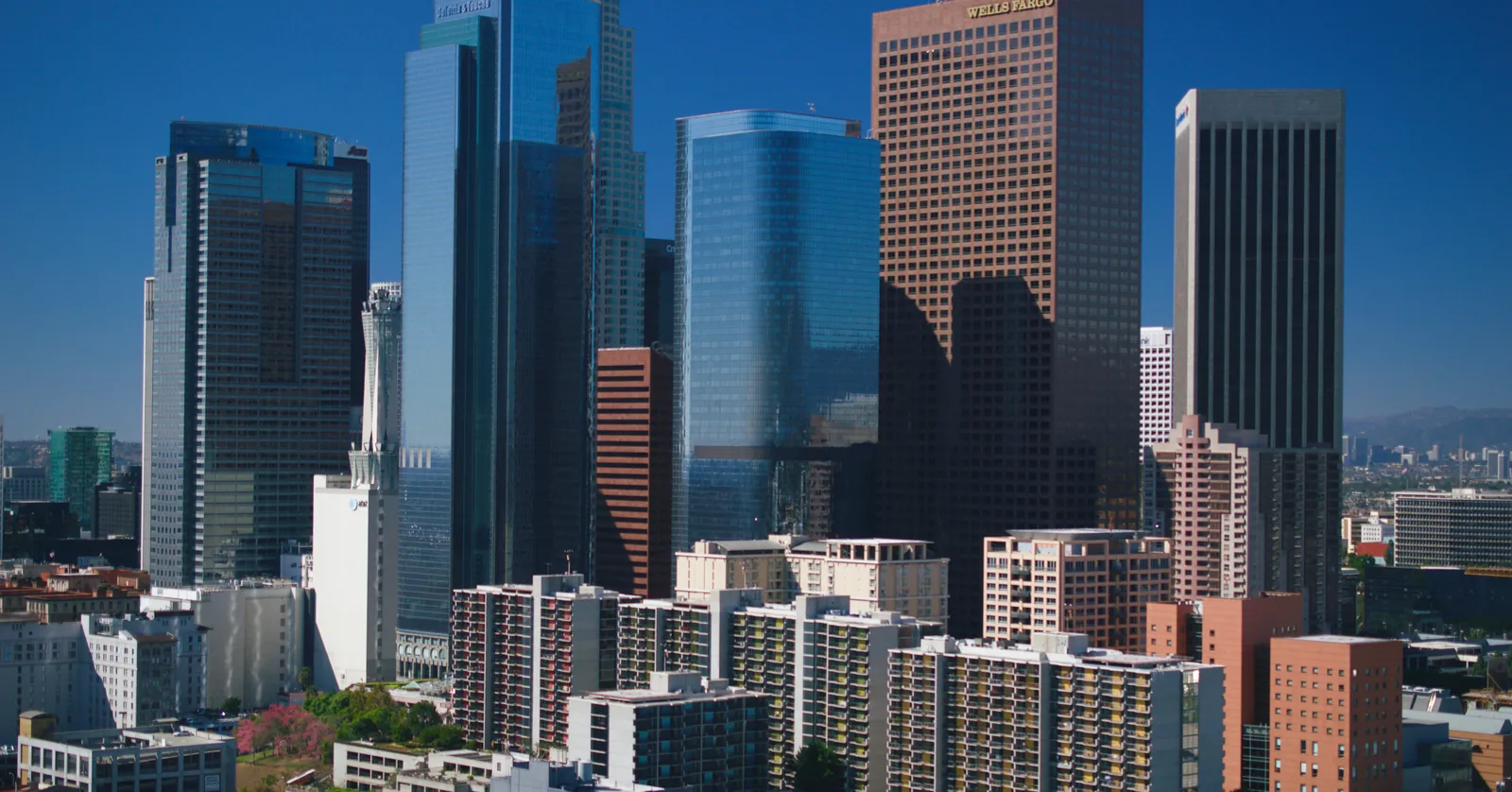
A mile of downtown Los Angeles holds a food market trading since 1917, a funicular up Bunker Hill, a free contemporary art museum, a 1939 railway station and the oldest house in the city, and only the funicular charges.
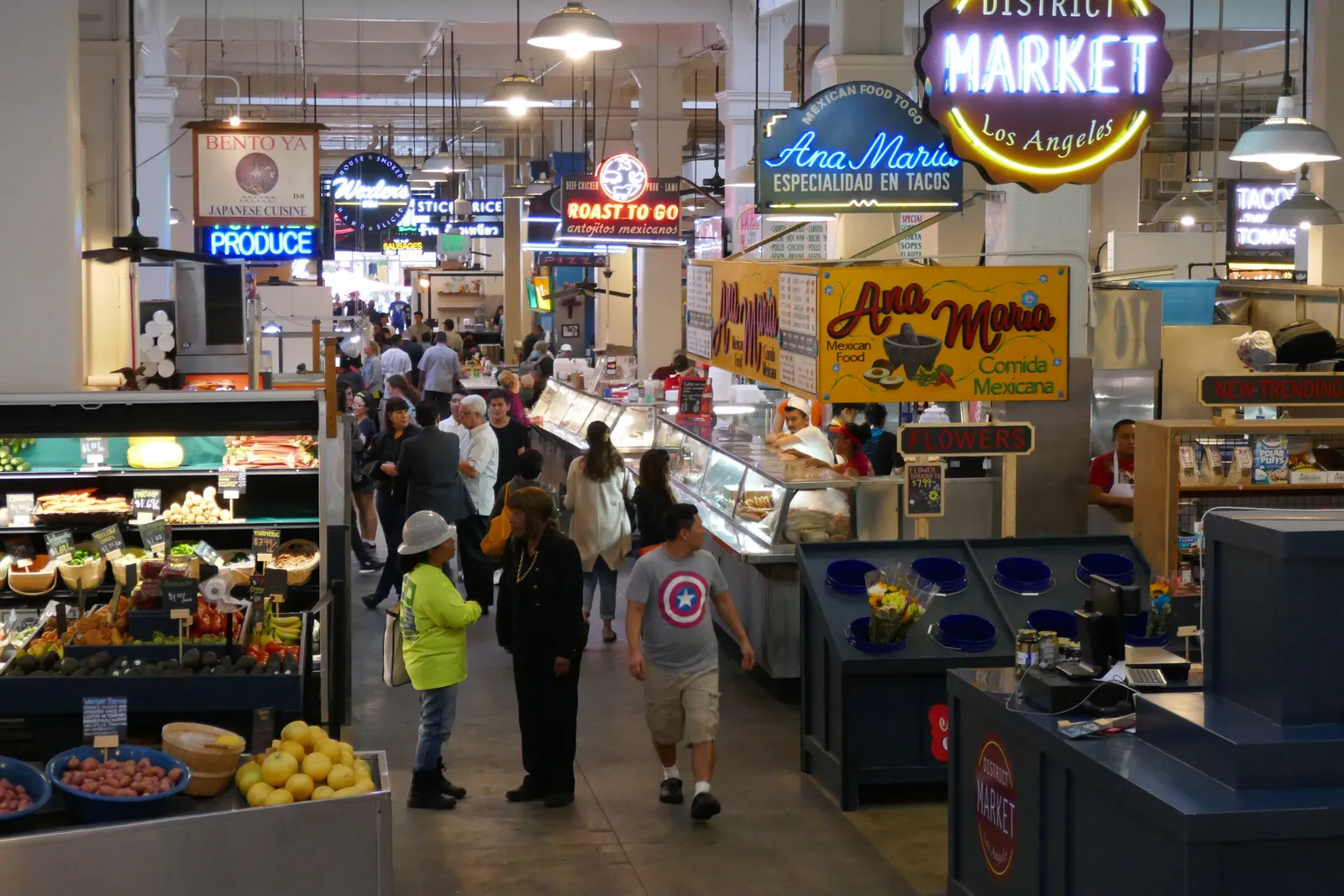
Grand Central Market has traded on Broadway since 1917
Grand Central Market fills the ground floor of the Homer Laughlin Building at 317 South Broadway, and it has sold food from that address since October 1917. Around forty counters trade under one roof now, and the room still works the way a market does rather than the way a food court does: produce crates and butchers’ display counters at one end, a wall of neon stall signs overhead, queues that form and dissolve in front of individual vendors. Walking in and looking costs nothing. It opens at 8am and the stalls run until 9pm, though individual counters keep their own hours inside that.
Directly across Broadway at number 304 is the Bradbury Building, finished in 1893, whose lobby is the reason people photograph it: an atrium of open cage lifts, wrought iron stair rails and yellow brick under a glass roof, used in Blade Runner and a long list of films since. It is a working office building, so the public gets the ground floor and the first landing, free, during business hours. If you would rather have the market’s stalls explained than guess at them, a guided food walk through this part of downtown can be booked in advance and starts within a couple of blocks.
Angels Flight climbs Bunker Hill for a dollar fifty
Angels Flight runs between Hill Street and California Plaza, 298 feet of track carrying two counterweighted wooden cars, Olivet and Sinai, up a 96-foot rise. It first opened in 1901, was dismantled when Bunker Hill was flattened and rebuilt, and came back at its present position in 2017. A one-way ride is $1.50, or 75 cents if you tap a transit card, and it runs from 6:45am to 10pm every day of the week. The ride itself is over in about a minute, which is part of the appeal.
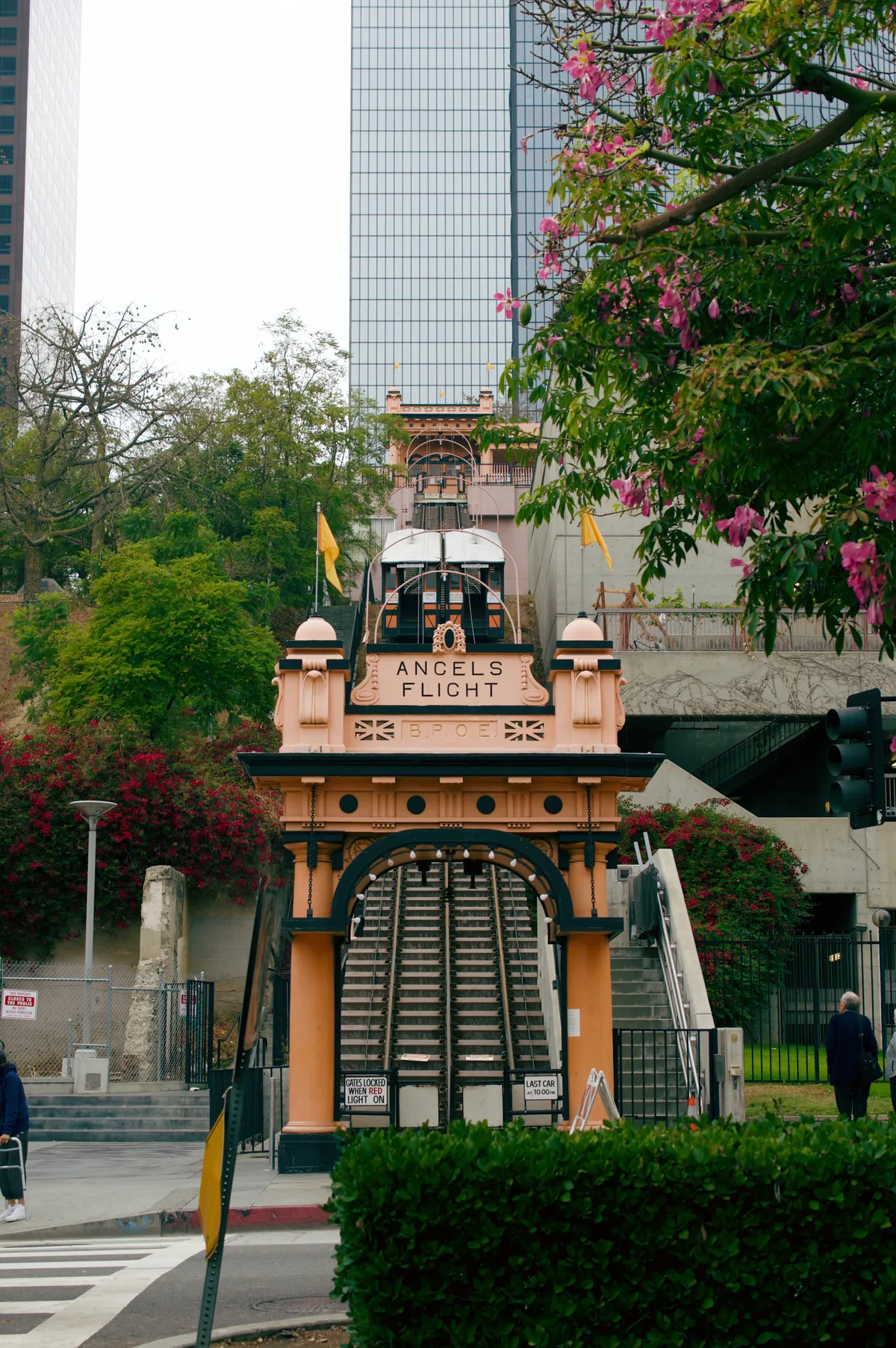
The public stairway beside the track covers the same 96 feet for nothing, which is a different proposition with a suitcase in hand.
The Broad’s contemporary art galleries charge nothing to enter
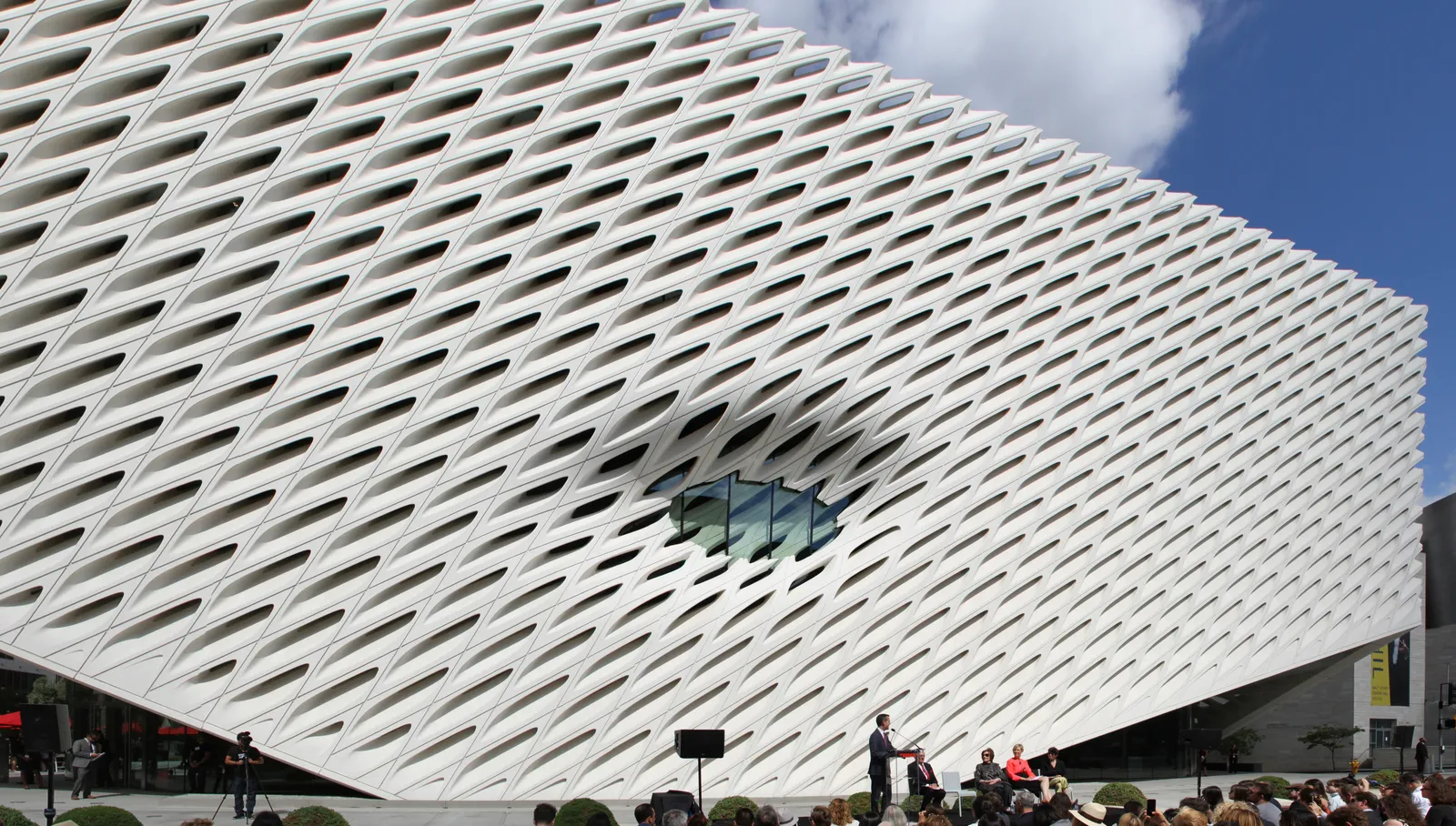
The Broad stands at 221 South Grand Avenue, on top of Bunker Hill, and opened in September 2015 to hold the collection Eli and Edythe Broad spent fifty years assembling. Diller Scofidio + Renfro wrapped the whole block in what the architects call the veil: a white honeycomb shell of angled cells that filters daylight into the galleries and gives the building its one recognisable feature from the street. The storage vault sits in the middle of it, deliberately visible, with the escalator running up through it.
General admission is free and always has been, which is the part worth planning around rather than budgeting for. It is a timed ticket, released online in daily batches, and it goes; checking the evening before is the standard advice for a reason. Turn up without one and there is a standby line at the door, which does move. The free ticket covers the third-floor collection galleries, where Warhol, Basquiat, Koons and Ruscha take up most of the room; special exhibitions and the Kusama mirrored room are sold separately.
Walt Disney Concert Hall has a public garden on its roof
Walt Disney Concert Hall stands at 111 South Grand Avenue, on the corner of First Street, and Frank Gehry finished it in 2003 after sixteen years of design and delay. The stainless steel panels are what the building is known for, curved and folded over each other so it reads as a pile of sails rather than a box, and they look different in every light the day throws at them.
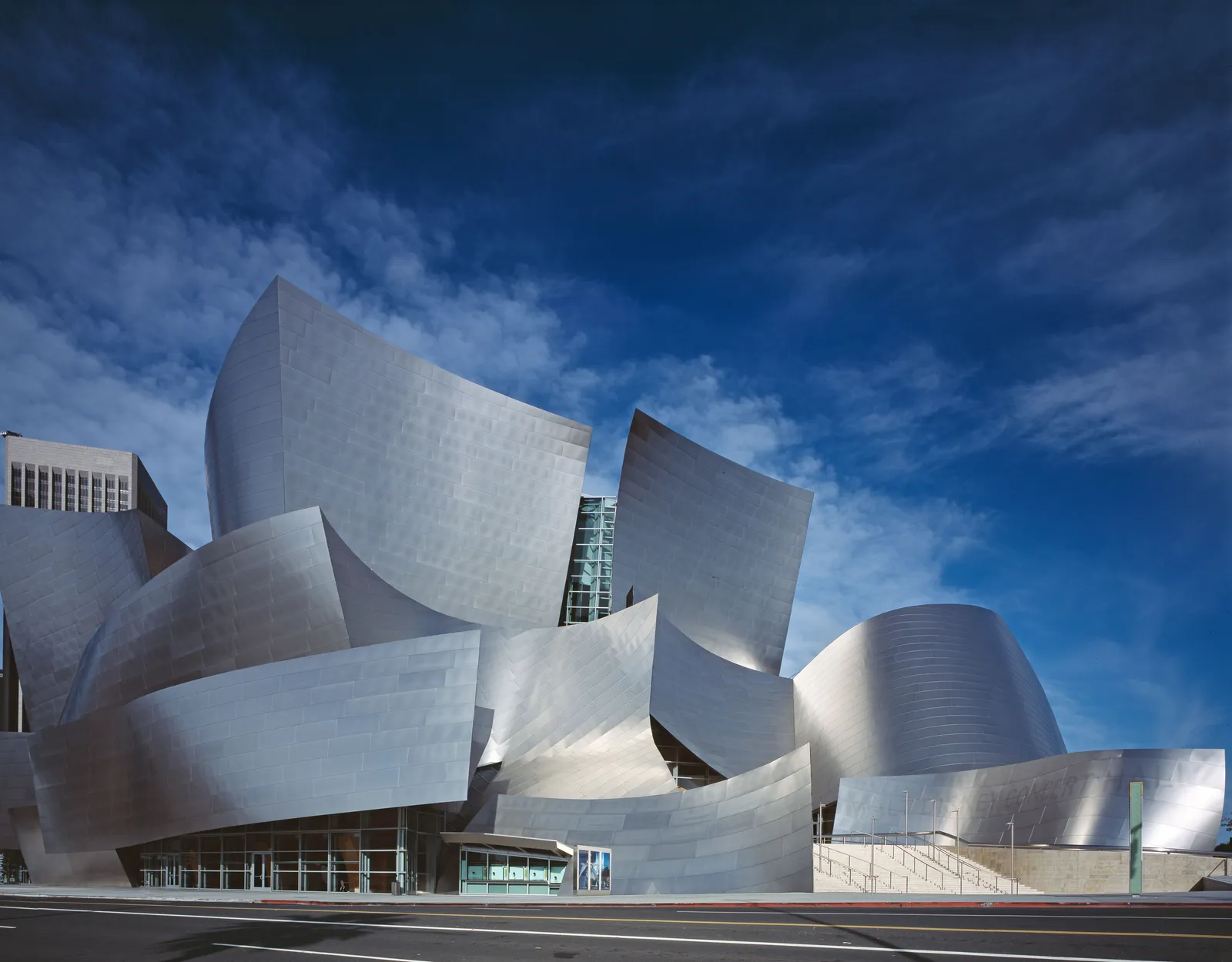
The roof is open to anyone. The Blue Ribbon Garden covers nearly an acre up there, reached from the street without a ticket or a check-in: trees, winding paths, benches, and a fountain Gehry shaped like a rose out of broken Delft porcelain as a memorial to Lillian Disney. Traffic noise drops away almost entirely once you are inside it, and none of it costs anything. On days without a matinee, the hall also lends out a free self-guided audio tour of the interior, usually from mid-morning to mid-afternoon, with no reservation needed; the performance schedule blacks out some days entirely, so it is worth a look at the calendar rather than a firm plan.
The arched hall inside Los Angeles Union Station
Los Angeles Union Station opened at 800 North Alameda Street in May 1939, the last large passenger rail terminal built in the United States. The Parkinsons designed it with the three railroads that paid for it, mixing Spanish Mission Revival outside with Streamline Moderne detailing inside, which is why a building with a bell tower and a tiled courtyard also has chrome-edged signage and geometric floor patterns.
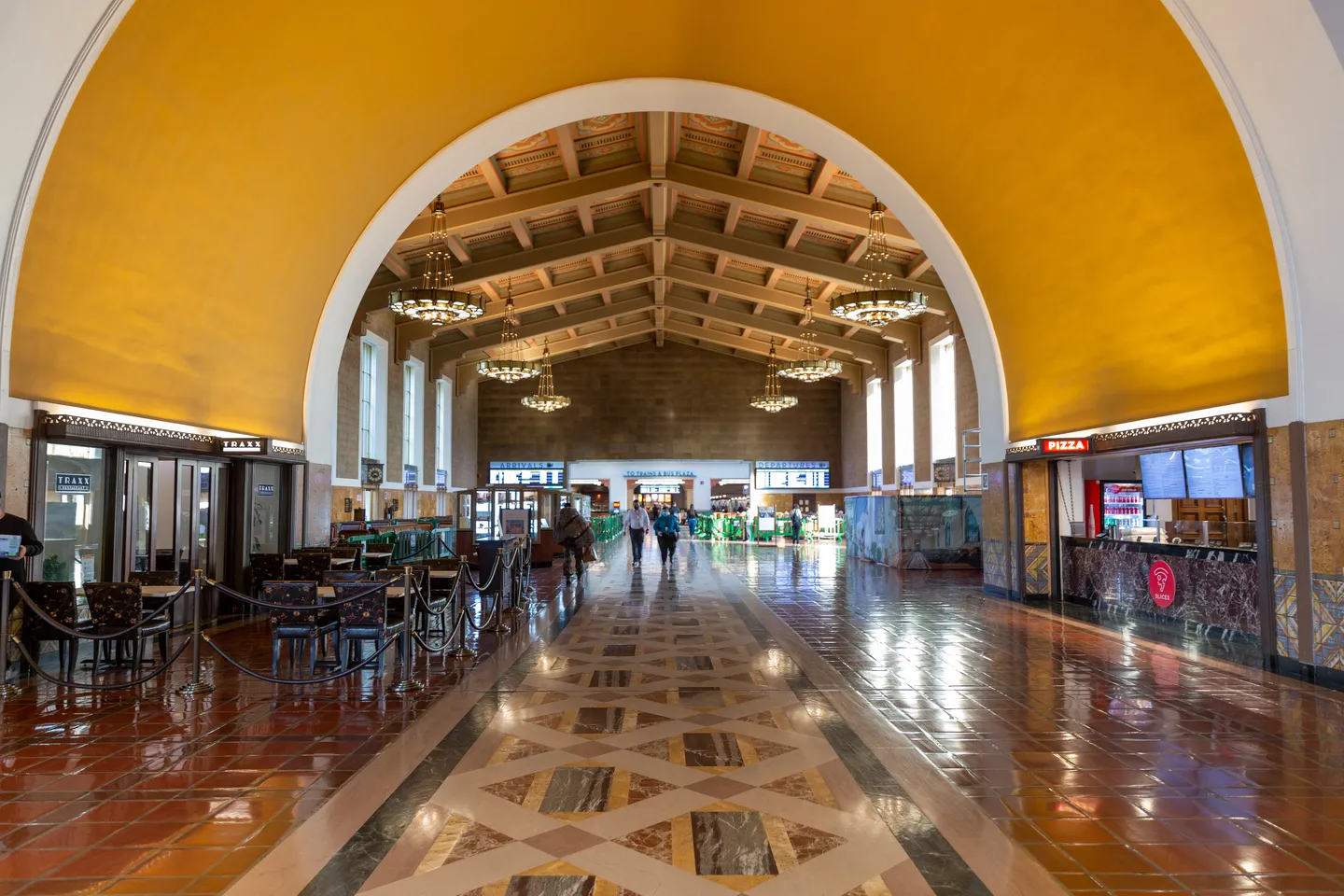
The hall is the reason to walk in: a high vaulted ceiling on exposed wooden beams, 30-foot windows, Art Deco chandeliers on long chains, and a floor inlaid with marble in bands of colour. The old waiting room off it still has its original leather-upholstered mahogany chairs, 286 of them. No ticket is checked to come in and look, and the two enclosed garden courtyards either side are open as well, so a spare twenty minutes before a flight can be spent sitting down indoors or outside.
The Ávila Adobe, the oldest house in Los Angeles
The Ávila Adobe was built in 1818 by Francisco José Ávila, a cattle rancher from Sinaloa who served as the town’s mayor in 1810, and it is the oldest house still standing in the city. It sits halfway down Olvera Street, the brick-paved paseo running north from the Los Angeles Plaza, directly across Alameda Street from the railway station. Going in is free, donations welcome, and it closes in the late afternoon.
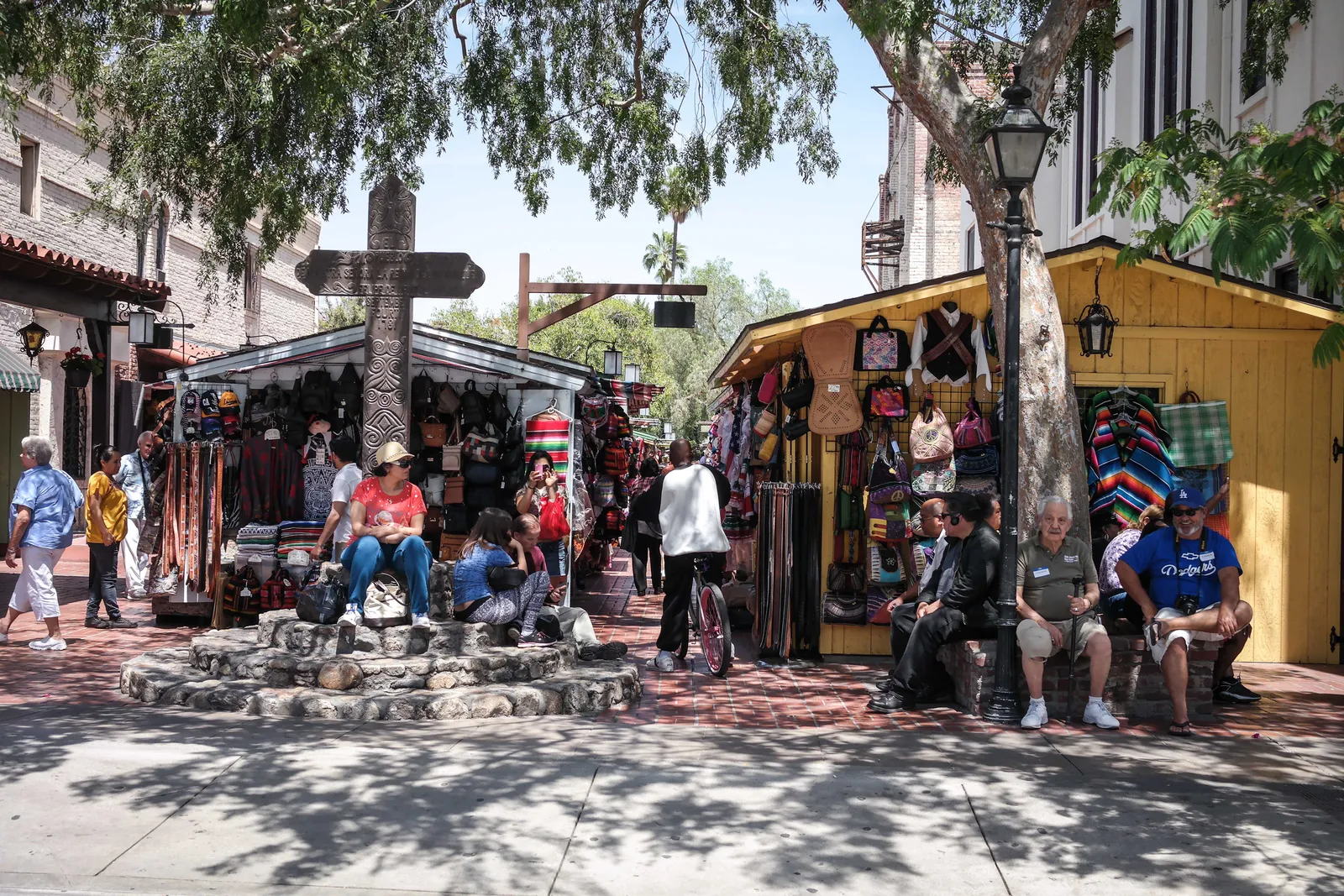
Inside is seven rooms of 1840s furniture around a courtyard, with adobe walls thick enough to keep the temperature down without anything mechanical. It reads small now and was not: this was a substantial house at a time when Los Angeles held a few hundred people. The paseo outside it has been a market since 1930, stalls selling blankets, leather and guitars under the trees, and the plaza at the end of it is where the pueblo was founded in 1781.
Los Angeles City Hall opens its 27th floor for free on weekdays
Los Angeles City Hall stands at 200 North Spring Street, ten minutes’ walk from the Los Angeles Plaza, and it was the tallest building in the city from its dedication in 1928 until 1966, when the height limit that had protected it was lifted. The 454-foot tower turns up on plenty of postcards; the observation level near the top of it, on the 27th floor, is open to the public and costs nothing.
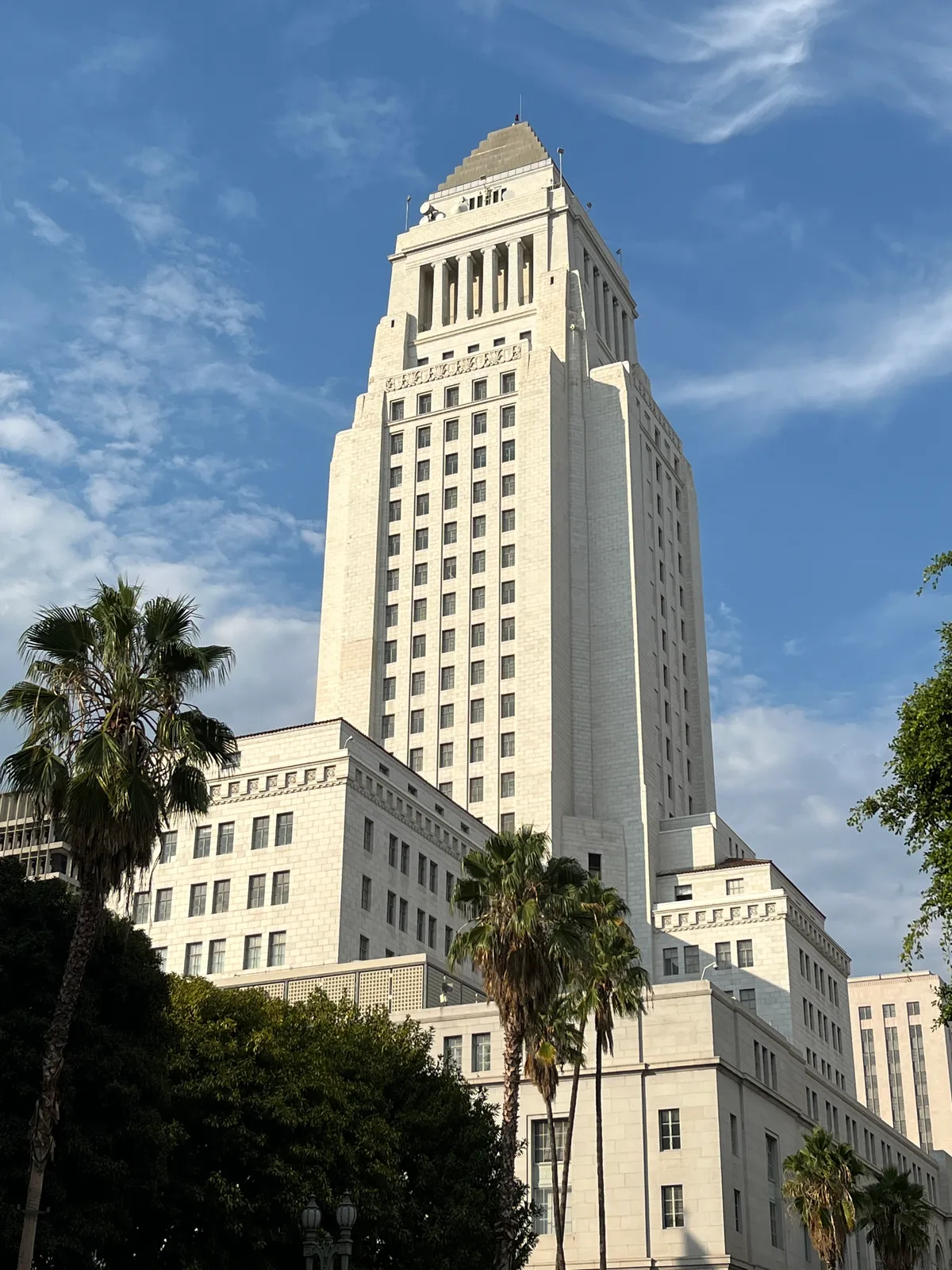
The catch is that it is a working government building. You go in from the Main Street side, show ID and pass a metal detector, and the deck runs Monday to Friday during business hours only, closing at 5pm, with no weekend access and the occasional closure when a civic function takes it over. Ringing ahead saves a wasted walk. What it buys is the whole basin from one open-air walkway: Bunker Hill and the towers west, the mountains north, and the ocean on a clear day. With six hours or more to spend, it costs about fifteen minutes, and if the coast or the hills appeal more than another building, plenty of that is bookable.
A nonstop airport bus leaves from behind Union Station
The FlyAway is the reason this itinerary ends where it does. It runs nonstop from Bus Stop 1 at the Patsaouras Transit Plaza, on the Vignes Street side of Union Station, straight to the LAX terminals, seven days a week, at $9.75 one way, and uses the toll and carpool lanes on the way out. Reckon on 35 to 55 minutes depending on traffic, more on a Friday afternoon. At the airport end it drops at the blue FlyAway columns on the lower arrivals level outside each terminal.
Metro is the cheaper option at $1.75, with transfers free for two hours after you tap, and it makes sense if your day ends closer to Bunker Hill than to the plaza. From downtown it is the E Line west from 7th St/Metro Center to Expo/Crenshaw, then the K Line south to the LAX/Metro Transit Center, roughly 45 to 55 minutes of riding. That station opened in June 2025 and sits outside the airport rather than in it: until the automated people mover connecting the two is finished, which is still in testing with no announced opening date, a free shuttle from Bus Bays 1 and 2 covers the last leg into the terminals. The C and K Lines both stop running around midnight, so a very late departure is a bus or a car, not a train.
That gap between the station and the terminal is worth knowing about because it is not the norm: in Chicago the train runs into the airport itself and the published ride time is close to the real one. Here it is not, so whichever way you go back, budget at least two and a half hours from downtown for collecting your bag, the ride, check-in and security.
Which is the real argument for not carrying the bag around in the first place. The stairs beside Angels Flight, the roof garden, the observation deck and the walk down to the plaza are all better without one, and leaving it near the market at the start puts it a few minutes from Broadway when you come back through for it.
Frequently asked questions
What should I do during a layover in Los Angeles?
Start at Grand Central Market on South Broadway, which has been a food market since 1917 and costs nothing to walk through, then take Angels Flight up the hill behind it for $1.50. At the top, The Broad and Walt Disney Concert Hall stand a couple of minutes apart on Grand Avenue, and both let you in for nothing: the museum's general admission is free and the concert hall's roof garden has no gate at all. From there it is about twenty-five minutes downhill on foot to Los Angeles Union Station and the Ávila Adobe across Alameda Street, the oldest house in the city. The Broad is the one stop worth reserving before you land, since general admission tickets go quickly, and it is also the one you can drop without breaking the walk.
How late in the evening can you do this downtown Los Angeles walk?
Later than most of it suggests, but not all of it. Angels Flight runs until 10pm seven days a week and Grand Central Market's stalls stay open until 9pm, so the Broadway and Bunker Hill half of this route works well into the evening. The plaza end does not: the Ávila Adobe shuts in the late afternoon, and City Hall's observation deck closes at 5pm and does not open at weekends at all. For a flight leaving late at night, do the market and the hill and treat Union Station as the place you end up rather than something to look around.
Do you need to book The Broad before you go?
General admission is free but it is timed, and the reservations are released online in daily batches rather than held open indefinitely, so the sensible move is to check the evening before the day you want. If nothing is left, the museum runs a standby line at the door on Grand Avenue and it does move, though how fast depends entirely on the day. Free admission covers the third-floor collection galleries; ticketed special exhibitions and the Yayoi Kusama mirrored room are sold separately and are not part of it.
Is the Metro or the FlyAway bus better for getting back to LAX?
The bus, if you finish anywhere near Union Station. The FlyAway runs nonstop from Bus Stop 1 at the Patsaouras Transit Plaza on the Vignes Street side of the station straight to the LAX terminals, seven days a week, for $9.75, and takes something like 35 to 55 minutes depending on traffic. Metro is cheaper at $1.75 with free transfers for two hours, but from downtown it means the E Line west to Expo/Crenshaw, the K Line south to the LAX/Metro Transit Center, and then a free shuttle from Bus Bays 1 and 2 into the terminals, which is closer to 45 to 55 minutes of riding before the shuttle leg is added on top.
How much of this downtown Los Angeles walk is uphill?
One climb, and there is a railway for it. Bunker Hill stands 96 feet above Hill Street, and Angels Flight exists to cover exactly that; the public stairway running alongside the track is the free alternative and it is a proper flight of steps. Everything above that, Grand Avenue between The Broad and the concert hall, is flat, and the walk on from there down to Union Station loses the height gradually along Temple and Alameda rather than in one drop. Grand Central Market and the Olvera Street paseo are both level and step-free inside.