New Orleans Layover: French Quarter From MSY
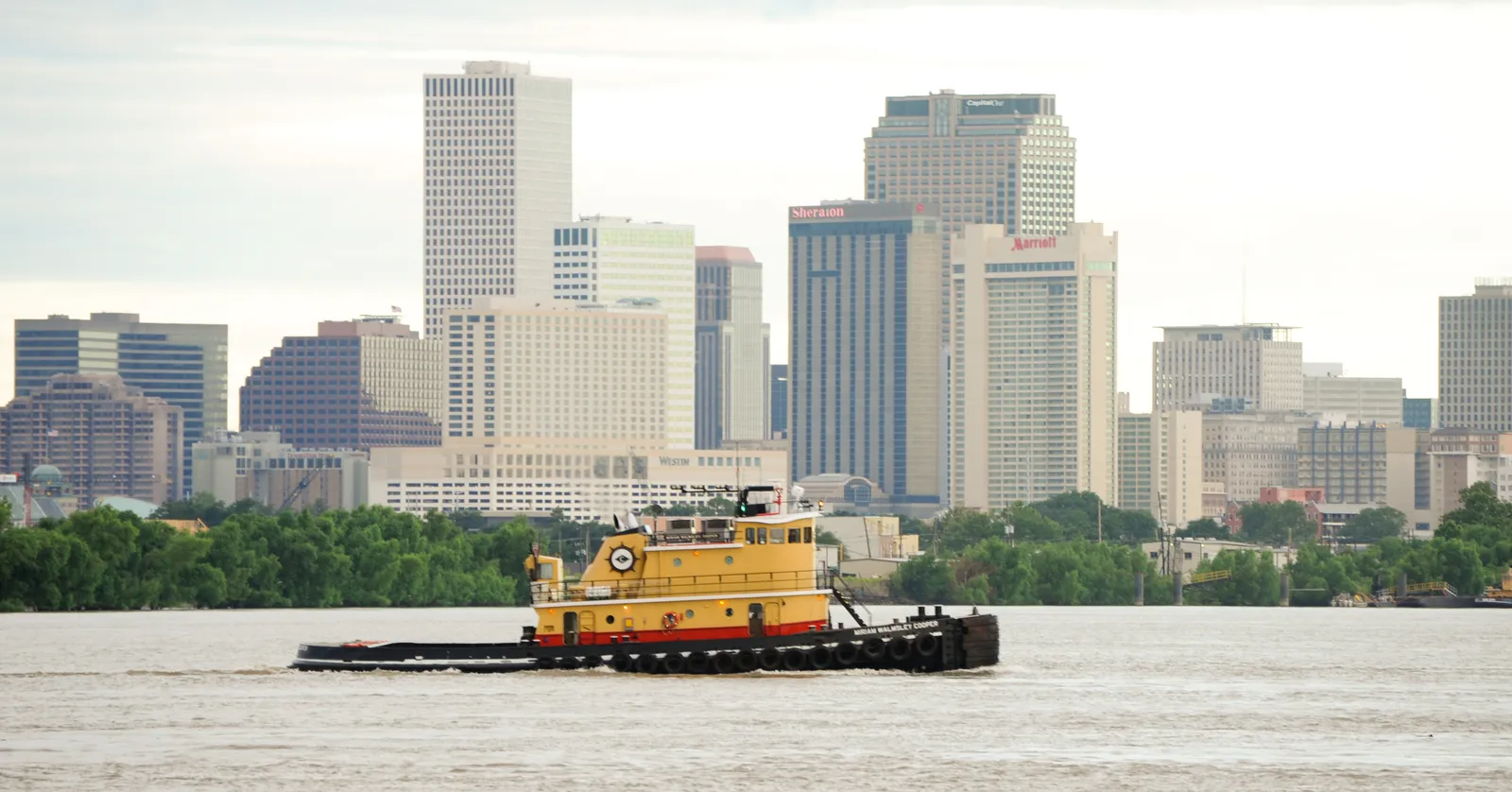
New Orleans keeps nearly everything worth a layover inside a mile of the Mississippi: the National WWII Museum on Andrew Higgins Drive, St. Louis Cathedral and the two Spanish colonial buildings flanking it on Jackson Square, and a French Market coffee stand that shuts one day a year.
The B-17 bomber hung inside the National WWII Museum
The museum stands on Andrew Higgins Drive between Camp and Magazine Streets, named for the New Orleans boatbuilder whose flat-bottomed landing craft put troops onto the beaches at Normandy. It opened on 6 June 2000 as the National D-Day Museum, and Congress made it the country’s official World War II museum in 2003, which is why the national collection sits here rather than on the Mall in Washington DC. It has grown to a seven-acre campus since.
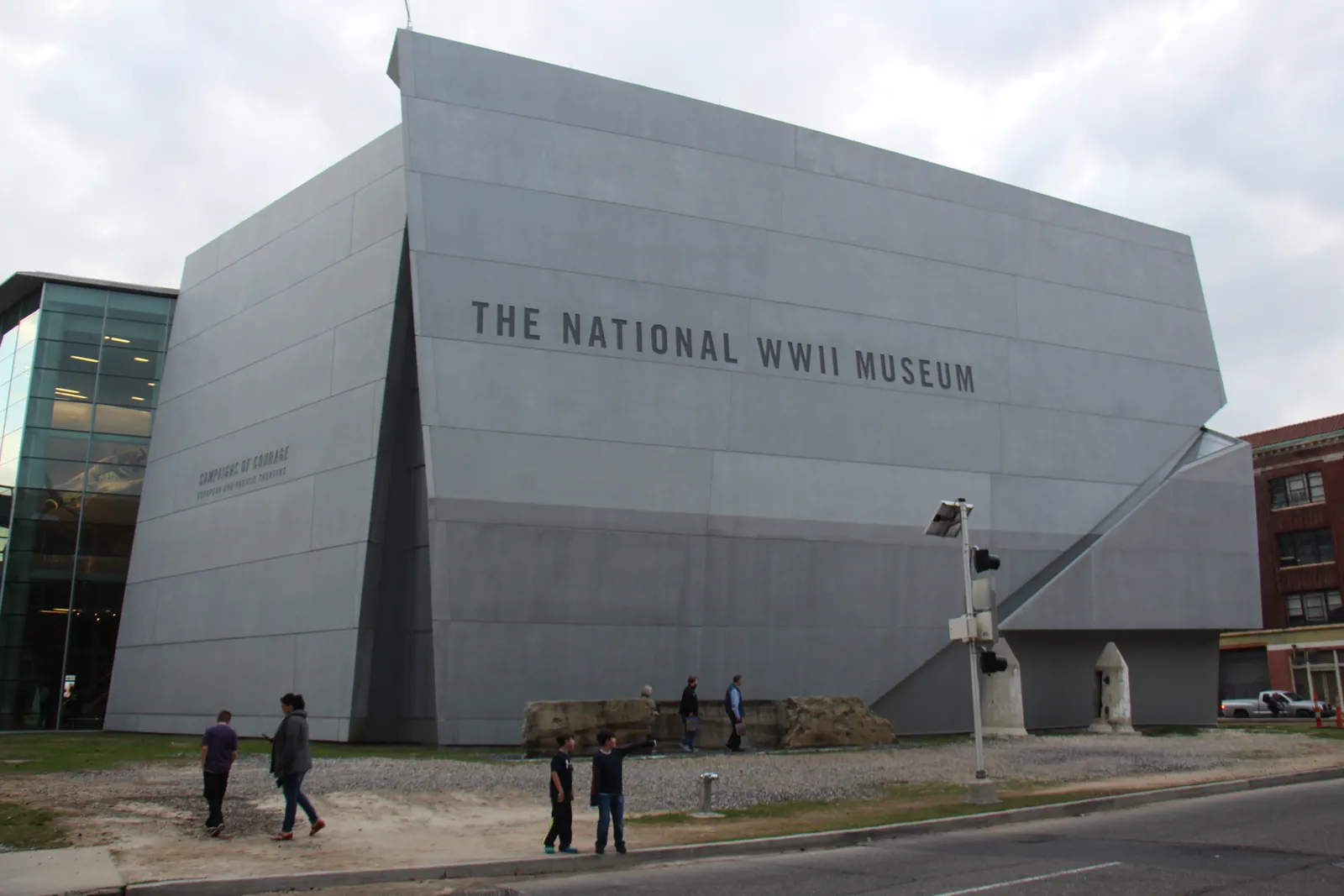
The Boeing Center hangs a B-17E bomber called My Gal Sal from its roof three storeys up, with fighters and a Douglas C-47 around it, and the Louisiana Memorial Pavilion has one of Higgins’s landing craft down on the floor. Road to Berlin and Road to Tokyo, the two walk-through campaign exhibits, take an hour each on their own. Doors are open 9am to 5pm every day except Thanksgiving, Christmas Eve, Christmas Day and Mardi Gras, and adult admission runs $27 to $37 depending on what you add to it; entry tickets booked through a tours and activities platform save the counter queue. Two hours is the least that does the place justice, and four will disappear in it.
The Steamboat Natchez, a sternwheeler still driven by steam
The Natchez ties up at the Toulouse Street Wharf behind the old Jax Brewery, four blocks downriver of the foot of Canal Street. She runs on a steam engine rather than a diesel, and the engine room is open to walk through partway into the trip, which is most of the reason to pick her over a modern sightseeing boat. Before the daytime cruise casts off, the steam calliope on the top deck starts up: a keyboard played through brass whistles, loud enough to carry several blocks into the Quarter.
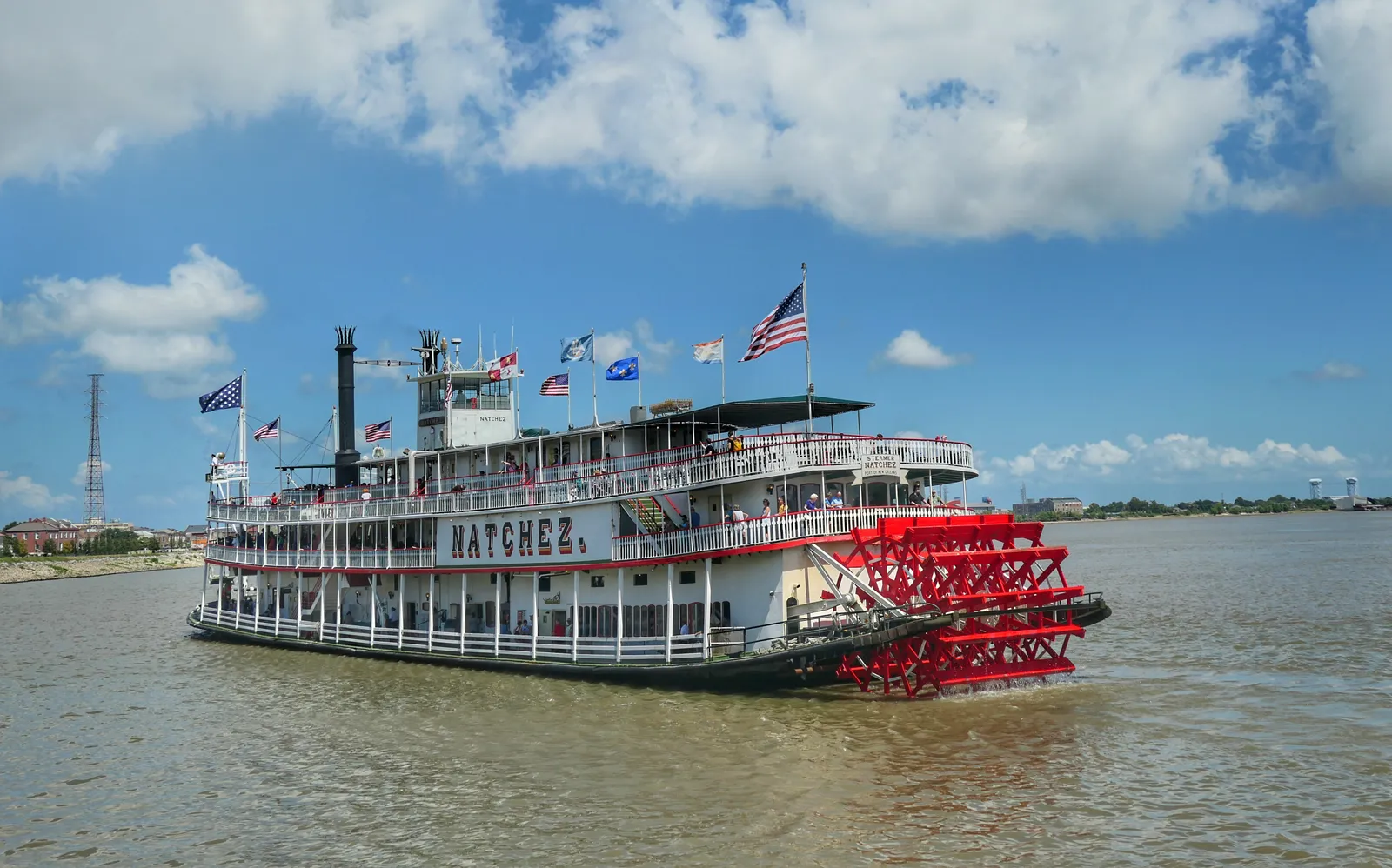
A harbour cruise lasts about two hours, down past the working wharves and back, with a jazz trio playing the length of it. Adult tickets start around $43.50 and children of two to five ride free; the daytime sailing can be booked ahead on a tours and activities platform. Boarding opens half an hour before departure, so a two-hour cruise is really a three-hour commitment once the wharf is counted in.
St. Louis Cathedral and the two colonial buildings beside it
Jackson Square is a two-and-a-half-acre block of the French Quarter bounded by Decatur, Chartres, St. Peter and St. Ann. It was laid out as the Place d’Armes in 1721 and renamed in 1851 for Andrew Jackson, whose equestrian statue, cast by Clark Mills in 1856, rears in the middle of it. Behind the statue stands the cathedral, rebuilt after the fire of 1788, remodelled into its present three-spired shape in the 1850s, and made a minor basilica by Paul VI in 1964. The Cabildo on its left is the old city hall where the Louisiana Purchase transfer was signed; the Presbytère on its right was designed to match it.
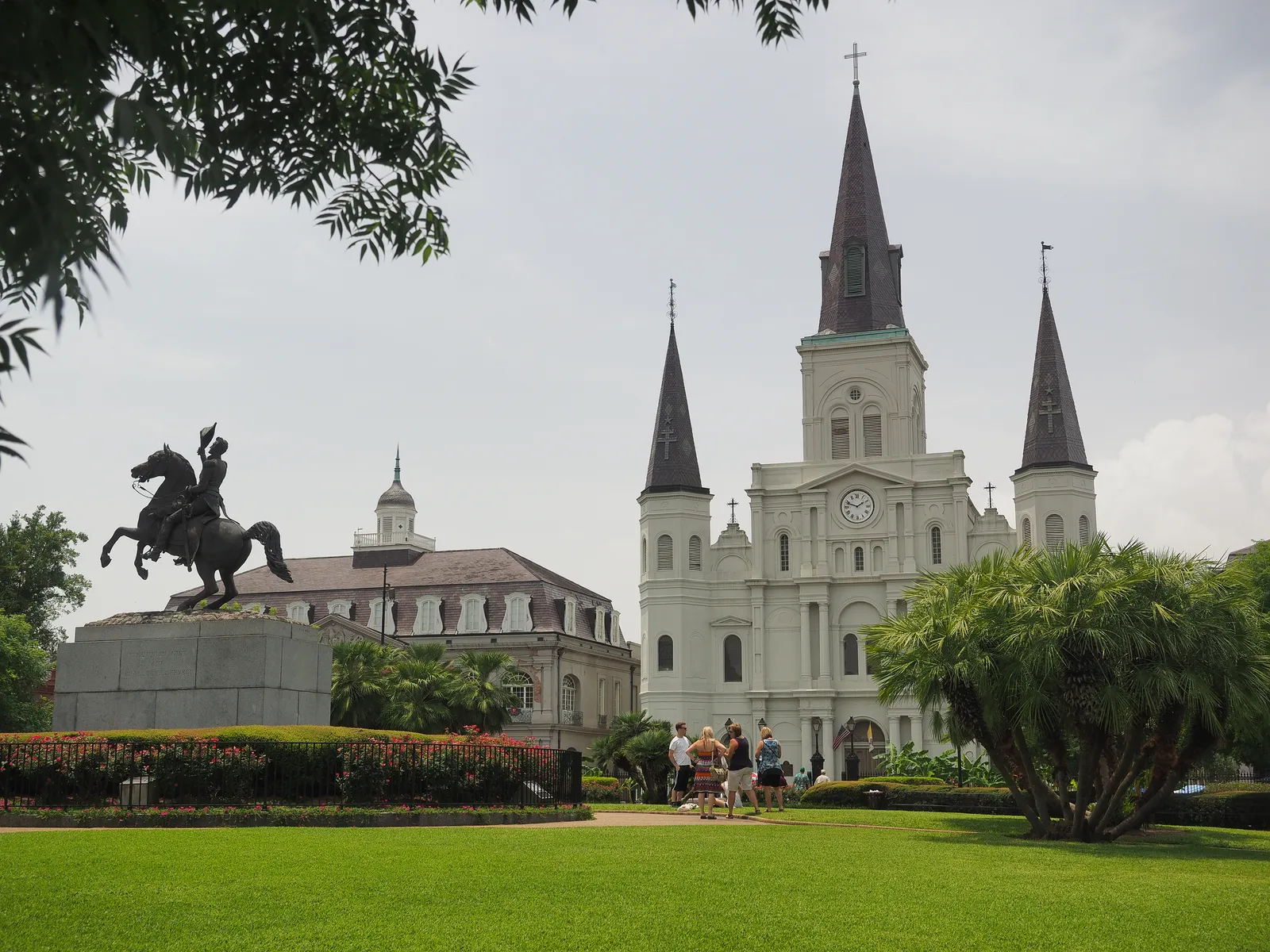
The cathedral is free to walk into, 9:30am to 4pm Monday to Saturday and from 8am on Sunday, with a self-guided brochure at the door for a dollar, and it closes to visitors whenever there is a wedding or a funeral on. The four-storey red-brick Pontalba Buildings running down either side of the square went up in the 1840s and still have apartments above the shops at street level.
Beignets at Cafe du Monde on Decatur Street
The stand at 800 Decatur Street, under a green and white awning at the upriver end of the French Market, has sold the same two things since 1862: beignets, three to an order under a drift of powdered sugar, and cafe au lait cut with chicory, a wartime economy that stuck. Three beignets cost $3.60. The place is open around the clock and closes one day a year, on Christmas, plus whenever a hurricane makes the decision for it.
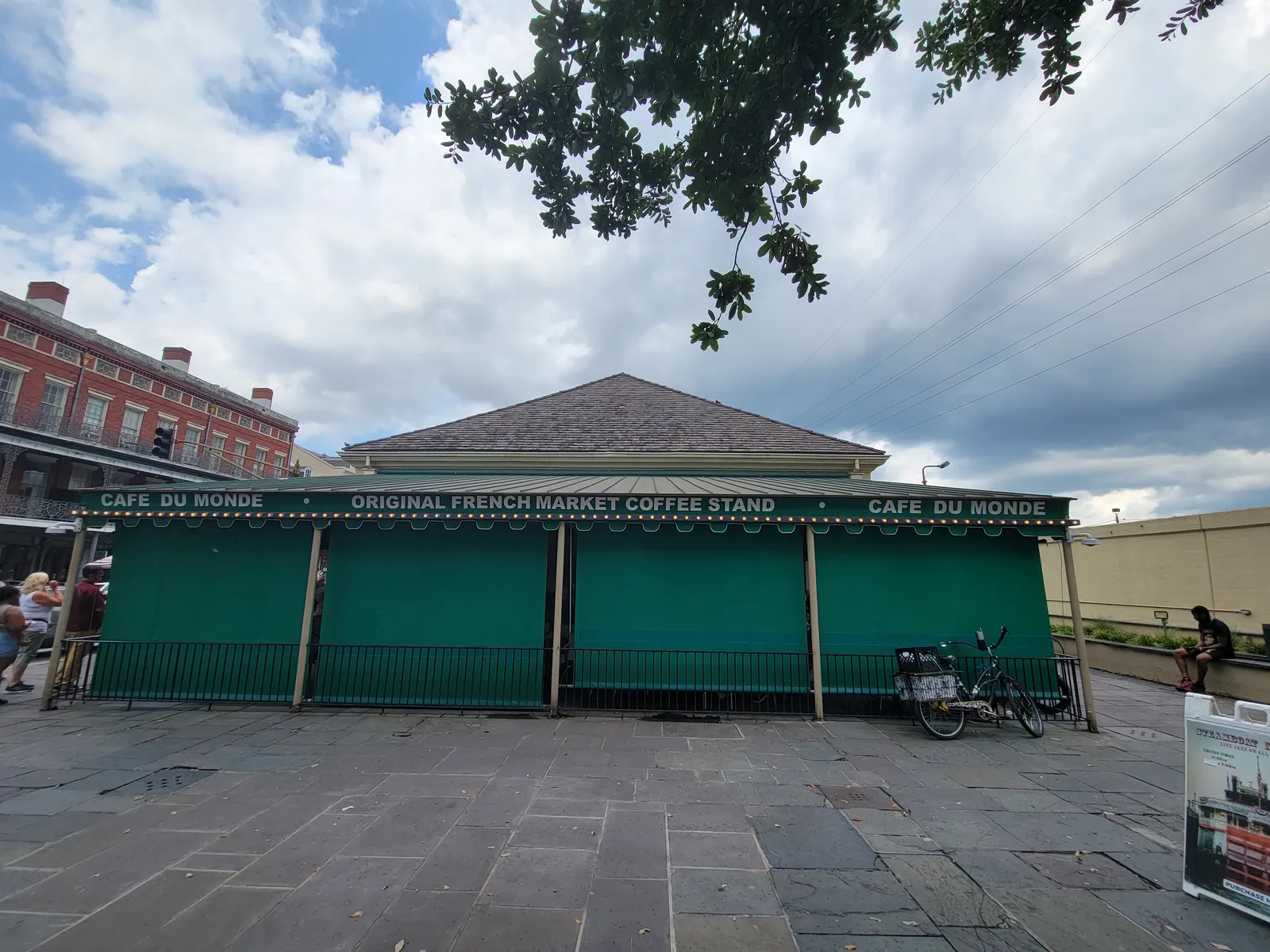
Table service is under the awning and there is a separate takeaway window on the Decatur side when the queue has wrapped around the building. That queue forms on the open pavement, which is where New Orleans weather gets its say: August averages about 8.6 inches of rain, most of it in short afternoon storms, with nowhere dry to park a suitcase while you wait it out.
The LaBranche buildings’ cast-iron galleries at Royal and St. Peter
Royal Street runs one block back from Decatur and is where the Quarter keeps its antique dealers, its galleries and most of its ironwork. The corner of Royal and St. Peter carries the best of it: the LaBranche buildings, put up for a sugar planter’s family between 1835 and 1840, with cast-iron galleries wrapping all three floors in a pattern of entwined oak leaves and acorns. Ferns hang from the railings the length of both frontages.
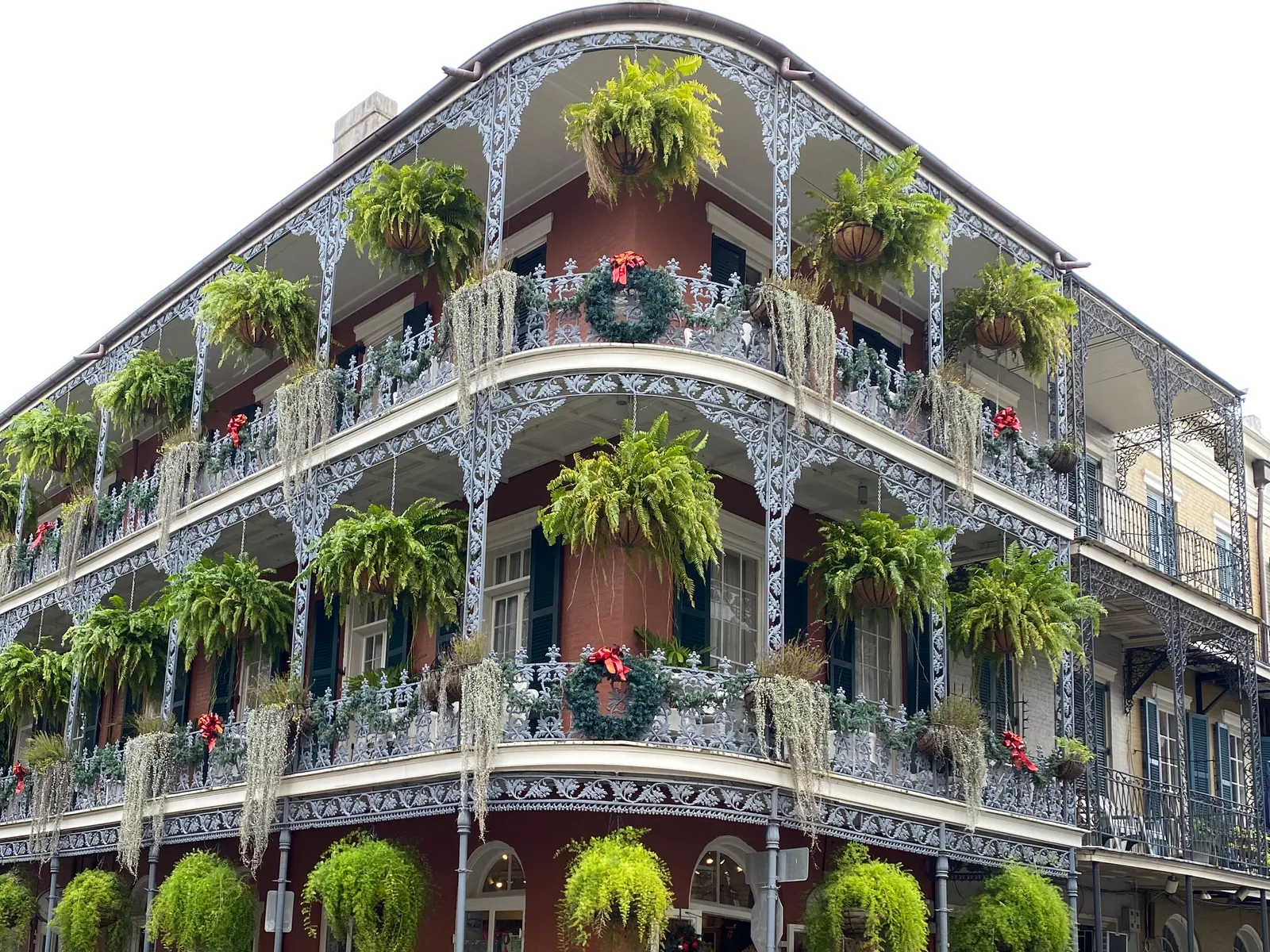
Between Bienville and Orleans the street closes to cars for a pedestrian mall, 11am to 4pm on weekdays and 11am to 7pm at weekends, and that is when the buskers claim it: brass players, a piano hauled out on a handcart, singers working a block at a time.
A few doors along at 520 Royal, the Historic New Orleans Collection puts its exhibitions on for nothing, though you still pick up a ticket at the front desk on the way in. It opens 9:30am to 4:30pm Tuesday to Saturday and from 10:30am on Sunday, closed Mondays, and the galleries are air-conditioned and quiet, which in July is a reason of its own to go in.
The 1923 wooden streetcars on St. Charles Avenue
Streetcars have run the length of St. Charles Avenue since 1835, the oldest continuously operating streetcar line in the world. The dark green cars working it were built by the Perley A. Thomas Car Works in 1923 and 1924: reversible wooden seats, brass fittings, windows that push up, and no air conditioning at all. A ride costs $1.25 in exact change, or $3 buys a day pass through the transit app.
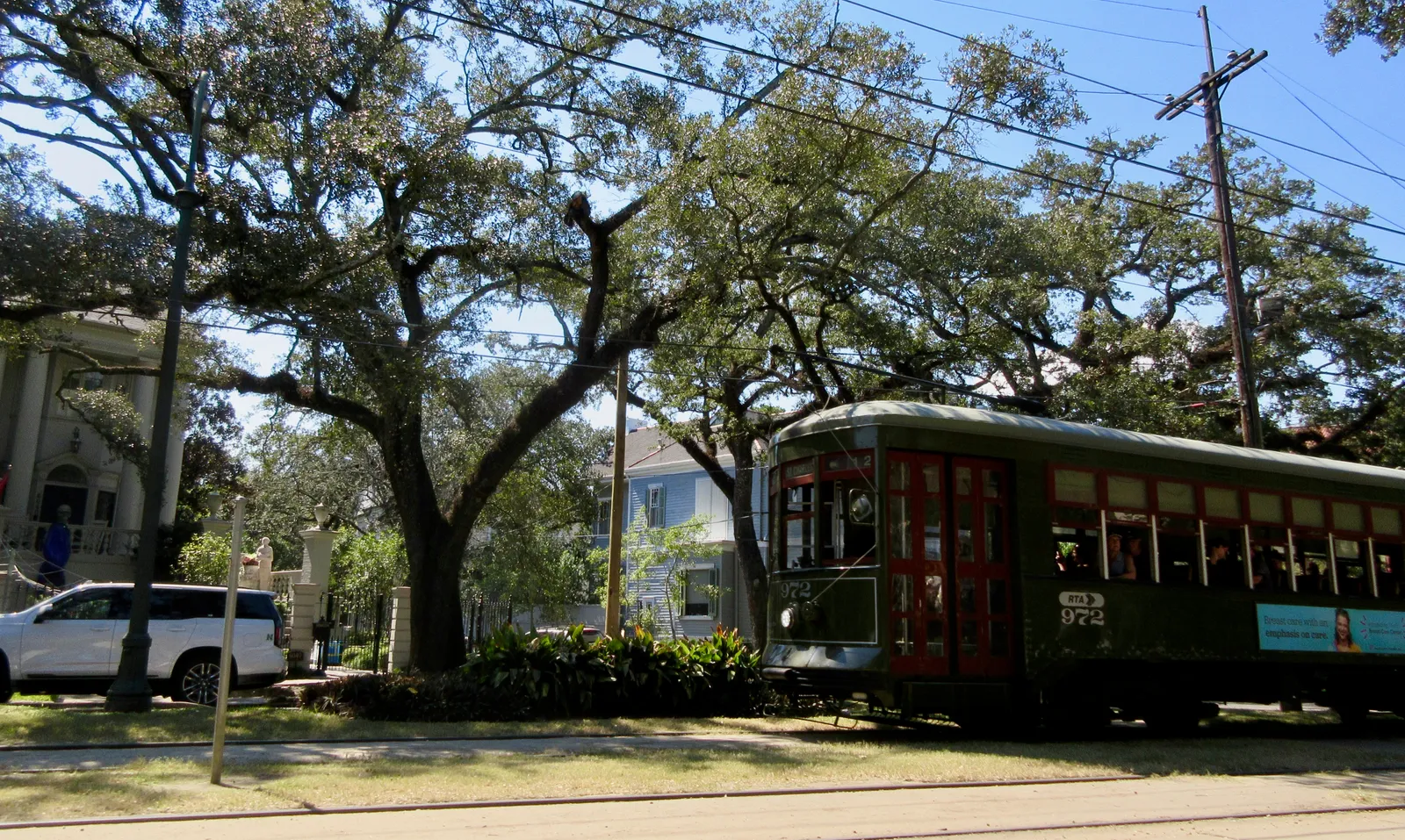
From Canal and Carondelet it is about 20 minutes uptown to Washington Avenue, where the Garden District begins: Greek Revival and Italianate houses set back behind cast-iron fences on Prytania, First and Third Streets, built by Americans who arrived after the Louisiana Purchase and were not made welcome in the Creole Quarter. The avenue runs under a near-continuous tunnel of live oaks for most of that ride. Two hours covers the round trip and a walk around the blocks, which makes this the first thing to cut when the flight is early.
One bus route links Louis Armstrong airport to downtown
The 202 Airport Express is the only city bus between downtown and Louis Armstrong New Orleans International Airport (MSY), and it costs $1.25, the same as a streetcar ride. It runs out along Interstate 10, picking up on Poydras Street between Loyola Avenue and Convention Center Boulevard and at the Union Passenger Terminal bus bays, and the ride itself is about 40 minutes. The frequency is the catch: buses come roughly every 70 to 90 minutes, so the wait can run longer than the journey, and the departure time is worth checking before you plan the last hour of the day around it.
A taxi is the fixed-price alternative, and the fare is set by city ordinance rather than by the meter: $36 between the airport and the Central Business District or the French Quarter for one or two passengers, $15 a head once there are three or more. Leaving the Quarter three hours before departure covers either version of the trip, the walk through the terminal and the security line.
Almost all of the above is flat ground within a mile of the river. Collecting a stored bag on the way out costs a few minutes. Wheeling one down Royal Street in August costs a good deal more than that.
Frequently asked questions
What should I do during a layover in New Orleans?
Stay in the French Quarter and the blocks just upriver of it. St. Louis Cathedral on Jackson Square is free to walk into until 4pm, the beignet stand at 800 Decatur Street never shuts overnight, and the cast-iron galleries at Royal and St. Peter are a three-minute walk from either. With five hours or more, add the National WWII Museum on Andrew Higgins Drive, which is a mile away and wants two hours of its own, or a streetcar ride up St. Charles Avenue to the Garden District and back. The museum and the river cruise are the two things worth booking before you land; everything else here you can walk up to.
Is the bus or a taxi better between downtown and Louis Armstrong airport?
The 202 Airport Express bus is $1.25 and takes about 40 minutes from Poydras Street or the Union Passenger Terminal, but it runs only every 70 to 90 minutes, so the wait is the real cost. A taxi is a flat $36 between the airport and the Central Business District or the French Quarter for one or two passengers, set by city ordinance rather than the meter, and $15 a head once there are three of you. For two people with a flight to catch, the taxi usually wins on time and is not far off on money. For one person with hours to spare, the bus is fine as long as you have checked when it actually leaves.
What is there to do in the French Quarter when it rains?
August is the wettest month in New Orleans, averaging around 8.6 inches, and most of that arrives as short afternoon thunderstorms rather than all-day rain, so waiting one out is usually enough. The Historic New Orleans Collection at 520 Royal Street is the cheapest place to do it: free exhibitions in air-conditioned galleries, open 9:30am to 4:30pm Tuesday to Saturday and from 10:30am on Sunday, closed Mondays, with a ticket picked up at the front desk. The National WWII Museum is entirely indoors and will absorb a whole afternoon. The beignet stand at 800 Decatur Street has a covered terrace and a takeaway window, though the queue for both forms on the open pavement.
Can you reach the Garden District and get back in time for a flight?
Yes, with five hours or more in the city. A streetcar up St. Charles Avenue takes about 20 minutes from Canal and Carondelet to Washington Avenue, where the mansions on Prytania, First and Third Streets begin, and the same again coming back. A single ride is $1.25 in exact change, or $3 buys a day pass through the transit app, which pays for itself on the third boarding. Allow two hours end to end including a walk around the blocks, and drop it if you also want the National WWII Museum.
Is Jackson Square open in the evening?
The square itself is gated and locks at dusk, around 6pm in winter and 7pm the rest of the year. The pavement around all four sides stays open, and that is where the tarot readers and portrait artists work. St. Louis Cathedral closes to visitors at 4pm daily, and the Royal Street galleries shut around the same time, so an arrival after dark gets the music rooms and the restaurants rather than the buildings.