Julia Street Cruise Terminal, New Orleans
Part of the full New Orleans Layover: French Quarter From MSY
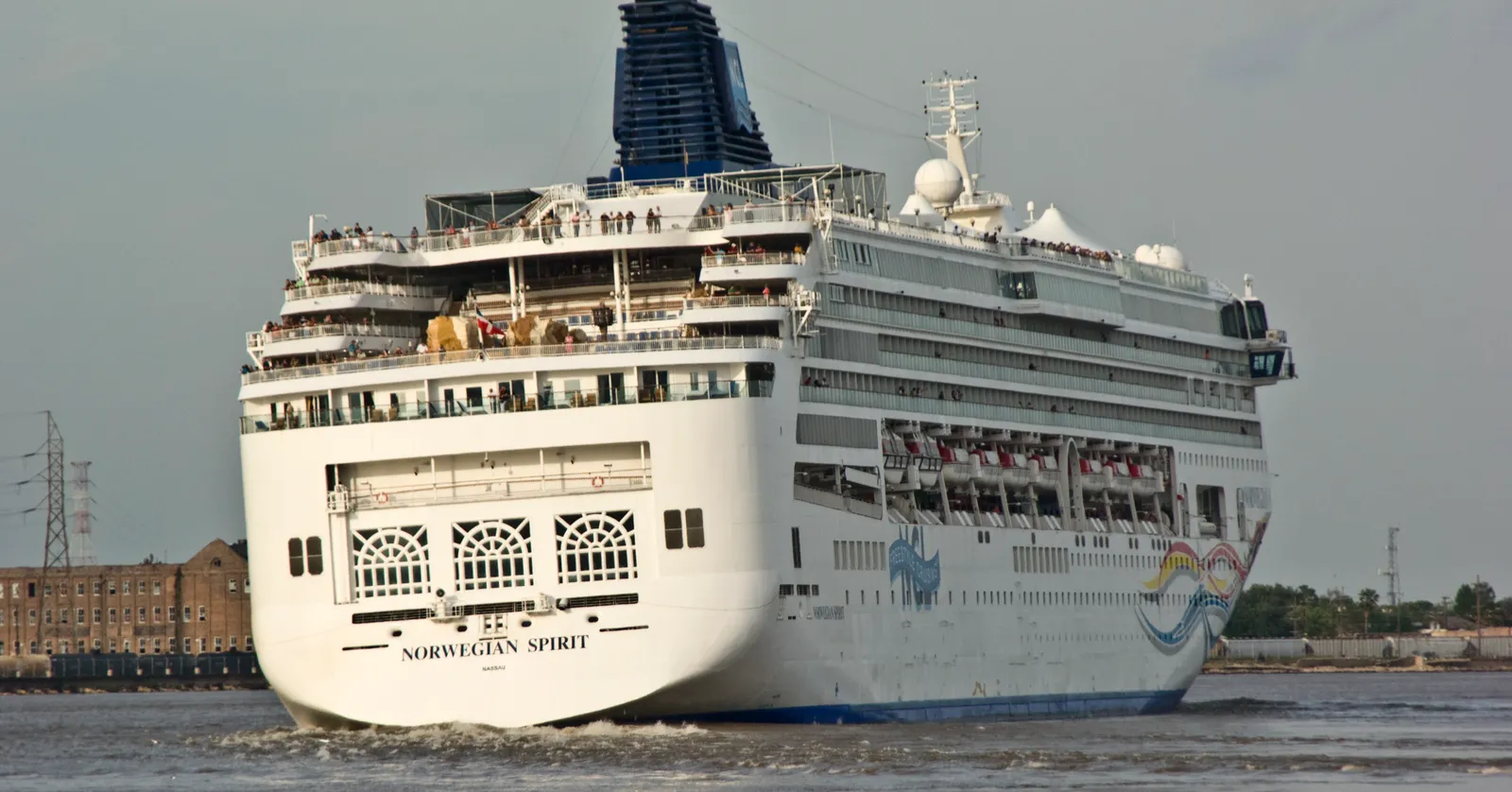
New Orleans puts its cruise berths on the working wharves at the top of the Warehouse District, which means the Julia Street Cruise Terminal is half a mile from the warehouse where the city’s Mardi Gras floats are built, and under a mile from a tiled Spanish fountain at the foot of Canal Street.
Kern Studios’ working float den at Mardi Gras World
Blaine Kern and his father built their first parade float on a garbage wagon in 1932, and the company that grew out of that now makes floats for most of the big Carnival parades in the city, out of a 300,000 square foot shed at 1380 Port of New Orleans Place. The tour is the reason to go: an hour on foot through the working den, past half-finished floats and papier-mâché figures two storeys high with artists actually working on them, rather than a museum arrangement of finished ones behind rope.
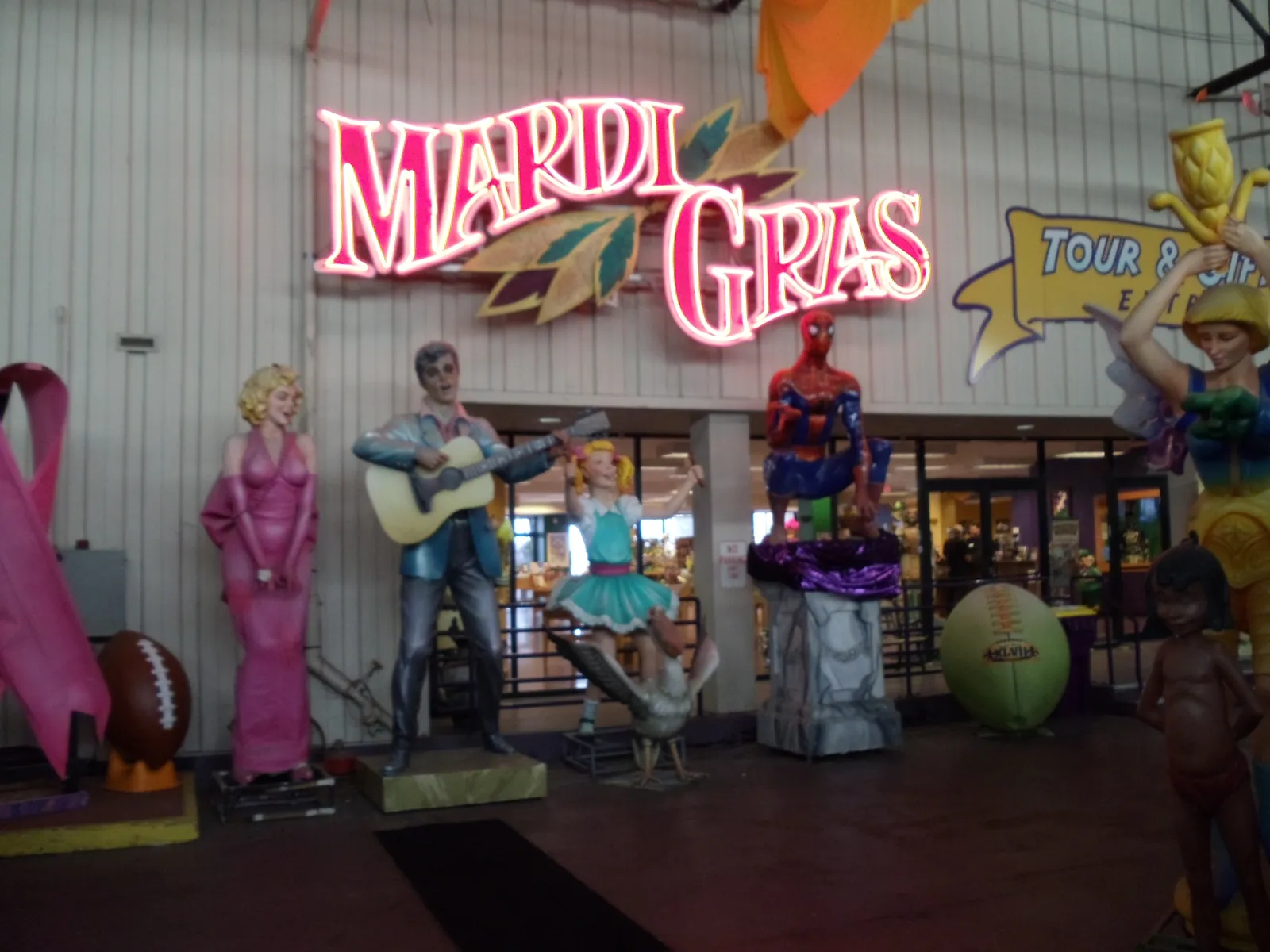
Tours leave every thirty minutes, seven days a week, first admission 9:30am and last at 4:30pm, and adult entry runs around $29.95 with a fifteen-minute film on Carnival history and a slice of king cake folded in. A multi-attraction city pass from a tours and activities platform covers it alongside the aquarium and several other paid stops, which is worth the arithmetic if you plan on more than one. The studio also runs a free shuttle from ten downtown pickup points, so the walk is optional.
The Fountain of the Americas on Spanish Plaza
Spain gave New Orleans this plaza in 1976 for the American bicentennial, the cost split between the two governments, and it sits at the foot of Canal Street where the wharves meet the Riverwalk arcade. The fountain in the middle throws a single tall jet from a round basin, and the low wall around it is faced in hand-painted ceramic tiles from Seville, one coat of arms for each Spanish province, replaced with new tiles in 2002 after the originals wore out.
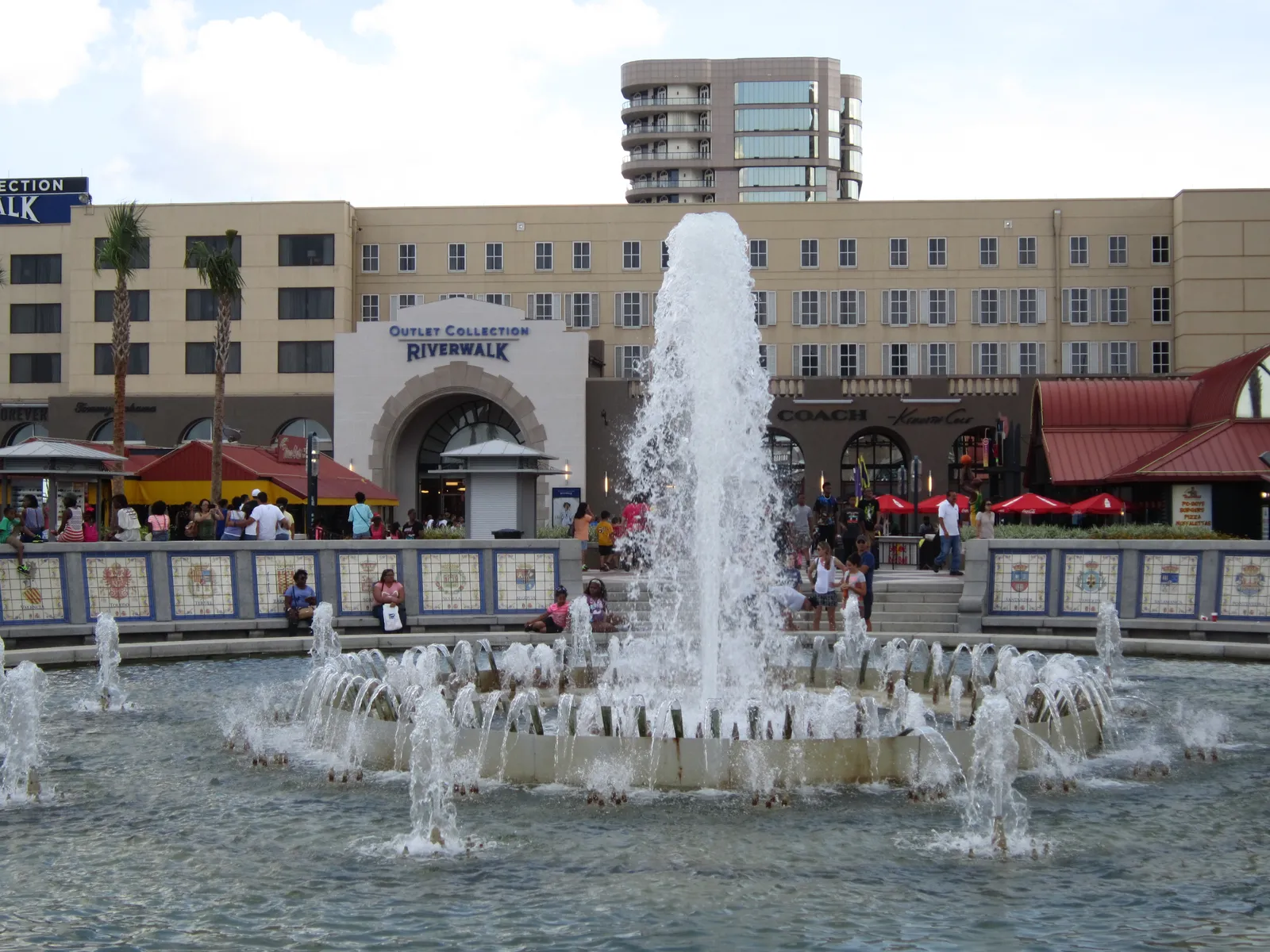
It is open ground with nothing to pay and a lot of stone to sit on, which is what makes it useful on a disembarkation morning. A ship turning around empties several thousand people and their checked suitcases onto one wharf inside about two hours, and the queue for a taxi at that hour is the longest thing on the riverfront.
The wharf promenade under the Crescent City Connection
Between the cruise terminals and Canal Street the old cargo wharves have been given over to a continuous riverside walk, flat the whole way and about a mile end to end. The Mississippi is doing real work alongside it: tugs pushing barge trains, the occasional container ship, paddlewheelers turning in the channel to pick up a lunch cruise.
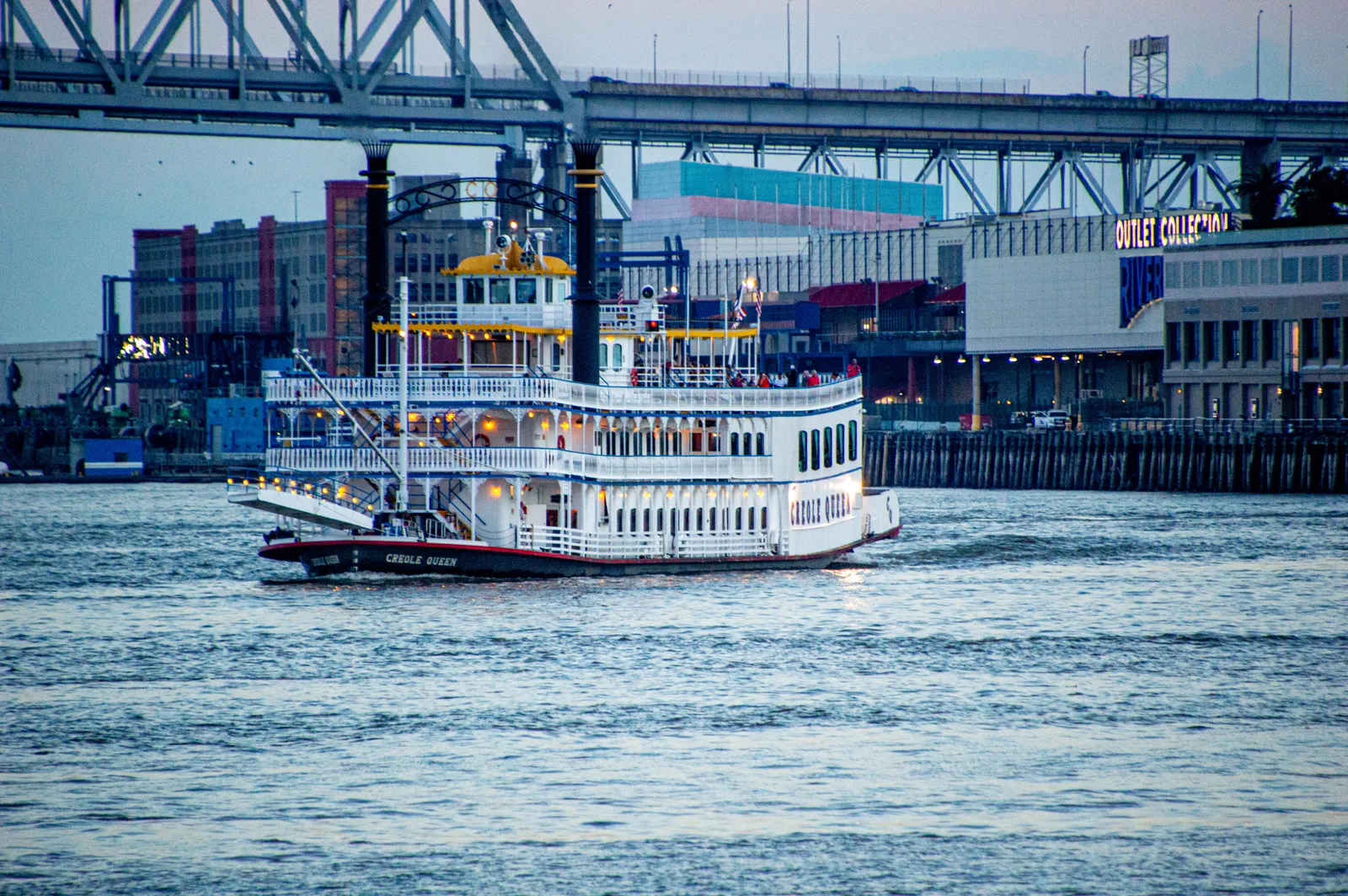
Overhead at the downriver end are the twin cantilever spans of the Crescent City Connection, which carries the interstate across to Algiers and is the piece of structure that fixes where you are from anywhere on this stretch of bank. A streetcar runs the length of the wharves if the walk back is longer than you want, and the Riverwalk arcade behind the promenade is indoor, air-conditioned and open to anyone who has had enough sun.
Convention Center Boulevard is the nearest airport bus stop
The 202 Airport Express runs along Poydras Street between Loyola Avenue and Convention Center Boulevard, and the Convention Center end of that is a few minutes’ walk inland from the cruise berths, which makes this one of the simplest places in the city to start for Louis Armstrong New Orleans International Airport (MSY). The fare is $1.25 and the ride takes about 40 minutes, but buses come only every 70 to 90 minutes, so it is a plan you make around a timetable rather than a whim.
The taxi alternative is a flat $36 to the airport from the Central Business District or the French Quarter for one or two passengers, set by city ordinance, and $15 a head for three or more, which is often the sensible answer for a family coming off a ship. Either way, the suitcases do not have to come on the walk.
Frequently asked questions
What should I do during a layover near the Julia Street Cruise Terminal in New Orleans?
Stay on the river side of the city. Mardi Gras World is about half a mile downriver along the same wharf road, a working float warehouse you can walk through on an hourly-ish guided tour for around $30. Spanish Plaza is the other direction, a tiled fountain square at the foot of Canal Street that costs nothing, and the promenade between the two runs the whole way along the wharves with the Crescent City Connection bridge overhead. Five hours covers all three at a walk, and only the float tour needs booking.
How far is Mardi Gras World from the cruise terminal?
About half a mile, on the same road: both addresses are on Port of New Orleans Place, the cruise terminal at 920 and the float den at 1380, roughly a ten-minute walk downriver. The studio also runs a free shuttle that picks up from ten downtown locations, which is worth knowing if you have come off the ship with luggage still in hand. Tours leave every thirty minutes, first admission at 9:30am and last at 4:30pm.
Is there enough time after disembarking for an evening flight?
Usually, yes. Ships clear most passengers off by mid-morning, which leaves five or six hours before you need to start for the airport, and everything in this itinerary is within a mile of the wharf. If you would rather spend that time in the old city instead, the Jackson Square and French Quarter walk starts about fifteen minutes away on foot and is the better use of a long gap.
Does the float tour work with a large group?
Better than most things in New Orleans do. Tours run every thirty minutes seven days a week rather than on a handful of fixed departures, so a group of ten is not competing for one timed slot, and the warehouse is 300,000 square feet of floor rather than a set of small rooms. The free shuttle from downtown pickup points helps if half the group has scattered. The one-hour tour includes a short film and a slice of king cake at the end.