Canal Street, New Orleans Layover
Part of the full New Orleans Layover: French Quarter From MSY
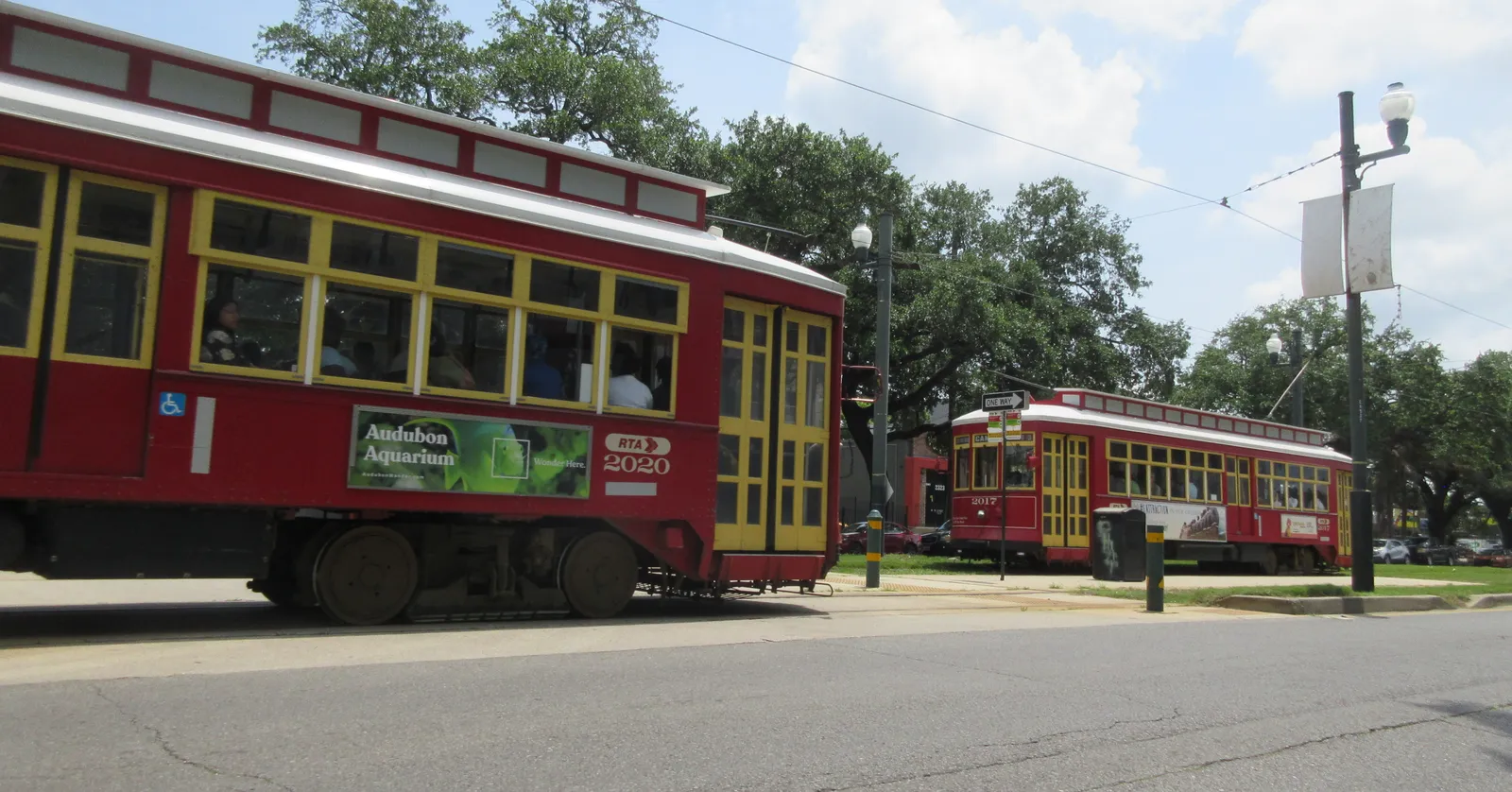
Canal Street runs 171 feet wide through the middle of New Orleans, with an aquarium at the river end of it, the 1927 Saenger Theatre’s vertical sign a few blocks inland and the terracotta bulk of the old Maison Blanche department store in between.
The Audubon Aquarium at the river end of Canal Street
The building at number 1 Canal Street, right where the street meets the Mississippi, holds the aquarium and, since a 2023 merger put them under one roof, the insectarium as well. The piece people remember is the tunnel: a curved acrylic tube you walk through with water on both sides and overhead, sharks and rays going past at eye level and above it, which is a different proposition from looking at a tank through glass.
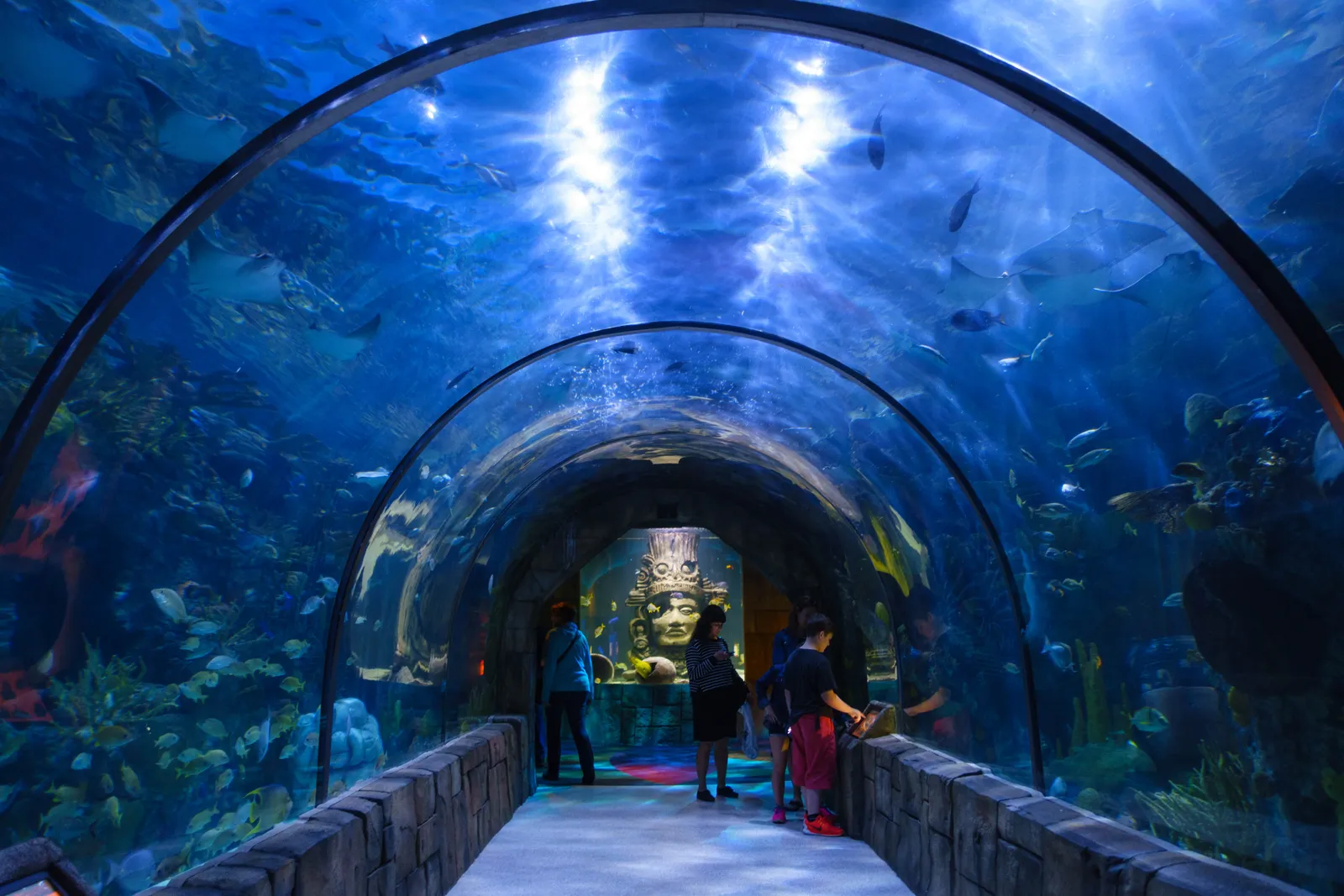
Doors are open 10am to 5pm daily, the last ticket goes at 4pm and the last entry at 4:30pm, and the place shuts entirely on Mardi Gras, Thanksgiving and Christmas. Combined tickets can be picked up in advance through a tours and activities platform, which matters more here than it looks: the ticket desk is the bottleneck on a wet afternoon, not the galleries.
The Saenger Theatre’s night-sky ceiling
Emile Weil spent three years and $2.5 million building this theatre and opened it on 4 February 1927 as an indoor Italian courtyard: plaster statuary along the walls, a ceiling painted as open sky with 150 lights set out in the shapes of constellations, and machines behind the proscenium that pushed clouds, sunrises and sunsets across it during the show. A Robert Morton organ of roughly 2,000 pipes went in at the same time.
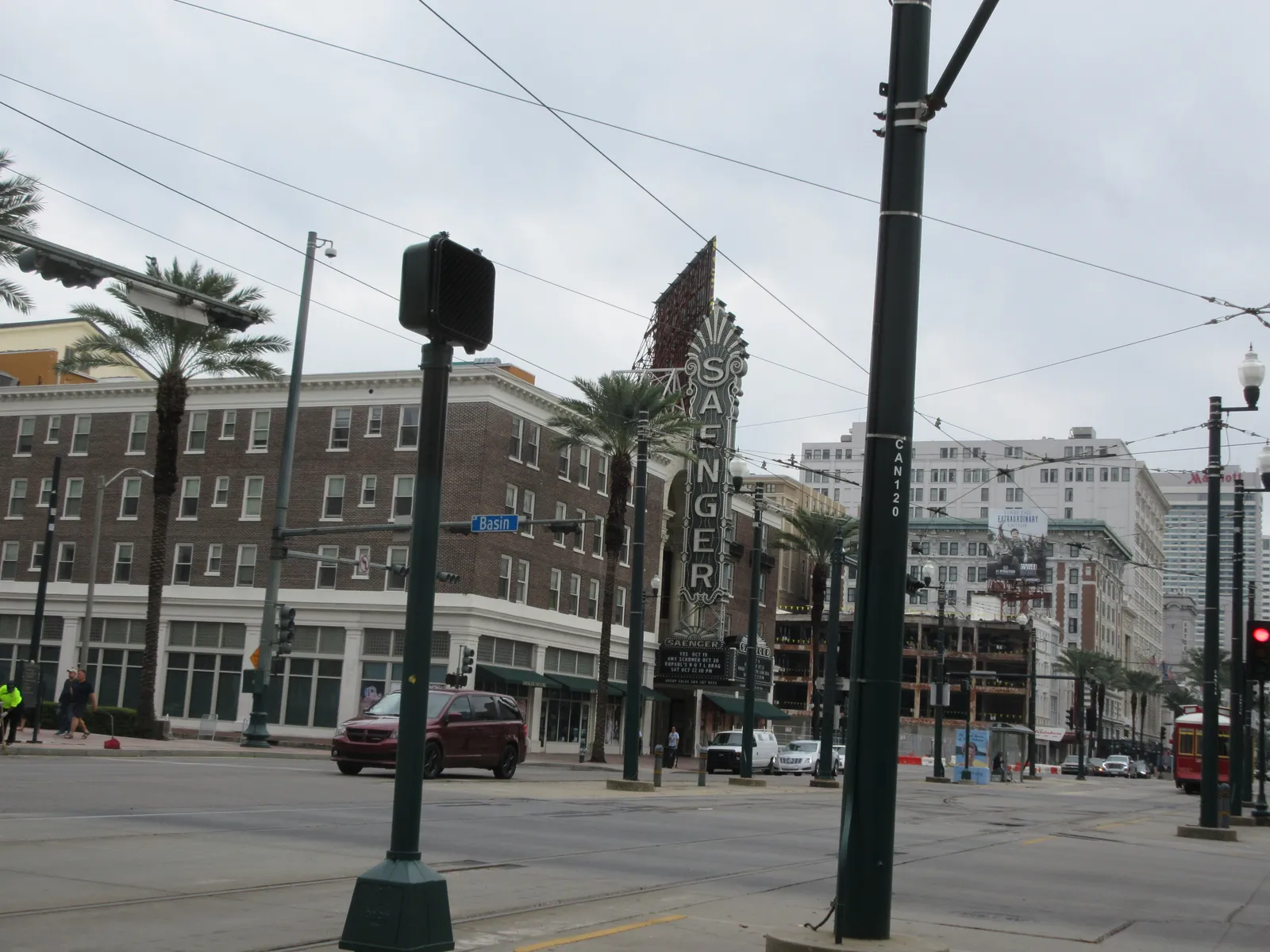
Hurricane Katrina put a foot of water over the stage in 2005 and the building sat dark for eight years. It came back on 27 September 2013 after a $53 million restoration that rebuilt the marquee and the vertical blade sign from the 1927 drawings, and it now seats 2,600 against the original 4,000. Most nights carry a touring show, so the practical version of this stop for anyone on a daytime gap is the outside of it.
Why the middle of Canal Street is called neutral ground
A canal was surveyed along this line in the early nineteenth century, on the boundary between the French-speaking Creole city downriver and the American sector filling in upriver of it after the Louisiana Purchase. It was never dug. The strip of land reserved for it became the median of the street built in its place, and the two populations treated that strip as unclaimed ground between them. New Orleans has called every median in the city a neutral ground ever since, and at 171 feet across this is the widest of them, which is why crossing on foot takes two changes of the lights rather than one.
The Maison Blanche building and the department store blocks
Canal Street was where New Orleans shopped for the best part of a century, and the buildings are still standing even though the shops are not. Maison Blanche opened on 30 October 1897 as one of the first purpose-built department stores in the city, five floors sorted into leather goods, jewellery, stationery, toys, upholstery and bric-a-brac, and it and D. H. Holmes up the street competed by covering their frontages in electric bulbs, which is where the neon that followed in the 1920s got its start.
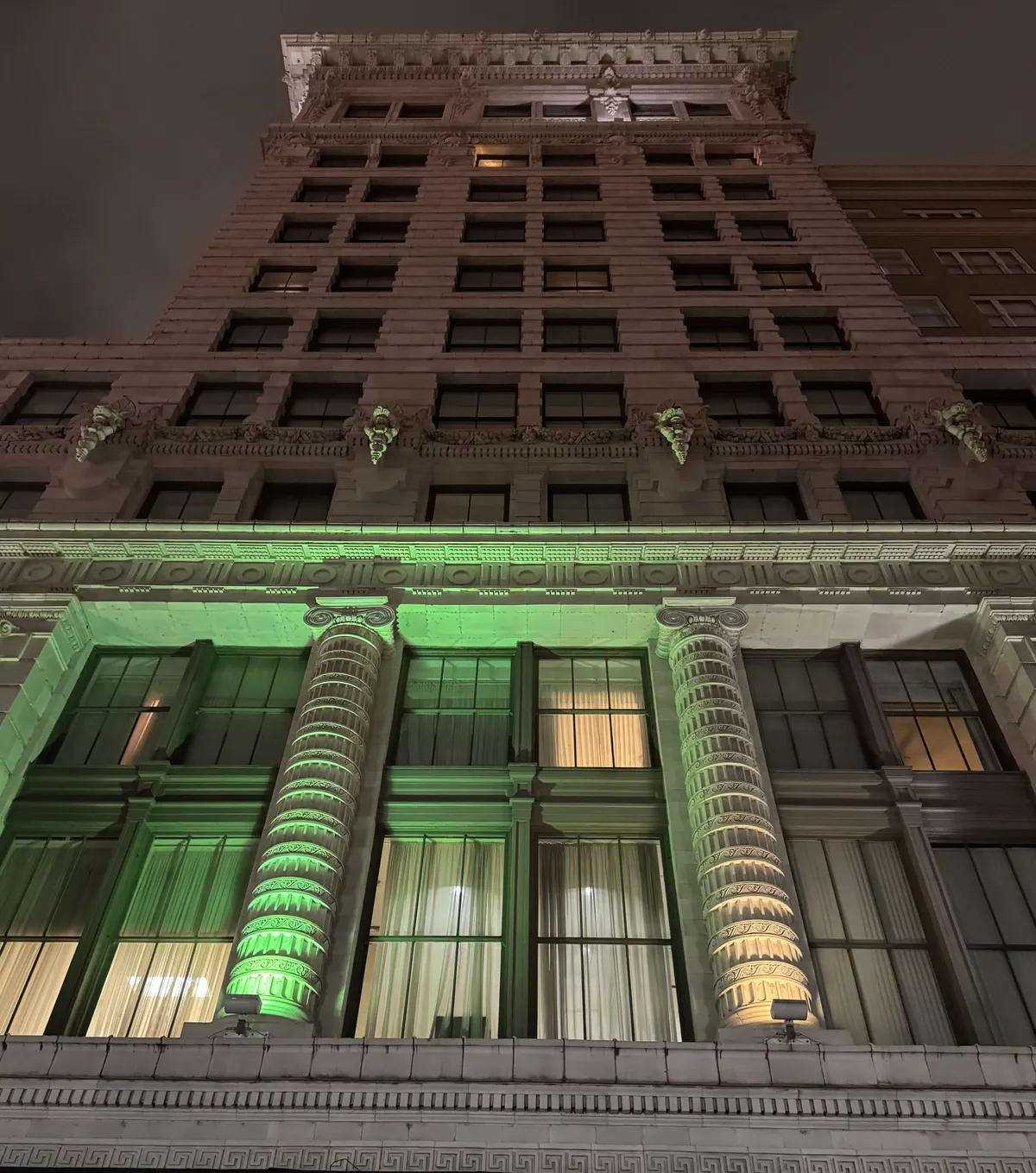
The pale terracotta block that carries the name now has been a hotel since 2000, with lion heads along the cornice and fluted columns at second-floor level that are easier to see at night when the facade is lit from below than in flat daylight. Walking the blocks between here and the river, with the street’s full 171 feet open in front of you, gives a better sense of the scale the city built at than anything in the Quarter does.
Boarding a streetcar means a step up into a single narrow aisle, so a suitcase holds the queue behind it while you get it aboard.
The airport bus runs on Poydras, not on Canal
The 202 Airport Express is the only public transit between the city and Louis Armstrong New Orleans International Airport (MSY), and it does not use Canal Street: pick it up a couple of blocks inland on Poydras, between Loyola Avenue and Convention Center Boulevard, or at the Union Passenger Terminal. The fare is $1.25 and the run is about 40 minutes, with departures every 70 to 90 minutes, which is the figure to plan the last hour around.
The taxi fare from here is fixed by ordinance at $36 into or out of the Central Business District and the French Quarter for one or two passengers, $15 a head beyond that. Canal’s own streetcars run 24 hours, which is worth knowing for a pre-dawn departure when nothing else is moving. If the gap is longer than five hours, the Jackson Square and Royal Street walk starts on the other side of this street and uses the time better than another lap of the shopping blocks.
Frequently asked questions
What should I do during a layover on Canal Street in New Orleans?
Work the street end to end rather than turning off it. The Audubon Aquarium sits at number 1, on the river, and holds a walk-through tunnel with sharks and rays overhead; it opens 10am to 5pm with the last ticket sold at 4pm. Going inland, the 1927 Saenger Theatre still carries its vertical sign over the pavement, and the old Maison Blanche department store occupies a whole block in pale terracotta. Three hours covers all of it on foot, and only the aquarium needs a ticket.
Do the streetcars on Canal Street run overnight?
Yes. The Canal Street lines are among the few in the city that operate around the clock rather than shutting down after midnight, which is worth knowing if your flight leaves before dawn or lands after the rest of the city has closed. A single ride is $1.25 in exact change, or $3 for a day pass through the transit app. Frequency thins out considerably in the small hours, so a car you can see coming is worth waiting for rather than walking on.
Can you catch a show at the Saenger Theatre on a layover?
Only if your flight is late enough for an evening curtain, which is when almost everything here goes up. The auditorium seats 2,600 and runs touring Broadway, comedy and concerts rather than a fixed programme, so what is on is a matter of the week you turn up. Tickets go through the theatre's own box office rather than at the door on the night. If nothing fits, the outside is worth the two minutes: the blade sign and the marquee were rebuilt from the 1927 originals during the restoration.
How do you get from Canal Street to Louis Armstrong airport?
Walk inland to Poydras Street, a couple of blocks, and pick up the 202 Airport Express, which is the only public transit out to Louis Armstrong New Orleans International Airport (MSY). It costs $1.25 and takes about 40 minutes, but departures come only every 70 to 90 minutes, so the timetable decides the plan rather than the other way round. A taxi is a flat $36 from the Central Business District or the French Quarter for one or two passengers, set by city ordinance. The streetcars along Canal itself run around the clock, which is useful if your flight is a very early one.