San Diego Layover: The Embarcadero From SAN
An aircraft carrier, an 1863 sailing ship and the ferry across to Coronado all sit within a mile of each other along San Diego’s Embarcadero waterfront, on flat ground the whole way from the downtown train station.
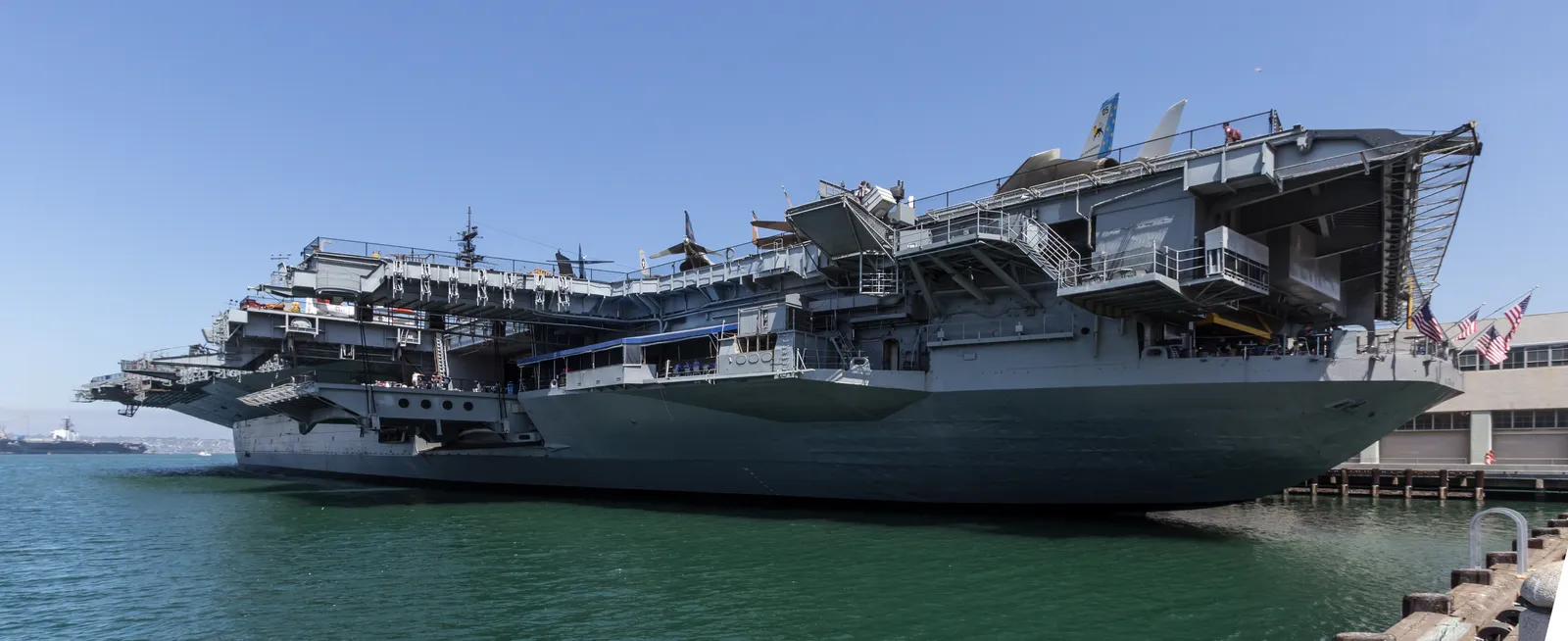
The USS Midway’s flight deck at Navy Pier
Midway was commissioned in September 1945 and stayed in service until 1992, the United States’ longest-serving aircraft carrier of the twentieth century and the only one that covered the whole of the Cold War. She has been tied up at Navy Pier on Harbor Drive, about ten minutes’ walk from Santa Fe Depot, since opening as a museum in 2004. The audio tour, narrated by men who served aboard her, covers more than sixty spots below decks: the galley, the engine room, the post office, the officers’ quarters. Up top, restored aircraft stand parked across the flight deck with the island and the bridge above them.
Doors open at 10am and the last people are let aboard at 4pm, so an afternoon layover has to clear that cutoff to be worth walking over for. Adult tickets run around $39 booked ahead and a few dollars more at the gate, and a tours and activities platform sells timed entry tickets if you would rather not join the queue on the pier. The ladders between decks are steep and single-file, and there is a lot of climbing between the hangar deck and the bridge.
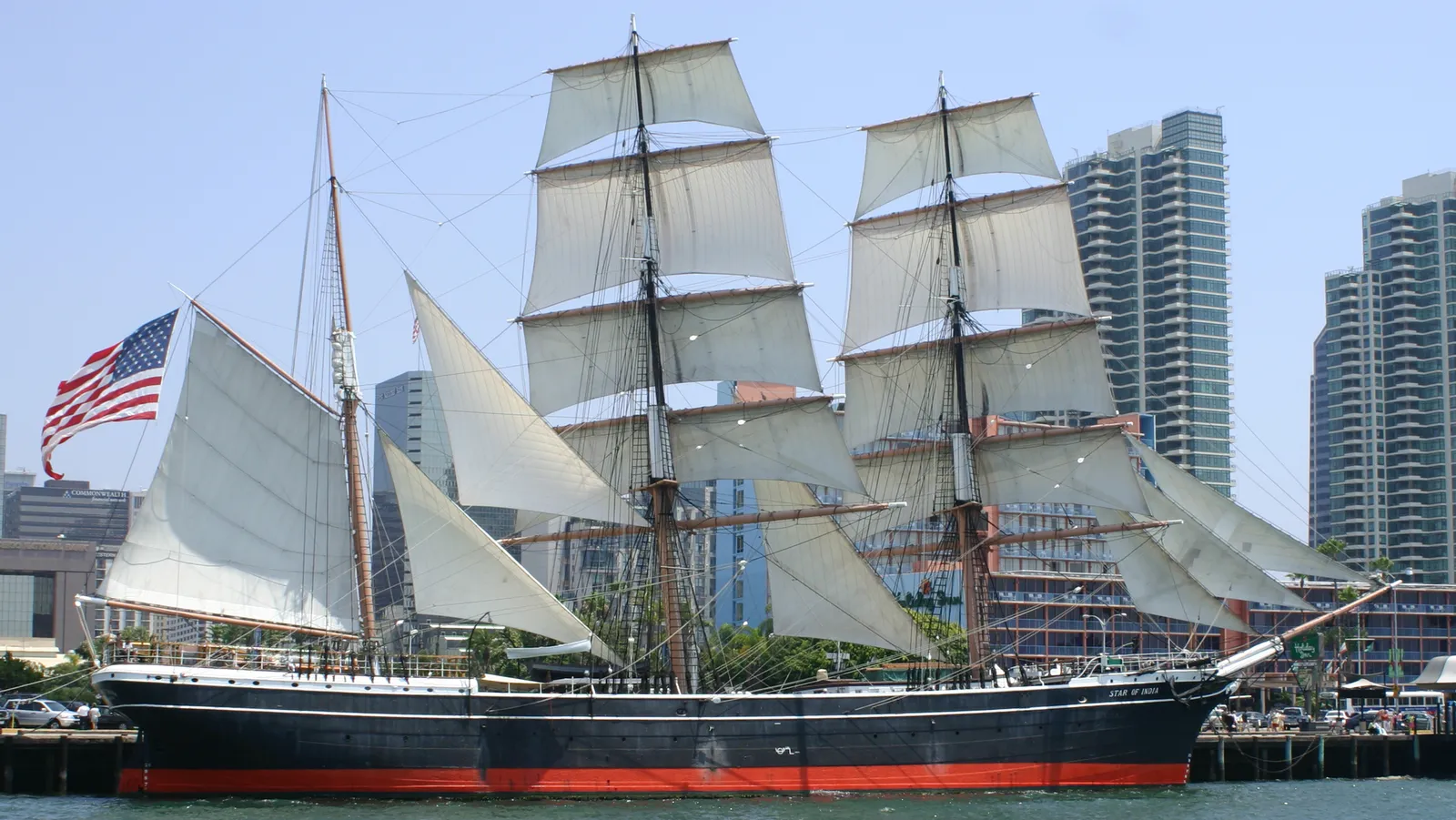
The Star of India, an 1863 ship that still sails
Launched at Ramsey on the Isle of Man as the Euterpe, she spent a quarter of a century carrying emigrants out to New Zealand, twenty-one circumnavigations in all, and ended her working life hauling for the Alaska salmon fleet, which cut her rig down from a full ship to the barque she is today. She is the oldest iron-hulled merchant ship still afloat, and a volunteer crew still takes her to sea. She sits at 1492 North Harbor Drive, half a mile north of Santa Fe Depot, as the centerpiece of the Maritime Museum, moored alongside the 1898 steam ferryboat Berkeley and a full-size replica of the sixteenth-century galleon San Salvador. Adult admission to the whole fleet runs $20 to $24 depending on where you buy it.
Three blocks inland from the ships, Little Italy runs north from the station around Piazza della Famiglia at West Date and Columbia. On Saturdays a farmers market takes over six blocks of West Date Street from 8am to 2pm, which is the one morning of the week the neighborhood is worth the detour on its own.
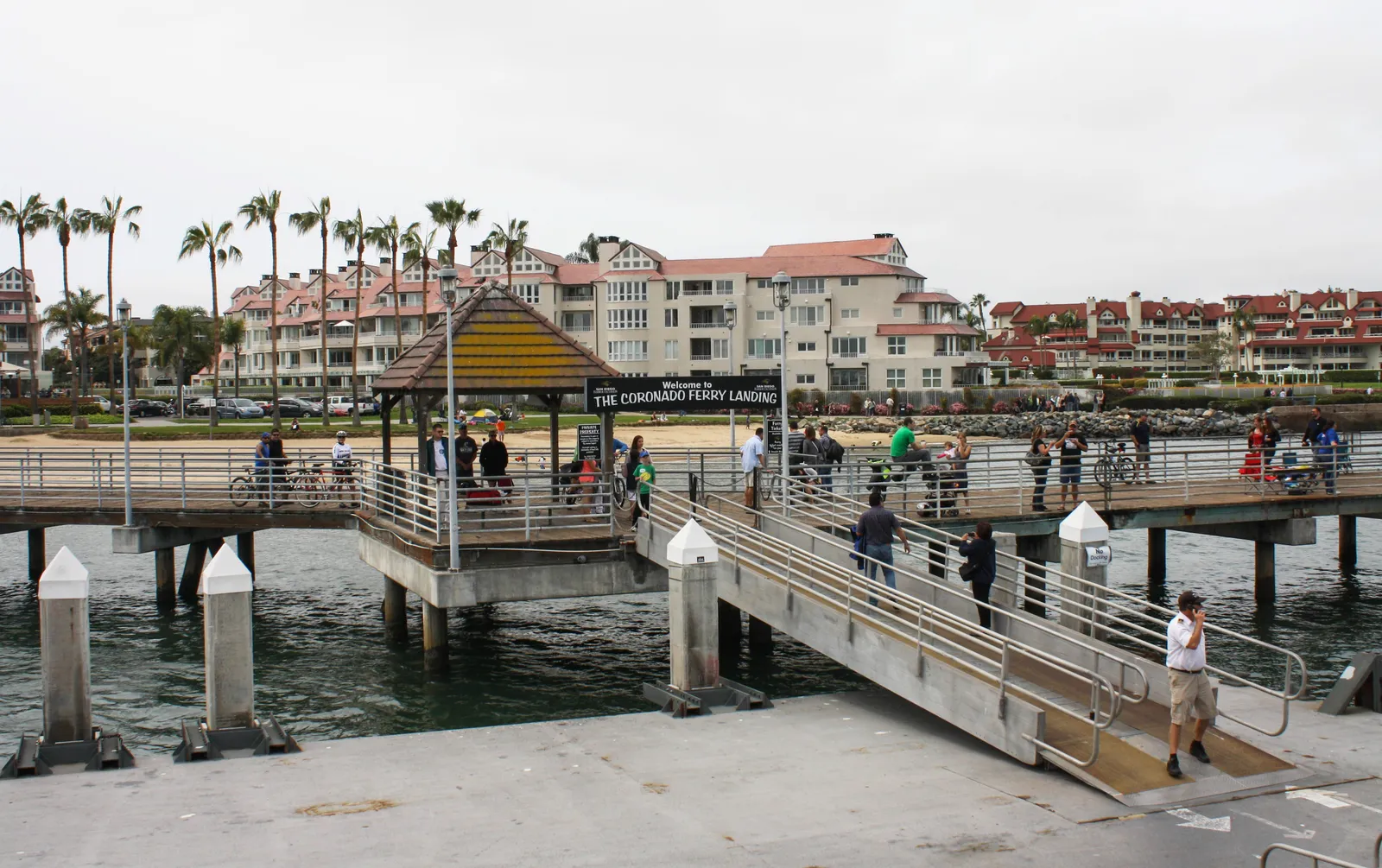
Coronado’s ferry landing and the view back at downtown
Boats leave Broadway Pier once an hour, cross San Diego Bay in fifteen minutes and tie up at the Coronado Ferry Landing on First Street. It costs $9 each way for anyone aged four and over. The first sailing is at 4:50am and the last boat back leaves Coronado at 10:30pm, and because there is only one an hour, the return time is the thing to look at before you get on.
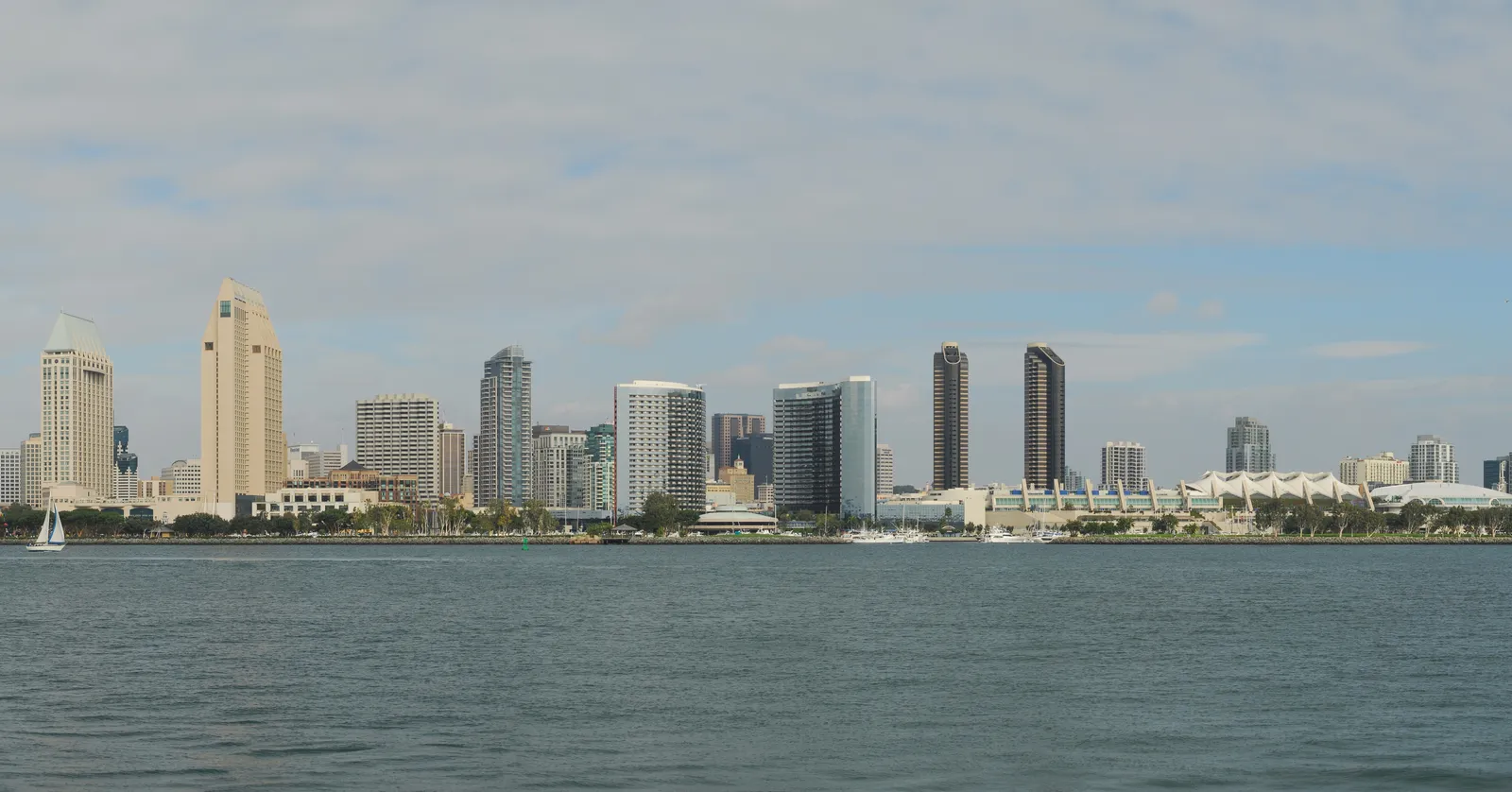
What you get for the nine dollars is the skyline from the outside: the whole downtown bank of towers lined up across the water, the Coronado Bridge curving away south, and gray navy hulls at the piers beyond it. The landing itself is a short boardwalk of shops and a fishing pier, and it is as far as most layover schedules stretch. If you would rather stay on the water than land at all, a tours and activities platform sells a loop of the harbor that runs under the bridge and along the naval piers instead.
Balboa Park’s Botanical Building and its lily pond
A bus runs up Park Boulevard from downtown and puts you in the middle of Balboa Park in about fifteen minutes. The Botanical Building went up there for the 1915 Panama-California Exposition as a lath house, a shell of thin redwood strips laid close enough to filter the sun without shutting it out, and it reopened in December 2024 after a three-year, $28.5 million restoration. Inside are ferns, orchids and palms under that slatted dome; outside, the long lily pond runs away from the entrance with flower beds down both sides. It is free, opens 10am to 4pm, and is shut on Thursdays.
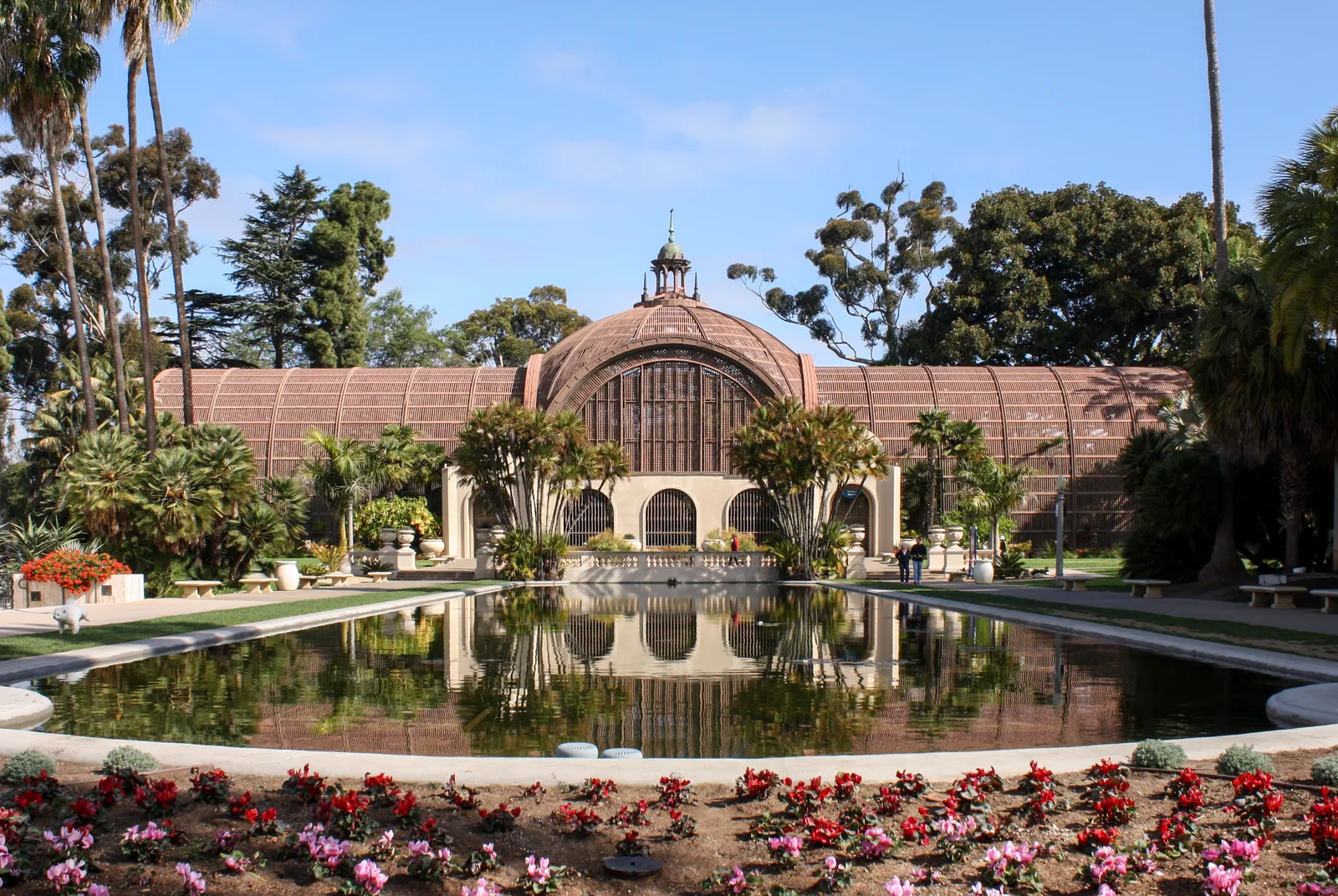
South of the pond, the Spreckels Organ Pavilion holds an outdoor pipe organ with more than 5,000 pipes, given to the city by the Spreckels brothers in 1915. A free concert runs there every Sunday at 2pm, rain or shine.
Off El Prado, in between the museum buildings, Zoro Garden is a sunken stone grotto with a rough amphitheater cut into one side. At the 1935 exposition it was a paid sideshow billed as a nudist colony, staffed by hired performers rather than by anyone who actually lived that way, and it took more money than anything else on the grounds. It has been planted as the park’s butterfly garden since 1997, and it is free to walk down into.
Casa de Estudillo and the adobes of Old Town
José María Estudillo, who commanded the Spanish presidio above what is now Old Town San Diego State Historic Park, put up a thirteen-room adobe around a courtyard in 1827, and it is still standing, one of five original adobes inside the park. The rooms run off an external covered walkway rather than an interior corridor, so you cross the courtyard to get from one to the next, and one of them is fitted out as the chapel it once served as. The park’s museums and visitor center are free, 10am to 5pm from May through September and 10am to 4pm the rest of the year, and a blacksmith works the forge on the plaza most days.
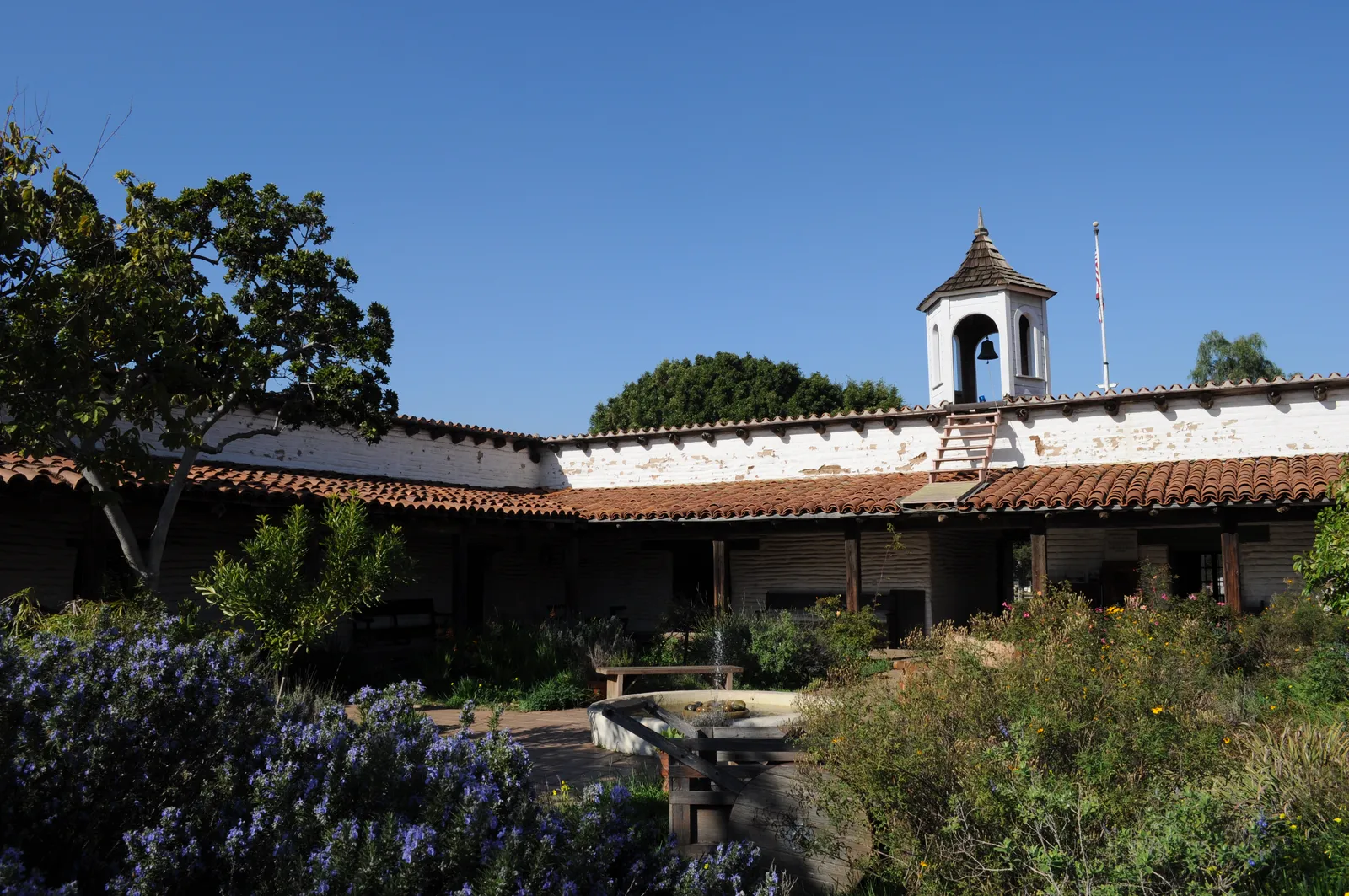
Anyone connecting on up the coast can find the same period standing in Los Angeles, where the Ávila Adobe of 1818 survives on Olvera Street a few minutes from Union Station.
The Flyer shuttle runs free between Old Town and the terminals
The San Diego Flyer leaves about every 20 to 30 minutes, seven days a week, with the first pickup at 4:45am and the last at 12:30am, timed around the first and last trolley, COASTER and Amtrak services at Old Town Transit Center. From downtown, MTS Route 992 is the direct one: it runs along Broadway, calls at Santa Fe Depot and reaches the upper-level islands at both terminals of San Diego International Airport in about fifteen minutes, for a flat $2.50 one way, every fifteen minutes from 4:15am to midnight. SAN is only three miles northwest of downtown, so the ride is short, but budget closer to 45 minutes door to door once you have waited for a bus and walked the terminal. Four hours between flights covers the Embarcadero ships comfortably; six opens up Balboa Park or Old Town on top.
Everything above is flat, and nothing on the waterfront is more than fifteen minutes from the next thing. Collecting a stored bag on the way back to the bus costs you a few minutes at the end of the day. Taking a suitcase down the Midway’s ladders and onto an hourly ferry costs you the afternoon.
Frequently asked questions
What should I do during a layover in San Diego?
Walk the Embarcadero. The aircraft carrier USS Midway at Navy Pier, the 1863 sailing ship Star of India half a mile north of it, and the Coronado ferry from Broadway Pier in between are all within about a mile of the downtown train station, on flat pavement the whole way. With five or six hours, a bus up Park Boulevard reaches Balboa Park in about fifteen minutes, where the Botanical Building and the gardens around it cost nothing. The Midway sells timed tickets and is worth buying before you set off; the ferry runs only once an hour, so check the return times before you cross.
How do I get from San Diego International Airport to downtown?
MTS Route 992 is the direct link: it stops on the upper-level islands at both terminals, runs along Broadway and reaches Santa Fe Depot in about 15 minutes for $2.50 one way. Buses go every 15 minutes from 4:15am to midnight. The other option is the San Diego Flyer, a free electric shuttle between the terminals and Old Town Transit Center, which is the better choice if you are heading for the trolley, the COASTER or an Amtrak train rather than downtown itself.
Is the Coronado ferry worth it if I only have a few hours?
The crossing is 15 minutes and costs $9 each way for anyone aged four and over, but the boats leave only once an hour, so the round trip realistically eats about two hours of your day even if you turn straight around. That is worth it for the view back at the skyline from the far shore and a walk along the Coronado Ferry Landing pier. It is not enough time to reach the Hotel del Coronado, which sits at the far end of Orange Avenue, a bus ride or a half-hour walk south of the landing.
What can I see in Balboa Park without paying?
The park itself is free to walk into, and so is the Botanical Building, open 10am to 4pm and shut on Thursdays, with its long lily pond in front. The Spreckels Organ Pavilion puts on a free concert on its outdoor pipe organ every Sunday at 2pm, rain or shine. Zoro Garden, a sunken stone grotto off El Prado, has been planted for butterflies since 1997 and costs nothing either. The museums along El Prado and the zoo all charge separately.
Will May Gray or June Gloom spoil the harbor views?
Late spring mornings on the San Diego coast often start under a marine layer, the overcast that locals call May Gray in May and June Gloom in June, and it usually thins out somewhere between 10am and 2pm. On the worst days it does not lift at all. If your free hours fall in the morning during those two months, put the indoor half of the day first, the Midway's hangar deck or the museums along El Prado, and save the ferry and the skyline for the afternoon.