Washington DC Layover: The National Mall, IAD
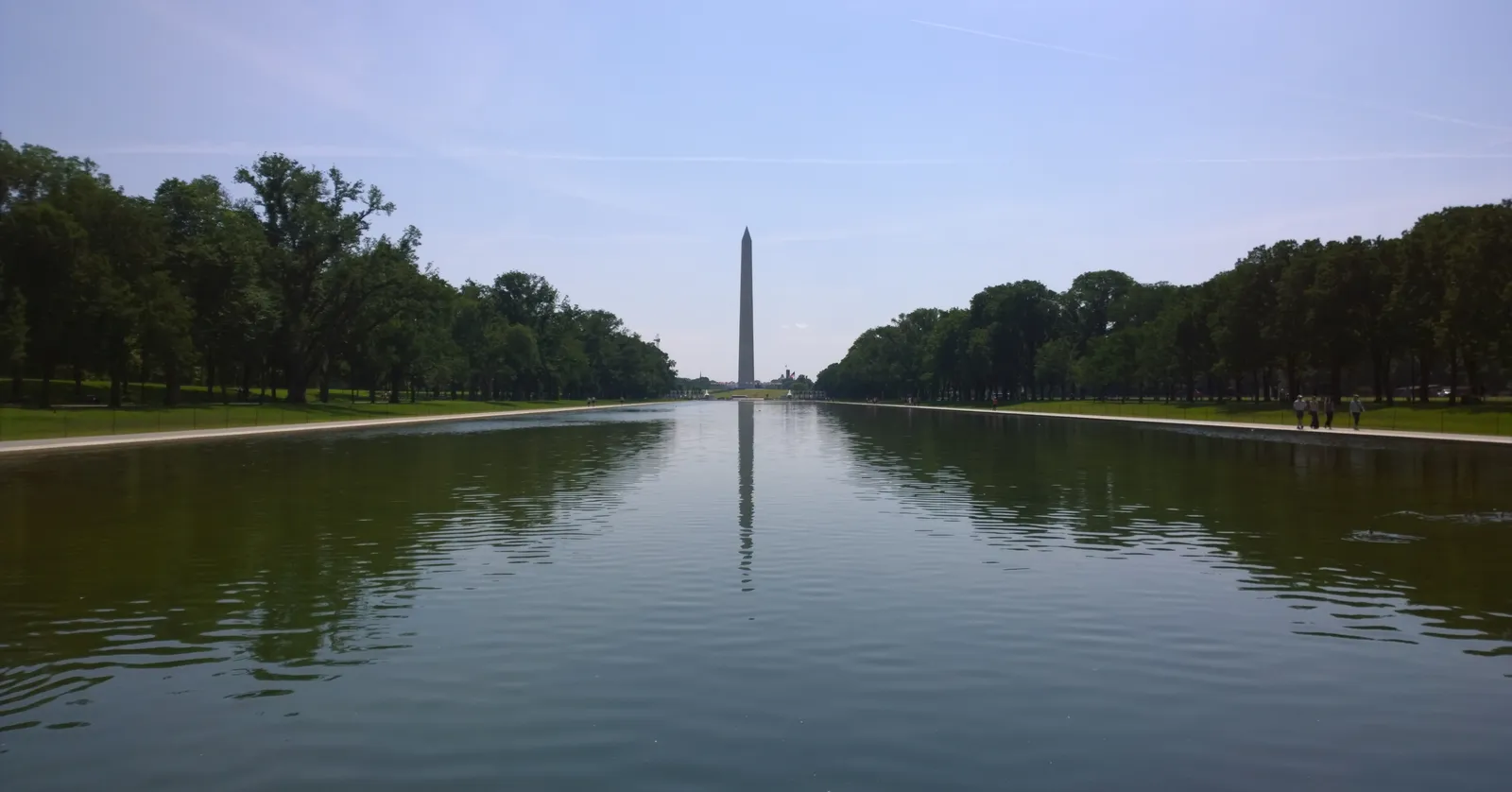
Washington’s National Mall runs two miles from the Capitol to the Lincoln Memorial, with the Washington Monument, the National Air and Space Museum and the Library of Congress reading room strung along it and a train station in the middle of the lawn.
The view from 500 feet up the Washington Monument
The obelisk is 555 feet of plain stone with no ornament on it anywhere, and the observation floor sits at 500, behind eight small windows set into the pointed cap. Two of them face east down the lawn to the Capitol dome; two face west along the Reflecting Pool to the Lincoln Memorial. The building is open 9am to 5pm.
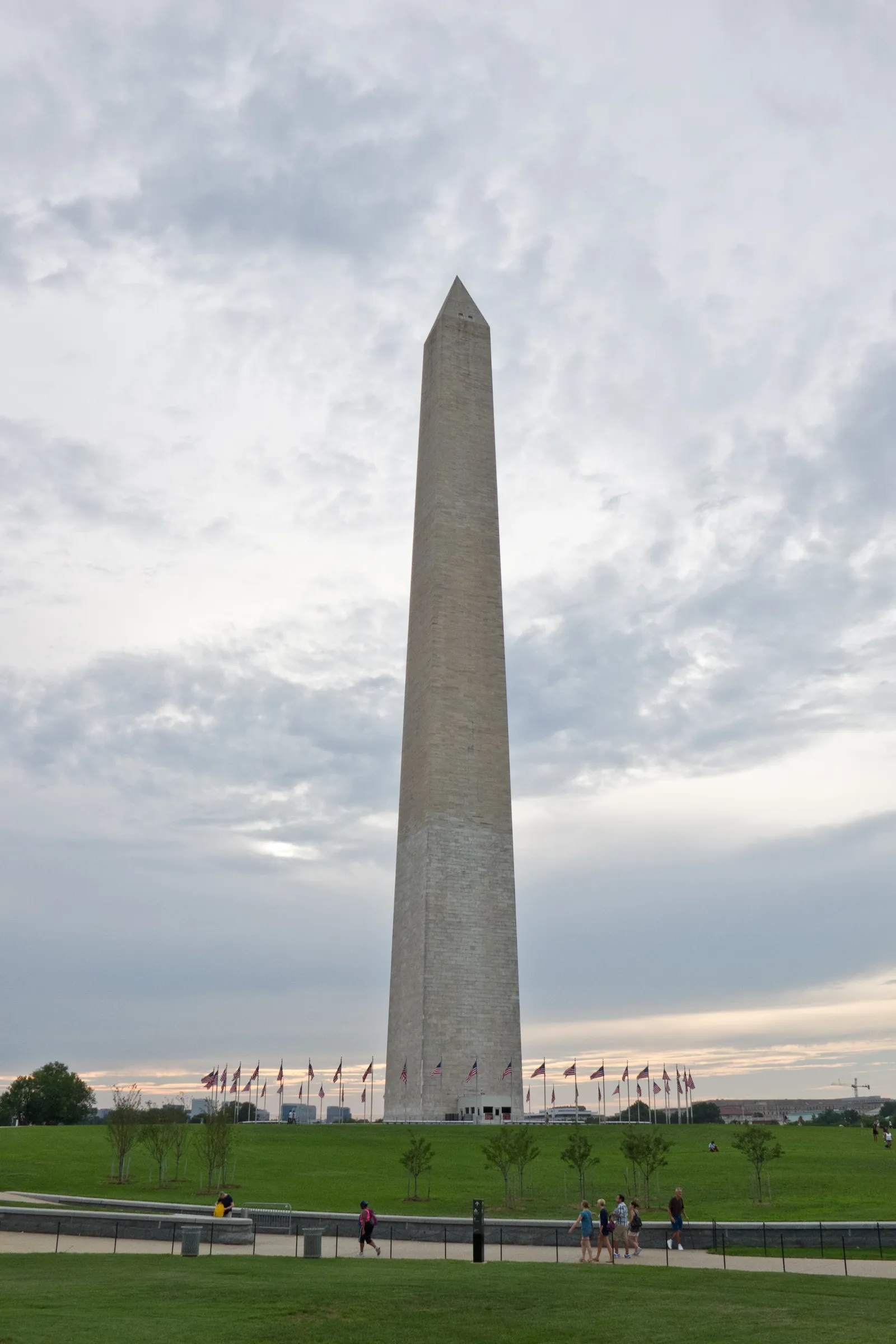
Entry costs nothing; getting hold of a ticket is the difficult part. Same-day tickets are handed out at the Washington Monument Lodge on 15th Street from 8:45am, first come, and in the busy months they are gone long before the afternoon. The Park Service also releases timed tickets online 30 days ahead at 10am and a smaller batch at 3pm the day before, each carrying a one-dollar booking charge. If none of that lines up with a flight day, a tours and activities platform sells timed entry with an optional walking tour of the memorials attached.
There is a second high view a few blocks north that nobody has to book. The Old Post Office clock tower on Pennsylvania Avenue has an observation level at 270 feet, free, with no ticket of any kind, looking down over the Federal Triangle roofs to the Mall and out across the river into Virginia. It reopened in July 2026, run by the hotel that occupies the rest of the building rather than by the Park Service, and published opening hours have disagreed between sources ever since, so check on the day before walking over. The way in is the door marked Museum and Clock Tower, round the back off 12th Street.
An Enigma cipher machine at the International Spy Museum
Around a thousand objects are on show at a time, drawn from a collection of more than seven thousand: a German Enigma machine, concealment devices, forged papers, and the working tradecraft of half a dozen intelligence services laid out room by room. The building is a glass box braced in red and black steel at the southwestern corner of the Mall, five minutes from the lawn.
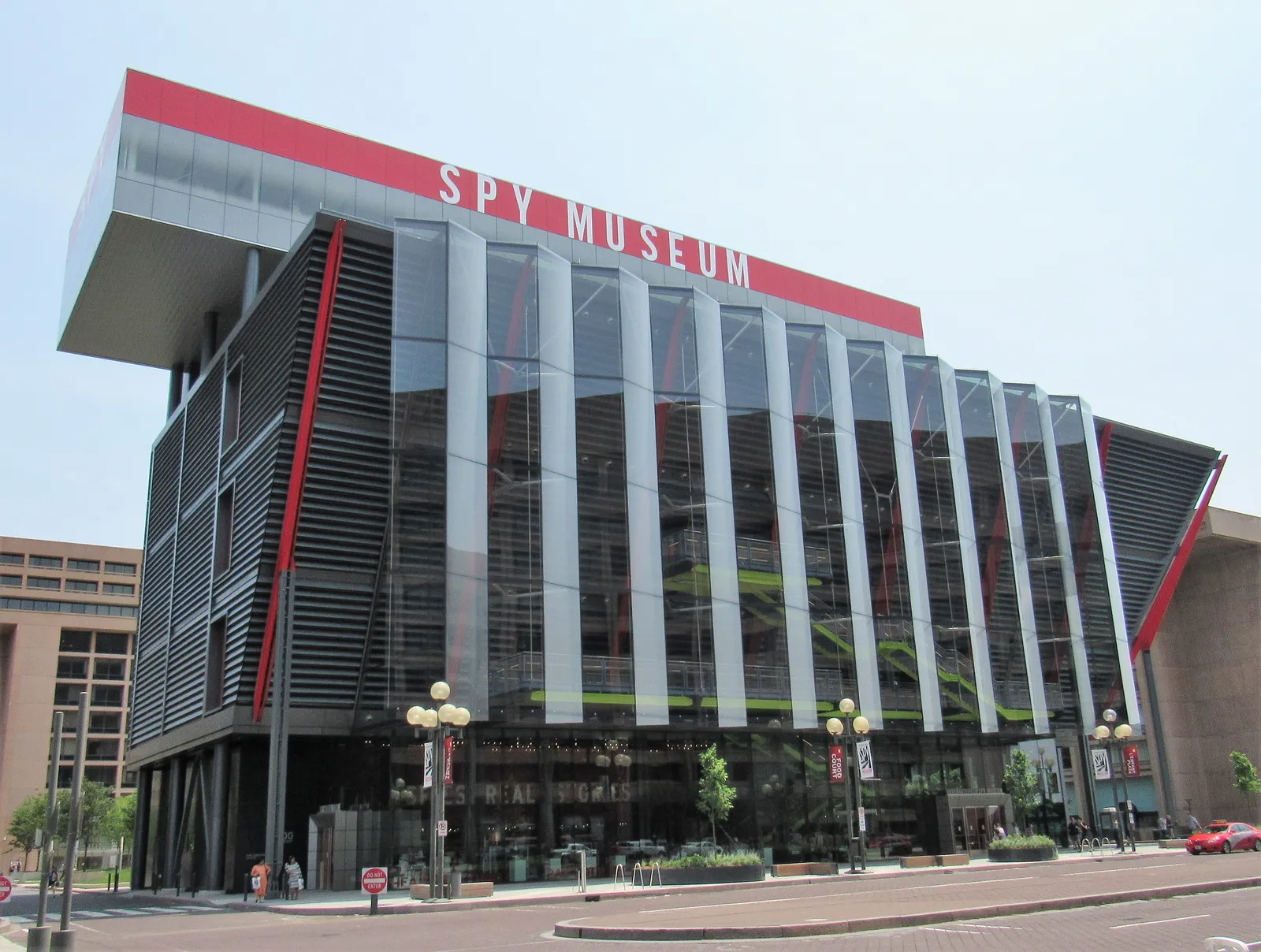
This is the only stop on the lawn you pay for, and it wants about two hours of the day, which is a real bite out of a flight-day afternoon. Opening is 10am to 6pm on weekdays, 9am to 7pm on Saturdays and 9am to 6pm on Sundays. Booking admission ahead of time is worth it here for the price rather than the queue.
Airliners hanging over the gallery floor at the Air and Space Museum
A Ford Tri-Motor and a Douglas DC-3 in Eastern Air Lines colours hang from the ceiling of the hall on Jefferson Drive, low enough that the lettering on the fuselages reads from the floor, with a Northrop Alpha and a row of early mail planes behind them. Admission costs nothing, but a free timed-entry pass is required and has been since the museum reopened in stages, so book one before you set out rather than turning up at the door.
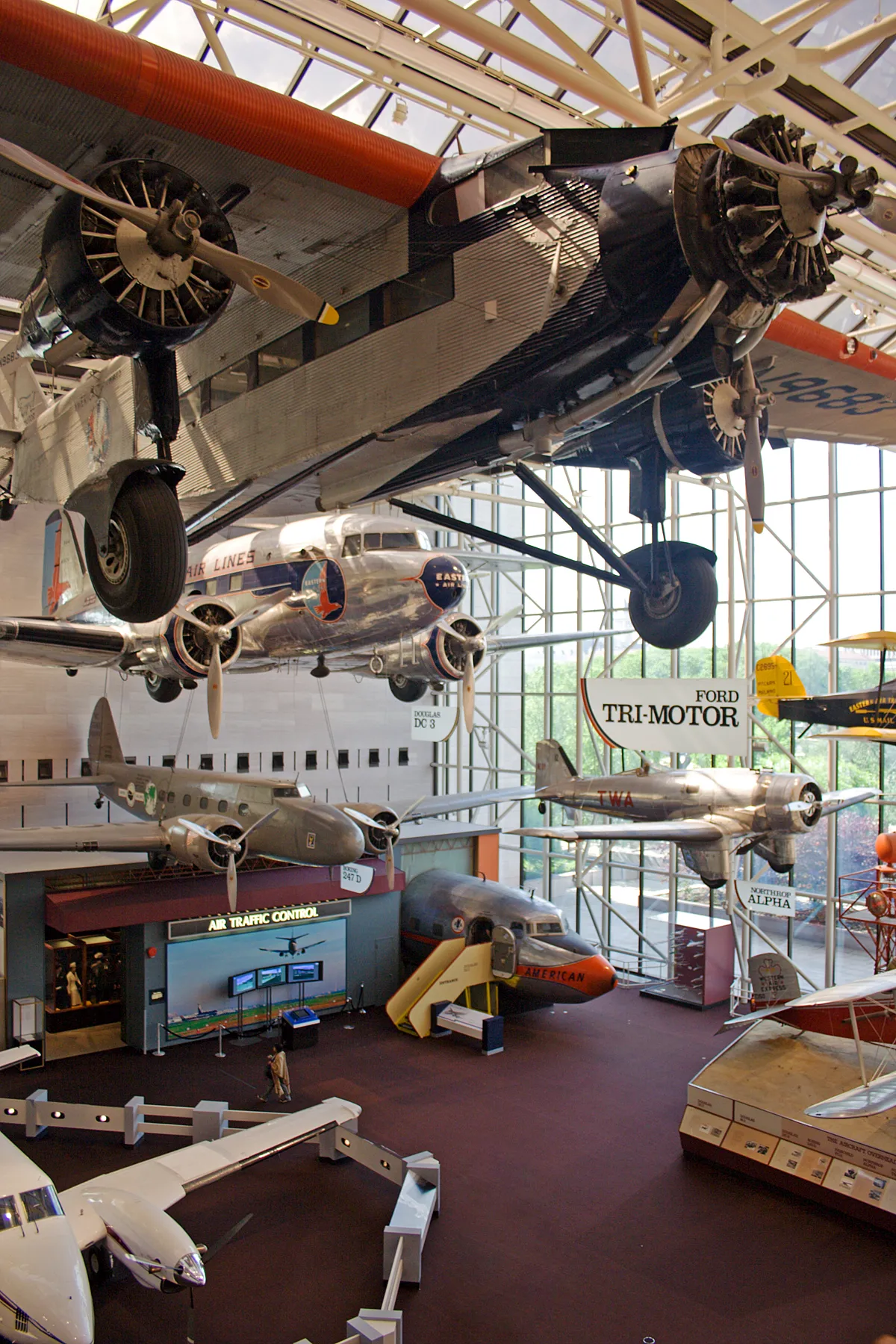
The whole building has been rebuilt gallery by gallery since 2018. Five more opened on 28 July 2026 and the last two are due on 30 October and 11 November 2026, after which every room in it is back in use for the first time in eight years. Every Smithsonian entrance runs a bag check at the door and wheeled luggage is not allowed through the galleries at all, so a suitcase has to go somewhere before the first museum rather than after it.
The Main Reading Room at the Library of Congress
The Thomas Jefferson Building faces the Capitol across First Street, under a dome finished on the outside in 23-carat gold leaf. Inside, the reading room is a circle of eight marble columns with desks radiating out from an island in the centre, and Edwin Blashfield’s 1896 murals covering the underside of the dome above it. The building opened to readers in 1897 and has not been softened since.
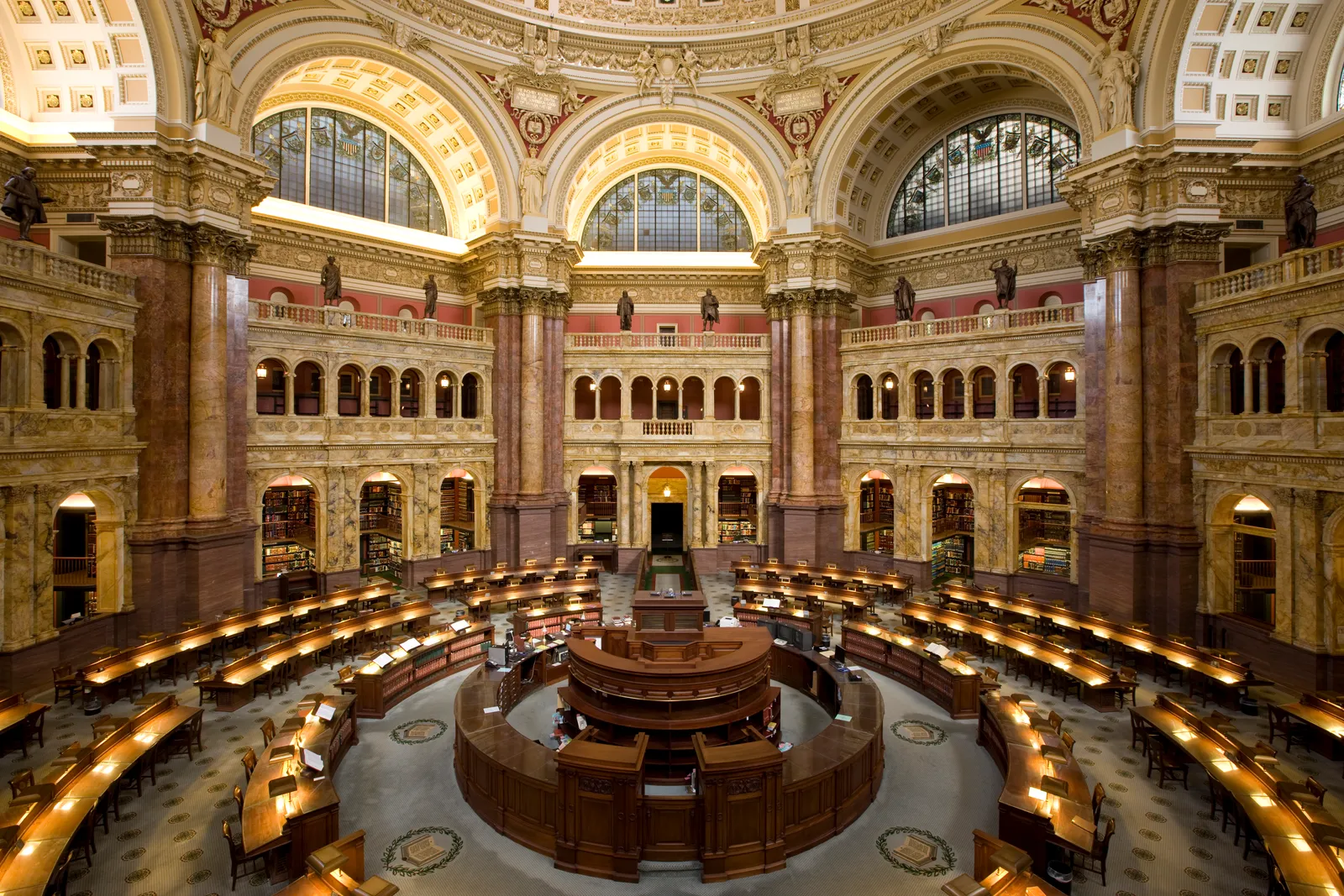
Entry is free and needs a timed ticket, released online up to 30 days ahead and again at 9am on the day itself. Hours are 10am to 5pm Tuesday to Saturday, with a late evening opening until 8pm on Thursdays, and the building is shut on Sundays and Mondays. A ticket gets you the overlook gallery above the room; the floor itself opens to visitors only from 10:30 to 11:30am and 2 to 3pm, Tuesday to Friday, and the overlook queue is at its worst between 10am and noon. If the day you are passing through is one of the closed ones, Boston has a room of the same kind in Bates Hall at its central library, and that one takes walk-ins with no ticket at all.
The Lincoln Memorial never closes
At the western end of the Reflecting Pool, the memorial has no closing time and no ticket: it is open every hour of the day and night, with rangers on duty from 9:30 in the morning until 11:30 at night. Thirty-six Doric columns, one for each state in the Union when Lincoln died, hold up a white marble hall with a 19-foot seated Lincoln by Daniel Chester French at the back of it and the Gettysburg Address carved on the south wall.
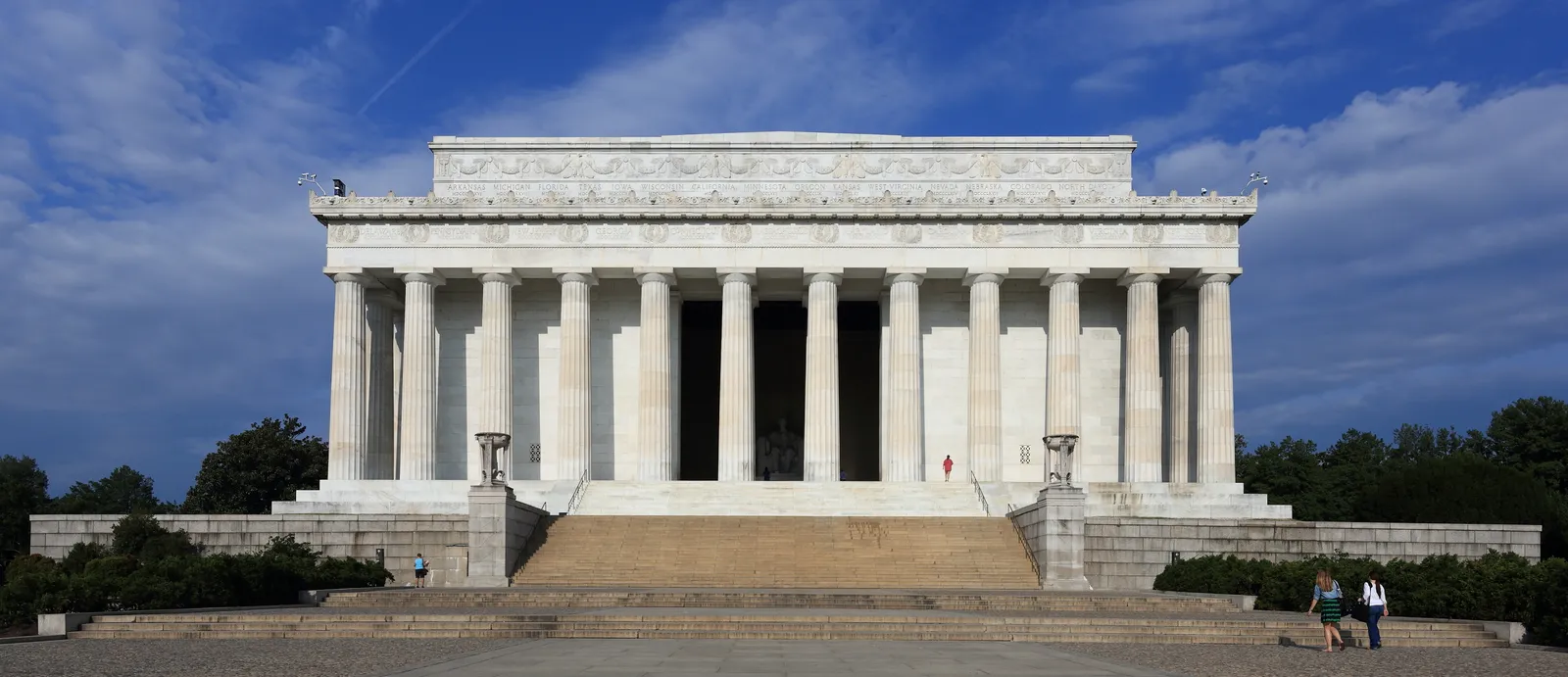
This is the stop that rewards a longer gap. With six hours or more before a departure there is time to walk the full mile west from the Washington Monument along the water; with less, it is the one thing on the Mall still guaranteed to be open whenever you get there, which is worth more on a flight day than it sounds. An inscription cut into the landing partway up the steps marks where Martin Luther King Jr. stood in August 1963, added in 2003 for the fortieth anniversary. That last mile is open lawn from end to end, with no lockers, no cloakroom and nowhere to set anything down, which is why the bag is better left downtown before the walk starts.
The Silver Line runs straight into Dulles airport
Trains from Smithsonian station, whose northern entrance opens straight onto the lawn, run through to Washington Dulles International Airport (IAD) in about 55 minutes with no change anywhere on the way. They leave every 10 minutes in the weekday rush, every 12 minutes off-peak and at weekends, and every 15 minutes after 9:30pm. At the airport end the station sits beside a parking garage and connects to the main terminal by an indoor tunnel with moving walkways, which is another five to ten minutes on top.
Allow an hour and a quarter from a platform on the Mall to the terminal door, and work backwards from three hours before departure, which is what most airlines here ask of international passengers. Metro charges by distance, and this is close to the longest trip in the system: expect something near the ceiling of six and a half dollars on a weekday, and roughly two and a half after 9:30pm or at any time on a weekend. Tap a contactless card at the gate rather than buying a paper ticket, and remember the fare comes off on the way out as well as the way in.
Frequently asked questions
What should I do during a layover in Washington D.C.?
Aim for the National Mall, where the Washington Monument, the National Air and Space Museum and the Library of Congress reading room sit within a two-mile walk of each other. With six hours or more, add the Lincoln Memorial at the western end, which is open at any hour and costs nothing. The Air and Space Museum needs a free timed pass booked in advance, and the Washington Monument's own timed tickets often run out by lunchtime, so treat both as things to sort before you arrive rather than on the day. The Library of Congress is the one stop that can defeat you on timing alone, because it shuts on Sundays and Mondays.
Which Washington museums are closed on a Monday?
The Library of Congress is the one that catches people out: the Thomas Jefferson Building opens Tuesday to Saturday, 10am to 5pm, with an extra evening slot until 8pm on Thursdays, and stays shut on Sundays and Mondays. The Smithsonian museums on the Mall have the opposite pattern and open every day of the year except 25 December, so a Monday layover still gets you the Air and Space Museum, the National Gallery of Art and everything else along the lawn.
Is the National Mall walkable in Washington's summer heat?
It is, but the shade runs out fast. The strip from the Capitol to the Lincoln Memorial is around two miles of open lawn and gravel path, and the stretch along the Reflecting Pool has almost nothing to stand under. The practical fix is to use the museums as cover rather than powering through: they are free, air-conditioned and spaced along the whole route, and most Smithsonians are open 10am to 5:30pm. The Portrait Gallery and the American Art Museum, which share a building a few blocks north of the lawn, run 11:30am to 7pm.
What is still open in Washington after five in the afternoon?
Most Smithsonian museums close at 5:30pm, and the Library of Congress locks up at 5pm except on Thursdays. Two things keep going: the Portrait Gallery and the American Art Museum stay open until 7pm daily, and the memorials at the western end of the Mall never close at all. The Lincoln Memorial is lit through the night and has rangers on duty until 11:30pm, which makes it the obvious last stop before a late departure rather than a sacrifice.
Is the train to Dulles cheaper late in the evening?
Considerably. Metro prices by distance and the run out to Washington Dulles International Airport (IAD) is close to the longest trip the network sells, so a weekday afternoon ride on the Silver Line costs somewhere near the system ceiling of six and a half dollars. After 9:30pm on weekdays, and all day at weekends, the fare drops to roughly two and a half dollars no matter how far you go. Trains also thin out to every 15 minutes at that hour, so the money you save comes back as waiting time on the platform.