L'Enfant Plaza Layover, Washington DC
Part of the full Washington DC Layover: The National Mall, IAD
L’Enfant Plaza sits at the southwestern corner of Washington’s National Mall, close enough to walk north to Whistler’s Peacock Room at the Freer Gallery in about twelve minutes, or south to an open-air fish market that has traded on the Potomac since 1805.
Whistler’s Peacock Room at the Freer Gallery
Blue-green walls, gold peacocks fighting across the shutters, and shelving built to hold a shipping magnate’s blue-and-white porcelain: James McNeill Whistler painted the room in 1876 for a London house, fell out spectacularly with the man paying for it, and Charles Lang Freer bought the whole interior in 1904, had it dismantled, shipped it to Detroit and then to Washington. It has been reassembled here since the gallery opened.
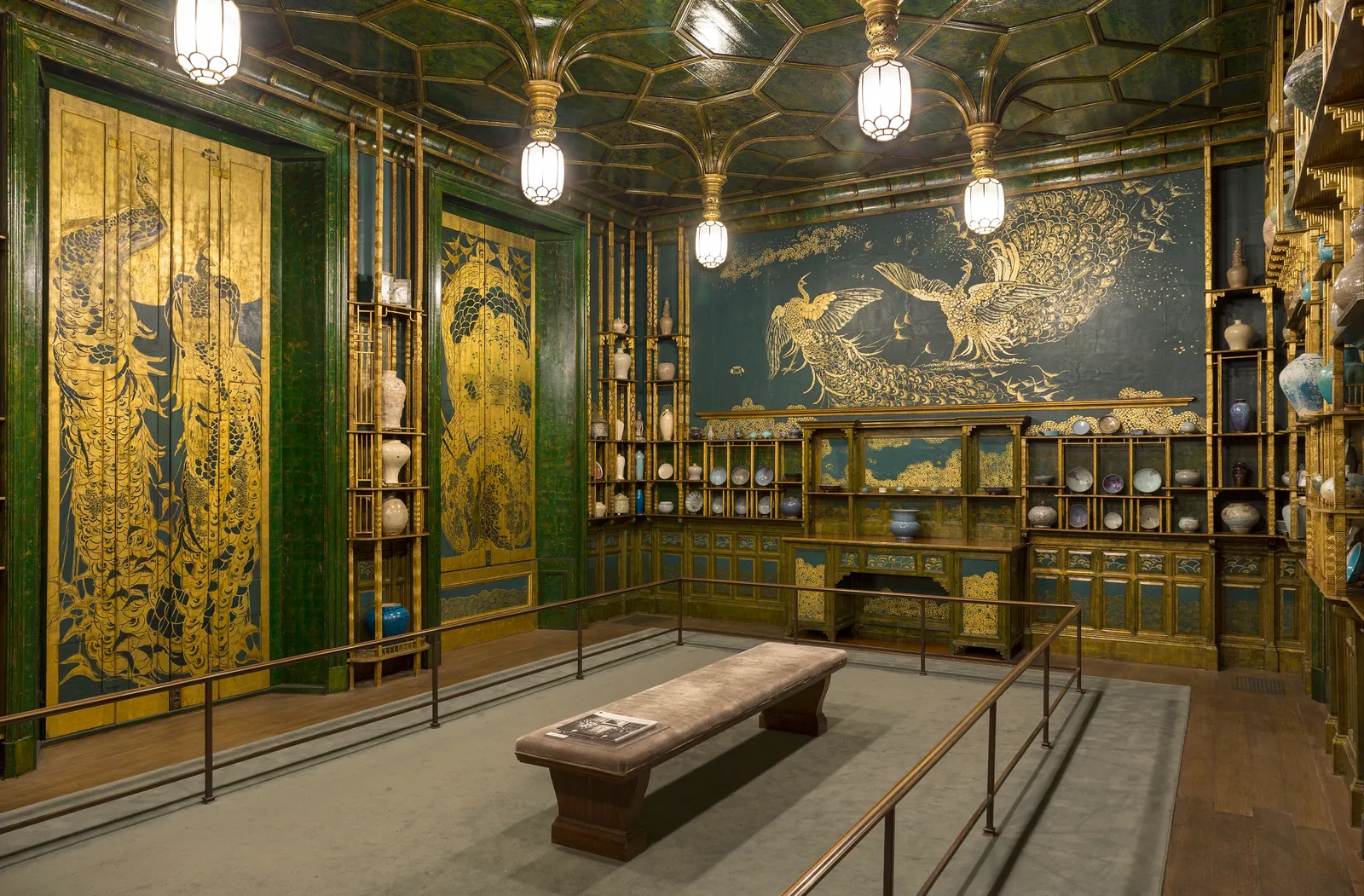
The Freer stands at Jefferson Drive and 12th Street, free, open 10am to 5:30pm daily. On the third Thursday of each month the staff open the room’s shutters between noon and 5:30pm so daylight reaches the gold, which is the version worth timing a visit for; no booking, no charge.
The curved limestone of the National Museum of the American Indian
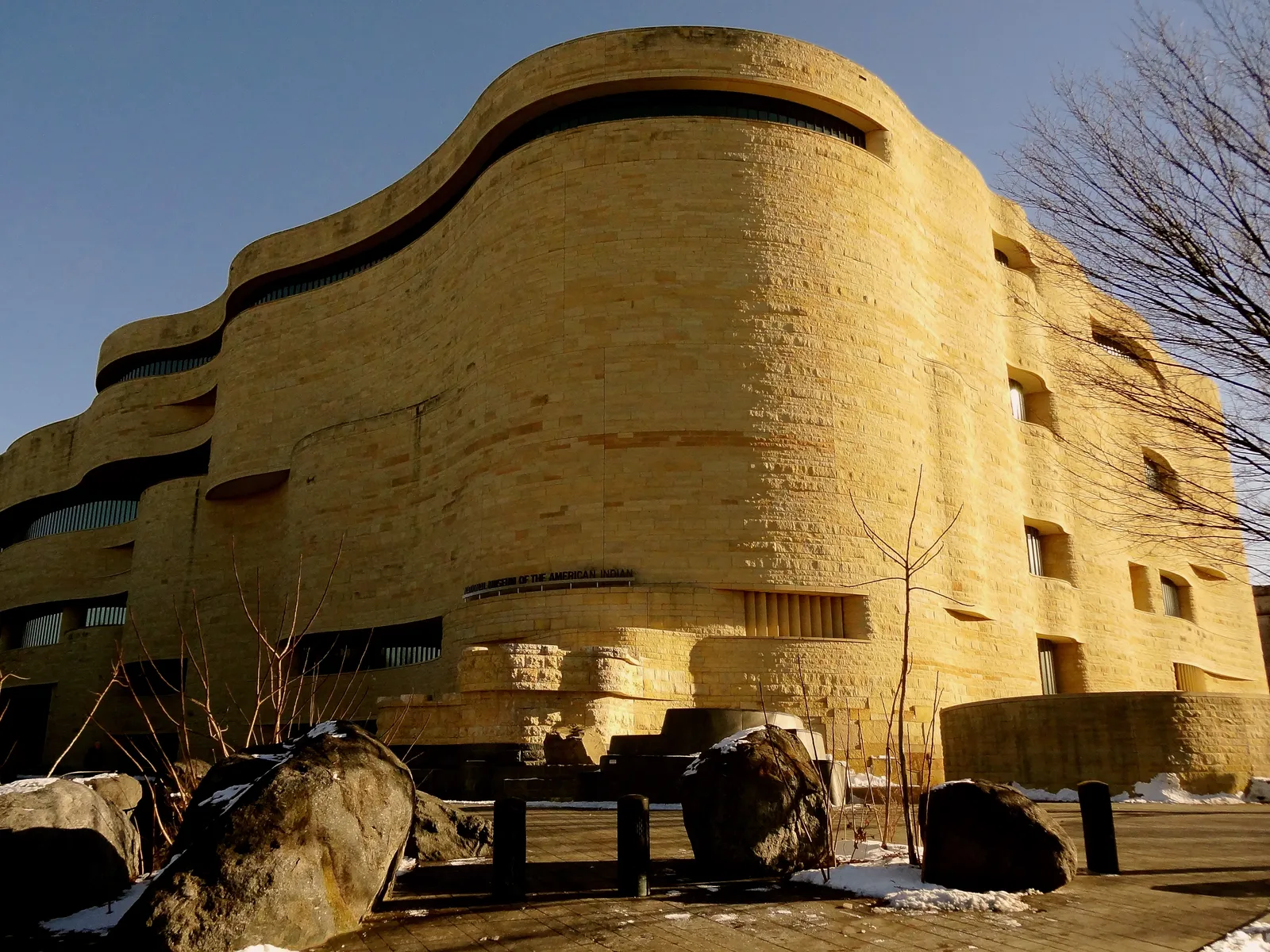
Five storeys of golden Kasota limestone, cut and stacked so the walls curve and overhang like a rock face worn down by wind and water, stand at Fourth Street and Independence Avenue. Douglas Cardinal, a Siksika Nation architect, designed it, and it opened in 2004 as the newest building on the Mall’s south side. Entry is free and takes no ticket, 10am to 5:30pm every day but 25 December, and the Mitsitam café on the ground floor serves Native-sourced menus from 11am to 4pm.
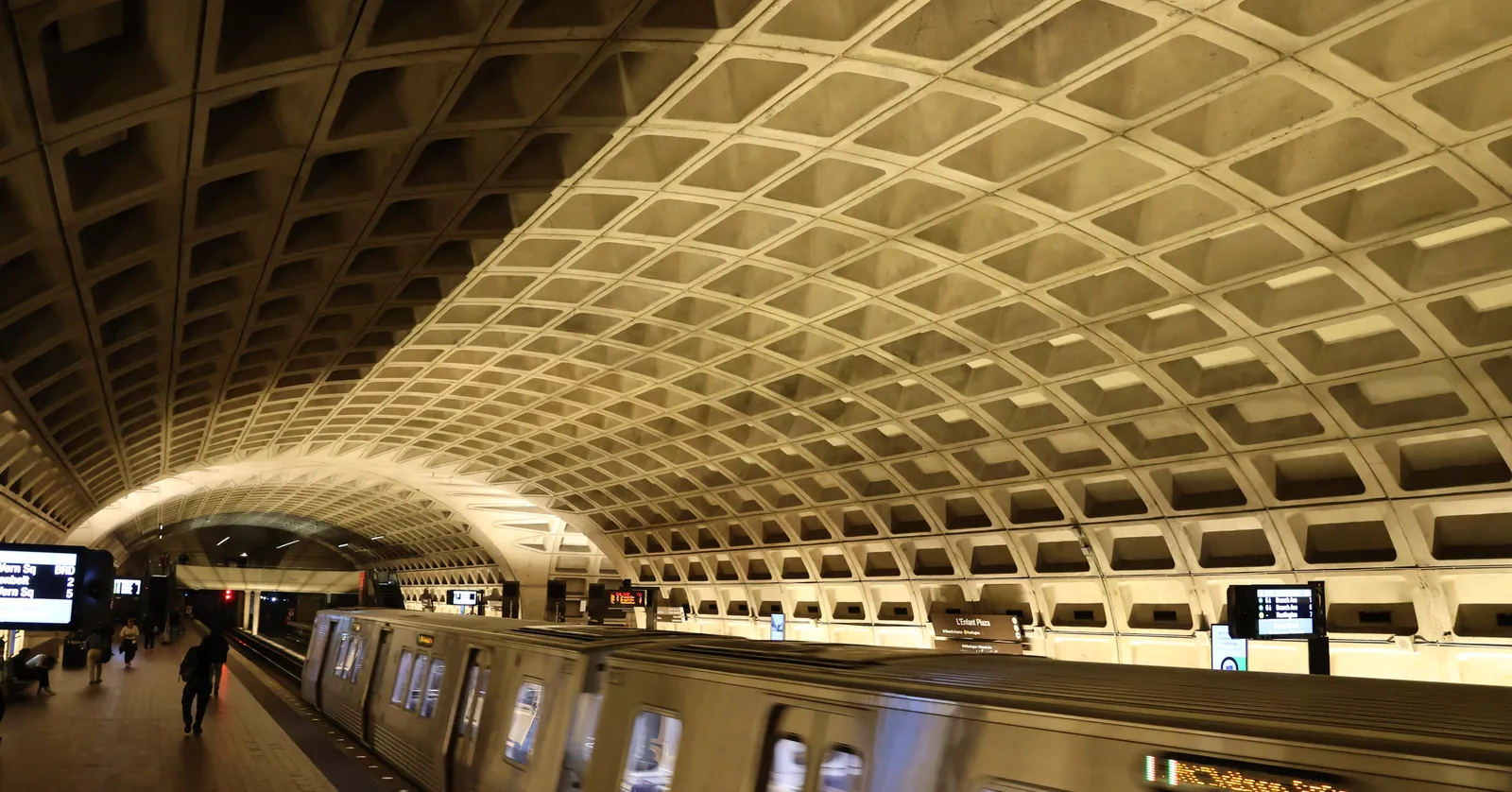
L’Enfant Plaza station stacks three levels: a fare mezzanine over two side platforms for the Green and Yellow lines, with the Blue, Orange and Silver sharing an island platform below that, so a wheeled bag here means finding the right lift twice rather than walking across a concourse.
Floating barges at the Municipal Fish Market
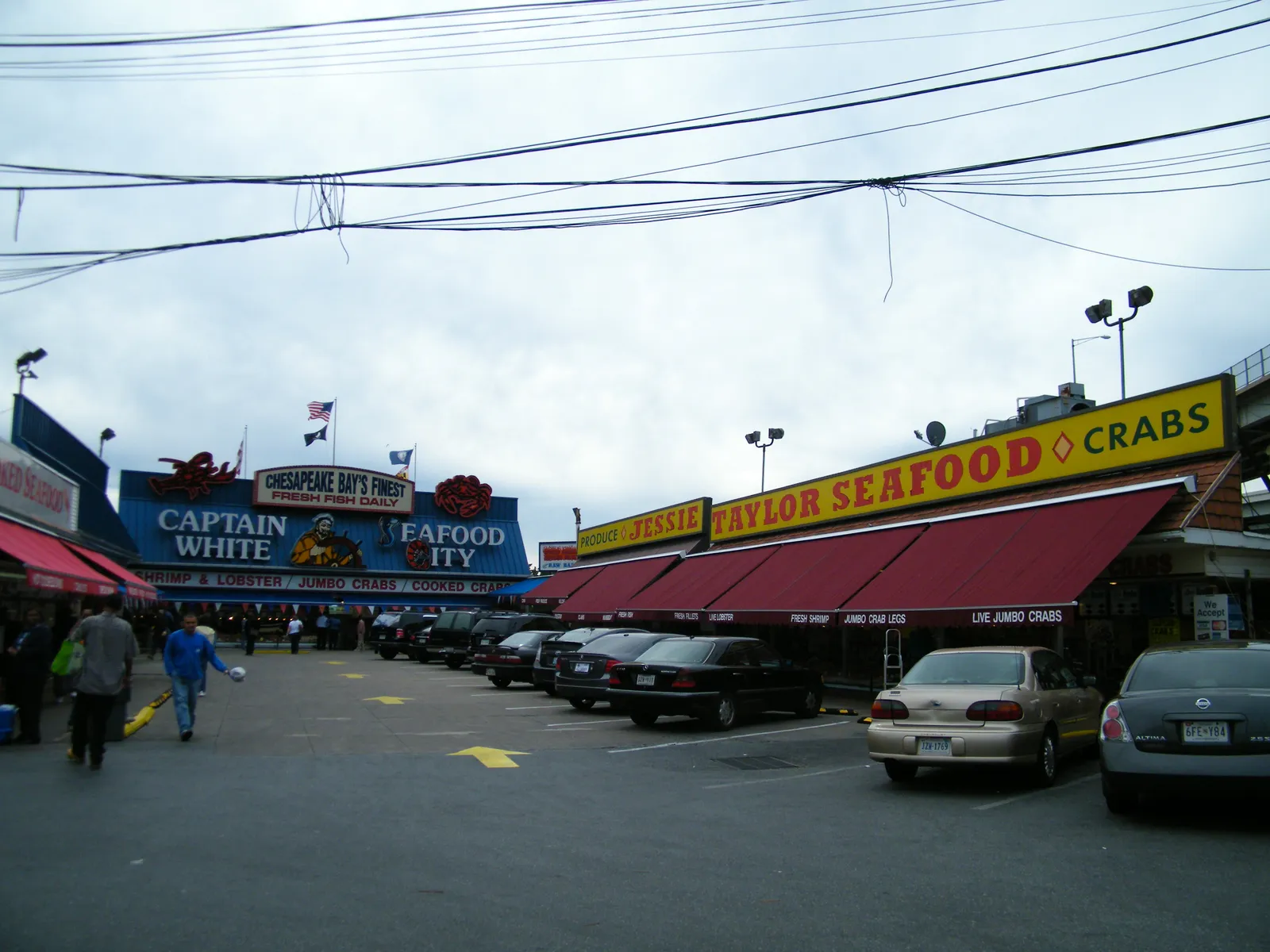
Counters have sold fish on this stretch of Maine Avenue since 1805, which the market bills as making it the country’s oldest continuously operating open-air fish market, seventeen years ahead of New York’s Fulton. The stalls are not buildings: vendors work off barges tied along the quay, and you walk the dry side reading what came in, blue crab by the bushel, oysters shucked while you wait, whole fish on ice under painted signboards.
The way down from the station is Tenth Street, and halfway along it the road runs into Banneker Park, 4.7 acres run by the National Park Service as part of National Mall and Memorial Parks. Its overlook is an elliptical terrace 200 feet across with a conical fountain that throws water more than 30 feet into a green granite basin, and the view from the rail takes in the Washington Channel, the marinas and East Potomac Park beyond. The park spent decades barely used because there was no direct way down to the water; a staircase built in 2017 as part of the waterfront redevelopment fixed that, and it is now simply the route.
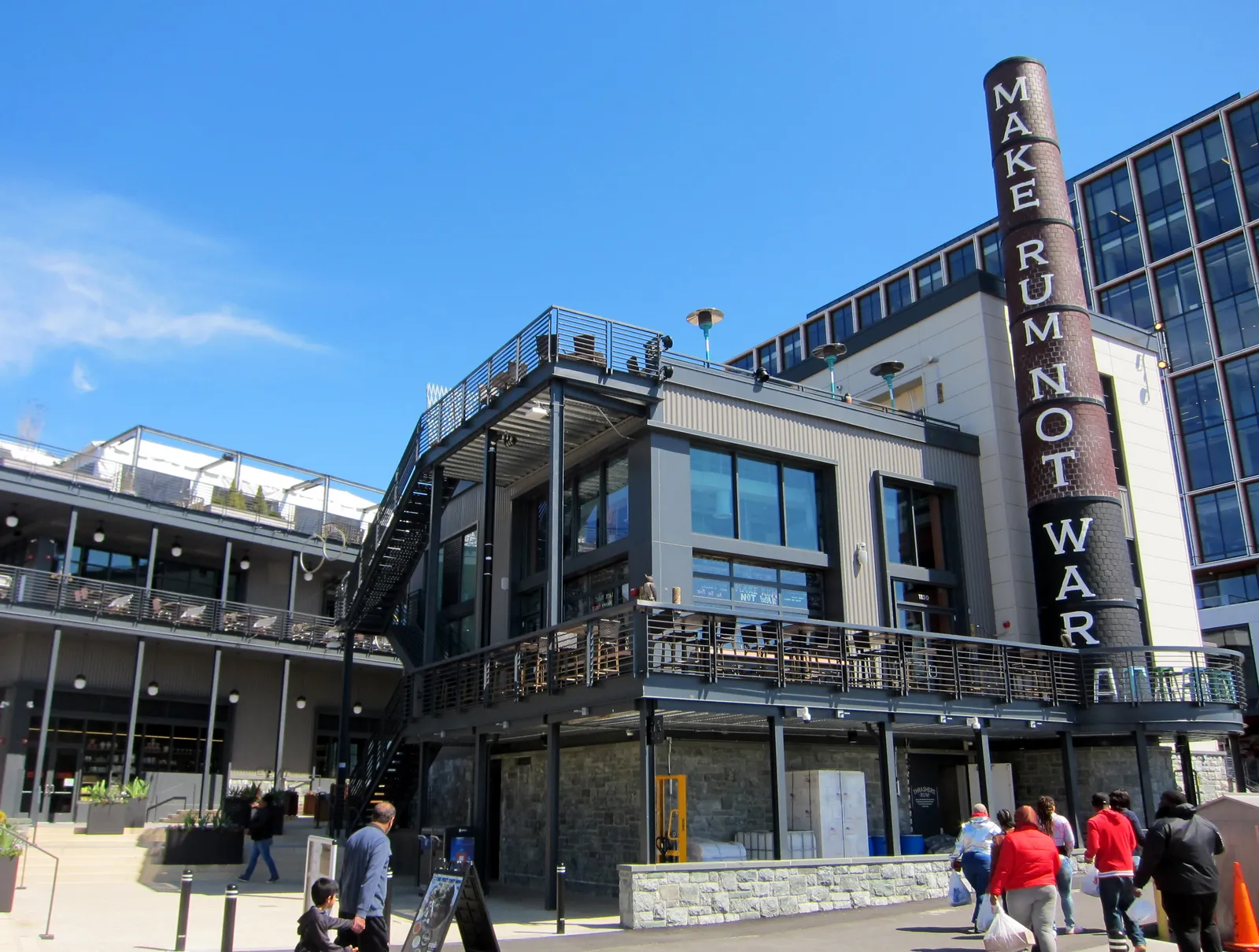
Past the market, the waterfront carries on as a boardwalk of piers, terraces and music venues along the channel. If an hour on the water appeals more than an hour beside it, a small boat you drive yourself can be booked by the hour from one of the piers here.
One train from L’Enfant Plaza reaches Dulles
The Silver Line calls on the lower of the two platform levels and runs through to Washington Dulles International Airport (IAD) in a little under an hour, no change anywhere. At the airport the station links to the terminal by an indoor tunnel on moving walkways, another five to ten minutes, so budget about an hour and a quarter from this platform to the check-in desk and work back from three hours before departure.
Fares here are by distance, and this is close to the longest ride the system sells: around six and a half dollars on a weekday, roughly two and a half after 9:30pm or at any hour on a weekend. If the gap is long enough to go further than the waterfront, the full Washington guide covers the rest of the Mall, from the Air and Space Museum up to the Lincoln Memorial at the far western end.
Frequently asked questions
What should I do during a layover near L'Enfant Plaza Station in Washington D.C.?
Two directions, both on foot. North onto the Mall gets you the Freer Gallery in about twelve minutes, where Whistler's Peacock Room is free and permanent, and the National Museum of the American Indian in about five, also free and needing no ticket. South down Tenth Street gets you the Municipal Fish Market and the Washington Channel waterfront in roughly fifteen. Four hours covers one direction comfortably and both at a push, though the museums shut at 5:30pm while the waterfront does not.
Why does L'Enfant Plaza have so many platforms?
It is the only station on the network where five of the six lines call. The Green and Yellow lines use two side platforms on the upper level, the Blue, Orange and Silver lines share a single island platform on the level below, and a fare mezzanine sits above both. That makes it one of the four big interchange points in the system, and it means the line you want may be one floor further down than the one you arrived on.
Is the Municipal Fish Market open all year?
Yes. The counters have traded on this stretch of Maine Avenue since 1805, through every season, and the seafood is sold off floating barges tied up along the quay rather than from fixed shops. It is an outdoor market, so there is nothing overhead beyond the vendors' own awnings, and on a wet day the museums back up the hill are the better call.
Which exit from L'Enfant Plaza should I use for the Smithsonian museums?
The Maryland Avenue and Smithsonian Museums exit, on the north side. The station has several street exits scattered under and around the office complex above it, and the others put you out among federal office blocks on D Street or Seventh with no sight of the lawn at all. For the Wharf and the fish market you want the opposite side and Tenth Street instead, which runs south to the overlook and then down to the water.