San Francisco Layover: Cable Cars, SFO
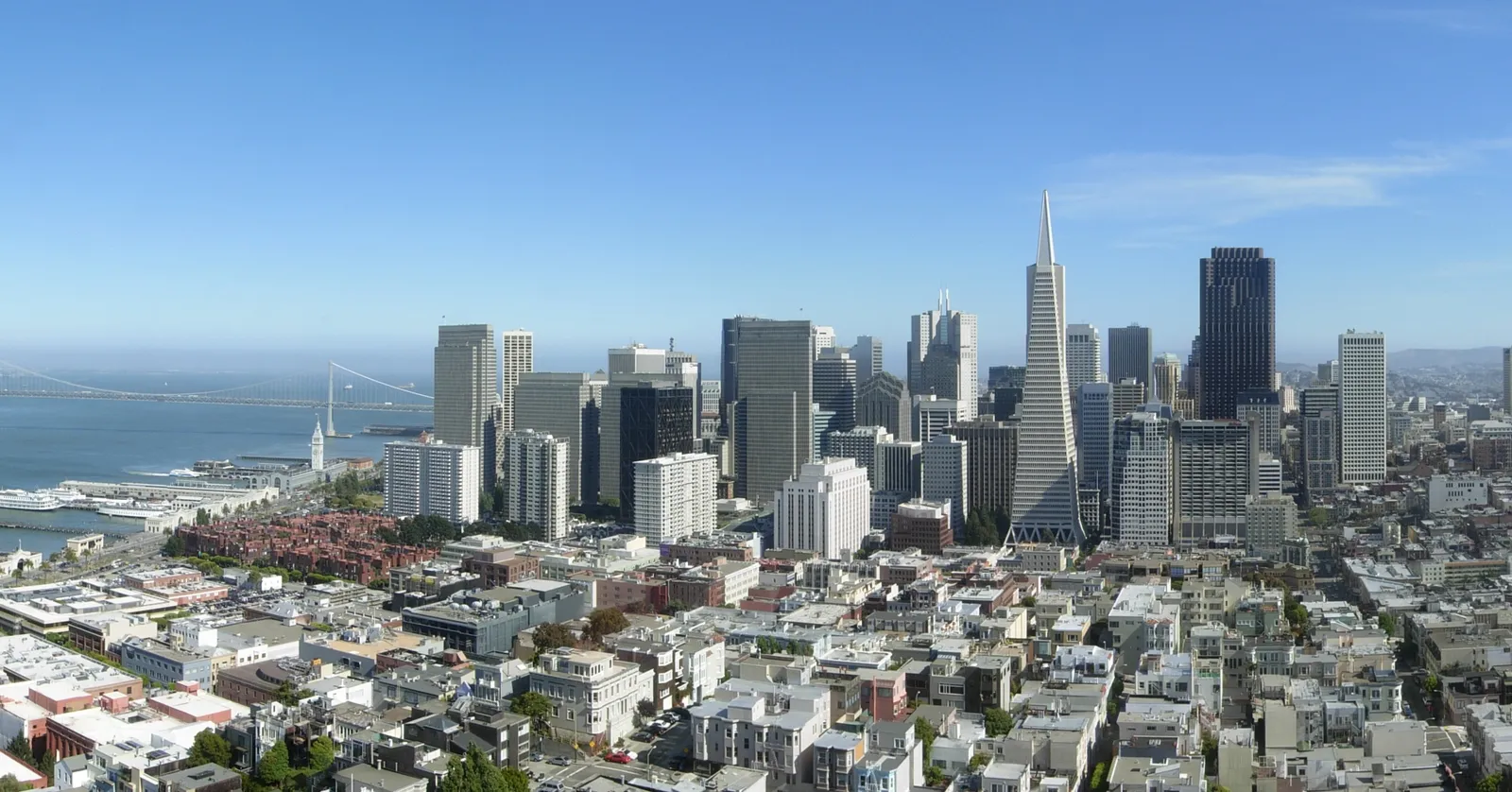
Central San Francisco puts a hand-operated cable car line, the oldest Chinatown in North America and an 1898 ferry terminal turned market hall inside a mile and a half of Union Square.
Hand-operated cable cars still climb Nob Hill from Powell Street
The cable car turntable at Powell and Market is a wooden disc set into the road, and two operators walk each car around on it by hand before it starts back up the hill. San Francisco runs the last manually operated cable car system in the world: a cable moves under the street at a constant 9.5 miles an hour, and the gripman takes hold of it and lets it go with a lever to start and stop. Three lines are left, worked by a fleet of forty cars, twenty-seven of which are out on an ordinary day.
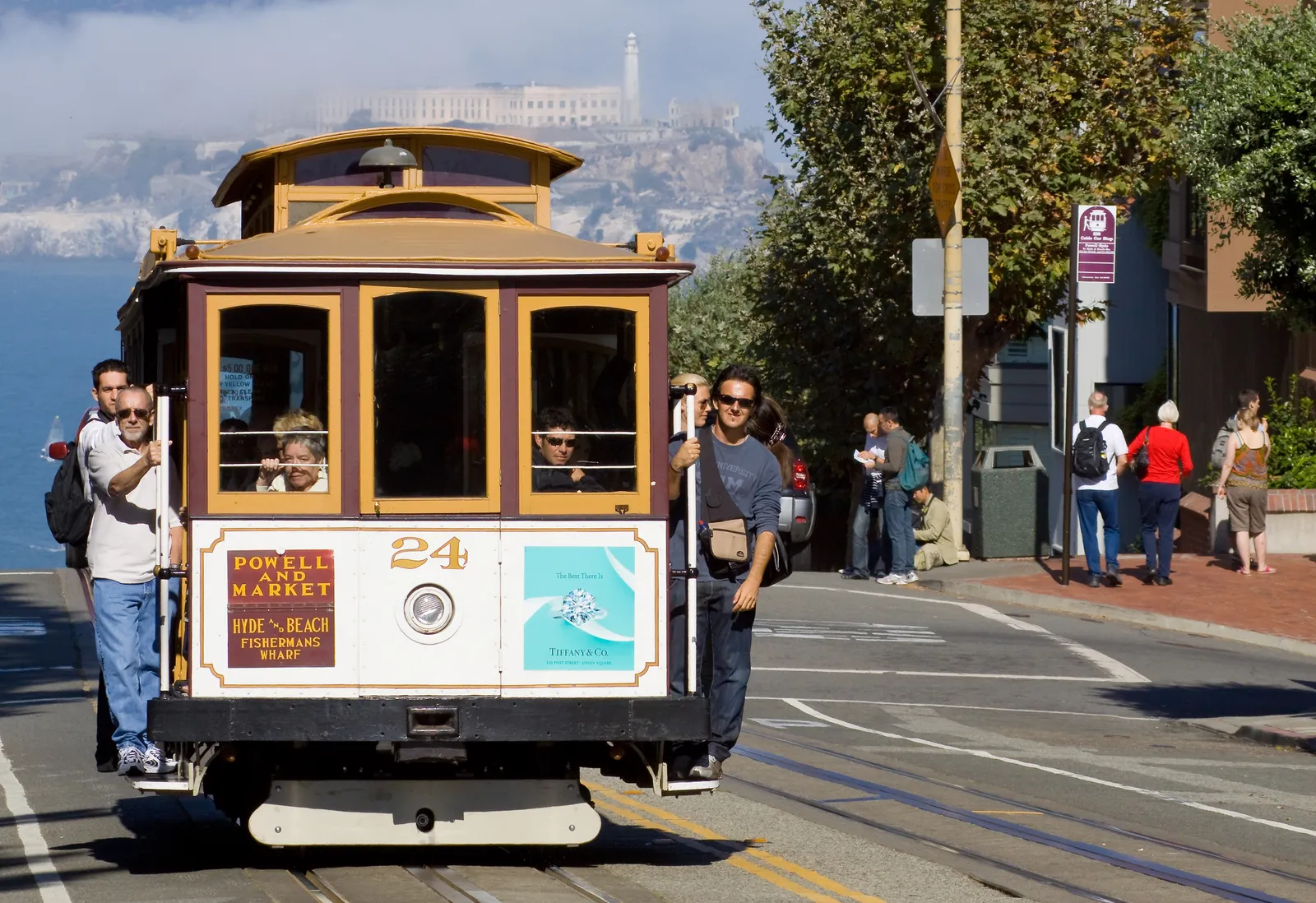
A single ride is $9 whether you go one block or the full line, so two rides cost more than the $15 day passport that also covers the buses and the metro. Powell-Hyde is the line to spend it on. It goes over the top of Nob Hill, down the far side of Russian Hill, and carries the steepest grade on the system, 21 percent, on Hyde Street, with Alcatraz sitting square in the view ahead on the descent. The queue at the turntable is the longest on the network by the middle of the day; boarding at a stop further up the hill often works, though cars come through full. Angels Flight, the funicular in Los Angeles, does the job the other way round, hauling two counterbalanced cars up a short track rather than gripping a cable that never stops moving.
Two free floors at the San Francisco Museum of Modern Art
The museum stands on Third Street in SoMa, about five minutes’ walk from Union Square, its red brick 1995 block with the striped oculus now backed by a taller white wing added in 2016. Floors one and two, 45,000 square feet of them, are open to anyone who walks in from either the Third Street or the Howard Street door, with no ticket and no queue for one.
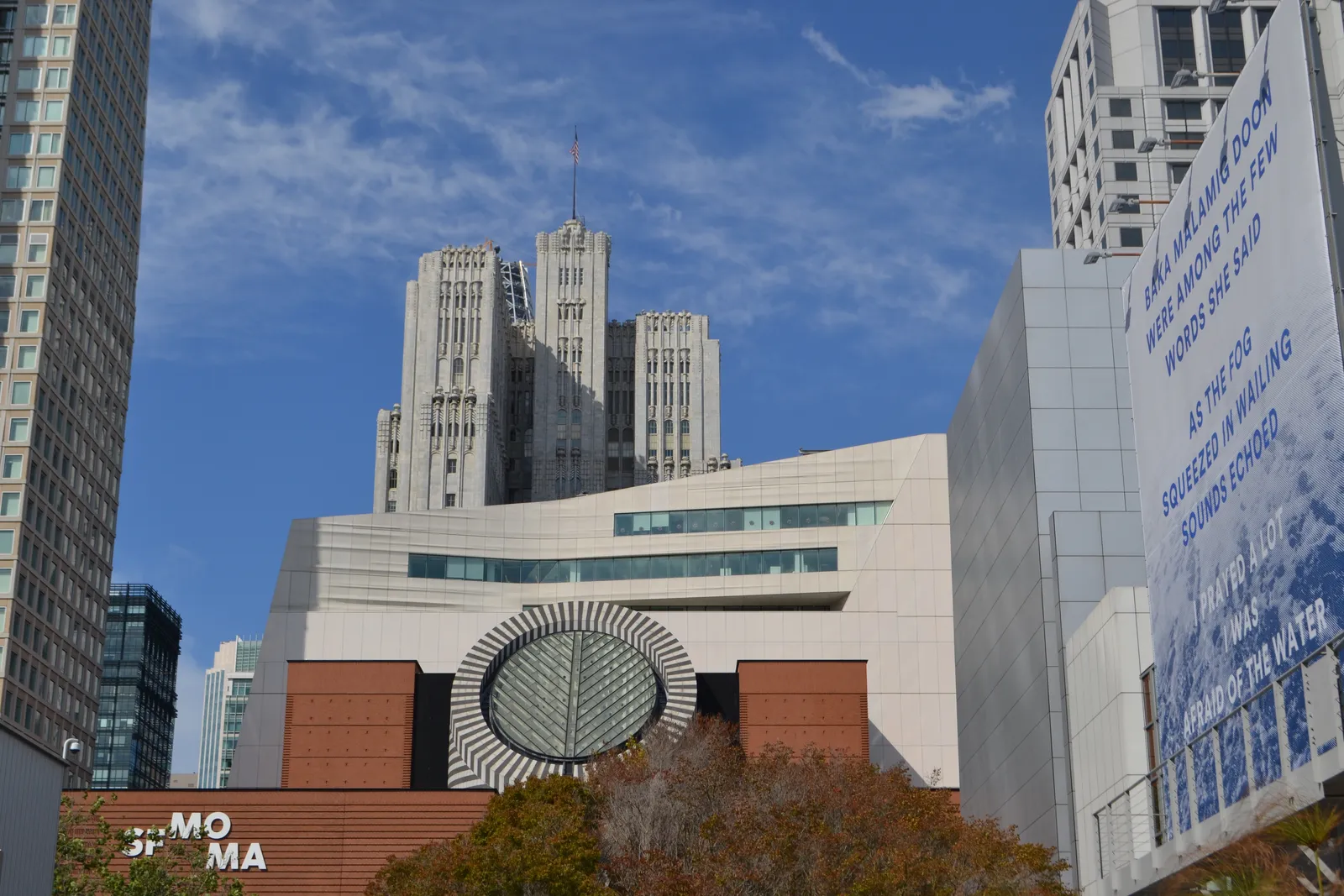
Everything above that costs $30 for an adult, and nothing at all for anyone 18 or under, on every day the museum opens. Two dates matter more than the price on a flight day: the building is shut on Wednesdays, and Thursday is the one late day, noon to 8pm, against 10am to 5pm the rest of the week. If the upper floors are the reason you are going, entry can be booked ahead rather than sorted out at the desk.
The Exploratorium’s 650 exhibits fill Pier 15
Pier 15 stands on the Embarcadero at Green Street, and the Exploratorium has occupied its shed since April 2013, having spent its first forty-four years in the Palace of Fine Arts. Frank Oppenheimer, a physicist, started it in 1969 on the principle that people learn a thing by doing it, which is why almost none of the 650-odd exhibits across its six galleries sit behind glass.
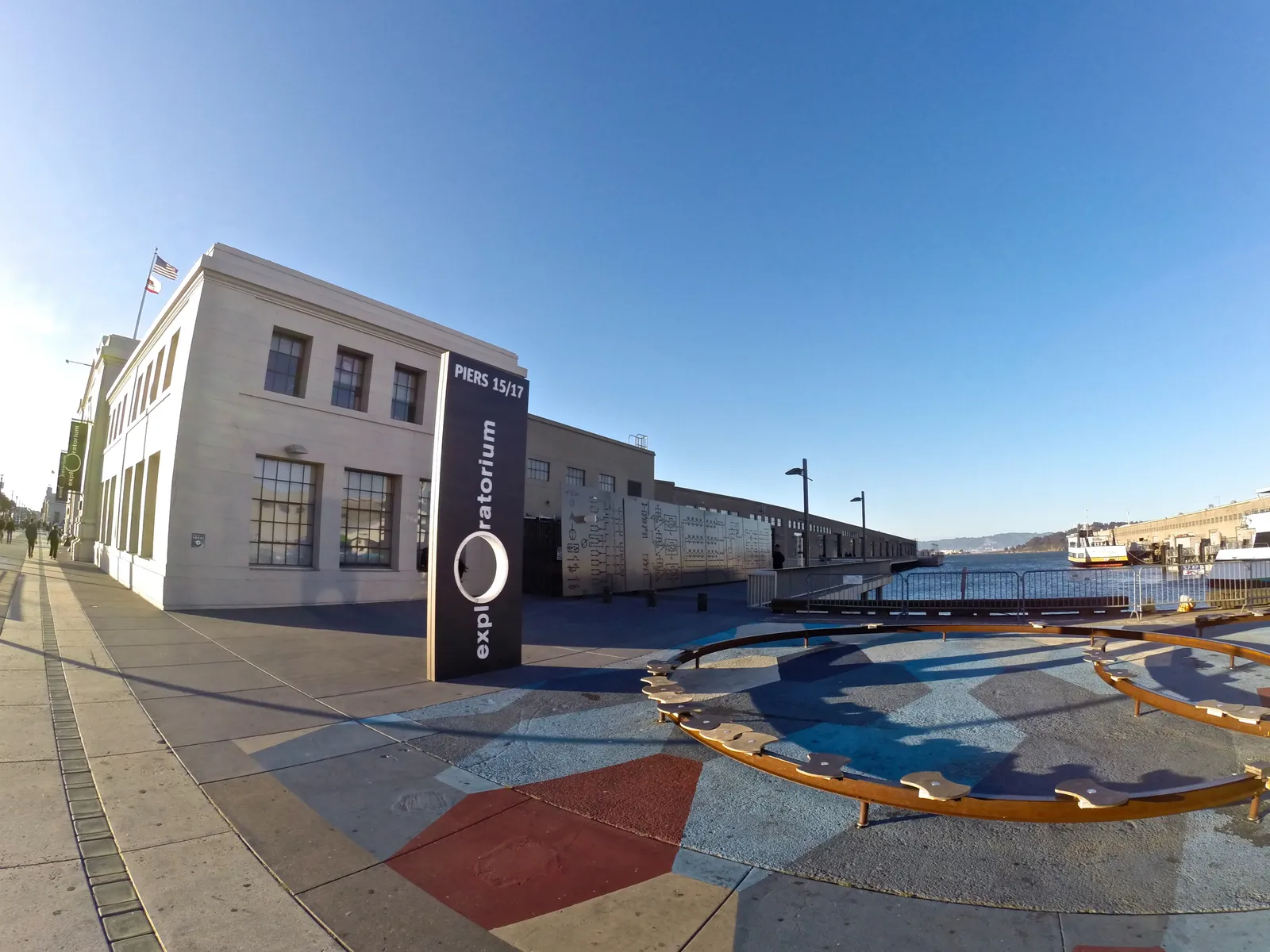
Opening is Tuesday to Saturday, 10am to 5pm, and Sundays from noon; Mondays it is closed. Thursday evenings are the useful ones for anyone flying out late, when the place reopens from 6pm to 10pm for adults only and the exhibits get handled by people who are old enough to know better. Daytime and evening are separate admissions to book, so check which one your hours land in.
The Ferry Building’s market hall on the Embarcadero
The Ferry Building closes the foot of Market Street, finished in 1898, with a 245-foot clock tower carrying four dials 22 feet across. Before the bridges opened in the 1930s and took the traffic off the water, it was the second busiest transit terminal in the world, behind Charing Cross in London. Then the Embarcadero Freeway went up in front of it in the late 1950s and walled it off from the city until the 1989 earthquake wrecked the freeway and settled the argument about pulling it down.
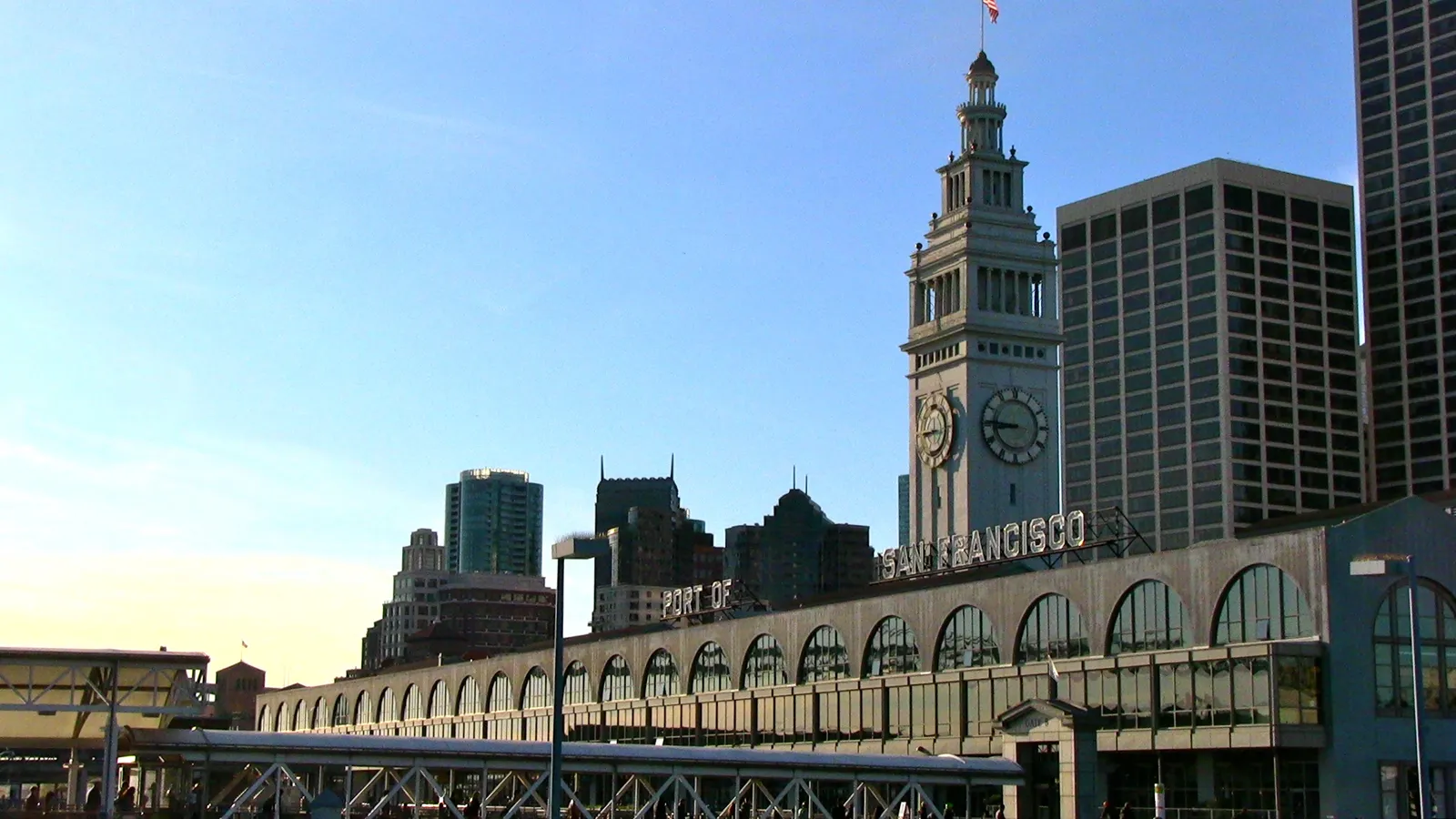
The nave under the tower now holds about fifty food shops and restaurants, open to walk through whether or not you buy anything, and the farmers’ market sets up outside on the plaza on Tuesdays and Thursdays from 10am to 2pm and Saturdays from 8am to 2pm. Three blocks inland at 425 Mission Street there is something almost nobody comes to San Francisco to see: the roof of the Salesforce Transit Center is a public park, four blocks long and 70 feet above the pavement, with 600 trees on it and a free gondola up from street level. It opens at 6am and shuts at 9pm from May to October, an hour earlier the rest of the year.
The Dragon Gate at Grant Avenue and Bush Street
The Dragon Gate spans Grant Avenue where it crosses Bush Street, three arches under green tiled roofs, dedicated in 1970. Through it is the oldest Chinatown in North America, settled in the early 1850s, and the six or so blocks of Grant beyond the gate are the tourist half of it; the working half is one street west on Stockton, where the produce is sold.
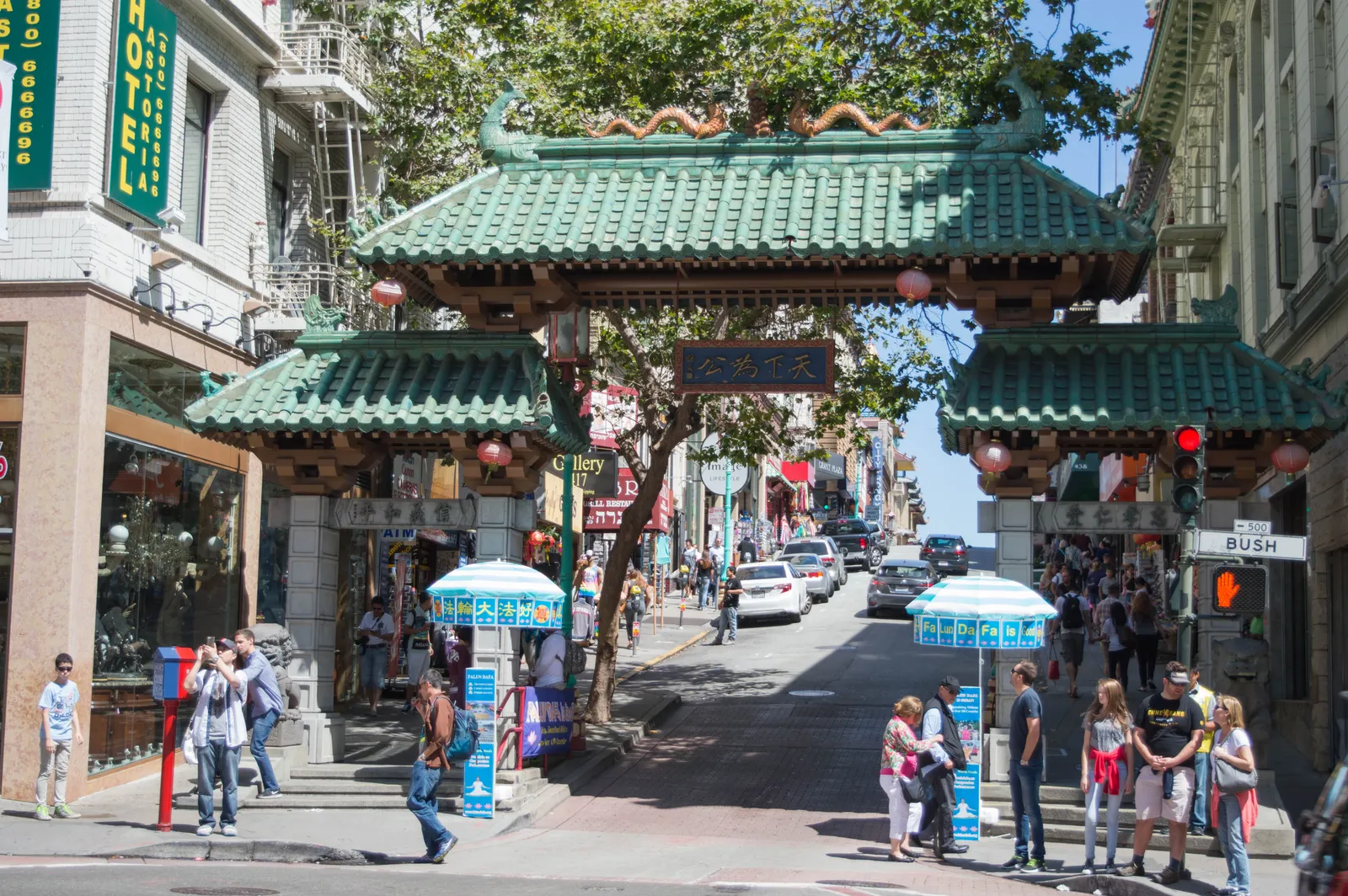
Two things off Grant are worth the detour. Tin How Temple sits up three flights of stairs on Waverly Place, founded around 1852 and the oldest Chinese temple in the United States, still in use and still lit by hanging lanterns. And at 56 Ross Alley, the Golden Gate Fortune Cookie Factory has been folding cookies by hand off a hot griddle since 1962, in a room about the size of a garage; there is a small charge if you want to photograph the machines.
Grant Avenue itself is close to level, but every cross street west of it climbs toward Nob Hill hard enough that a wheeled suitcase stops being wheeled and starts being carried.
The eight hairpin turns of Lombard Street
With more than four hours in hand, the crooked block of Lombard Street is the one addition worth the extra transit. It runs one block down Russian Hill between Hyde and Leavenworth, and it exists because the natural grade there is 27 percent, too steep for cars to take head on. The turns were laid in in 1922 at the suggestion of a property owner on the street, and they stretch 600 feet of red brick roadway across 412 feet of actual hillside.
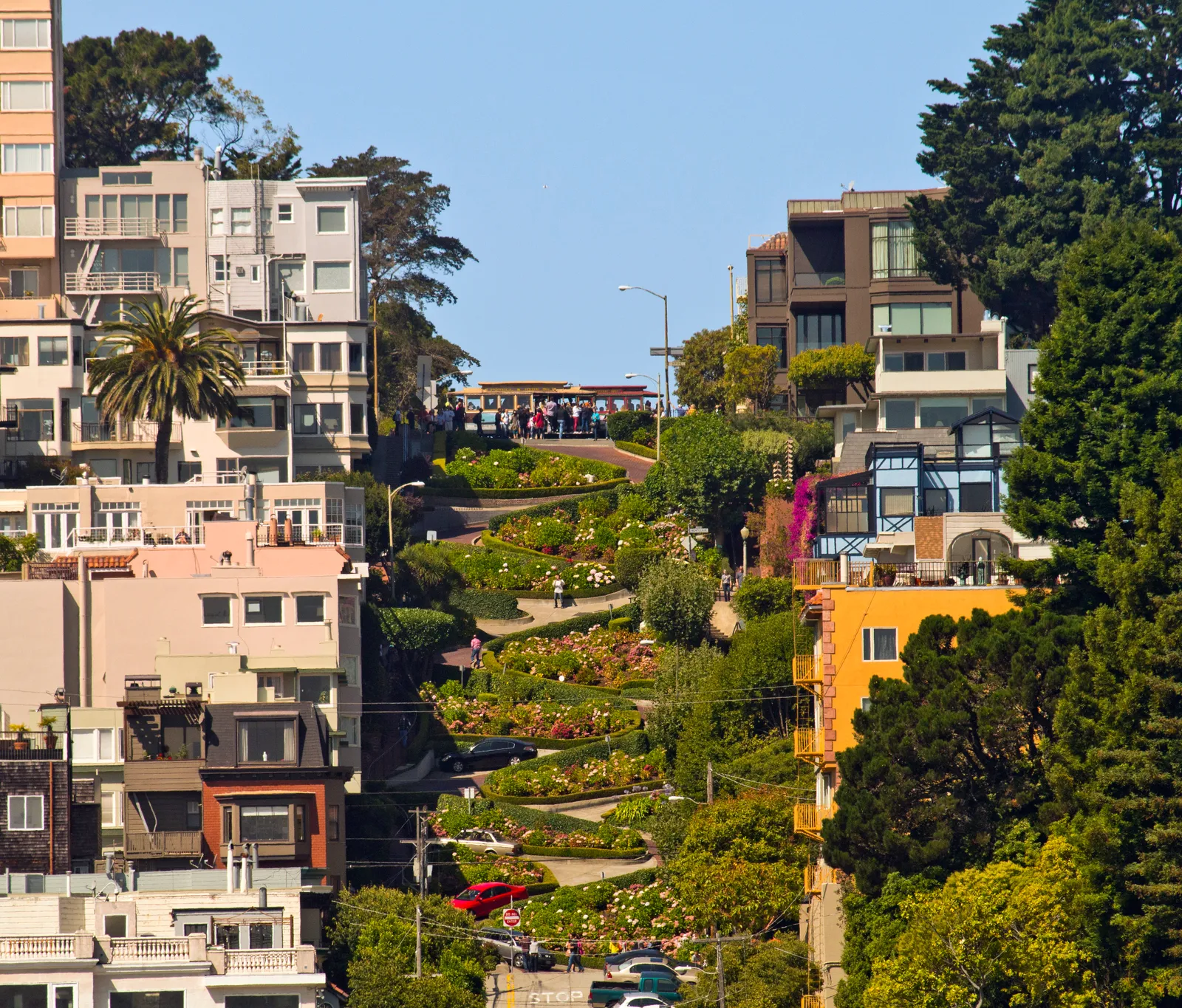
Walking it costs nothing and there are steps down both sides, which is how most of the two million people a year who come here do it. Driving is one-way downhill at a posted five miles an hour, and the queue of cars waiting their turn at the top on a summer afternoon is longer than the block itself. The Powell-Hyde cable car stops at Hyde and Lombard, a few paces from the top of the turns, which is the argument for riding that particular line rather than any of the others.
Everything above happens on foot, on hills, in and out of buildings that will not take a suitcase past the door. Leaving the bag somewhere central first is what makes the difference between four separate errands and one continuous afternoon.
The last airport train leaves Powell Street at 12:43am
Powell Street station sits directly under Market Street at the cable car turntable, and the ride from its platform out to San Francisco International Airport takes 31 minutes for $11.80 on a Clipper card. BART stopped taking paper tickets in November 2023, so a physical Clipper card from a machine, or a free one added to a phone wallet, is the only way to get through the gates.
Two lines cover the airport during the day, the Yellow and the Red, which between them put a train on the platform roughly every eight to twelve minutes. The Red line stops running to the airport at 9pm. After that only the Yellow line continues, every 20 minutes, with the last departure from Powell Street at 12:43am.
Budget more than the 31 minutes. The BART station is at the north end of the International Terminal by Garage G, so if you are flying from Terminal 1 or Terminal 2 you add an AirTrain ride at the far end: free, running 24 hours, a car every four minutes or so, and about nine minutes for the Red Line loop around the terminals. Door to gate, that is closer to 50 minutes than to half an hour, and the usual advice of two hours before a domestic departure and three before an international one sits on top of it.
Frequently asked questions
What should I do during a layover in San Francisco?
Ride a cable car from the turntable at Powell and Market: $9 for a single ride, and the one thing here that exists nowhere else in the world. The Dragon Gate stands where Grant Avenue crosses Bush Street, with Chinatown running north from it, and the Ferry Building at the foot of Market Street holds about fifty food shops under its 1898 roof, with a farmers' market outside on Tuesdays, Thursdays and Saturdays. If a museum suits the day better, the San Francisco Museum of Modern Art on Third Street gives away its first two floors, and the Exploratorium fills Pier 15 with things to pull and push. With four hours or more, the Powell-Hyde line carries on over Russian Hill to the top of Lombard Street's crooked block. Check the closing days before you commit: SFMOMA shuts on Wednesdays and the Exploratorium on Mondays.
Which is the better stop with kids, SFMOMA or the Exploratorium?
The Exploratorium, on almost any day it is open. Its 650-odd exhibits are built to be handled rather than looked at, and it sits on Pier 15 on the Embarcadero where a child who has had enough can go and watch the water instead. The San Francisco Museum of Modern Art, SFMOMA, is the cheaper answer, though: admission is free every day for anyone 18 or under, and the 45,000 square feet of galleries on its first two floors are free for everyone, so a short look costs a family nothing. The scheduling trap is the closing days, Mondays at the Exploratorium and Wednesdays at the museum, which is also the one open late, until 8pm on Thursdays.
Can I fit Alcatraz into a layover in San Francisco?
Realistically, no. Alcatraz City Cruises is the only operator licensed to land people on the island, the boats leave from Pier 33 rather than the Ferry Building, and the National Park Service says tickets can sell out several weeks ahead in summer and around holiday weekends. Between the crossing, the time on the island and the wait for a boat back, it takes a bigger piece of the day than a flight-day plan can safely give it. Look at the island from the Hyde Street end of the cable car line instead, which is where the postcard view of it is taken from.
Are the cable cars worth nine dollars for one ride?
For one ride on the Powell-Hyde line, yes: it is the last manually operated cable car system in the world, the gripman works the lever in front of you, and the line climbs a 21 percent grade on Hyde Street with the bay opening up ahead. For two rides, buy the $15 day passport instead, which covers the cable cars, the buses and the metro for the whole day and costs less than two single fares. The queue at the Powell and Market turntable is the longest on the network in the middle of the day; boarding at a stop further up the hill often works, though cars come through full.
Is the train or a rideshare better from San Francisco International Airport?
The train, unless you are travelling with several people or your flight is at an hour with no service. BART charges $11.80 on a Clipper card from Powell Street to San Francisco International Airport (SFO) and covers it in 31 minutes on a fixed schedule, while a car takes the same US-101 corridor that backs up every weekday afternoon and costs several times as much. The BART station is at the north end of the International Terminal, so from Terminals 1 and 2 you add a free AirTrain ride, which runs 24 hours a day and comes about every four minutes. Rideshares drop at the terminal door, which is the one real advantage, and it matters most late at night: after 9pm only the Yellow line runs to the airport, every 20 minutes, and the last one leaves Powell Street at 12:43am.