Golden Gate Park on a San Francisco Layover
Part of the full San Francisco Layover: Cable Cars, SFO
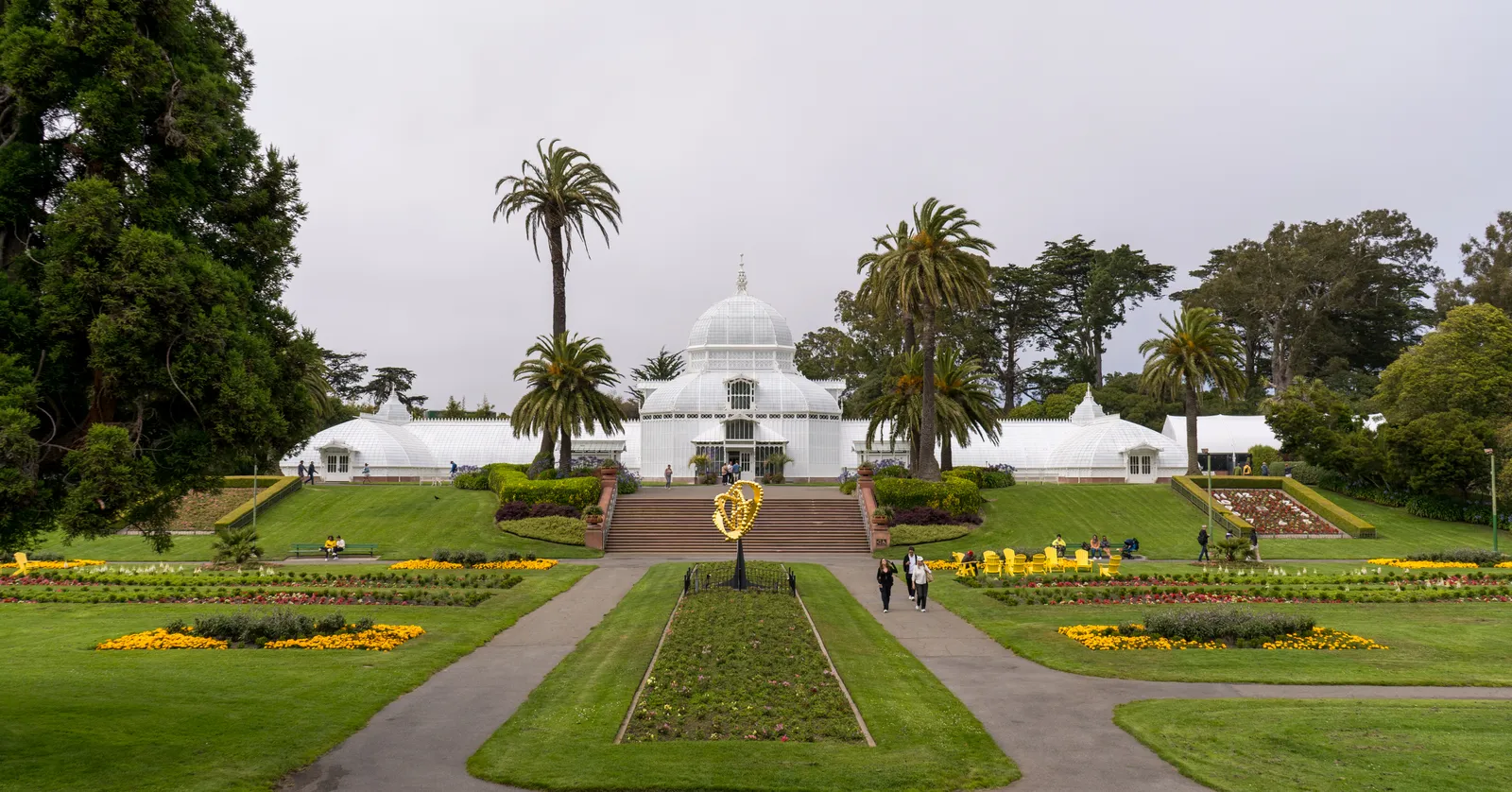
San Francisco’s Golden Gate Park packs an aquarium under a living roof, a free ninth-floor observation tower and an 1894 Japanese garden into one walkable cluster around its Music Concourse, with bison grazing two miles further west.
A living roof of 1.7 million plants over the California Academy of Sciences
Renzo Piano put a 2.5-acre meadow on top of the Academy of Sciences when it reopened in September 2008, seven grassy hillocks shaped after San Francisco’s own hills, planted with 1.7 million native Californian plants and punched through with round skylights that vent the building below.
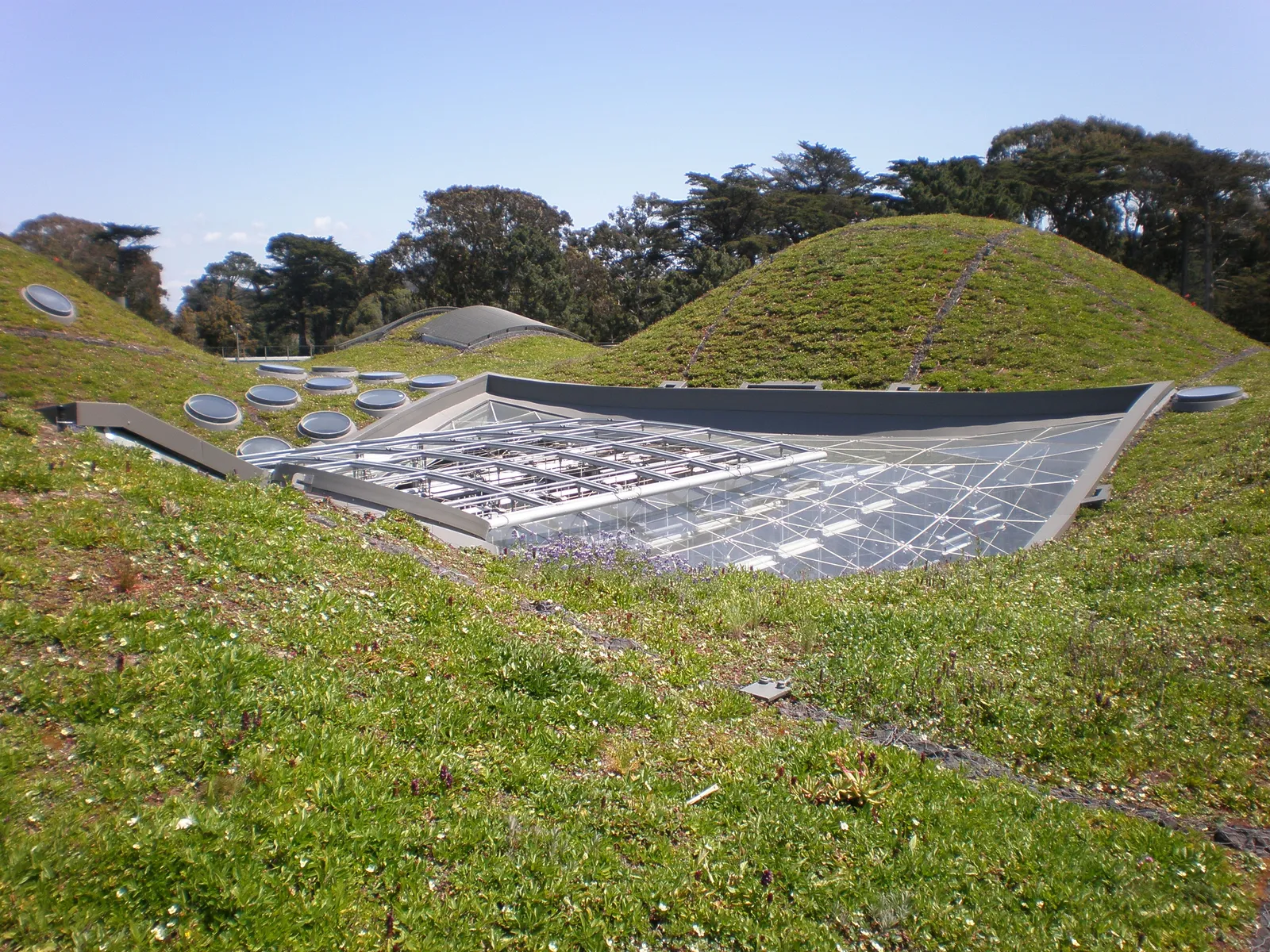
Underneath it are four things that would each normally be their own building: the Steinhart Aquarium, the Morrison Planetarium under a 90-foot dome, a four-storey rainforest inside a glass sphere, and the natural history galleries. It is the single biggest time commitment in the park, two hours minimum to do it any justice, and timed admission is sold in advance, which matters more here than elsewhere in the park because the planetarium runs on fixed showtimes.
The de Young’s ninth-floor tower is free without a museum ticket
The de Young stands across the Music Concourse from the California Academy of Sciences, a long building sheathed in perforated and dimpled copper that Herzog and de Meuron designed to weather green over decades. At one end it twists up into a nine-storey tower.
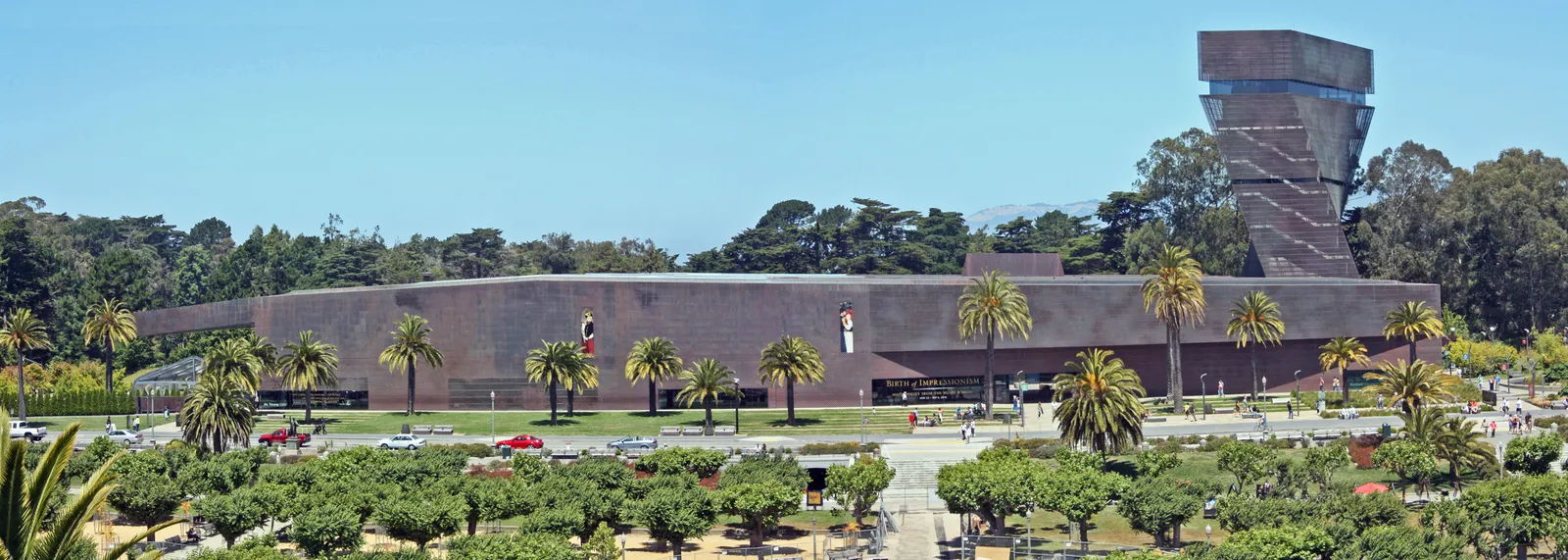
The Hamon Observation Tower at the top of it is free, and the way in is unceremonious: through the main lobby, past the ticket desk without stopping, into the lift. The room at the top is glassed on all four sides and looks over the whole park, the avenues of the Richmond and Sunset, the Pacific, and the Golden Gate on a clear day. It closes earlier than the galleries, so leave it as an early stop rather than a last one.
The park is three miles end to end and the gaps between its stops are measured in half-miles rather than blocks, which is a different proposition with a suitcase than without one.
The Japanese Tea Garden was built for an 1894 world’s fair and never taken down
The California Midwinter International Exposition put a Japanese village in the park in 1894, and unlike the rest of the fair it stayed. What is there now is five acres of pruned pines, stone lanterns, koi ponds, an arched drum bridge steep enough that people cross it on hands and feet, and a red five-storey pagoda standing over the whole thing.
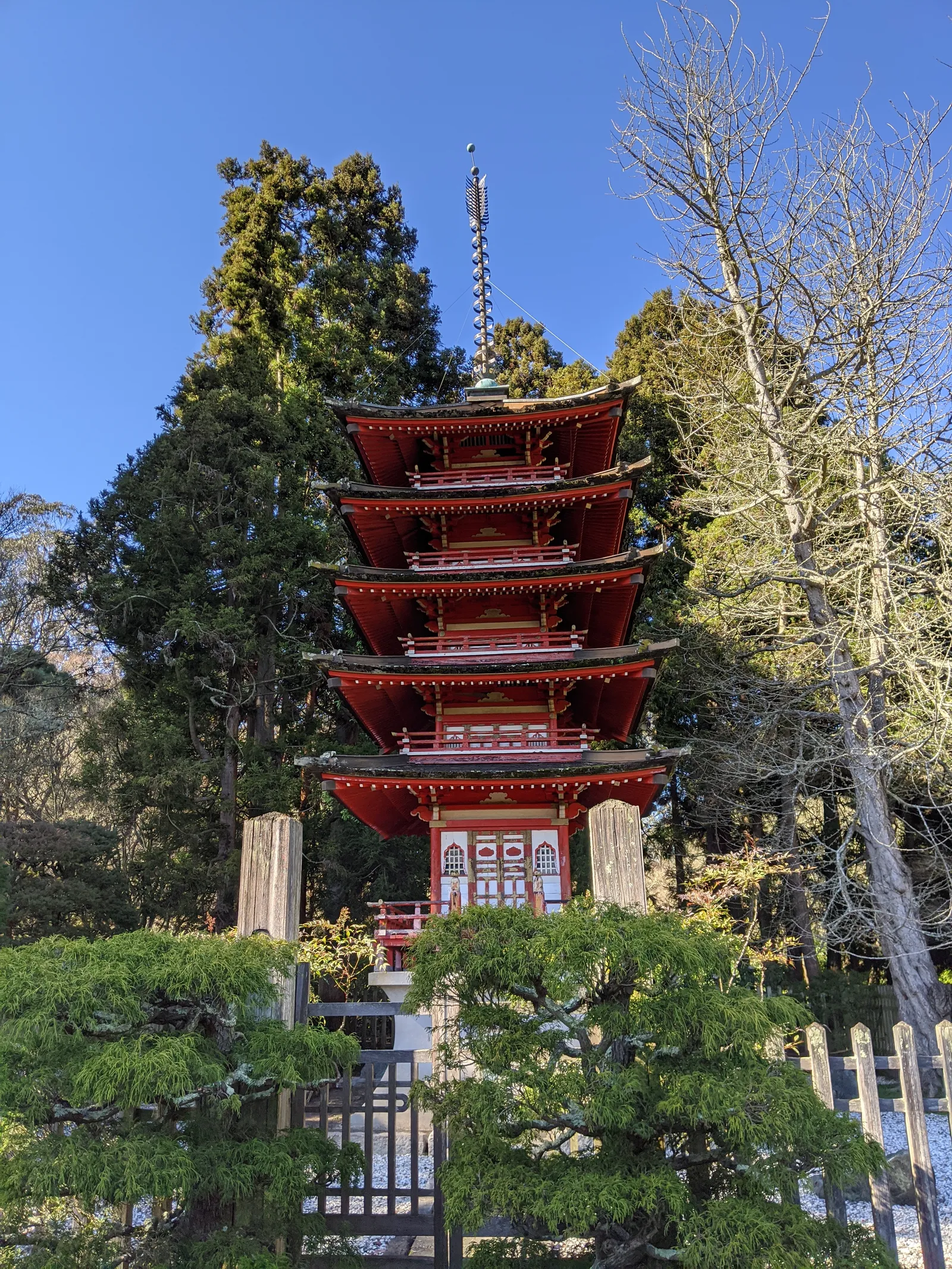
Admission for non-residents runs roughly $12 to $16 depending on season and day. The hour worth knowing about is 9am to 10am on Mondays, Wednesdays and Fridays, when the gate is free to everyone, which also happens to be the quietest hour the garden has. The teahouse still serves tea, and this is the oldest public Japanese garden in the United States.
Bison have been kept in Golden Gate Park since 1891
John McLaren’s park administration bought bison in 1891, when the species was close to gone from the plains, starting with a bull named Ben Harrison. The herd lived at the eastern end first, near where the Music Concourse is now, and moved in 1899 to the meadow it still occupies off John F. Kennedy Drive, just west of Spreckels Lake.
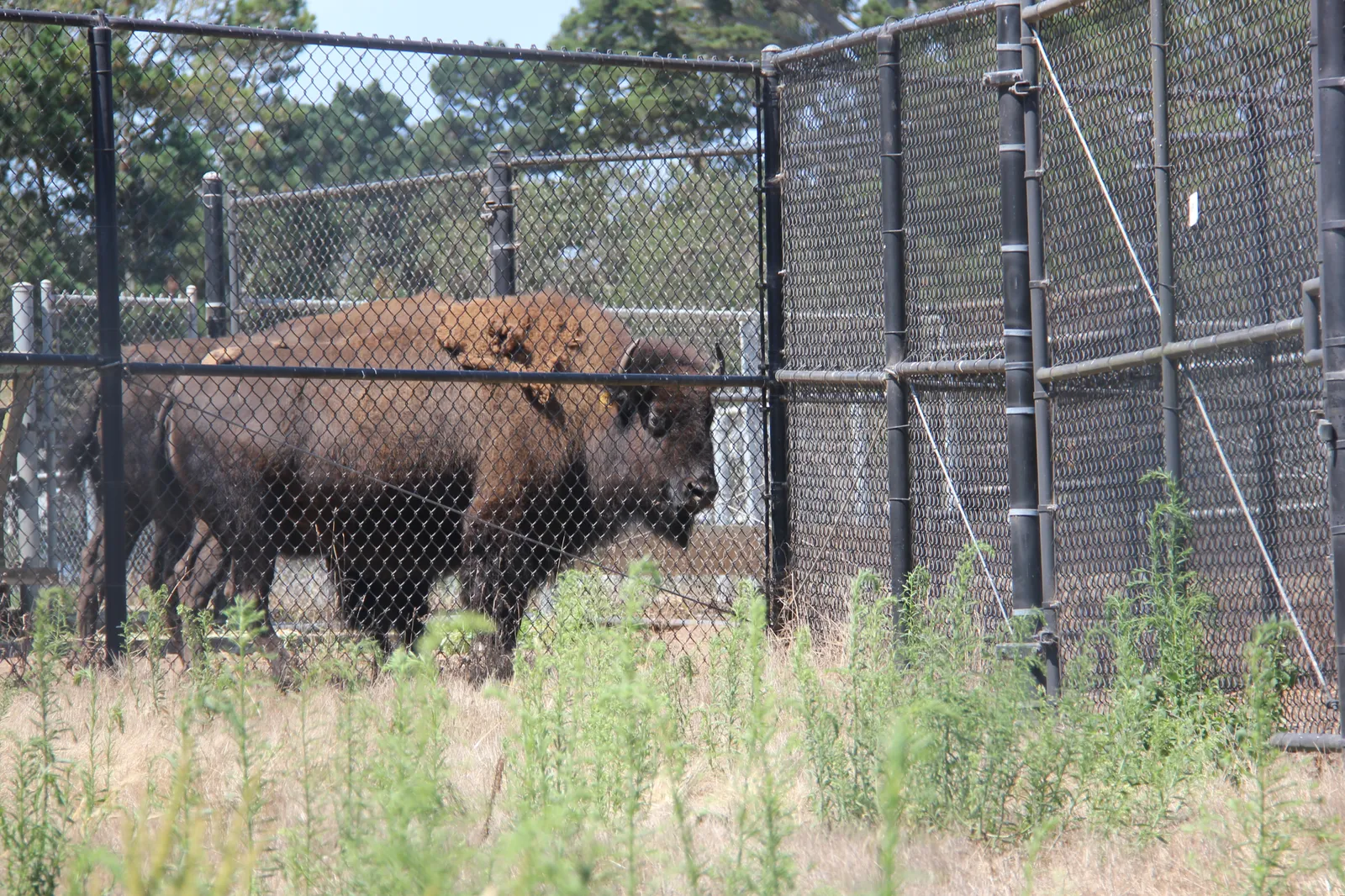
The herd peaked at thirty in 1918 and the animals there now, all female and looked after by keepers from the San Francisco Zoo, are not descended from the originals. Looking at them costs nothing and takes as long as you want it to. Getting there is the issue: the paddock is about two miles west of the museums, which on foot is most of an hour each way.
The park’s east end is a straight run in from the Market Street subway
The Conservatory of Flowers, a white glasshouse from 1879, marks the eastern entrance nearest the city, and the walk in from Stanyan Street at the edge of the Haight takes a couple of minutes. The light rail line that runs under Market Street continues out to the Sunset and surfaces a block south of the park at Ninth Avenue and Irving, which puts the Music Concourse cluster within a five-minute walk.
For the airport, ride that line back east into the Market Street subway and get off at Powell Street, where BART uses the same station. San Francisco International Airport (SFO) is 31 minutes from there for $11.80 on a Clipper card, served by the Yellow and Red lines through the day and by the Yellow line alone every 20 minutes after 9pm, with the last airport train leaving Powell at 12:43am. Count on an hour and a half from the park to the terminal door, more if you have been out at the western end.
Three miles of park is more than a short layover can absorb. If you have less than four hours, the San Francisco layover guide stays downtown, where the stops are minutes apart rather than miles.
Frequently asked questions
Can you go up the de Young tower without paying for the museum?
Yes. Walk into the de Young's main lobby, go past the ticket desk and take the lift to the ninth floor: the Hamon Observation Tower is free to everyone and needs no ticket. The glassed-in room at the top gives a 360-degree view over the park, the western half of the city, the ocean and the Golden Gate Bridge. It keeps shorter hours than the galleries below it and closes before the museum does, so it is not a plan for the last half hour of the day.
Is the Japanese Tea Garden ever free?
For an hour, three mornings a week. Everyone gets in free from 9am to 10am on Mondays, Wednesdays and Fridays, no residency or ID needed. Outside that window adult admission for non-residents runs between about $12 and $16 depending on the season and the day, with lower rates for seniors, teenagers and children. San Francisco residents get in free any day with proof of address. The garden was built for the California Midwinter International Exposition in 1894 and is the oldest public Japanese garden in the United States.
How far apart are things in Golden Gate Park?
Further than the map suggests. The park is three miles long and half a mile wide, over 1,000 acres in all, and the museums sit near the eastern third while the bison paddock and the windmills are out toward the ocean. The Music Concourse cluster, meaning the Academy of Sciences, the de Young and the tea garden, is genuinely compact and covers most of what a short visit wants. Getting from there to the western end is a bus ride or a bike, not a stroll, and the wind off the Pacific stiffens noticeably as you go west.
Is a bike a good way to cover Golden Gate Park before a flight?
It is the only sensible way to reach both ends in one visit. John F. Kennedy Drive is car-free through much of the park's eastern half, which makes the main axis a continuous ride rather than a series of road crossings, and it flattens the three-mile length into about twenty minutes. Bikes and eBikes are rented by the day near the park. The catch on a flight day is the return: you have to bring it back where you got it.