Mission Dolores on a San Francisco Layover
Part of the full San Francisco Layover: Cable Cars, SFO
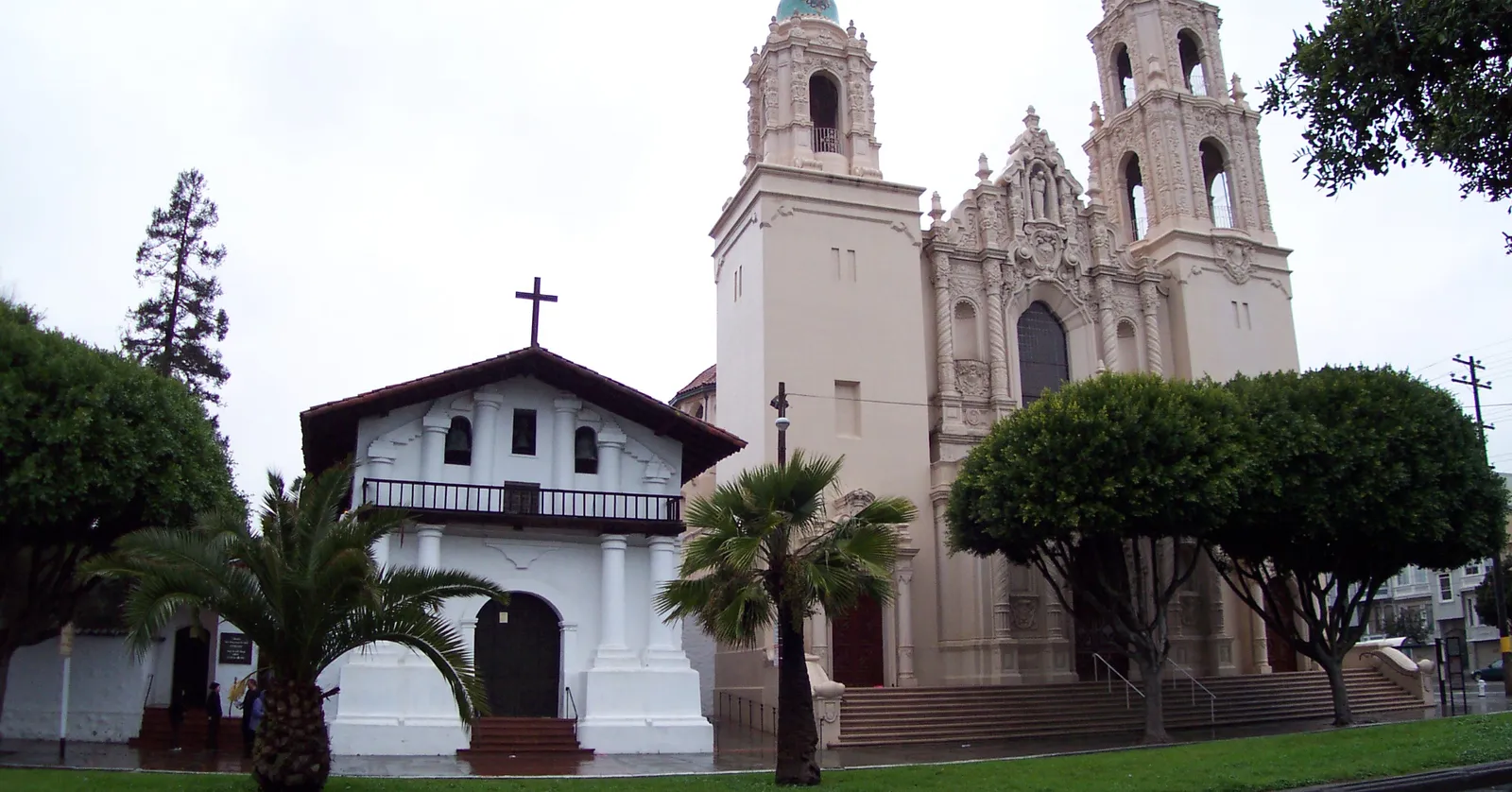
San Francisco’s oldest intact building is the small adobe chapel at Mission Dolores, finished in 1791 and standing beside a 1918 basilica, in a neighbourhood that stays sunny on the afternoons the rest of the city fogs over.
An adobe chapel of 1791 next to a basilica of 1918
The Spanish founded Misión San Francisco de Asís in June 1776 and finished the adobe church fifteen years later. It is still standing, unrebuilt, with four-foot adobe walls, redwood roof beams, a ceiling painted in Ohlone designs in vegetable dyes and a carved reredos shipped up from San Blas in Mexico in 1796; of the twenty-one missions in the California chain, this is the only chapel that never had to be reconstructed, and it came through 1906 when most of the city did not.
Alongside it, dwarfing it, is the basilica of 1918: carved Churrigueresque stone, twin towers, a rose window. The contrast between the two buildings, sharing one forecourt on Dolores Street, is the thing worth crossing town for. A self-guided visit runs on a suggested $10 donation, 10am to 4pm on weekdays and to 5pm at weekends, and includes the cemetery, the only one left inside the city limits, where Ohlone and Miwok dead lie alongside gold-rush settlers.
Mission Street and 24th Street are where this neighbourhood eats
The commercial spine runs south from Mission Dolores along Mission Street and crosses 24th, and this is where the Mission stops being a historic site and starts being a place people live. Taquerias, panaderías, produce stalls, record shops, and the burrito that took the neighbourhood’s name and went everywhere else.
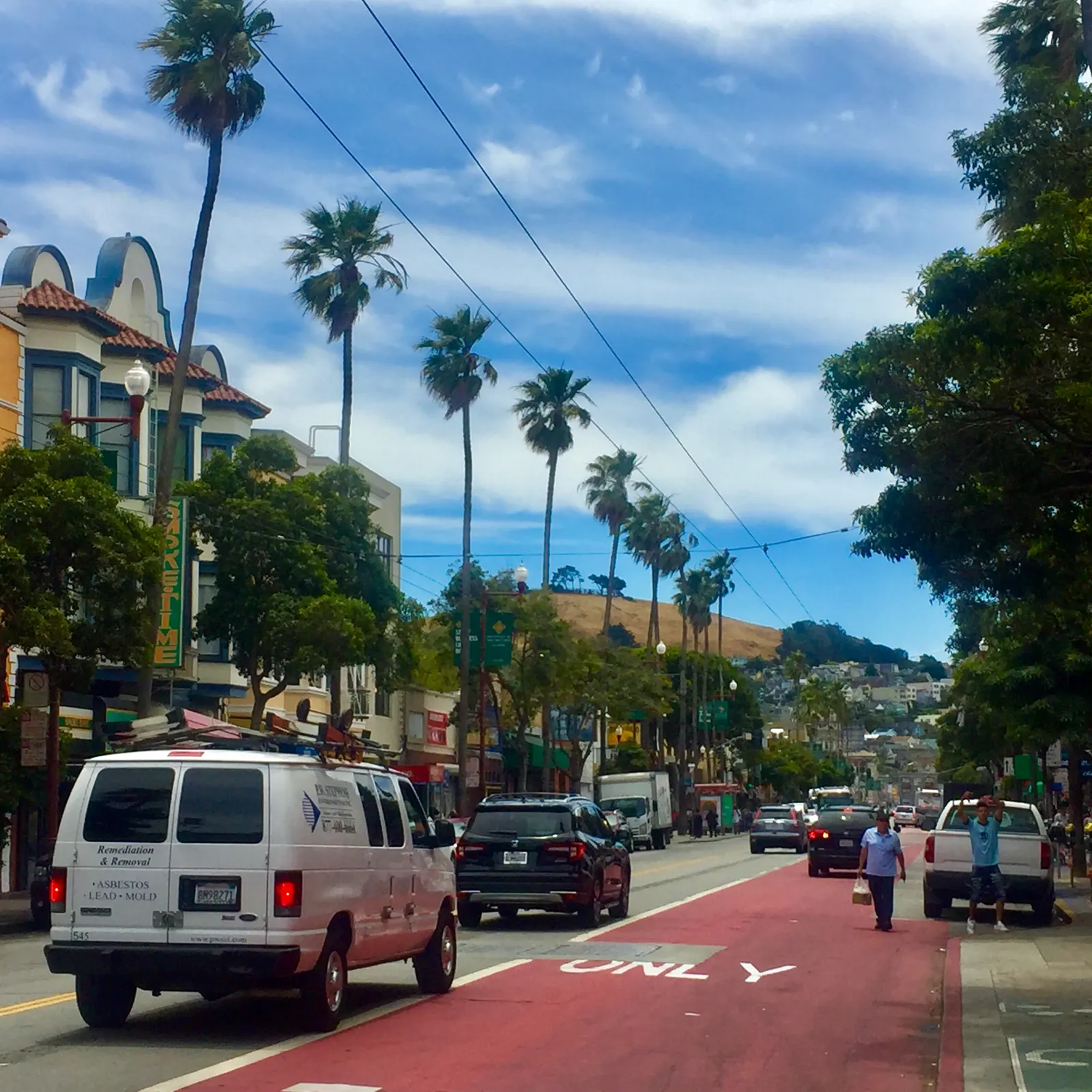
Two lanes off this grid are given over to murals: Balmy Alley, off 24th, painted continuously since 1984 and heavy with Central American political work, and Clarion Alley off Valencia, repainted often enough by its volunteer project that regulars still find new walls. Both are free and both are residential streets, so the etiquette is to keep moving. If you would rather have the food and the painting explained than guess, a walking tour covers both across 24th Street with tastings along the way.
Dolores Park’s slope lines the downtown towers up above the rooftops
Sixteen acres of grass rise west from Dolores Street between 18th and 20th, and the higher you go the better the view gets: the whole downtown skyline stacked above the low Victorian rooftops of the Mission, with palms along the park’s edge.
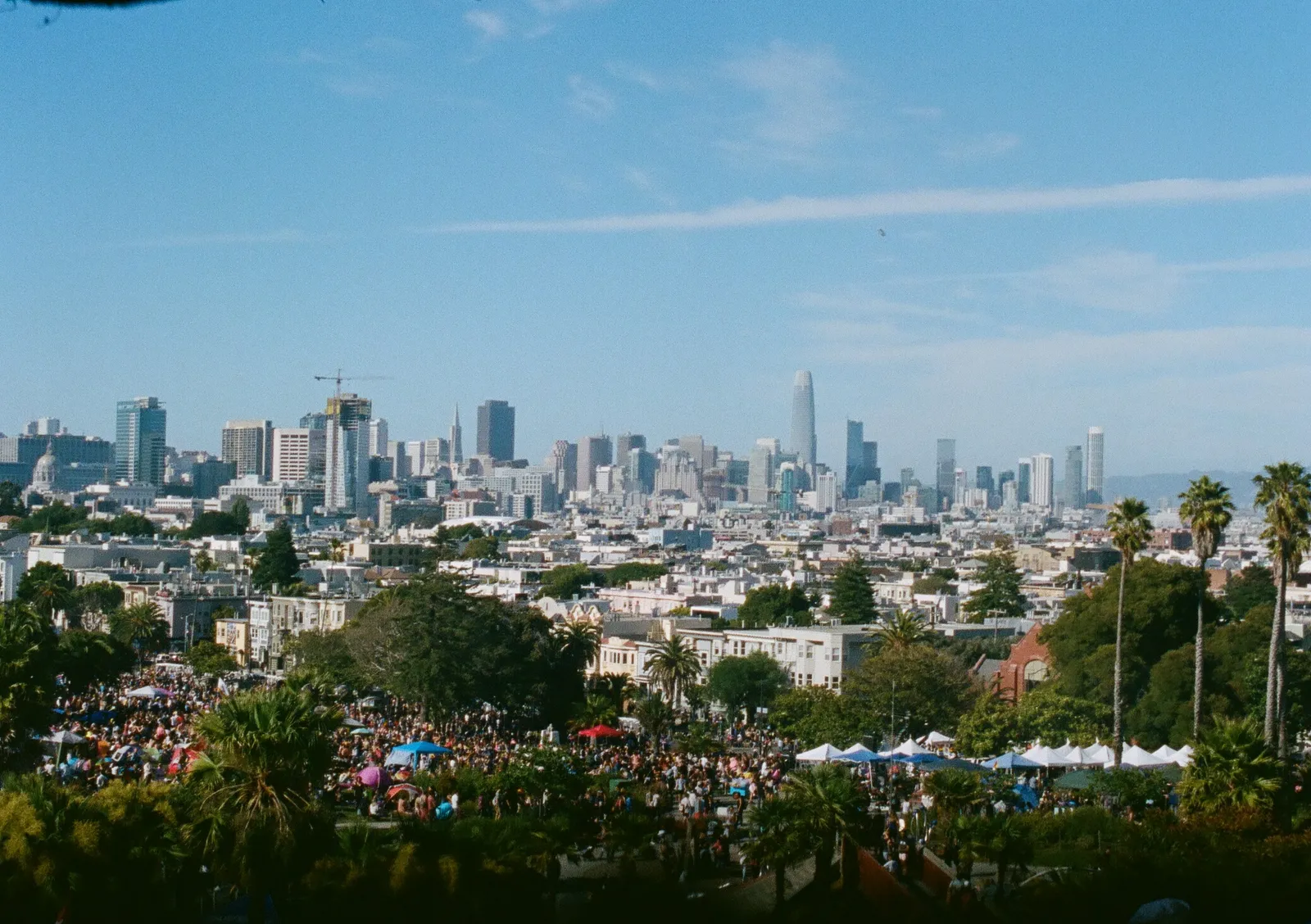
The park is also the clearest demonstration of what Twin Peaks does to this city’s weather. The ridge to the west breaks up the marine layer before it gets over, which is why the Mission can be in full sun at 75 degrees while the Outer Sunset, under three miles away, sits at 58 in the fog. That gap is what catches people out: you arrive dressed for a grey downtown, warm up here, and cool down again the moment you head back, so a jacket ends up in your hands rather than on you for most of the afternoon.
Two metro stops separate the Mission from the airport train
The Mission’s two underground stations sit on Mission Street at 16th and at 24th, and both are on the same BART line that runs under Market Street through the middle of the city; 16th Street is about a ten-minute walk from the mission itself, uphill on the way back.
For San Francisco International Airport (SFO), you do not need to change at all from either one: the Yellow line runs straight through from the Mission out to the airport, roughly every 20 minutes on its own and more often during the day when the Red line is also running to SFO. The fare from 16th Street is $11.70 on a Clipper card and the ride takes 27 minutes. Add the AirTrain at the far end for Terminals 1 and 2, and remember the last airport-bound trains run shortly after midnight.
That through service is the real argument for spending a layover out here rather than downtown: it is the one neighbourhood on this side of the city where the airport train stops at the end of the street.
Frequently asked questions
What are Mission Dolores's opening hours and does it cost anything?
The chapel and basilica open 10am to 4pm Monday to Friday and 10am to 5pm at weekends, and a self-guided visit runs on a suggested donation of $10 for an adult with no reservation needed. Guided docent tours are suspended for the time being; when they return they are booked through the parish rather than at the door. The cemetery beside the chapel is part of the same visit, and it is the only burial ground left inside the city limits.
Why is the Mission sunny when the rest of San Francisco is fogged in?
Twin Peaks is in the way. The marine layer rolls in off the Pacific across the Sunset and the Richmond, and the 900-foot ridge west of the Mission breaks it up before it gets this far, so the neighbourhood spends a lot of summer afternoons in clear sun while the western half of the city sits under grey. The gap can be ten to fifteen degrees Fahrenheit across less than three miles. The practical version: whatever you wore downtown will be too much here, and too little again when you go back.
Where are the Mission's mural alleys?
Two lanes, both open to walk down and neither charging anything. Balmy Alley, off 24th Street between Harrison and Treat, has been painted continuously since 1984 and concentrates on Central American political work. Clarion Alley, off Valencia between 17th and 18th, has been run by a volunteer mural project since 1992 and repaints far more often, so it looks different year to year. Both are working residential lanes rather than galleries, so keep to the pavement and do not block doorways.
Is the Mission worth it on a short layover?
Only if you have four hours or more. It is two stops out from the middle of the city on the metro, which is quick, but the walking between the mission, the park and 24th Street adds up to a couple of miles, and the food is half the reason to come, which takes time you cannot rush. With less than that, the San Francisco layover guide keeps everything inside a mile and a half of Union Square instead.