Caltrain 4th and King: A San Francisco Layover
Part of the full San Francisco Layover: Cable Cars, SFO
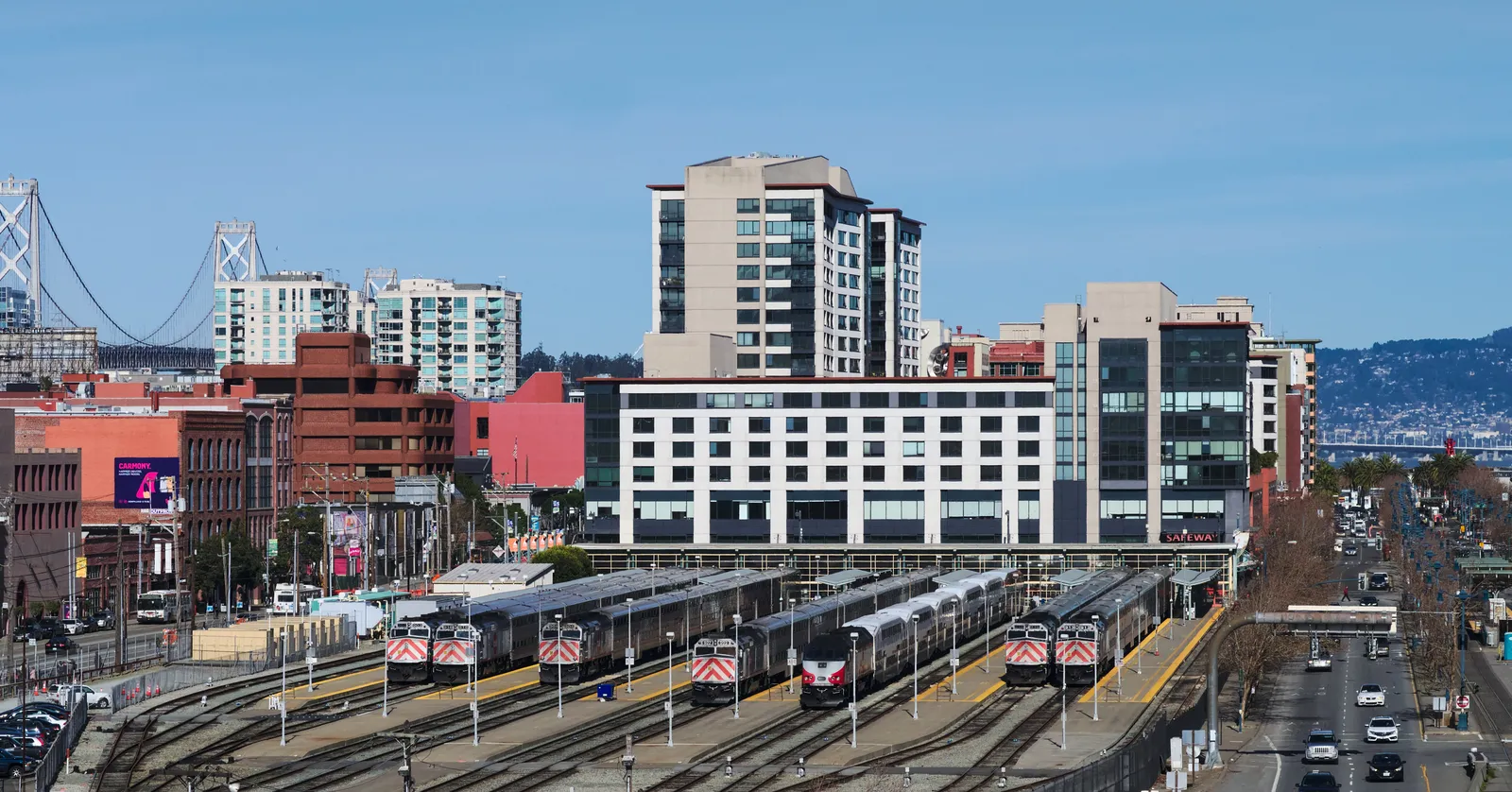
San Francisco’s Caltrain terminus at 4th and King sits two blocks from Oracle Park, where the public walkway along McCovey Cove has arches cut into the right field wall that let anyone watch three innings for nothing.
Three innings through the arches on Oracle Park’s portwalk
Oracle Park stands at 24 Willie Mays Plaza on China Basin, and the reason the free view exists at all is a planning condition: the city required a public walkway between the ballpark and the water, so the Giants put openings in the right field wall for the people using it. About 75 spectators stand behind the chain-link at once, in a queue that staff cycle every three innings, sooner on a full house, and the club’s own account calls it the only setup like it in the major leagues.
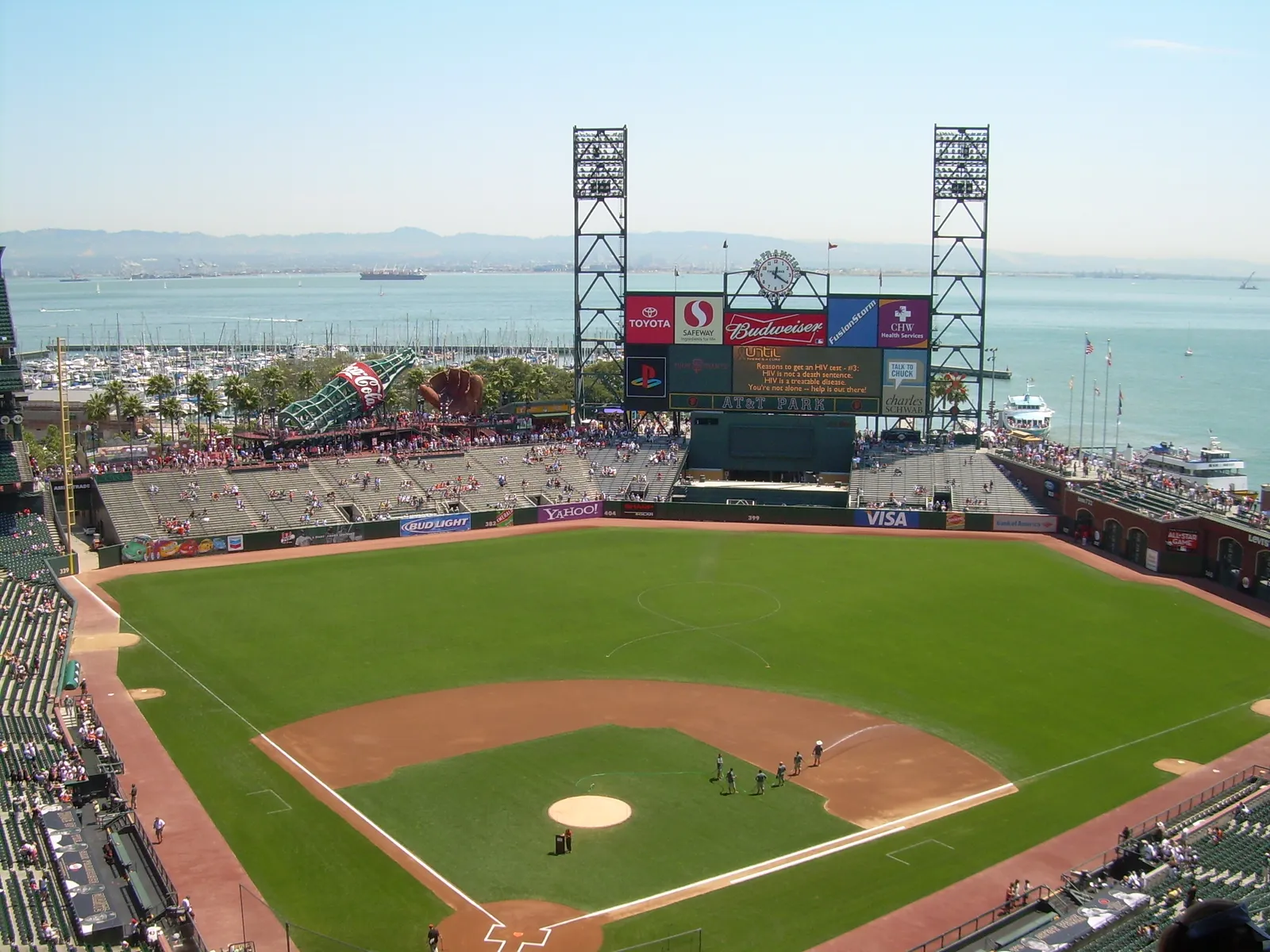
The screening is the same as at any gate and cans, bottles and alcohol stay outside. If three innings from a standing spot is not the version you want, a seat inside is sold in advance, and the walk back from the ballpark to the platforms is about five minutes, which is the whole argument for using this station as a base rather than downtown.
Everyone who arrives at 4th and King came up the peninsula on a train, which usually means a full trip’s worth of luggage rather than a day bag, and every one of the stops below is a flat outdoor walk of a mile or more.
Chase Center’s public plazas on the Mission Bay waterfront
Chase Center opened at Third and 16th Street in September 2019 as the Warriors’ home, an 18,064-seat arena on an eleven-acre site. What matters on a day with no game is the rest of that site: public plazas, cafés, and a five-and-a-half-acre waterfront park along the bay, none of which asks for a ticket.
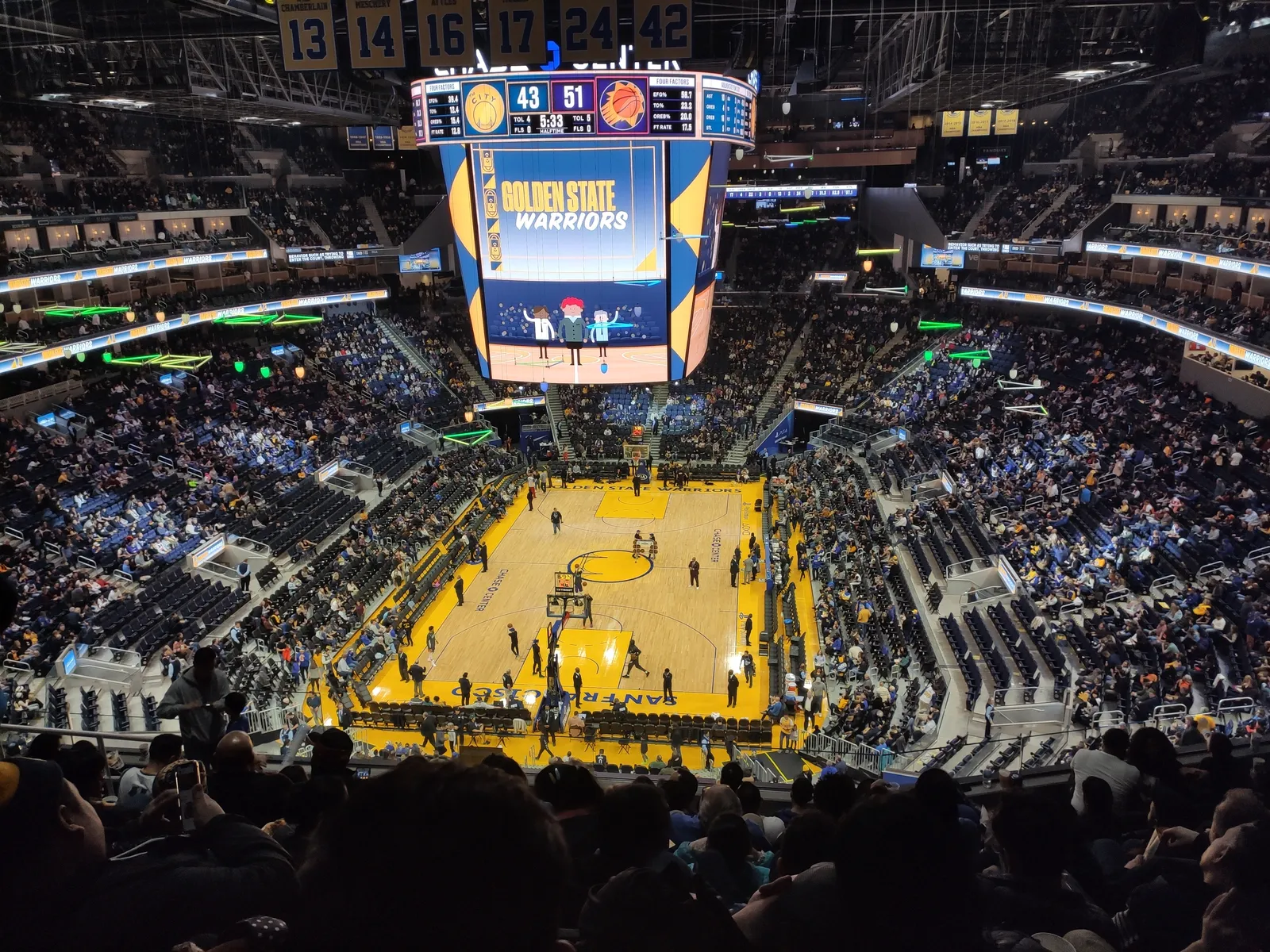
It is about fifteen minutes’ walk south of the station down Third Street, or a couple of stops on the light rail that runs the same street. Basketball and concerts both need an evening, so treat the arena as an option for a genuinely late flight and the plazas as the thing that is there at any hour.
Twenty houseboats moored on Mission Creek
Mission Creek runs inland from the bay just south of Oracle Park, and about twenty houseboats are tied along it, on a berth arrangement that has been there since 1960 when the community was moved up from Islais Creek to clear the way for merchant shipping.
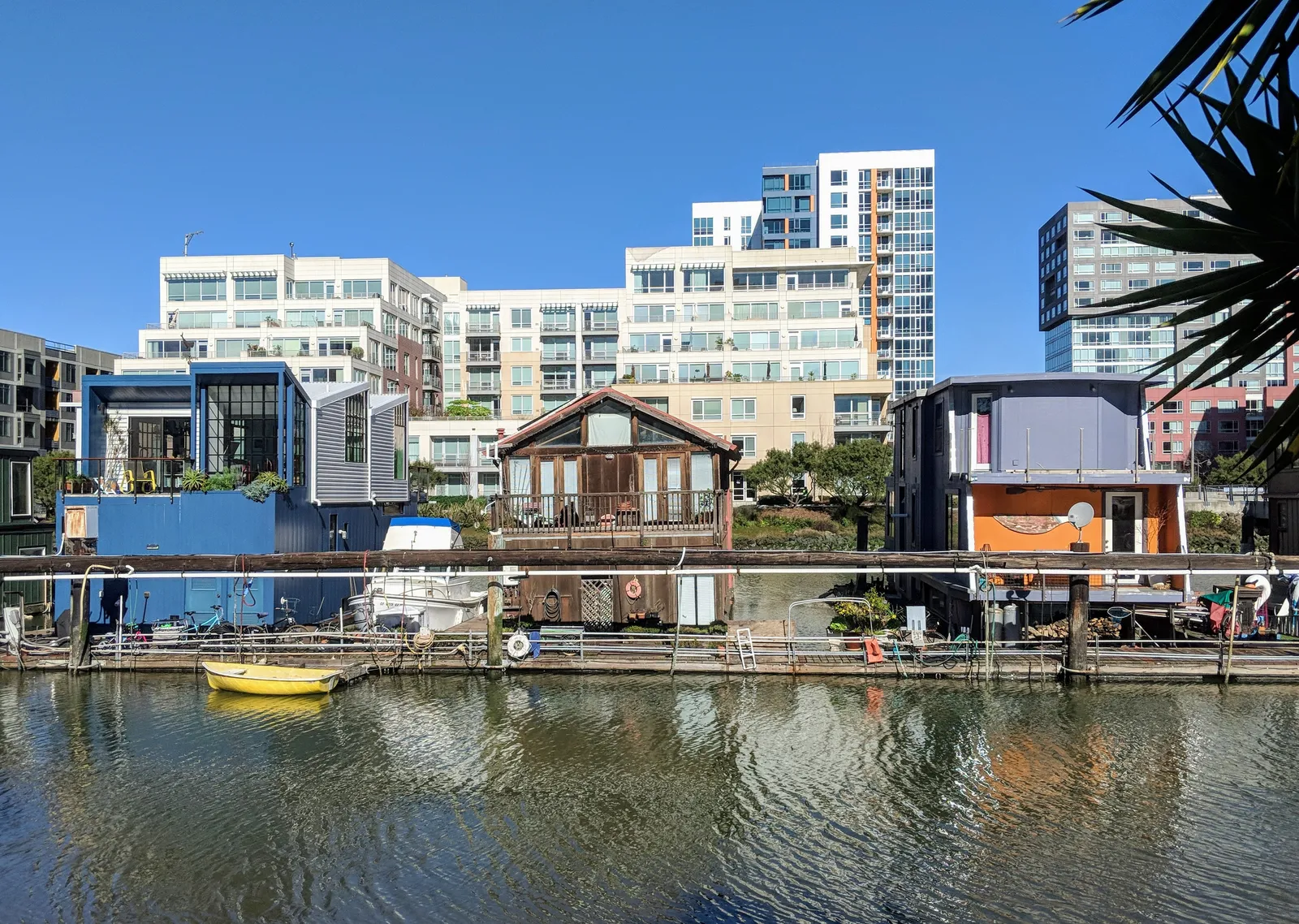
The south bank is a grassy, tree-shaded promenade open to walk, and the view across is a row of hand-built floating houses with twenty-storey glass towers standing directly behind them, which is Mission Bay’s whole recent history in one frame. It takes ten minutes to walk from the station and there is nothing to pay or queue for at any point.
South Park, an oval laid out on a London model in 1855
South Park is a single ellipse of grass and old trees between Second and Third Streets, 550 feet around, and it has been in the same place and the same shape since the 1850s. George Gordon, a British-American developer, assembled the land in 1852 and built the park and its surrounding terraces by 1855 on the model of a London residential square, aimed at buyers who wanted the city’s first fashionable address.
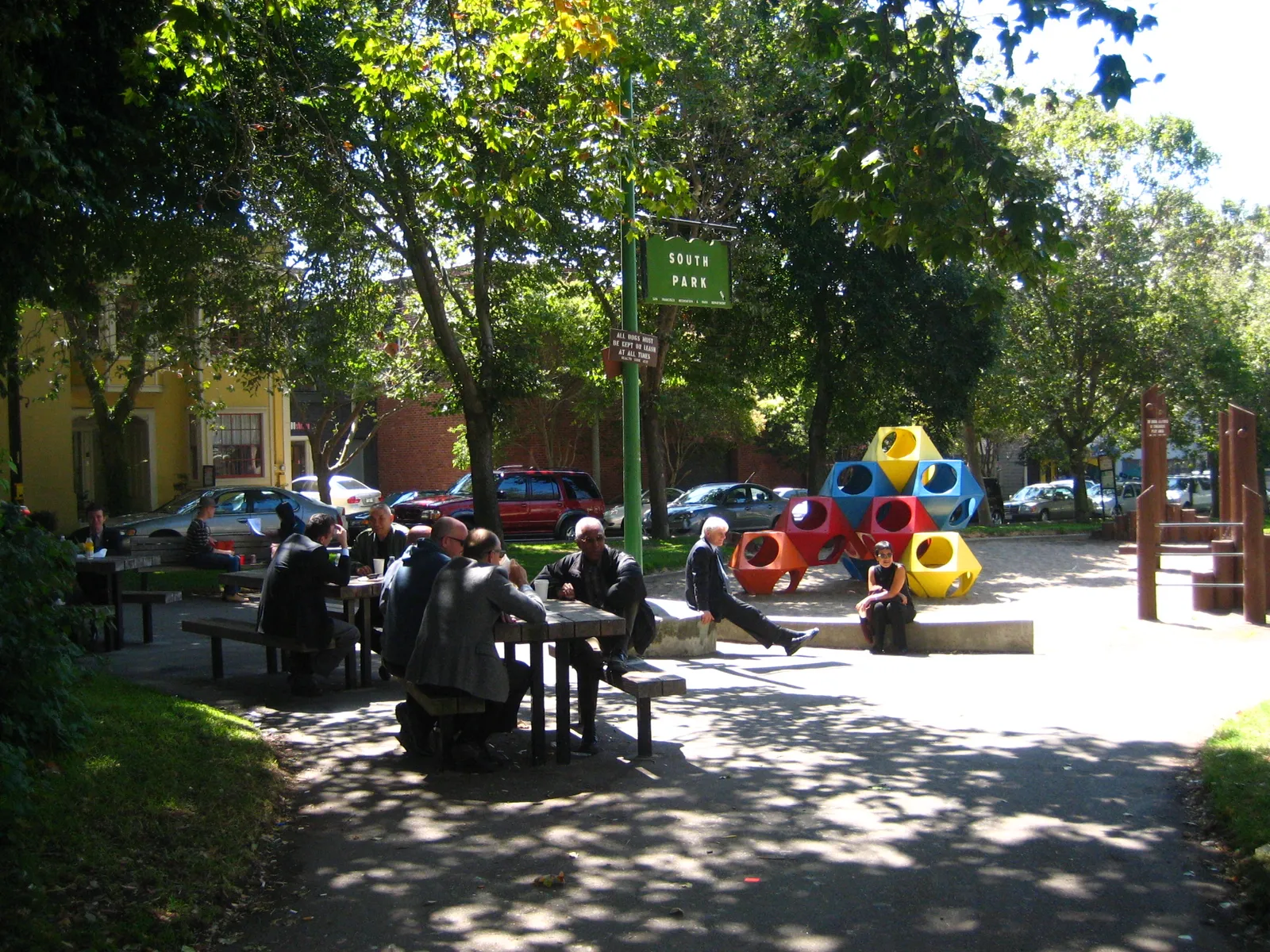
The terraces went in the 1906 fire and the neighbourhood came back as warehouses and light manufacturing, then as the address for the first internet boom in the 1990s. The oval itself never moved. A $2.8 million rebuild finished in 2017 replaced everything inside it, paths, planting, playground and all, without touching the shape. It is about twelve minutes on foot from the station, and it is where people who work around here eat lunch rather than a place with anything to see, which is rather the point after an hour on a train.
No BART platform at 4th and King, but two stops gets you one
The airport train does not call here. What the station has is its own Muni light rail platforms, and the N Judah runs from them along King Street and the Embarcadero before dropping into the Market Street subway, where it calls at Powell Street on the same platforms BART uses.
From Powell Street, San Francisco International Airport (SFO) is 31 minutes and $11.80 on a Clipper card, on the Yellow line all day and the Red line as well until 9pm; after that the Yellow line runs alone every 20 minutes until the last airport train leaves Powell at 12:43am. Allow more than the sum of those numbers: the light rail leg, the wait, and the AirTrain from the airport station out to Terminal 1 or 2 push the real door-to-gate figure closer to an hour.
The T Third also serves 4th and King and runs north through the Central Subway to Union Square/Market Street, but that connection leaves you walking a block above ground to reach Powell Street, so the N is the simpler of the two. If you would rather spend the time in the middle of the city than around the ballpark, the San Francisco layover guide works from Union Square instead, and the cable cars start a few steps from the same Powell Street platforms.
Frequently asked questions
Can you really watch a Giants game for free at Oracle Park?
Yes, for three innings at a time. City law required a public walkway between the ballpark and the water when Oracle Park was built, so the Giants cut openings in the right field wall along the McCovey Cove portwalk. About 75 people stand behind the chain-link at a time, first come first served, and staff cycle the queue through every three innings or sooner when it is busy. Security screening applies the same as at any gate, and no cans, bottles or alcohol come in with you. The Giants describe it as the only arrangement of its kind in Major League Baseball.
How do I get from the Caltrain terminus to the airport train?
There is no BART platform at 4th and King. Take the N Judah light rail from the station's own Muni platforms: it runs along King Street and the Embarcadero, then into the Market Street subway, and stops at Powell Street, where the BART platforms are in the same station. From Powell Street it is 31 minutes to San Francisco International Airport (SFO) for $11.80 on a Clipper card. The T Third also serves 4th and King and reaches Union Square/Market Street through the Central Subway, but that leaves you with a street-level walk over to Powell Street rather than a direct interchange.
Is there anything to do near the Caltrain station in the rain?
Not a great deal outdoors, which is worth knowing before you commit to the walk. Oracle Park's free viewing arches, the Mission Creek promenade and South Park are all open-air, and the portwalk in particular sits exposed on the water with wind coming across the bay. The indoor answers near the station are the ballpark itself with a ticket, an event at Chase Center on Third Street, or the light rail two stops into the Market Street subway, where the museums and the downtown shops are under cover.
Is a Warriors game at Chase Center realistic before a flight?
Only with a late departure. Tip-off is usually in the evening and an NBA game runs past two hours once stoppages are counted, so an 18,064-seat arena emptying out at the same time as you need to reach the airport is the part to think about, not the ride itself. Seats are sold in advance across budget, regular and premium tiers. If there is no game on, the plazas and the waterfront park around the arena stay open and cost nothing.