Boston Layover Guide: Freedom Trail From BOS
Boston’s Freedom Trail links the free Faneuil Hall and Quincy Market, the colonial graves at the Granary Burying Ground, and the swan boats on the Public Garden lagoon, with the Boston Tea Party Ships and Museum’s costumed reenactment the one paid stop worth booking ahead.
The replica tea ships on the Congress Street bridge
Five minutes’ walk from South Station, a red clapboard building stands on pilings over Fort Point Channel, with replica square-rigged brigs moored alongside. The Boston Tea Party Ships and Museum runs the December 1773 raid again and again through the day with costumed actors, and reenactors hand out crates of tea for guests to throw over the rail themselves.
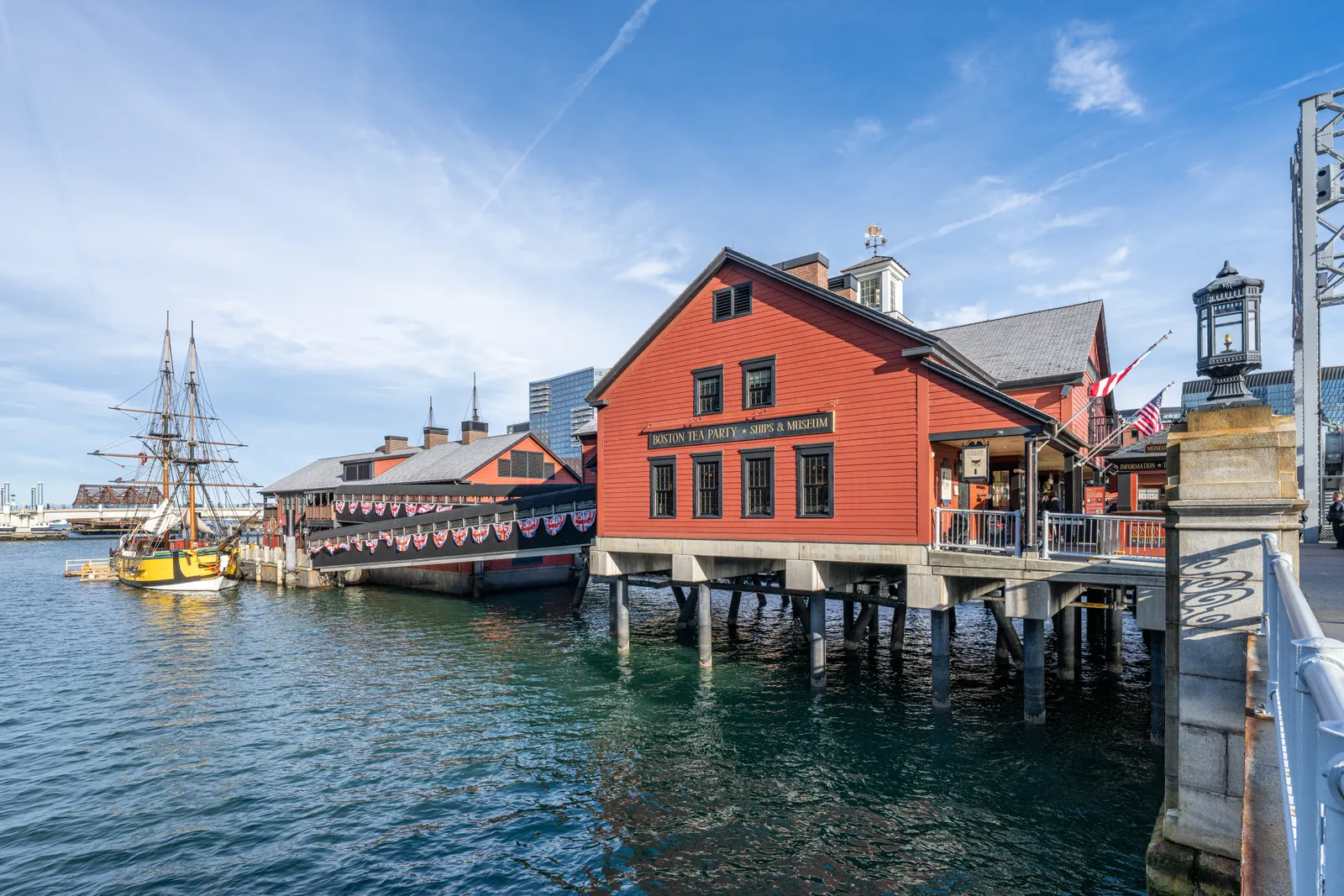
Every other stop on this walk is free or costs a few dollars; this is the one real admission. Adult tickets run around $35 and the tour takes about an hour, so it fits a layover only if you have booked it, and a timed ticket bought ahead saves standing in the walk-up line out on the bridge.
Faneuil Hall and the Quincy Market colonnade
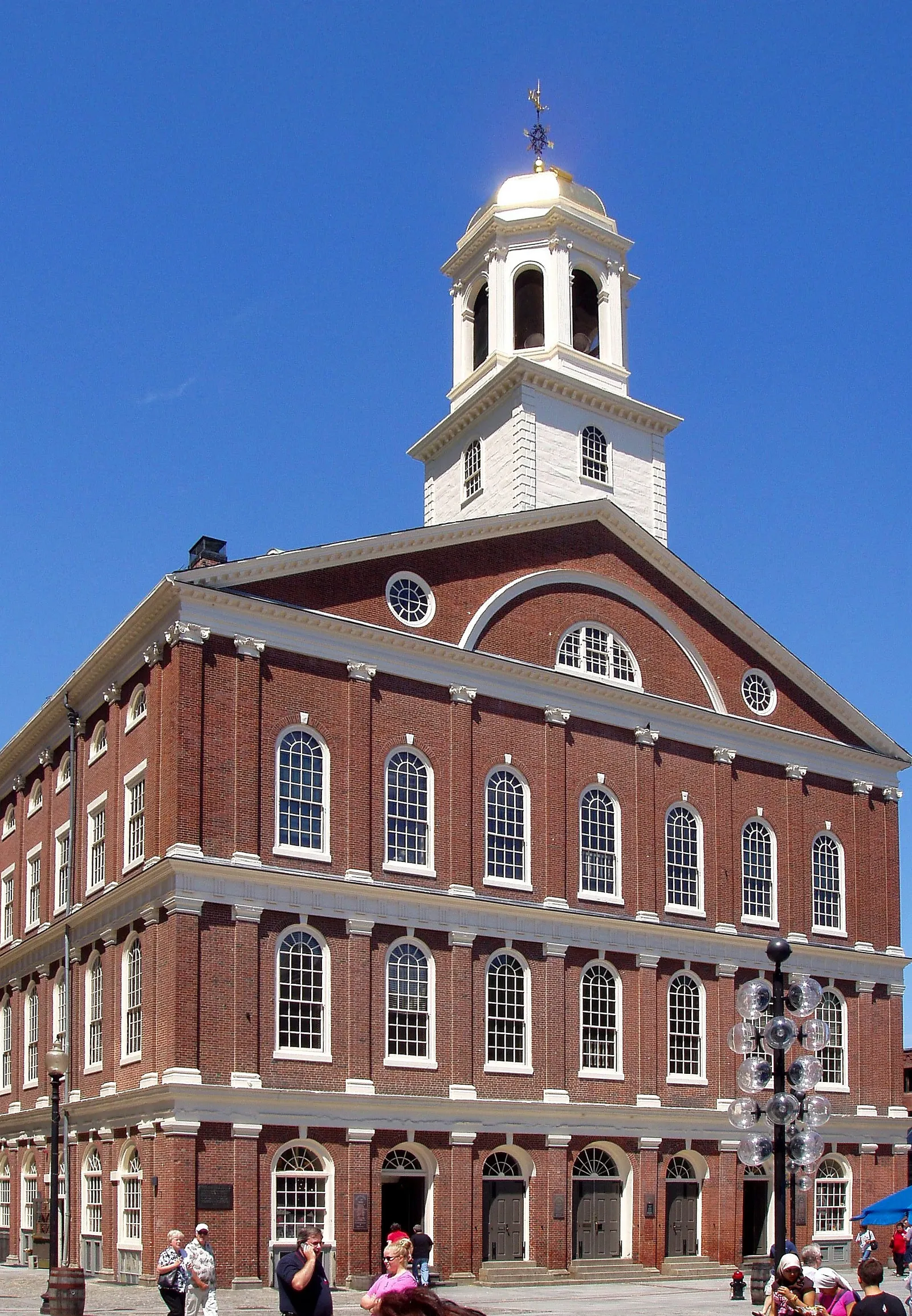
Faneuil Hall is about ten minutes north of South Station, up the lawns and fountains of the Rose Kennedy Greenway where the elevated expressway used to run. The hall itself is a squat brick Georgian block with a gilded grasshopper weathervane on the cupola, and the upper floor is the Great Hall, where Samuel Adams and later the abolitionists argued in public and where the National Park Service now gives a free talk every hour from late morning through mid-afternoon. Admission costs nothing on any floor, and a guided walking tour of the whole Freedom Trail, led by a Revolutionary War historian, covers this stop and the rest of the mile for anyone who’d rather not navigate it alone.
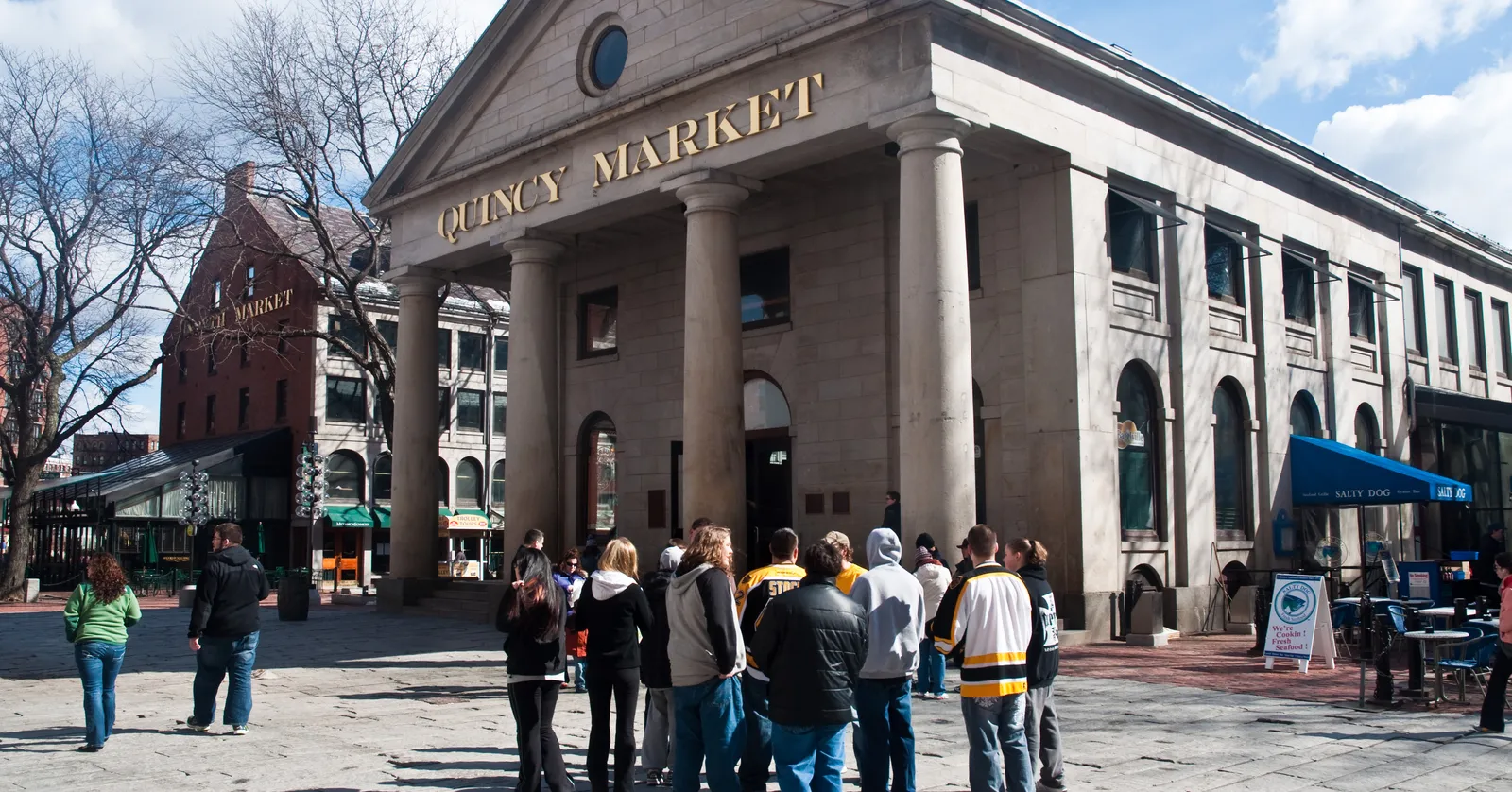
Quincy Market, the long granite hall directly behind it, opened in 1826 and is a working food hall down its whole length, with a domed rotunda halfway along and pushcart vendors filling the colonnades on either side. The market’s shops and counters keep going for hours after the Park Service floors of Faneuil Hall have shut for the day. The airport has no left-luggage lockers, so a suitcase either comes along the trail or goes into a storage point downtown before you set out.
Paul Revere’s grave at the Granary Burying Ground
On Tremont Street beside the Park Street church, a wrought-iron gate opens onto rank after rank of thin slate headstones carved with winged skulls and hourglasses. This is the Granary Burying Ground, free and open every day from 9am to 5pm, and it holds Paul Revere, Samuel Adams, John Hancock, Robert Treat Paine and the five men killed in the Boston Massacre, a dense cast list for a plot this size.
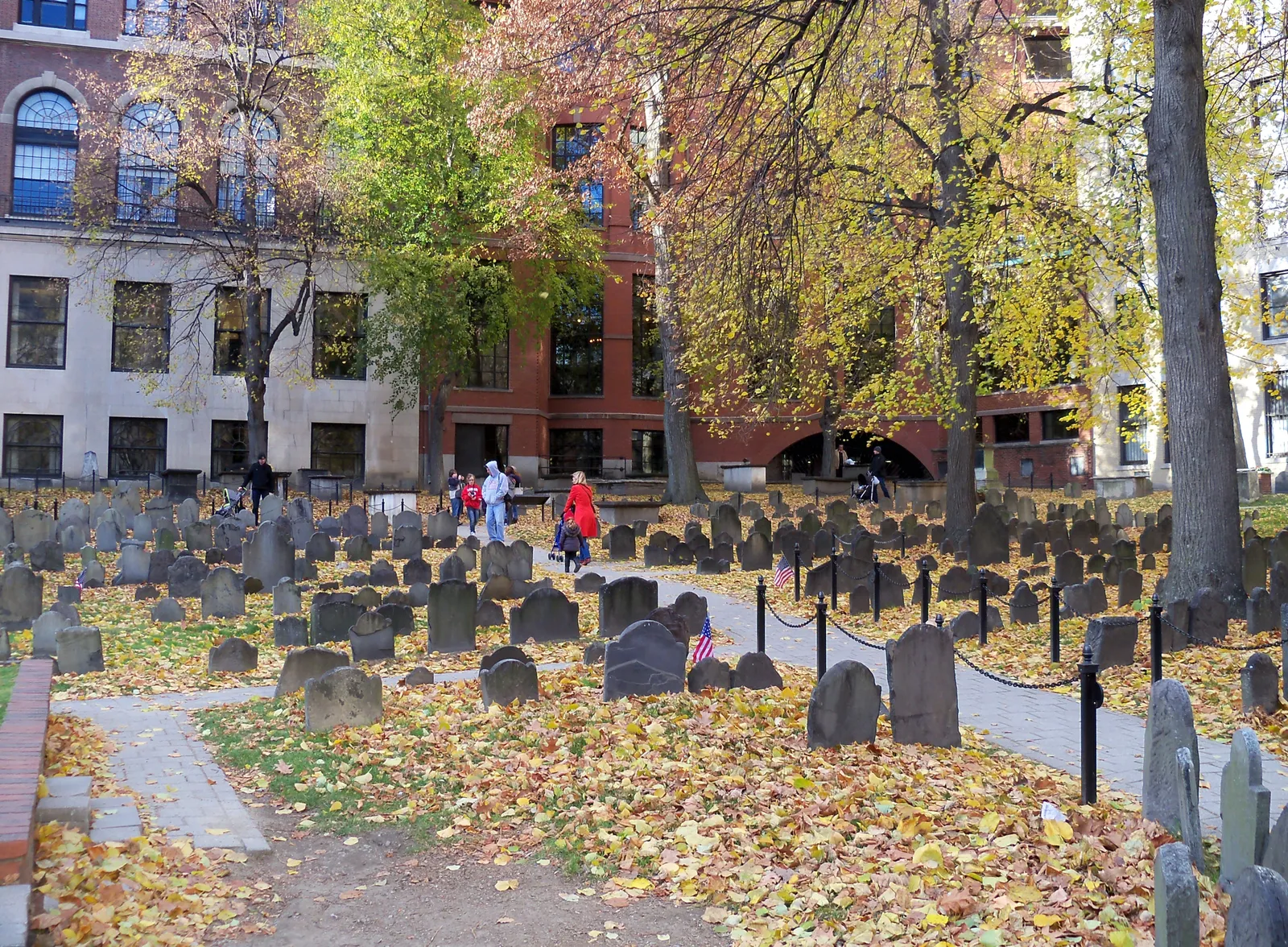
The granite obelisk in the middle is not Benjamin Franklin. It marks his parents, Josiah and Abiah, who are buried here; Franklin himself was born a few streets away on Milk Street and buried in Philadelphia. Most of the headstones were shifted into tidy rows in the nineteenth century to make mowing easier, so the stone you are standing in front of is very often not standing over the person named on it.
Boston Common has been public land since 1634
Boston Common’s fifty acres of grass run along the top of Tremont Street, bought by the town in 1634 and voted common land in 1640, which makes it the oldest public park in the country; it was pasture, militia drill field and gallows long before it was a place to sit. It is free, it is open until 11pm, and the Freedom Trail runs across it toward the gold dome of the State House on the Beacon Street side.
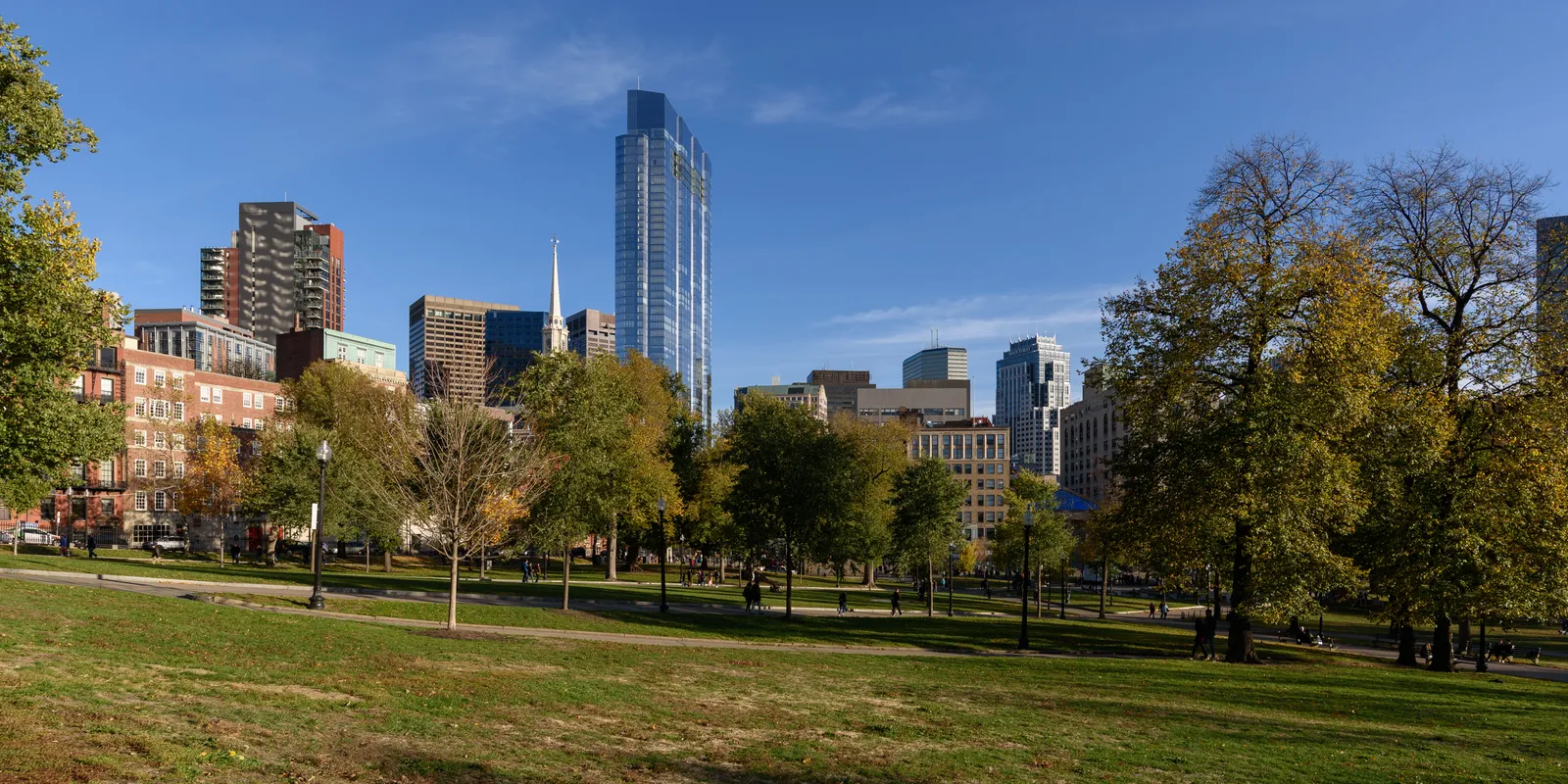
The Frog Pond in the middle changes job with the season: a free spray pool for children from late June through Labor Day, a skating rink from mid-November to mid-March, and a shallow reflecting pool the rest of the year.
Swan boats on the Public Garden lagoon
Charles Street divides Boston Common from the Public Garden, laid out in 1837 as the first public botanical garden in the United States and the more formal half of the pair: bedded flowers, labeled trees, a small lagoon and an 1867 iron footbridge across the middle of it.
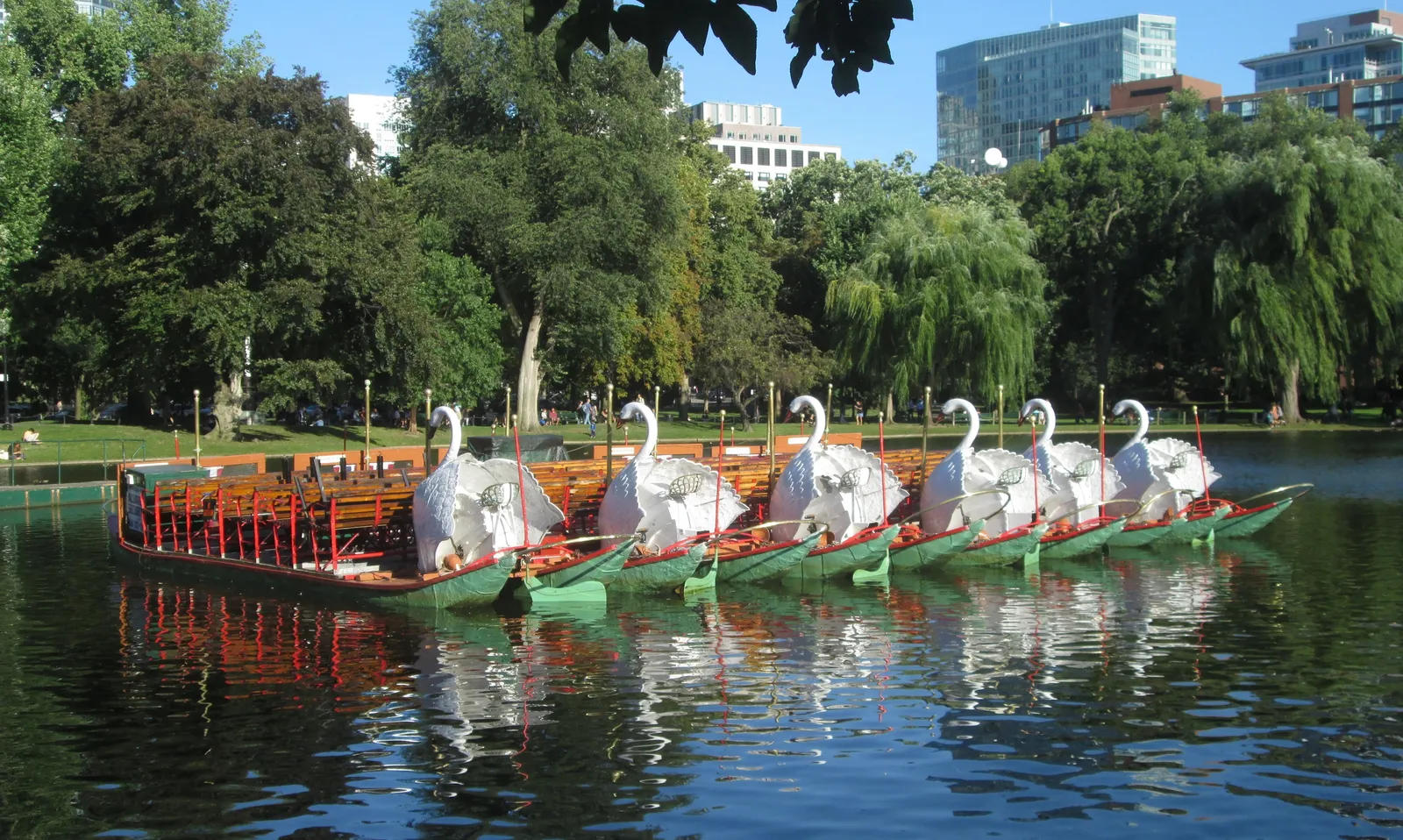
The swan boats have worked that lagoon since 1877 and are still pedaled by a driver sitting inside the swan shell at the stern. A ride lasts ten to fifteen minutes, costs $4.75 for an adult, needs no reservation and is bought at the dock. The season runs from mid-April to early September, April 18 to September 7 in 2026, and outside those months the lagoon is drained and the boats are in storage, which is worth knowing before you build an afternoon around them.
Bates Hall and the Sargent murals at the Boston Public Library
With more than about five hours to spend, the Central Library at Copley Square is the indoor half of this day, fifteen minutes down Boylston Street from the Public Garden or one stop on the Green Line subway from Arlington station. Charles McKim’s 1895 building is free to walk into, and the room people come for is Bates Hall, a barrel-vaulted reading room lined with oak tables and green-shaded lamps where the ceiling arches high enough to swallow the noise.
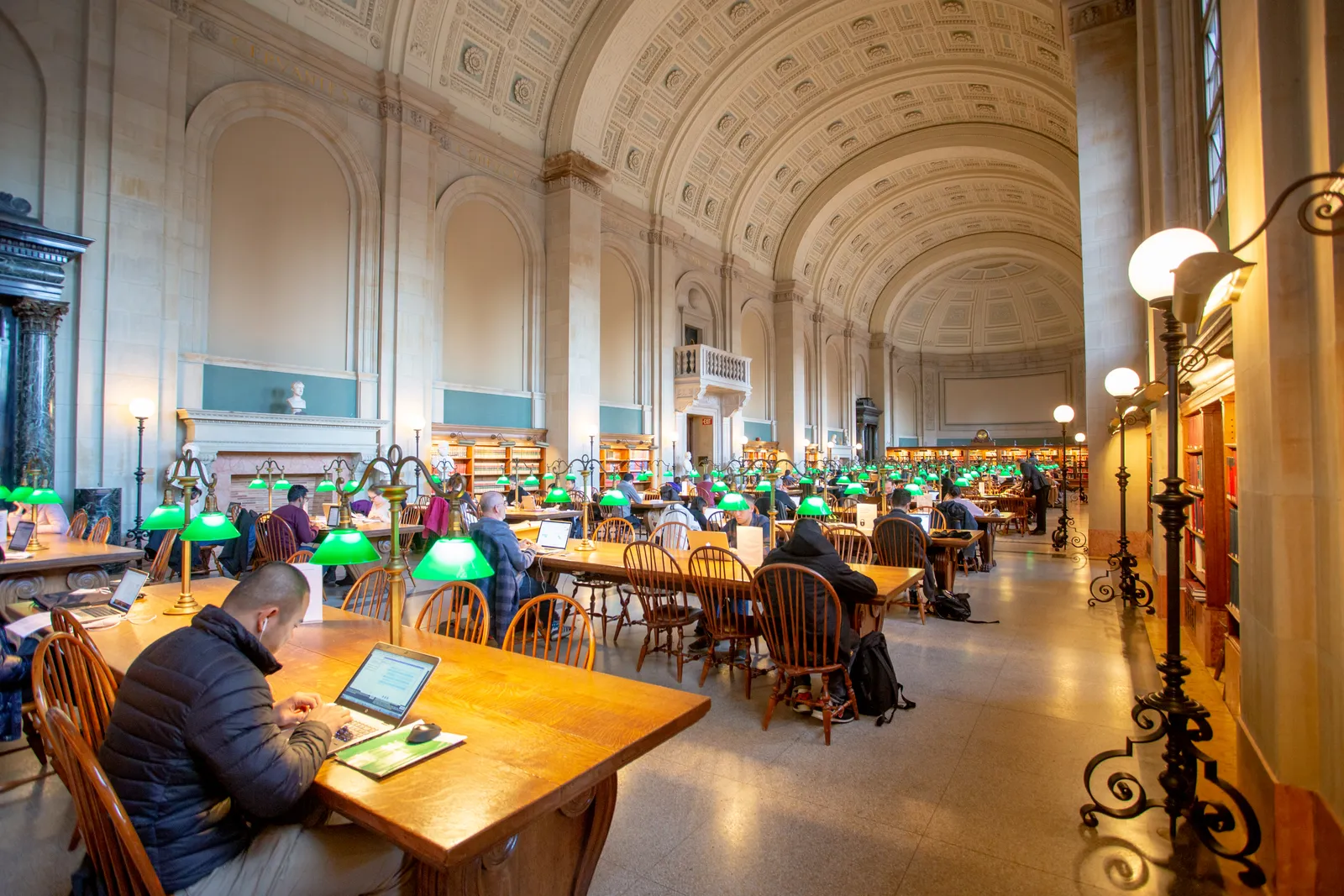
Two more things are worth the stairs. John Singer Sargent spent nearly thirty years on the murals wrapping the top-floor hall, a cycle called Triumph of Religion that he never finished, and the arcaded courtyard at the building’s center, copied from a Renaissance palazzo in Rome, is an open-air room with a fountain in it that most visitors walk straight past. The library opens 9am to 8pm Monday through Thursday, 9am to 5pm Friday and Saturday, and 11am to 5pm on Sunday.
No fares are collected at Logan Airport’s bus stops
It holds at every terminal, so the SL1 ride in costs nothing no matter where you board. The ride back is the standard $2.40 subway fare, and transfers from the Red Line subway onto the SL1 bus are free, so a single $2.40 tap gets you to your terminal from anywhere downtown. The bus takes about twenty minutes through the harbour tunnel, but it shares that tunnel with everything else leaving the city, so leave at least two hours for the ride, check-in and security.
If you end up back near South Station with time to fill, the lawn and trees at Post Office Square, a few minutes up Congress Street in the middle of the Financial District, are open 6am to 9pm, with cushions put out for the grass and café tables under a garden trellis. A multi-story parking garage stood here until 1988; it was rebuilt underground, the park went in on top of it, and the parking revenue has paid the upkeep ever since.
Faneuil Hall, the burying ground, the Common and the Public Garden are strung along about a mile of the trail, which is what makes this work on foot rather than in a taxi. Leaving the suitcase downtown is what keeps it a walk: the brick sidewalks, the grass between the headstones and the line out on the Congress Street bridge all stop being your problem.
Frequently asked questions
What should I do during a layover in Boston?
With four to six hours, a bus into the city is free from any terminal to South Station, about 20 minutes, from where it's a ten-minute walk up the Greenway to Faneuil Hall's free Great Hall and Quincy Market's food stalls. From there, the Granary Burying Ground on Tremont Street is free and holds Paul Revere, Samuel Adams and John Hancock in one small plot, and Boston Common and the Public Garden beyond it stay open until 11pm. The one paid stop is the Boston Tea Party Ships and Museum's reenactment near South Station, worth booking ahead if it fits the schedule, and the only other real planning is timing the ride back: the standard subway fare and about two hours before your flight.
Why is the Silver Line bus free out of Logan but not back to it?
No fares are collected at the Logan Airport stops at all, so the SL1 bus into the city costs nothing whichever terminal you board at. Going the other way you pay the standard $2.40 subway fare, and transfers from the Red Line subway onto the SL1 are free, so that $2.40 covers the whole trip back from anywhere downtown. Airport fare rules differ a lot between US cities: the Blue Line train out of O'Hare in Chicago adds a $5 surcharge in exactly the direction Boston charges nothing.
Is the walk from South Station to Boston Common step-free?
The route itself is flat and the crossings are curb cut, but a lot of downtown Boston's sidewalk is laid in brick that has lifted around tree roots over the years, which is slow going on small wheels. At the Granary Burying Ground the main path is paved and the rows between the headstones are grass. Boston Common rises toward Beacon Street and the State House at its northern corner, so keeping to the Tremont Street and Charles Street sides keeps it level.
Is this walk worth doing with young children?
The Public Garden is the reason to say yes. Nancy Schön's bronze Mrs. Mallard and her eight ducklings stand near the Beacon and Charles Street corner of the garden, low enough to be climbed on, and a swan boat ride costs $3.25 for ages 2 to 15, free under 2, and lasts 10 to 15 minutes. Over on Boston Common, the Frog Pond runs a free spray pool from late June through Labor Day and freezes into a skating rink from mid-November to mid-March.
What is still open in Boston if I only reach downtown in the evening?
Boston Common and the Public Garden stay open until 11pm, so the outdoor half of this walk holds up late. The Granary Burying Ground closes at 5pm and the National Park Service floors of Faneuil Hall, including the Great Hall, shut in the late afternoon. The Central Library in Copley Square is the useful exception: it stays open until 8pm Monday through Thursday, and until 5pm on Friday and Saturday.