Boston Layover Near Fenway Park
Part of the full Boston Layover Guide: Freedom Trail From BOS
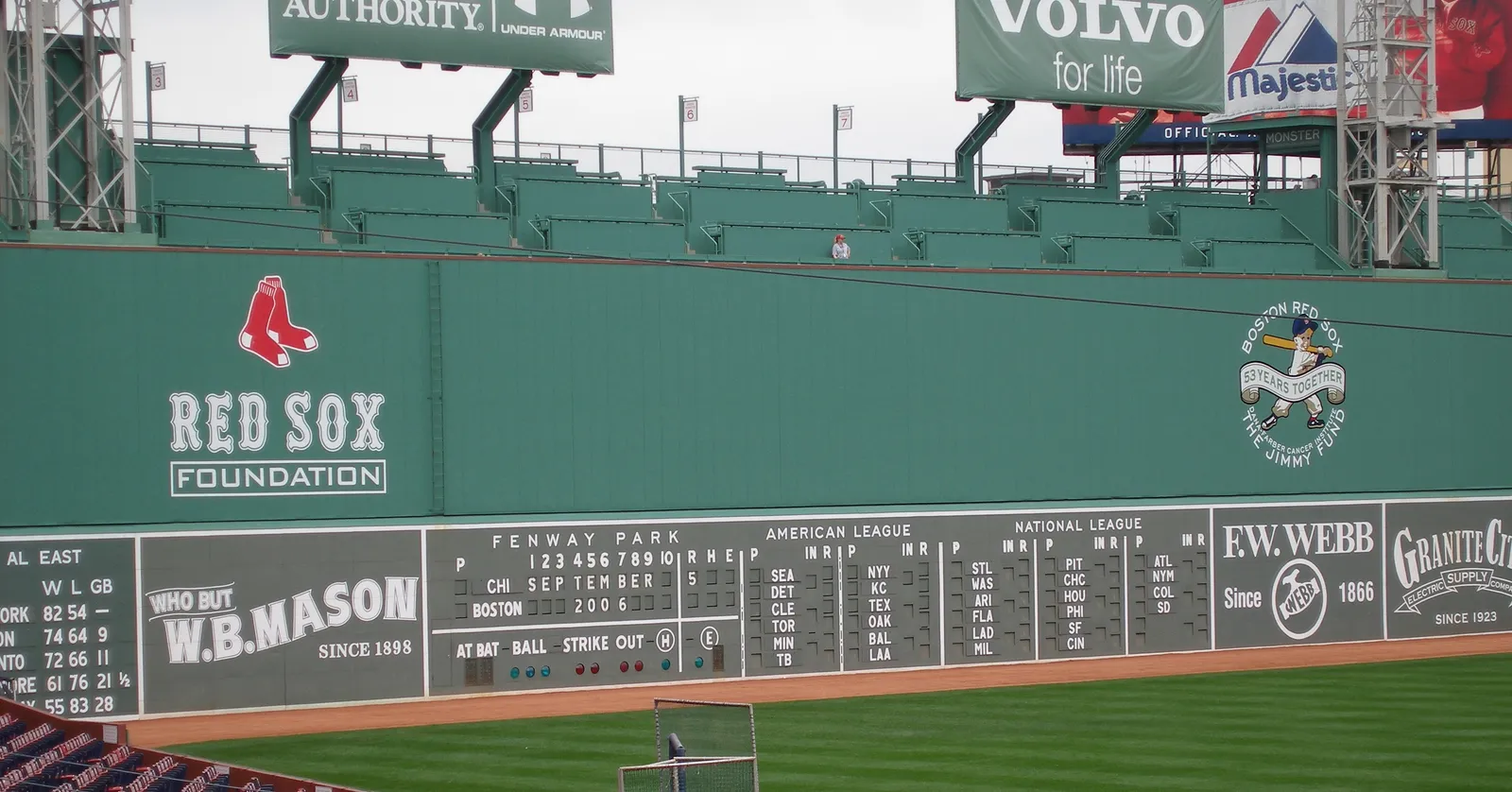
Boston’s Fenway Park has been in use since 1912 and stands five minutes from Kenmore Square, with the Citgo sign over one side of it, the Back Bay Fens and their wartime victory gardens on the other, and the Museum of Fine Arts twenty minutes’ walk beyond that.
The Green Monster and the lone red seat at Fenway Park
Fenway Park opened on 20 April 1912 on a plot of filled marsh at Jersey Street, and the shape of that plot is why the left field wall is 37 feet 2 inches tall: there was no room to put the fence further out, so it went up instead. The scoreboard set into its base is still changed by hand from a room behind it, during play, by people who watch the game through slots.
Out in right-centre field there is a single red seat in an ocean of green ones, Section 42, Row 37, Seat 21, painted in 1984 to mark where a Ted Williams home run came down on 9 June 1946. The measured distance was 502 feet, and the man sitting there at the time was wearing a straw hat, which did not help. A tour booked in advance is the only way to stand on top of the wall and see both, and it runs about an hour on the hour, roughly $25 for an adult.
Fenway’s gates enforce a strict bag rule, small purses and nothing larger, so on a game day anything bigger has to be dealt with before you arrive rather than at the turnstile.
The Museum of Fine Arts on Huntington Avenue
Huntington Avenue carries a long columned granite front twenty minutes’ walk east of the ballpark, and behind it is a collection built up since 1870: Egyptian galleries filled by the museum’s own excavations at Giza, deep holdings of Japanese prints and paintings, and the Art of the Americas wing that opened in 2010 with Copley and Sargent in it. The building has been on this site since 1909 and keeps growing sideways, which is why the plan reads as several museums joined together.
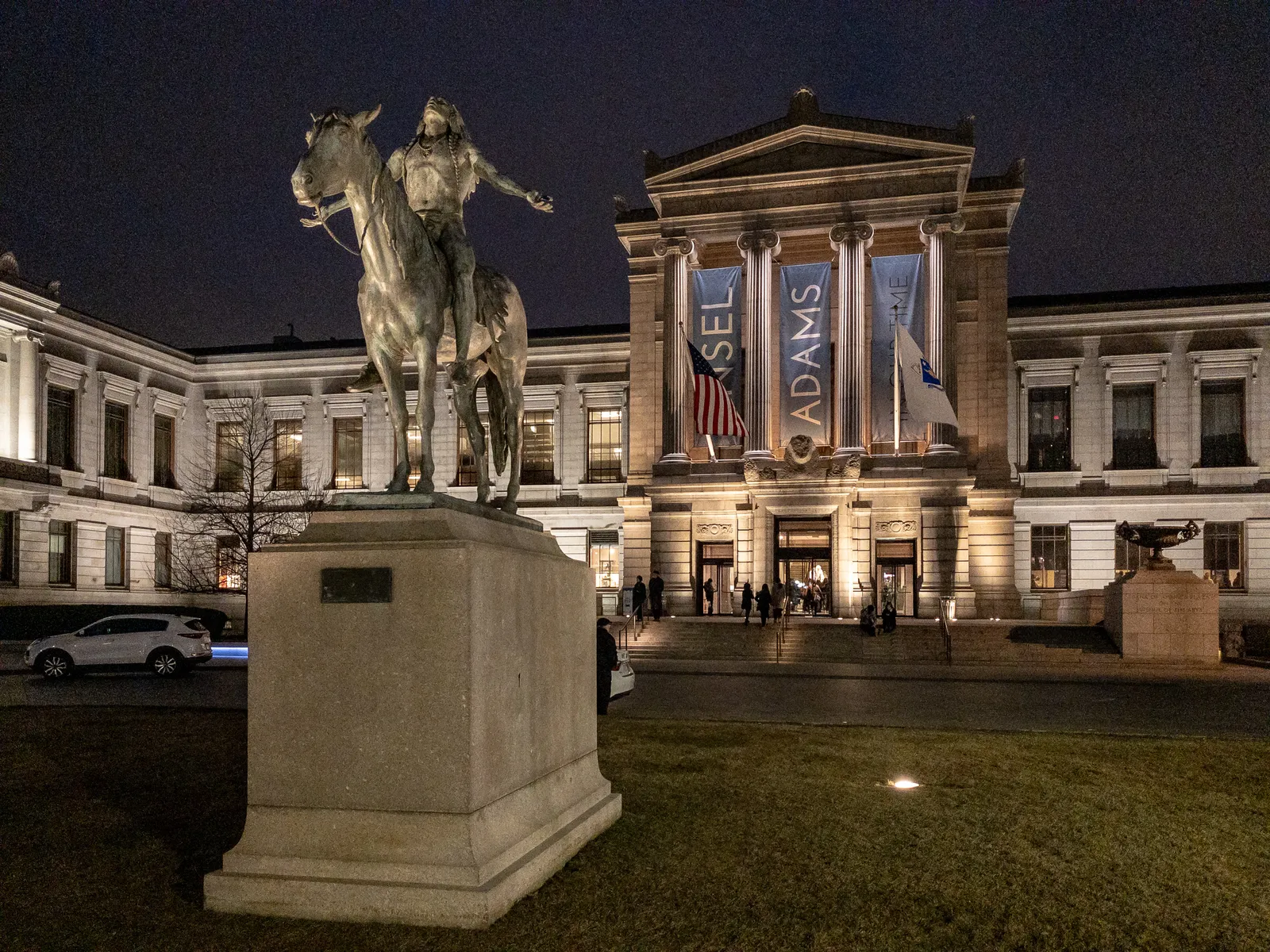
Admission is $27 for an adult and $10 for ages 7 to 17, and the hours are the thing to check: 10am to 5pm on Monday, Wednesday, Saturday and Sunday, 10am to 10pm on Thursday and Friday, closed all day Tuesday. Those two late evenings are the reason this works as an after-the-ballpark stop rather than an instead-of one, and admission bought ahead takes the ticket desk out of the equation when you arrive with an hour to spend.
The Citgo sign over Kenmore Square
Kenmore Square has a sign 60 feet square standing above its rooftops, a red triangle on white with CITGO underneath, and it has been part of the skyline here since 1940, when it advertised Cities Service instead. The current logo went up in 1965, the neon tubes were replaced with LEDs in 2010, and the city came within one mayoral veto of making it a protected landmark in 2018.
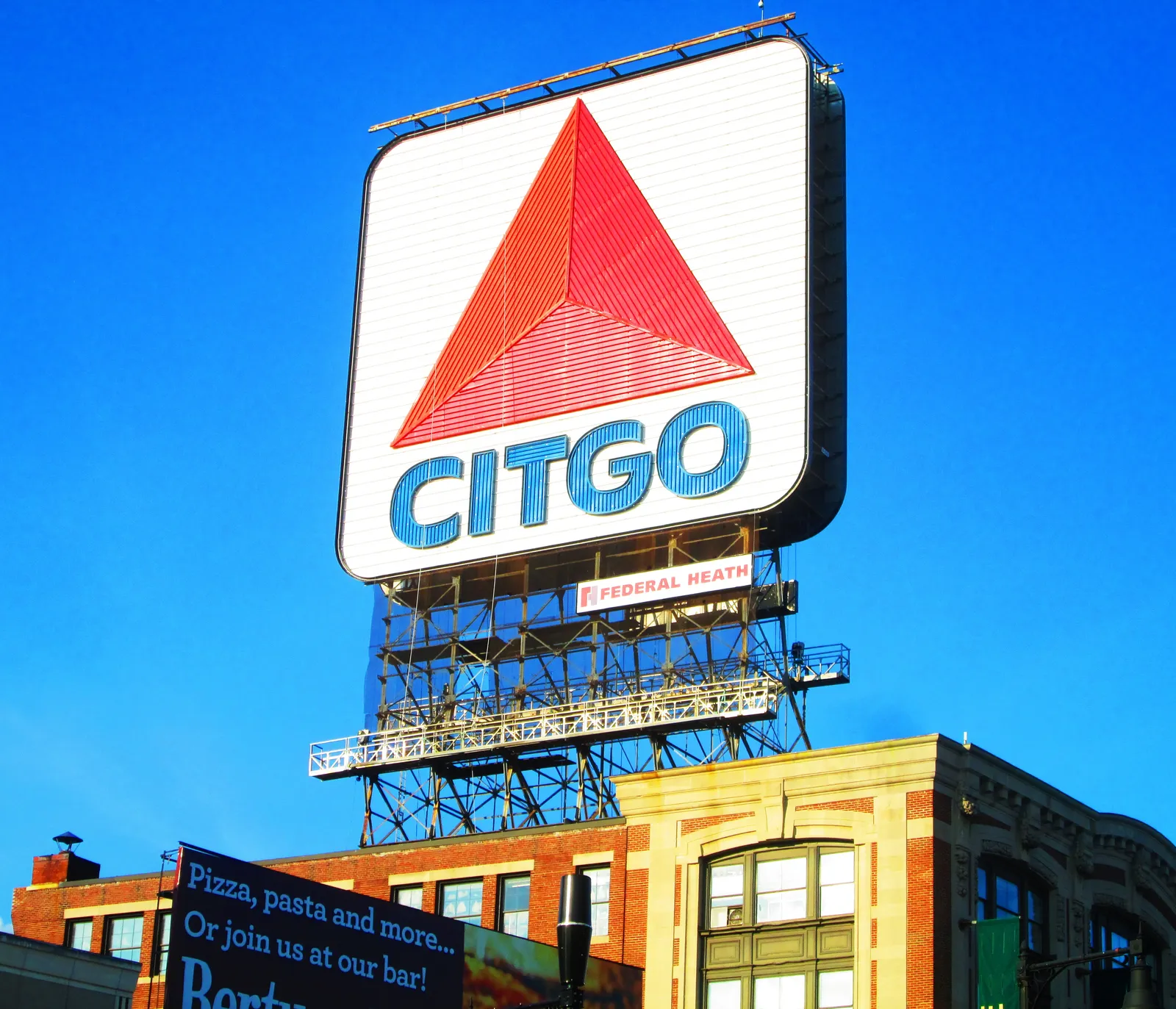
It is the thing that tells Boston Marathon runners they have one mile left, and it sits in the gap over the Green Monster from inside the ballpark, which is the view most people have actually seen it in. Standing under it costs nothing and takes four minutes.
The victory gardens in the Back Bay Fens
The Back Bay Fens is the first link in Frederick Law Olmsted’s chain of Boston parks, a strip of reedbed and winding water south of the ballpark, and the part worth walking into is the allotments. These plots were dug in 1942 as wartime victory gardens and have been worked without a break ever since, which makes them the last of that wartime programme still going anywhere in the country.
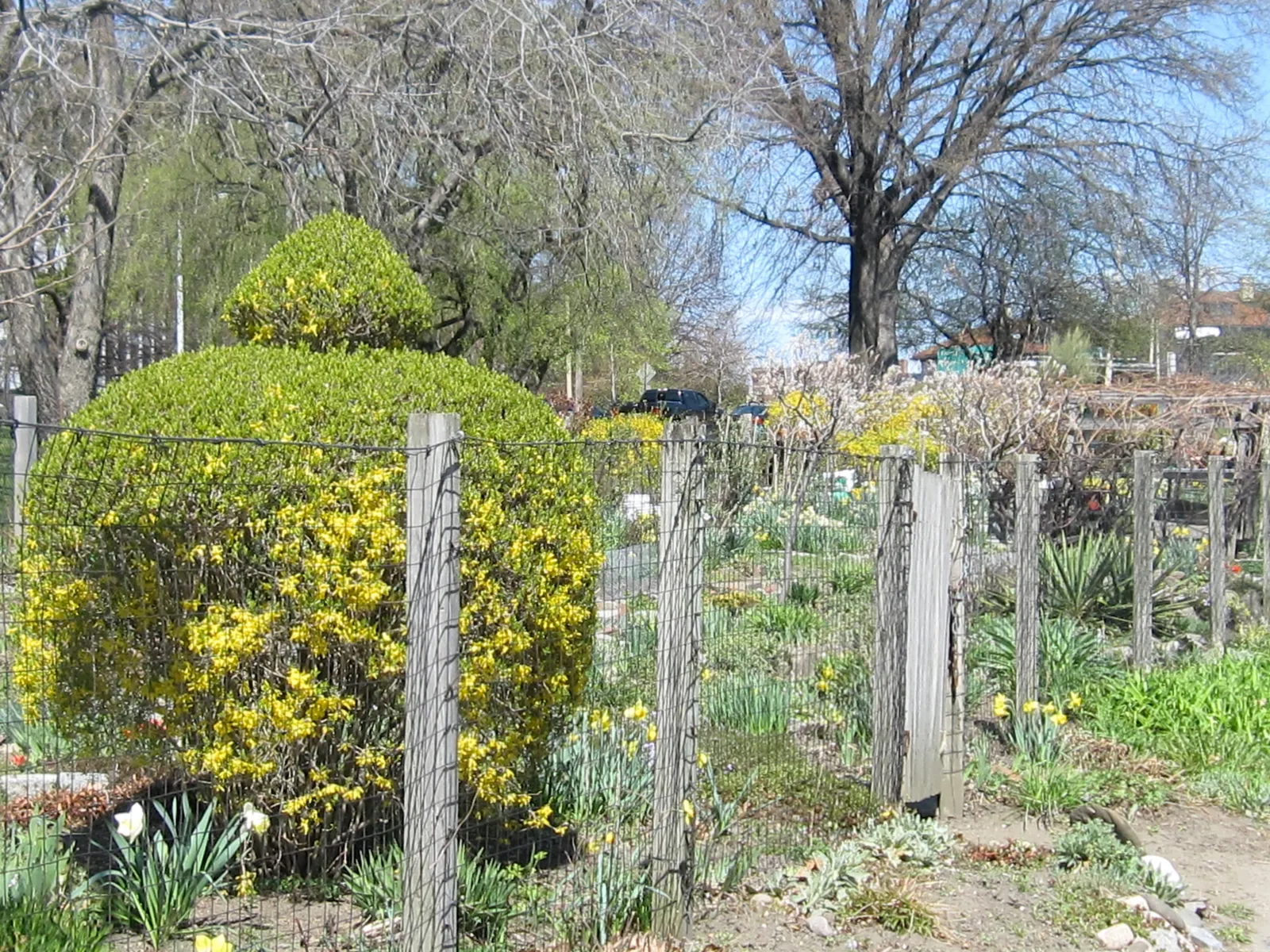
There is no gate and no charge, and the paths between the plots are public. Each is worked by a different household, so the whole thing changes character every few metres: vegetables, roses, a shed, a chair, someone’s tomato experiment. The rose garden further along the Fens is the formal counterpart and peaks in June.
Two trains and a shuttle bus separate Kenmore from the airport
Kenmore is the far western end of the subway as far as this itinerary goes, and getting to Boston Logan International Airport (BOS) means a Green Line train inbound to Government Center, the Blue Line out to Airport station, and then the free Massport shuttle bus to your terminal. It is one $2.40 fare and about 50 minutes when nothing is in the way.
The thing that puts something in the way is a home game. Fenway seats about 37,000 people and most of them leave through Kenmore’s two subway entrances inside half an hour, so if the Red Sox are playing, work out when the game ends and be on a train before it does.
Frequently asked questions
What should I do during a layover near Fenway Park and Kenmore Square in Boston?
Take the ballpark tour, which is the only way inside on a normal afternoon: an hour, about $25, and it puts you on top of the 37-foot Green Monster and next to the one red seat in the bleachers marking a 502-foot home run from 1946. Book it, because tours run on the hour and fill. Twenty minutes east on foot, the Museum of Fine Arts is the other ticketed stop, $27 and closed Tuesdays. In between, the Citgo sign over Kenmore Square and the victory gardens in the Back Bay Fens cost nothing and take twenty minutes each. Allow four hours for the pair of ticketed stops, or two for everything free.
Can you tour Fenway Park on a day the Red Sox are playing?
Yes, but a shorter version and an earlier deadline. Tours run on the hour, roughly 9am to 5pm in summer and from 10am in winter, and on a game day the last one leaves about three hours before first pitch. The route also contracts: the warning track, the dugout and the press box come off the itinerary once the field is being prepared, so a game day buys you the stands and the Green Monster seats rather than the ground itself. If the choice is yours, a no-game weekday is the better tour.
Is Fenway worth the trip outside the baseball season?
The park runs tours year round, so the building is available in February exactly as it is in July, just with a shorter winter schedule starting at 10am and an empty field instead of batting practice. What changes is everything around it. The Back Bay Fens is bare from November, the victory garden plots are cut back to soil and stakes, and Kenmore Square loses the crowd that gives it its character on a game night. The Museum of Fine Arts is the stop that does not care what month it is.
Is Kenmore worth the trip with under three hours to spare?
Probably not. Kenmore is the far western end of the subway from the centre, so the round trip alone eats an hour before you have looked at anything, and the ballpark tour is another hour on top with a fixed departure time. Under three hours, the Freedom Trail walk through downtown gives you more per minute, because the stops there are strung along a mile of pavement rather than sitting at the end of a line. Three hours and up is where Fenway starts to make sense.