Boston Layover in Harvard Square
Part of the full Boston Layover Guide: Freedom Trail From BOS
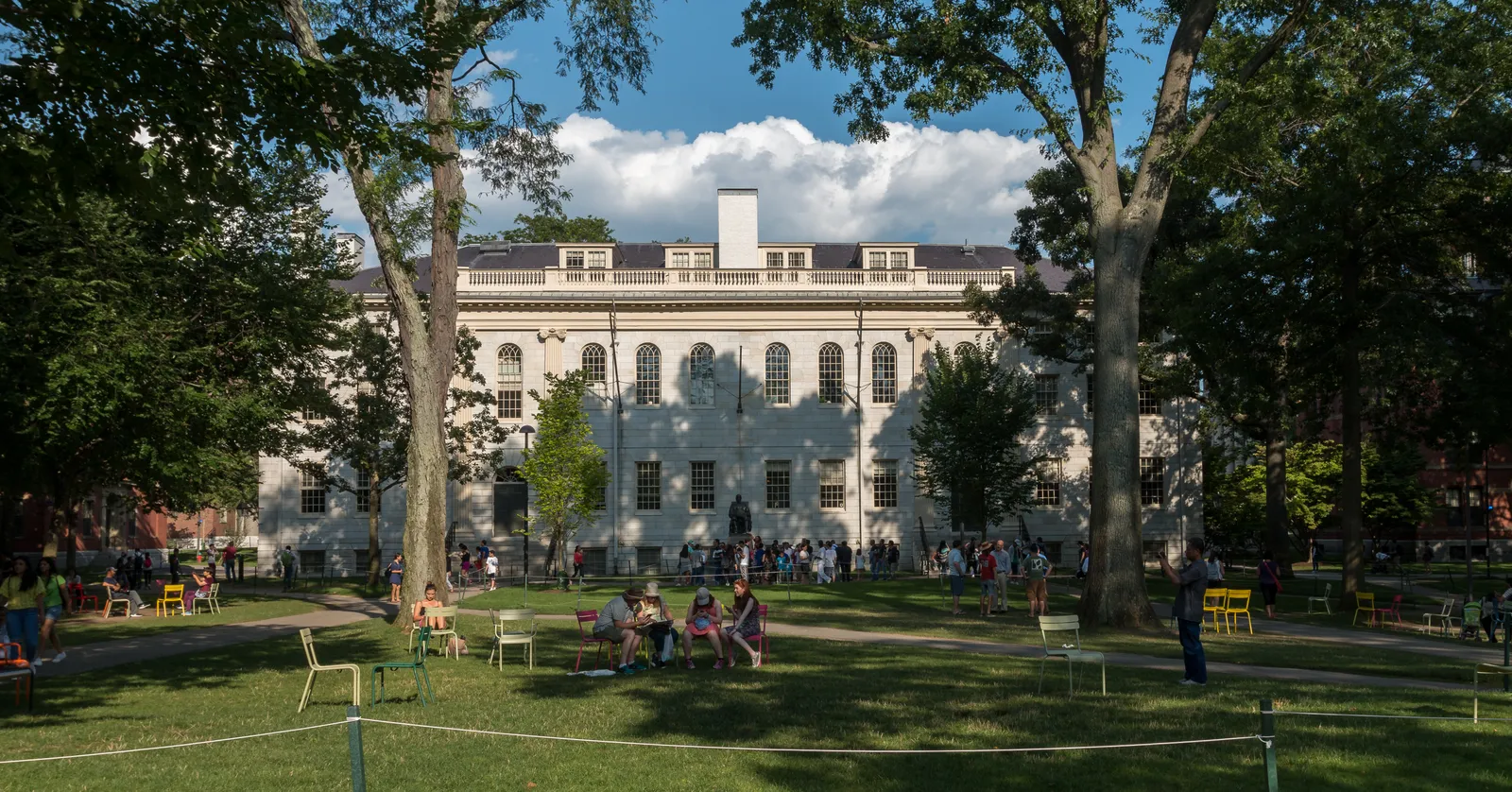
Harvard Square sits across the Charles from Boston, twenty minutes out on the subway, and puts Harvard Yard, a gallery of glass flowers made in Dresden and a free art museum under a Renzo Piano roof inside a five-minute walk of Harvard station’s exit.
Harvard Yard and the statue that gets three things wrong
Harvard Yard is the oldest part of the university, a walled rectangle of lawn, brick halls and old trees entered through gates on Massachusetts Avenue, and it is open to anyone who wants to walk across it. In front of University Hall sits a seated bronze figure by Daniel Chester French, put there in 1884 and inscribed John Harvard, Founder, 1638.
Every part of that is wrong. John Harvard was a benefactor, not the founder; the college was established in 1636, not 1638; and since no picture of him survived, French used a student as the model, so the face is somebody else’s. Students have called it the Statue of Three Lies ever since. A campus walk led by a current student is the version that comes with the rest of the arguments attached, and it comes with a ticket to the natural history museum ten minutes north.
The Glass Flowers at the Harvard Museum of Natural History
The Harvard Museum of Natural History at 26 Oxford Street, ten minutes north of the Square, holds one gallery that is unlike anything else in the building. The Ware Collection is 4,300 models of 780 plant species, made entirely of glass by Leopold Blaschka and his son Rudolf at their workshop near Dresden between 1886 and 1936, commissioned because dried herbarium specimens lose their colour and shape and wax models look like wax.
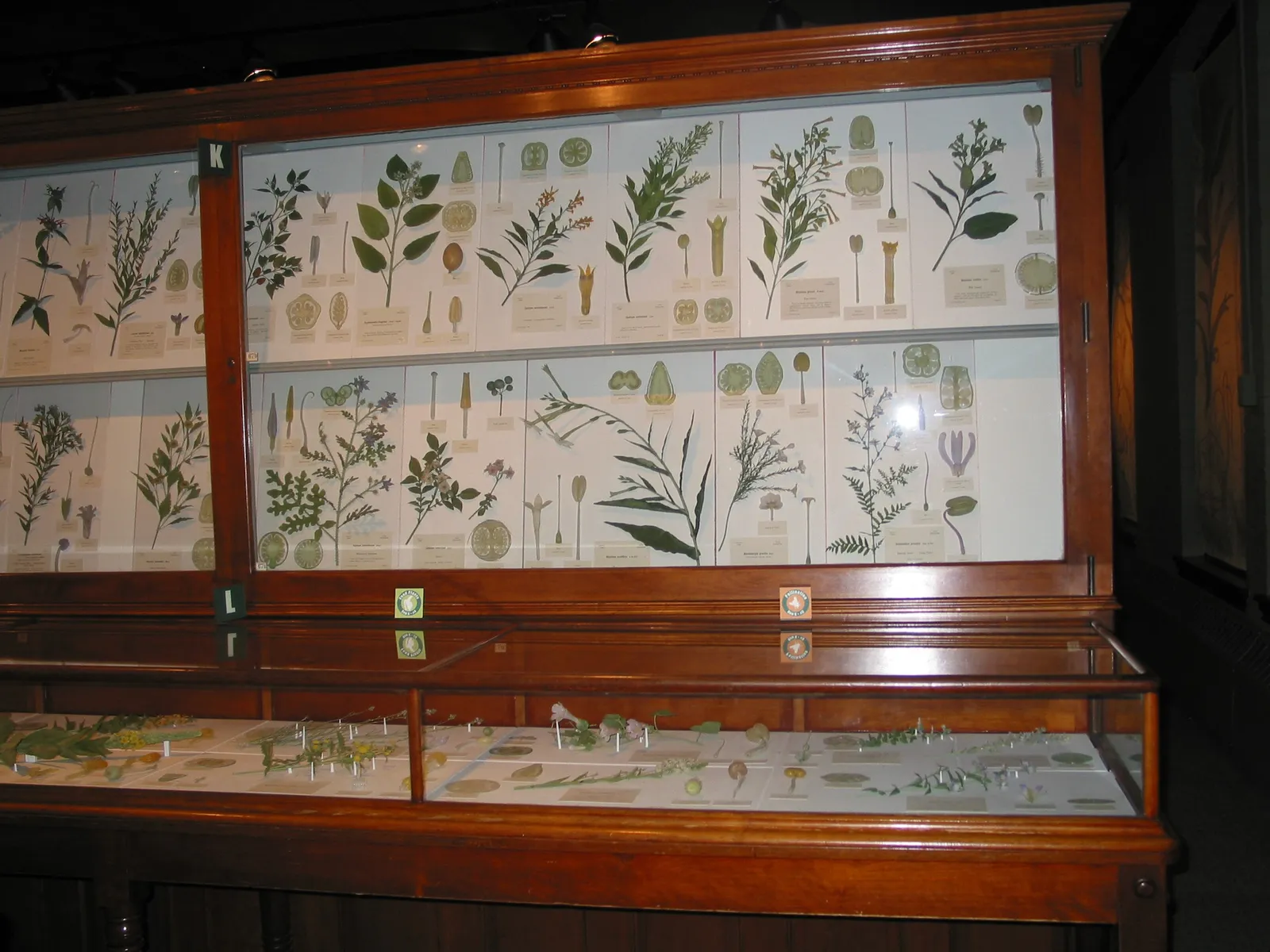
They are accurate down to root hairs and rot spots, and the thing people misjudge is scale: these are not decorative sculptures but botanical teaching aids, laid out in old wooden cases exactly as a nineteenth-century lecture course would have wanted them. The museum opens daily 9am to 5pm and one ticket also covers the Peabody Museum of Archaeology and Ethnology, which shares the building.
Renzo Piano’s glass roof at the Harvard Art Museums
Quincy Street holds three separate collections, the Fogg, the Busch-Reisinger and the Sackler, in one building that Renzo Piano rebuilt around them in 2014. The old Fogg’s Italianate courtyard was kept and a glass roof put over the whole thing, so the arcaded stone levels now sit under daylight that gets filtered on its way down through the conservation labs on the top floor.
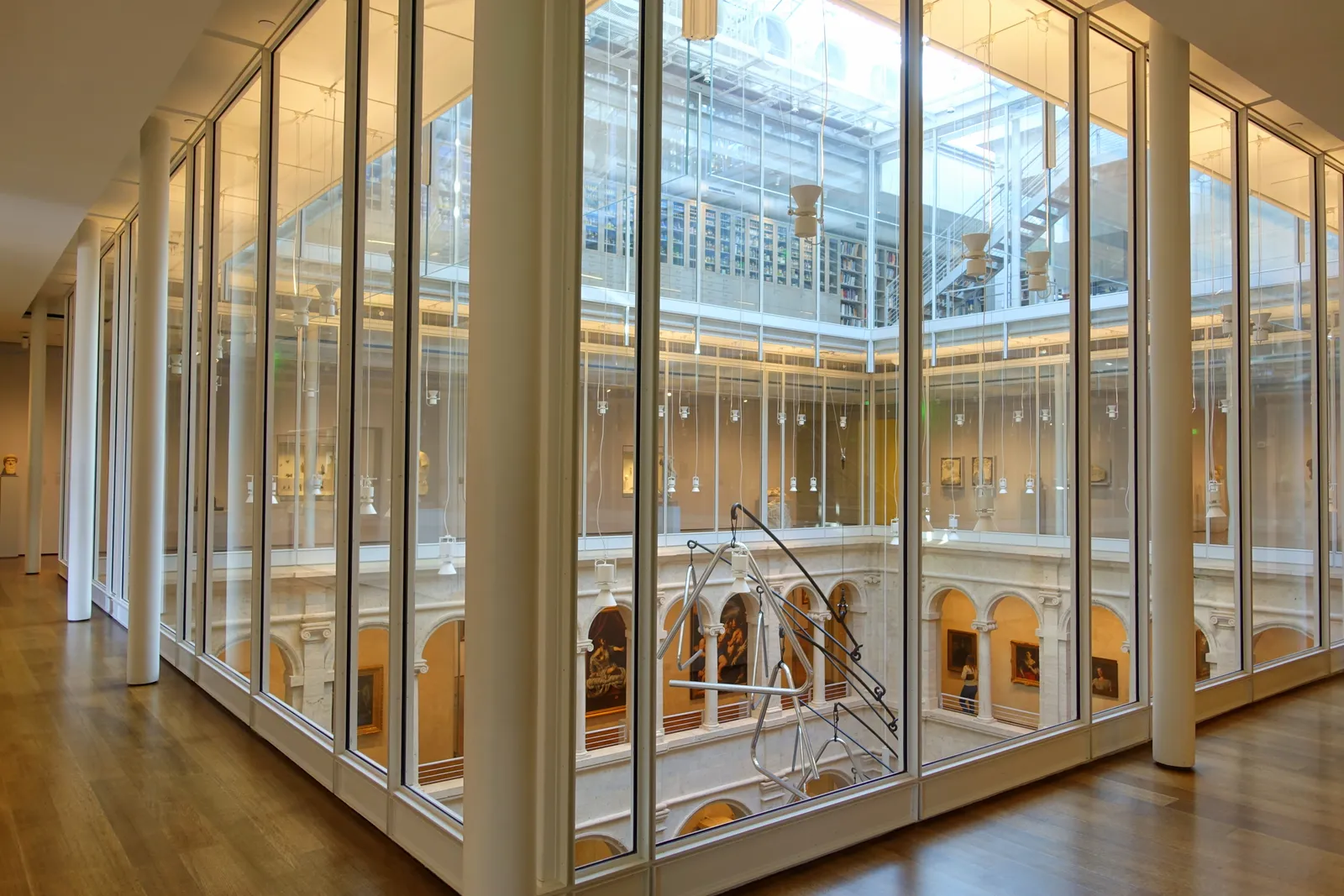
Admission has been free to every visitor since June 2023, no ticket and no booking, Tuesday to Sunday from 10am to 5pm. An hour is enough for the courtyard and one floor, which makes it the easiest thing here to fit around a fixed departure.
Harvard is a twenty-minute subway ride from central Boston, so a suitcase costs you forty minutes of platform changes and escalators on the round trip before it costs you anything else.
The brick and copper kiosk at the centre of Harvard Square
Harvard Square’s middle is occupied by a small brick structure with a curved copper verandah roof, built in 1928 as the headhouse for the subway station underneath it. From 1984 it held a newsstand that carried papers from most of the world, and it sold its last one on 31 October 2019; the building has been waiting on a restoration ever since.
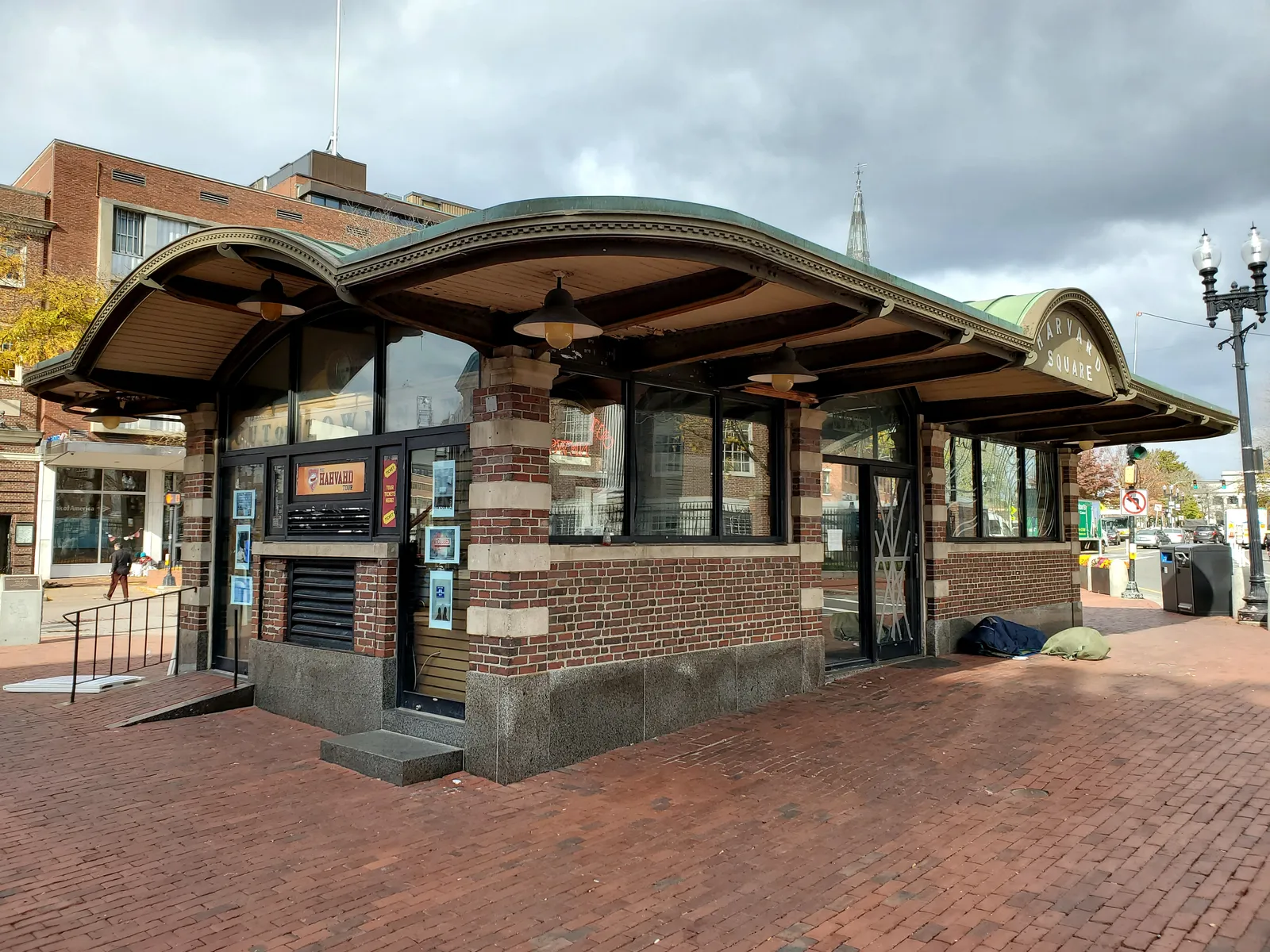
Everything around it turns over fast, which is what makes the kiosk worth two minutes: it is the fixed point that every photograph of this square has been taken from since before the chain stores arrived.
Two bookshops that outlasted the rents on Massachusetts Avenue
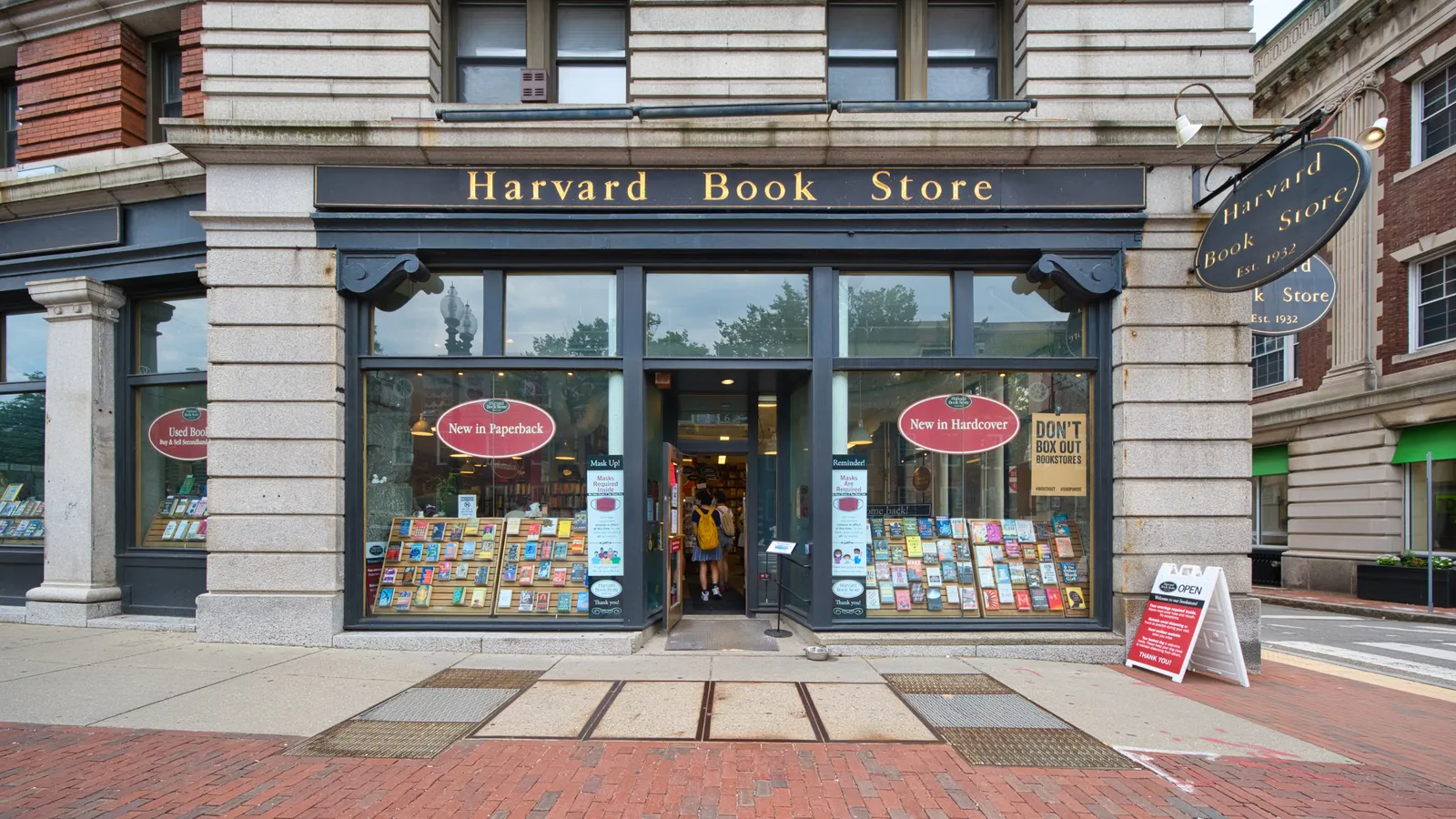
Harvard Book Store at 1256 Massachusetts Avenue has been independent since 1932 and keeps a basement of used and remaindered stock underneath the new books, which is where an hour goes if you let it.
The Grolier Poetry Book Shop, a few steps off the avenue at 6 Plympton Street, has sold nothing but poetry since 1927, in a room you could cross in four paces. E. E. Cummings, T. S. Eliot and Allen Ginsberg all used it, and it is still only poetry: no fiction, no history, no cookery.
One fare and about an hour from Harvard to the airport
The subway runs from Harvard through downtown to South Station in about twenty minutes, and the transfer there onto the bus that serves Boston Logan International Airport (BOS) is free, so the whole trip is a single $2.40 tap. The bus is the Silver Line SL1, it goes through the harbour tunnel to all four terminals, and it takes about another twenty minutes on a clear run.
An hour door to terminal is the number to work with, and that extra quarter of an hour is the honest price of crossing the river. What you get for it is a different city: the Freedom Trail stops on the Boston side are colonial and dense, and this is a nineteenth-century university town with a bookshop problem.
Frequently asked questions
What should I do during a layover near Harvard station in Cambridge?
Harvard Yard is thirty seconds from the station exit and free to walk into, with Daniel Chester French's 1884 statue of John Harvard standing outside University Hall carrying an inscription that gets three separate facts wrong. Ten minutes north, the Harvard Museum of Natural History holds the Glass Flowers, 4,300 glass plant models made by two men in Dresden between 1886 and 1936, which is the one thing here you will not see anywhere else. The Harvard Art Museums on Quincy Street have been free to everyone since 2023. Four hours makes this comfortable; the round trip on the subway is about 40 minutes of it.
Which Harvard museums cost money and which are free?
The Harvard Art Museums, three collections in one Renzo Piano building at 32 Quincy Street, dropped admission charges for all visitors in June 2023 and open Tuesday to Sunday, 10am to 5pm. The Harvard Museum of Natural History at 26 Oxford Street does charge, and one ticket also gets you into the Peabody Museum of Archaeology and Ethnology attached to it; it opens daily 9am to 5pm. Harvard Yard itself, the Square and the riverbank cost nothing at any hour.
Can you walk into Harvard Yard without being a student?
Yes. The gates on Massachusetts Avenue are open to the public through the day and the paths across the Yard are a normal shortcut for anyone in the Square. What you cannot do is walk into the buildings: Widener Library's reading rooms and the residential halls need a university card, so the Yard is an outdoor visit with the interiors left to the imagination. Gate hours tighten around commencement and orientation, when parts of the Yard get fenced off for a few days at a time.
Is a suitcase a problem on the trip out to Cambridge?
It is the reason to leave it behind, and the cost is time rather than trouble. Harvard is about twenty minutes on the subway from downtown Boston, so the round trip is forty minutes before you have looked at anything, and Harvard station's platforms sit deep enough that the escalators and the busway level add a few minutes each way with a bag in hand. Nothing here is difficult with luggage. It just turns a four-hour visit into a three-hour one.