New York Layover: Grand Central From JFK
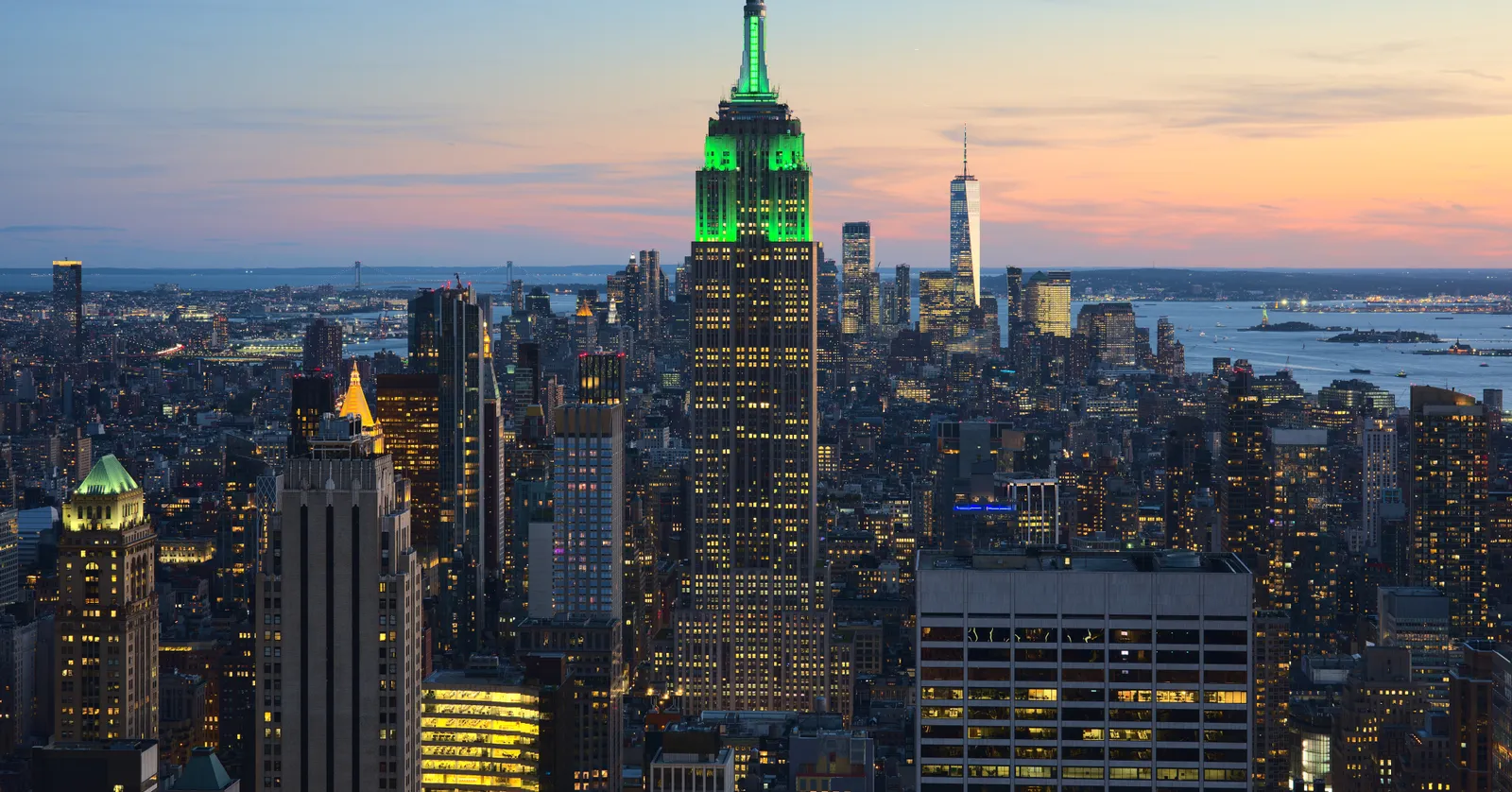
Five blocks of Midtown New York hold Grand Central Terminal’s ceiling of backwards constellations, the New York Public Library’s 297-foot reading room and an observation deck 1,000 feet above the street, with a free ferry across the harbour at the bottom of the island.
SUMMIT One Vanderbilt’s mirrored observation floors
One Vanderbilt is the 1,401-foot tower standing alongside Grand Central Terminal on 42nd Street, and its 91st, 92nd and 93rd floors are an observation deck called SUMMIT. Most of it is a single artwork rather than a viewing gallery: Kenzo Digital’s “Air” puts 25,000 square feet of mirrors across the walls, floors and ceilings, so the city arrives from several directions at once. Two glass boxes called Levitation hang off the side of the building at 1,060 feet, with nothing under your feet but Madison Avenue.
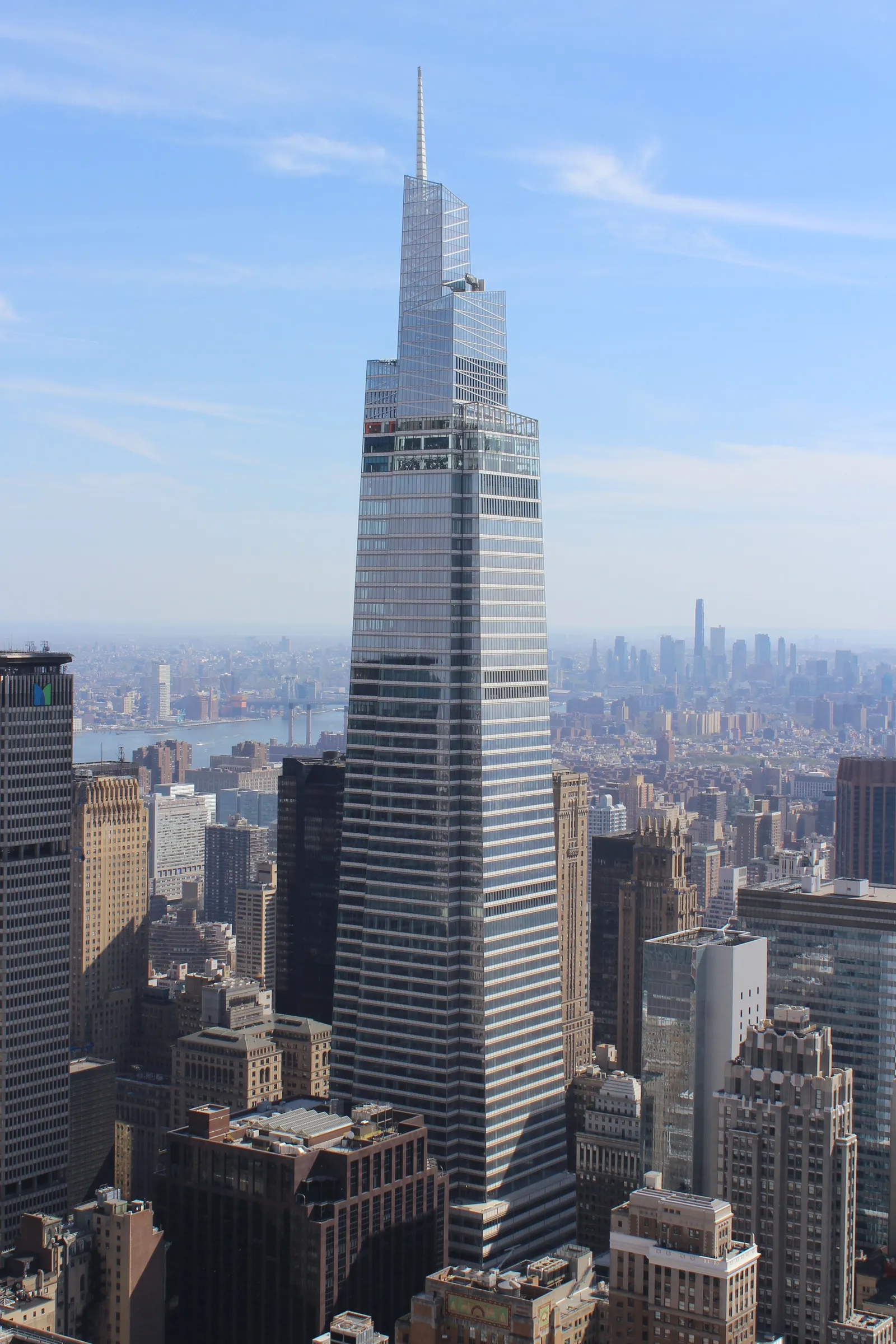
Tickets start at $44, or $39 for anyone who lives in the city or on Long Island, and the deck is open from 8am to midnight every day with last entry at 10:30pm, which suits a flight that goes out late. The entrance is on the Main Concourse level of Grand Central, so you never cross a street to get there. Sunset slots cost more and go first, so it is worth picking a time slot in advance rather than turning up and taking what is left. One practical limit: security turns away wheeled bags and carry-ons, and there is no bag check inside.
Grand Central Terminal’s ceiling is a night sky painted in reverse
Orion is the one constellation on the Main Concourse ceiling set the way it actually appears from the ground. The rest, spread across 2,500 stars on a green Mediterranean sky, run the opposite way, east where west should be and west where east should be. The design came from the French portraitist Paul César Helleu, and the explanation offered at the time was that this is the sky seen from outside it, the way it would sit on a celestial globe rather than the way it looks from the pavement.
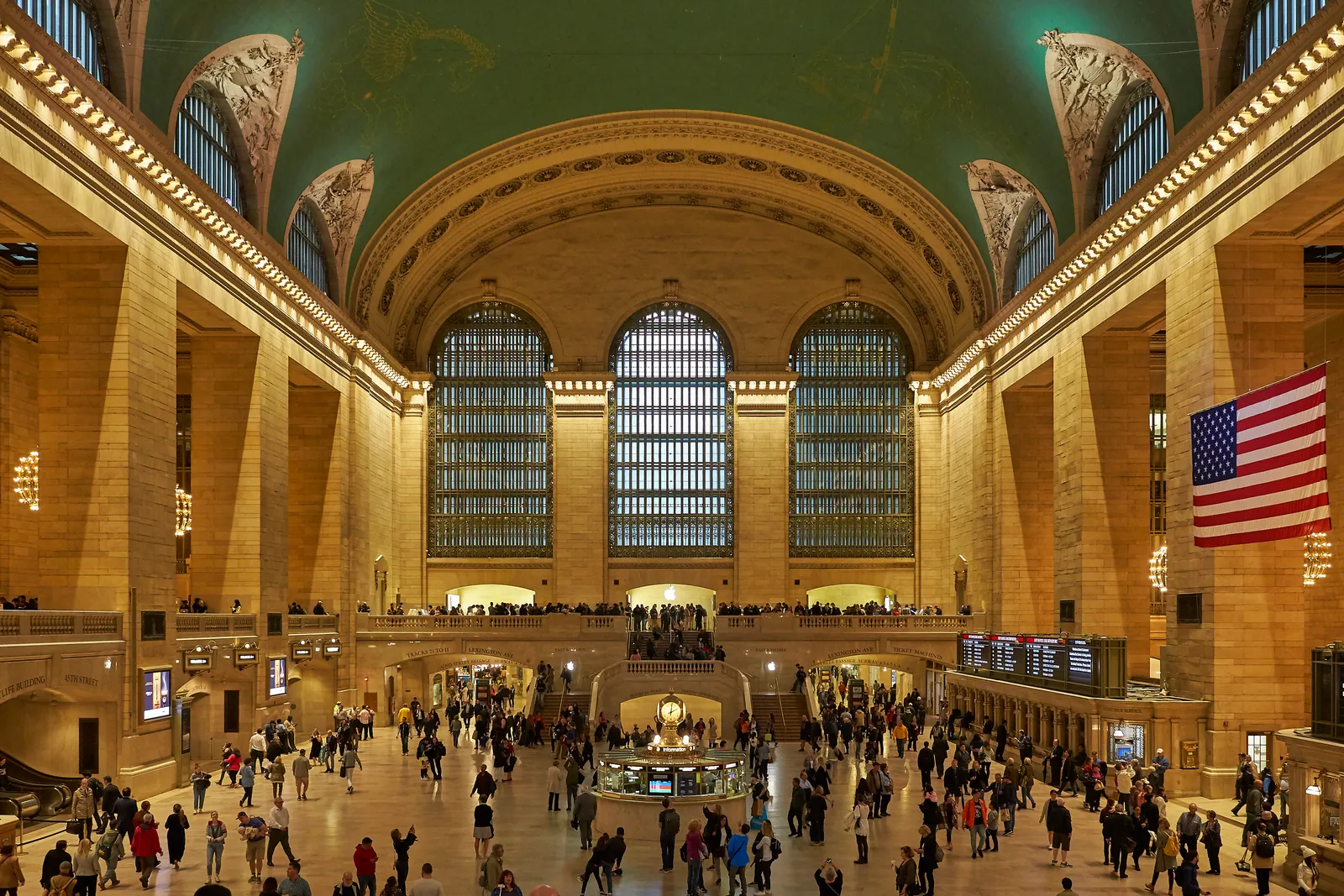
None of this costs anything to stand and look at. Two things are worth finding while you are in the building. One is the small dark rectangle at the northwest edge of the ceiling, about nine inches by eighteen, left untouched when the rest was cleaned in the 1990s so that anyone could see what a century of grime had done; the story that it was cigarette smoke is the version usually told, but the analysis found car and industrial exhaust instead. The other is on the lower level outside the Oyster Bar, where four Guastavino tile arches meet in a domed corner: stand facing into one corner, have someone do the same 50 feet away, and a whisper carries across the vault as if it were spoken next to you.
The Rose Main Reading Room at the New York Public Library
The New York Public Library’s main branch stands on Fifth Avenue at 42nd Street, five minutes’ walk west of Grand Central, and its third floor holds the Rose Main Reading Room: 297 feet long, 78 feet wide, under a 52-foot ceiling that James Wall Finn painted with clouds. It opened in May 1911 and reopened in 2016 after every one of the 900 plaster elements on that ceiling was pinned back with steel cable.
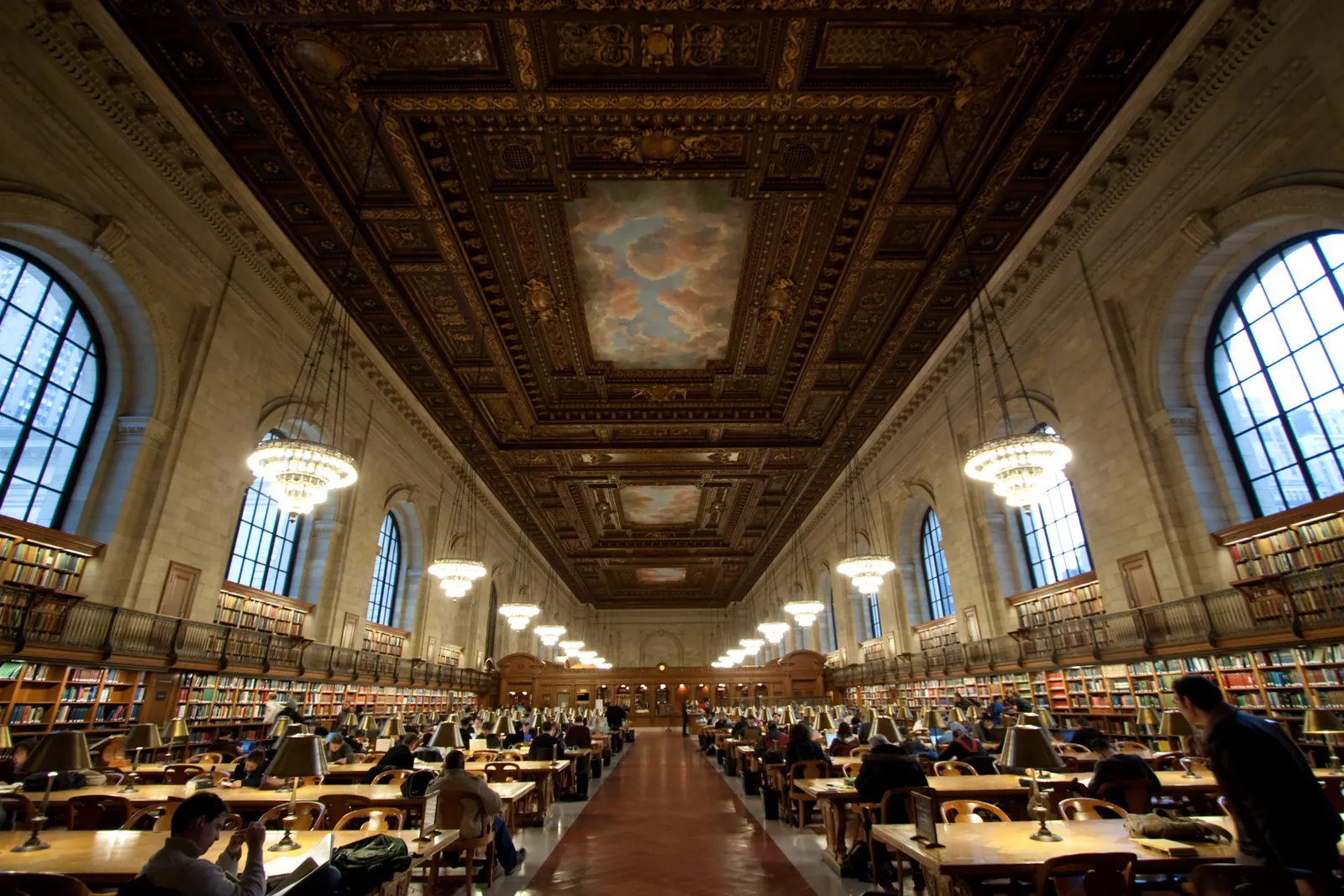
The room is free, but it is a working library and it protects that. Visitors who have come to look rather than to read get one hour, 10am to 11am Monday to Saturday, with final entry at 10:50am. Miss it and the free option downstairs is the Polonsky Exhibition, 5,000 square feet of the library’s own holdings on the first floor with no ticket and no reservation, where a Gutenberg Bible sits a few display cases along from George Washington’s handwritten farewell address. The building opens at 10am, stays open until 8pm on Tuesdays and Wednesdays and until 6pm the rest of the week, and its Sunday hours are short, 1pm to 5pm, and dropped altogether over the summer. Behind it, Bryant Park is the flat green square that Midtown otherwise has none of.
The High Line runs above Chelsea on a 1930s freight viaduct
With more than four hours in hand, the walk worth adding is the High Line, a park laid along 1.45 miles of the West Side Line’s elevated freight viaduct, 30 feet up, from Gansevoort Street to 34th Street. Trains ran on it from 1934 until 1980, hauling meat and produce straight into the upper floors of the warehouses it passes through; it sat abandoned for nearly thirty years before the first section opened as a park in 2009, and the last one in 2014.
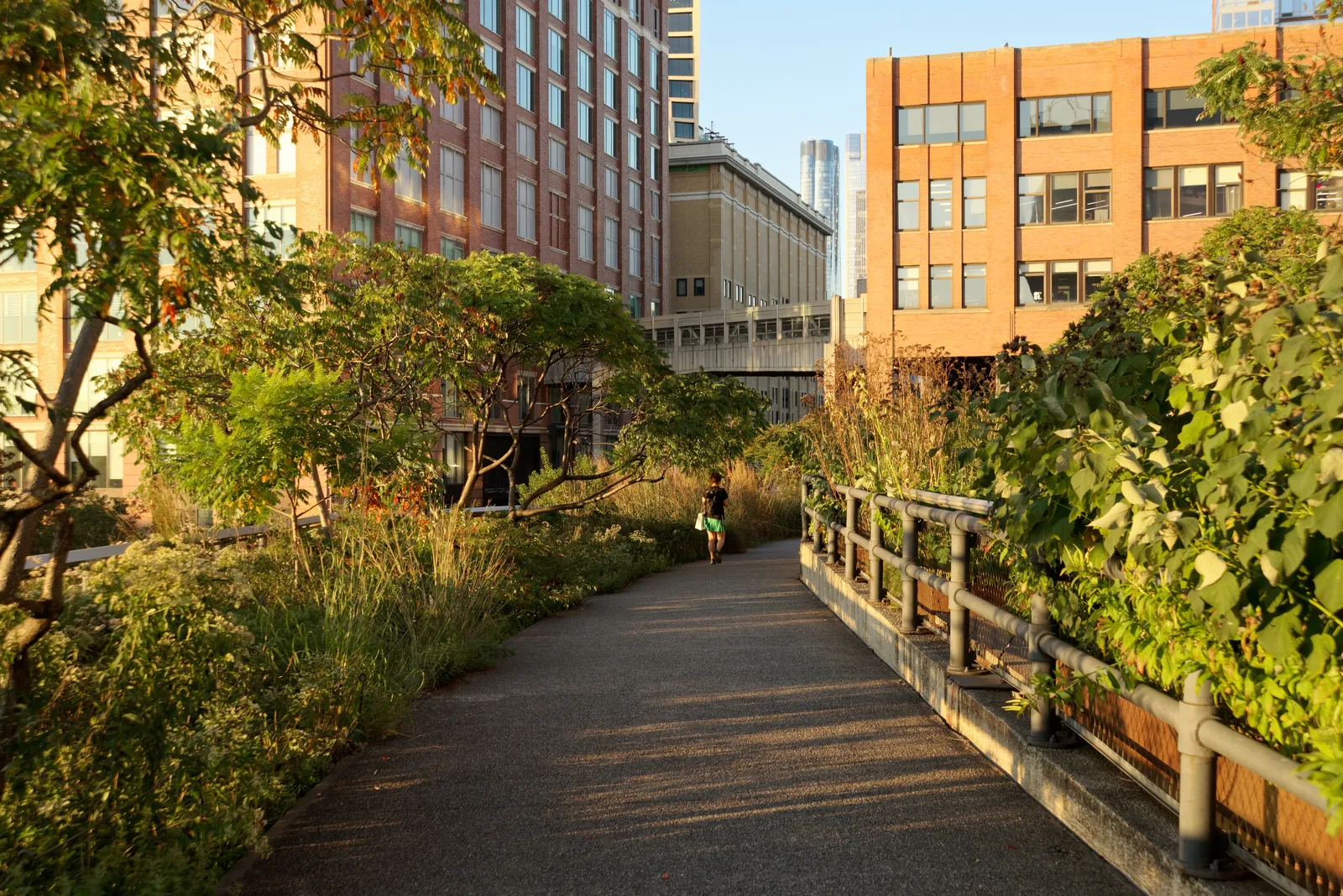
It costs nothing, it takes about 45 minutes end to end at a walking pace, and eight million people a year do it. The northern end now connects onward: the Moynihan Connector, opened in 2023, carries the park’s eastern spur over 30th Street to Manhattan West, a block from Moynihan Train Hall, where the intercity trains up to Boston leave. That makes the High Line a reasonable thing to walk in one direction rather than an out-and-back.
The Staten Island Ferry has been free since 1997
Whitehall Terminal sits at the southern tip of Manhattan, and the boats from it cross 5.2 miles of New York Harbor to St George on Staten Island in about 25 minutes. The 50 cent fare was dropped on 4 July 1997 and nothing has replaced it. Boats run 24 hours a day, every 15 to 20 minutes during weekday peaks and every half hour the rest of the time.
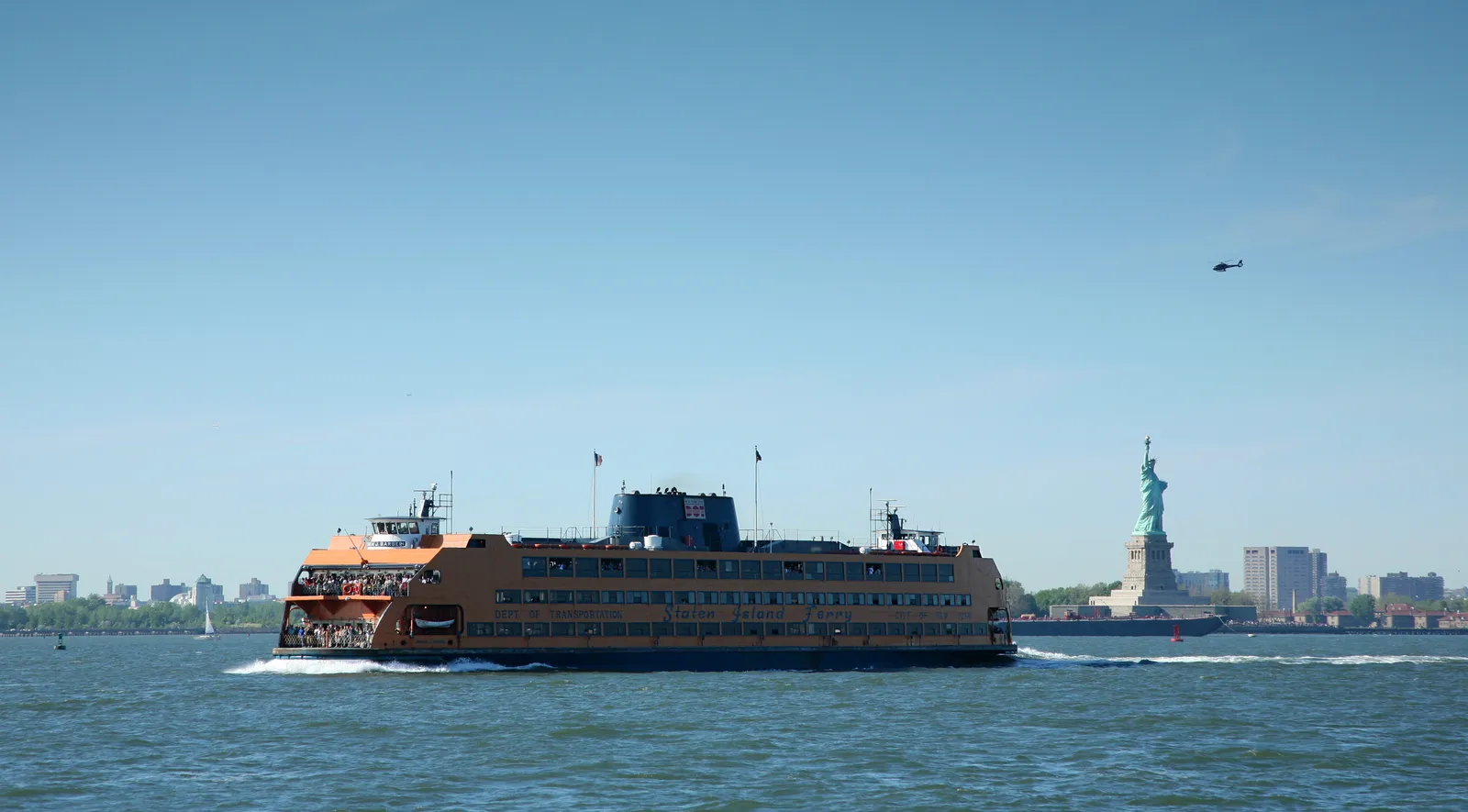
Liberty Island passes a few hundred yards off the starboard side on the way out, which is the closest most visitors get to the statue without buying a cruise ticket, and the whole of Lower Manhattan lines up behind the boat as it pulls away. The catch is that this is a commuter service, not a sightseeing loop: you disembark at St George, walk back around through the terminal and board the next boat, so budget an hour and a half rather than 50 minutes. Everything above happens on foot, through security lines, up and down subway stairs and onto an open ferry deck, which is the argument for leaving the bag at a storage point near the station rather than taking it along for all of it.
The AirTrain is the only rail line that reaches Kennedy Airport’s terminals
Every route out to John F. Kennedy International Airport (JFK) finishes the same way, on the eight-mile AirTrain loop that connects the terminals to Jamaica and Howard Beach. It is a Port Authority system rather than an MTA one, so its $8.75 fare is separate from whatever you paid to get to the interchange, and it is charged when you leave the airport station, not when you board. Trains come every five to fifteen minutes, around the clock.
From Midtown there are two sensible ways to reach it. A Long Island Rail Road train from Grand Central Madison to Jamaica takes about 21 minutes and costs $5.25 off peak or $7.25 during the weekday rush; check the board for a train that actually calls at Jamaica, because Port Washington branch services skip it. The cheaper route is the E subway line from 42nd Street to Sutphin Boulevard-Archer Avenue, $3.00 and roughly 35 to 40 minutes, with the same AirTrain connection at the far end.
Budget more than the riding time. Grand Central Madison’s platforms are 140 feet below the street, at the bottom of the longest escalators in the MTA system, and the railroad’s own guidance is that the walk from street to platform takes 10 to 15 minutes. Add the AirTrain leg and door to terminal is closer to an hour than to half of one, before the usual two hours for a domestic departure or three for an international one.
Frequently asked questions
What should I do during a layover in New York City?
Stay in the five blocks around Grand Central Terminal and you can do three things without a transit ride between them. The terminal's Main Concourse is free to walk into and its ceiling carries 2,500 stars with the constellations painted in reverse. The New York Public Library's main branch is a five-minute walk west on 42nd Street, where the Polonsky Exhibition on the first floor is free and holds a Gutenberg Bible. SUMMIT One Vanderbilt, the observation deck on floors 91 to 93 of the tower next door, is the one paid stop and the one to book ahead. If the harbour appeals more than the skyline, the Staten Island Ferry from the bottom of the island is free and takes about 25 minutes each way, so allow an hour and a half for the round trip.
Can anyone walk into the Rose Main Reading Room, or is it researchers only?
Anyone can, but only for one hour a day. The library sets aside a visiting hour from 10am to 11am Monday to Saturday for people who have come to look rather than to work, with final entry at 10:50am. Outside that hour the room is meant for readers using the collections. Free one-hour building tours at 11am and 2pm, Monday to Saturday, also go in, and they are capped at 20 people booked online. If your free hours land in the afternoon, the Polonsky Exhibition downstairs needs no ticket and no reservation at all: 5,000 square feet of the library's own holdings, including a Gutenberg Bible and George Washington's handwritten farewell address.
Does the Staten Island Ferry actually pass the Statue of Liberty?
It passes within a few hundred yards of Liberty Island, on the starboard side heading out to Staten Island and the port side coming back, which is close enough to see the statue clearly and much further than any photograph of it makes the crossing look. The boat does not stop there; landing on the island needs a separate ticketed cruise from Battery Park. The ferry itself has cost nothing since the 50 cent fare was dropped on 4 July 1997, and it runs 24 hours a day. You do have to get off at St George and walk back around to reboard, which is what makes the round trip closer to an hour than to 50 minutes.
Does this itinerary still work in the middle of winter?
Better than most New York walking routes, because three of the five stops are indoors. Grand Central, the reading room and the observation deck are all under a roof, and the deck's glass floors and mirrors are unaffected by cold. Bryant Park, behind the library, turns into an ice rink from late October to the end of February, and skating there is free if you have brought your own skates; rentals start around $19. The two stops that suffer are the High Line, which is exposed for its whole length, and the ferry, where the open deck is where the view is.
Why does getting to Kennedy Airport cost more than a subway ride?
Because the last leg is not run by the MTA. The AirTrain that links the terminals to Jamaica and Howard Beach is a Port Authority system with its own $8.75 fare, and nothing you have already paid on the subway or the Long Island Rail Road counts toward it. That makes the cheap route to John F. Kennedy International Airport (JFK) a $3.00 subway ride out to Sutphin Boulevard-Archer Avenue on the E line plus $8.75, about $11.75 in total for roughly 50 minutes of travel from Midtown. The faster route is a Long Island Rail Road train from Grand Central Madison to Jamaica, about 21 minutes, at $5.25 off peak or $7.25 in the weekday rush, plus the same $8.75. Children under five ride the AirTrain free.