Central Park on a New York Layover
Part of the full New York Layover: Grand Central From JFK
Central Park’s southwest corner at Columbus Circle in New York opens onto six miles of car-free road, the Mall’s four rows of elms, Bethesda Terrace and the cast iron arch of Bow Bridge.
The park drives have carried no cars since 2018
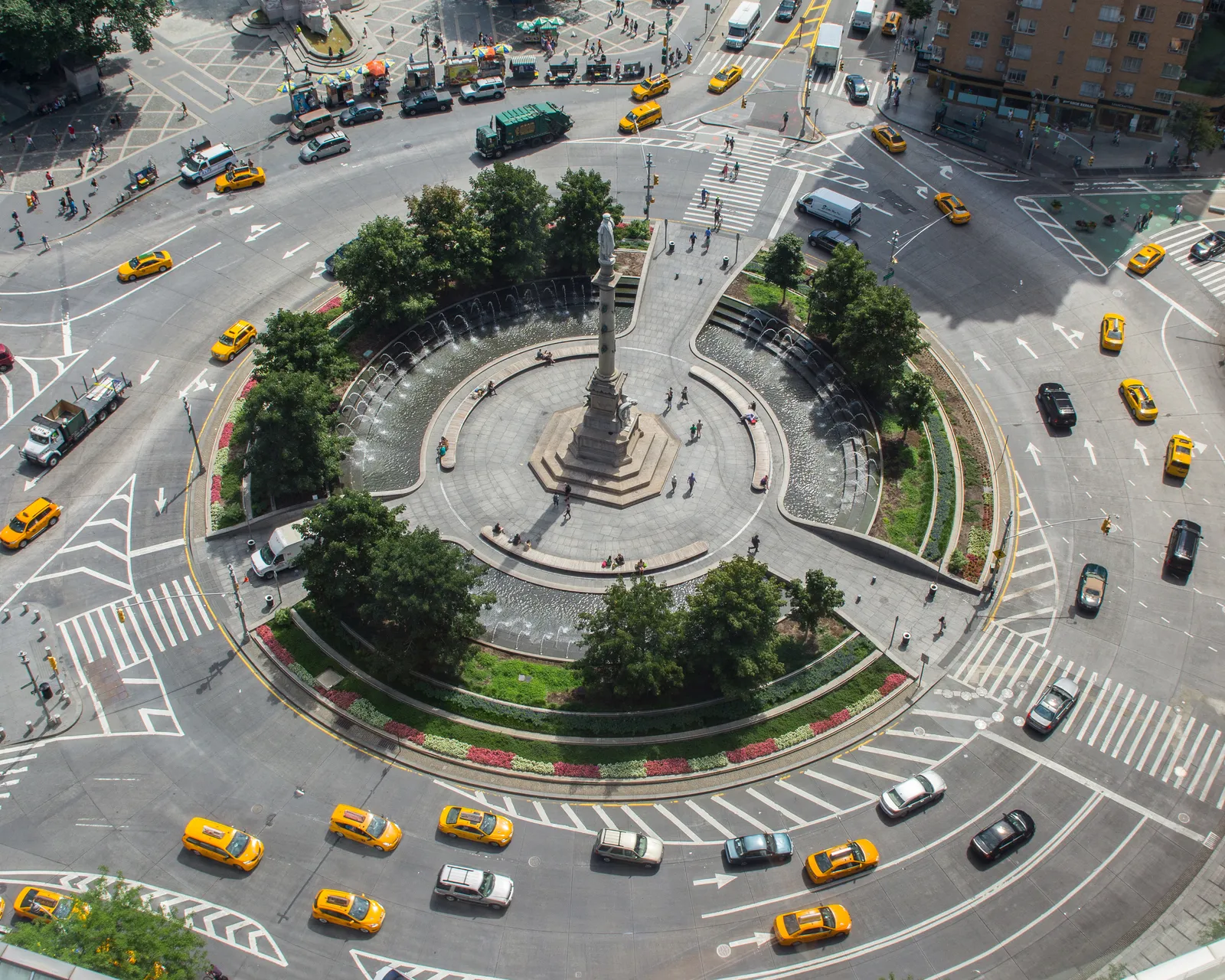
Columbus Circle is the roundabout at the park’s southwest corner, where Broadway, Eighth Avenue and 59th Street meet around an 1892 granite column, and it is where the park’s West Drive begins. On 27 June 2018 the last car was let through the drives; since then the full loop, a little over six miles of road, has belonged to people walking, running, cycling, and to the pedicabs and horse carriages that work the southern end.
That matters more here than it sounds, because the park is 2.5 miles top to bottom and walking is the slow way to see it. The loop takes roughly 45 minutes on a bike against about two hours on foot, and a rental booked in advance saves the queue at the gate shops, which is the part that actually costs time on a flight day.
Four rows of American elms line the Mall
The Mall runs a quarter of a mile north from around 66th Street and is the one straight line Frederick Law Olmsted and Calvert Vaux allowed into a design otherwise built entirely of curves. Four rows of American elms lean in over it, and their branches close overhead into something like a nave.
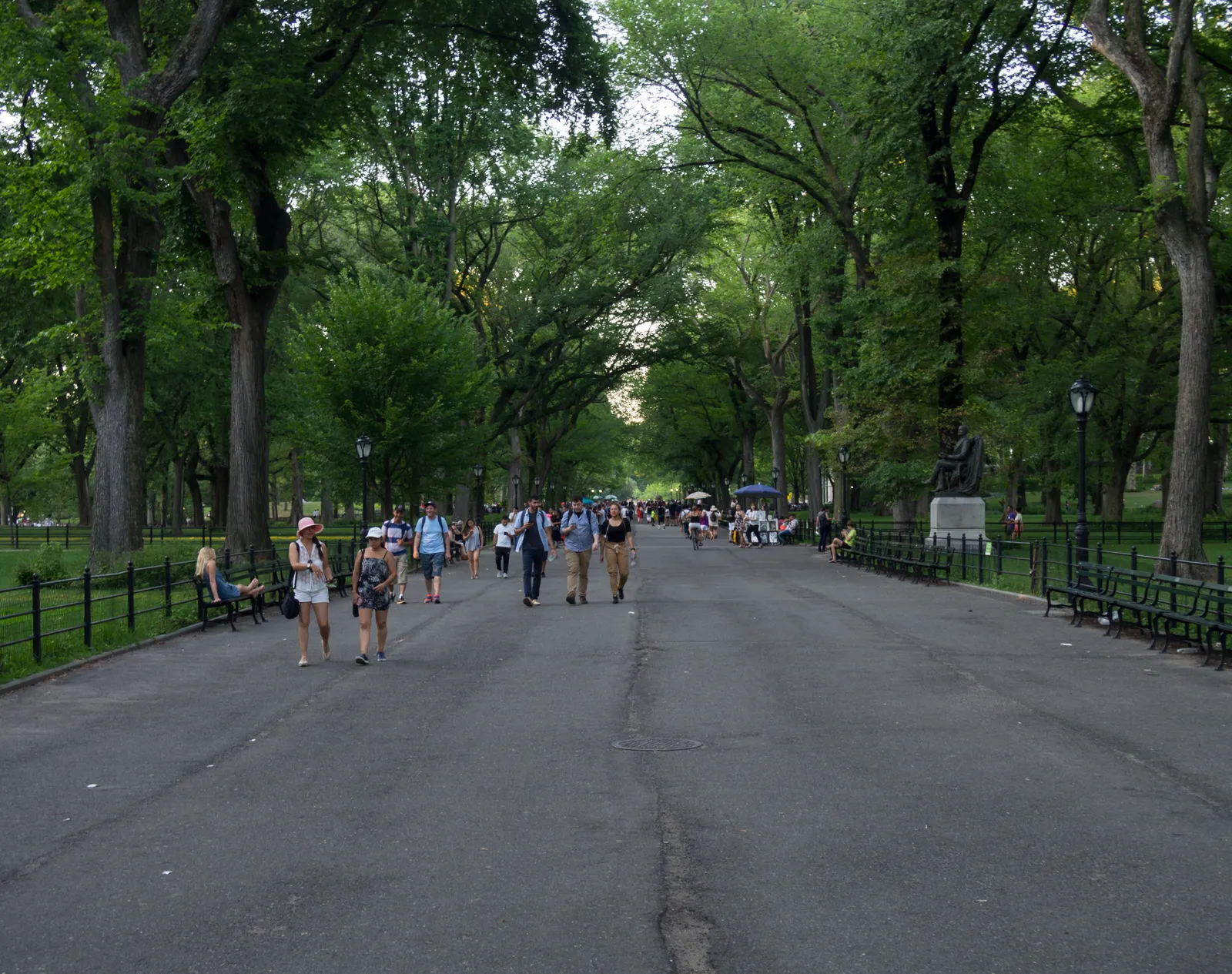
The southern stretch is called the Literary Walk for the writers standing along it in bronze, Shakespeare and Burns and Walter Scott among them. Benches line both sides for its whole length, which is worth knowing because seating in the busy southern third of the park is otherwise scarce.
Bethesda Terrace hides a tiled ceiling under its stairs
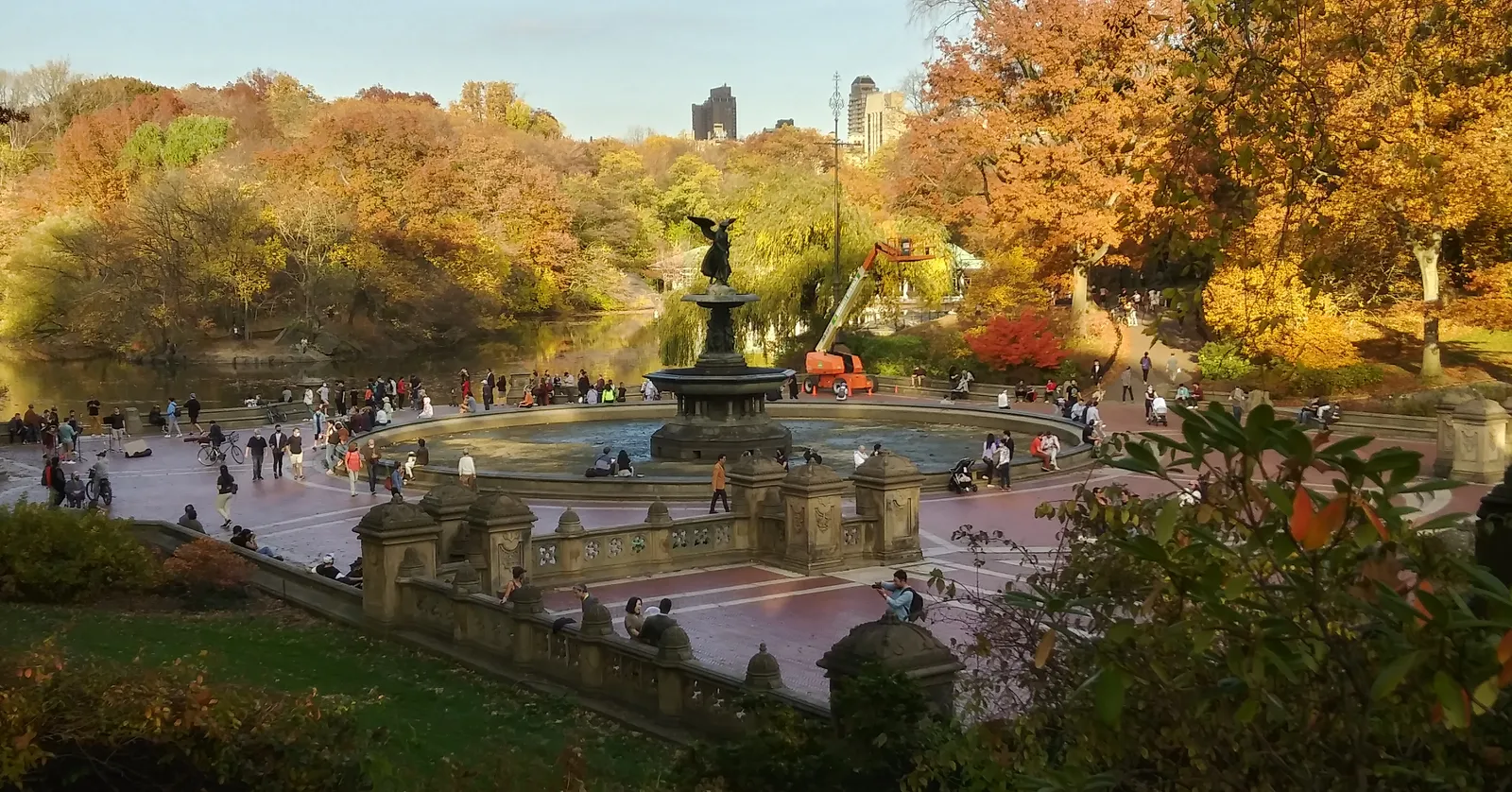
The Mall ends at a terrace stepping down to the Lake, with Emma Stebbins’ bronze Angel of the Waters standing over a fountain basin. It was unveiled in 1873 and was one of the first large public sculptures in the United States commissioned from a woman. The terrace above is where everyone stops.
What almost nobody does is go down into the arcade underneath. Its ceiling carries 15,876 encaustic tiles made by Minton in Staffordshire, hung rather than laid, and the panels came down in 1987 when they were judged unsafe. They went back up after a restoration completed in 2007. The passage is free, covered, and usually several degrees quieter than the terrace over it.
Bow Bridge crosses the Lake in cast iron
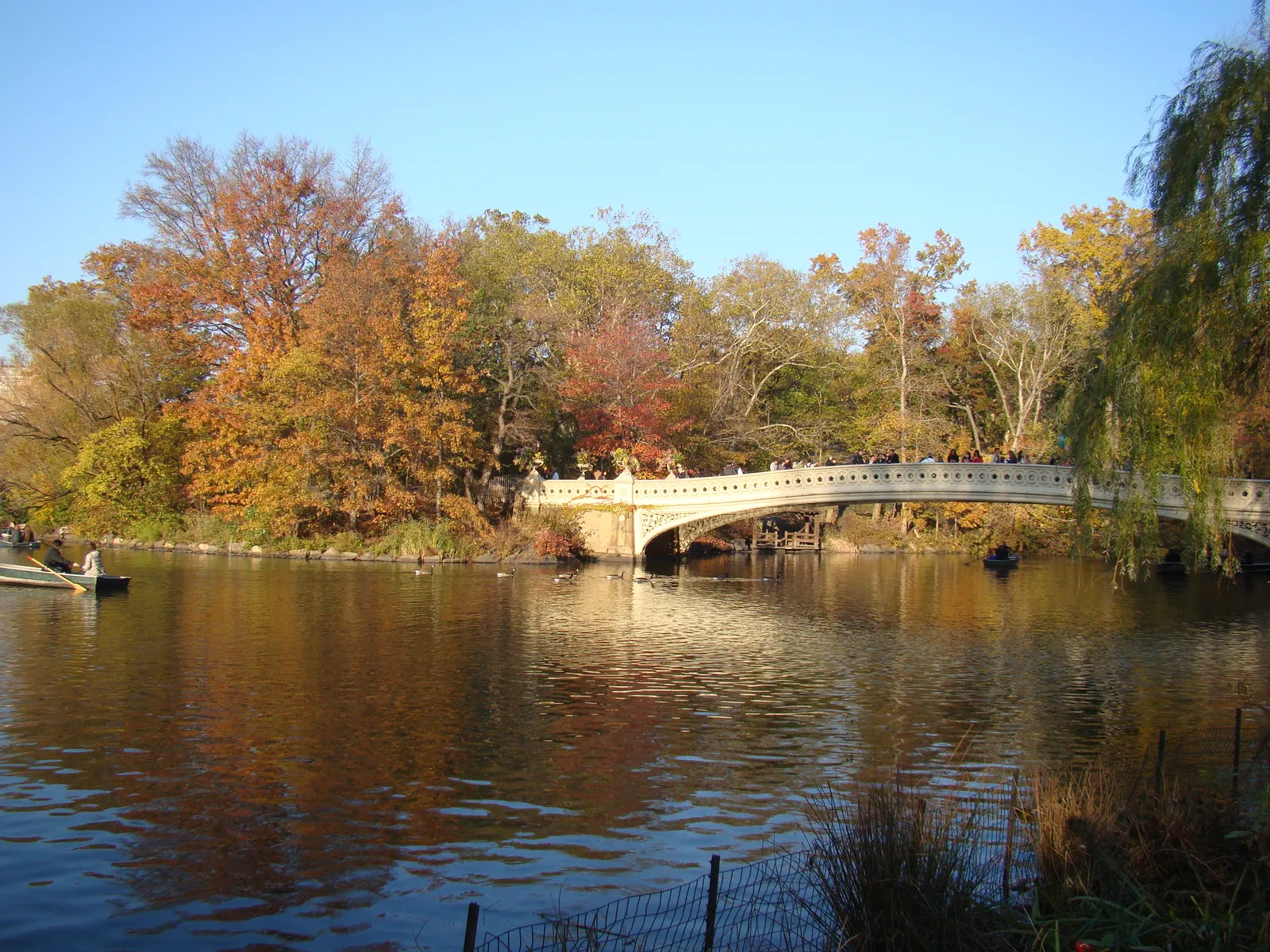
West of the terrace, the Lake narrows to about sixty feet and a cast iron arch from 1862 carries the path across it between Cherry Hill and the Ramble. It is one of the oldest cast iron bridges in the country and reads as much lighter than it is, with the balustrade’s ironwork picked out in cream against the water.
North of the bridge the Ramble’s paths were laid out deliberately to disorient, which is the point of them with time in hand and a problem without it. The park runs two and a half miles from Columbus Circle to its northern edge, so the walking inside it is longer than the trip to it, and there is nowhere along any of it to put a bag down and come back for it.
Columbus Circle has no direct line to the airport
The 59th Street-Columbus Circle station sits directly under the roundabout, and getting from it to John F. Kennedy International Airport (JFK) means one change: take the A or the D down to a Midtown interchange and pick up the E line, which runs through to Sutphin Boulevard-Archer Avenue where the AirTrain begins. The subway is $3.00 and the AirTrain a separate $8.75, charged by the Port Authority rather than the MTA.
Allow an hour and a quarter from the park gate to a terminal. With five hours or more, the Grand Central route across Midtown picks up the indoor half of the city, which is the better plan if the weather has turned.
Frequently asked questions
What should I do during a layover near Central Park and Columbus Circle in New York City?
Enter the park at Columbus Circle and work east and north. The Mall is the only straight line Olmsted and Vaux allowed themselves, four rows of American elms over a quarter-mile promenade, and it ends at Bethesda Terrace, where the 1873 Angel of the Waters stands over the fountain and the arcade underneath carries a ceiling of 15,876 patterned tiles. Bow Bridge crosses the Lake a few minutes west of there. All of it is free and the drives have carried no cars since 2018, so a rented bike covers the same ground in a third of the time. Three hours on foot gets you to Bethesda and back; four lets you keep going.
Is it faster to walk or to rent a bike?
A bike, by a long way, if you want more than the southern end. The full loop drive is a little over six miles and takes most people about 45 minutes on a bike against two hours walking, and since June 2018 there has been no car traffic on it at all. Walking is better if your target is Bethesda Terrace and the Mall, which are both within about 25 minutes of Columbus Circle on foot and are not really cyclable at a useful pace anyway because of the crowds. Rentals cluster around the southern gates.
What is under Bethesda Terrace, and is it open?
An arcade, and yes, free and unticketed like the rest of the park. Its ceiling carries 15,876 encaustic tiles made by Minton in England, hung as panels rather than laid on a surface; they were taken down in 1987 when they became unsafe and put back after a restoration that finished in 2007. Most people walk over the terrace and never go down the stairs into it, which is why it is usually quiet even when the fountain above is not.
How far north is worth going in three hours?
Bethesda Terrace and the Lake, and no further, unless you are on a bike. The park runs two and a half miles from Columbus Circle to 110th Street, so its northern half is a separate trip rather than an extension of this one. On foot, the sensible turning point is Bow Bridge; beyond it the Ramble's paths are deliberately confusing and eat time. On a bike, the loop past the reservoir and back is comfortable inside an hour and a half.