New York Layover: The Met and Museum Mile
Part of the full New York Layover: Grand Central From JFK
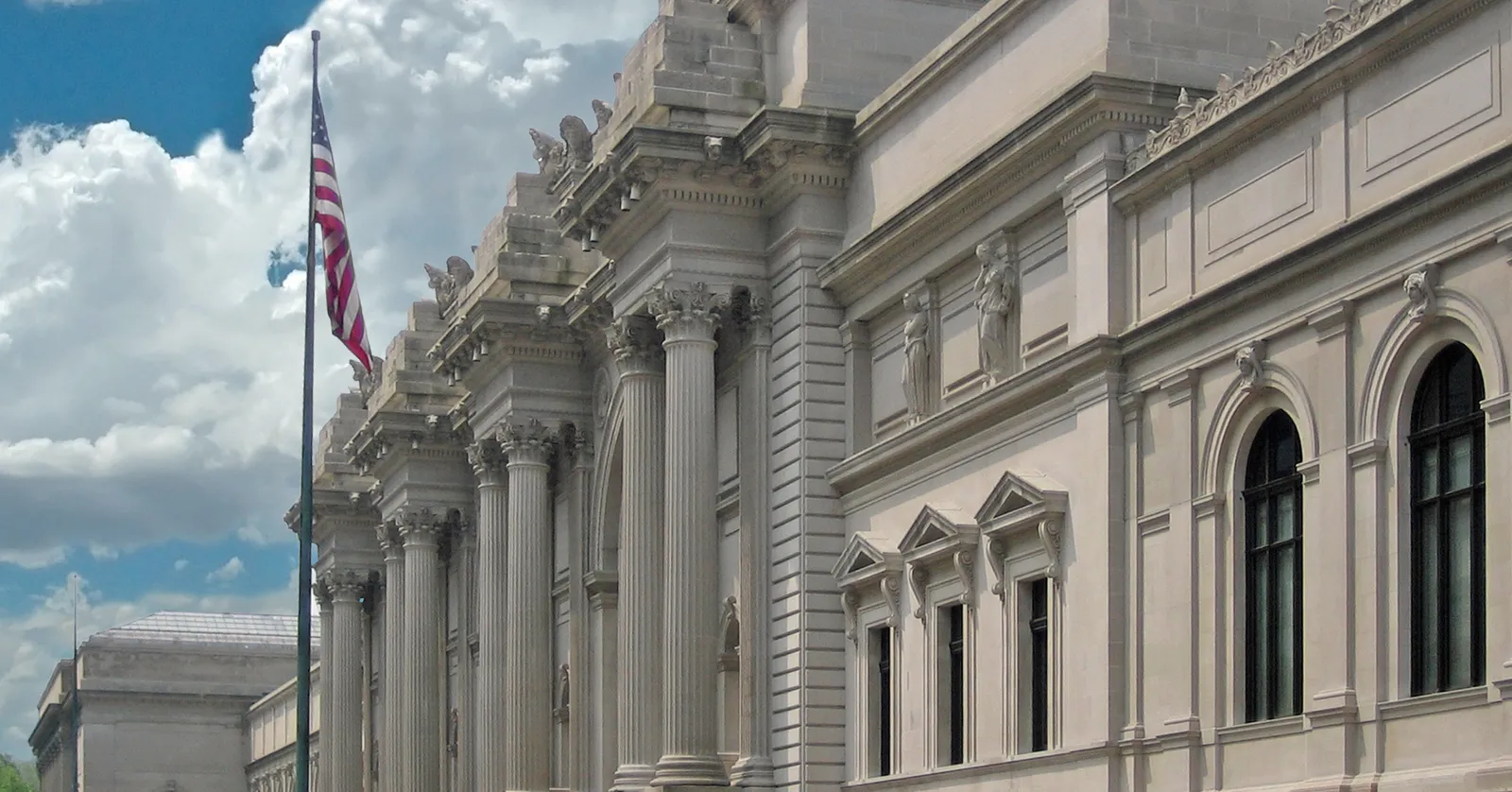
The Metropolitan Museum of Art on New York’s Fifth Avenue keeps a 2,000-year-old Egyptian temple standing whole in a glass-walled hall, with Frank Lloyd Wright’s spiral five blocks north of it and a 3,500-year-old obelisk in the park behind.
An Egyptian temple stands whole inside the Met
The Temple of Dendur was built on the Nile around 10 BC, dismantled when the Aswan High Dam flooded its site, and given to the United States by Egypt in 1965 in thanks for helping to rescue Nubian monuments. It went back up here in 1978, stone by stone, in a wing built for it with a sloping glass wall facing Central Park, and a shallow pool standing in for the river.
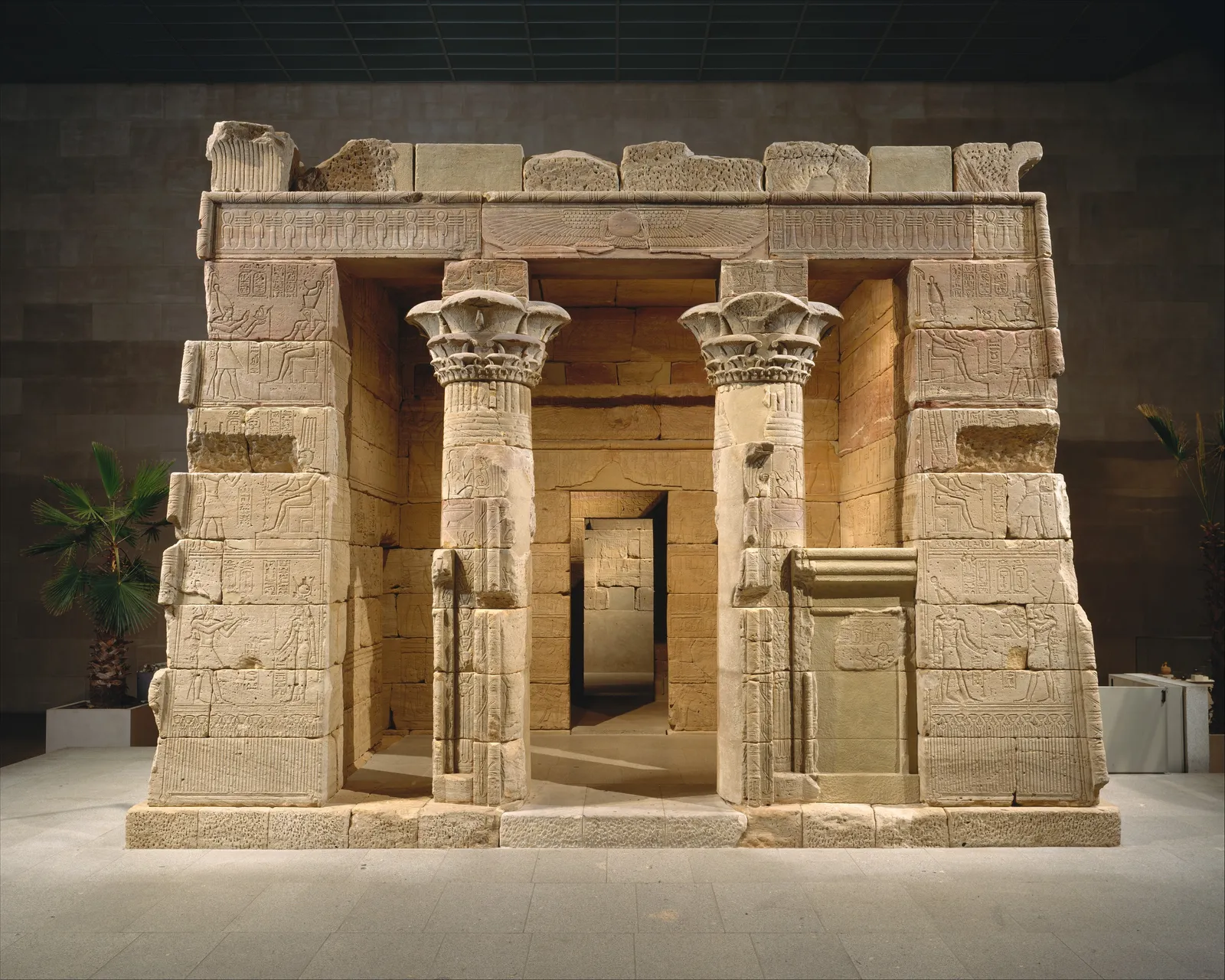
The museum around it holds roughly two million objects across about 1.5 million square feet, which on a few free hours is a reason to be ruthless rather than thorough: the Egyptian wing and the Greek and Roman court, and nothing else. Admission is $30 for an adult from outside New York State, $22 over 65 and $17 for students, and free for under-12s. It opens at 10am, runs to 5pm, stays open to 9pm on Fridays and Saturdays, and closes entirely on Wednesdays. Buying the ticket before you arrive puts you past the desk queue, which is the longest part of the entry between 11am and 2pm.
Wright’s spiral ramp at the Guggenheim
Fifth Avenue at 89th Street carries a white concrete drum that widens as it rises, finished in 1959 to Frank Lloyd Wright’s design, set among the limestone apartment blocks either side of it. Inside, the galleries are a single ramp coiling down around an open well, so the collection is seen by walking a slope rather than passing through rooms.
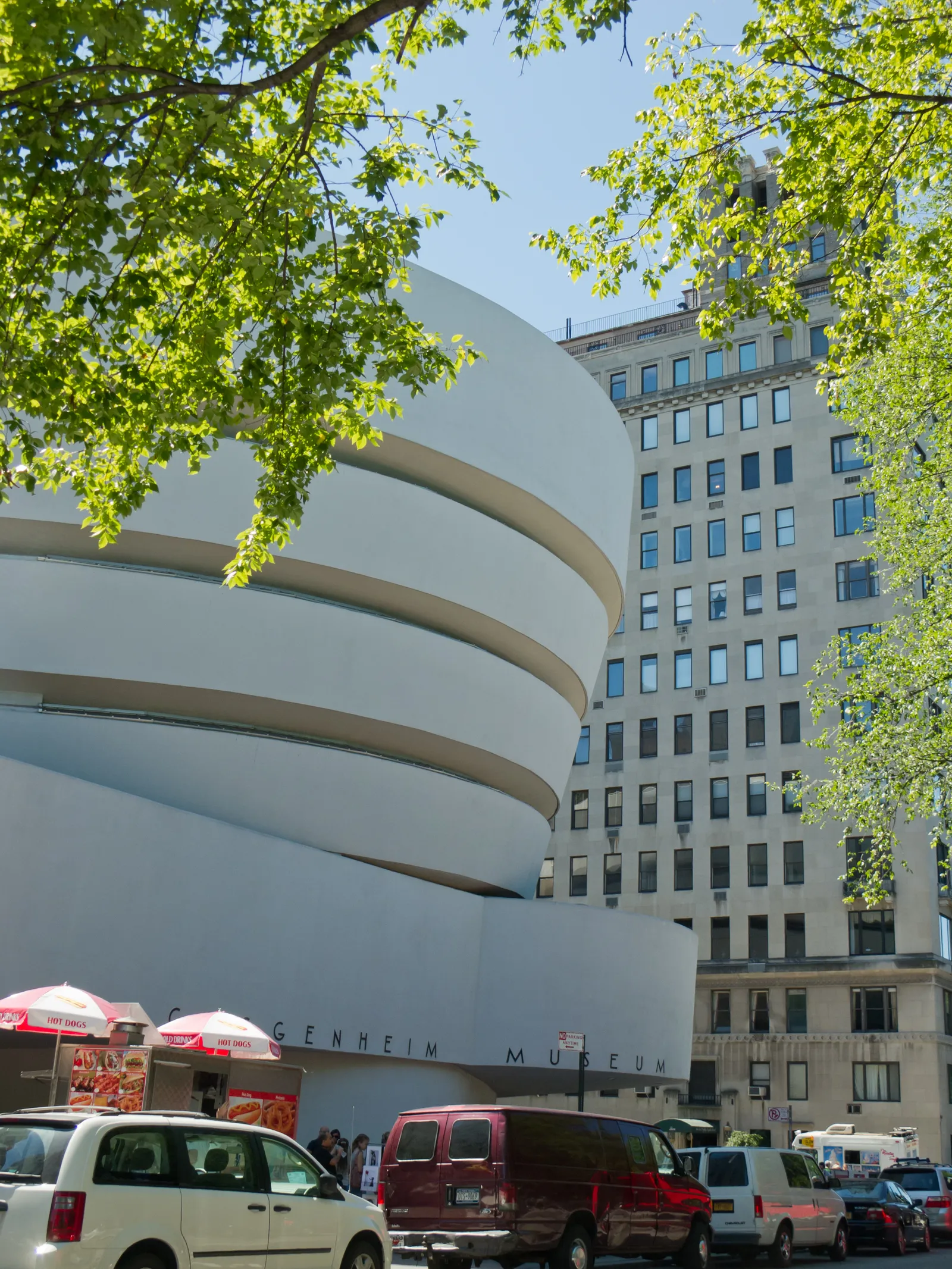
It is a separate ticket from the Met and about an hour’s visit, which makes it the realistic second stop rather than a third. Timed admission can be booked ahead, and on a flight day it is worth doing, because the ramp is one-way and the entry rate is managed at the door.
A 3,500-year-old obelisk stands behind the Met
Central Park’s Greywacke Knoll, immediately west of the museum, holds a granite obelisk carved in Egypt around 1450 BC for Thutmose III and raised in New York in 1881. It is the oldest outdoor monument in New York, and it is free, unfenced and standing in the open at any hour.
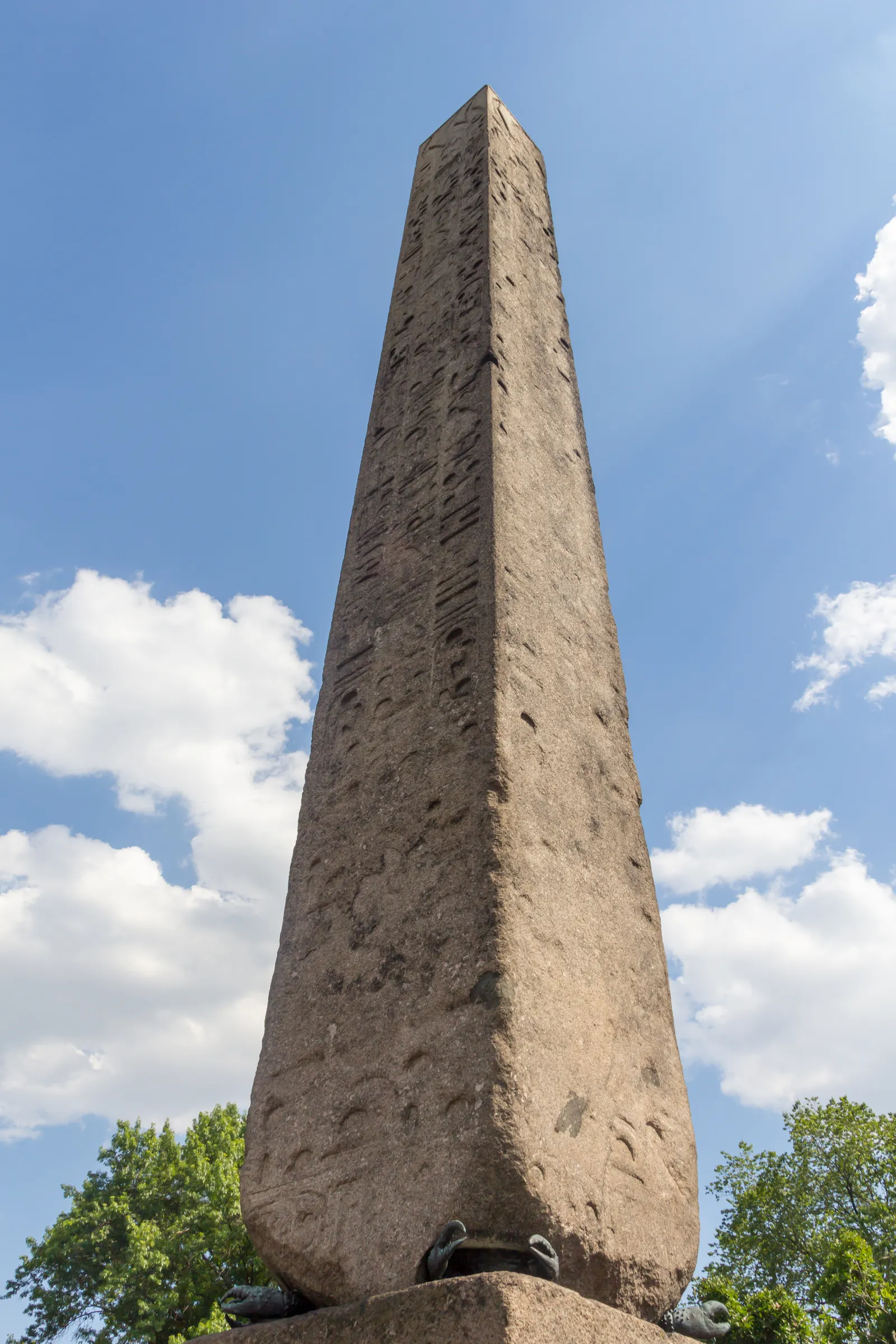
The hieroglyphs on the western and northern faces are noticeably softer than the others; a century of New York weather did more damage to the surface than three millennia in the dry air of Alexandria and Heliopolis did. Four bronze crabs support the corners, replicas of the Roman ones added when the obelisk was moved to Alexandria in 12 BC. The park it stands in runs south from here for two and a half miles, and the southern half around Bethesda Terrace is a walk of its own if the museums are closed.
Nothing along this stretch of Fifth Avenue will hold a suitcase for you: the museum checkroom takes coats and small bags only, and the mile of galleries north of it is residential blocks in between.
The nearest subway to the Met is two avenues east
There is no station on Fifth Avenue here. The closest is 86th Street on Lexington Avenue, about a ten-minute walk east across the top of the Upper East Side, and from there getting to John F. Kennedy International Airport (JFK) means taking the 4, 5 or 6 down into Midtown and changing to the E line for Sutphin Boulevard-Archer Avenue, where the AirTrain begins. Subway $3.00, AirTrain a separate $8.75 charged by the Port Authority.
Allow an hour and a half from the museum steps to a terminal, which is longer than most of Manhattan and the main argument against cutting the visit fine. With a shorter gap than four hours, the Grand Central route through Midtown sits much closer to the airport trains and makes fewer demands on the clock.
Frequently asked questions
What should I do during a layover near the Metropolitan Museum of Art in New York City?
Pick two rooms at the Met rather than trying to do the building. The Temple of Dendur, an Egyptian sandstone temple of about 10 BC reassembled whole inside a glass-walled hall, is the one thing here that exists nowhere else, and the American Wing courtyard next door is a five-minute walk from it. Admission is $30 for an out-of-state adult, and the museum is shut on Wednesdays, which is the trap on a flight day. Five blocks north, Frank Lloyd Wright's Guggenheim is a separate ticket and about an hour. Behind the Met in Central Park, Cleopatra's Needle costs nothing and takes ten minutes.
Is the Met really pay-what-you-wish?
Only if you live in New York State or study at a university in New York, New Jersey or Connecticut, in which case you name your own price, down to a cent. Everyone else pays a fixed $30 for an adult, $22 for over-65s and $17 for students from elsewhere; under-12s are free with an adult. The pay-what-you-wish policy was open to everyone until 2018 and a lot of guidance online still says so.
How much of the Met can I actually see in two hours?
Two or three galleries, honestly, out of a building holding around two million works across about 1.5 million square feet. The practical approach is to walk in, take the map, and go straight to the Egyptian wing and the Temple of Dendur at the north end, then double back through the Greek and Roman court on the way out. Ignore the rest; it will still be there. Entry is at the top of the Fifth Avenue steps and the security queue is worst between 11am and 2pm.
What else on Fifth Avenue is worth the walk?
The Guggenheim, five blocks north at 89th Street, where the building draws as many photographs from the pavement as the collection does from inside. Wright's spiral ramp opened in 1959 and you see the whole collection by walking down one continuous slope rather than through rooms. The Neue Galerie sits between the two at 86th, and the Jewish Museum at 92nd. All of them are on the park side of the avenue, so the walk between them is under trees rather than between buildings.