Nashville From BNA: Broadway and the Ryman
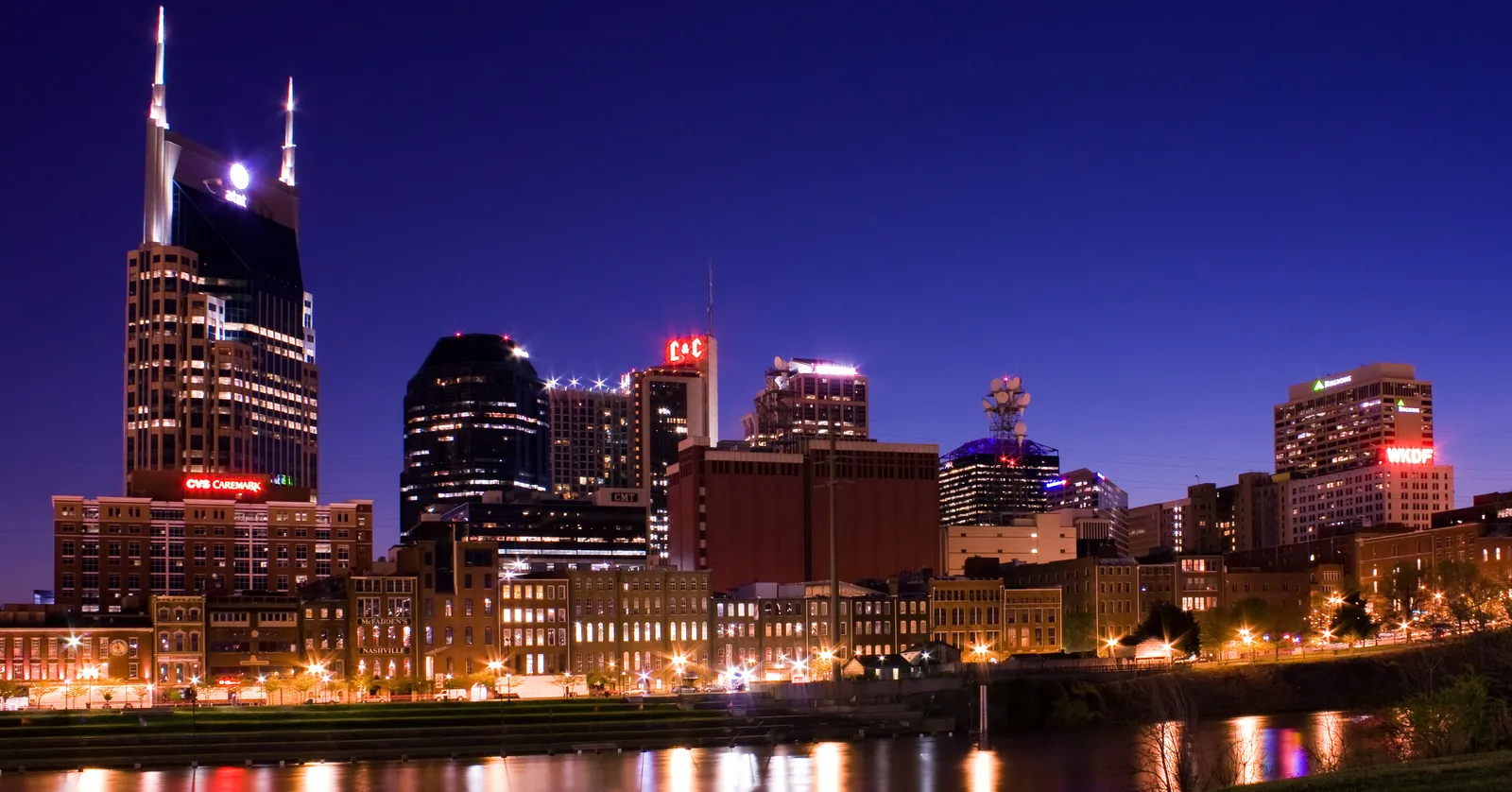
Nashville’s music landmarks sit within a few blocks of each other downtown: the Country Music Hall of Fame, the Ryman Auditorium three blocks north of it, and the Broadway honky-tonks in between, playing live country from mid-morning with nothing charged at the door.
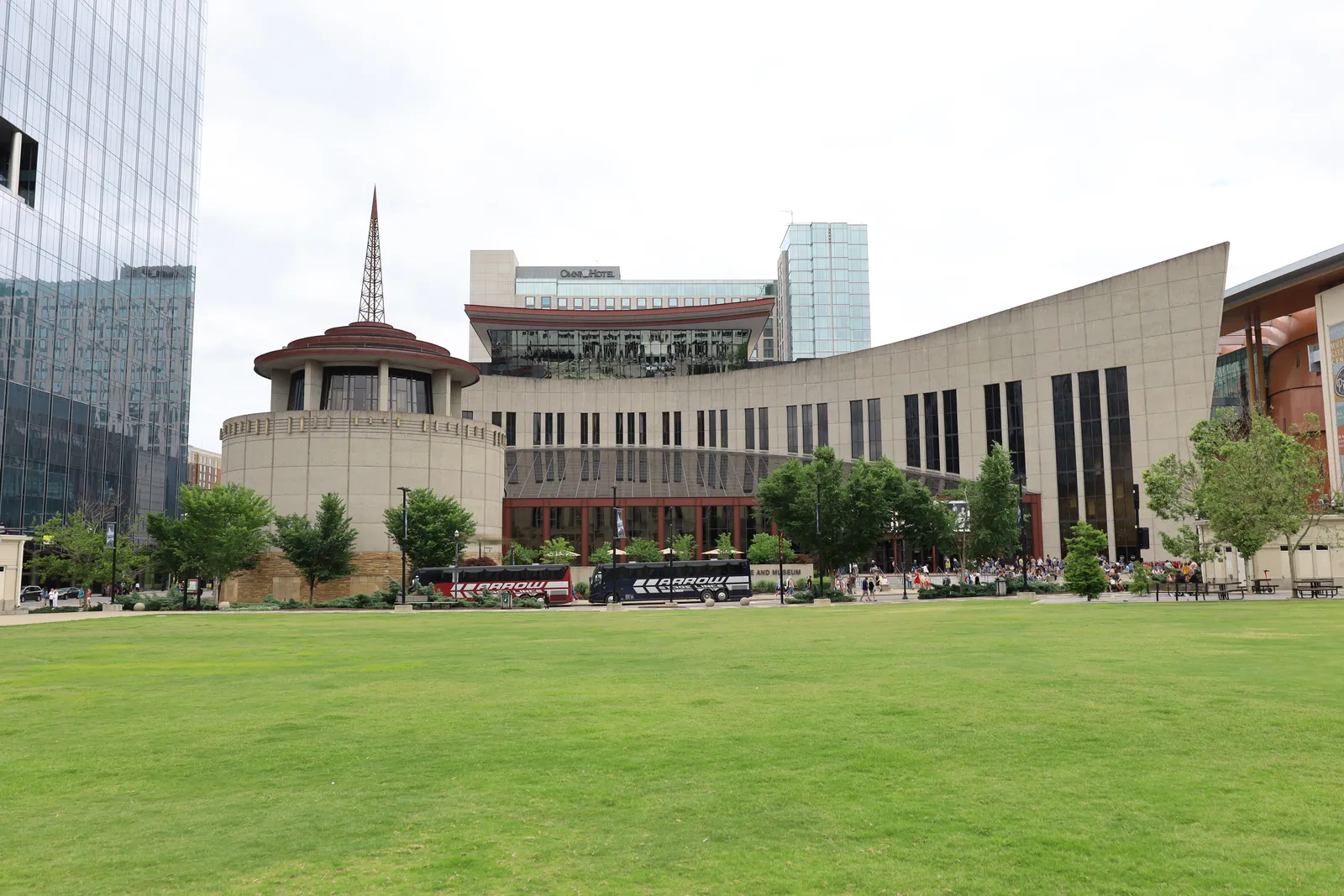
The rotunda at the Country Music Hall of Fame
The Country Music Hall of Fame and Museum fills a long curving building at 222 Rep. John Lewis Way South, on the street Nashville renamed in 2020 for the congressman who helped lead its lunch counter sit-ins. Tuck-Hinton’s design is a set of deliberate puns: the front windows step up and down like piano keys, the stone bars along the outside spell the opening notes of “Will the Circle Be Unbroken,” and the whole footprint reads as a bass clef from the air. The drum at the north end is the rotunda, capped by a copy of the diamond-shaped WSM radio tower that went up in 1932.
Inside that drum, a bronze plaque for every inducted member hangs around the wall at the height a note would sit on a staff, with the song’s title running around the ceiling above them. The rest is the collection: instruments, stage clothes, handwritten lyrics, and the 2014 expansion that doubled the place to 350,000 square feet. Doors are open 9am to 5pm every day and adult admission is $31.95, or you can pick up entry tickets from a tours and activities platform beforehand and walk past the ticket desk. Two hours goes fast in here, and one is enough if you keep moving.
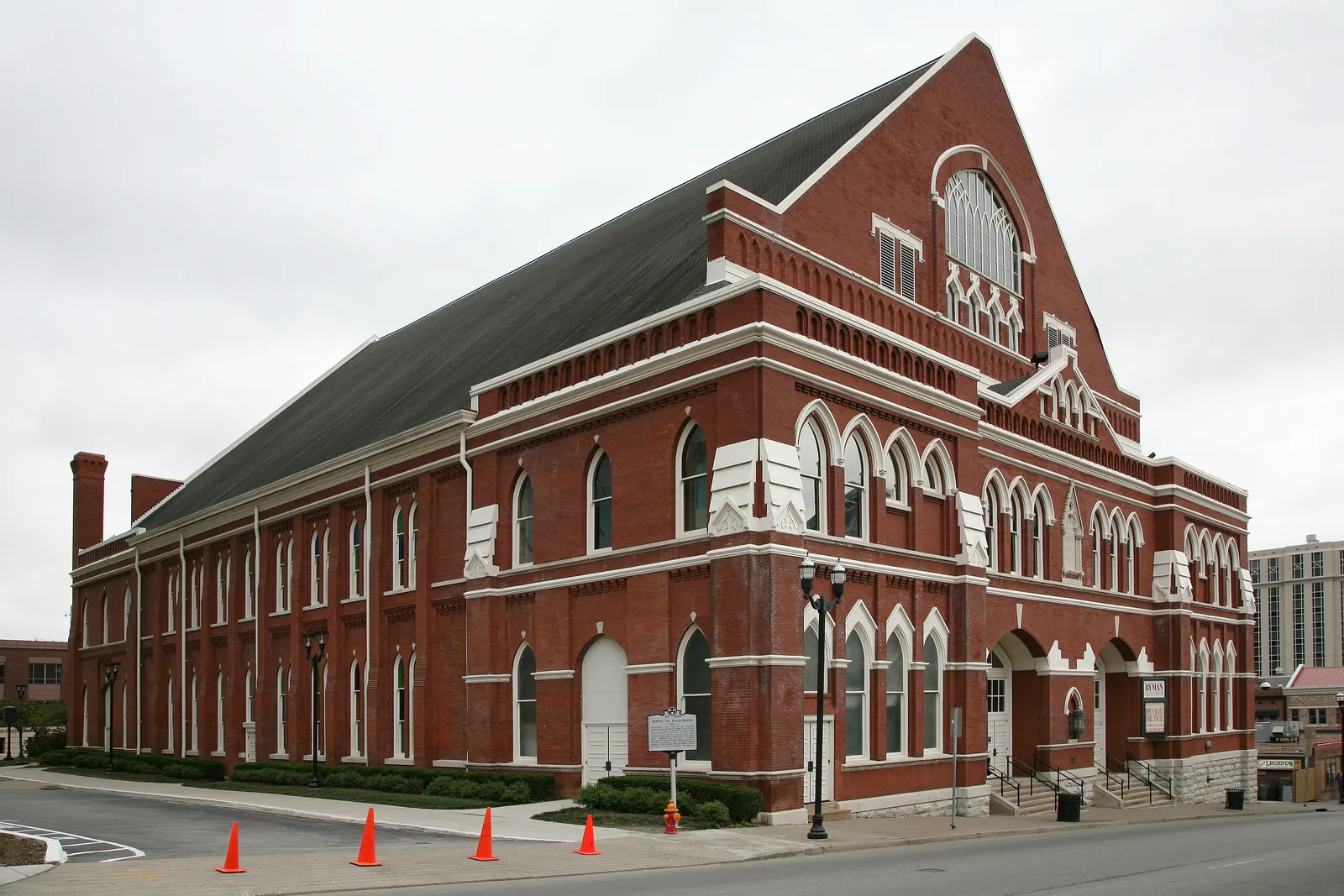
The Ryman Auditorium’s original wooden pews
Thomas Ryman put up the hall at 116 Rep. John Lewis Way North as the Union Gospel Tabernacle, a meeting house for the revivalist preacher Samuel Porter Jones, finished in 1892. The Grand Ole Opry moved its radio broadcast in on June 5, 1943 and stayed for nearly 31 years, which is where the second name comes from, the Mother Church of Country Music. All 2,362 seats are the original curved wooden pews, taken out during the 1993 restoration, refurbished and put back.
The self-guided visit runs 9am to 4pm daily, takes about an hour and costs $25 plus tax, with exhibits along the balcony and time on the stage itself. A guided backstage version at $42.52 plus tax adds the dressing rooms and runs an hour and a half. The building is a working venue, so a matinee or a soundcheck can shorten the day’s tour hours; the schedule on the door is the one that decides.
Free live country on Lower Broadway from ten in the morning
Broadway drops five blocks from Fifth Avenue down to First, and that stretch is the honky-tonk strip: Tootsie’s Orchid Lounge in its painted purple building, Robert’s Western World with the boots along the back wall, Legends Corner, The Stage. Bands start around ten in the morning and rotate through in shifts until close, most of them with nothing charged at the door. The arrangement is that the bar takes the drinks money and the band takes the tip jar, so carry cash or have a payment app ready.
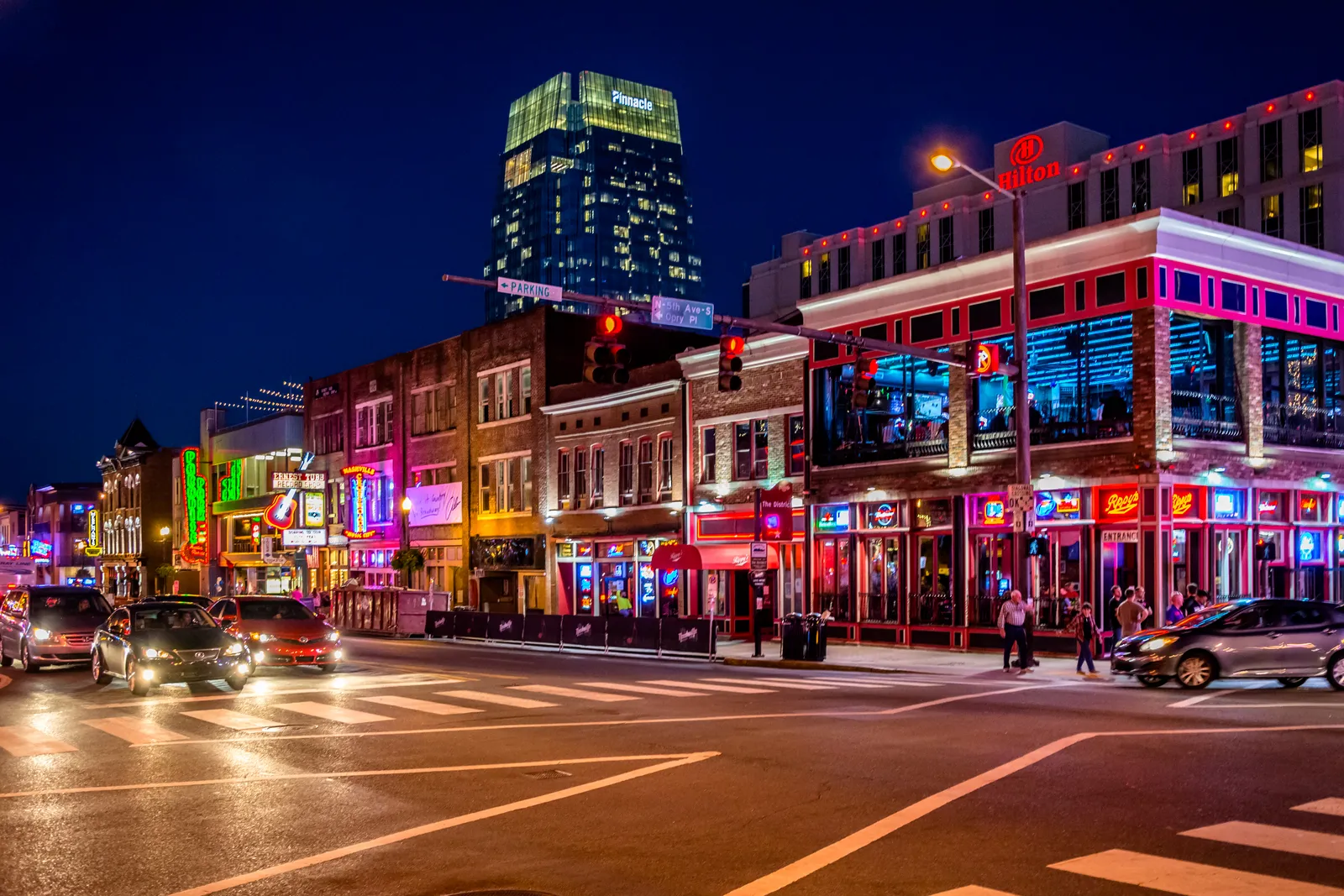
Broadway’s sidewalks between First and Fifth run shoulder to shoulder from late afternoon on a weekend, when downtown counts a reported 200,000 or so visitors, and the bars themselves are standing room with nowhere to put a suitcase down.
The main library at 615 Church Street, two blocks north, is the quiet counterweight to all of that, and free. Its Civil Rights Room on the second floor is built around a symbolic lunch counter, with the ten rules of conduct the sit-in students carried printed on glass placemats in front of each seat and the photographs that put Nashville’s 1960 campaign on national news around the walls. It is the room that explains why the street the Ryman stands on carries the name it does.
The John Seigenthaler Pedestrian Bridge across the Cumberland
The bridge opened in July 1909 as the Sparkman Street Bridge, the first in North America built with concrete arched trusses, and carried traffic until inspectors condemned it and it closed to cars in 1998. Rather than pull it down, the city spent more than $15 million turning it into a 3,150-foot walkway, and renamed it in 2014 for the newspaper editor and civil rights figure John Seigenthaler. Its west end comes out facing the Schermerhorn Symphony Center at the bottom of Broadway; the east end drops onto a plaza by the football stadium.
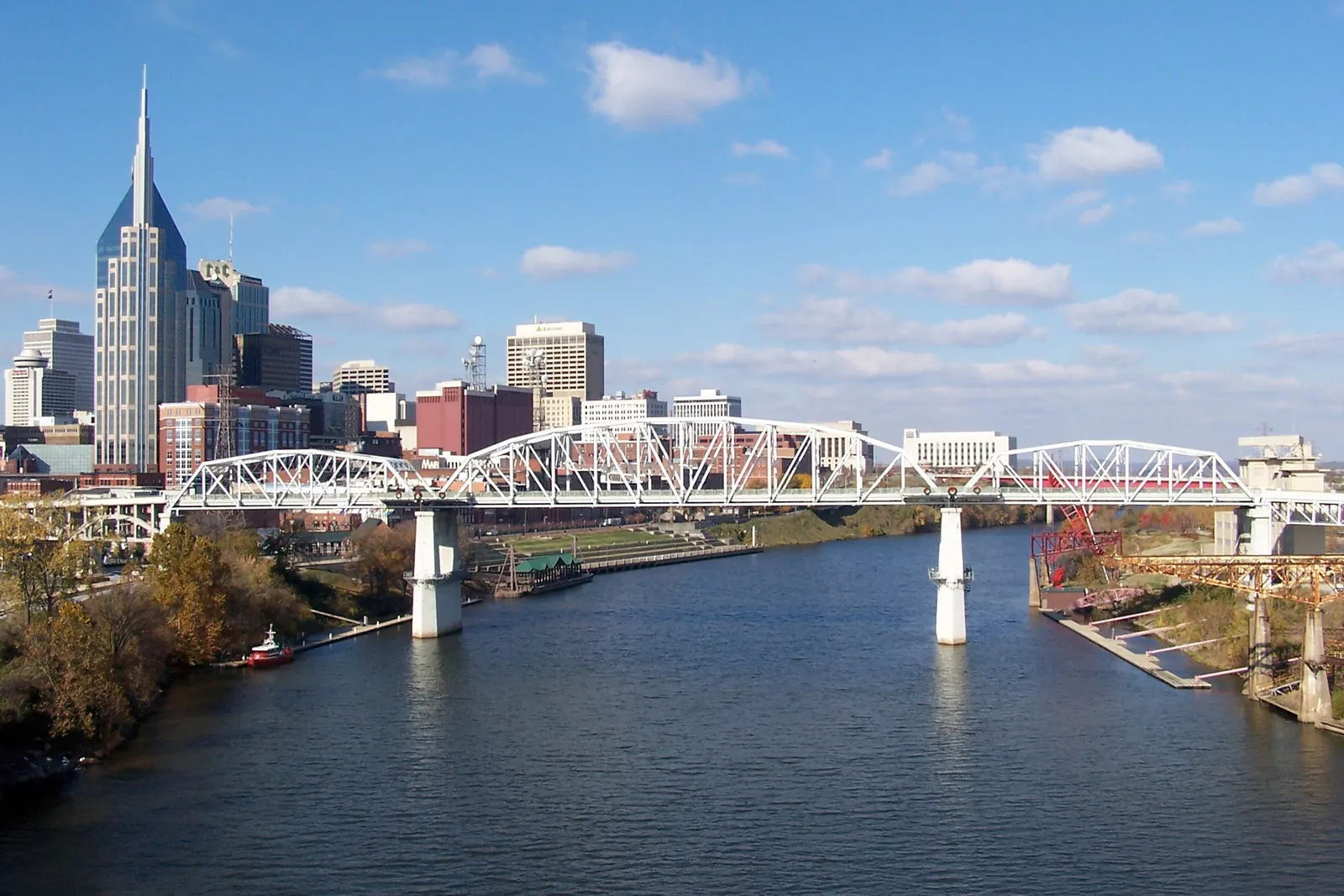
What it is worth walking for is the halfway point. From midstream the whole downtown bank lines up across the water, the AT&T Building’s two antenna spires over the rest of it, and the river runs north out of the frame under the road and rail bridges. It costs nothing, it never closes, and it takes about ten minutes to cross.
Nashville’s full-size Parthenon in Centennial Park
Centennial Park sits on West End Avenue about two and a half miles west of downtown, roughly fifteen minutes on a bus down West End. Nashville built a Parthenon there in 1897 for the Tennessee Centennial Exposition, on the strength of the city’s old nickname, the Athens of the South. It went up in plaster, wood and brick and was meant to come down with the rest of the fair. It proved popular enough that the city kept it instead, then rebuilt it properly in concrete once the weather got the better of the original, the outside finished in 1925 and the inside in 1931.
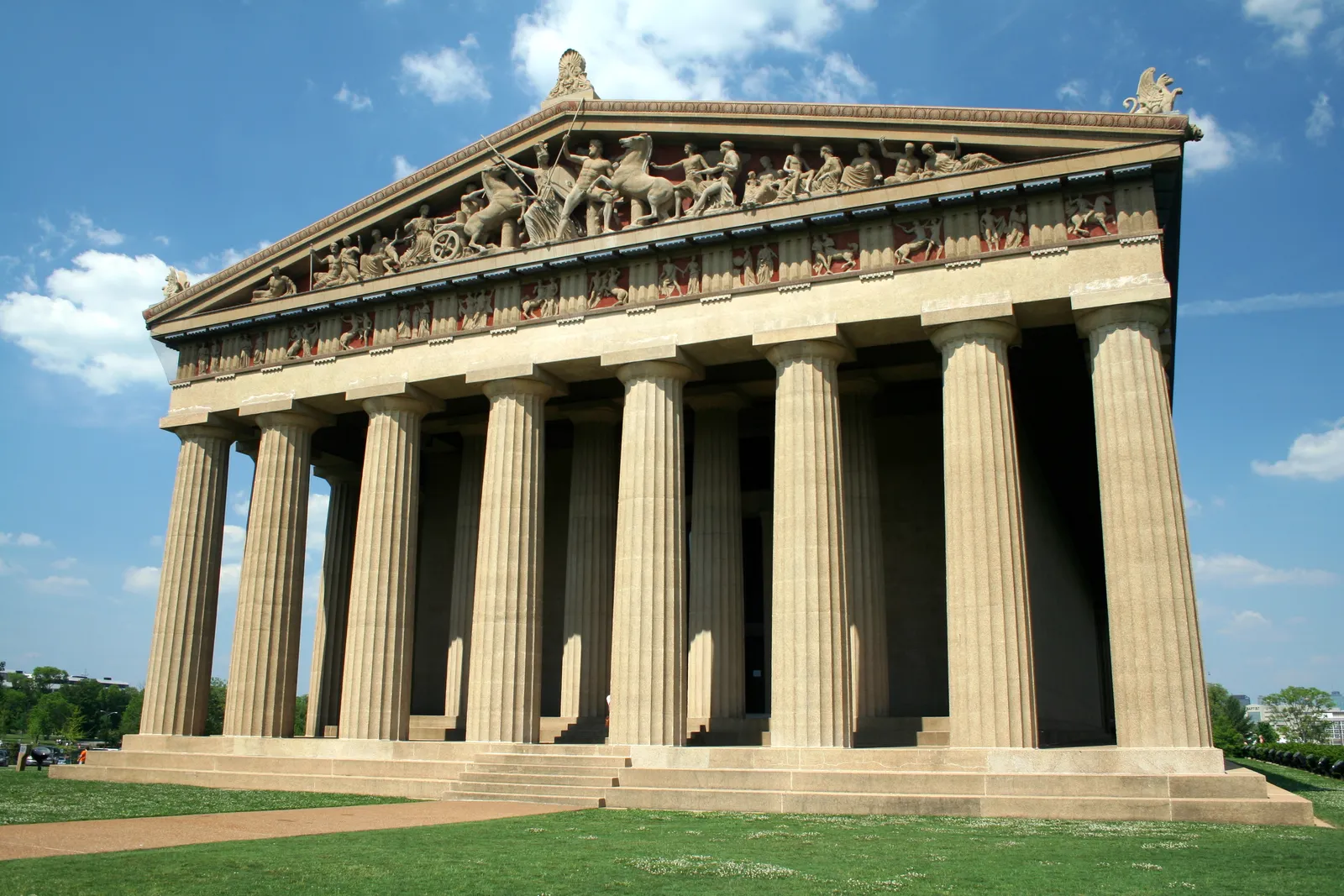
The main hall is filled by a 42-foot recreation of the Athena Parthenos, gilded in 2002 with more than eight pounds of gold leaf, and the floor below holds the Cowan collection, 63 American paintings given to the city between 1927 and 1929. It opens Tuesday to Saturday 9am to 4:30pm and Sunday from 12:30pm, and shuts all day Monday. Adult admission is $15, sold at the counter inside rather than online, and luggage and large backpacks are turned away at the door. The park around it is free and open regardless.
This is the stop that decides whether you want four hours here or six, because the round trip adds most of an hour to whatever you spend inside. The original, the building this one is measured against column for column, is still standing on the Acropolis in Athens, where it has been a ruin since a Venetian shell hit its powder store in 1687.
The Tennessee Capitol and the 95 bells below it
Bicentennial Capitol Mall State Park runs twenty acres north from the foot of Capitol Hill, laid out for Tennessee’s two-hundredth birthday in 1996. Its far end is the Court of Three Stars, a granite circle in the red, white and blue of the state flag’s tri-star, ringed by fifty columns carrying a carillon of 95 bells, one for every county in Tennessee. It chimes every fifteen minutes and plays a whole tune on the hour, usually the Tennessee Waltz or Chattanooga Choo Choo. A ninety-sixth bell on the Capitol grounds above answers it.
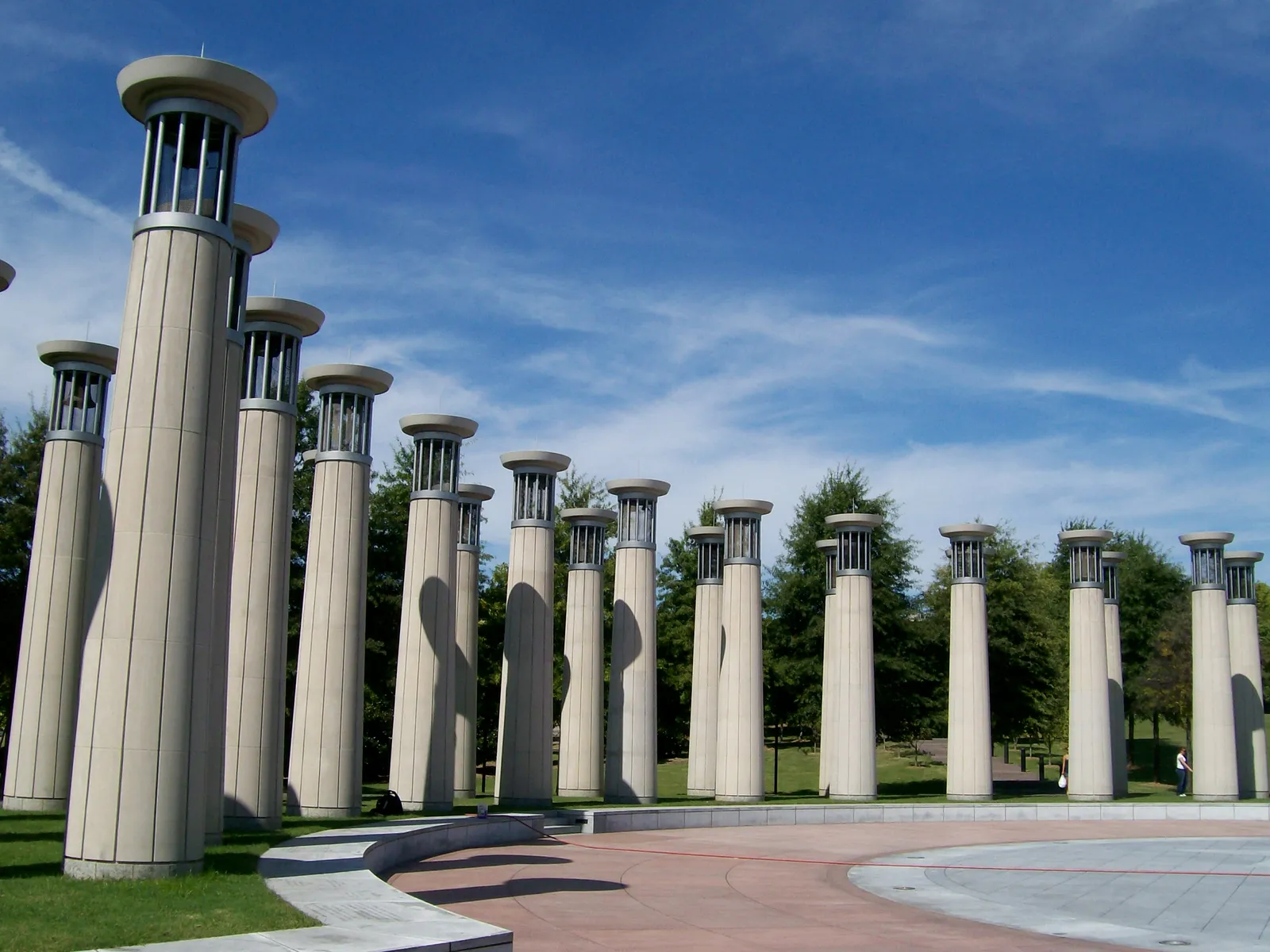
Between the two ends of the park are 31 fountains jetting straight out of the paving in the pattern of the state’s rivers, each inscribed with the waterway it stands for, and a granite plaza for the 5,731 Tennesseans killed in the Second World War, with a time capsule under it dated to be opened in 2045. The park is in the middle of a capital improvement program, so some sections and paths are fenced off.
Uphill from the mall, the Capitol stands on the highest ground downtown, about 200 feet above the Cumberland. William Strickland designed it as a Greek Revival temple, worked on it from 1845, died in 1854 five years before it was finished, and is buried in a vault in its east wall. James K. Polk and his wife Sarah lie in a tomb on the northeast lawn.
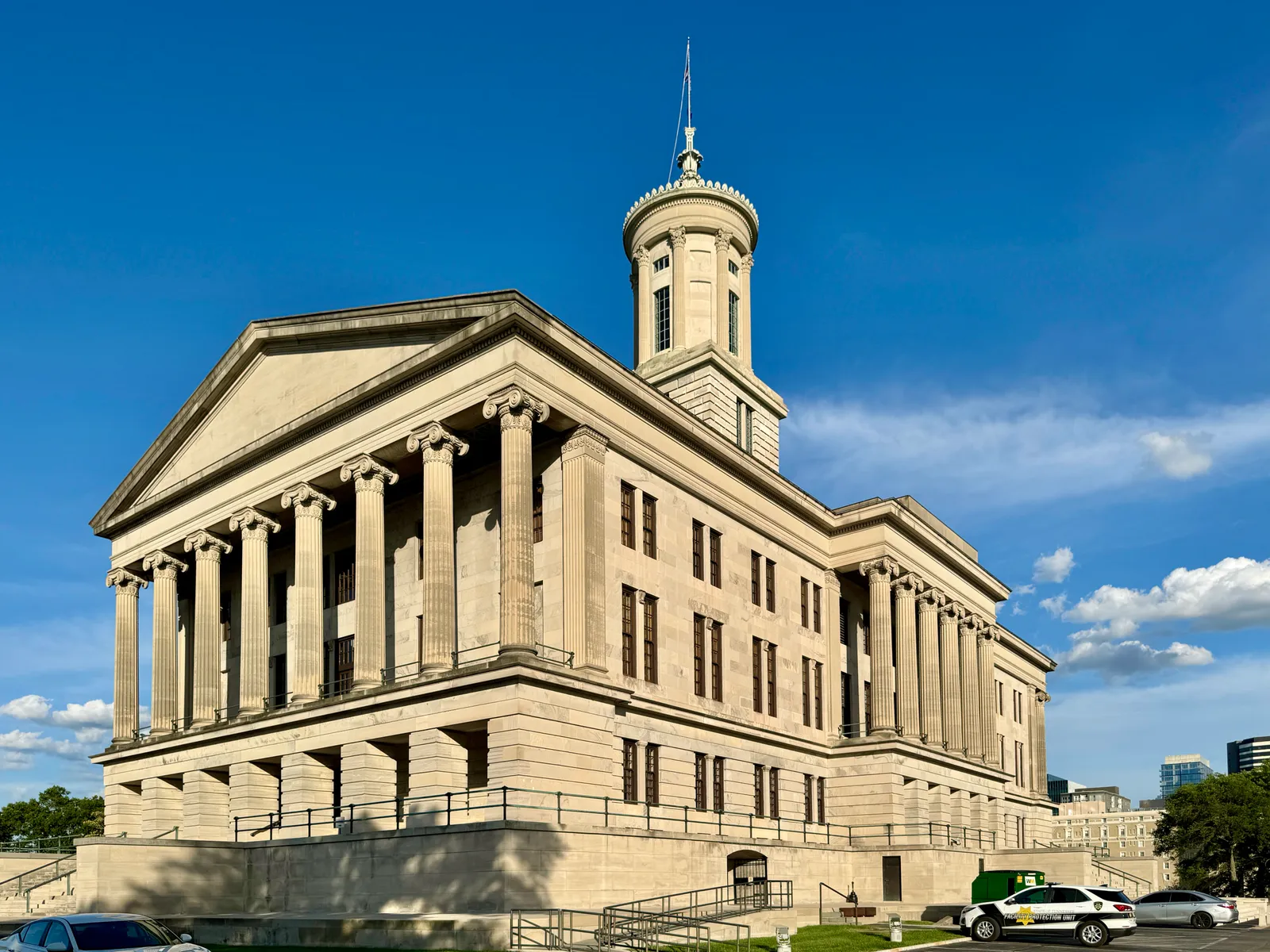
It costs nothing to walk into, Monday to Friday, 9am to 4pm, and free 45-minute guided tours leave the first-floor information desk at nine, ten and eleven in the morning and one, two and three in the afternoon, no booking needed unless you are a group of twelve or more. The main doors are up flights of steps; step-free entry is through the Cordell Hull building tunnel at 425 Rep. John Lewis Way North.
No airport train in Nashville, just a two-dollar bus
WeGo Route 18 is the whole of the public transit link between downtown and Nashville International Airport (BNA), and it costs $2 each way, paid in exact cash or through the transit app. Buses leave WeGo Central on 4th Avenue every 30 minutes from 5:50am until 11:15pm, with one earlier express at 5:15am that runs out along the interstate and does the trip in 18 minutes. The ordinary run takes 34 to 40 minutes for most of the day and closer to 45 in the afternoon rush hour, so leaving downtown two and a half hours before departure covers the ride, the wait and the security line with room to spare. At the airport end the stop is in the Ground Transportation Center, on the first floor of Terminal Garage 2, signposted from baggage claim.
Almost everything above is on flat ground within a mile of the river, and the one real climb is the last hundred yards up to the Capitol. Picking a stored bag back up on the way to the bus costs a few minutes. Wheeling a suitcase down Broadway on a Saturday afternoon costs considerably more than that.
Frequently asked questions
What should I do during a layover in Nashville?
Stay downtown. The Country Music Hall of Fame, the Ryman Auditorium and the five honky-tonk blocks of Lower Broadway sit within about a mile of each other, and the bars there put live country on from around ten in the morning with no cover at the door. Walking out onto the John Seigenthaler Pedestrian Bridge gets you the skyline from the middle of the Cumberland River for nothing. With five or six hours, a bus down West End Avenue reaches the full-size Parthenon replica in Centennial Park in about fifteen minutes, though it is shut on Mondays and the round trip costs you most of an hour.
Can you take kids into the Broadway honky-tonks?
During the day, usually yes. Most bars on Lower Broadway admit under-21s until around 6pm and then go 21-and-over for the evening, and a handful of the larger venues hold out until 8pm or 9pm. Each bar sets its own cutoff and changes it for events, so the policy on the door on the day is the one that counts. Since the music starts around 10am, a late-morning or lunchtime layover is the one that works with children in tow.
Is the Parthenon worth the ride out to Centennial Park?
It is the only full-size replica of the Athens Parthenon anywhere, and the 42-foot gilded Athena inside is worth seeing on its own, but budget for the trip: about fifteen minutes on a bus each way from downtown, plus the wait. It opens Tuesday to Saturday 9am to 4:30pm and Sunday from 12:30pm, and closes all day Monday. Adult admission is $15 and is sold only at the counter inside, not online. Luggage and large backpacks are turned away at the door, and the lockers inside will not take a suitcase.
How late does the last bus to Nashville International Airport leave downtown?
WeGo Route 18 is the only public transit between downtown and BNA. The last departure from WeGo Central on 4th Avenue is at 11:15pm, and buses run every 30 minutes before that from about 5:50am. The fare is $2 each way and the ride takes 34 to 40 minutes most of the day, closer to 45 in the afternoon rush hour. The stop at the airport end is in the Ground Transportation Center on the first floor of Terminal Garage 2, signposted from baggage claim.
Is there anywhere quiet near Broadway to sit for an hour?
The main library at 615 Church Street, two blocks north of the bars, is free to walk into and open 9am to 6pm on weekdays, 9am to 5pm on Saturdays and 2pm to 5pm on Sundays. Its Civil Rights Room on the second floor is built around a symbolic lunch counter documenting the 1960 Nashville sit-ins, with the ten rules of conduct the students carried printed on the counter in front of each seat.