Centennial Park Layover: Nashville's Parthenon
Part of the full Nashville From BNA: Broadway and the Ryman
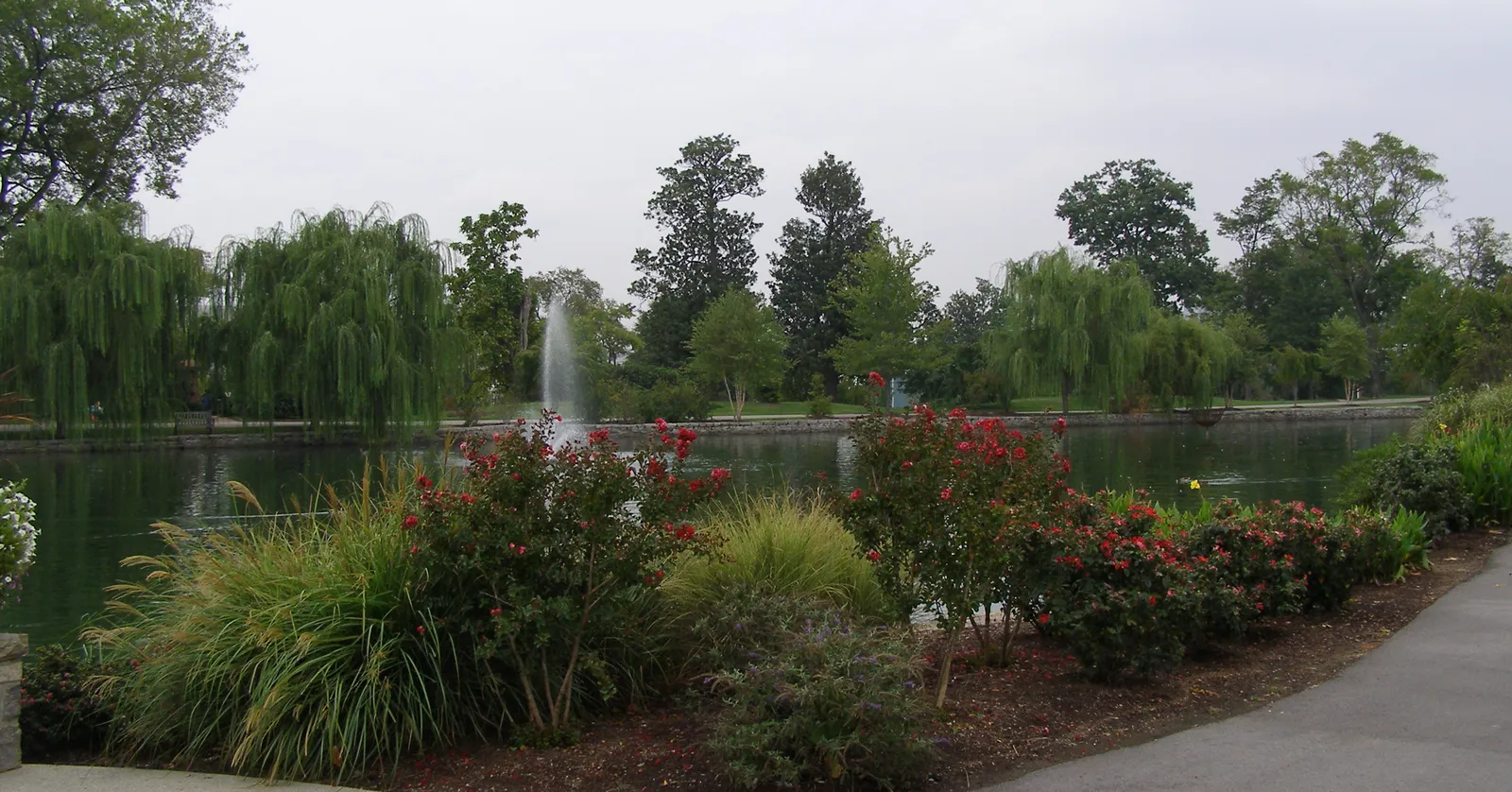
Centennial Park on West End Avenue in Nashville is built around a full-size Parthenon, with a lake, a sunken garden and a mile of flat trail on the ground around it, so a few free hours here never need a second stop.
Inside the Parthenon, a gallery and a gilded statue
Nashville put up a Parthenon at 25th Avenue and West End for the 1897 Tennessee Centennial Exposition, in plaster and wood, meant to be temporary, and kept it when the fair came down. The concrete rebuild that replaced it was finished outside in 1925 and inside in 1931, and it is the only full-size copy of the Athens original anywhere. Standing under the east pediment is worth the trip on its own, and costs nothing.
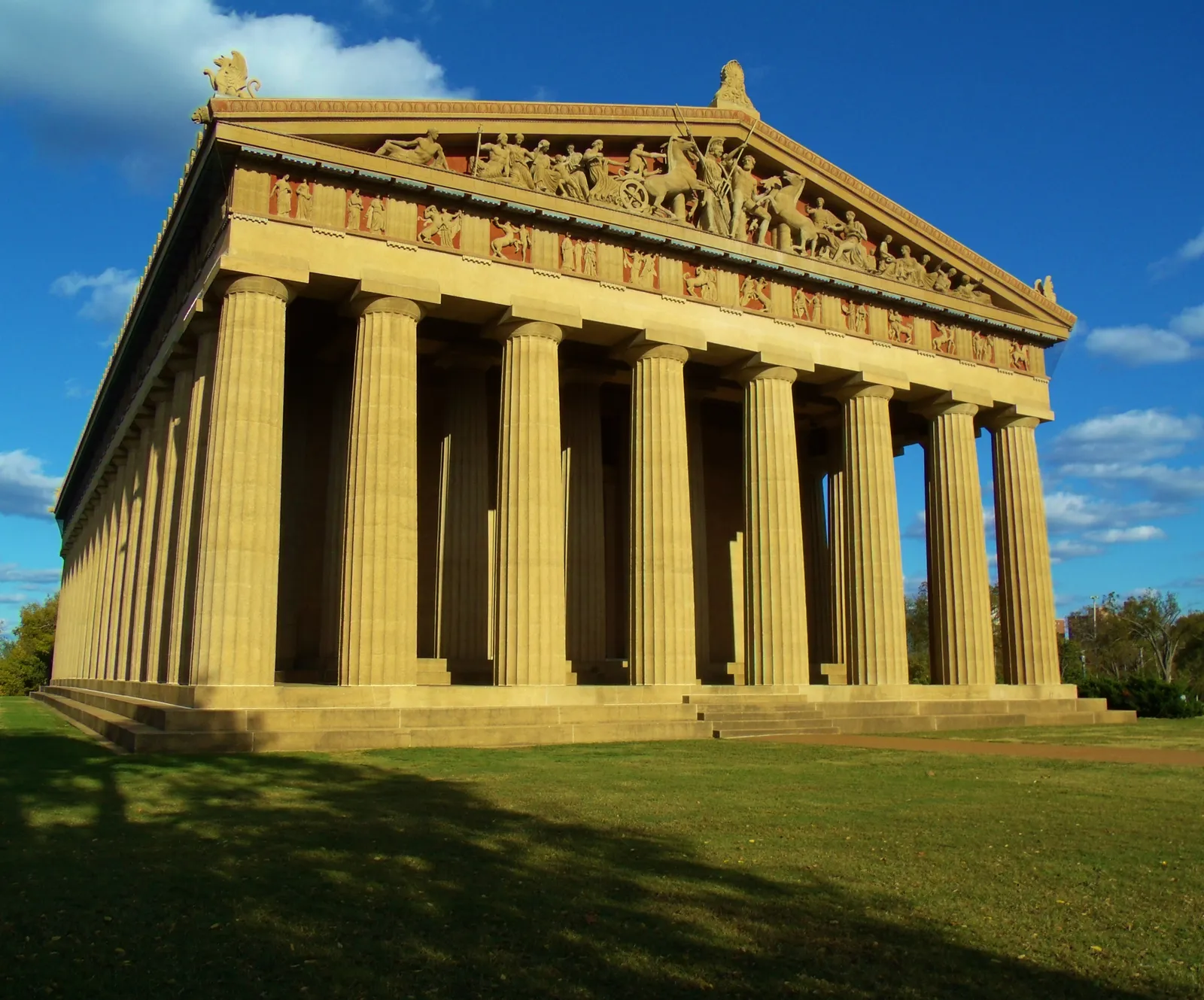
The ticket buys two floors. The main hall holds a recreation of the Athena Parthenos, forty-two feet of it, made in 1990 and covered in 2002 with more than eight pounds of gold leaf; the floor below is a gallery of 63 American paintings from the nineteenth and twentieth centuries, given to Nashville by James M. Cowan between 1927 and 1929. Adult admission is $15, seniors and anyone from four to seventeen pay $10, and tickets are sold only at the counter inside, not online, with a small surcharge on cards. Doors are open Tuesday to Saturday 9am to 4:30pm and Sunday from 12:30pm, shut all day Monday. A tours and activities platform sells a hop-on hop-off trolley pass that stops here, if you would rather not work out the bus.
Luggage and oversize backpacks are turned away at the Parthenon’s door, and the lockers inside take a quarter but will not hold anything larger than a phone.
Lake Watauga and the concrete bridge into the Sunken Garden
Centennial Park covers 132 acres, and about three million people a year come through it. Lake Watauga sits in the middle with a jet fountain going in it and willows down the far bank, and a one-mile trail loops the whole park, flat the entire way.
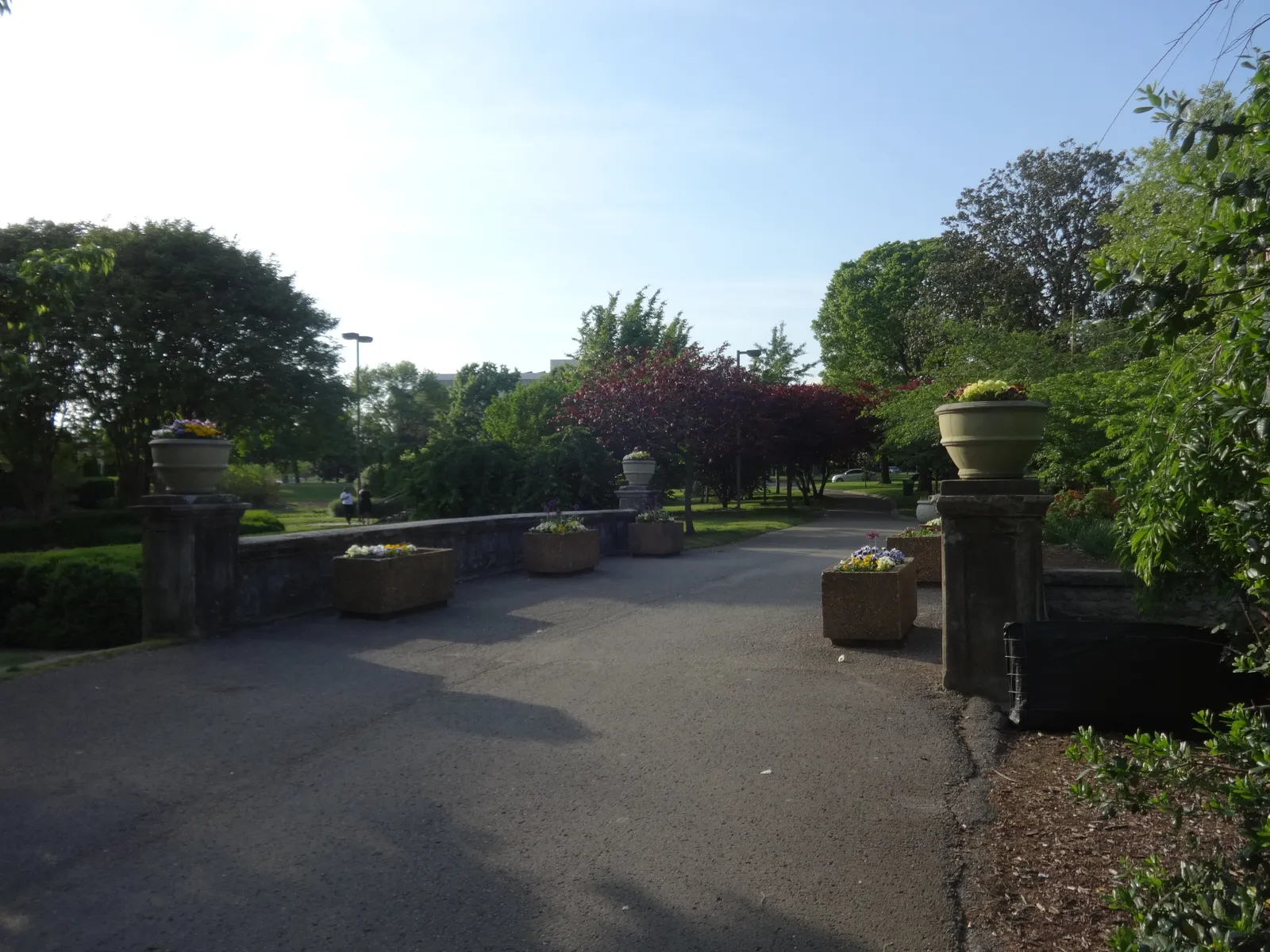
The span between the lake and the Sunken Garden is the piece of the park most people walk over without looking at. It dates from 1906 and was the first reinforced concrete bridge built anywhere in Tennessee. The garden it leads into started life as a lily pond at the 1897 exposition and spent the years between 1922 and 1949 as a Japanese water garden of aquatic plants before becoming the planted bowl it is now.
Vanderbilt’s campus arboretum across West End Avenue
Vanderbilt University’s grounds begin on the far side of West End Avenue and are a registered arboretum: roughly 6,000 trees of more than 300 species, most of them native or adapted to middle Tennessee, planted continuously for close to 150 years. The university publishes a tree map for anyone who wants to know what they are looking at.
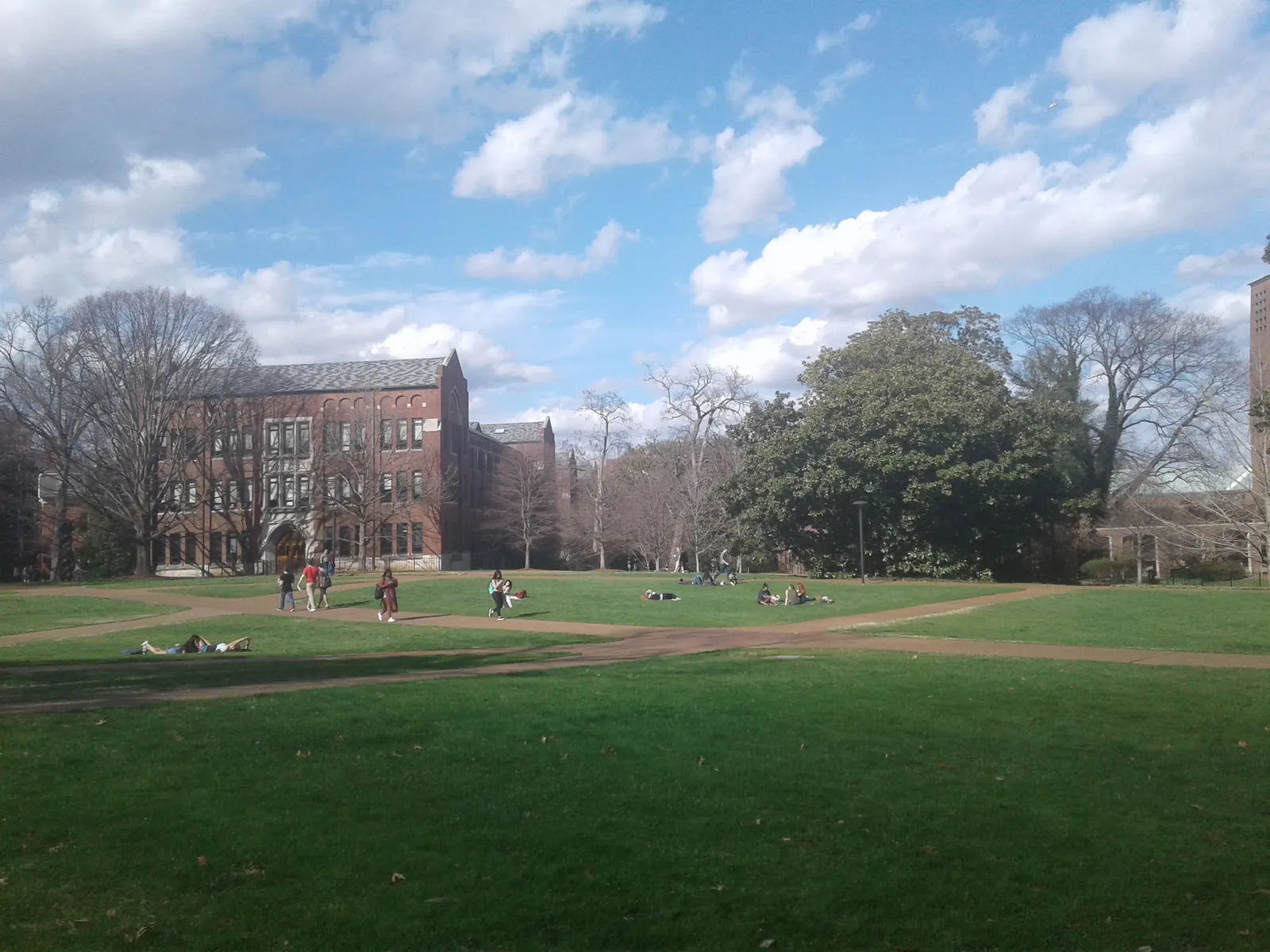
The Peabody College end of the campus has been a National Historic Landmark since 1966, a quadrangle of columned brick buildings around an open lawn. Walking in costs nothing and nobody checks, which makes it the natural extension when the park itself has been exhausted.
The airport bus does not come out to West End
WeGo Route 18 runs to Nashville International Airport (BNA) from downtown only, so getting there from here is two legs: a bus east along West End Avenue downtown, about fifteen minutes, then Route 18 from Bay 14 at WeGo Central. Each leg is $2. The airport bus goes every 30 minutes until 11:15pm and takes 34 to 40 minutes, longer in the afternoon rush, so budget an hour and a half from the park.
Three or four hours is the right size for this one: an hour inside the Parthenon, an hour on the trail and the gardens, and whatever is left for the campus over the road. If you would rather spend the time on music instead, the full Nashville layover guide covers Lower Broadway and the museums at the downtown end of the same avenue.
Frequently asked questions
What should I do during a layover near Centennial Park in Nashville?
Give the Parthenon an hour and the park another. The building is a full-size replica of the one in Athens, open Tuesday to Saturday 9am to 4:30pm and Sunday from 12:30pm, $15 for adults, holding a 42-foot gilded Athena and a gallery of 63 American paintings. Outside it, 132 acres of park cost nothing: Lake Watauga with its fountain, the Sunken Garden across a 1906 concrete bridge, and a one-mile loop trail. Vanderbilt's campus, a registered arboretum, starts across West End Avenue if you want more ground.
Is Centennial Park worth it on a Monday?
The park is, the Parthenon is not open. It shuts every Monday and on Metro holidays, so a Monday visit gets you the exterior, which is free and impressive enough on its own, plus the lake, the gardens and the trail. If the interior is the reason you were coming out to West End Avenue, move the trip to another day.
How do you get to the airport from Centennial Park?
Not directly. A bus down West End Avenue reaches downtown in about fifteen minutes, and WeGo Route 18 to BNA loads from Bay 14 on the Fourth Avenue side of WeGo Central. The fare is $2 for each leg, the airport bus runs every 30 minutes until 11:15pm, and the ride out takes 34 to 40 minutes, so allow an hour and a half from the park gates.
Can you bring a bag into the Parthenon?
Not a large one. Luggage and oversize backpacks are turned away at the door, along with food, drink and water bottles. There are a few free cubbies inside and some small lockers that take a quarter, but they are sized for a phone and a wallet rather than anything you would travel with.