WeGo Central Layover: Old Downtown Nashville
Part of the full Nashville From BNA: Broadway and the Ryman
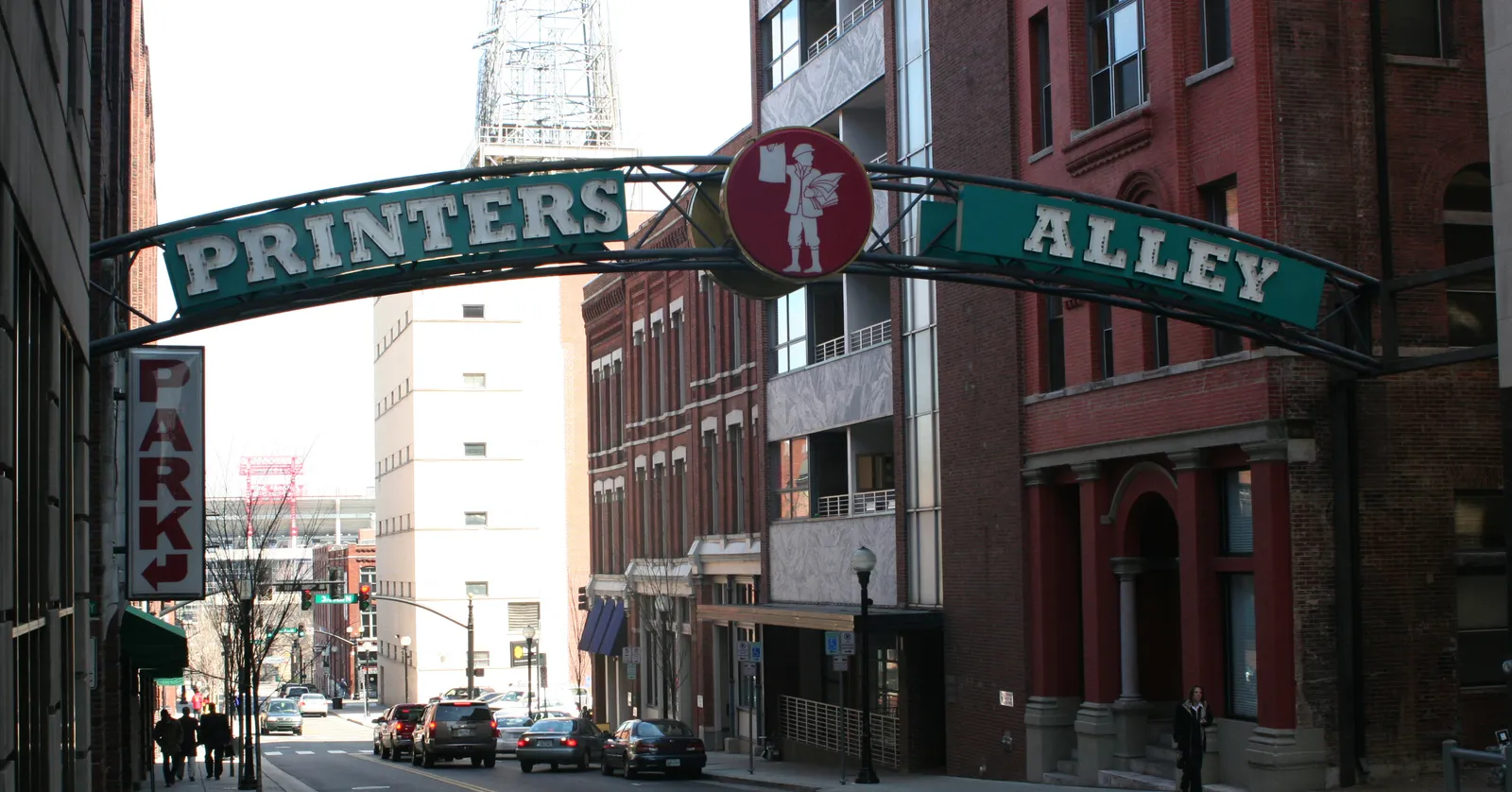
Nashville’s downtown transit center at 400 Dr. Martin Luther King Jr. Boulevard stands within four blocks of Printers Alley, the glass-roofed Arcade of 1903 and an Egyptian Revival church, an older and quieter set of blocks than the bar strip a few streets south.
The Musicians Hall of Fame under the Municipal Auditorium’s dome
The Nashville Municipal Auditorium opened in October 1962 as a 306-foot bowl under a clear-span curved roof, and it was the first public assembly hall in the mid-South with air conditioning. The exhibition floor below the arena has held the Musicians Hall of Fame and Museum since June 2013, which is a different proposition from the museums on Broadway: this one honors the session players and studio bands rather than the names on the record sleeves, the people who actually played on the records.
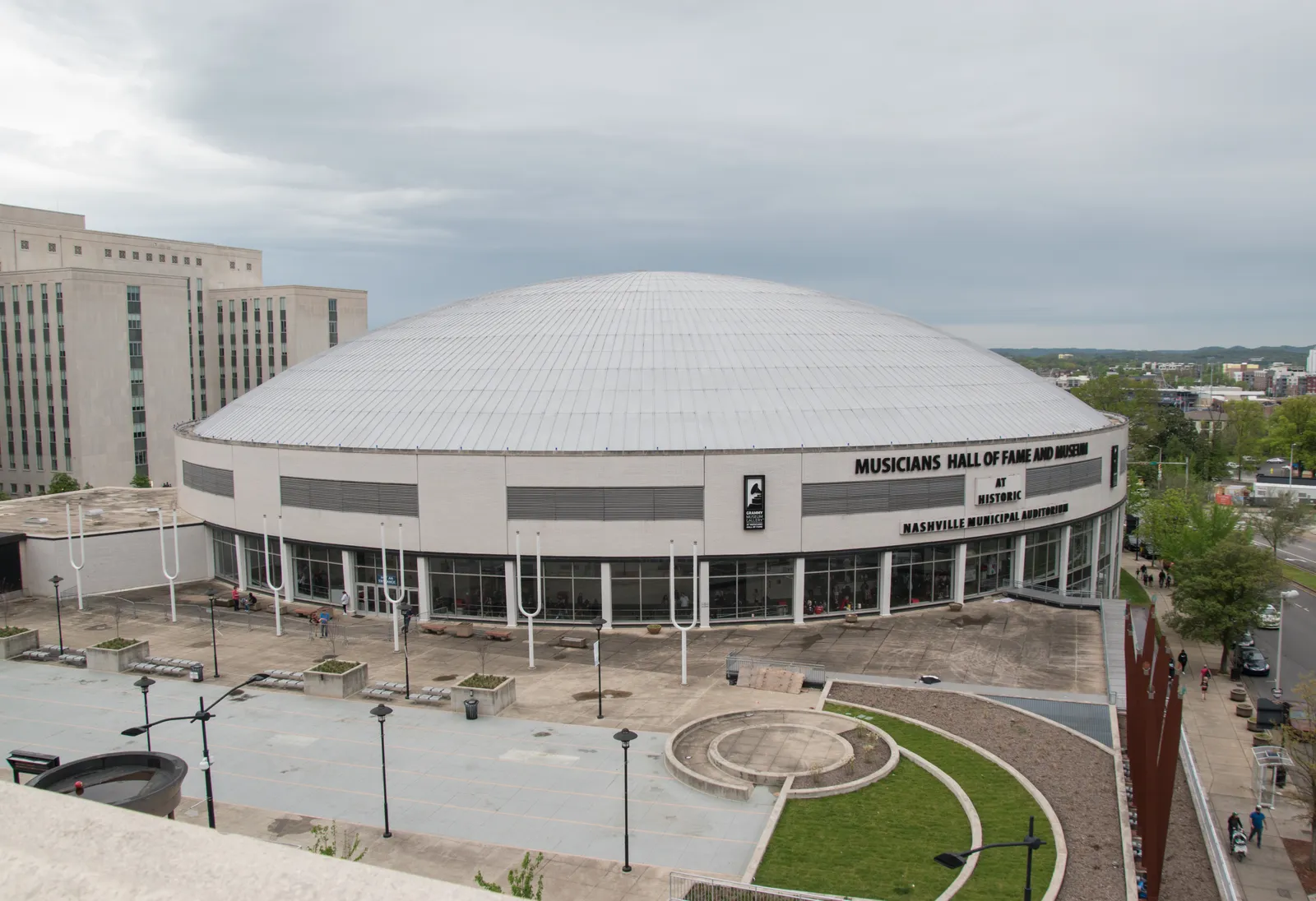
The Grammy Museum Gallery comes with the same ticket, an interactive run through how a record gets made and how the award works. Doors are open Monday to Saturday, 10am to 5pm, closed Sundays, and adult admission runs around $30 with children five and under free. Entry is on Musicians Way, off Gay Street.
Printers Alley’s neon between Third and Fourth Avenues
Printers Alley took its name from the newspaper trade that filled it in the late 1800s, when more than thirty publishers worked these buildings, The Tennessean and the Nashville Banner among them. The cafes, gambling rooms and speakeasies that grew up around the printers gave it a second nickname, the Men’s District, and the drinking carried on through Prohibition with the local authorities looking elsewhere. What survives is the signage: restored originals and replicas of the marquees that lit the alley in its mid-century run, which is why it is still worth the two minutes it takes to walk end to end.
Most people who step off a bus in the bays here came in on a regional coach from Clarksville, Murfreesboro or Springfield rather than off a plane, which means checked-size luggage rather than a cabin bag, and none of these blocks has anywhere to set one down.
The Arcade’s gabled glass roof, open since 1903
Daniel C. Buntin had been to Milan and came home wanting a Galleria Vittorio Emanuele of his own, so he built one: two stories of shopfronts facing each other across a paved gallery, roofed in a long gabled span of glass, with Palladian entrances at either end on Fourth and Fifth. It opened in 1903 as the first enclosed shopping street in Nashville and has been running as one ever since.
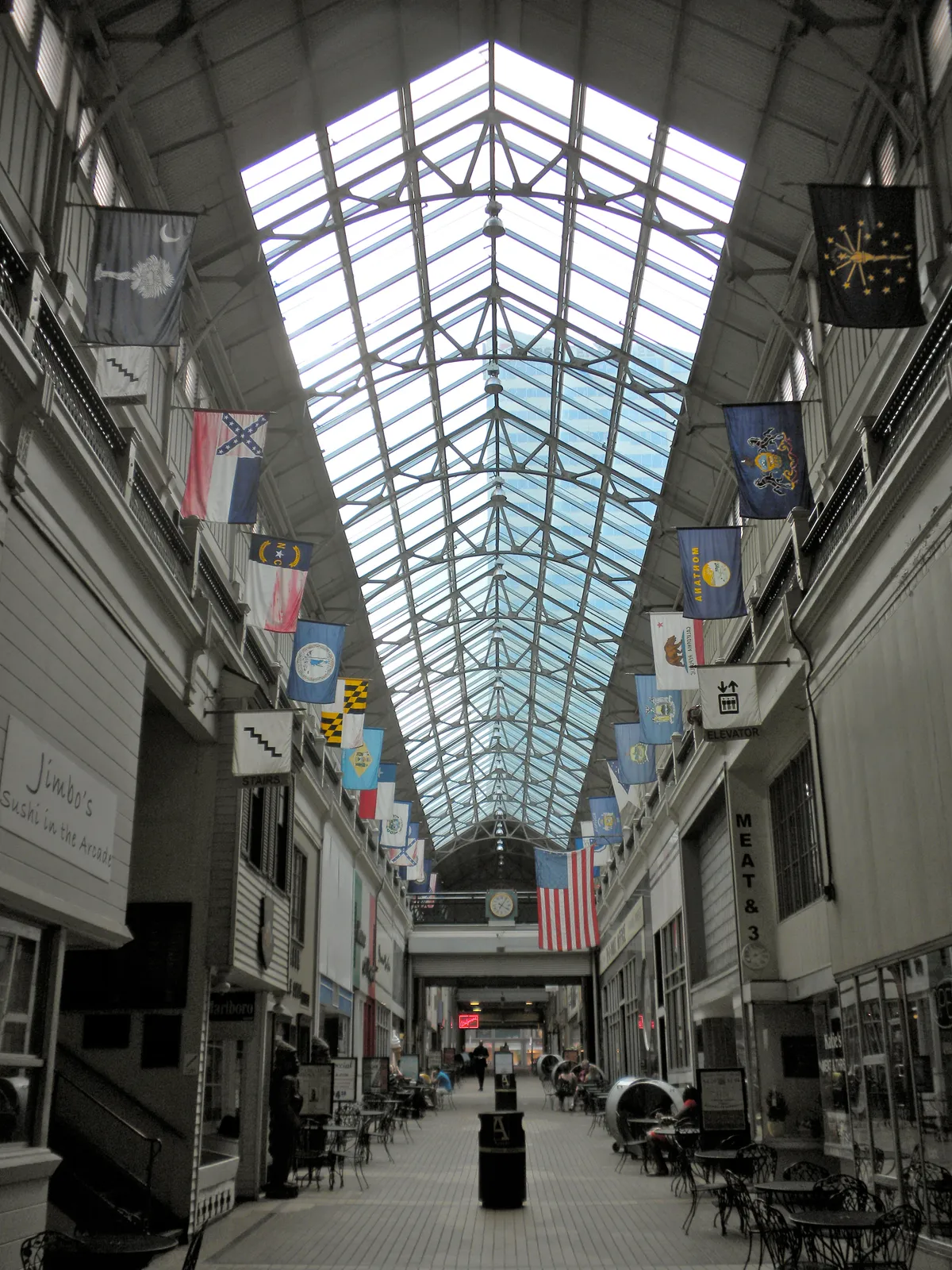
The oldest tenant is the Peanut Shop, which has been roasting in the same spot since 1927. Above and around it the upper floor filled with galleries over the last two decades, enough of them that the street outside took the name Fifth Avenue of the Arts. Walking the length of it costs nothing and takes about a minute.
The Egyptian Revival front of the Downtown Presbyterian Church
William Strickland, who was busy up the hill on the Tennessee State Capitol at the time, started this church on Church Street in April 1849 and finished it in 1851, and he did it in Egyptian Revival: two battered towers flanking a recessed porch, lotus-capital columns, a winged sun disk over the entrance. Strickland had drawn on Egyptian forms before, but not at this scale, and no other building downtown looks remotely like it.
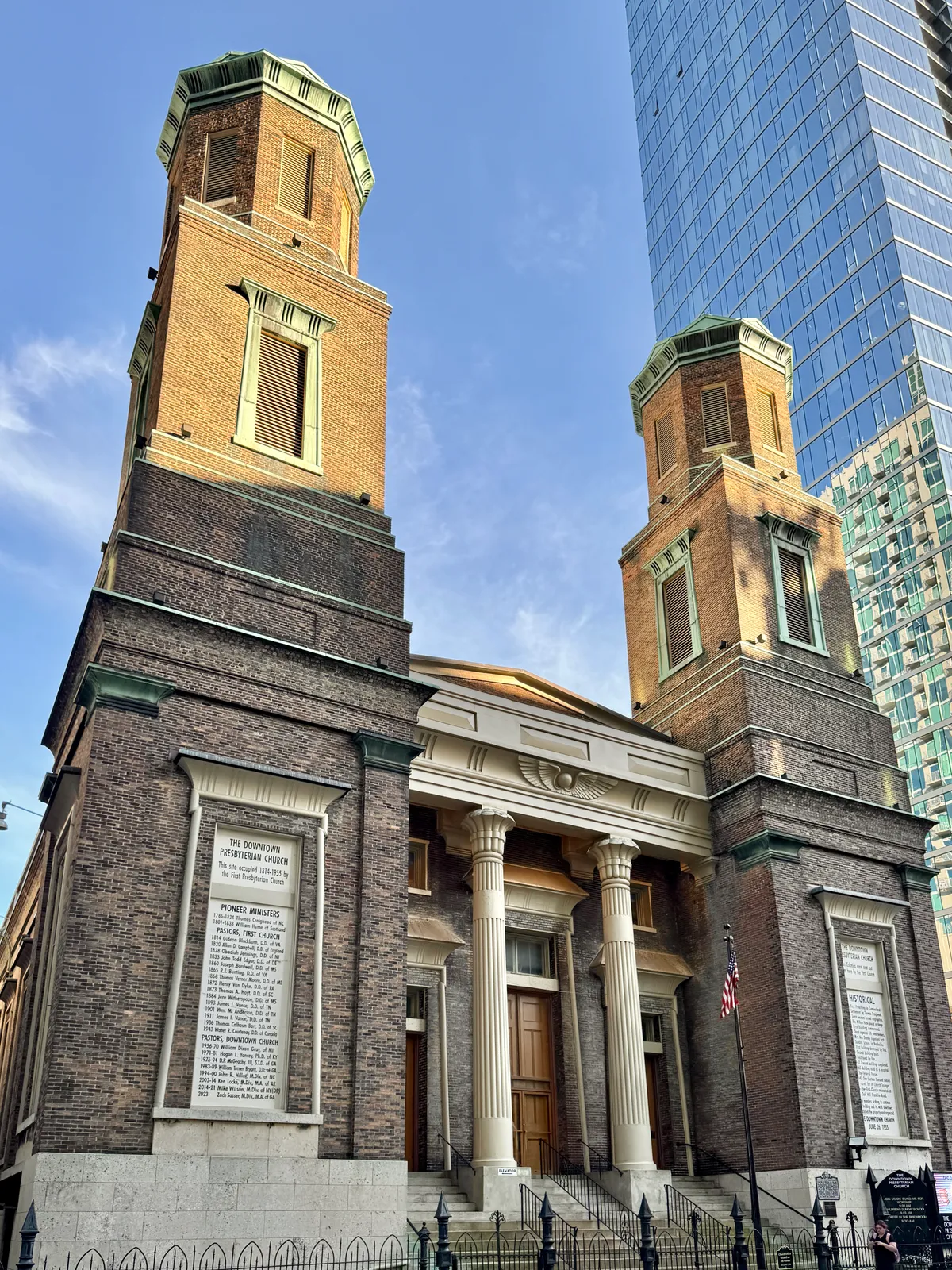
Inside is the better half, and harder to reach. Between 1880 and 1882 the congregation had the sanctuary walls painted with a trompe l’oeil view of the Temple of Karnak, with a coffered ceiling done to read as open sky above it, and the stained glass followed in 1887 and 1888. The church runs open tours on the fourth Friday of the month from noon to 2pm; the rest of the time the facade from the pavement is what is on offer, and it is free.
Bay 14 on Fourth Avenue is where the airport bus loads
WeGo Route 18 is the only public transit between downtown and Nashville International Airport (BNA). It leaves from Bay 14 on the Fourth Avenue side of the transit center every 30 minutes from 5:50am until 11:15pm, costs $2 in exact cash or through the transit app, and takes 34 to 40 minutes, closer to 45 during the afternoon rush. The airport stop is inside the Ground Transportation Center on the first floor of Terminal Garage 2.
The transit center itself was renamed in November 2023 for Elizabeth Duff, hired by the city’s transit authority in April 1974 as its first woman and first Black woman bus operator, and there is a mural of her inside the building.
Four hours is enough for all four stops above with time to sit down. If you have longer, or you would rather be where the music is, the full Nashville layover guide covers Lower Broadway and the museums at the other end of downtown, and a tours and activities platform runs a half-day bus tour that reaches the outlying parts of the city these blocks do not.
Frequently asked questions
What should I do during a layover near WeGo Central in Nashville?
Walk the four blocks north and east of the transit center. Printers Alley runs between Third and Fourth Avenues under restored neon, the Arcade is a two-story shopping gallery of 1903 under a gabled glass roof, and the Downtown Presbyterian Church on Church Street has an Egyptian Revival front and a painted Karnak inside its sanctuary. The Musicians Hall of Fame under the Municipal Auditorium's dome is the one paid stop, around $30, and the only one with fixed hours worth checking, since it shuts on Sundays.
Is Printers Alley worth walking through during the day?
It is a two-minute walk end to end, so the cost of finding out is low. The neon and the marquees are the point and they are up whatever the hour, but the clubs behind them are night businesses, so a morning visit gets you an empty brick lane rather than the noise it is known for. The alley was the newspaper district in the late 1800s, home to more than thirty publishers including The Tennessean and The Nashville Banner, and its speakeasies kept working through Prohibition.
Can you get inside the Downtown Presbyterian Church without a service?
Not reliably. The congregation runs open tours on the fourth Friday of each month, noon to 2pm, and the interior is the reason to go: a trompe l'oeil Temple of Karnak painted across the sanctuary walls between 1880 and 1882, under a coffered ceiling done to look like sky. Outside the tour window the Egyptian Revival facade on Church Street, its lotus columns and battered towers, is what you get, and it is free from the pavement.
How do I get from WeGo Central to Nashville International Airport?
WeGo Route 18 loads at Bay 14 on the Fourth Avenue side of the transit center and runs to BNA for $2, every 30 minutes from 5:50am to 11:15pm. The ride is 34 to 40 minutes most of the day and closer to 45 in the afternoon rush, and the airport stop is in the Ground Transportation Center on the first floor of Terminal Garage 2.