Boston Layover: Charlestown Navy Yard
Part of the full Boston Layover Guide: Freedom Trail From BOS
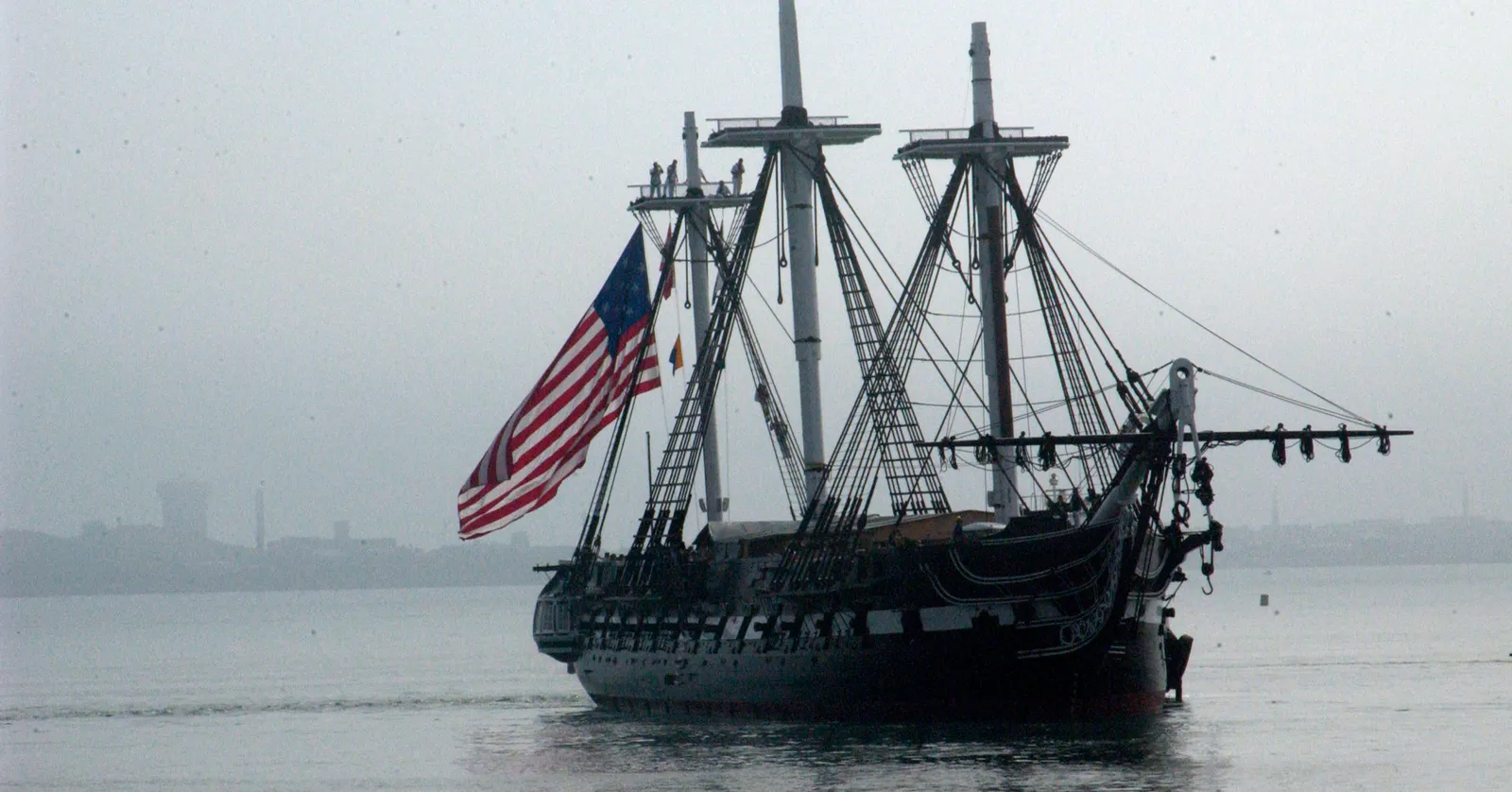
Boston’s Charlestown Navy Yard is a ten-minute ferry ride across the harbour from Long Wharf, and it holds a wooden frigate launched in 1797 that is still a commissioned warship, a granite dry dock finished in 1833, and a hill with a 221-foot obelisk on top of it.
USS Constitution has been in commission since 1797
Pier 1 at the Charlestown Navy Yard has a three-masted frigate tied up alongside it, black hull, white gun stripe, launched in Boston in October 1797 and never taken off the Navy’s list since. She got the name Old Ironsides in August 1812, when British shot was seen bouncing off her live oak planking during the fight with HMS Guerriere. The crew who show you round are serving US Navy sailors on a normal posting, and boarding costs nothing.
The other way to see her is from the water, since she sits where the inner harbour is at its most photogenic, and a sightseeing cruise booked ahead covers the same stretch of harbour the ferry crosses in a straight line. She is open Tuesday to Sunday, 10am to 6pm, with the hours contracting outside summer.
Because she is an active Navy vessel, everyone goes through a security screening at the gate, adults show federal or state photo identification, and bags are opened and examined the way they are at an airport checkpoint.
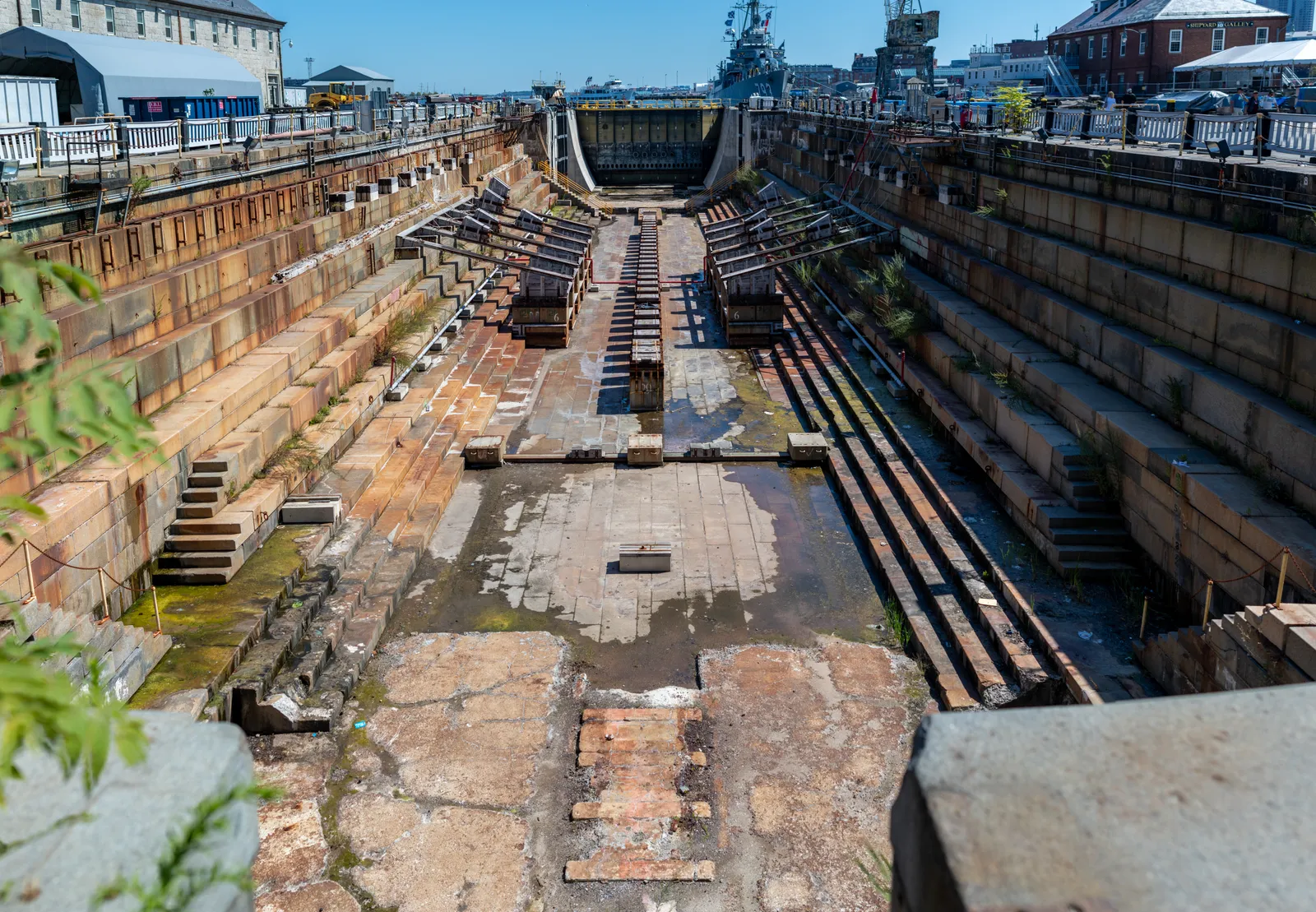
Dry Dock 1 and the 1943 destroyer moored beside it
Dry Dock 1 sits in the middle of the yard, a stepped granite pit cut into the shoreline by the engineer Loammi Baldwin Jr. from 1827 and inaugurated on 24 June 1833. USS Constitution was the first ship into it, and it is still the dock she is hauled into for major work, which means you are looking at working equipment nearly two centuries old rather than a preserved one.
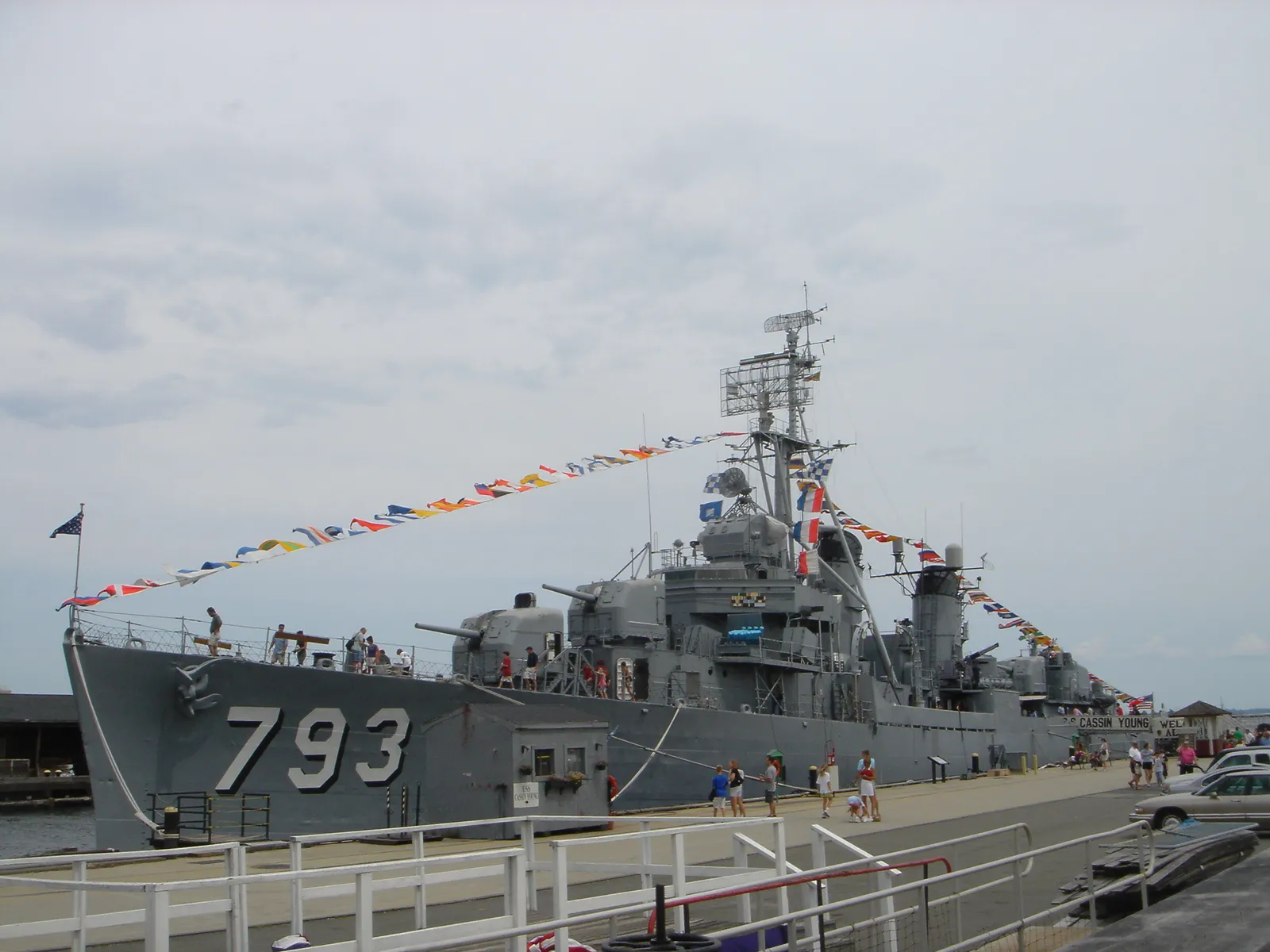
At the next pier is USS Cassin Young, a Fletcher-class destroyer launched in 1943, kamikaze-damaged twice off Okinawa and now a museum ship you can walk the main deck of for nothing.
The long low building running along the yard’s western edge is the Ropewalk, built between 1834 and 1837 to make rope for the entire US Navy, which it did until December 1971; it is apartments now, so it is a thing to look at rather than go into.
The 294 steps inside the Bunker Hill Monument
Breed’s Hill, ten minutes uphill from the yard, carries a plain granite obelisk 221 feet tall, finished in 1843 on the ground where the Battle of Bunker Hill was actually fought. The spiral stair inside runs 294 steps to a small chamber with four windows in it, there is no lift, and none of it costs anything.
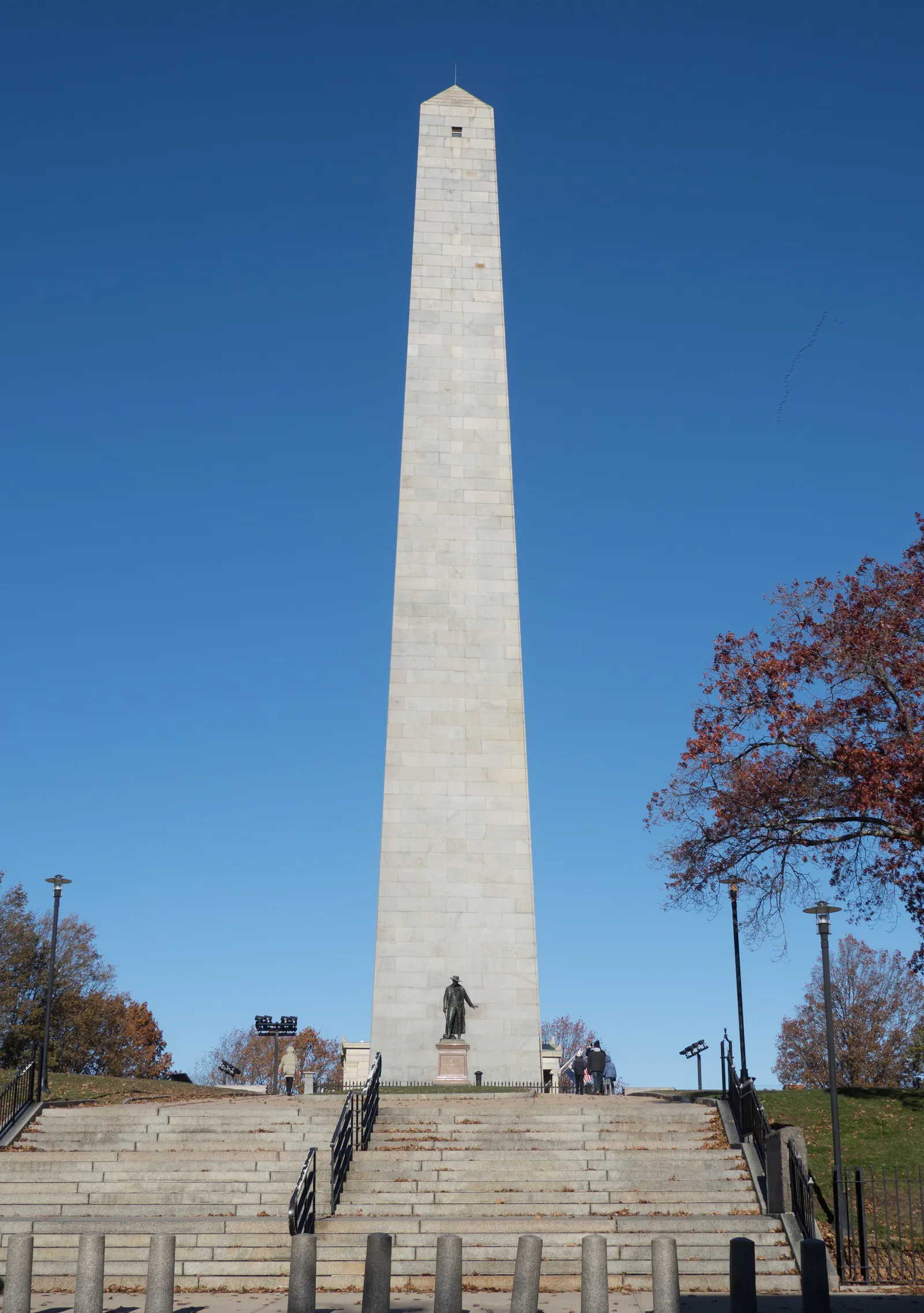
It opens Wednesday to Sunday, 10am to 5pm, and until 6pm between the start of July and early October. The chamber at the top looks out over the harbour on one side and the mouth of the Charles on the other, with the downtown towers across the water in between, and you get there on your own legs rather than in a lift queue.
The ferry stops at 8pm and the bridge back is a fifteen-minute walk
The boat between Long Wharf and the Navy Yard pier costs $3.70, takes about ten minutes and runs from 6:30am until 8pm, every fifteen to thirty minutes depending on the hour. That last departure is the number to write down, because it is the only thing on this side of the water that closes before the evening does; after it, the way back is a fifteen-minute walk over the North Washington Street bridge.
From Long Wharf, Aquarium station is five minutes’ walk and the Blue Line runs two stops to Airport station, where a free Massport shuttle bus covers the last leg to each terminal at Boston Logan International Airport (BOS). Boat, walk, train and shuttle comes to about 50 minutes, so this is the one Boston stop where the return leg genuinely needs planning rather than just leaving.
Everything here is on the far side of a water crossing, which is exactly what keeps it quieter than the Freedom Trail stops downtown: the same day, the same city, but reached by a boat with a timetable instead of a pavement.
Frequently asked questions
What should I do during a layover at the Charlestown Navy Yard and the USS Constitution in Boston?
Board the ship first, because it has the tightest hours and the longest queue: USS Constitution is free, open Tuesday to Sunday, and staffed by serving US Navy sailors who will answer anything you ask. Dry Dock 1 beside her was cut into granite in 1827 and finished in 1833, and the destroyer USS Cassin Young at the next pier is also free. Ten minutes uphill, the Bunker Hill Monument is 294 steps with no lift and no charge, open Wednesday to Sunday. Three hours does all four without rushing, and the ferry over from Long Wharf takes ten minutes each way.
Do I need identification to board USS Constitution?
Yes, if you are 18 or over: federal or state photo identification, so a driving licence or a passport. Everyone, including children, goes through a security screening at the gate that works like airport security, with jackets, belts, watches and bags all examined. The ship is an active US Navy vessel with a serving crew, which is why the screening exists, and it is also why a large suitcase is not a thing you want to be holding in that line.
What is the climb up the Bunker Hill Monument actually like?
294 steps in a stone spiral with no lift, no landings to speak of and no way past anyone slower coming the other way, since the stair is one person wide for most of its height. Ten to fifteen minutes up at a steady pace is normal, and the chamber at the top has four windows rather than an open deck. It costs nothing, there is no ticket and no booking, and it opens Wednesday to Sunday. Anyone who would rather not is not missing the site itself: the obelisk, the lawn and the museum lodge at its foot are all at ground level.
Is the Navy Yard worth the crossing in winter?
The ferry runs year round and the crossing is the same ten minutes, but three things change. Daylight goes early, and the monument shuts at 5pm from October onward, so the climb has to happen in the afternoon rather than after it. The piers are open to the wind coming up the harbour with nothing between them and the water. And the ship's hours contract outside summer, so the schedule you saw in August is not the one you will get in February.