Georgetown Waterfront Layover, Washington
Part of the full Washington DC Layover: The National Mall, IAD
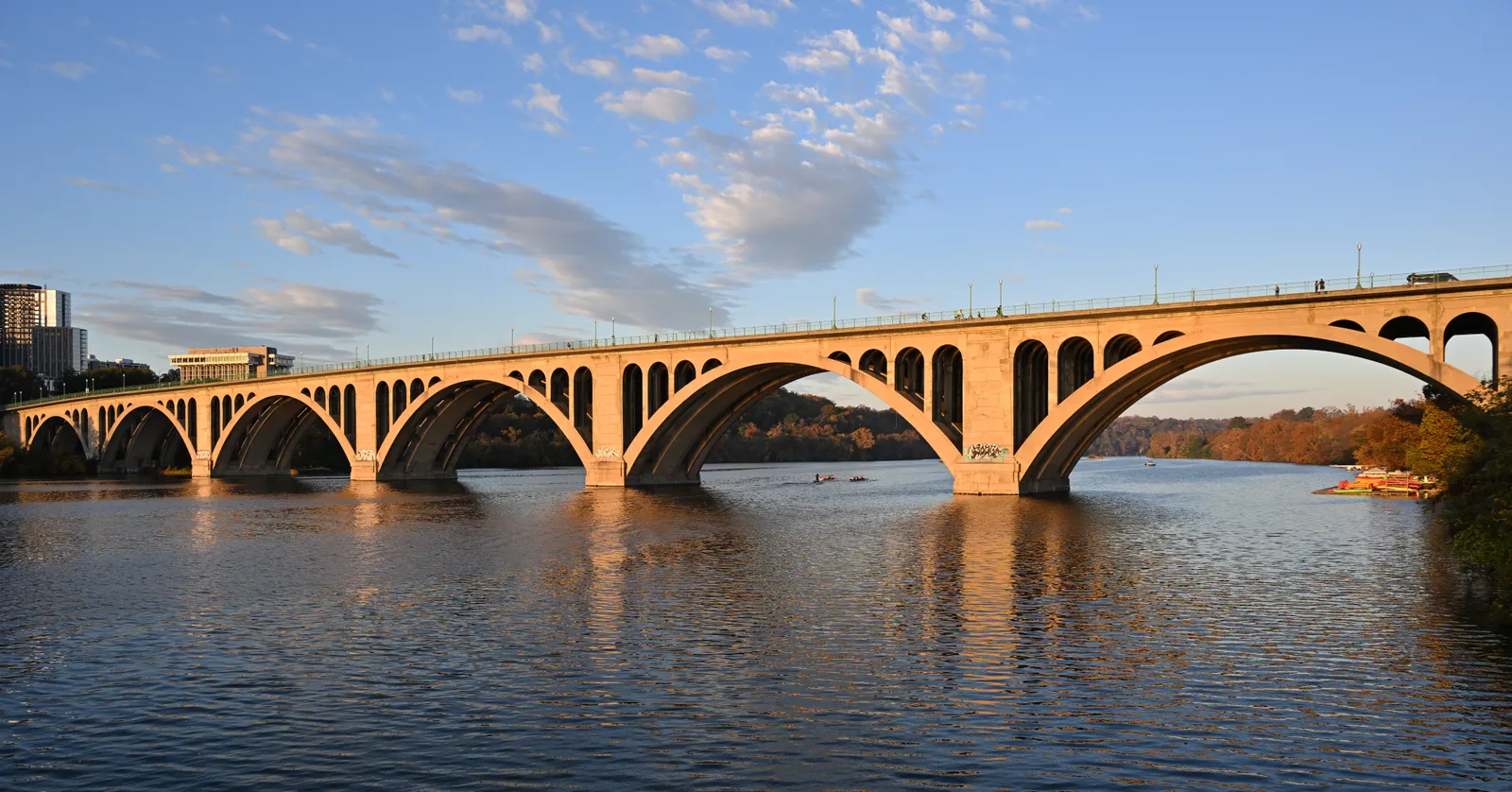
The Georgetown waterfront is the one part of central Washington with no metro station of its own, and what sits above it is a 1765 fieldstone house on M Street, a canal towpath one block south of the shops, and a terraced set of stone steps running down into the Potomac.
The Old Stone House has stood on M Street since 1765
A cabinetmaker called Christopher Layman put up the first floor in locally quarried stone and died the same year; his widow sold it to Cassandra Chew, who added the kitchen behind in 1767, the second storey soon after, and the third in the 1790s. What is left is the oldest unchanged building in Washington and the last pre-Revolutionary house in the city still standing on its original foundation, wedged between shopfronts at 3051 M Street.
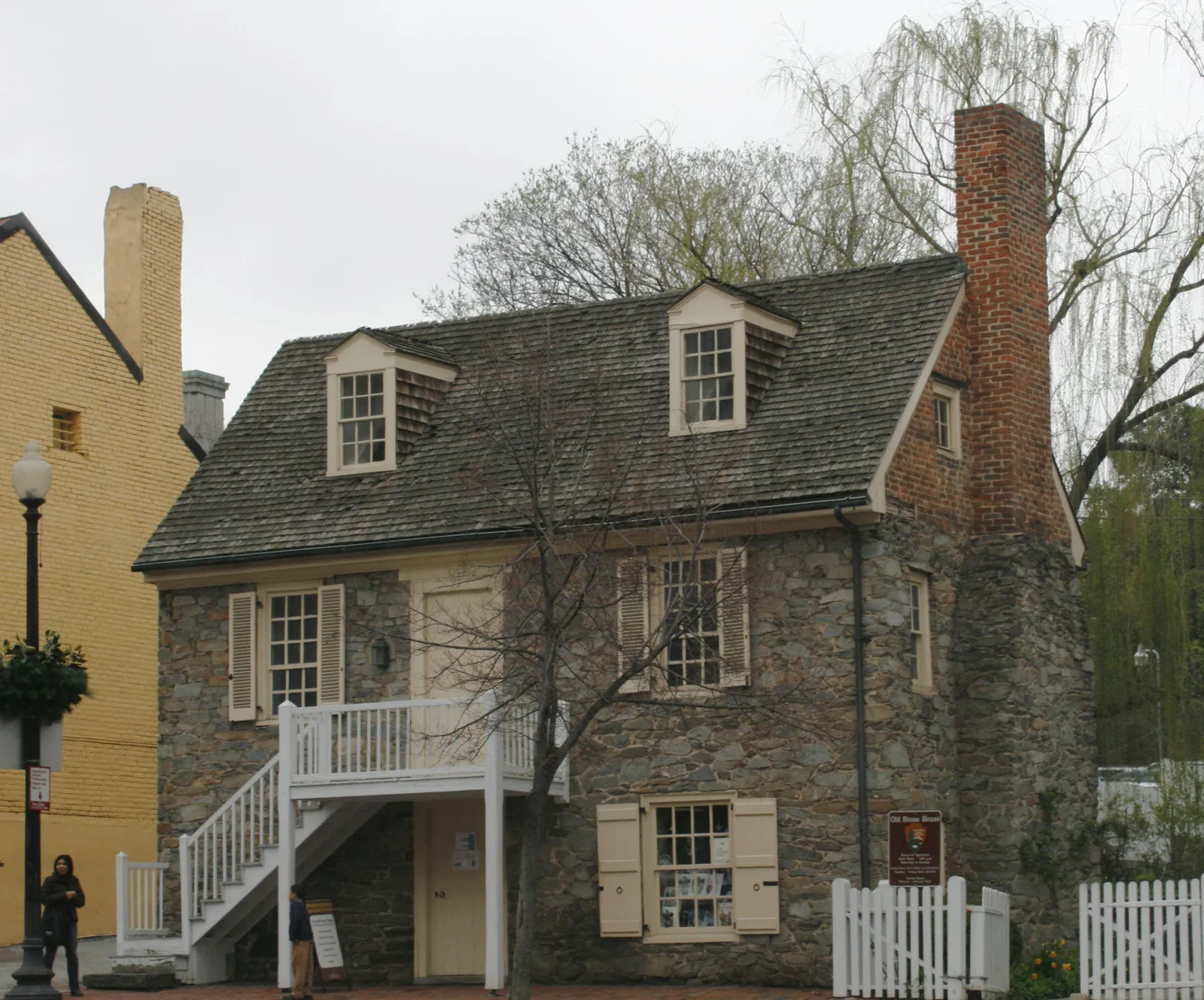
The Park Service runs it and charges nothing. Published opening hours disagree between sources, so check on the day rather than building the afternoon around it; the walled garden behind the house is open through daylight hours regardless, and it is a garden rather than a shopfront, which on this stretch of M Street counts for something.
The Exorcist steps at Prospect and 36th
Seventy-five stone steps drop from the top of the hill down to M Street in a slot barely wider than your shoulders, with the brick flank of the 1890s Georgetown Car Barn on one side and an ivy-covered retaining wall on the other. They were built in 1895 as a shortcut for streetcar crews, and the film that gave them their popular name arrived in 1973.
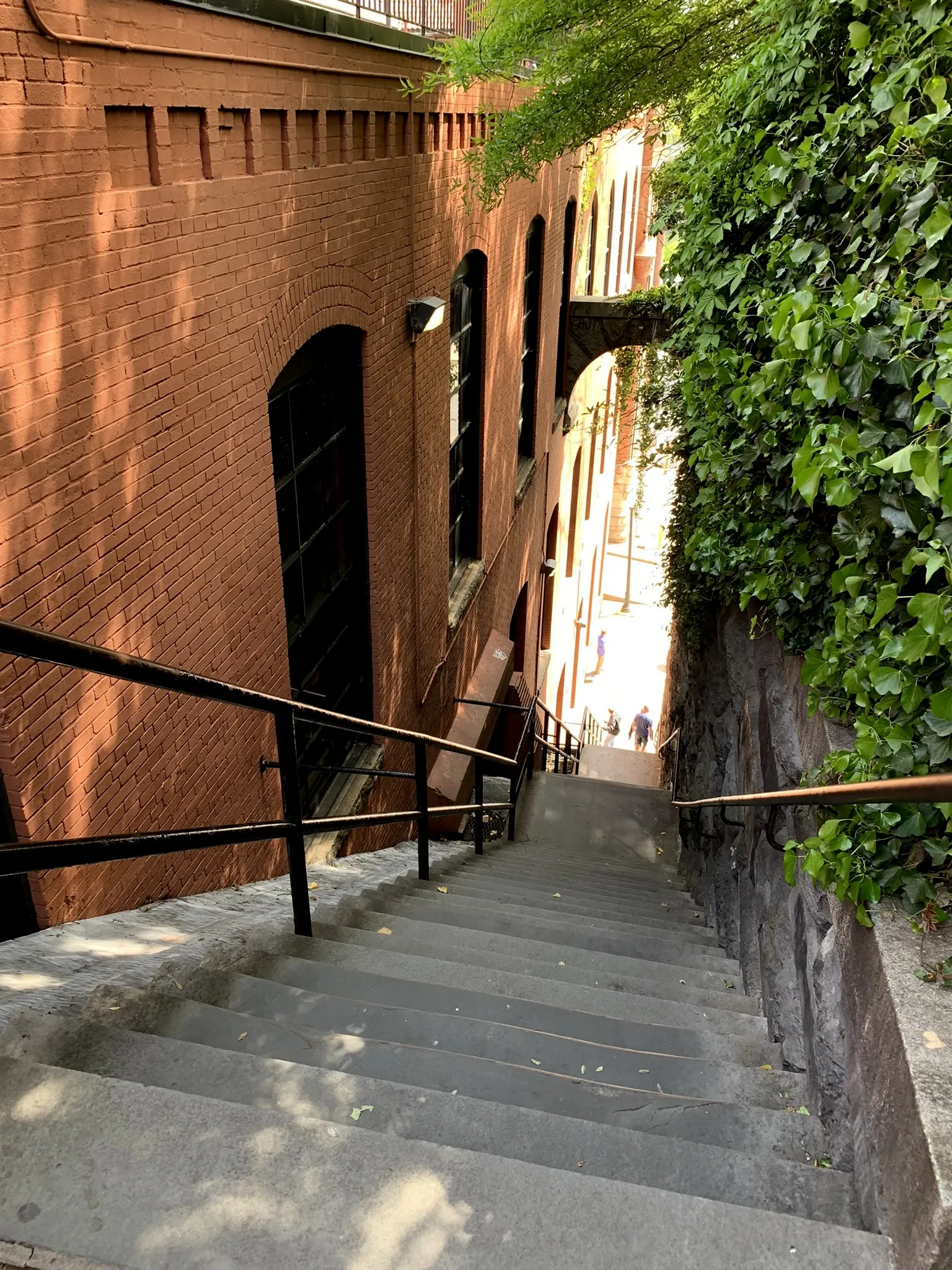
The city made them a historic landmark in 2019, and there is a plaque at the bottom. Worth knowing before you commit: they are steep, there is no ramp beside them, and the climb back up is the sharpest bit of ground in the neighbourhood.
The canal towpath starts one block below the shops
The Chesapeake and Ohio Canal begins its 184 miles at Rock Creek and runs west through Georgetown between the backs of nineteenth-century brick warehouses, under low stone arch bridges, with locks stepping the water down toward the river. The towpath alongside it is gravel, flat and continuous, and it sits a single block south of the M Street shopfronts while feeling nothing like them.
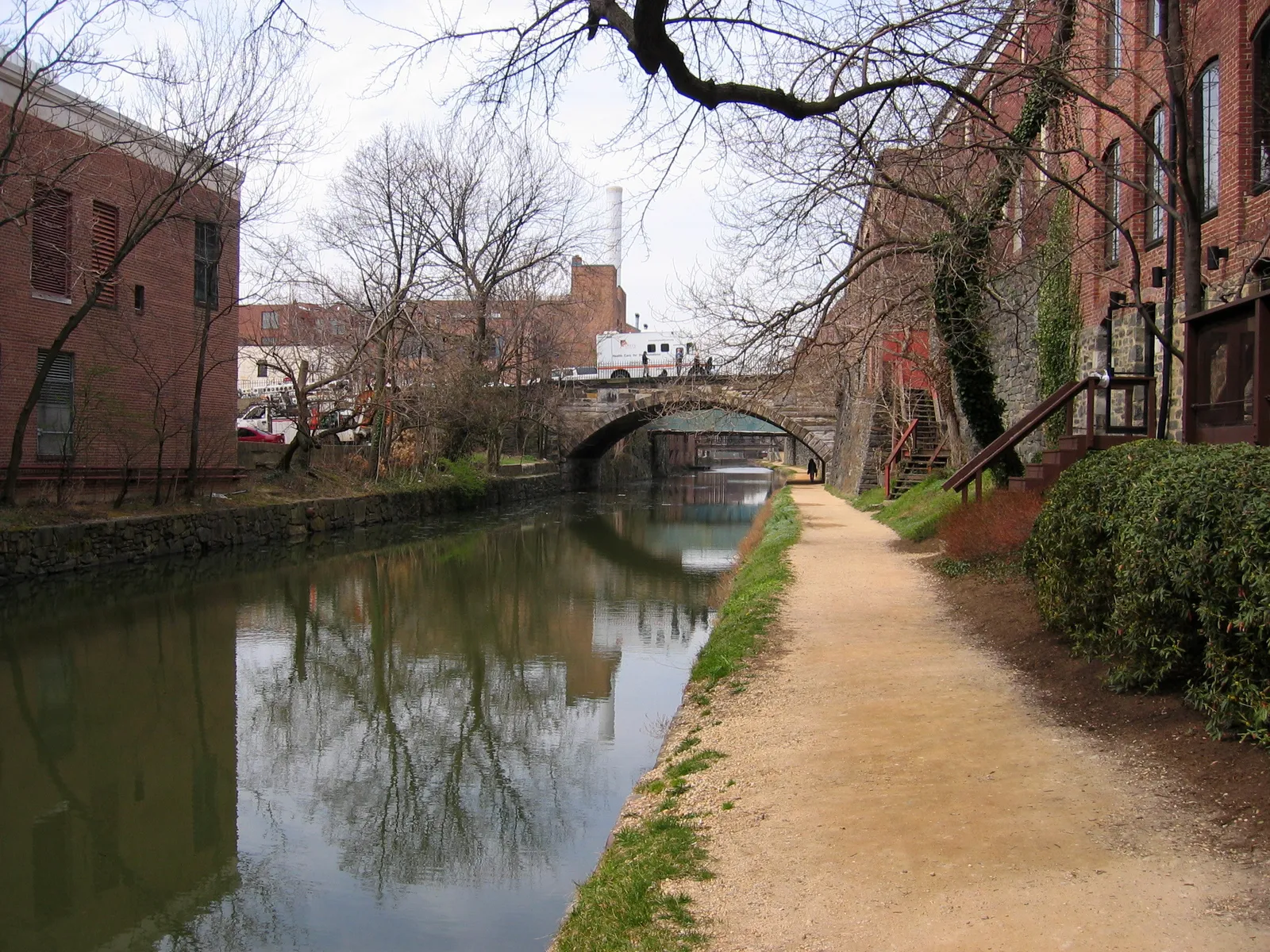
This is where a suitcase actually costs you here: the towpath is loose gravel, the streets above it are laid in brick and granite setts rather than poured pavement, and the ground between the river and Prospect Street climbs hard enough that the shortcut is a staircase.
The river steps at Georgetown Waterfront Park
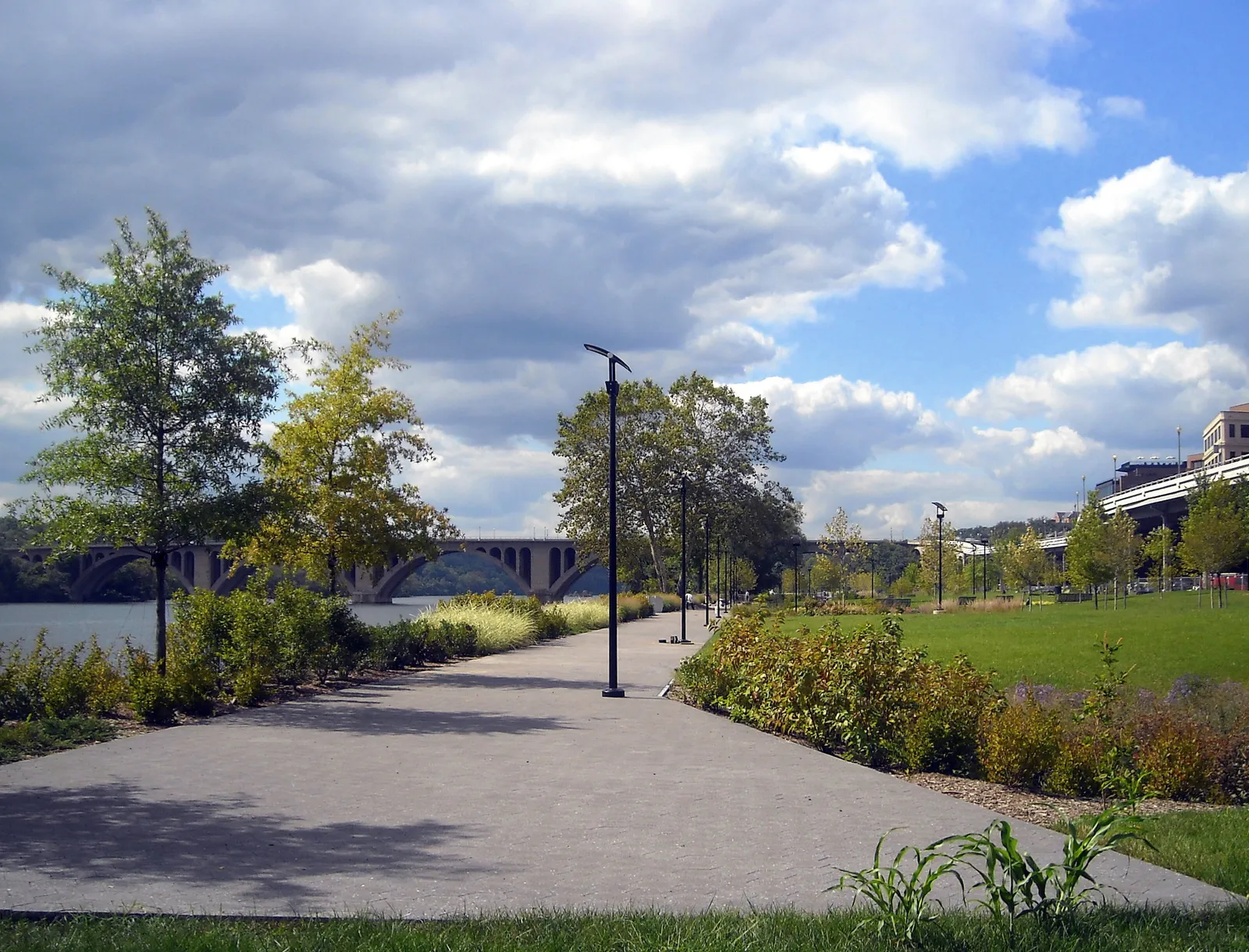
Wide stone terraces step down into the Potomac at the foot of Wisconsin Avenue, built as finish-line seating for the rowing regattas that come up this reach, and used the rest of the year by anyone who wants to sit on them. The park runs from 31st Street west to Key Bridge, free and open, with a car-free path the whole length, a fountain at the Wisconsin Avenue end and a labyrinth laid into the grass further along. Across the water are Theodore Roosevelt Island and the Virginia bank.
If you would rather see this reach of the river from the water than from the bank, a cruise up the Potomac paired with a guided walk through the neighbourhood covers both in one booking. The park itself asks for nothing, though, and the steps are the better seat of the two.
Georgetown has no metro station of its own
Foggy Bottom-GWU is the closest, about a mile east and fifteen to twenty minutes on foot from M Street, and Rosslyn is a similar walk across Key Bridge. Roughly ten Metrobus routes come through, the 30N, 30S, 31, 33 and 38B among them, and the two 30-series routes run all night. The free city shuttle that used to plug this gap stopped for good at the end of 2024.
For the airport, the Silver Line from Foggy Bottom-GWU runs through to Washington Dulles International Airport (IAD) in about an hour, with the indoor tunnel and moving walkways at the far end adding five to ten minutes. Counting the walk out of Georgetown, budget an hour and three quarters from the waterfront to the check-in desk, and work back from three hours before departure. If that overhead sounds steep for a short gap, the main Washington itinerary stays on the Mall, where the stations sit on the lawn itself and the same airport is one train away.
Frequently asked questions
What should I do during a layover near the Georgetown Waterfront in Washington D.C.?
Start at the Old Stone House on M Street, which has stood since 1765 and costs nothing to walk into, then drop onto the canal towpath a block south and follow it west. The long flight of stone steps at Prospect and 36th is a five-minute detour off the top of the hill if you want the view down them. Finish at Georgetown Waterfront Park, where the terraced steps go down to the Potomac and the whole stretch is free and open at any hour. Five hours is comfortable, and the only thing here with fixed opening times is the stone house.
How do you get to Georgetown without a metro station?
On foot or by bus. Foggy Bottom-GWU is the nearest station, about a mile and fifteen to twenty minutes' walk east of M Street, and Rosslyn is a similar distance across Key Bridge from the Virginia side. Around ten Metrobus routes serve the neighbourhood, including the 30N, 30S, 31, 33 and 38B, and the two 30-series routes run around the clock. The city's own free Circulator shuttle, which used to cover this gap, stopped running at the end of 2024, so plan on Metrobus or the walk.
Is the walk around Georgetown step-free?
Partly. The canal towpath and the riverside path through Georgetown Waterfront Park are both flat and continuous, and the park's path is paved end to end. The neighbourhood streets above them are another matter: much of the historic core is brick and granite setts rather than poured pavement, the ground rises steeply from the river to Prospect Street, and the stone steps at 36th Street are 75 of them with no alternative route alongside. Stay on the canal and the river if wheels matter.
Can I reach Dulles from Georgetown without a car?
Yes, but it takes two legs. Walk or ride a bus back to Foggy Bottom-GWU, pick up the Silver Line there and stay on it to Washington Dulles International Airport (IAD), which is roughly an hour of riding from that station. Add the walk out of Georgetown at the start and the airport's indoor tunnel to the terminal at the end, and the whole thing runs closer to an hour and three quarters, which is the main cost of choosing this end of the city.