Dulles (IAD) Layover, Washington DC
Part of the full Washington DC Layover: The National Mall, IAD
Three miles east of the Dulles terminal in Washington, the Smithsonian keeps Space Shuttle Discovery, the Enola Gay and a Concorde in two hangars that cost nothing to enter, and one bus route connects them to the airport.
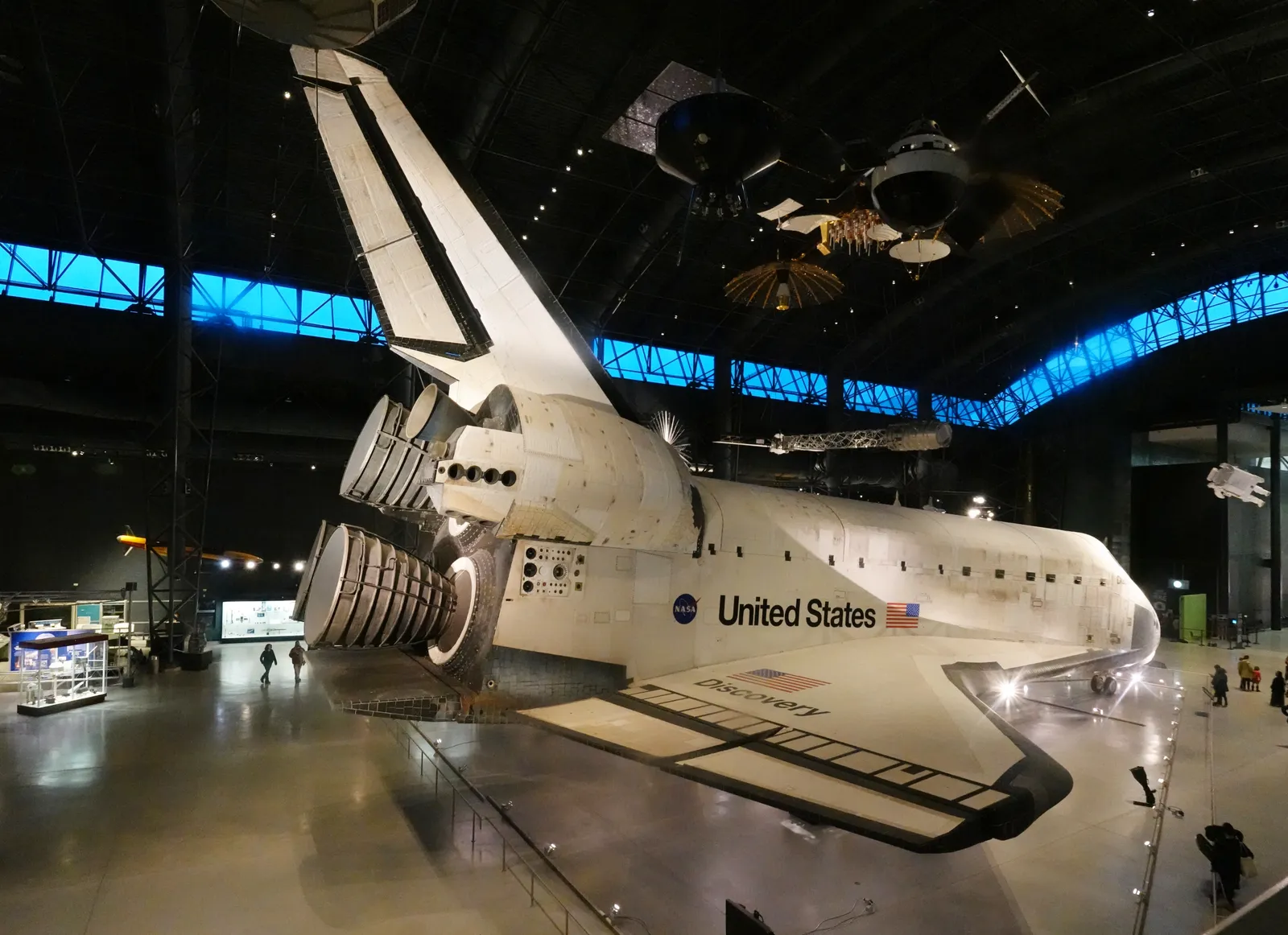
Space Shuttle Discovery at the Udvar-Hazy Center
Discovery flew 39 missions, more than any other orbiter, and NASA handed it over without cleaning it up: the heat-shield tiles are still scorched and mismatched from re-entry, the engine bells still stained. It stands at floor level in the space hangar with satellites and rocket stages hung around it, close enough that the scale of the thing lands properly rather than reading as a picture of a shuttle.
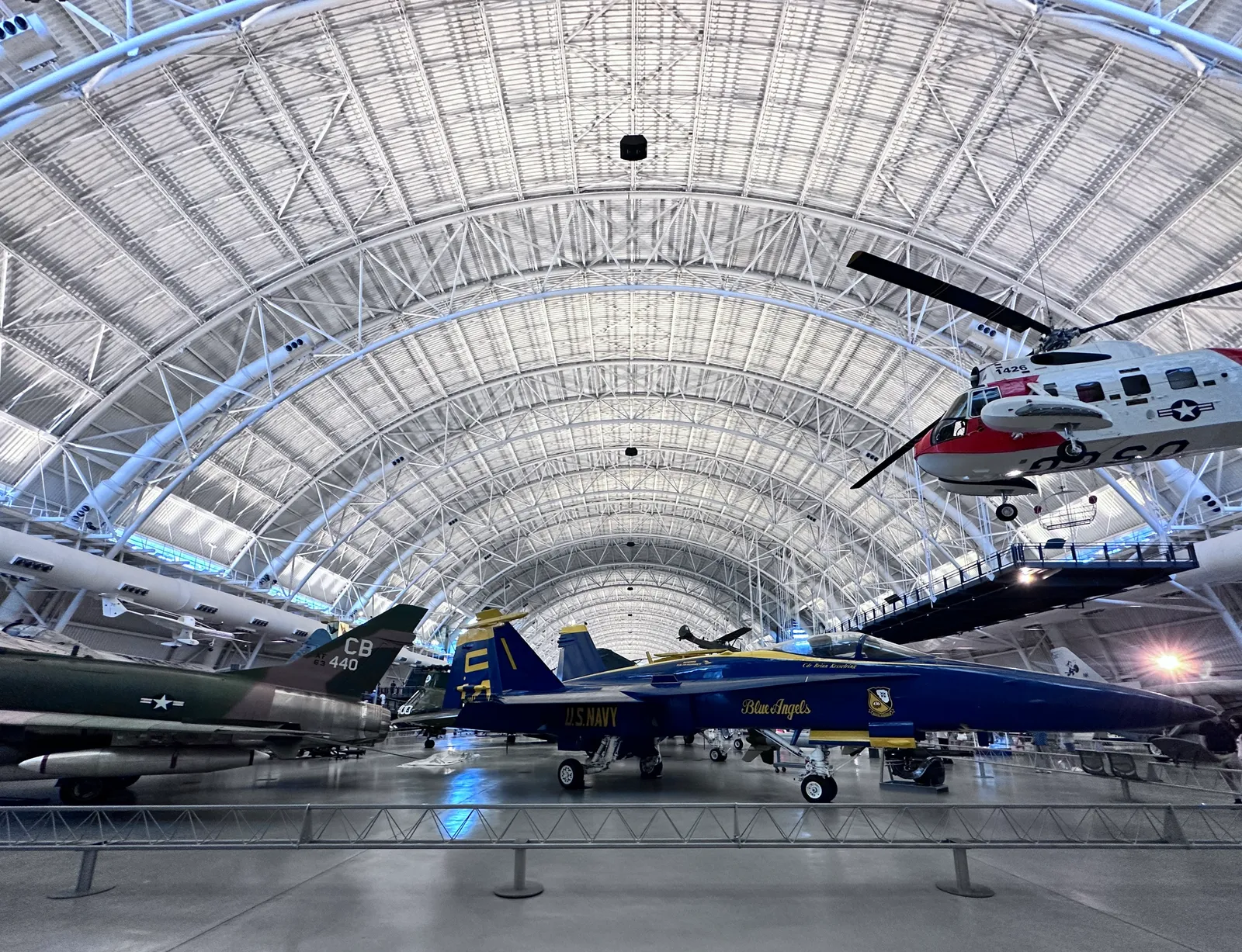
The aviation hangar next door is the bigger of the two, a steel arch long enough to hold a Concorde, an SR-71 Blackbird and the Enola Gay on one floor, with light aircraft and helicopters suspended overhead and a raised walkway to see them from. Admission to both is free and the doors are open 10am to 5:30pm every day except 25 December. The only charge is for parking, which is irrelevant if you come by bus.
Fairfax Connector route 983 is the link, running between the airport and the museum by way of Innovation Center metro station, at a fare of a little over two dollars. It does not run often, so read the timetable before you rely on it. And the rule that shapes this whole trip: coming back into the terminal means clearing the main security checkpoint again, with everything still in your hands going through the X-ray a second time.
Saarinen’s roof over the main terminal
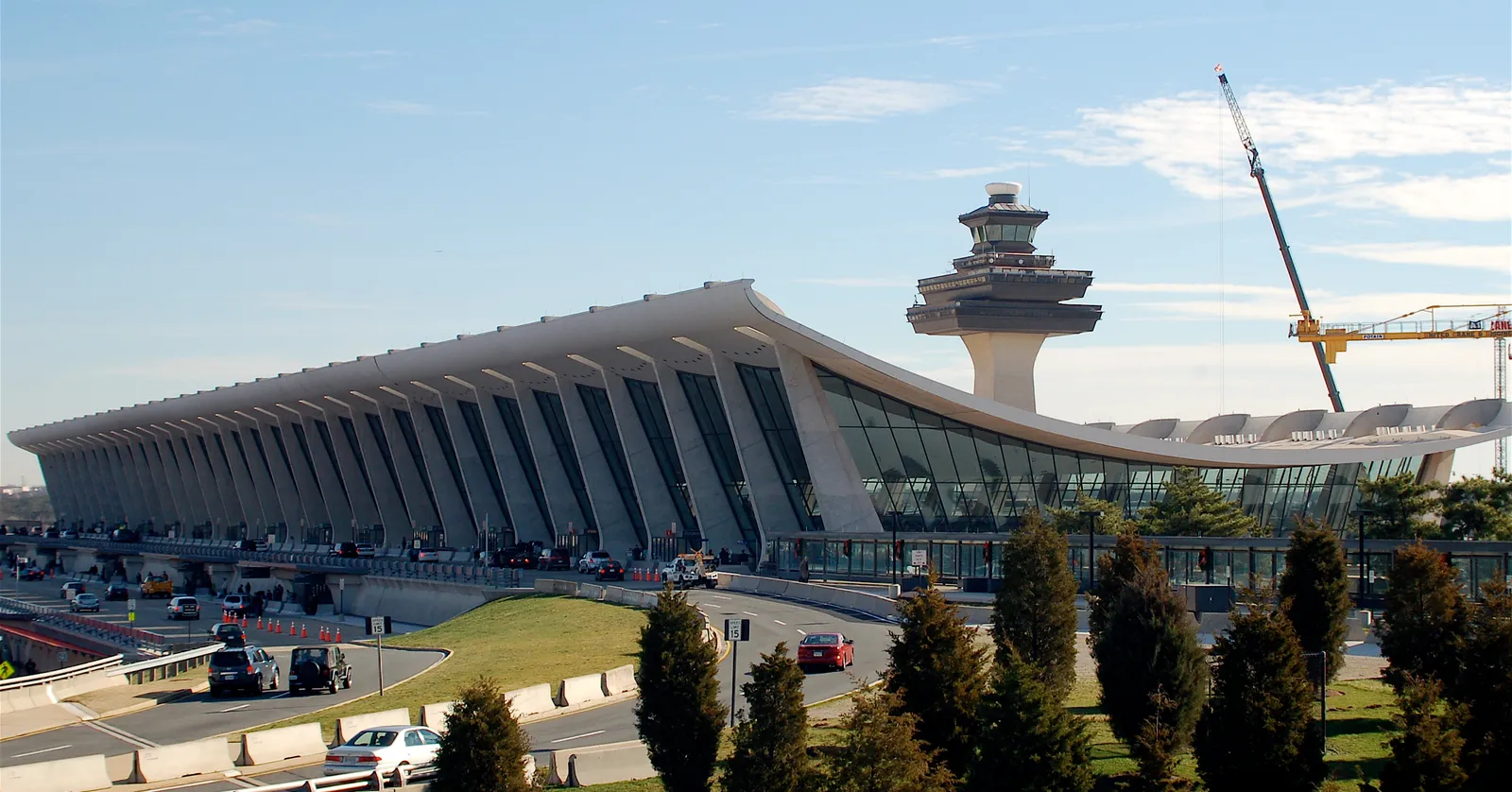
The roof is a concrete slab hung between two rows of outward-leaning piers, sagging in the middle the way a cable does under its own weight, and Eero Saarinen drew it as the first purpose-built jet airport in the United States. It opened in 1962, a year after he died, and was extended along its own lines in 1996 rather than replaced. The control tower beside it, also his, is 193 feet of glass with an unobstructed view for miles.
Outside on the apron, the mobile lounges are still working: white cabins the length of a rail carriage, mounted on a wheeled chassis that raises them to aircraft door height, which is how Saarinen intended passengers to reach their planes without walking a mile of pier. Nineteen of them run alongside a larger fleet of smaller plane mates, serving concourses and the international arrivals building the underground train does not reach.
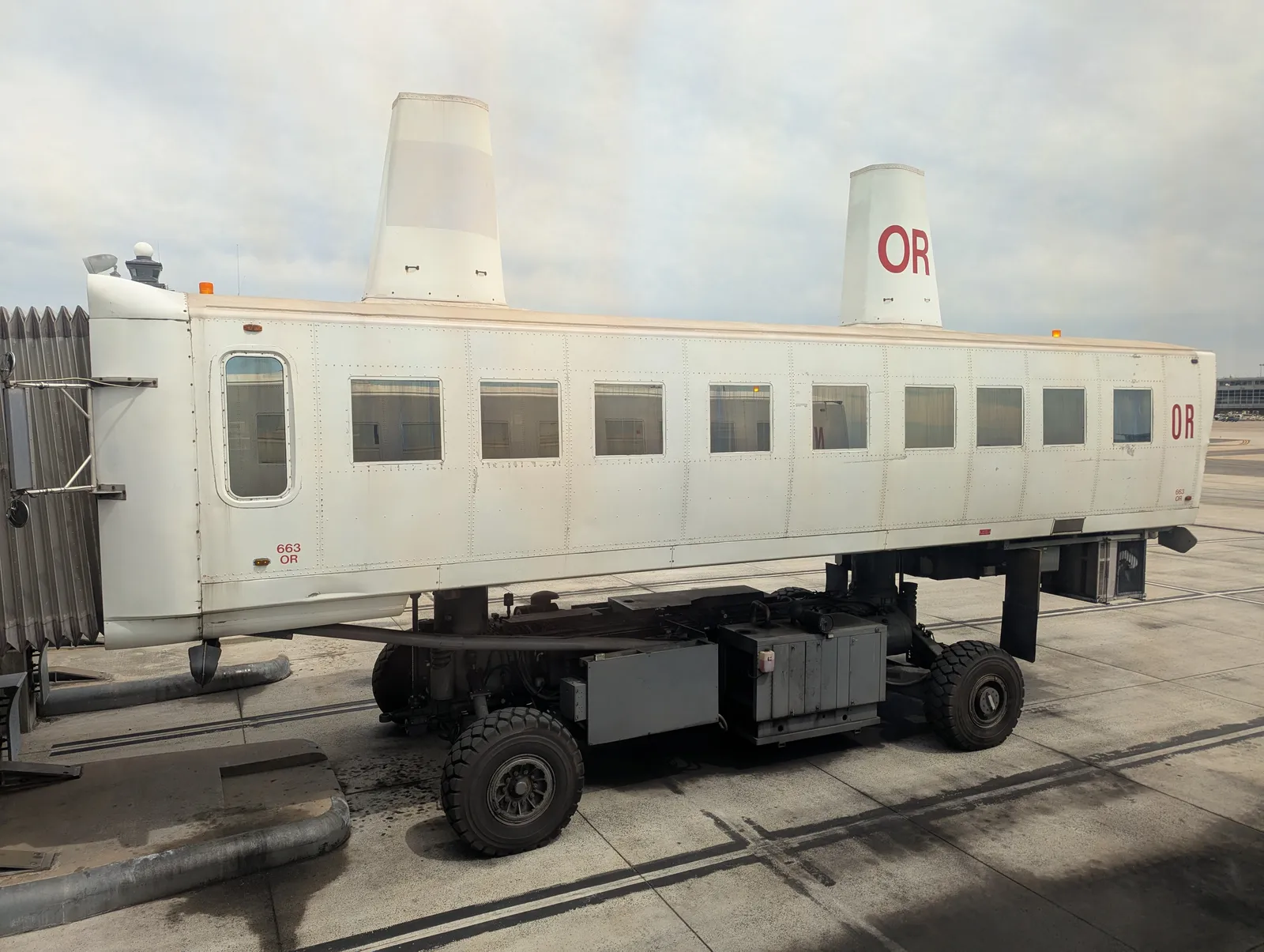
The airport’s redevelopment does eventually retire them, but the works that would make that possible are not due until the mid-2030s, so they are a fixture rather than a curiosity for now.
The city is 55 minutes away on the Silver Line
The airport has its own metro station beside daily parking garage 1, linked to the terminal by an indoor tunnel with moving walkways, five to ten minutes at a normal pace. From there the Silver Line runs through to Smithsonian station, whose northern exit opens onto the National Mall, in about 55 minutes with no change of train.
That is worth doing above roughly six hours clear of boarding and not below it, once you count the tunnel, the wait and the checkpoint on the way back. If the gap does stretch that far, the full Washington itinerary is built around exactly that arrival point, from the Air and Space Museum on the lawn to the Lincoln Memorial at the western end. Fares run to around six and a half dollars on a weekday afternoon and drop to roughly two and a half after 9:30pm or at any hour on a weekend.
Frequently asked questions
What should I do during a layover near Washington Dulles International Airport in Washington D.C.?
If you have three hours or more clear of your flight, take the Fairfax Connector 983 bus from the airport to the Udvar-Hazy Center, three miles east, where Space Shuttle Discovery and the Enola Gay sit in two enormous free hangars. Allow around ninety minutes inside and the same again for the bus and re-screening. With less time than that, stay in the main terminal, which is a 1962 Eero Saarinen building worth looking at properly, and watch the mobile lounges working the apron from the departures level.
How do you get from Dulles to the Udvar-Hazy Center?
Fairfax Connector route 983 runs between the airport and the museum, calling at Innovation Center metro station on the way, for a fare of a little over two dollars. It is the only direct public link, and it is not frequent, so check the timetable before committing rather than turning up at the stop. The museum itself charges nothing to enter; the fee at Udvar-Hazy is for parking, which does not apply if you arrive by bus.
Are the mobile lounges at Dulles still running?
Yes, and they will be for years yet. The airport still operates a fleet of them alongside the smaller plane mates, and they carry passengers to concourses and the international arrivals building that the underground train does not reach. The airport's redevelopment plan does eventually replace them, but the pieces that would allow it are not due until the mid-2030s, so the odds are good you will ride one.
Is it worth leaving Dulles at all on a short connection?
Only above about three hours clear of boarding. Coming back in means clearing the main terminal's security checkpoint a second time, and at Dulles that queue is the variable you cannot plan around. Under three hours, the terminal building itself is the better use of the time; over four, the city is reachable on the Silver Line in about 55 minutes each way.