Reagan National (DCA) Layover, Washington
Part of the full Washington DC Layover: The National Mall, IAD
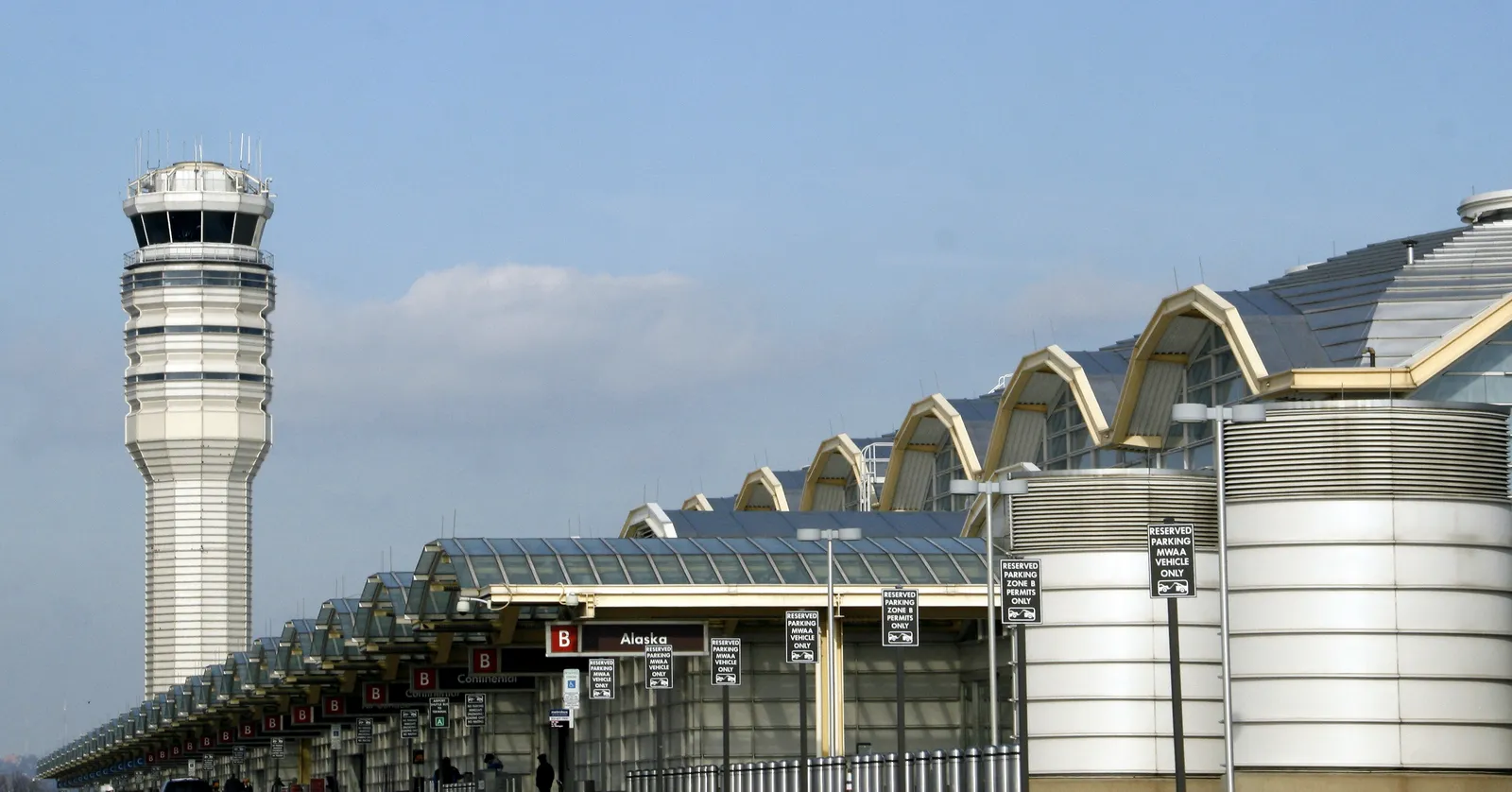
Reagan National sits four miles down the Potomac from central Washington, close enough that Gravelly Point’s runway-end lawn is a twenty-minute walk from the terminals and Old Town Alexandria is two stops the other way.
Aircraft a couple of hundred feet over the lawn at Gravelly Point
The grass runs right up to the threshold of the airport’s main runway, and everything landing from the north crosses it low enough to read the registration on the belly. It is a National Park Service site on the George Washington Memorial Parkway, free, ungated, open 6am to 10pm, with portable toilets by the car park and nothing else in the way of facilities. On a clear day the Washington Monument stands on the skyline directly behind the approach path.
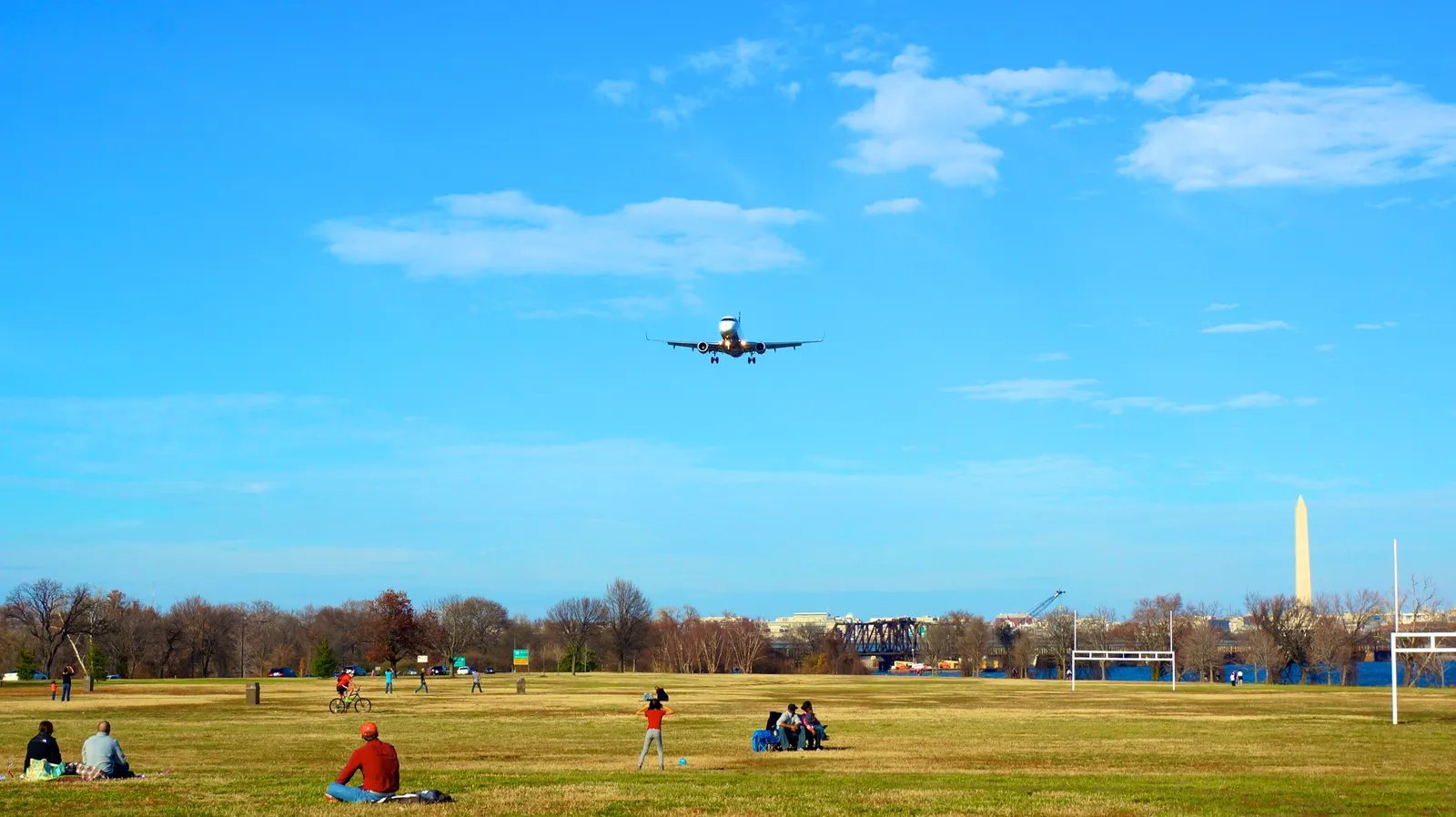
Getting there means the Mount Vernon Trail, which runs the length of the airport’s river side and carries on north to Theodore Roosevelt Island and south through Alexandria to Mount Vernon. Walking takes about twenty minutes from the terminals; a rented bike from Alexandria turns the same trail into a much longer ride if the gap is big enough for it. A federal rule caps nonstop flights here at 1,250 miles bar a handful of exemptions, so the people passing through are mostly on short domestic hops with a carry-on still in hand rather than a checked suitcase already gone, and there is nothing to set that down on between the terminal and the grass.
The 1941 terminal is still working as Terminal 1
Howard L. Cheney designed it with Charles M. Goodman between 1938 and 1941, a white streamlined block with a curved concrete canopy over the kerb and a long bowed wall of windows facing the apron. It is on the National Register of Historic Places and it never became a museum piece: nine gates, A1 to A9, still run flights out of it, and the curved back wall where the ticket counters used to stand now carries historic photographs of the airport being built.
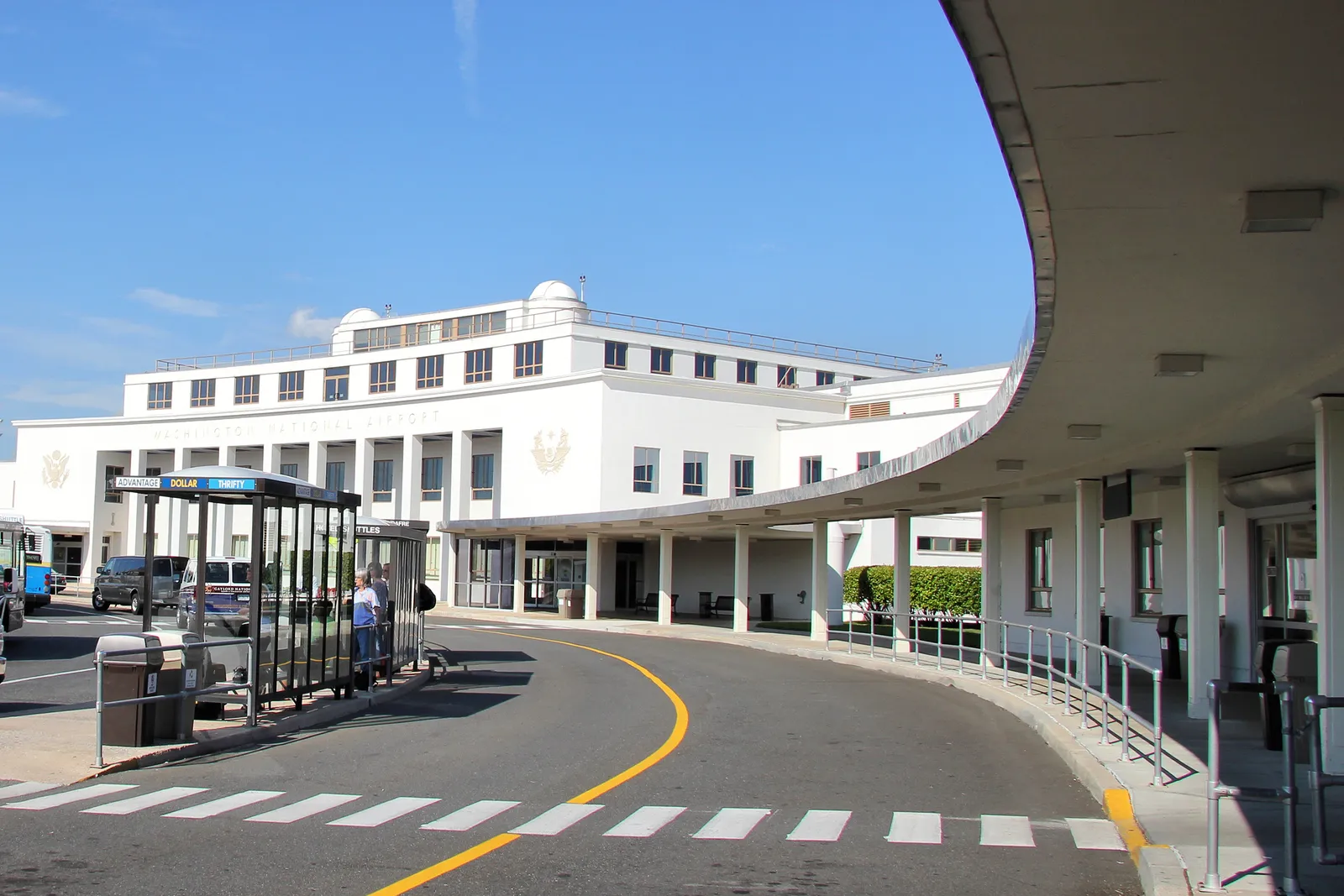
Walking in takes no boarding pass, since the landside hall is public like any other terminal lobby. It is a five-minute detour rather than an afternoon, and the reason to make it is the contrast: a building that has been checking passengers in since 1941, a few hundred metres from the vaulted glass one that replaced it in 1997.
King Street runs from the metro down to the Potomac in Old Town Alexandria
Two stops south on the Blue or Yellow Line, King Street-Old Town station puts you at the top of a mile of eighteenth and nineteenth-century brick that ends at the river. A free trolley covers that mile between the station and Market Square every 15 minutes, 11am to 11pm, seven days a week, so the walk down is optional in both directions.
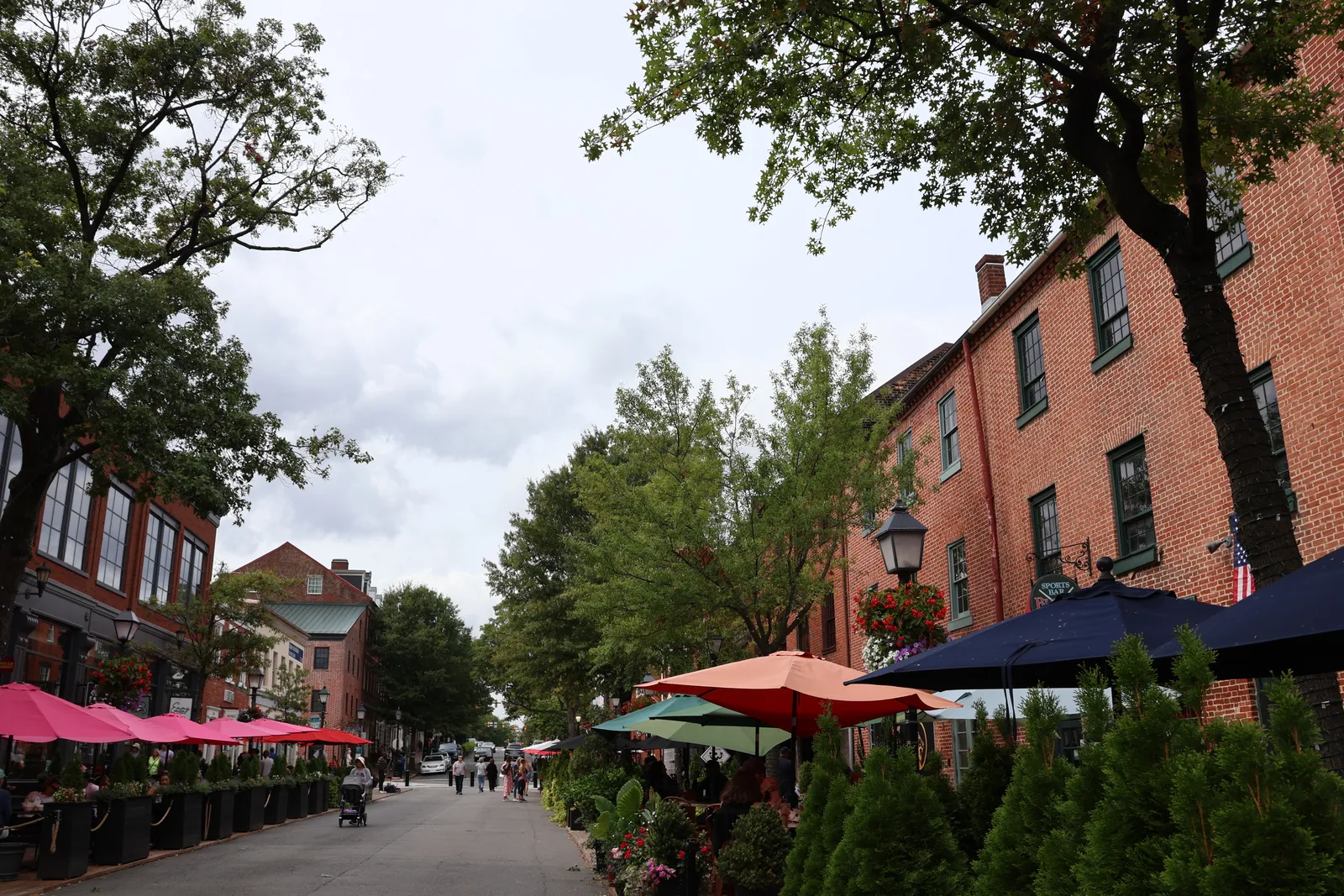
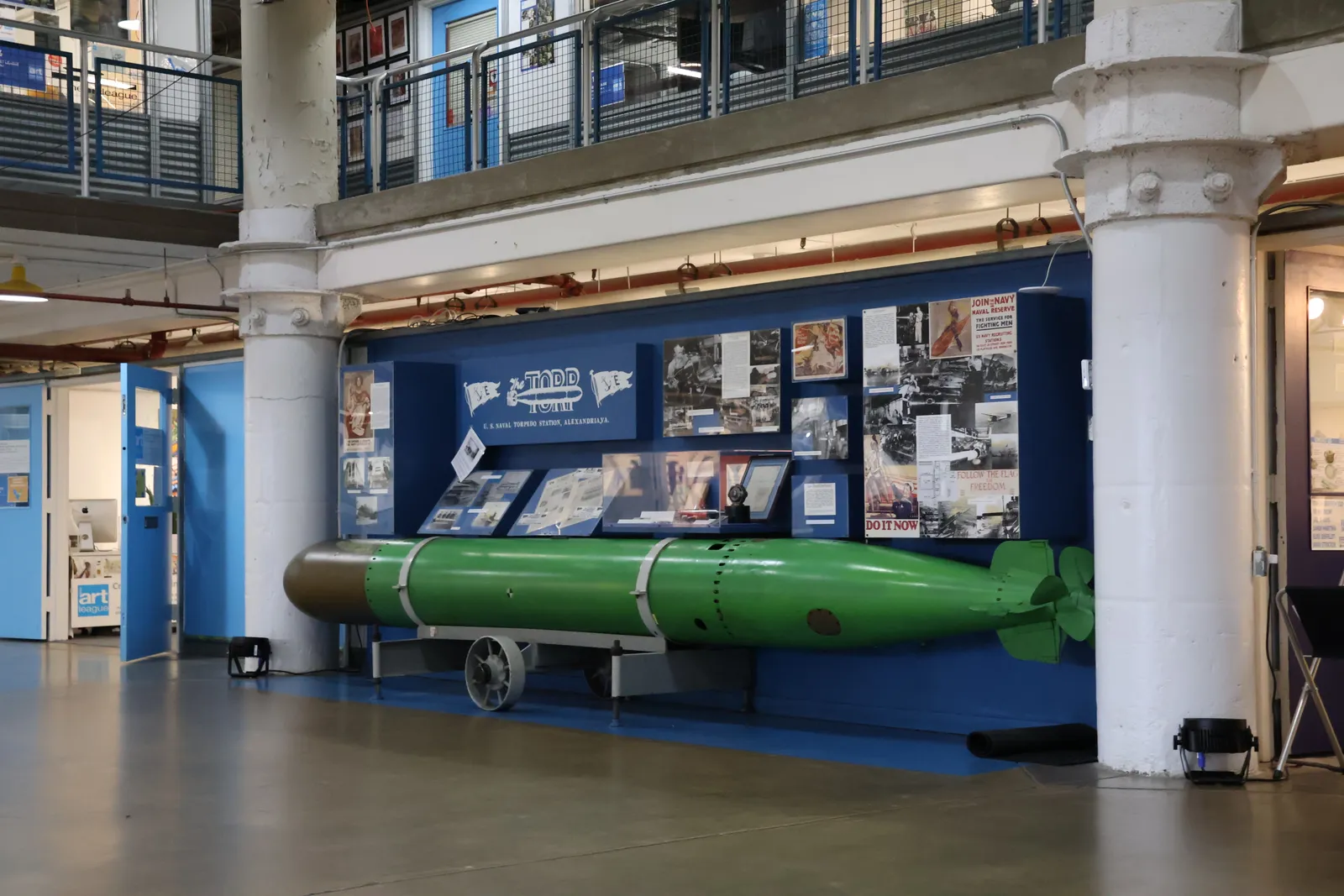
At the bottom of the street, on the waterfront at 105 North Union Street, the Torpedo Factory Art Center is exactly what its name says: a plant that built torpedo shell cases from 1918, converted in 1974 into 82 artists’ studios and ten galleries you can walk through while people are working in them. Admission has been free since it opened, and it runs 10am to 6pm daily. One of the torpedoes is still parked in the main hall.
Twenty minutes to the Mall, with no change of train
The Blue Line runs from the airport station to Smithsonian in about 20 minutes, and Smithsonian’s northern exit opens directly onto the National Mall, which is what makes this airport unusual among big American ones. The station here is also an interchange, so the Yellow Line calls at the same platforms and you can swap between the two inside the faregates.
If the gap is long enough to justify it, the full Washington itinerary covers what is actually worth doing once you are down there, from the Air and Space Museum to the Library of Congress reading room. Coming back, the two enclosed bridges from the station land at Terminal 2’s concourse level; Terminal 1 is a further walk or a free shuttle ride, so check which one your flight leaves from before working out how much slack you have.
Frequently asked questions
What should I do during a layover near Ronald Reagan Washington National Airport in Washington D.C.?
With three hours, walk about twenty minutes north on the Mount Vernon Trail to Gravelly Point, where aircraft cross the lawn at a couple of hundred feet on their way in, then look into the 1941 terminal on the way back. With four or five, ride two stops south instead to Old Town Alexandria, where King Street runs down to the river and the Torpedo Factory's studios are free to walk through. Everything here costs nothing except the train fare. The one thing to watch is the clock: Gravelly Point shuts at 10pm and the Torpedo Factory at 6pm.
Is there anything free to do near Reagan National Airport?
Almost all of it is free. Gravelly Point is a National Park Service lawn with no gate and no charge, open 6am to 10pm. The 1941 terminal building is a working part of the airport you can walk into without a boarding pass. The Torpedo Factory Art Center in Alexandria has charged nothing since 1974, and the trolley along King Street between the metro station and the waterfront is free too. Budget for the metro fare and nothing else.
How long does it take to get from Reagan National into central Washington?
About 20 minutes on the Blue Line to Smithsonian station, which comes out on the National Mall itself, with no change of train. The airport's own station is an interchange, so the Yellow Line calls here too and you can switch between the two inside the faregates without paying again. Trains run every 10 minutes in the weekday rush, every 12 off-peak and at weekends, and every 15 after 9:30pm.
Which part of the airport does the metro station connect to?
Terminal 2. Two enclosed pedestrian bridges run from the station mezzanine straight across Smith Boulevard into the terminal's concourse level, where the security checkpoints are. Terminal 1, the 1941 building with gates A1 to A9, is further along and is reached either on foot or on the free airport shuttle bus. If your flight leaves from Terminal 1, add the shuttle into your timing rather than assuming the bridges drop you at the right door.