Old Town Transit Center Layover, San Diego
Part of the full San Diego Layover: The Embarcadero From SAN
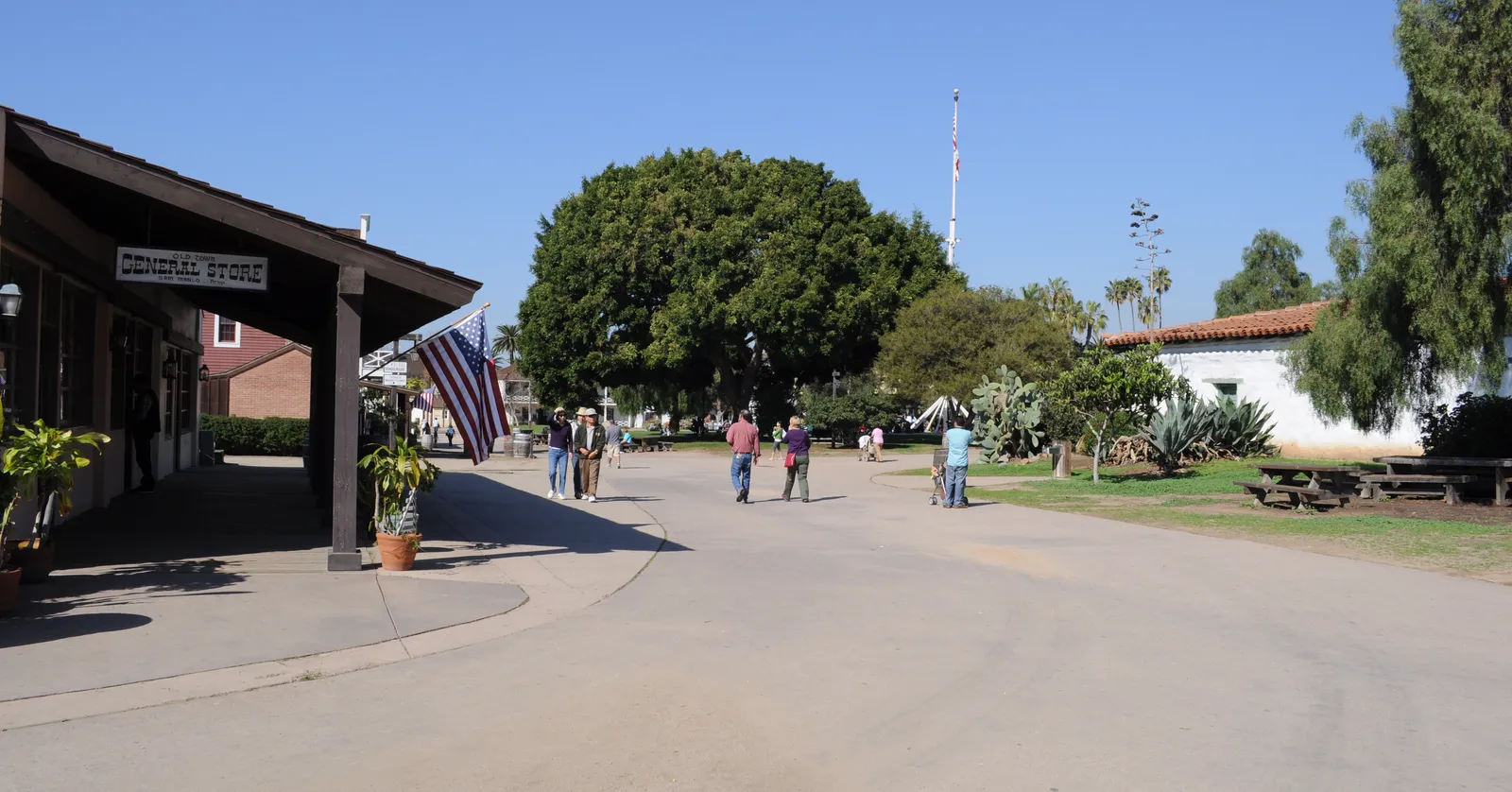
Old Town Transit Center in San Diego drops you five minutes from a plaza of 1820s adobes, the oldest brick house in Southern California and a cemetery with graves left under the road, in a district compact enough to do properly in two hours.
The Whaley House, the oldest brick building in Southern California
Thomas Whaley fired the bricks in his own yard and put up a two-story Greek Revival house on San Diego Avenue in 1857, the first building of its kind in a town that until then had been entirely adobe. It has been a museum since 1960, with the county courtroom and the general store that once shared its ground floor both put back. A self-guided day ticket gets you through the rooms at your own pace; doors are open 10am to 4:30pm daily.
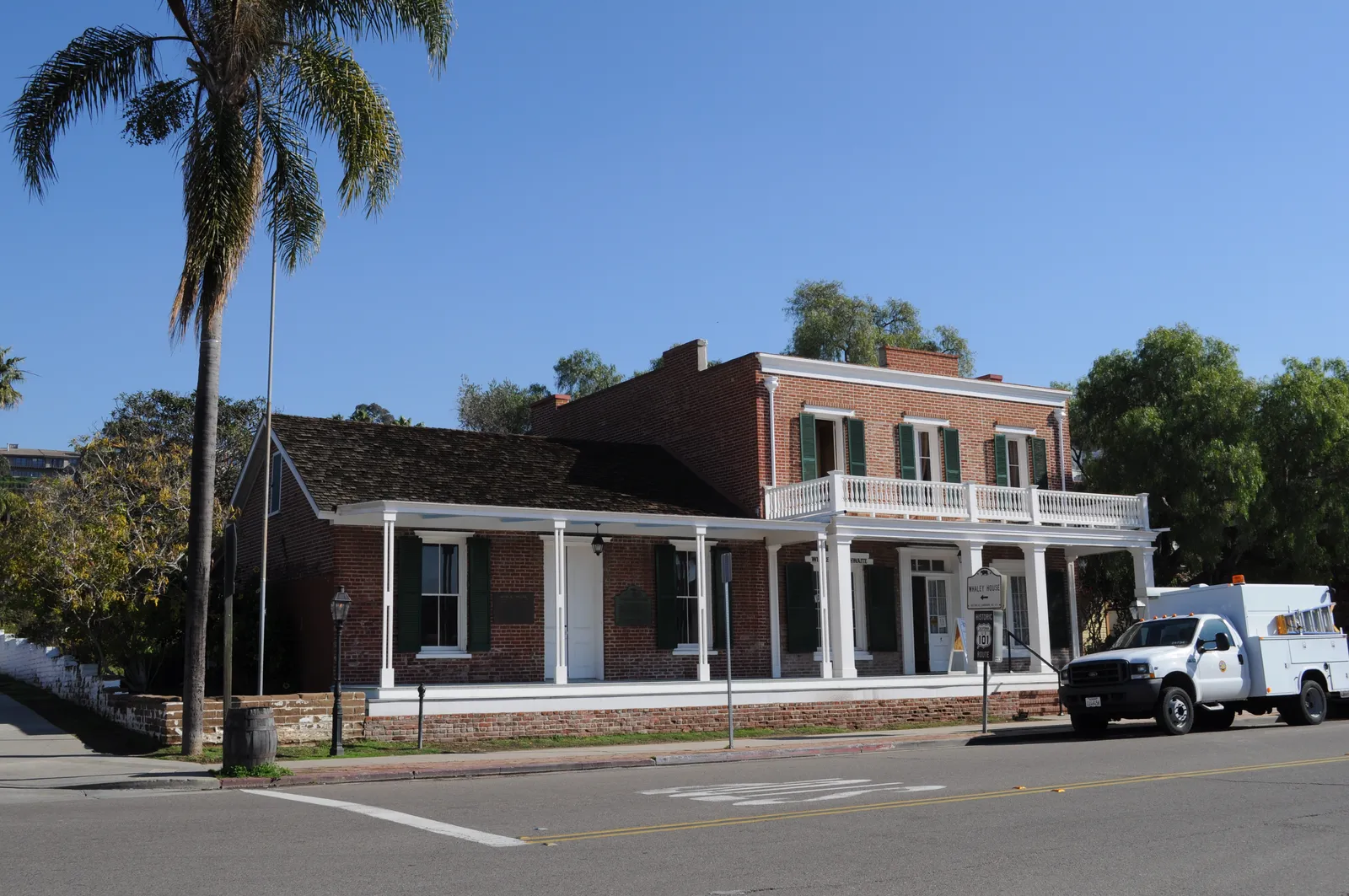
The house has a long reputation as haunted, which is most of what draws the hundred thousand people a year who go through it, and the museum leans into it rather than away.
El Campo Santo’s graves under San Diego Avenue
Burials started in this walled plot on San Diego Avenue in 1849 and ran to 1880. In 1889 a horse-drawn streetcar line was driven straight through part of it, the route became San Diego Avenue, and in 1942 the whole thing was paved. Ground-penetrating radar in 1993 established that more than twenty people are still down there, under the road and the sidewalk, and small round metal discs reading “Grave Site” were set into the concrete to mark where. They are easy to walk over without noticing; a plaque by the gate explains them.
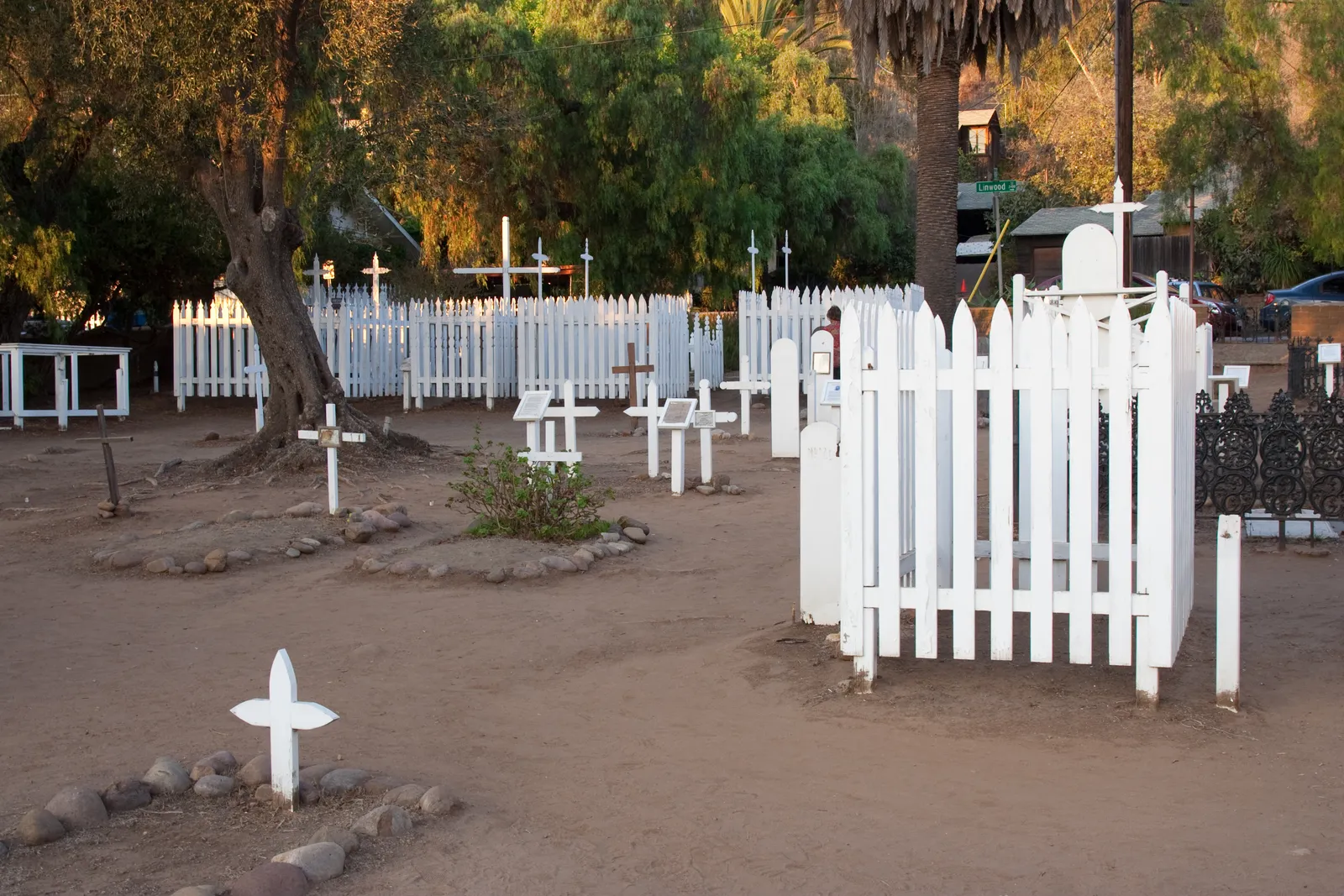
The cemetery itself is small, free and open through the day, a rectangle of white crosses and picket fences on bare earth. If you would rather have it narrated, a night trolley tour of the district stops here and at the Whaley House grounds after dark.
Almost none of the historic quarter is paved. The streets through the state park are packed earth and gravel, which wheels badly.
The Mormon Battalion site runs free tours until 9pm
About five hundred men marched close to two thousand miles from Iowa to San Diego in 1846 and 1847 as the only religious unit in United States military history, and the site on Juan Street tells that story through a guided walk in period dress rather than a room of cases. Tours leave every fifteen to twenty minutes, take about 45 minutes, and cost nothing. There is brick-making and gold-panning at the end of it for anyone who wants them.
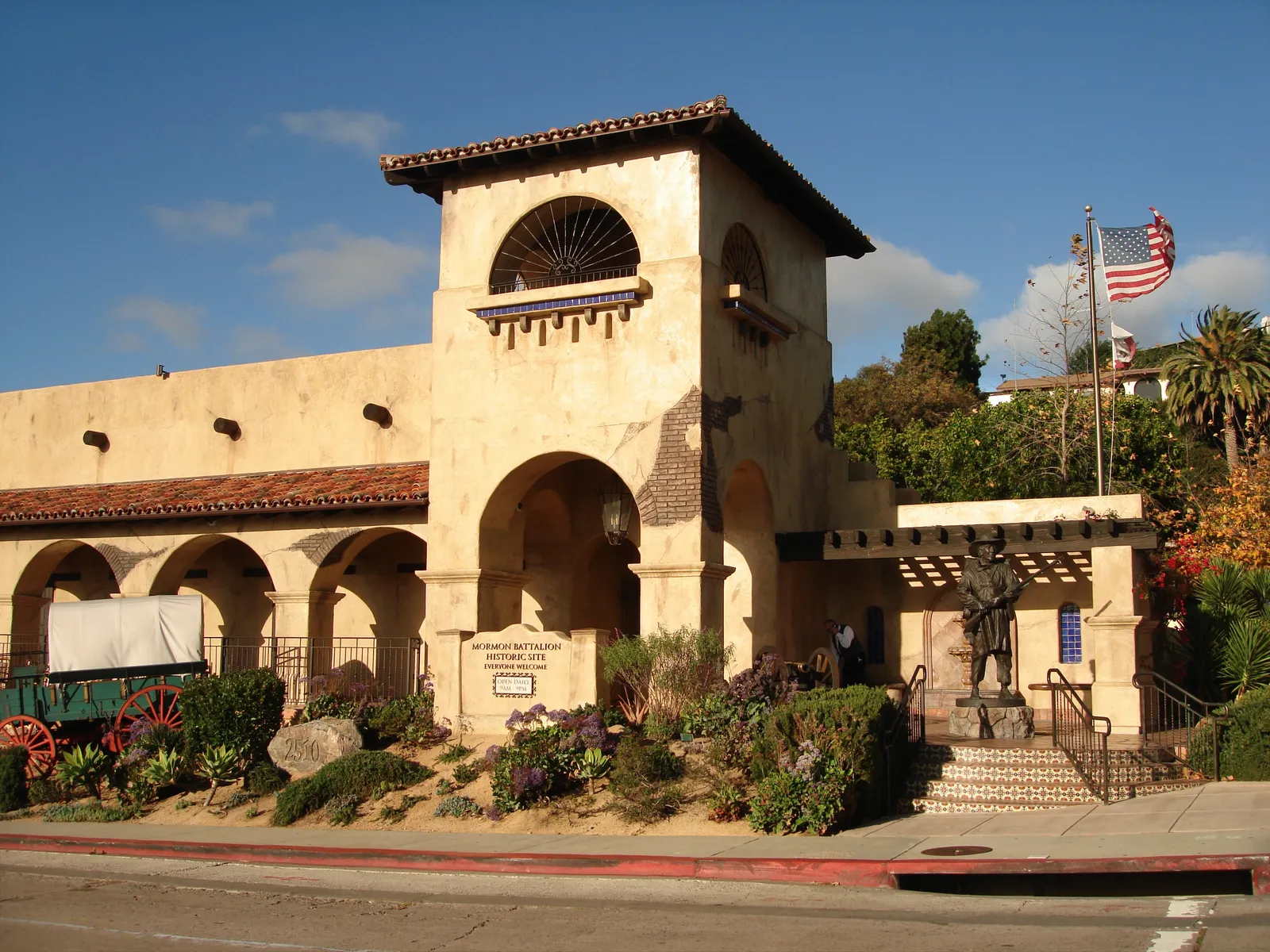
Doors are open 9am to 9pm every day, with the last tour at 8pm, which makes it the one thing in Old Town still going when everything else has shut. On a flight-day evening that matters more than it sounds.
The Junipero Serra Museum on Presidio Hill
Spain founded its first Alta California mission and presidio on the hill above Old Town in 1769, and both moved away within decades. What stands there now is a 1929 building, white with a red-tiled arcade and a tower, put up to hold the San Diego History Center’s collection and often mistaken for the mission itself.
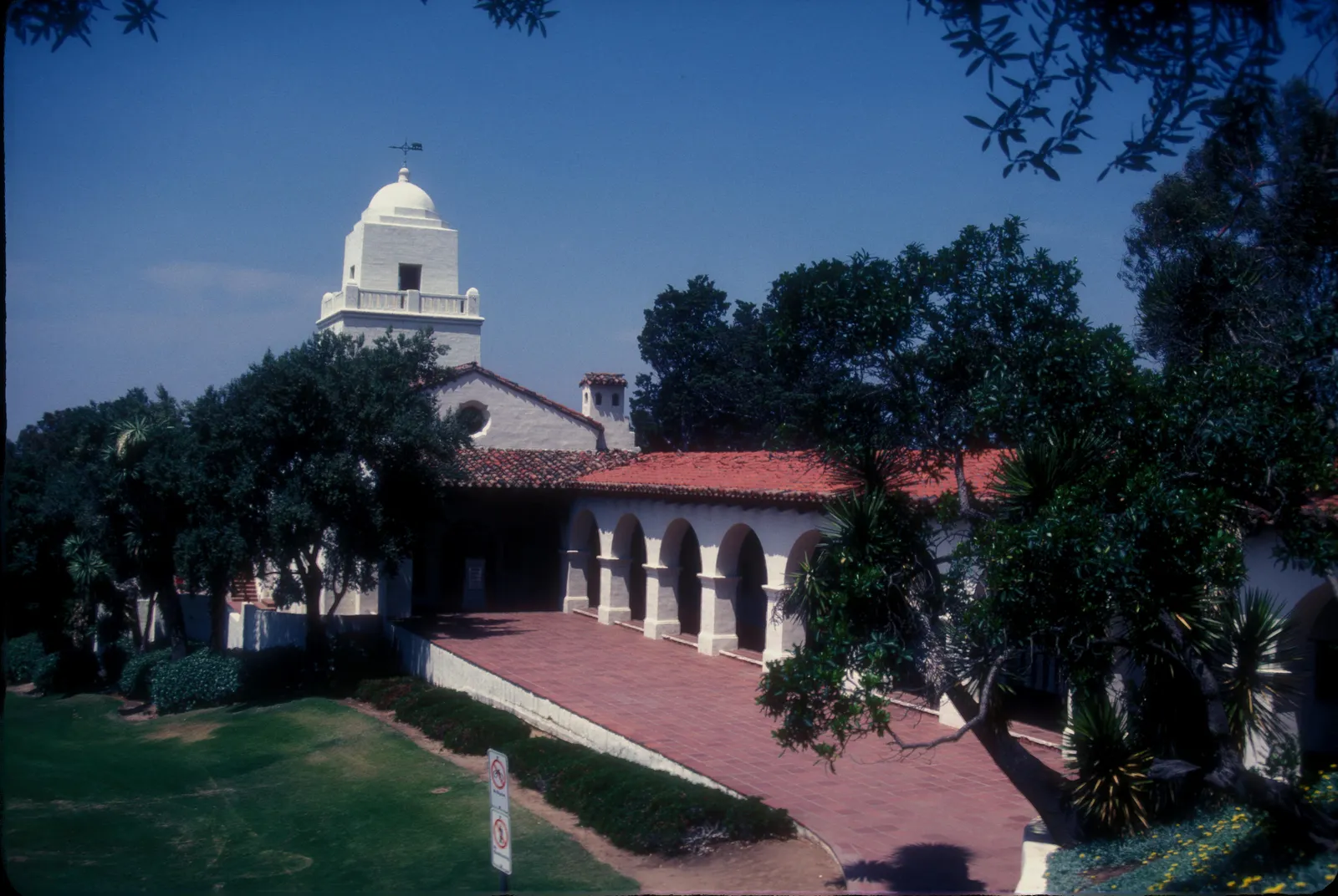
Getting up there is fifteen to twenty minutes of climbing from the plaza, and the museum opens Saturday and Sunday only, 10am to 4pm, on a suggested donation of $10. The lawns of Presidio Park are open every day and cost nothing, and the view down over Mission Valley is most of the reward either way.
The airport shuttle leaves from the transit center platform
The San Diego Flyer, a free electric bus, runs from Old Town Transit Center to Terminals 1 and 2 at San Diego International Airport in about ten minutes, going roughly every 20 to 30 minutes with the first pickup at 4:45am and the last at 12:30am. Its timetable is built around the first and last trolley, COASTER and Amtrak services calling here, which is the practical reason this station is a better place to end a day than downtown.
That free ride is most of the argument for ending a day out here rather than downtown. The main San Diego layover guide runs along the Embarcadero instead and pays $2.50 for the bus at the end of it, and if you are connecting between the two terminals once you arrive, that is its own separate walk.
Frequently asked questions
What should I do during a layover near Old Town Transit Center in San Diego?
Everything worth seeing here is within about ten minutes of the platform. The Whaley House on San Diego Avenue is the oldest brick building in Southern California and opens daily 10am to 4:30pm; the El Campo Santo cemetery a short way further down the same street has metal discs set into the pavement marking graves left under the road; and the Mormon Battalion Historic Site on Juan Street runs free guided tours until 9pm, which is later than anything else here. Two hours covers all three. Presidio Hill above the town adds another hour and a climb.
How do I get from Old Town to San Diego International Airport?
The San Diego Flyer, a free electric shuttle, runs from Old Town Transit Center to both terminals, leaving roughly every 20 to 30 minutes with the first pickup at 4:45am and the last at 12:30am, timed around the first and last trolley, COASTER and Amtrak services. It costs nothing and the ride is about ten minutes. If you would rather go via downtown, two trolley lines run from the same station to Santa Fe Depot in about ten minutes, where MTS Route 992 picks up for the terminals at $2.50.
Is the Junipero Serra Museum open during the week?
No. It opens Saturday and Sunday only, 10am to 4pm, and is shut Monday to Friday, which catches out a lot of people who walk up Presidio Hill for it midweek. Admission is by donation, with $10 suggested. The hill itself and Presidio Park around it are open every day and free, so the view over Mission Valley and the walk up are still there when the building is not.
Is Old Town worth visiting in the rain?
Less than most of San Diego, because the streets through the historic park are packed earth rather than pavement and they turn to mud. The indoor half holds up: the Mormon Battalion site is a guided walk through interiors, the Whaley House is a house, and the shops and restaurants around the plaza have covered walkways. Rain here is mostly a December to March problem, and even then it usually passes within a day.