Garden District, New Orleans Layover
Part of the full New Orleans Layover: French Quarter From MSY
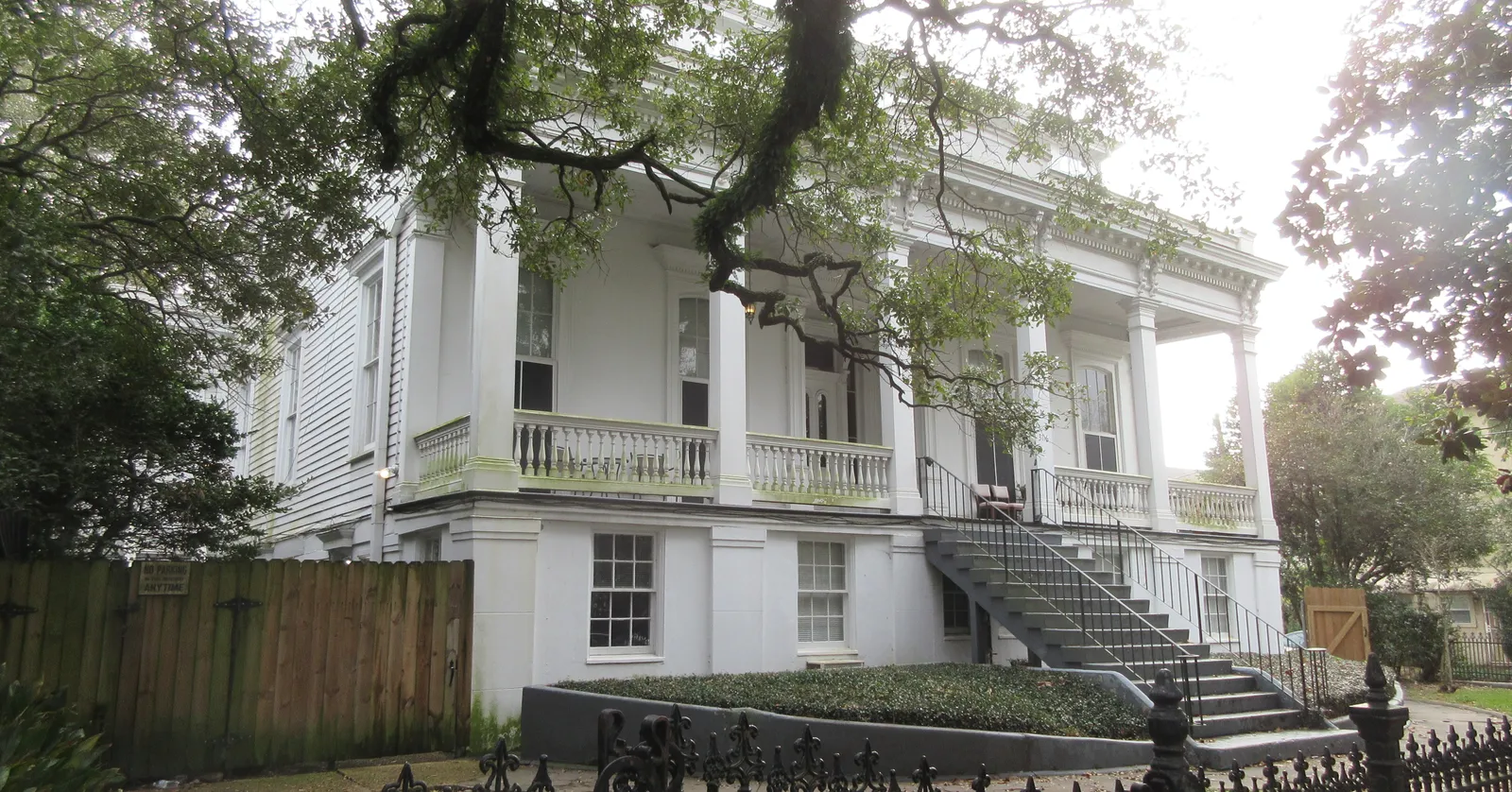
The Garden District in New Orleans is twenty-odd flat blocks of 1850s mansions behind iron fences, with Colonel Short’s cornstalk fence at Fourth and Prytania, the turquoise front of Commander’s Palace on Washington Avenue and an 1884 skating hall turned shop row in between.
The mansion blocks along Prytania Street
Americans arriving after the Louisiana Purchase were not made particularly welcome in the Creole city downriver, so they bought plantation land upriver and built on it at a scale the French Quarter had no room for. What went up between the 1830s and the 1860s, on lots wide enough for a garden on every side, is what the neighbourhood is named for, and the grid bounded by Prytania, Magazine, Jackson Avenue and Louisiana Avenue still holds most of it: Greek Revival porticoes, Italianate brackets, the occasional Queen Anne turret from a later decade, all of it behind cast or wrought iron and under live oaks that have been there nearly as long.
None of it is a museum. These are private houses on ordinary streets, which means the whole thing is free, permanently open and entirely a matter of looking over fences. A two-hour guided walk can be booked through a tours and activities platform if you would rather have the histories attached to the houses than guess at them, and it covers ground a stranger would otherwise spend the first hour finding.
Colonel Short’s cornstalk fence at Fourth and Prytania
Henry Howard designed the house on this corner in 1859 for Robert Short, a commission merchant from Kentucky, and what stops people on the pavement is not the house but the railing in front of it: every upright cast as a stalk of corn, with morning glories twined through the stalks and the ears picked out at the top, in dark green paint. A Philadelphia foundry, Wood and Miltenberger, supplied it.
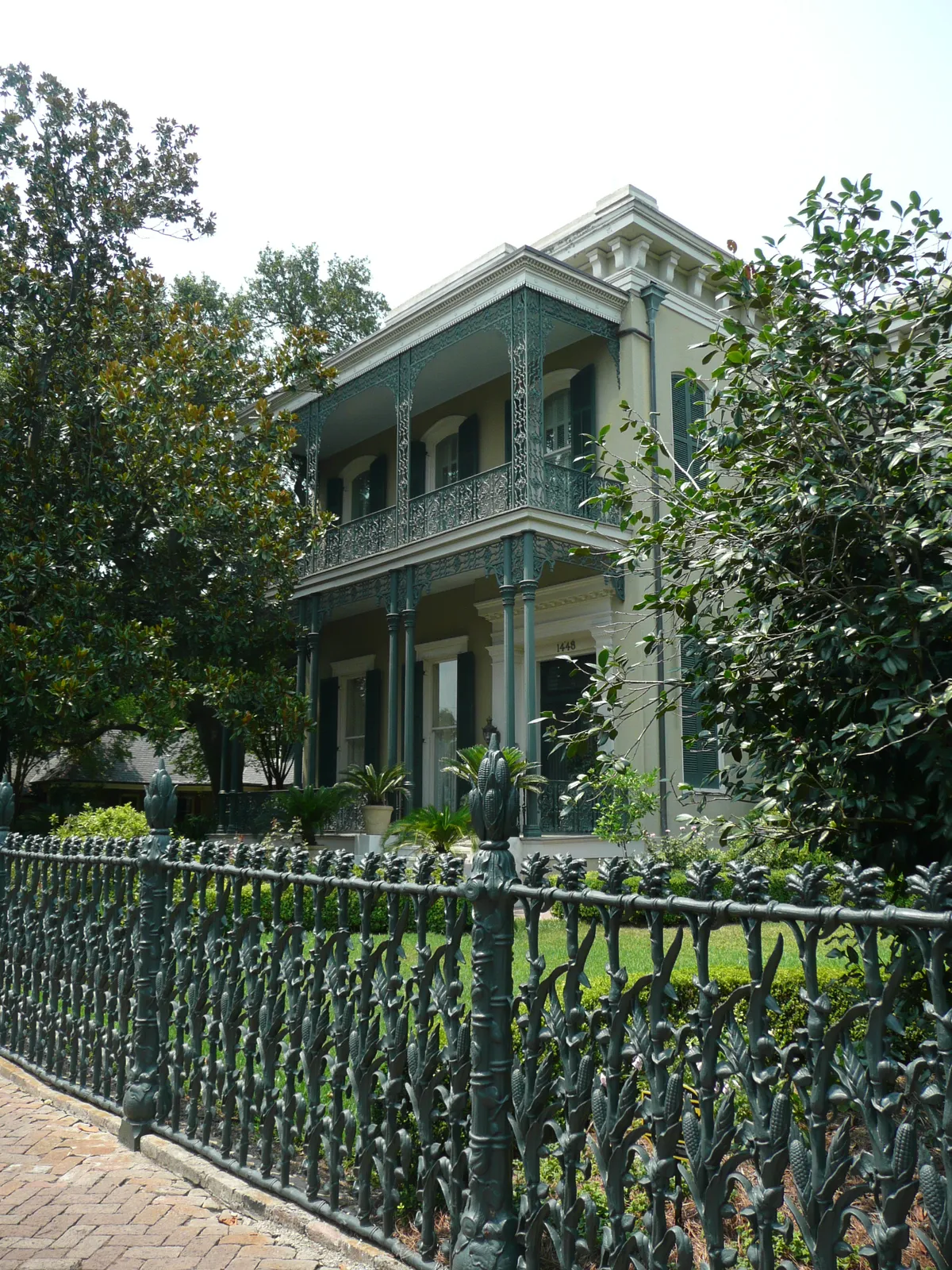
The story told about it locally is that Short bought the fence because his wife missed the cornfields of home, which is a better line than the likelier explanation that he picked it out of the foundry’s catalogue like everyone else who ordered one. The house had a stranger war than most on this street: federal forces seized it in 1863 as the property of an absent rebel, it served briefly in 1864 as the residence of Louisiana’s federally elected governor and then of the Union commander of the Department of the Gulf, and Short got it back in 1865 and died in it in 1890.
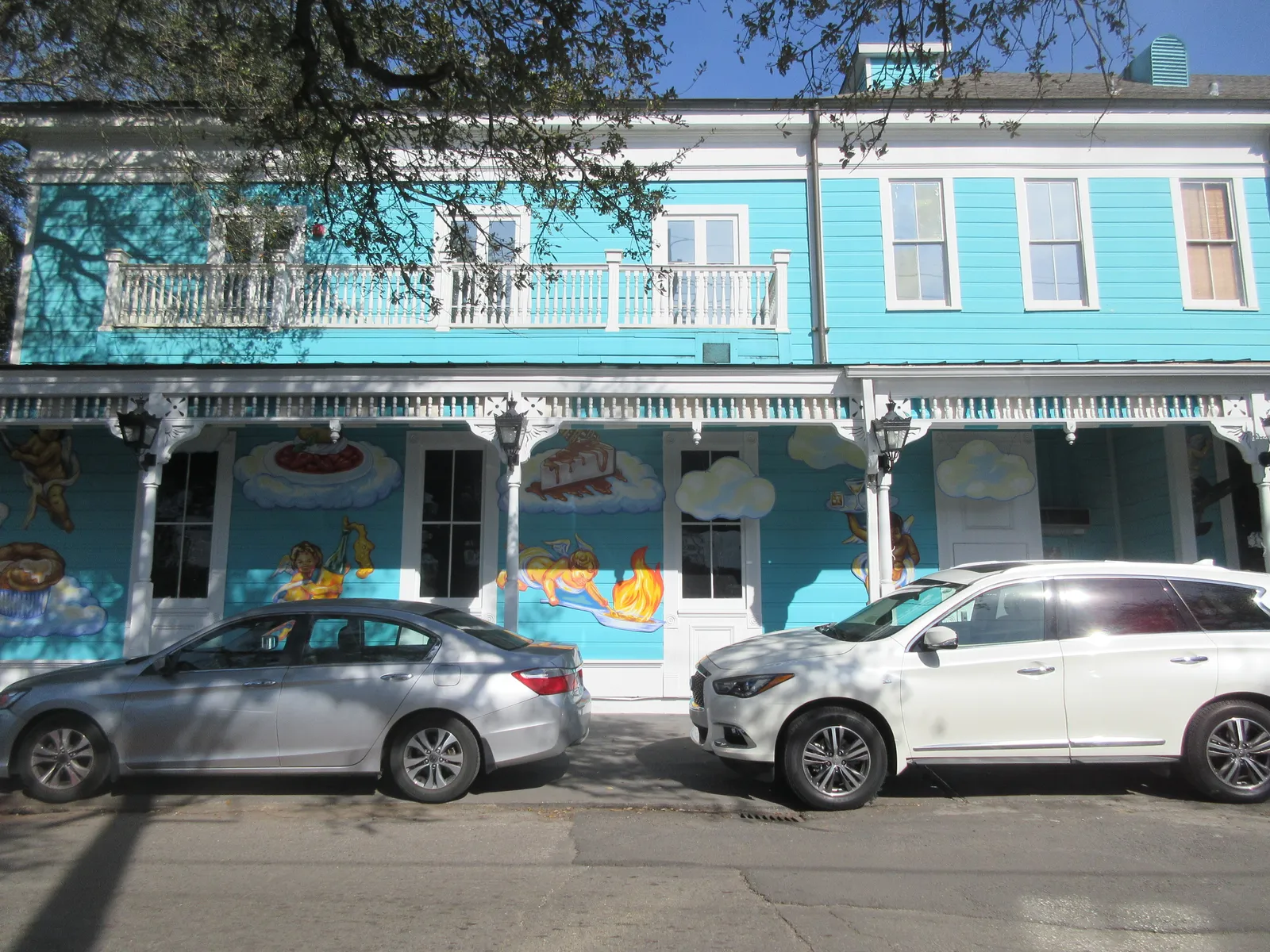
Commander’s Palace, turquoise and white on Washington Avenue
Emile Commander opened a saloon on the corner of Washington Avenue and Coliseum Street in 1893, in a building that was already a decade old, and the restaurant that grew out of it has been painted the same improbable turquoise and white for long enough that the colour is the landmark. Paul Prudhomme and Emeril Lagasse both ran the kitchen here before they were names.
Getting in is a matter of booking and of clothes. The dress code is enforced: no shorts, t-shirts or flip-flops, collared shirts and closed-toe shoes for men, jackets preferred, jeans discouraged, which rules out a lot of flight-day wardrobes. The weekday lunch is the one to angle for, with martinis at twenty-five cents on Wednesday, Thursday and Friday, up to three per person.
Two blocks along Prytania at number 2727, The Rink is worth the detour for what it used to be: a roller-skating hall thrown up in 1884 to catch the crowds coming to the World’s Cotton Centennial Exposition, then a livery stable, a mortuary and a grocery in turn, and now a short row of small shops with a bookshop at the end of it. The pavements out here are brick and flagstone lifted into ridges by oak roots, which a rolling suitcase does not cross.
Lafayette Cemetery No. 1 is shut while the city repairs it
The walled burial ground at 1400 Washington Avenue is the one this neighbourhood grew up around, and it has been closed to general visitors while the city works on its walkways and its deteriorating tombs. Walking tours that used to go inside now stop at the gates and talk from the pavement, which still gets you the rows of wall vaults and the tops of the family tombs over the railings. Nothing has been announced about a reopening date, so treat the gates as the visit rather than planning around getting in.
The airport run from uptown needs a transfer downtown
The 202 Airport Express, the only public transit to Louis Armstrong New Orleans International Airport (MSY), runs from Poydras Street and the Union Passenger Terminal downtown, so from here it means a streetcar ride back down St. Charles Avenue first, about twenty minutes, then the bus itself for around forty more at $1.25. With departures every 70 to 90 minutes, that is three separate waits stacked on one journey.
A taxi direct from the Garden District is the simpler version and the ordinance fare of $36 to the airport covers the Central Business District and the French Quarter; from uptown, agree it before you get in. If you have five or six hours rather than three, the French Quarter and riverfront itinerary puts you closer to both the bus stops and the airport road at the end of it, which is worth weighing against the mansions.
Frequently asked questions
What should I do during a layover in the Garden District in New Orleans?
Walk it. The grid between Prytania, Magazine, Jackson and Louisiana is about twenty blocks of 1850s mansions behind iron fences, all of it flat and all of it free to look at from the pavement. The one everybody stops for is Colonel Short's Villa at Fourth and Prytania, whose cast-iron fence is moulded as cornstalks with morning glories through it. Three hours is comfortable, and only lunch at Commander's Palace on Washington Avenue needs booking in advance.
Is Lafayette Cemetery No. 1 open to visitors?
Not at the moment. The city closed it for repairs to the walkways and the tombs and has not reopened it to the general public, and walking tours that once went inside now stop at the Washington Avenue gates and talk from there. The wall-vault rows and the tops of the family tombs are visible over the gate. If it does reopen, it sits directly across the street from Commander's Palace, so it is hard to miss on the way past.
Can you get into Commander's Palace without a reservation?
Rarely, and the dress code is the bigger obstacle for anyone travelling. No shorts, t-shirts, flip-flops or sweatshirts, collared shirts and closed-toe shoes for men, jackets preferred, jeans discouraged. Weekday lunch is the version worth aiming at: Wednesday, Thursday and Friday lunch comes with martinis at twenty-five cents, up to three of them. Book ahead if you want it, because walk-in tables at that price are not a thing.
Is the Garden District walk manageable with elderly parents?
The terrain is as easy as New Orleans gets, flat the whole way with no steps on the route and plenty of shade from the live oaks. The catch is the surface: those same oak roots have lifted and cracked the brick and flagstone pavements along Prytania and First, so there are trip edges every few yards. Slow it down, keep to the smoother side of the street, and count on a few benches being available only at The Rink on Prytania rather than out on the blocks.
Are any of the Garden District houses open to go inside?
Almost none of them. These are private homes on ordinary residential streets, so the whole thing is a looking-over-fences exercise rather than a house-museum circuit, which is also why it costs nothing. The interiors you can actually walk into are Commander's Palace, if you have booked and dressed for it, and the shops inside The Rink on Prytania. Lafayette Cemetery No. 1, the other thing people try to get into out here, has its gates shut for repairs.