Hollywood Walk of Fame on a Los Angeles Layover
Part of the full Los Angeles Layover: Downtown Walk From LAX
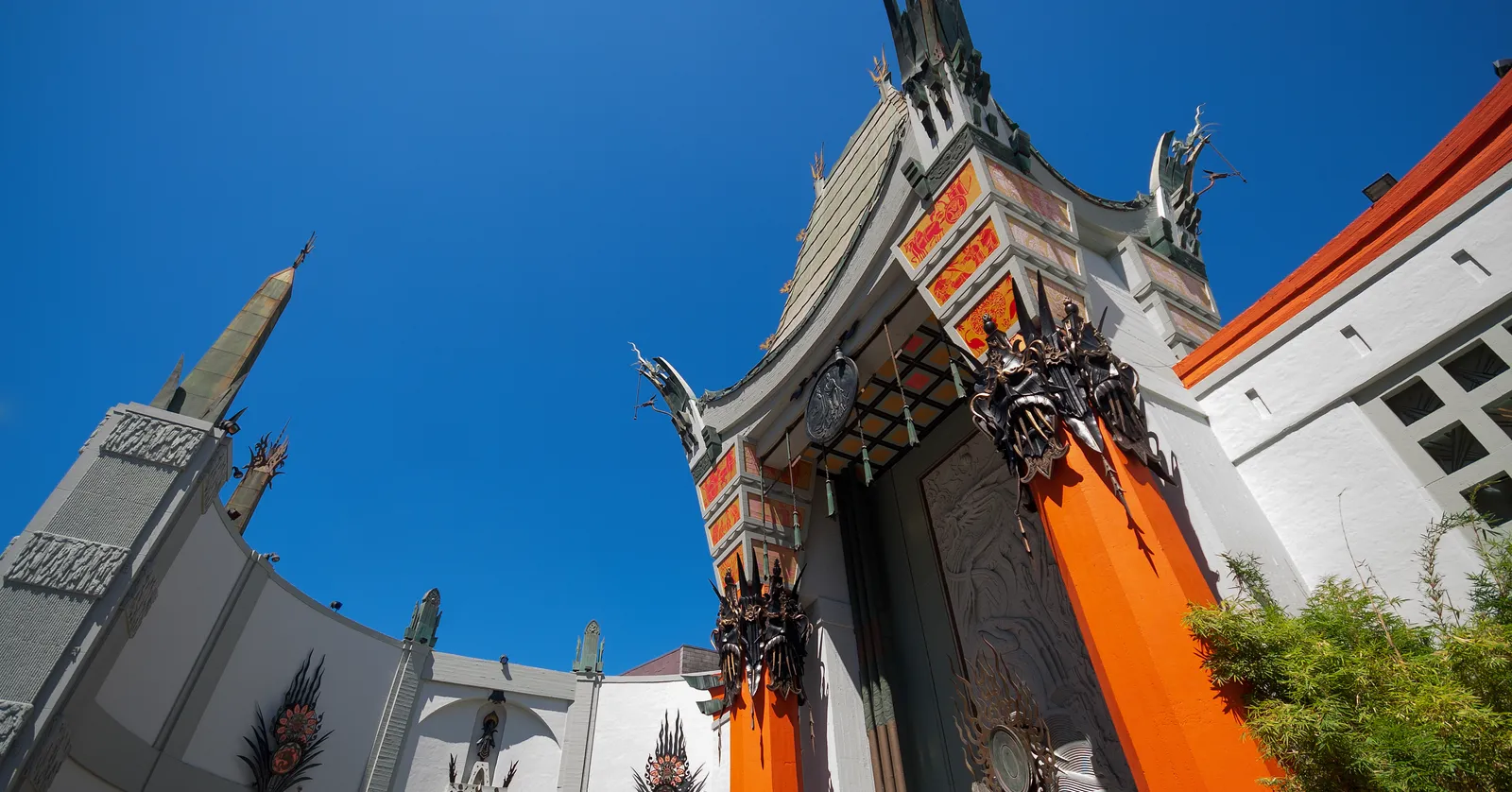
The Chinese Theatre’s handprint forecourt, the Walk of Fame stars and the theatre the Academy Awards use all stand within two blocks of each other on Hollywood Boulevard in Los Angeles, and walking the length of it costs nothing.
The Chinese Theatre forecourt has held handprints in concrete since 1927
The Chinese Theatre stands at 6925 Hollywood Boulevard behind a green pagoda roof, bronze finials and a pair of stone guardian figures, and Sid Grauman opened it in May 1927. The forecourt in front of it is the part that matters on a short visit: it is open air, part of the public footpath, and there is no gate or ticket booth between the street and the concrete.
Close to 200 slabs are set into that concrete, hand and foot prints with signatures scratched in beside them. Mary Pickford and Douglas Fairbanks went first in April 1927, and the slabs kept coming for a century, which is why the surnames run from silent-film stars to people who were on screen last year. A few of them are not hands at all: cigars, a wand, a pair of legs, a set of hoofprints.
The Walk of Fame runs fifteen blocks of Hollywood Boulevard
The Walk of Fame is set into the pavement itself, brass-rimmed pink terrazzo stars covering fifteen blocks of Hollywood Boulevard and three more of Vine Street. The first permanent ones went down in 1960, there are now well over two thousand of them, and the names cover film, television, radio, recording and live theatre, so the pavement holds musicians and radio announcers alongside the actors people come looking for.
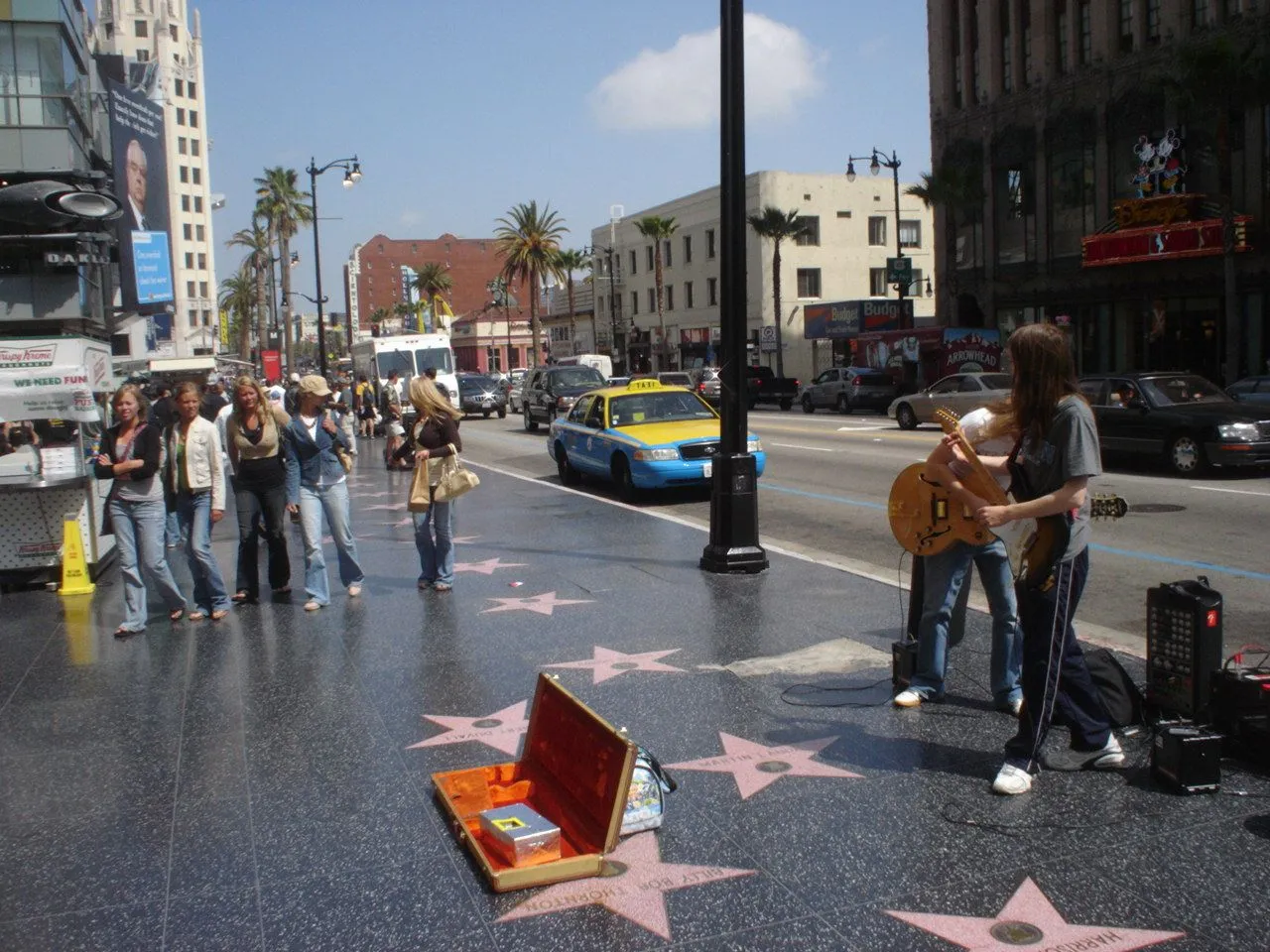
Finding one specific name by wandering does not work; the stars are grouped by nothing you can guess at from the ground, and the official directory is the only reliable way to locate one. If you would rather have the block read to you than read it yourself, a guided walk of the boulevard covers the theatres and the stars in one go and books ahead.
The wax figures at Madame Tussauds Hollywood
Madame Tussauds Hollywood is at 6933 Hollywood Boulevard, next door along from the Chinese Theatre’s forecourt, behind a red frontage with a carpet running out onto the pavement. It is the one indoor, air-conditioned, sit-down-free attraction on this stretch, which matters more than it sounds on a hot afternoon.
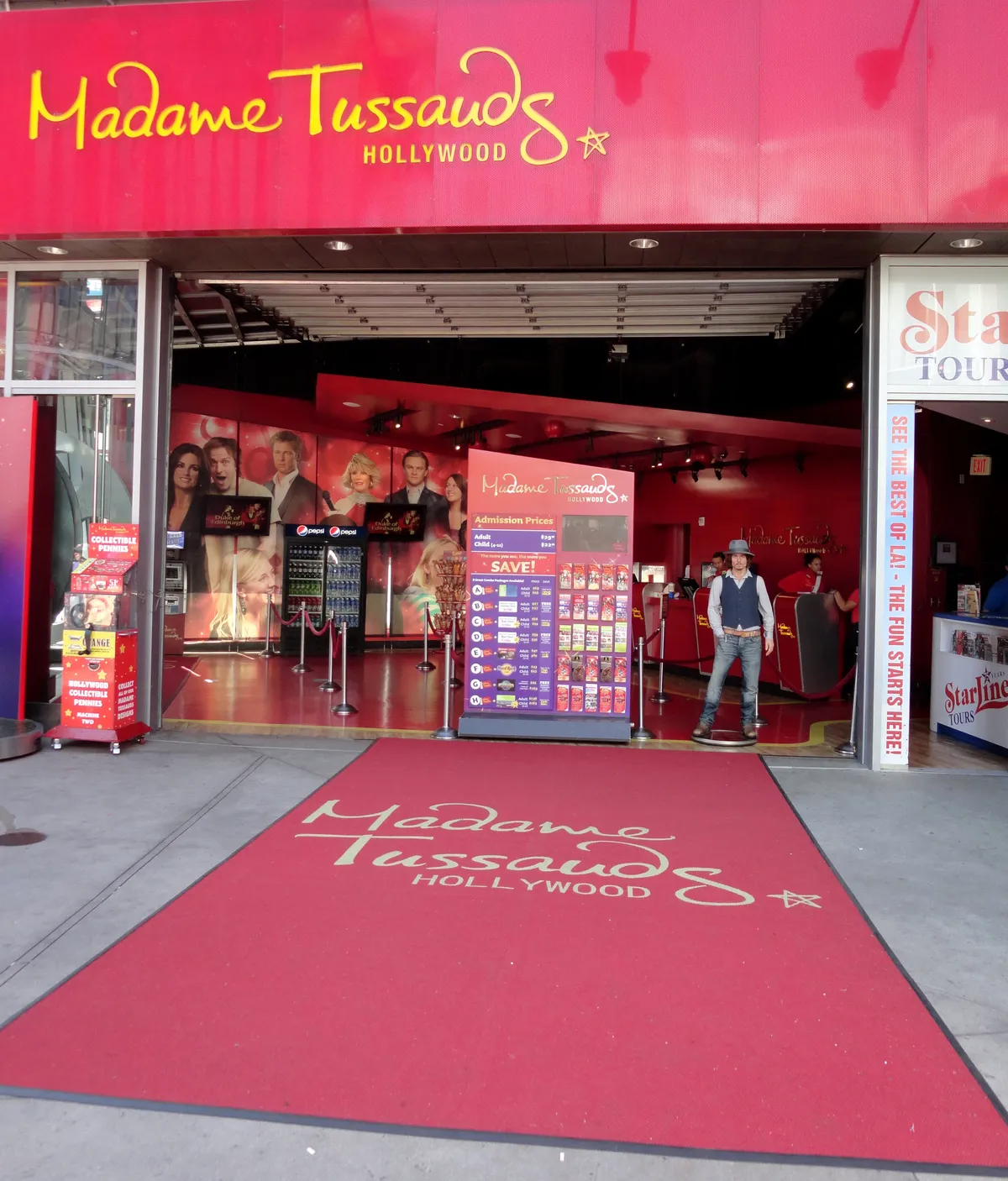
The figures are arranged to be walked among rather than viewed across a barrier, set up in scenes from films that were mostly made within a few miles of the building. Entry is ticketed and tickets can be bought before you arrive, which saves the queue at the box office window on the boulevard.
The Walk of Fame is the reason the pavement here moves slowly: people stop mid-stride to photograph the ground, and a wheeled bag turns every one of those stops into something you have to steer around.
The Dolby Theatre has staged the Academy Awards since 2002
The Dolby Theatre is built into the Ovation Hollywood complex on the corner of Hollywood Boulevard and Highland Avenue, and it opened in 2001 under a different sponsor’s name before taking its current one in 2012. It has held the Academy Awards every year since 2002, which is the reason the arched entrance off the boulevard turns up in the background of so much television.
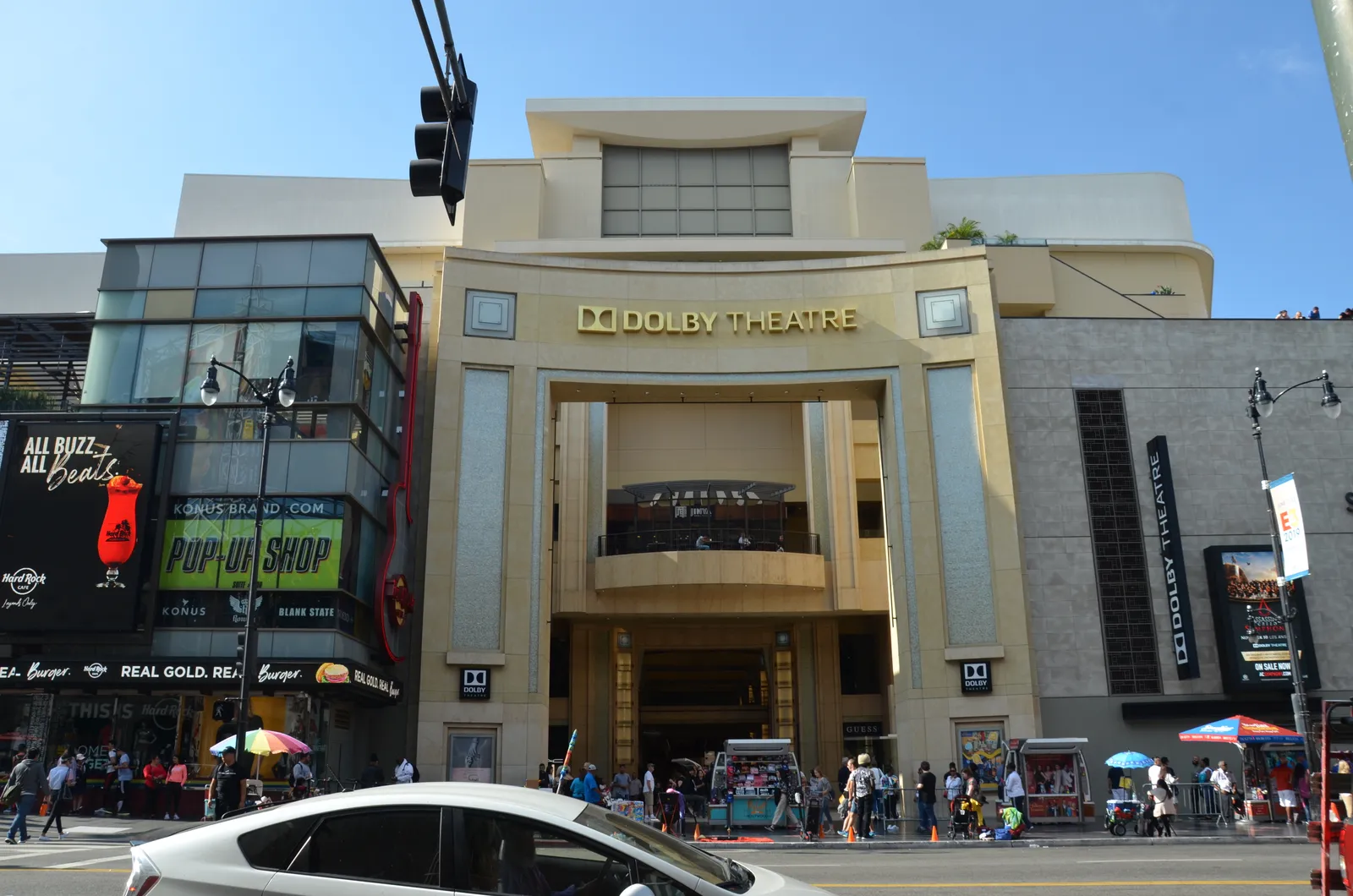
Guided tours go inside for about half an hour, $25 for adults and $19 for seniors and under-18s, and take in the auditorium, the lounge the nominees use and a real statuette you are allowed to hold. The catch is scheduling: tour days depend on what else the theatre has booked, and the calendar is usually only published about a month ahead, so it is worth checking the day before rather than counting on it. The courtyard levels above the entrance are open regardless, and they were laid out to frame the Hollywood Sign on the ridge to the north.
The El Capitan Theatre plays a 1929 Wurlitzer before weekend screenings
The El Capitan Theatre is across the boulevard at number 6838, under a patterned grey office block and a marquee outlined in bulbs. It opened in May 1926 as a live theatre, went through decades as a cinema under another name, and was taken on by Disney in 1989 and reopened restored in 1991. It still runs as a working single-screen cinema rather than a museum piece.
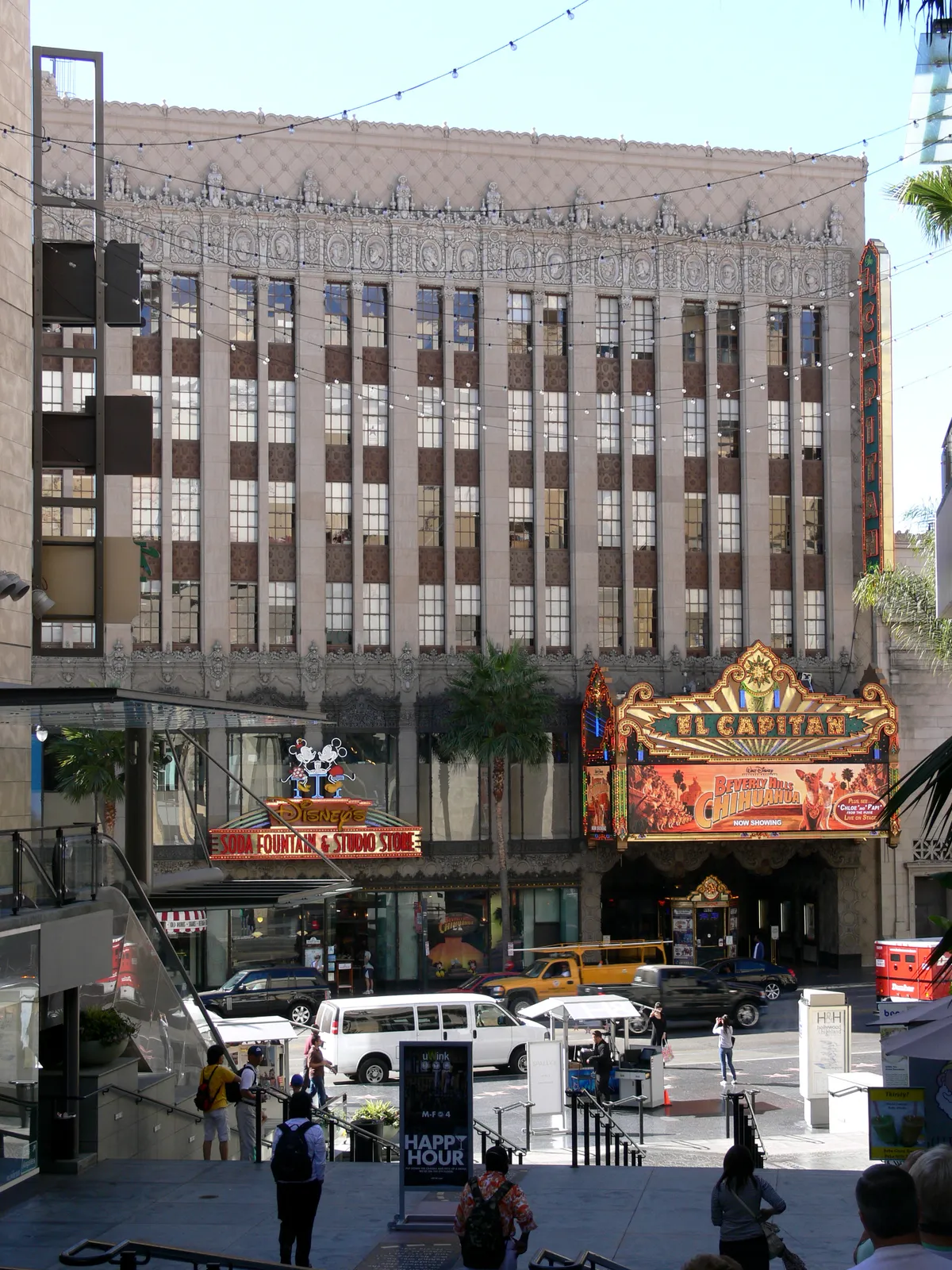
The organ is the reason to time a visit around a screening. It is a four-manual, 37-rank Wurlitzer built for the San Francisco Fox in 1929, one of five made to that specification, and it is played live at weekends before the film starts, rising into the auditorium on a lift. Buying a ticket to whatever is showing is the only way to hear it.
No airport bus from Hollywood since the FlyAway route closed
A dedicated FlyAway coach used to run from a stop on Vine Street to the terminals; that route was withdrawn, so everything from here now goes through downtown. The all-rail version is a genuine three-change trip: the B Line subway south from Hollywood/Highland to 7th St/Metro Center, the E Line west to Expo/Crenshaw, the K Line south to the LAX/Metro Transit Center, and then a free shuttle from Bus Bays 1 and 2 into the terminals at Los Angeles International Airport. It costs $1.75 with transfers free for two hours, and the automated people mover that will eventually replace that last shuttle leg is still in testing with no announced opening date.
The alternative trades money for simplicity: the same subway east to Union Station instead, then the FlyAway bus, which runs nonstop to every terminal for $9.75 and leaves every 20 to 30 minutes. Either way, allow two and a half hours from Hollywood Boulevard for the trip, check-in and security, and remember the trains stop around midnight. If your day starts earlier and you would rather spend it on architecture than pavement, the downtown walk taking in a 1917 market and a funicular is the other direction on the same subway line, and the Chinatown and Union Station route sits at the far end of it.
Frequently asked questions
How many handprints are in the Chinese Theatre forecourt?
Close to 200 sets of prints and signatures, laid in slabs of concrete going back to 1927. Mary Pickford and Douglas Fairbanks put theirs down in April that year, and Norma Talmadge added hers at the theatre's opening on 18 May. The forecourt is part of the public footpath on Hollywood Boulevard, so it is open air, free to walk into and busiest in the middle of the afternoon.
Can you get to the Hollywood Bowl from Hollywood Boulevard?
Yes, and on concert days the easy way is the free shuttle that leaves from the Ovation Hollywood complex at Hollywood and Highland, which costs nothing if you show a valid transit card or a round-trip pass. Walking is possible but it is about fifteen minutes uphill, which is a different proposition from the flat pavement everything else here sits on.
Can you see the Hollywood Sign from Hollywood Boulevard?
You can, though it is small from here. The upper courtyard levels of the Ovation Hollywood complex at Hollywood and Highland were built with the sightline in mind, and the observation decks on levels three and four are open to anyone. Looking north up Highland Avenue from street level works too. For anything closer than a distant white row of letters on the ridge you need to go up into the hills, which a guided walk up to the sign viewpoints handles without a car.
What is there for children on Hollywood Boulevard?
The El Capitan Theatre is run by Disney and its screenings usually come with a live stage segment beforehand, which is the most reliably kid-shaped thing on the street. The wax figures at Madame Tussauds are walk-around rather than roped off, and the handprint slabs in the Chinese Theatre forecourt cost nothing and let children put their hands in the same concrete as the names they half recognise. The pavement itself is wide, flat and step-free the whole way along.