Little Tokyo, Los Angeles: Four Walkable Blocks
Part of the full Los Angeles Layover: Downtown Walk From LAX
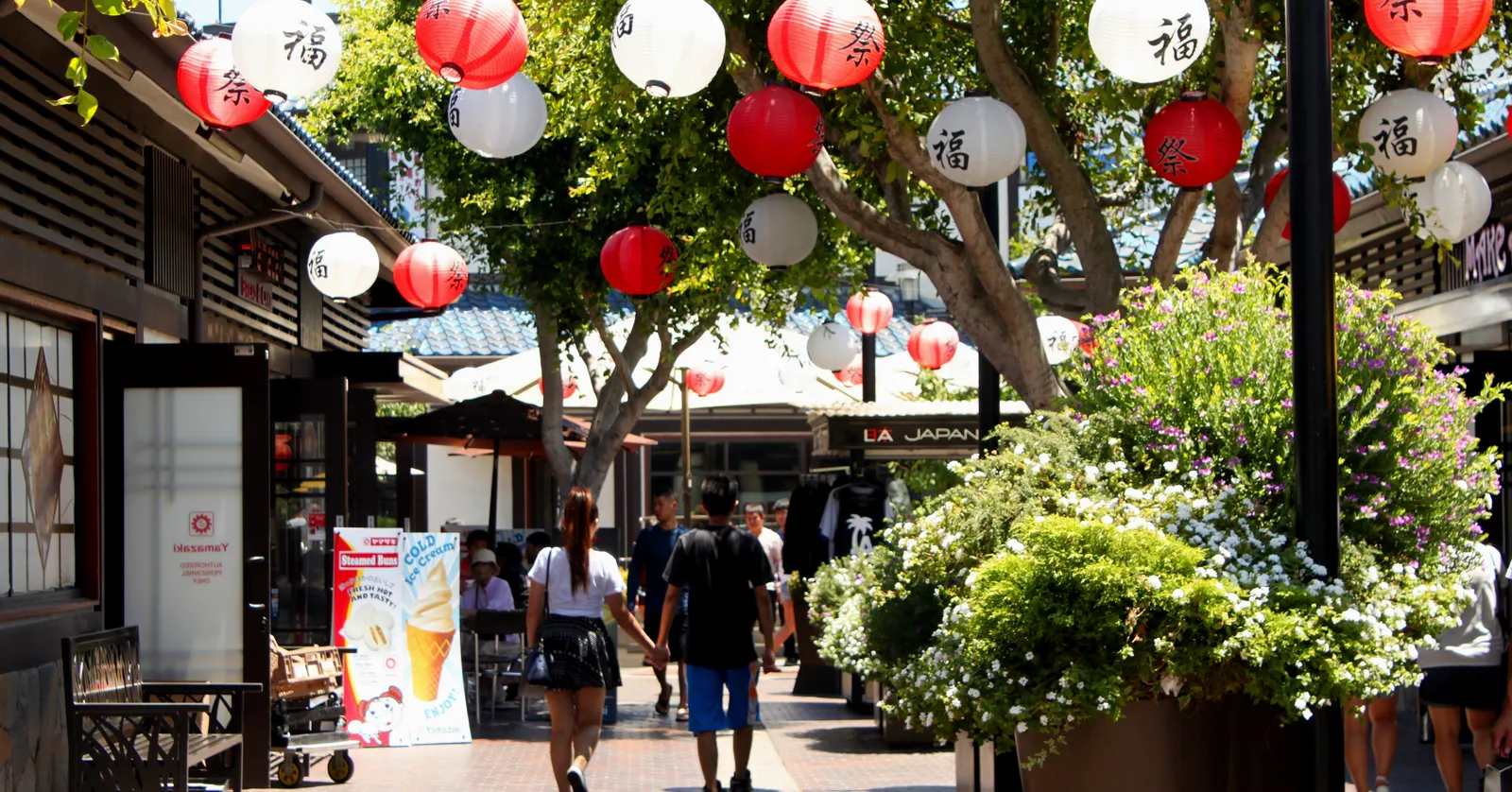
Little Tokyo sits four blocks east of the Los Angeles civic centre and holds a lantern-hung shopping plaza, a mochi shop trading since 1903 and a warehouse full of contemporary art with free general admission, all within about ten minutes’ walk of each other.
Japanese Village Plaza’s lantern-hung lanes opened in 1978
Japanese Village Plaza runs between First Street and Second Street as two connected pedestrian lanes of small shopfronts, with paper lanterns strung overhead between the trees. David Hyun designed it and it opened in 1978, put up deliberately as a revitalisation project after decades in which the neighbourhood had been squeezed by freeway building and the emptying of these blocks during the war. What fills it now is stationery shops, kimono and gift stores, ramen counters, a bookshop and several places selling shaved ice.
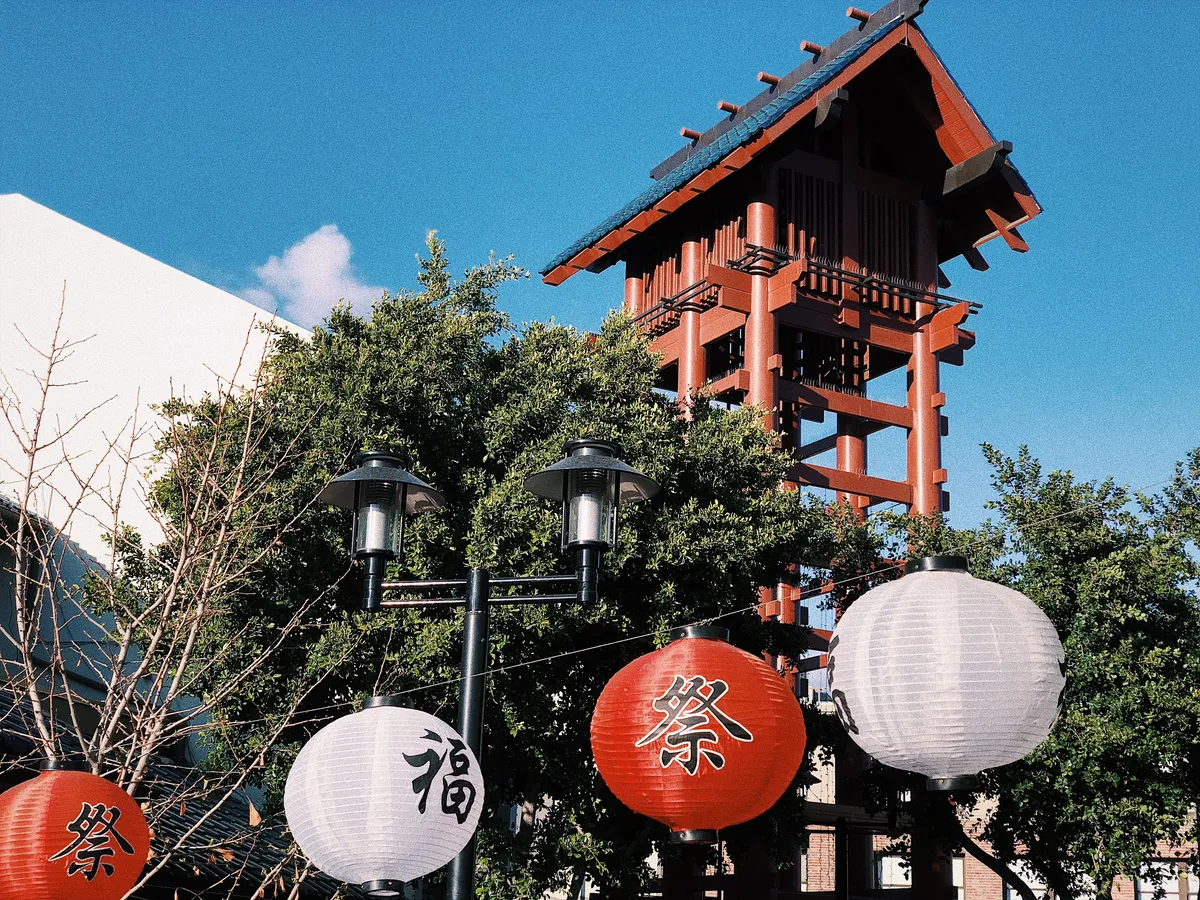
The marker at the First Street end is the yagura, a 60-foot red timber tower with a blue tiled roof, built with the plaza as a replica of the fire lookouts that stood in rural Japanese towns. It has no function beyond being the thing people photograph and arrange to meet under.
Along First Street outside the plaza is Fugetsu-Do at number 315, a confectioner making mochi since 1903 and the oldest business in Little Tokyo, now on its third generation of the same family. It reopened at that address in May 1946, after the incarceration of Japanese Americans had emptied the neighbourhood for four years, which is a piece of the block’s history you can walk into and buy something from.
The Geffen Contemporary fills a police garage on Central Avenue
The Geffen Contemporary at MOCA is at 152 North Central Avenue, in a warehouse the police department used to store cars in. Frank Gehry converted it in 1983 as a stopgap while the museum’s Grand Avenue building was under construction, under the name the Temporary Contemporary, and it turned out to be liked enough that it stayed: 55,000 square feet of raw industrial volume, trussed ceilings and daylight, which suits large-scale installation work better than a purpose-built gallery does.
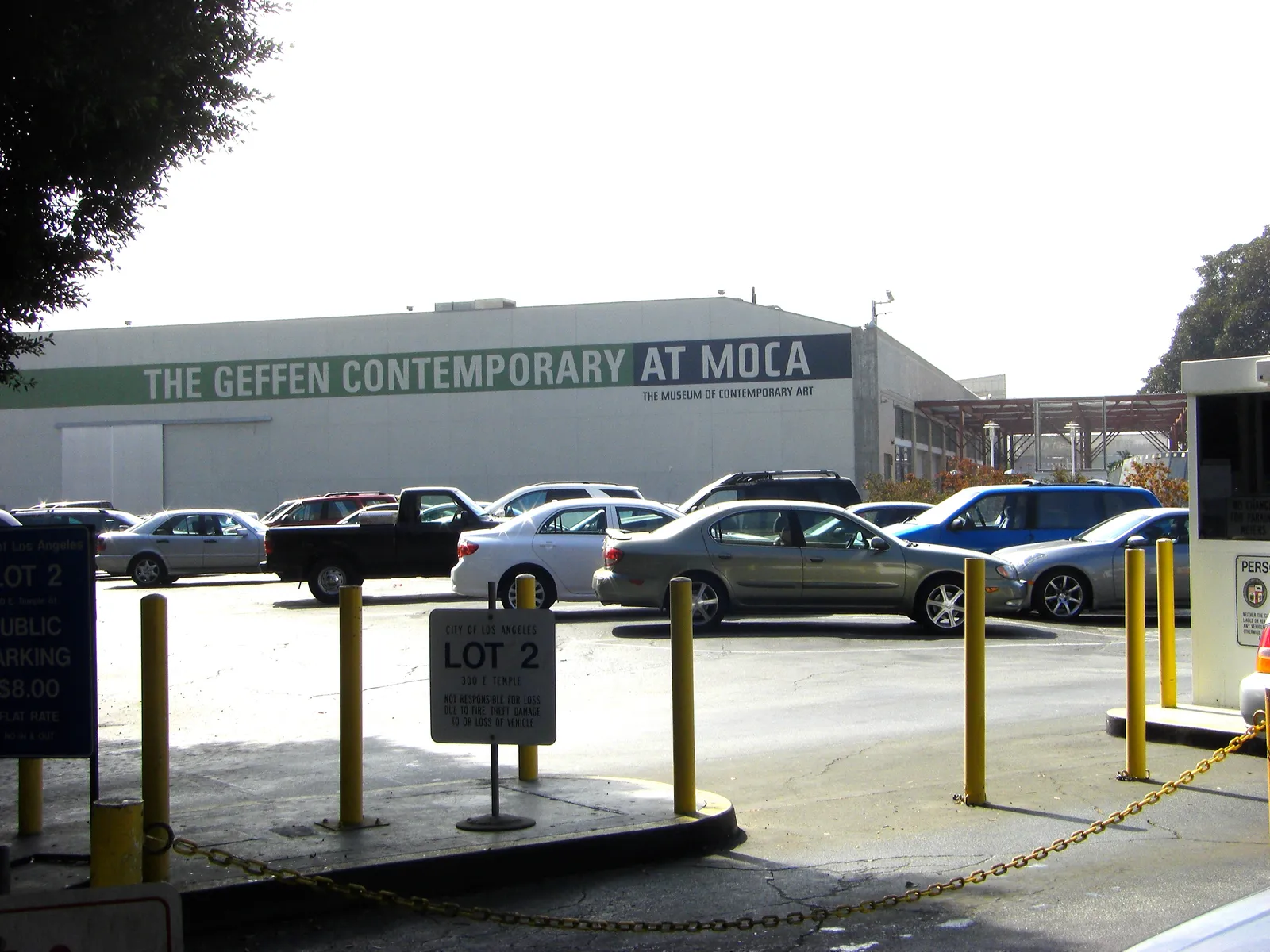
General admission costs nothing, which makes it one of the few large art spaces in the city you can walk into on impulse; individually ticketed exhibitions run $18, $10 for seniors and students, free under 12. It opens Tuesday to Sunday from 11am to 5pm and stays open until 8pm on the first Friday of the month.
The lanes inside Japanese Village Plaza are narrow and the shops off them are small enough that a wheeled suitcase blocks an aisle rather than follows you down it.
The Japanese American National Museum’s pavilion stands beside a 1925 temple
The Japanese American National Museum occupies two buildings at the corner of First Street and Central Avenue, and the older one is the point of the pair. Japanese immigrants built it in 1925 as the Nishi Hongwanji Buddhist Temple, the first building in Los Angeles put up specifically as a Buddhist place of worship, to Edgar Cline’s design; the museum leased it from the city in 1985, spent seven years restoring it and opened in it in 1992.
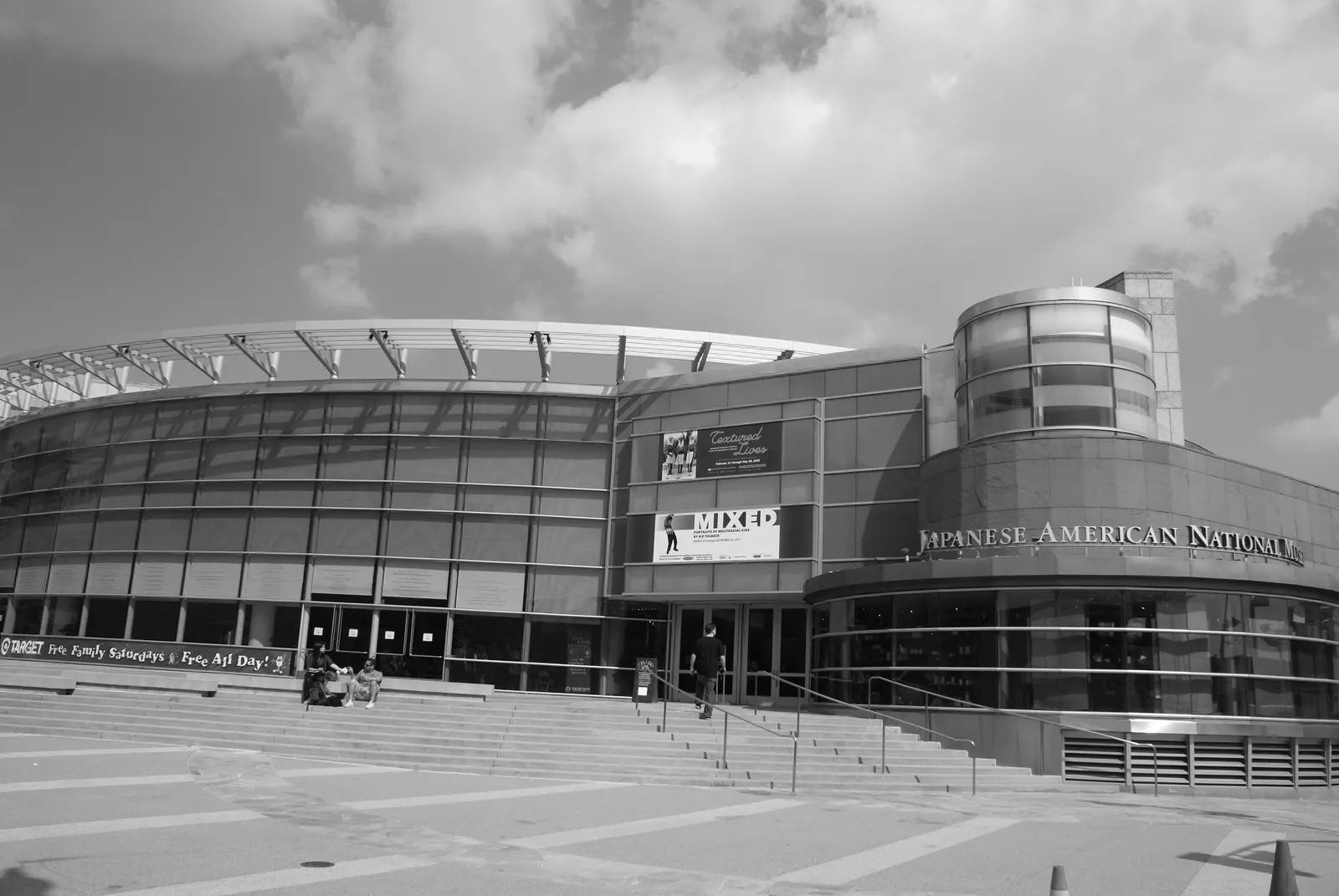
The glass-fronted Pavilion next door came later, 85,000 square feet by Gyo Obata, opened in January 1999, and it holds the permanent collection on the internment of 120,000 Japanese Americans during the Second World War. Those galleries are closed for a renovation due to finish in late 2026; until they do, the campus runs events and programmes rather than exhibitions, and the two buildings are still worth two minutes from the pavement. A quieter alternative on the same block is the James Irvine Garden below the cultural centre on San Pedro Street, a sunken half-acre with a 170-foot artificial stream running through it, laid out between 1978 and 1983 and free to walk into.
The nearest nonstop airport bus starts at Union Station
Union Station is a ten-minute walk north from First Street, and the FlyAway bus leaves from Bay 1 at the Patsaouras Transit Plaza on its eastern side, running nonstop to every terminal at Los Angeles International Airport for $9.75 with departures every 20 to 30 minutes. From Little Tokyo that walk is the fastest way to a single-vehicle trip, and the Chinatown and station route covers what else is worth seeing at that end if you end up with time in hand.
The rail alternative starts underground at the Little Tokyo/Arts District station, which reopened in 2023 when the Regional Connector tunnel joined the A and E Lines through downtown: the E Line west to Expo/Crenshaw, the K Line south to the LAX/Metro Transit Center, then a free shuttle from Bus Bays 1 and 2 into the terminals, $1.75 with transfers free for two hours. Allow two and a half hours from here either way. For a longer gap than that, the downtown walk up Bunker Hill starts two stops west and covers a 1917 food market, a funicular and a free art museum.
Frequently asked questions
Is the Japanese American National Museum open?
Its main Pavilion galleries are shut for a renovation and are due back in late 2026, so anyone visiting before then finds the campus running programmes and events rather than exhibitions. When the galleries are open, admission is $9 for adults and $5 for seniors, students and under-18s, free on Thursday evenings from 5pm to 8pm and free all day on the third Thursday of the month.
How long does it take to walk across Little Tokyo?
About ten minutes end to end. The neighbourhood covers roughly a tenth of a square mile, four or five blocks bounded by First Street, Central Avenue, Third Street and Los Angeles Street, and everything in it is flat and on the pavement. That size is the reason it works as a short stop: there is no travelling between the things worth seeing.
Where can you buy mochi in Little Tokyo?
Fugetsu-Do at 315 East First Street, which has been making it since 1903 and is the oldest business in the neighbourhood. It is on its third generation of the same family, and it reopened on East First Street in May 1946 after the wartime incarceration emptied these blocks. It is also reported to be the largest producer of traditional New Year's mochi in the country, so late December is its busiest stretch by a distance.
Which parts of Little Tokyo are open on a Monday?
The shops and restaurants, but not the museums. Both the Geffen Contemporary and the Japanese American National Museum close on Mondays, which leaves Japanese Village Plaza, the First Street shopfronts and the food counters, and that is still a workable couple of hours. If a museum is the point of the trip, any other day of the week is better.