Old Pasadena, Los Angeles, on Foot
Part of the full Los Angeles Layover: Downtown Walk From LAX
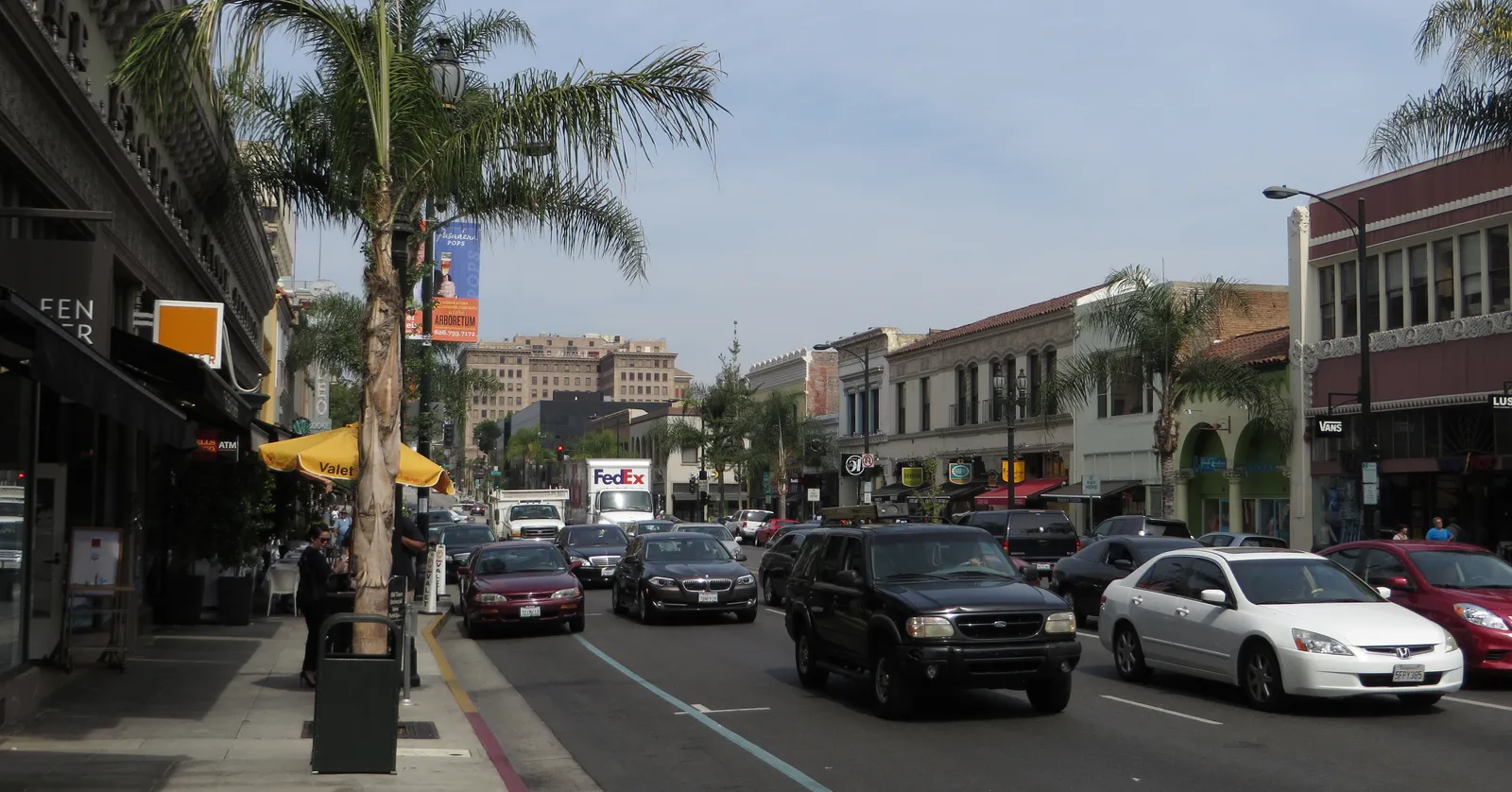
Old Pasadena, north-east of central Los Angeles, is 22 blocks of restored brick storefronts along Colorado Boulevard, with a museum of Degas and Rodin at its western end, a domed 1927 city hall two streets over and a 1913 concrete bridge beyond it.
Colorado Boulevard runs through 22 blocks of restored Old Pasadena
Colorado Boulevard is the main street of the Old Pasadena historic district, which went onto the National Register in September 1983 and covers roughly 22 blocks bounded by Pasadena Avenue, Walnut Street, Union Street and the boulevard itself. What survives here is late-19th and early-20th-century commercial building at two and three storeys: brick and stucco fronts, tiled entrance recesses, transom windows, all of it saved and repaired rather than replaced, which is why it looks nothing like the rest of the basin.
The unusual part is behind the shopfronts. The alleys that run parallel to the boulevard were rebuilt as proper pedestrian lanes with paving, lighting and courtyards, paid for out of the district’s own parking-meter revenue rather than a city budget, and more than half the businesses here are one-offs rather than chains, most of them off the main street. Walking the alleys rather than the boulevard is the version of this that a local would do.
Rodin bronzes stand outside the Norton Simon Museum
The Norton Simon Museum is at 411 West Colorado Boulevard, in a low building faced in dark brown tile at the western end of the historic district, and its holdings run from Renaissance and Baroque painting through Degas, Van Gogh, Cézanne and Picasso to a substantial collection of South and South-East Asian sculpture. Rodin casts stand outside on the entrance terrace and along the boulevard frontage, so the first of it is free and visible from the pavement.
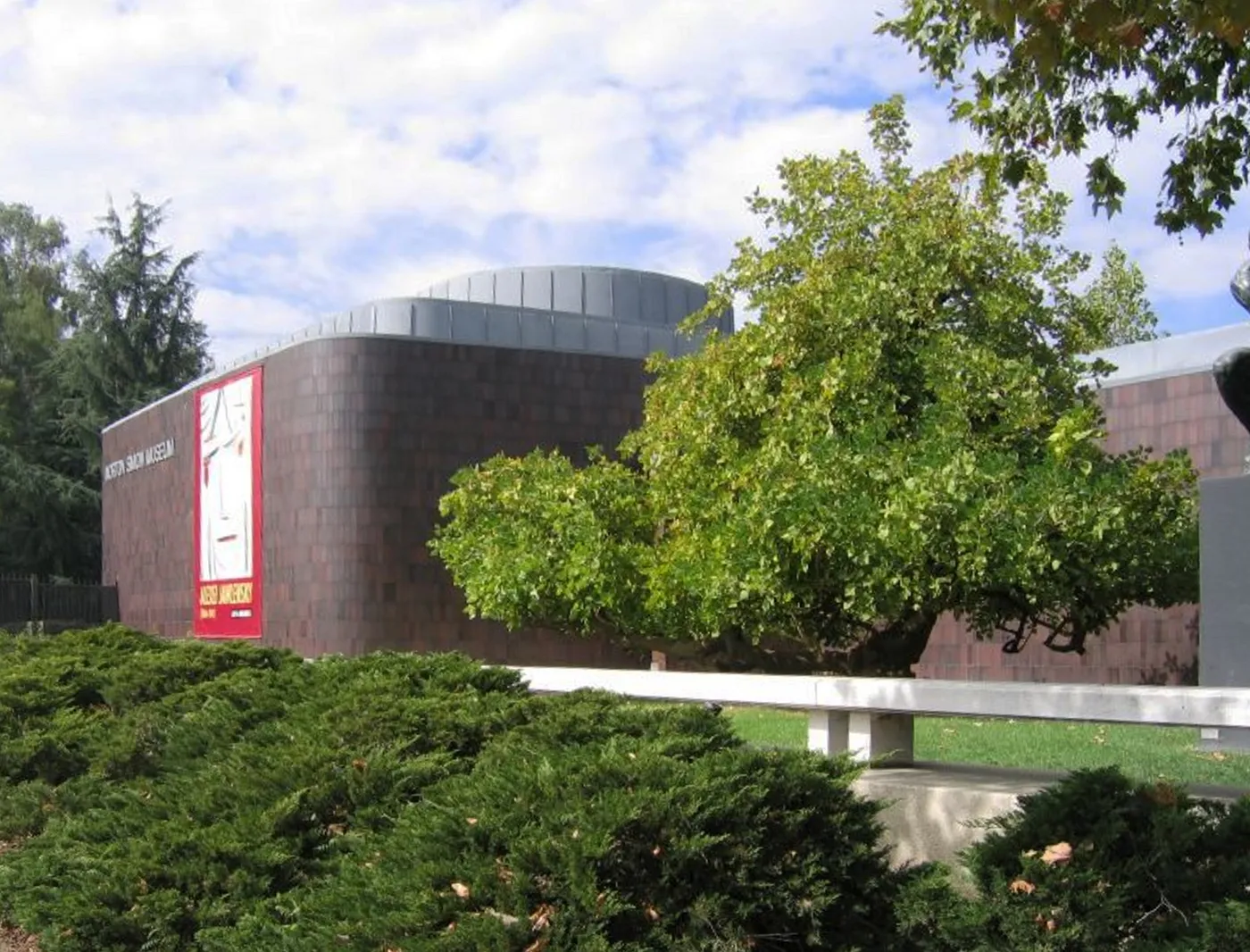
Admission inside is $20, $15 over 62, free under 18 and free for students, and it is free for everybody on the first Friday of the month from 4pm to 7pm. Check the day before you plan around it: the museum shuts on Tuesdays and Wednesdays and does not open before noon on any day. Behind the galleries is a sculpture garden around a lily pond, laid out with the Impressionist paintings in mind and worth the walk out even if the collection is not.
Pasadena City Hall’s 206-foot dome and its courtyard fountain
Pasadena City Hall fills the block at 100 North Garfield Avenue, and John Bakewell Jr. and Arthur Brown Jr. finished it in 1927 with French Beaux-Arts detail, Palladian proportions, a Spanish Colonial tiled roof and a heavily ornamented dome six storeys up. It is a civic office building, not an attraction, which is exactly why walking in costs nothing.
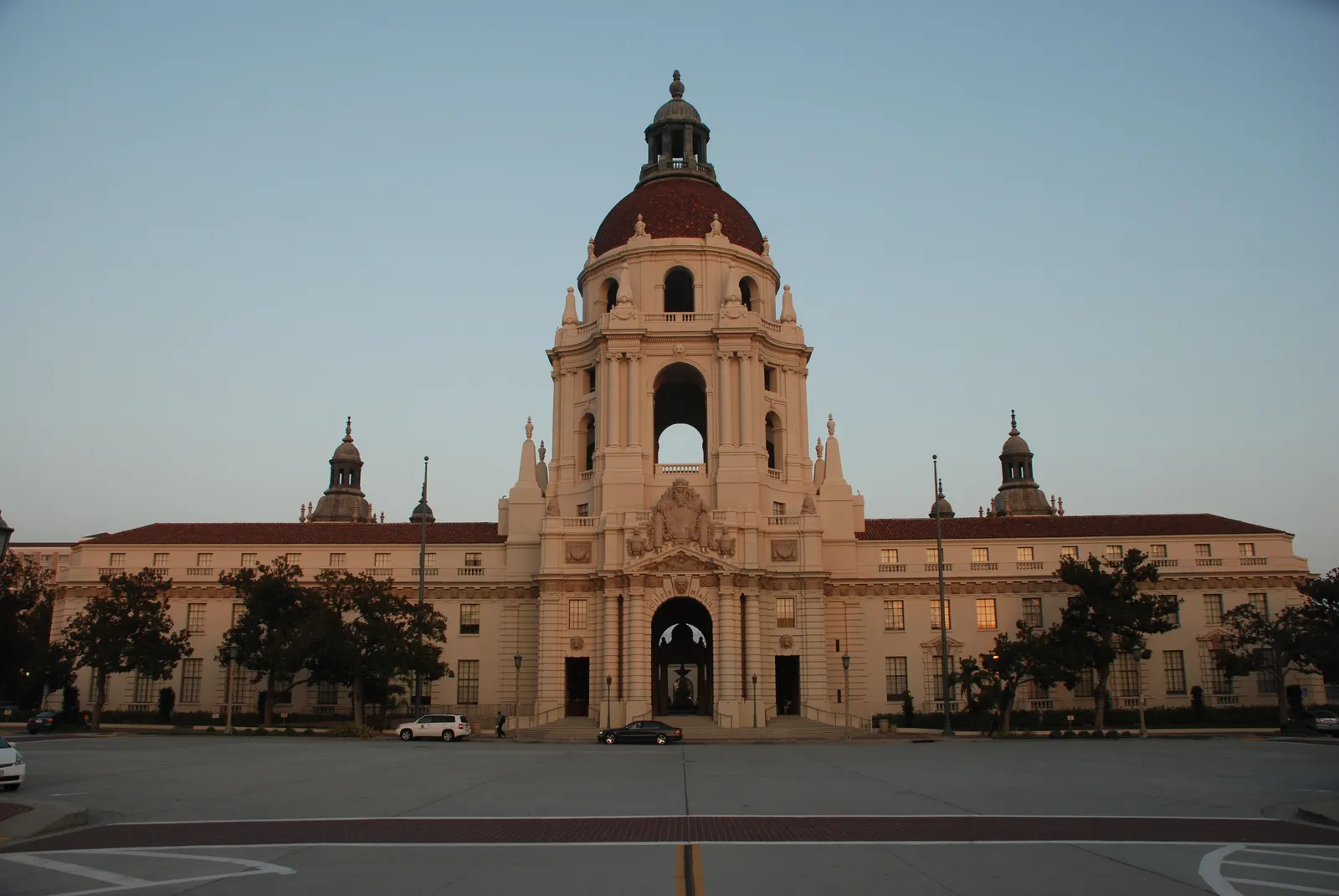
The centre of it is an open courtyard with a cast-stone Baroque fountain, arcaded on all four sides, and it is quiet in a way nothing on Colorado Boulevard is. Ten minutes covers it.
The one real cost of coming out here is the round trip itself: nearly an hour of riding in total before anything else, which comes straight off the time on the ground, and it is a long stretch of standing-room train to spend with a suitcase between your feet.
The Colorado Street Bridge has arched over the Arroyo Seco since 1913
The Colorado Street Bridge carries Colorado Boulevard west across the Arroyo Seco on eleven reinforced concrete arches, and it opened on 12 December 1913 to a design by Waddell and Harrington. It runs 1,467 feet and stands 148 feet above the streambed, and it was billed on opening as the longest and highest concrete bridge in the world.
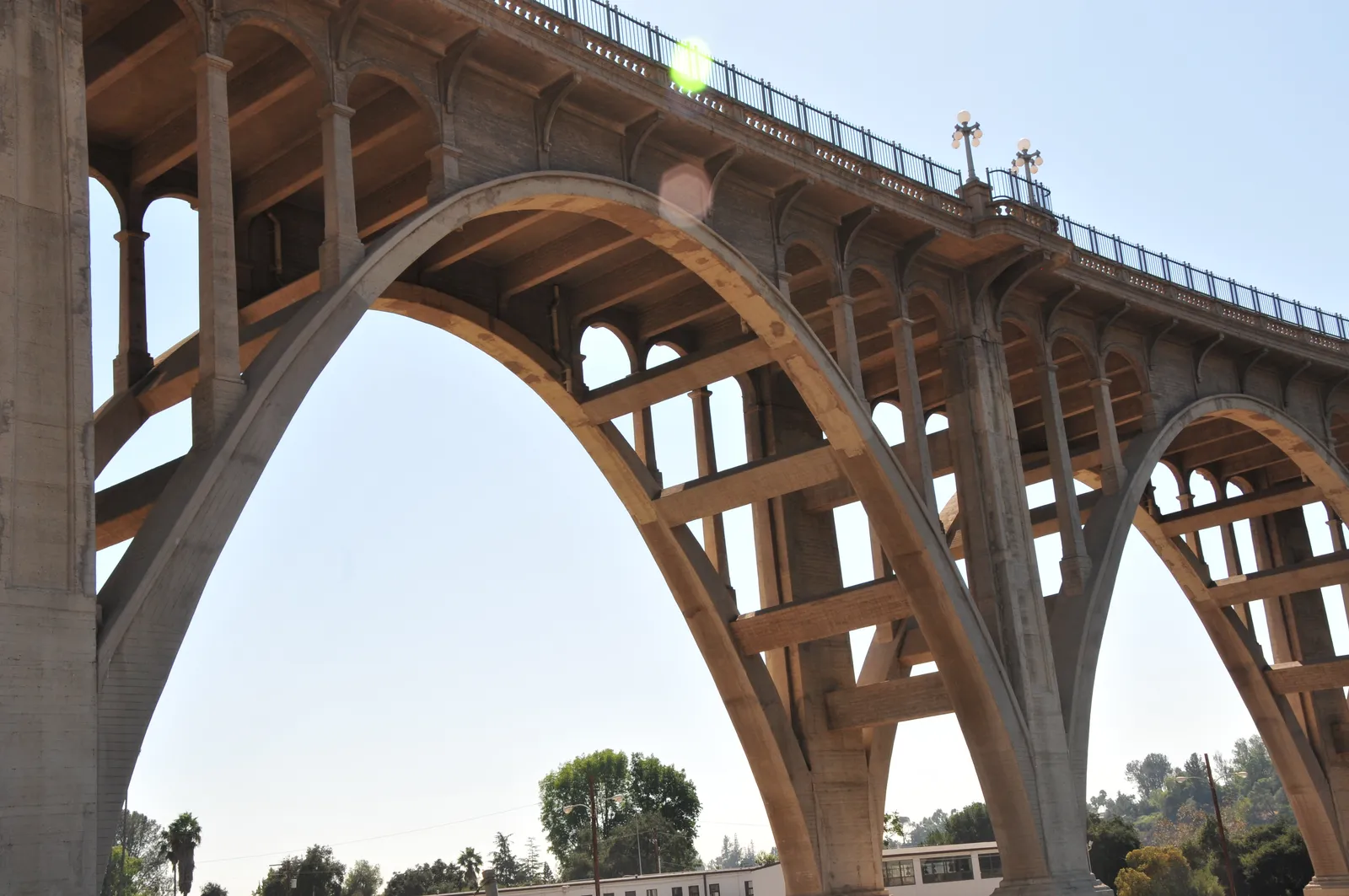
Both sides carry a pavement, and the Beaux-Arts balustrade is broken by ten alcoves fitted with benches and lamp standards, which is where people stop. It was closed for four years from 1989 as an earthquake risk and reopened after a retrofit in 1993. From underneath, in the parkland of the arroyo, the arches are the better view.
The Gamble House, Greene and Greene’s timber house of 1908
The Gamble House stands at 4 Westmoreland Place, on the eastern lip of the arroyo, and Charles and Henry Greene built it in 1908 for David and Mary Gamble of the Procter and Gamble family. The brothers designed everything in it, the furniture and the light fittings included: broad overhanging eaves on exposed rafters, teak and mahogany joinery pegged rather than hidden, art glass in the front door, sleeping porches along the upper floor.
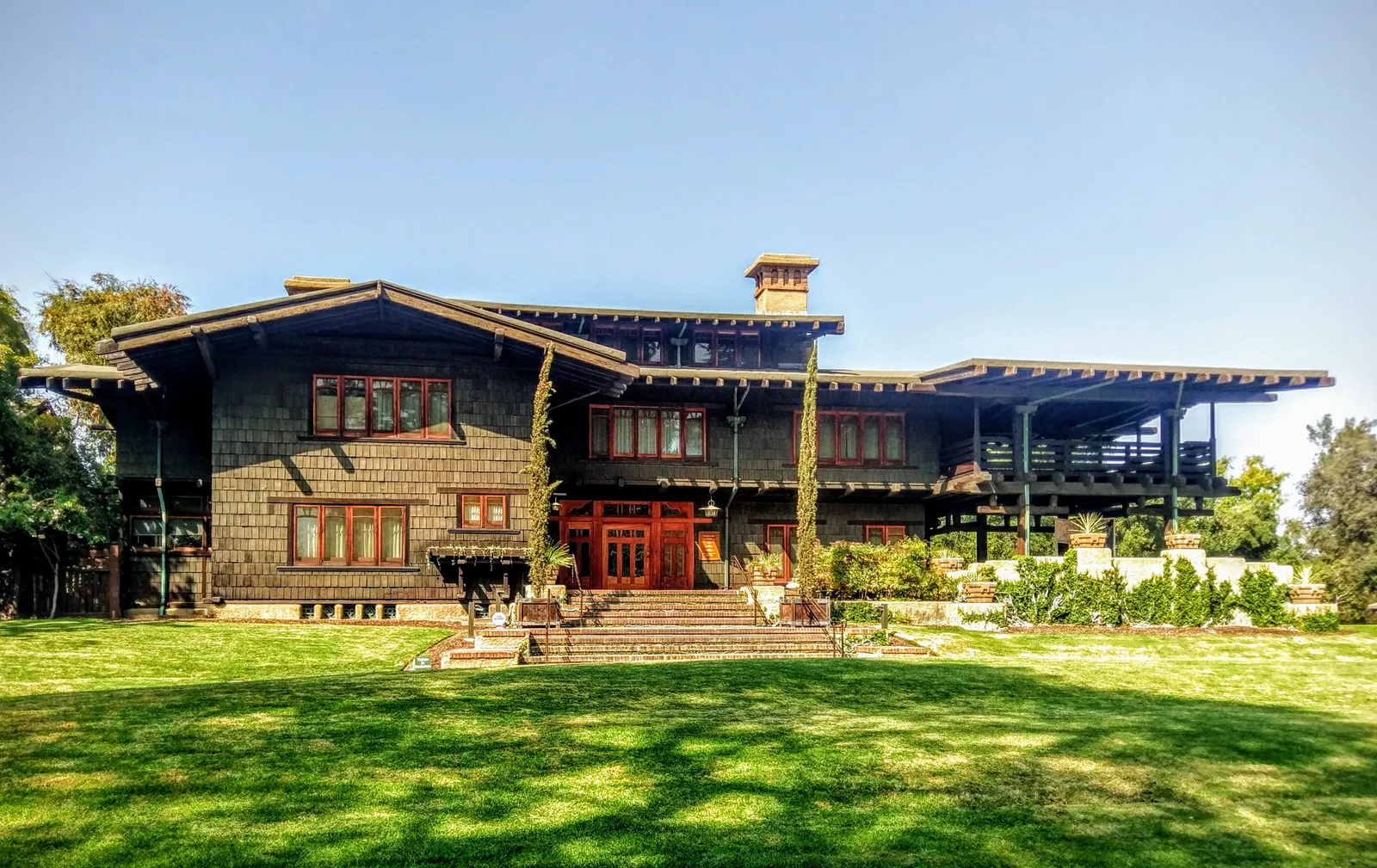
The grounds and the exterior can be looked at freely; going inside is a ticketed guided tour on a limited schedule, and the house is closed some days of the week, so it belongs on this route only if you have checked. Even from the lawn the front elevation is the point.
A 23-minute train to Union Station, then a nonstop airport bus
The A Line runs from Memorial Park station in Old Pasadena to Union Station in about 23 minutes, every fifteen minutes through the day, for $1.75 with transfers free for two hours. From there the FlyAway bus goes nonstop from Bay 1 at the Patsaouras Transit Plaza to every terminal at Los Angeles International Airport for $9.75, which makes this two vehicles rather than the three-train shuffle the all-rail route needs.
Budget three hours from Colorado Boulevard for the whole thing including check-in and security, and note the last useful train back leaves around midnight. If your day started on the other side of the city, the downtown walk from the Broadway market up Bunker Hill is on the same line and takes far less getting to, and the Chinatown and station route is the shorter version of this trip at the near end of it.
Frequently asked questions
Which days is the Norton Simon Museum closed?
Tuesdays and Wednesdays, all day. The rest of the week it opens at noon: until 5pm on Sundays, Mondays and Thursdays, and until 7pm on Fridays and Saturdays. Admission is $20 for adults and $15 for over-62s, free for anyone under 18 and for students with ID, and free for everyone on the first Friday of the month between 4pm and 7pm.
Can you go inside Pasadena City Hall?
Yes, and it costs nothing. It is a working municipal building rather than a museum, but the arcaded courtyard at its centre, with its Baroque fountain, is open to walk into during business hours, and the loggias around it are the part people photograph. There is no ticket desk and no tour to join, so ten minutes is enough unless you want to sit down.
How far is the Colorado Street Bridge from Old Pasadena?
About twenty minutes on foot west along Colorado Boulevard from the shops, which is the same street the whole way. The bridge itself is open to pedestrians on both sides, with alcoves set into the balustrade holding benches and lamp posts, and the view is straight down into the Arroyo Seco 148 feet below.
What is open in Old Pasadena in the evening?
More than the museums. The Colorado Boulevard shops mostly shut in the early evening, but the restaurants and bars along it and in the alleys behind it run late, and the Norton Simon stays open until 7pm on Fridays and Saturdays. The bridge and the City Hall courtyard are outdoors and lit, so a late finish here works better than at most stops on the far side of the city.