Kyoto Layover: Fushimi Inari Gates, KIX
Nijo Castle’s Ninomaru Palace, the 1,001 gilded statues in the temple hall at Sanjusangendo and the tunnels of vermilion gates at Fushimi Inari shrine all sit within twenty minutes of Kyoto Station, and the shrine costs nothing and never closes.
Nijo Castle’s floors squeak on purpose
Nijo Castle sits behind a moat and a stone wall in central Kyoto, about fifteen minutes from Kyoto Station on the subway with one change, and it was built in 1603 as the Tokugawa shoguns’ residence in a city that already had an emperor living in it. The point was made architecturally rather than diplomatically: the Karamon gate into the inner compound is a curved cypress-bark roof over gold leaf, carved cranes and painted panels, and it is the first thing you walk under.
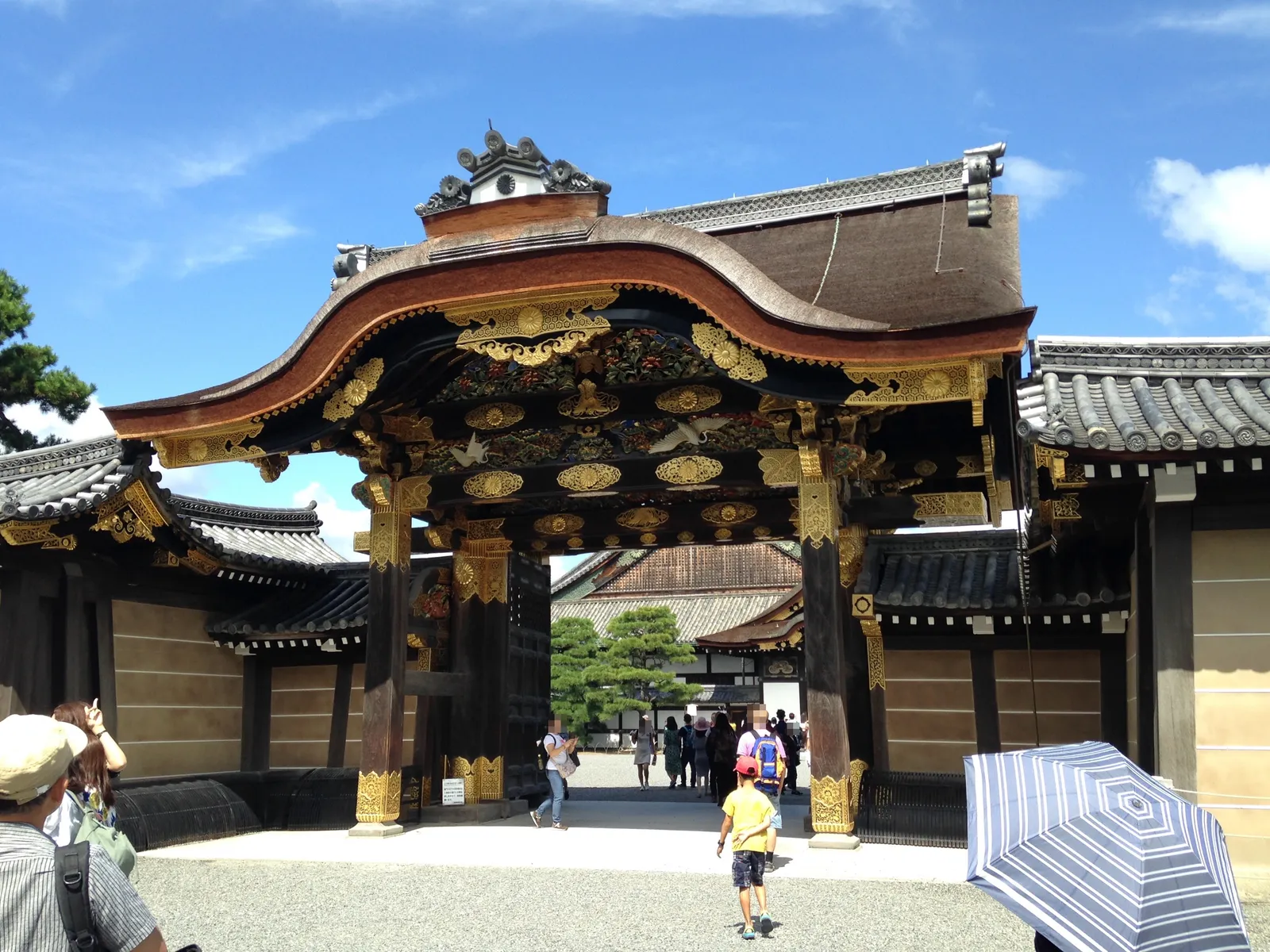
Behind it, Ninomaru Palace is six connected buildings of hinoki cypress covering 3,300 square metres, all six of them National Treasures, with screen paintings by the Kano school across the audience rooms. The corridors linking them are the famous part. The floorboards are laid so that the nails pass through metal clamps underneath and rub against them, which makes every board chirp as it takes weight; the effect is called uguisu-bari, nightingale floors, and it worked as a burglar alarm for the man sleeping at the end of the corridor. You cannot cross them quietly. Entry to the grounds is 800 yen, or 1,300 yen with the palace, and the combined ticket can be bought in advance through a tours and activities platform. The gates open at 8:45am and close at 5pm, but the last admission is 4pm and the palace shuts then too, so an afternoon arrival needs watching. It closes on Tuesdays in July, August, December and January, and from 26 December to 3 January.
A viewing deck 100 metres up Kyoto Tower
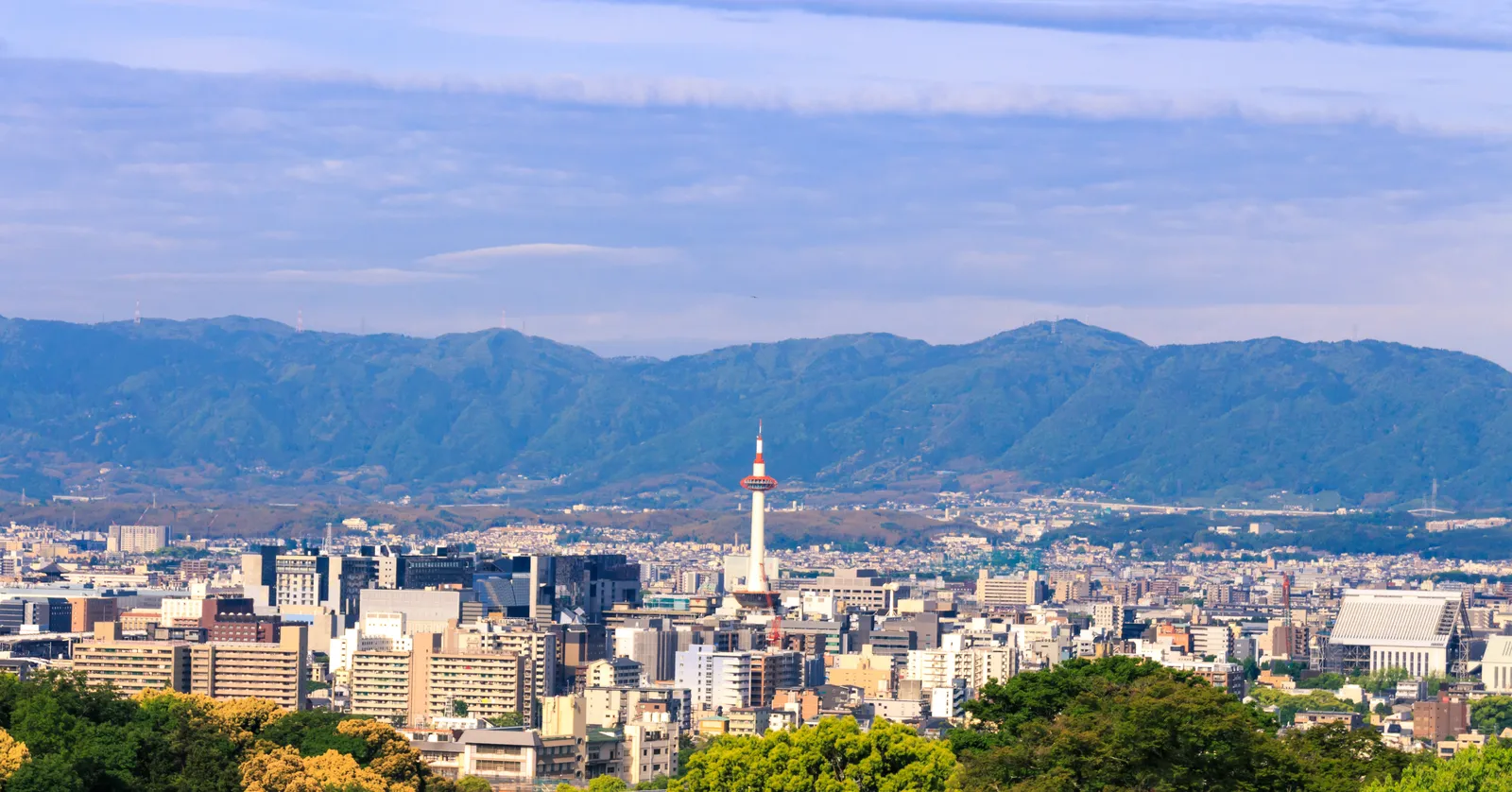
Kyoto Tower stands on the north side of Kyoto Station, across the road from the main entrance and reachable through an underground passage without going outside. It opened on 28 December 1964, is 131 metres to the tip of its mast, and is still the tallest structure in Kyoto more than sixty years later. A 1972 city ordinance caps new buildings across most of the urban core at 31 metres, to keep the skyline low and the ring of mountains visible from street level, and the tower went up before it.
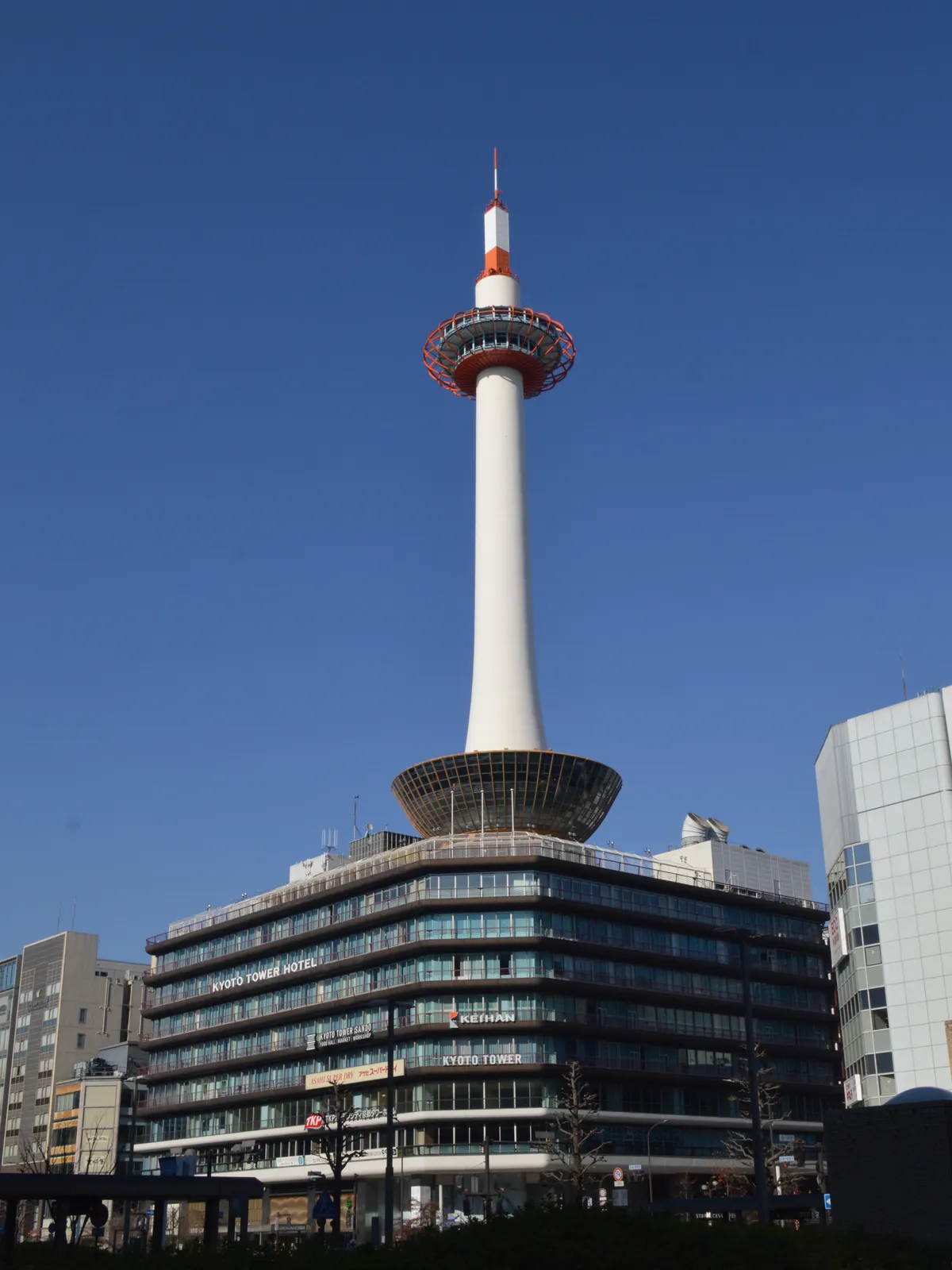
What that leaves is a viewing deck at 100 metres over a city with almost nothing else above five or six storeys, so the temple roofs, the river and the ring of hills all read clearly rather than being lost between towers. Free telescopes on the deck’s fifth floor stay usable after dark. Admission is 900 yen, the deck runs 10am to 9pm with last entry at 8:30pm, and tickets are sold in advance on a tours and activities platform, which is worth doing at busy times when the counter queues.
Sanjusangendo’s 1,001 standing statues
Sanjusangendo is on Shichijo-dori in eastern Kyoto, twenty minutes on foot from Kyoto Station or about ten by bus. The hall was finished in 1266 after the original burned down, it is 120 metres long, and it is the longest wooden building in Japan. The name means “thirty-three bays,” counting the intervals between the columns down that length.
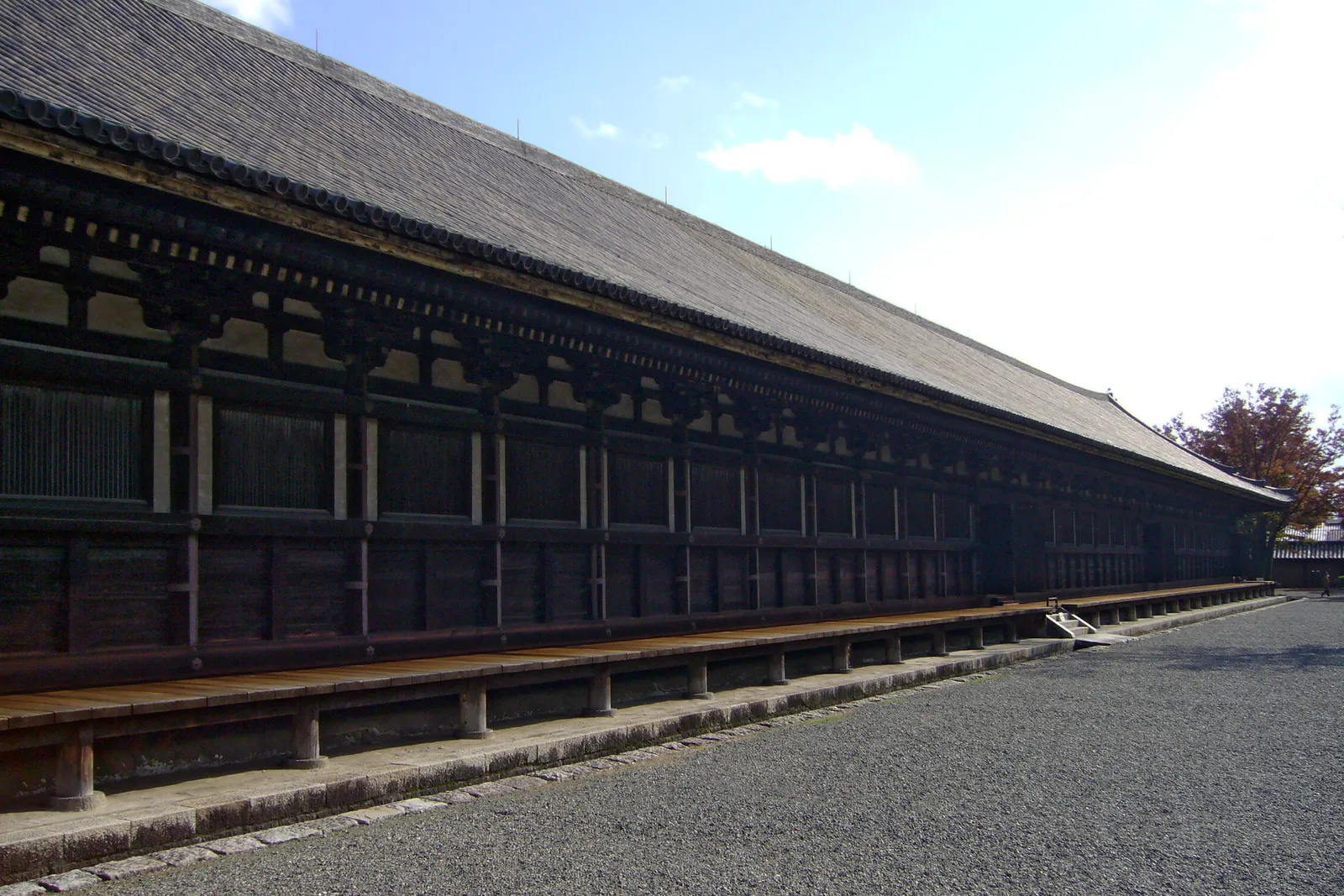
Inside, a thousand gilded, human-sized figures of Kannon, the bodhisattva of compassion, stand in ten ranks of fifty on either side of a large seated one carved by Tankei in the 13th century. Each of them is a thousand-armed Kannon, though the carvers gave each figure 42 arms and let the rest be understood. Twenty-eight guardian deities stand along the front, with the wind and thunder gods at the ends, and the whole collection is a National Treasure.
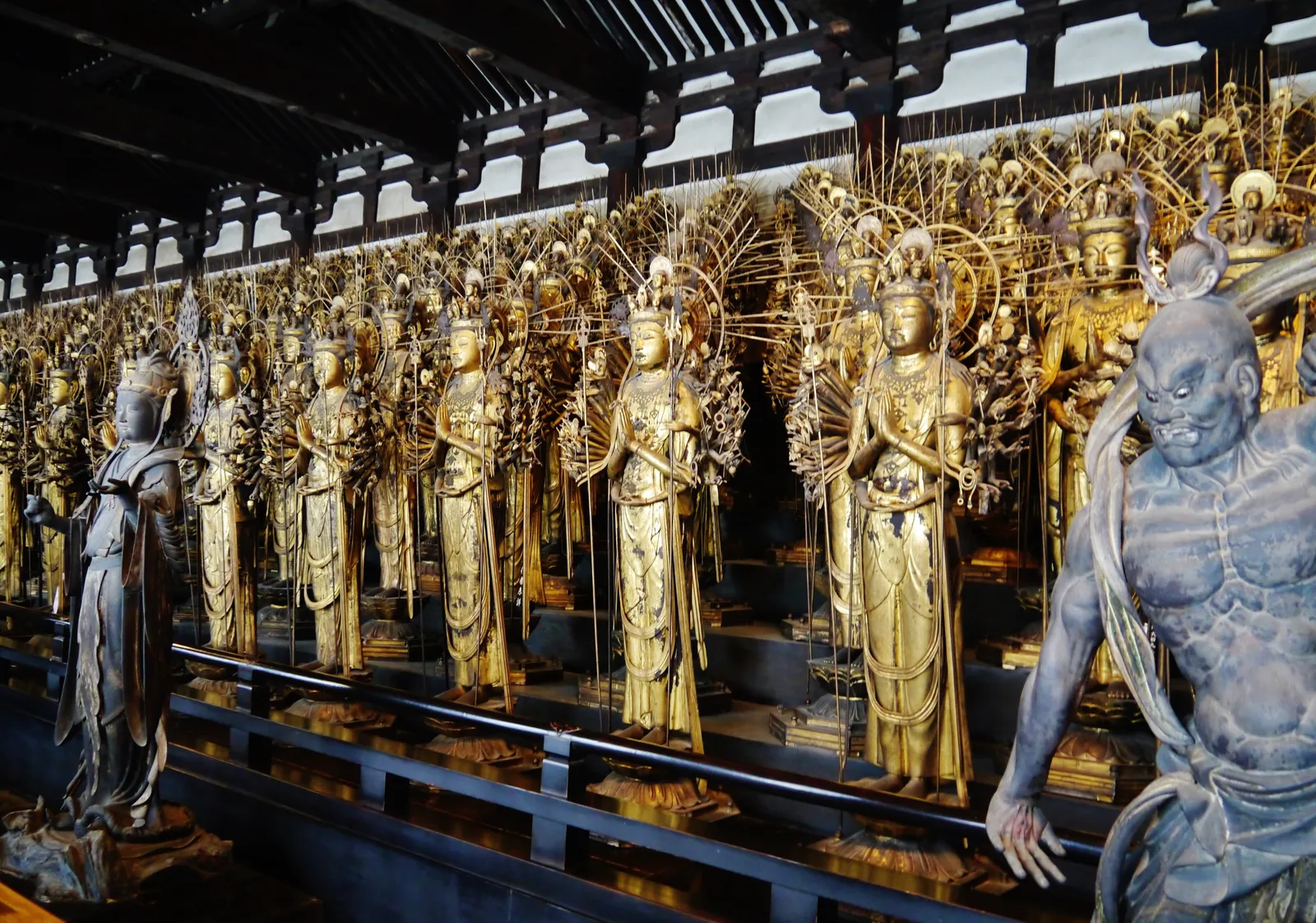
Photography is not allowed inside the hall. Admission is 600 yen; the doors open at 8:30am and close at 5pm from April to 15 November, and 9am to 4pm the rest of the year, with the last entry half an hour before. A city bus covers the distance from Kyoto Station in about ten minutes, but most Kyoto buses now carry a decal on the outside showing a crossed-out suitcase, and the transport bureau’s rule is that a driver can refuse luggage judged too large for the aisle.
Fushimi Inari’s gate tunnels never close
Fushimi Inari-taisha stands at the foot of Mount Inari in the south of Kyoto, five minutes from Kyoto Station on a local train, and it is the head shrine of Inari, the deity of rice and, by extension, of business. Around ten thousand vermilion torii gates line the paths up the hillside behind the main buildings, and the two dense parallel rows nearest the bottom are the Senbon Torii, the thousand gates.
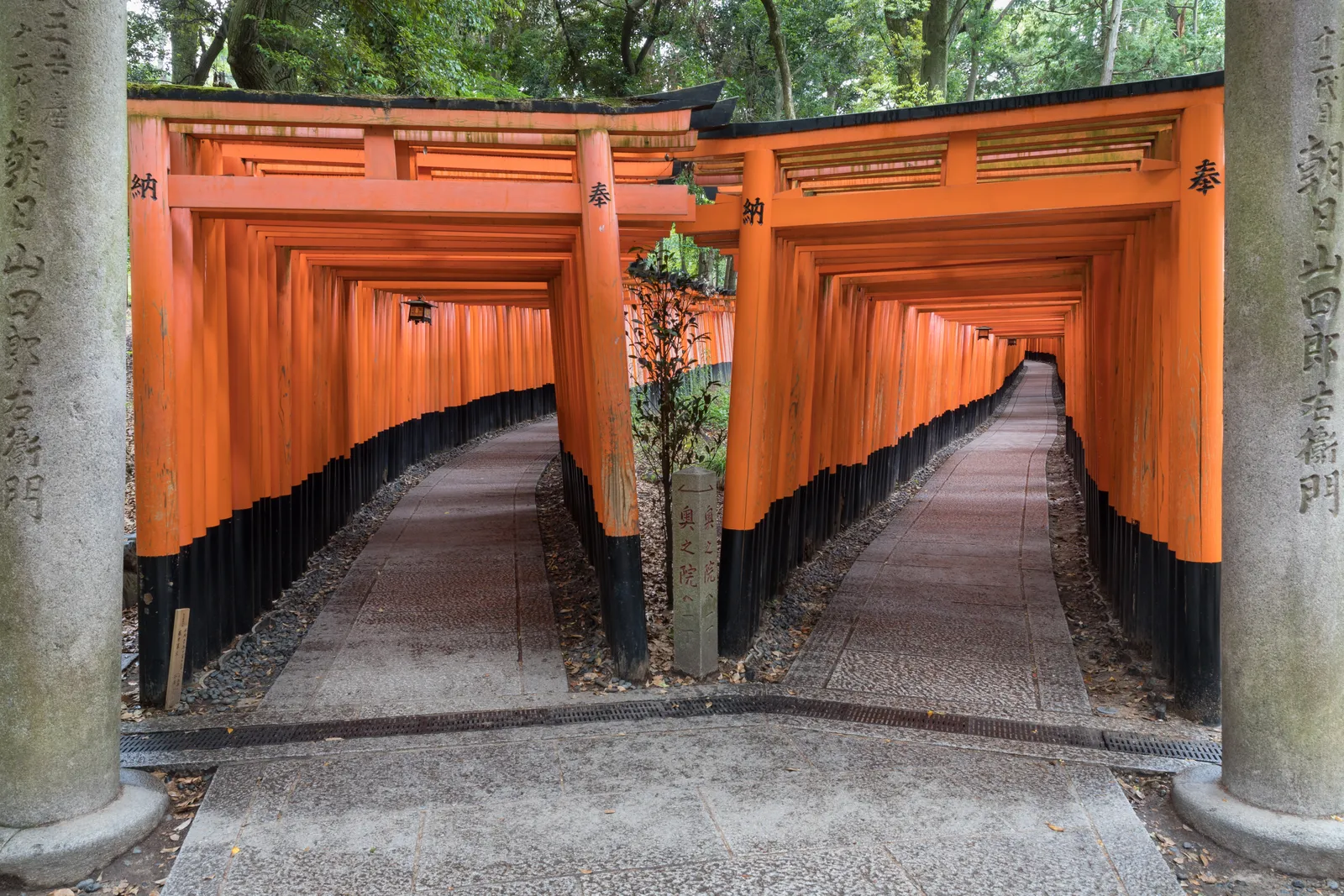
Every one of them was paid for by somebody, and the back of each upright carries the donor’s name, their company and the date in black lettering, so walking back down the hill is effectively reading a directory of Japanese businesses that wanted a good year. A small gate starts around 400,000 yen. There is no ticket and no closing time, which is what makes this the reliable stop on a flight day: it works at 6am and it works at 11pm. The office and the food stalls along the approach keep 9am to 5pm. Mount Inari is 233 metres and the full circuit to the summit takes two to three hours, but the Yotsutsuji intersection about halfway up is thirty to forty-five minutes’ climb and opens out over the southern half of the city.
To-ji’s pagoda is the tallest wooden tower in Japan
To-ji is fifteen minutes’ walk south-west of Kyoto Station, on a site granted in 796, two years after the capital moved here. Its five-storey pagoda is 54.8 metres, the tallest wooden tower in the country, and the version standing now went up in 1643 after four predecessors burned down, which is what tends to happen to tall wooden buildings over eight centuries.
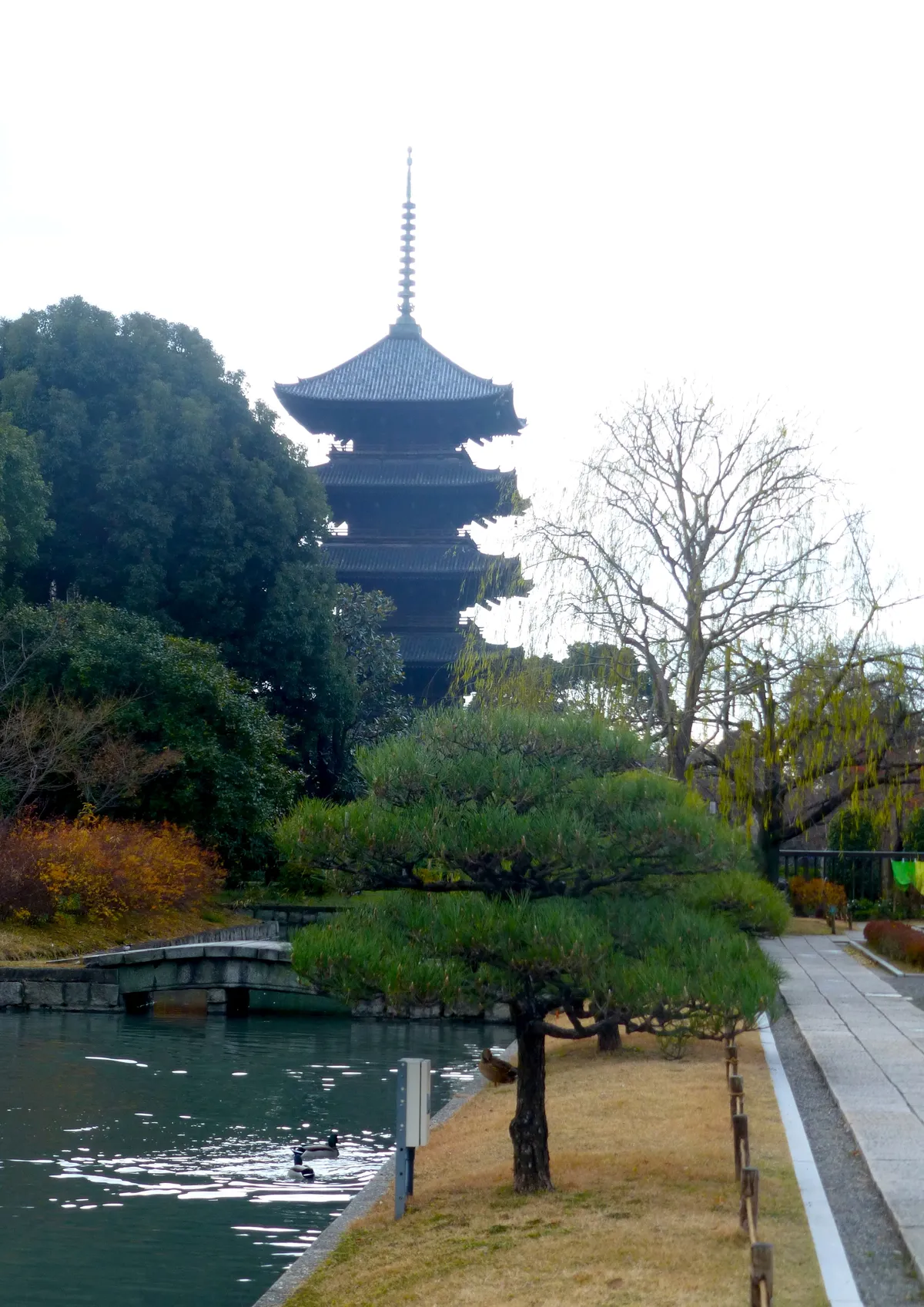
Walking the grounds and looking at the pagoda across its pond costs nothing; the Kondo and Kodo halls, with their arrangement of Buddhist figures laid out as a three-dimensional diagram, are 800 yen. The pagoda’s ground floor only opens for a week or so at New Year and during short spring and autumn viewings. The date to aim for, if you have any choice about it, is the 21st of the month, when a flea market called Kobo-san fills the grounds with antiques, secondhand kimono, tools and food stalls. It is named for Kukai, the monk who was given the temple in 823 and died on that date, and it has run monthly for centuries rather than being a recent tourist addition.
The last airport bus leaves Kyoto Station at 9:10pm
The Kansai-Airport Express Haruka is the fast way back: about 75 minutes from Kyoto Station to Kansai International Airport (KIX), roughly every half hour through the day, 3,060 yen in a non-reserved seat and 3,590 yen reserved. At the airport end, Terminal 1 is a three-minute walk from Kansai Airport Station along a second-floor walkway, and Terminal 2 needs a free shuttle bus, seven to nine minutes on top of the ride, so budget accordingly depending on which airline you are flying.
The bus is the slower, cheaper alternative and the one that runs latest. It goes from the Hachijo exit on the south side of Kyoto Station, costs 2,800 yen, takes an hour and twenty-five to an hour and thirty depending on the traffic on the expressway, and operates from 4:30am to that 9:10pm departure. Seats are reserved, so book rather than turn up hopeful in the evening.
If you are back at Kyoto Station with time in hand, the Skyway is worth the escalator ride up to it: a glass-walled walkway 147 metres along the roof of the concourse, 45 metres above the floor, running the length of Hara Hiroshi’s 1997 station hall, open 10am to 10pm and free. Collect the bag on the way down. A storage point near the station means the last hour before a flight is a walk and a train rather than a hunt for a locker that fits.
Frequently asked questions
What should I do during a layover in Kyoto?
Pick two stops, not five, because Kyoto's sights are spread out and the ride in from the airport is long. Fushimi Inari is the one that costs nothing, needs no ticket and never closes, and it is five minutes from Kyoto Station on a local train, so it works at any hour and at any length of stay. Pair it with one indoor stop that does keep hours: Sanjusangendo's 1,001 statues twenty minutes' walk east of the station, or Nijo Castle and its Ninomaru Palace about fifteen minutes away on the subway. To-ji's pagoda is the easiest addition if you have longer, since the grounds are free and a quarter of an hour on foot from the station.
How far up Fushimi Inari can I get in an hour?
Comfortably to the Yotsutsuji intersection and back, which is where most people turn around anyway. Yotsutsuji sits roughly halfway up Mount Inari, thirty to forty-five minutes of climbing from the shrine buildings at the bottom, and the trees open out there over the south of Kyoto. Above it the path splits into a loop around the summit, and doing the whole thing takes two to three hours. The gates are densest in the first stretch behind the main hall, so the walk gives you most of what you came for in the first fifteen minutes.
Is anything in Kyoto still open after dark?
Fushimi Inari is the main one: no admission, no closing time, and the paths are open at any hour, though the shrine office and the stalls along the approach work 9am to 5pm. Kyoto Tower's observation deck runs to 9pm with last entry at 8:30pm, and the Skyway walkway inside the station building is free until 10pm. The temples are the opposite: Nijo Castle stops admitting at 4pm, Sanjusangendo closes at 5pm from April to mid-November and 4pm the rest of the year, and To-ji's paid halls shut in the late afternoon too. An evening in Kyoto is a shrine, a viewpoint and dinner, not temple interiors.
Can I take a suitcase on a Kyoto city bus?
Officially it is at the driver's discretion, and in practice the answer is usually no. Kyoto's transport bureau states that if a bus driver or subway station attendant judges your luggage too large or too numerous, it will not be allowed aboard, and most city buses now carry a decal on the outside showing a crossed-out suitcase. Kyoto's two subway lines are considerably roomier and are the better bet if you are carrying something. Kyoto Station has coin lockers scattered through the building, but they fill up on busy days, so it is worth having a storage point in mind rather than counting on finding a free one.
Is the train or the bus better for getting to Kansai International Airport from Kyoto?
The train, on speed, and the bus if you want to sit down with your luggage in the hold. The Kansai-Airport Express Haruka runs from Kyoto Station to Kansai International Airport (KIX) in about 75 minutes, roughly every half hour, at 3,060 yen in a non-reserved seat or 3,590 yen reserved. The airport bus leaves from the Hachijo exit on the station's south side, costs 2,800 yen, takes an hour and twenty-five to an hour and thirty depending on the traffic, and runs from 4:30am with the last departure at 9:10pm. At the airport end the train wins again: Terminal 1 is a three-minute walk from the station along the second-floor walkway, while Terminal 2 needs a free shuttle bus on top.