Kyoto Station Layover: Temples and Trains
Part of the full Kyoto Layover: Fushimi Inari Gates, KIX
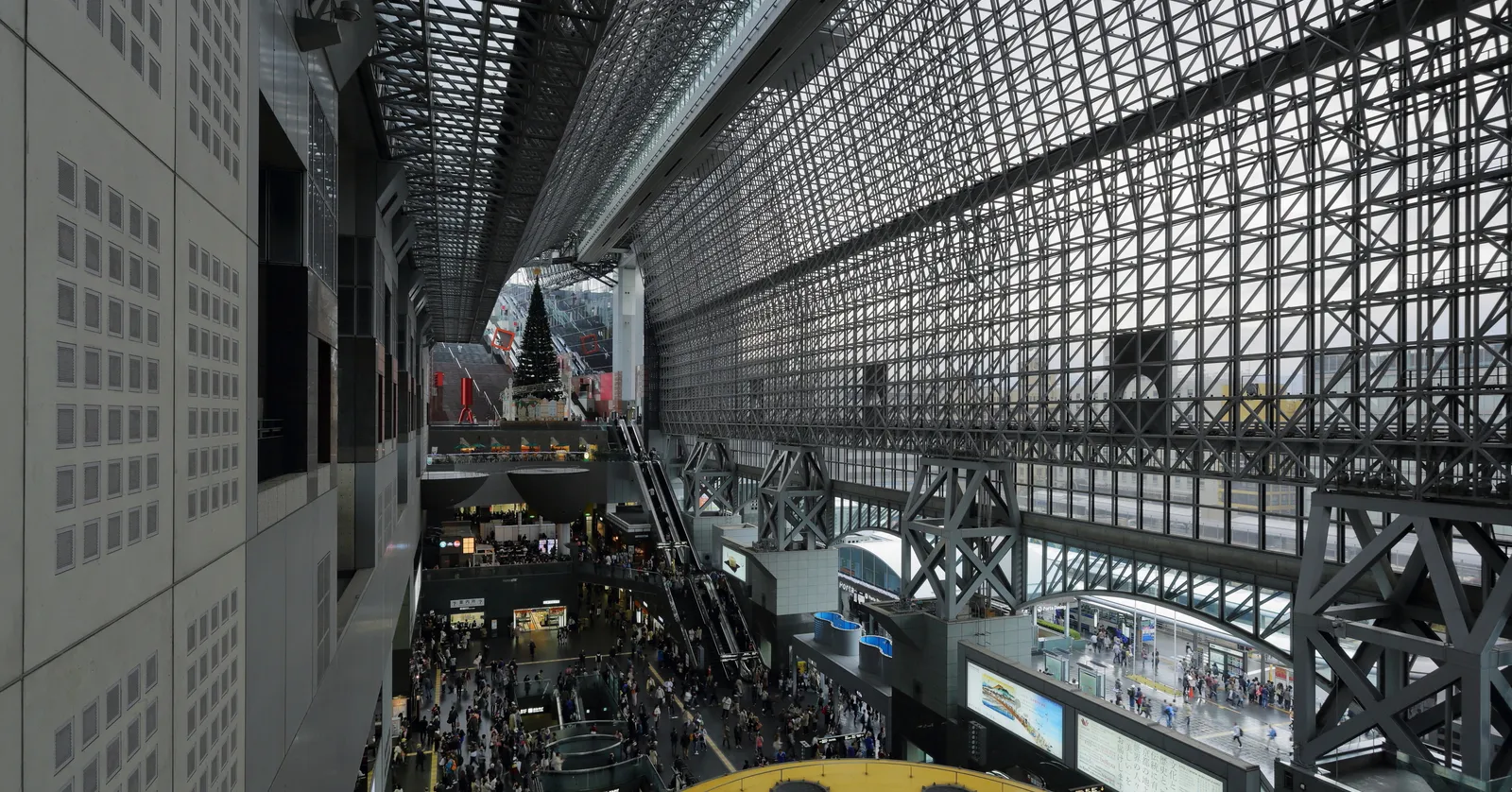
Kyoto Station’s own building carries free walkways and roof terraces fifteen floors above the platforms, and a 1914 steam-locomotive roundhouse and the two Honganji temples all sit within twenty minutes on foot of the concourse.
The 1914 roundhouse at the Kyoto Railway Museum
Umekoji Park is about twenty minutes’ walk west of Kyoto Station, or three minutes on a local train to the stop at its edge, and the railway museum in it is built around a semicircular engine shed that has been standing since 1914. Twenty tracks fan out from a working turntable into the arches of the shed, with fifteen steam locomotives parked on them, which is the largest gathering of preserved steam in Japan.
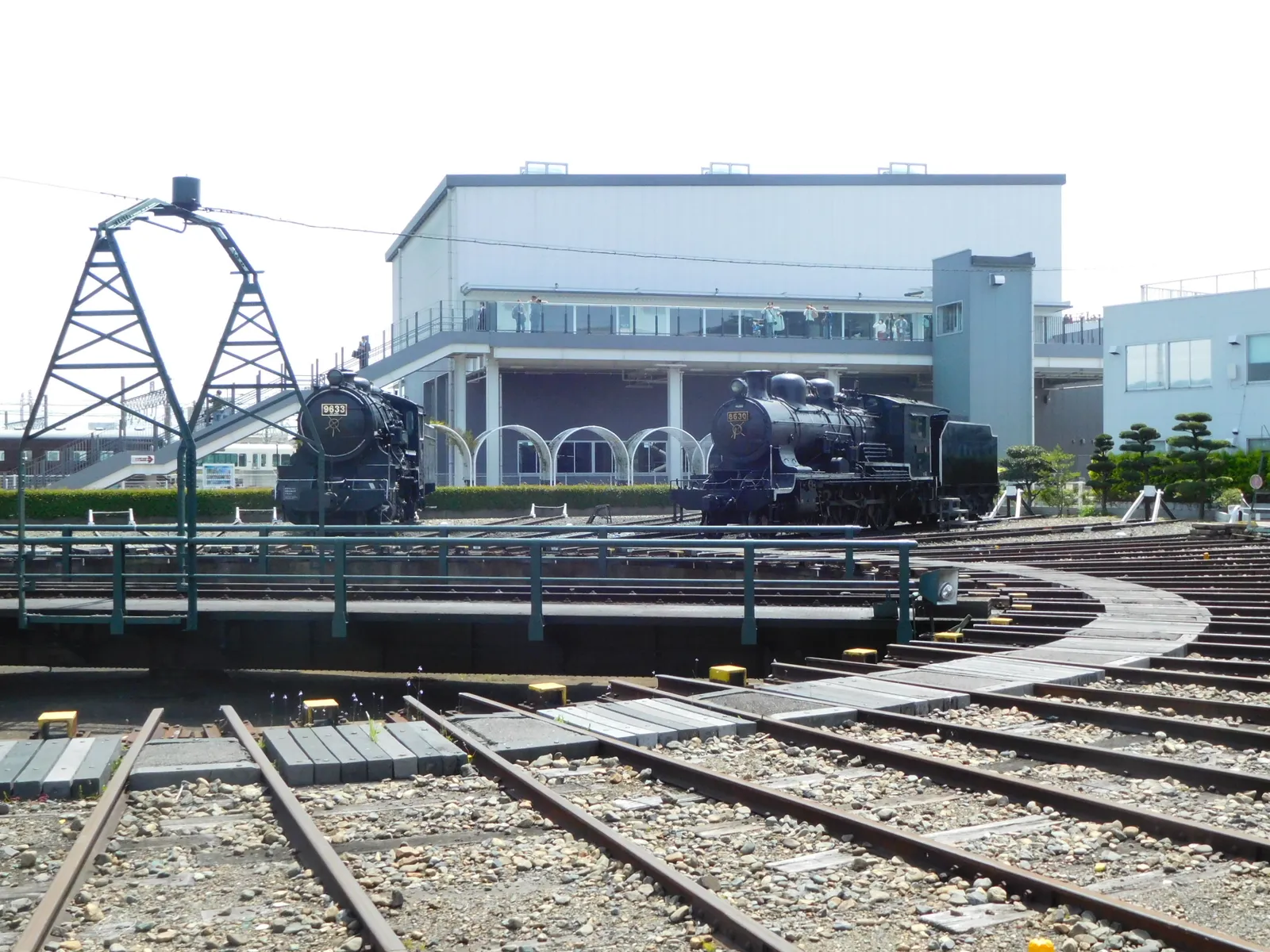
The rest of the museum, opened in 2016, runs to 54 vehicles and covers the whole span from those engines to a first-generation bullet train. Admission is 1,500 yen, bookable in advance through a tours and activities platform, and the doors open 10am to 5pm with last entry at 4:30pm. It shuts on Wednesdays and from 30 December to 1 January, so it is the stop most likely to be closed on the day you turn up. The steam-hauled ride out and back along a kilometre of track costs 300 yen more, is bought at the boarding platform rather than online, and runs 11am to 4pm.
Ropes of human hair at Higashi Honganji
Higashi Honganji sits on Karasuma-dori, seven minutes’ walk north of Kyoto Station, and its Goeido is 76 metres long, 58 wide and 38 high: the largest wooden building in Kyoto and one of the largest anywhere. Nothing is charged to go in, and the halls are floored in tatami with the doors open down one side, which makes them somewhere to sit rather than file past.
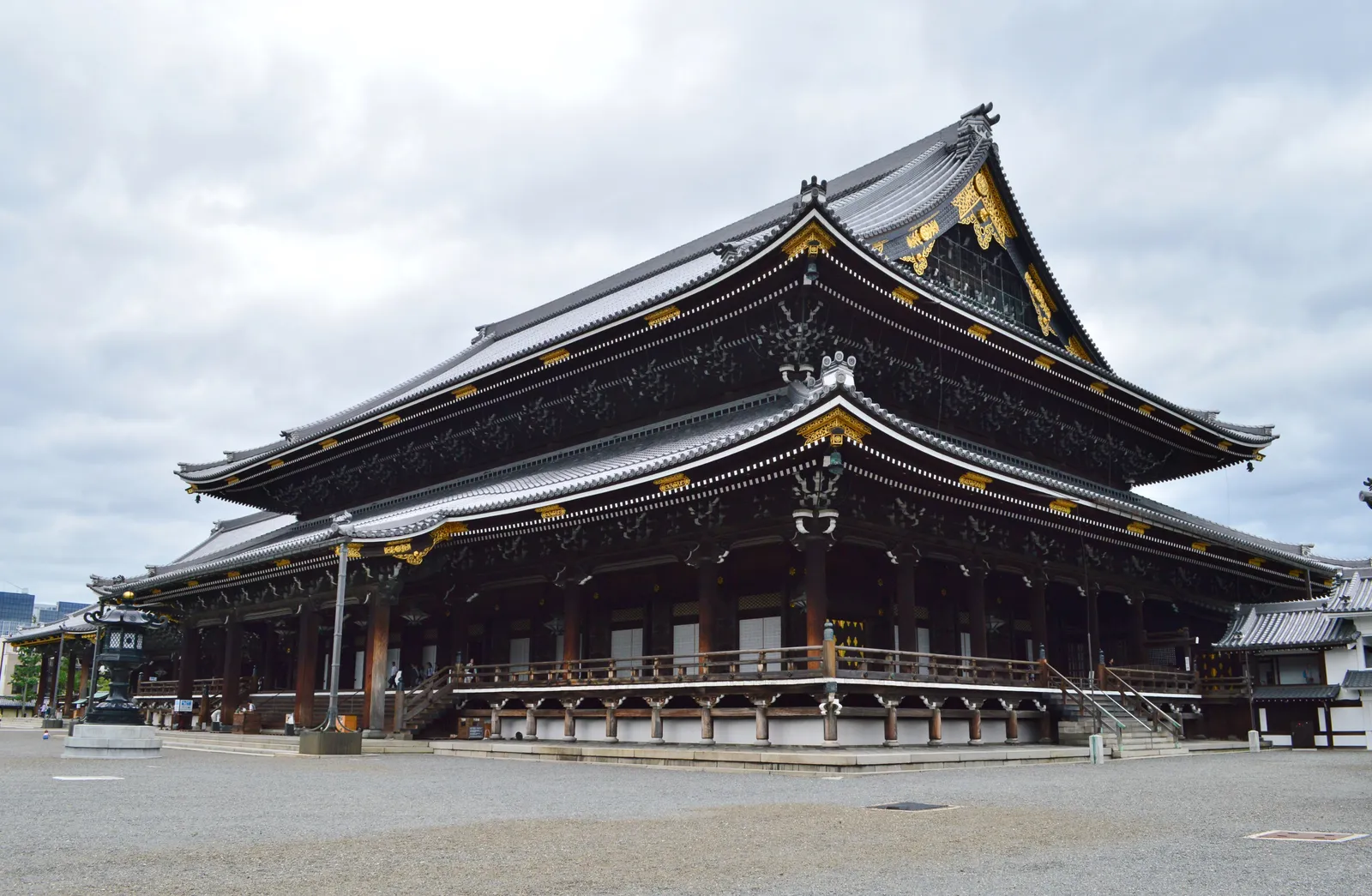
The hall standing now is the fourth attempt. A fire that swept the city during the Kinmon incident of 1864 took the previous one, rebuilding did not start until 1879, and the Goeido and the Amida hall alongside it were finished in 1895. The timbers were too heavy for the hemp rope available, so female followers across Japan cut and sent their hair, which was twisted together with hemp into around fifty hauling ropes. Coils of them are on display in the passage between the two halls, behind glass, still recognisably hair. It takes ten minutes to see. Kyoto Station’s coin lockers are spread across several floors rather than gathered in one bank, and on a busy morning the ones that take a full-sized suitcase are gone well before lunchtime.
Two National Treasure halls at Nishi Honganji
Nishi Honganji is twelve minutes west of the station on Horikawa-dori, on grounds of roughly 99,000 square metres, and it is one of the seventeen sites that make up the Historic Monuments of Ancient Kyoto on the UNESCO list. The founder’s hall and the Amida hall stand side by side facing a wide gravel courtyard, both National Treasures, and both are free to walk into in your socks.
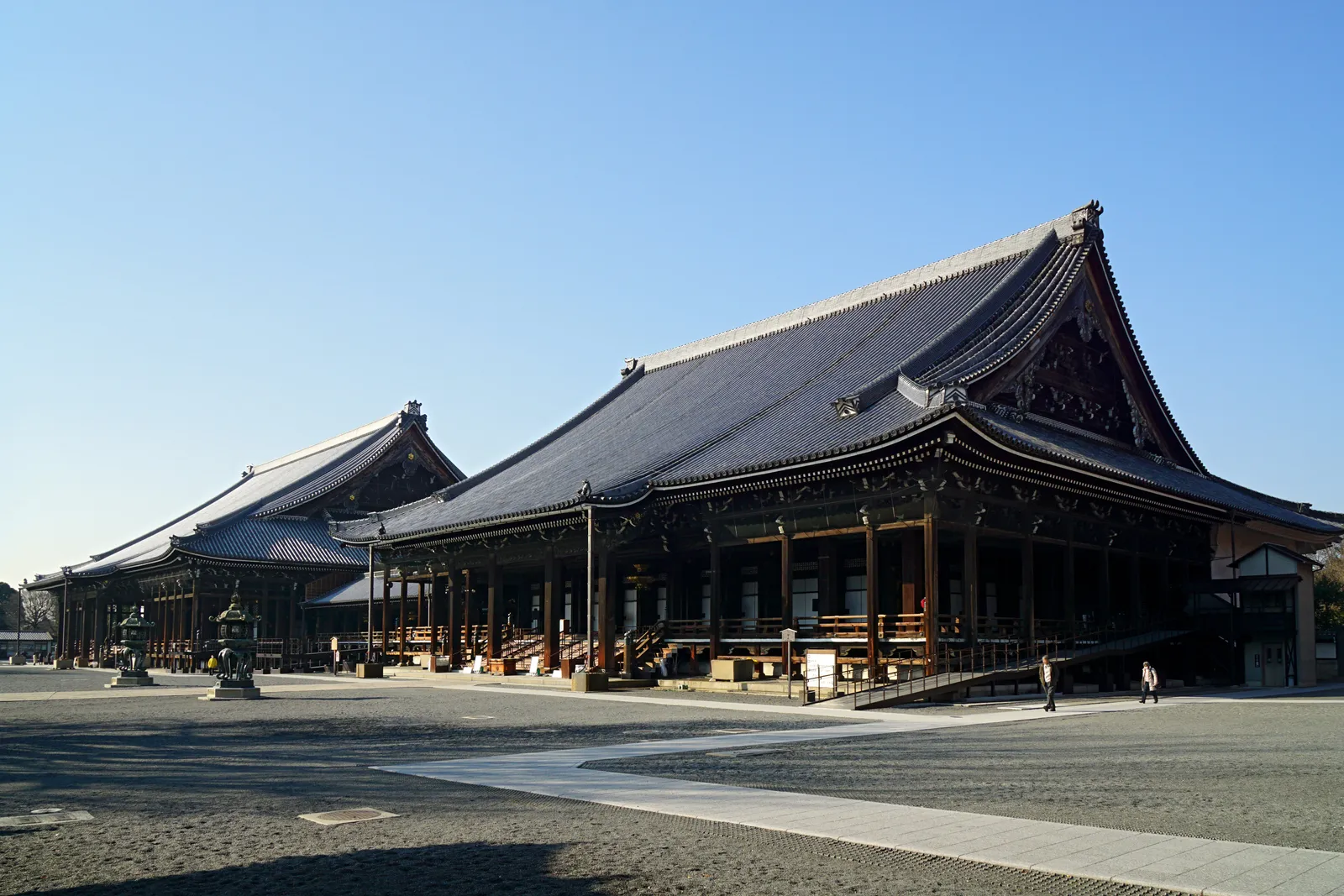
The oldest surviving Noh stage in Japan is here too, in a courtyard north of the Shiro Shoin, and it is not part of the ordinary visit: it opens only for occasional special viewings, so treat it as something to read about rather than plan around. The two Honganji compounds are close enough to do both in an hour, and if you would rather spend that hour on the temples people actually come to Kyoto for, the Kyoto layover guide covers the ones that need a train.
Kyoto Station’s own roof is open to walk on
Hiroshi Hara’s station building opened in 1997, on the 1,200th anniversary of Kyoto becoming the capital, and there was a long argument about whether a 470-metre glass and steel box seventy metres high belonged in this city at all. It went up anyway, fifteen storeys holding a department store, a hotel, a cinema and 238,000 square metres of floor, wrapped around a central hall roofed in exposed steel lattice that Hara called the Matrix, after the grid of Kyoto’s streets.
What matters on a short stop is that the top of it costs nothing. The Daikaidan, a staircase of 171 steps running from the fourth floor to the fifteenth, is set with about 15,000 LEDs that run seasonal animations after dark. At the head of it are the open roof terraces, Oozora Hiroba and the Happy Terrace, from 6am to 11pm. And the Skyway crosses the building at roof level, a glass-walled walkway 147 metres long and 45 metres above the concourse floor, open 10am to 10pm. None of it takes more than half an hour, and all of it is under cover.
The airport train goes from platform 30, not the central concourse
Platforms 30 to 33 are at the west end of the building, past the main gates rather than straight off the concourse, which is the one thing to allow for here: the number sounds like it should be next to platform 10 and it is a genuine walk. The Kansai-Airport Express Haruka runs from there to Kansai International Airport (KIX) in about 75 minutes, roughly every half hour, at 3,060 yen in a non-reserved seat or 3,590 yen reserved. Terminal 1 is a three-minute walk from the station at the far end; Terminal 2 needs a free shuttle bus of seven to nine minutes on top.
The airport bus goes from the other side of the building entirely, at the Hachijo exit on the south, for 2,800 yen and an hour and twenty-five to an hour and thirty. It runs from 4:30am until 9:10pm and the seats are reserved. Whichever you take, collecting a bag from a storage point near the north entrance is a five-minute detour rather than a change of plan.
Frequently asked questions
What should I do during a layover near Kyoto Station in Kyoto?
Work outwards from the building itself. The station's upper levels are free and open late: the Skyway walkway across the roof of the hall, the illuminated staircase up to it, and the roof garden at the top, which together take about half an hour. Higashi Honganji is seven minutes north on foot and Nishi Honganji about twelve minutes west, both free, both with halls you can walk into. If you have three hours or more, the railway museum at Umekoji is the one thing here worth a ticket, and it is the one to drop first if your stop shortens.
Is the Kyoto Aquarium worth booking ahead on a short stop?
Only if you are travelling with children and have three hours or more, because it sits in the same park as the railway museum and the walk out there is the same twenty minutes. It is indoors end to end, which makes it the sturdier choice in bad weather, and the dolphin and penguin areas run to a timetable rather than being permanently on. Admission is sold in advance through a tours and activities platform, which is worth doing at weekends and in school holidays when the counter queue is the slow part.
What is there to do around Kyoto Station in the rain?
Almost all of it, which is unusual for Kyoto. The station building is covered from the platforms to the roof garden, and the Porta mall runs underground beneath the north side, so you can cross to Kyoto Tower without going outside. The two Honganji temples have big roofed halls you can sit in, though the courtyards between the buildings are open gravel and there is no cover on the walk out. The railway museum is entirely indoors apart from the roundhouse yard and the steam-train ride, both of which run anyway.
Are the Honganji temples free to go inside?
Yes, both of them, and that includes the main halls rather than just the grounds. Higashi Honganji and Nishi Honganji each open their two great wooden halls to anyone who takes their shoes off at the step, with no ticket desk at any point. Nishi Honganji's older buildings, including the Noh stage in its inner courtyard, are the exception and are not part of the ordinary visit. Both open very early: Higashi Honganji from 5:50am to 5:30pm between March and October and from 6:20am to 4:30pm between November and February, and Nishi Honganji from 5:30am, so an early arrival at the station has somewhere to go before anything else in the city is awake.
Which platform does the airport train leave from at Kyoto Station?
Platform 30, at the west end of the building rather than off the central concourse, which is worth knowing because it is a longer walk than the platform number suggests. The Kansai-Airport Express Haruka runs from there to Kansai International Airport (KIX) in about 75 minutes, roughly every half hour, at 3,060 yen non-reserved or 3,590 yen reserved. The airport bus is the alternative and leaves from the opposite side of the building, at the Hachijo exit on the south, for 2,800 yen and about an hour and a half.