Kansai Airport Layover: KIX Without Kyoto
Part of the full Kyoto Layover: Fushimi Inari Gates, KIX
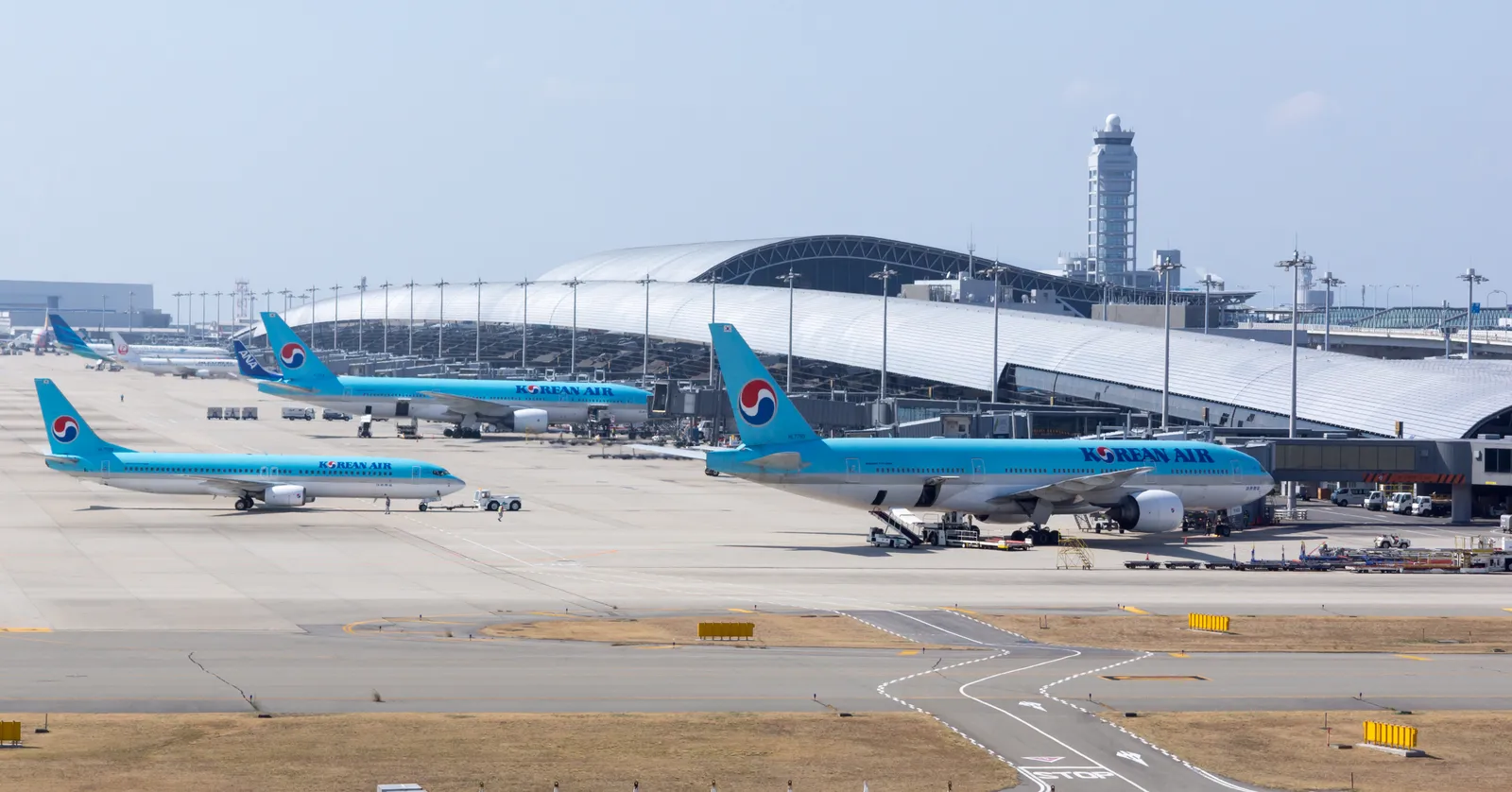
Kansai airport is 75 minutes from Kyoto by express train, so a short connection stays on the island, where a free observation deck sits 320 metres from the main runway and Rinku Town’s outlet mall is one stop back across the bridge.
The train into Kyoto takes 75 minutes each way
Kansai Airport Station sits between the two terminals: three minutes on foot from Terminal 1 along a second-floor walkway, or a free shuttle bus of seven to nine minutes from Terminal 2. From there the Kansai-Airport Express Haruka runs to Kyoto Station in about 75 minutes, roughly twice an hour, at 3,060 yen in a non-reserved seat or 3,590 yen reserved, and the ticket can be bought in advance through a tours and activities platform if you would rather not queue at the machines on arrival.
Doubled, that is two and a half hours of train before anything else, which is why the cut-off for going in at all sits at around six hours between flights. Below that the island is the better use of the time. Above eight, the Kyoto layover guide is the version of this trip that gets you to a shrine.
Whether you can leave at all depends less on the clock than on where your luggage is. Passengers connecting on one ticket with bags checked through usually cannot go landside; anyone self-transferring on separate tickets has already collected everything and cannot check it back in until the next airline opens its counter, which is where a few hours of carrying a full trip’s suitcase around a 1.7-kilometre terminal comes from.
A free observation deck 320 metres from the main runway
Sky View is a five-storey building on the far side of the apron, close enough to Runway A that arriving aircraft pass in front of it rather than in the distance. A shuttle bus runs there from stop 1 outside the passenger terminal, roughly every half hour, and it takes five to ten minutes. Neither the bus nor the building charges anything.
The rooftop deck on the fifth floor gives a 360-degree view over the runways and the water, with a park on it split between climbing equipment and slides at one end and benches at the other. Lower floors hold shops, food and a small aviation museum, which keeps shorter hours than the rest, 11am to 4pm against the hall’s 10am to 5pm. Timings do move, so check before committing a tight connection to the bus.
Rinku Town’s outlet mall and 85-metre Ferris wheel
Rinku Town is on the mainland shore at the far end of the bridge, six minutes by train from the airport and the first stop in either direction. The shopping centre attached to the station has an 85-metre Ferris wheel on it, the Star of Rinku, which puts the whole island, the bridge and the aircraft on approach in one frame.
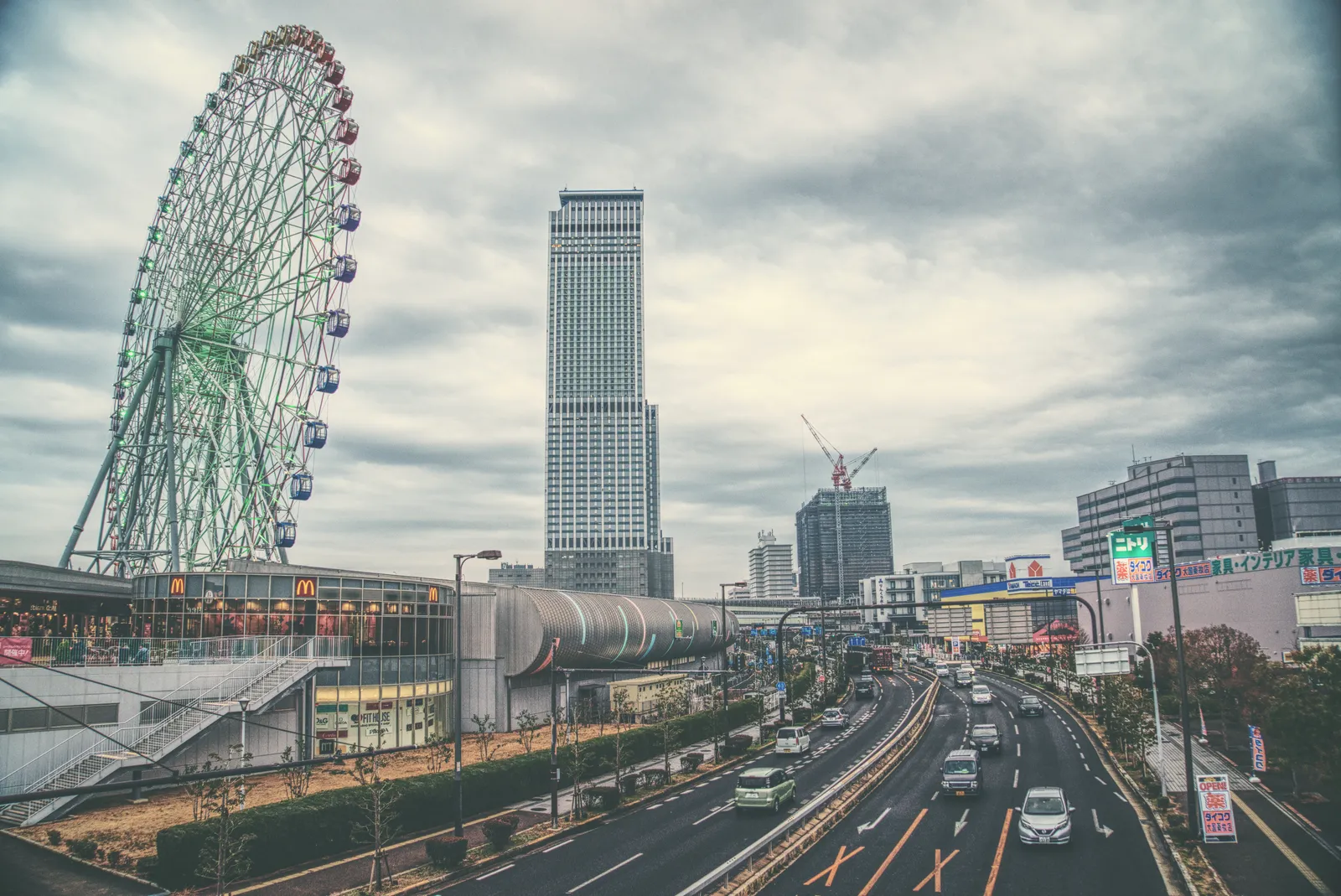
The outlet mall is the other draw and the reason most people make the trip: around 250 units, six minutes’ walk from the station, built on a seafront layout with a grass strip and a view back across the water to the terminal. It is the closest thing to a town this side of Osaka, which is a low bar, but it is a genuine change of scene for the price of a six-minute train fare.
Renzo Piano’s terminal runs 1.7 kilometres end to end
Terminal 1 opened on 4 September 1994 and is the longest airport terminal building in the world. Renzo Piano and Noriaki Okabe shaped its roof as one continuous asymmetric curve, and the curve is not decorative: air is fired across the departure hall from nozzles at the back of the building, and the roof follows the path the engineers calculated that air would take. Because the ducts are open rather than boxed in above a ceiling, the structure stays visible, and mobile sculptures by Susumu Shingu hang in the current so you can see it moving.
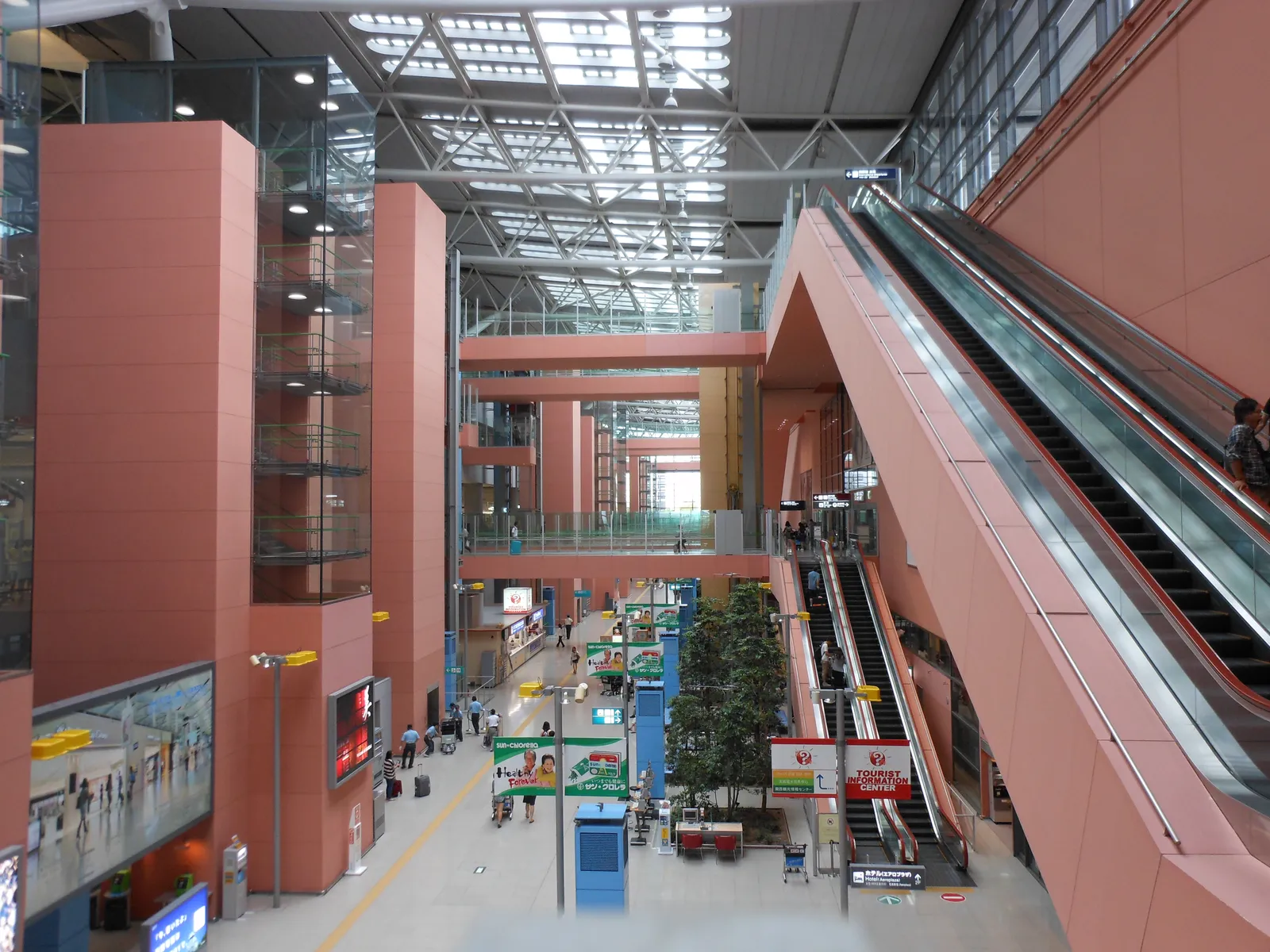
The stranger fact is underneath it. The airport stands on two reclaimed islands, roughly 510 and 545 hectares, built by dropping 180 million cubic metres of material onto soft seabed clay that had first been drained through a million sand columns. The ground has been compressing under the weight ever since: by 1999 the first island had settled 8.2 metres, about half as much again as the engineers had projected, and the terminal’s columns stand on hydraulic jacks and iron plates that are packed out as the ground drops. Kansai was also the first airport in Japan to run 24 hours a day, which is why a 6am connection here is a normal thing rather than a problem, and why the shops and the trains start earlier than they would anywhere inland.
Frequently asked questions
What should I do on a layover at Kansai International Airport without going into Kyoto?
Take the free shuttle bus to the Sky View observation hall, which is 320 metres from the main runway and costs nothing to go into, and give it an hour including the bus each way. If you have three hours or more, Rinku Town is one train stop off the island and holds an outlet mall of around 250 shops and an 85-metre Ferris wheel, both a few minutes from the station. If you have less than about two hours after clearing the terminal, stay inside it: Terminal 1 is 1.7 kilometres long and walking its length is not a small undertaking on its own.
How long a connection do I need before it is worth going into Kyoto?
About six hours from landing to your next departure, and that is not generous. The express train is 75 minutes each way, you want to be back at the terminal two hours before an international flight, and immigration on arrival plus the walk between the terminal and the station eats another half hour at the front. That leaves roughly ninety minutes in Kyoto on a six-hour gap, which is enough for one thing and no margin. Under six hours the honest answer is to stay put; over eight, the Kyoto layover guide covers what actually fits.
Can I leave Kansai airport if my bags are checked through to my final destination?
Usually yes, and this is the difference that decides most of these decisions. If your luggage is tagged through and you are staying airside on a single ticket, you may not be able to leave the secure area at all; if you have cleared immigration into Japan, you are landside with everything you are carrying. Self-transfer passengers on separate tickets are the ones who end up dragging a full trip's luggage around a terminal, because they have collected it and cannot check it back in until their next airline's counter opens, which at Kansai is typically a few hours before departure.
How do I get between Terminal 1 and Terminal 2 at Kansai airport?
A free shuttle bus, seven to nine minutes between the Aeroplaza building beside Terminal 1 and Terminal 2. There is no train and no walkway, so it is the bus or nothing. Terminal 2 is the low-cost terminal, used by Peach, Spring Airlines and Jeju Air, and it was deliberately built without lifts or air-conditioned corridors to keep the landing fees down, which is worth knowing before you plan a long wait there rather than in Terminal 1.
Is there anything at Kansai airport for children on a long connection?
The roof of the Sky View observation hall is the best of it, and it is free. The fifth-floor deck is split into a play area with slides and climbing equipment and a rest area where you can sit and watch aircraft come in over the water, and the shuttle bus out to it runs about every half hour. One stop off the island, the Ferris wheel at Rinku Town is 85 metres and connected straight to the station, so it works even in the rain.