Arashiyama Layover: Kyoto's Bamboo Path
Part of the full Kyoto Layover: Fushimi Inari Gates, KIX
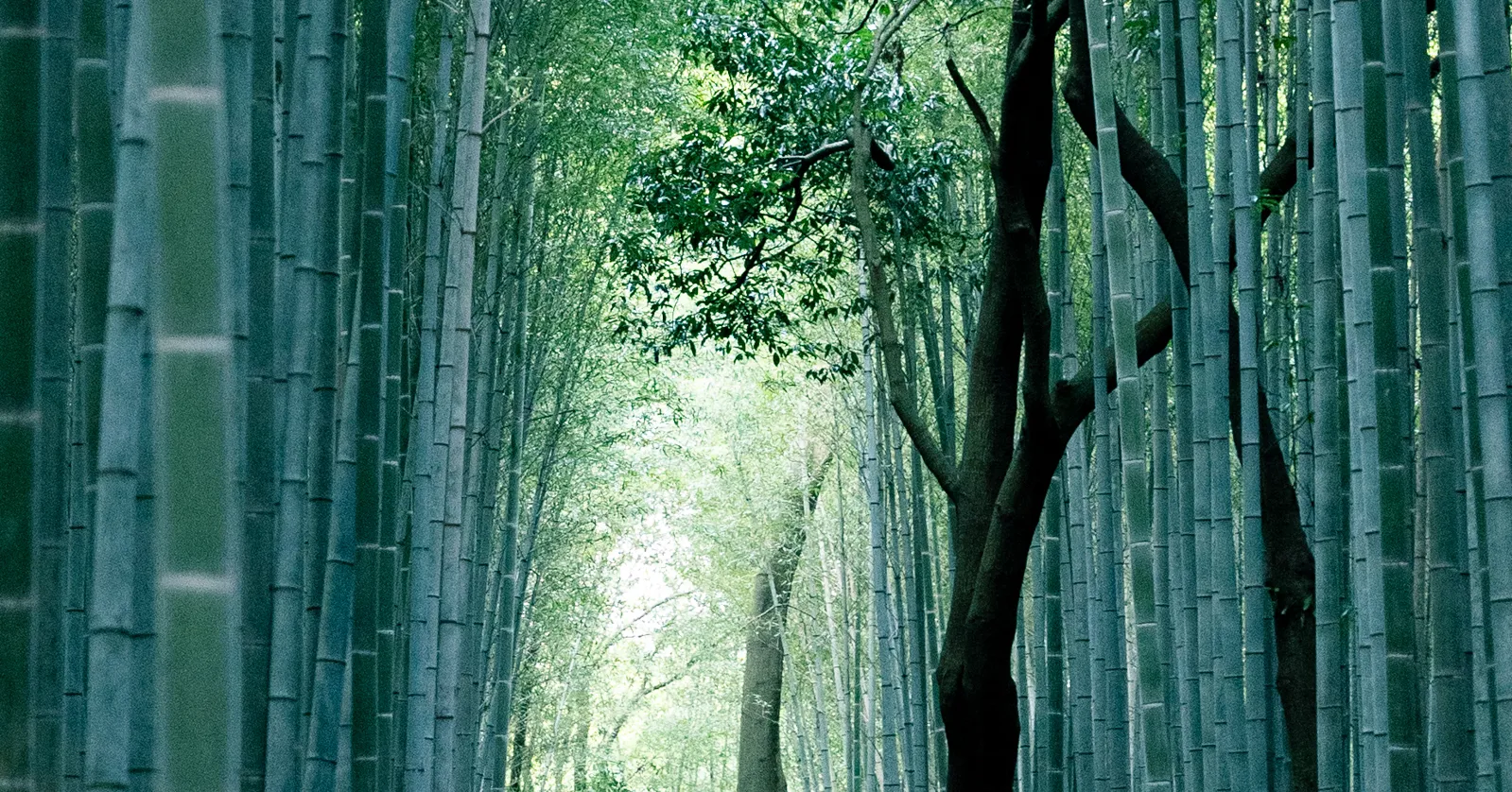
Arashiyama sits fifteen minutes west of Kyoto Station on a local train, where a 400-metre bamboo path runs free and gateless behind Tenryu-ji’s 14th-century pond garden, and the Togetsukyo bridge crosses the river below.
Tenryu-ji’s pond garden has kept its 14th-century shape
Tenryu-ji stands at the foot of the Arashiyama hills, ten minutes’ walk north-west of Saga-Arashiyama station. The shogun Ashikaga Takauji founded it in 1339 in memory of Emperor Go-Daigo, whom he had spent years fighting, and handed the job of building it to the monk Muso Soseki. The buildings have burned down repeatedly since. The garden has not.
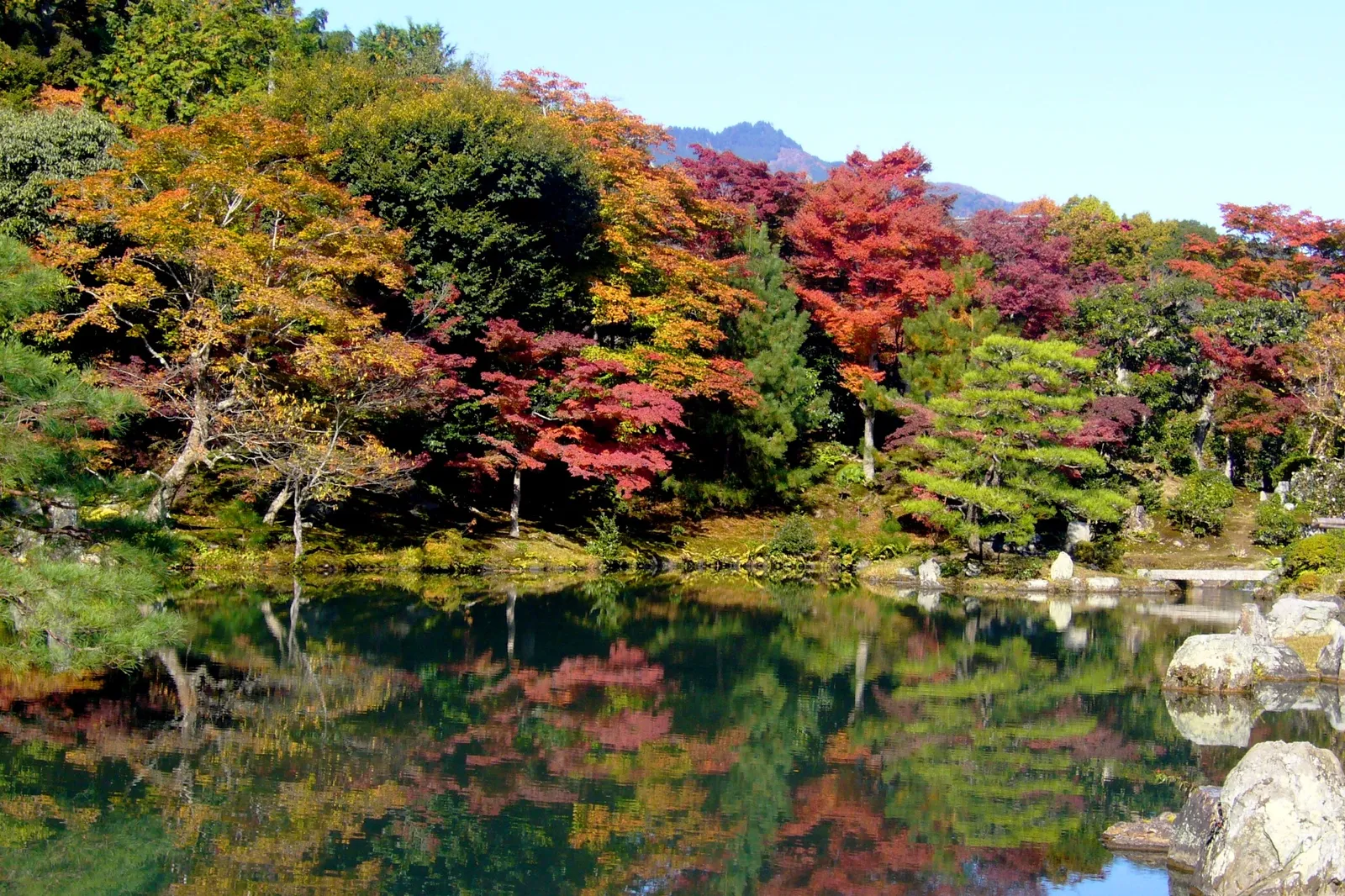
Sogenchi is a strolling pond garden laid out around the same time as the temple and still in essentially its original arrangement, which is why the site carries a UNESCO listing. It was designed to take the hills behind it as part of the composition rather than screening them out, so the mountain reads as the back of the garden. Admission to the grounds and garden is 500 yen, with another 300 for the main building, and the gates run 8:30am to 5pm with last entry at 4:50pm.
The scenic railway runs one way up the Hozu gorge
Torokko Saga station sits next to Saga-Arashiyama, and the train that leaves from it is the one thing in Arashiyama with a timetable worth deciding about before anything else: 25 minutes along a ledge cut into the side of the Hozu gorge, with the river in white water below, hourly at two minutes past the hour from 9am until 4pm.
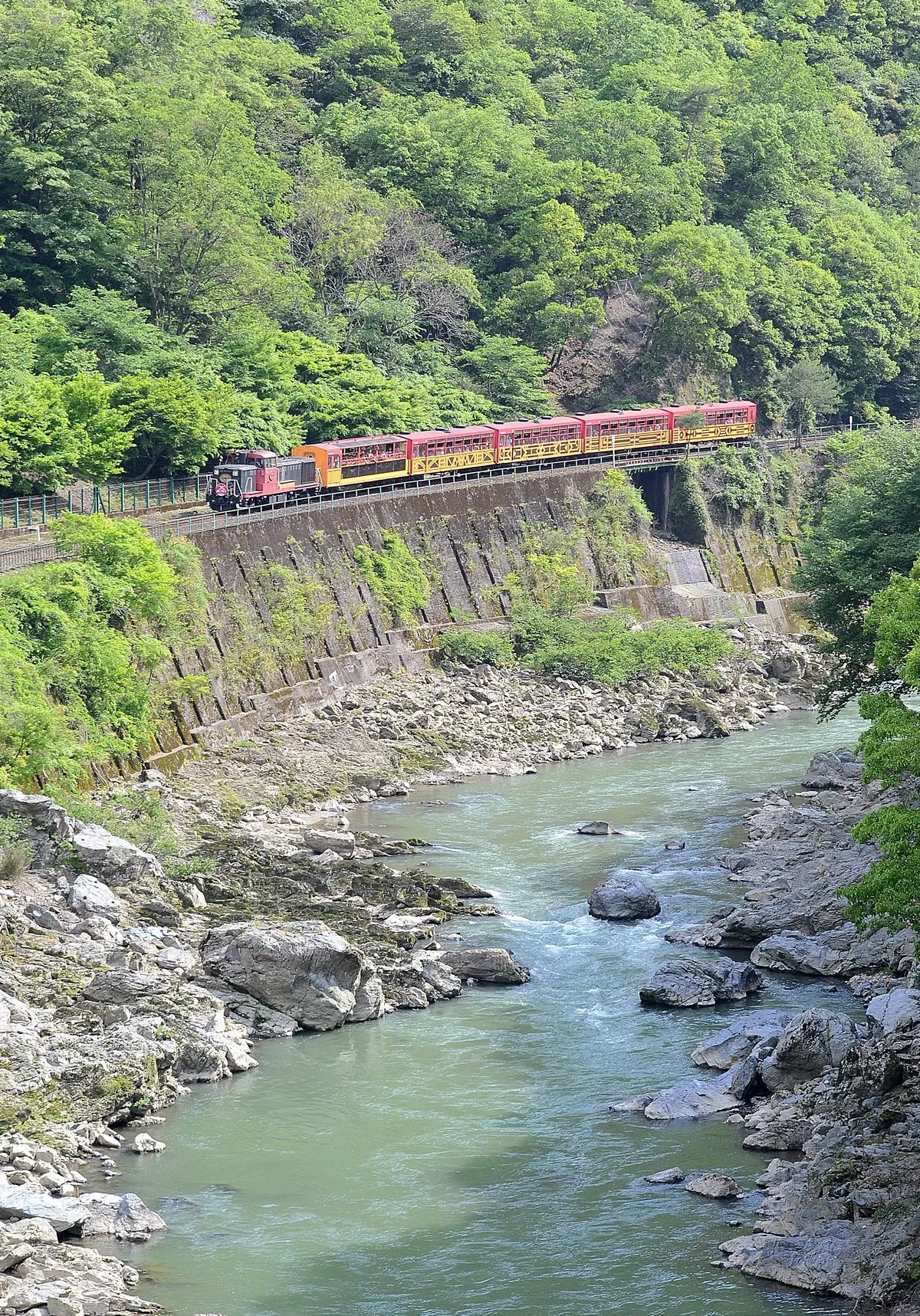
The catch is that it does not come back the same way. At Torokko Kameoka you either transfer to a local line for the ordinary run back into Kyoto, or take the traditional flat-bottomed boat down the river, which is a fine two hours and completely wrong for a flight day. Round trip, budget three hours, which is why this is the part of Arashiyama that either shapes the visit or gets left out of it entirely. Seats are sold in advance through a tours and activities platform and are worth securing in autumn, when they go days ahead. Car five has no glass in the sides, which is the one to ask for in any weather that is not rain.
The bamboo path is 400 metres long and has no gate
Tenryu-ji’s north gate opens straight onto the bamboo path, which is the reason to do the temple first rather than last. The walkway runs about 400 metres between dense stands of bamboo grown close enough that the light coming through goes green, and there is no ticket booth, no fence and no closing time anywhere along it.
What there also is not, is lighting, so walking it after sunset means feeling your way. The practical window is early: before 8am the path is close to empty, and by ten it is a slow shuffle in single file for most of its length. Because Arashiyama’s sights sit in a loop that ends back at the station rather than strung along one street, anything you are carrying comes round the entire circuit with you.
The Togetsukyo bridge crosses below the Arashiyama hills
Togetsukyo spans the Hozu river at the southern end of the district, a long low crossing with timber rails and the wooded slopes rising straight out of the far bank. The name means moon crossing bridge, after a 13th-century emperor who watched the moon travel over it and said so.
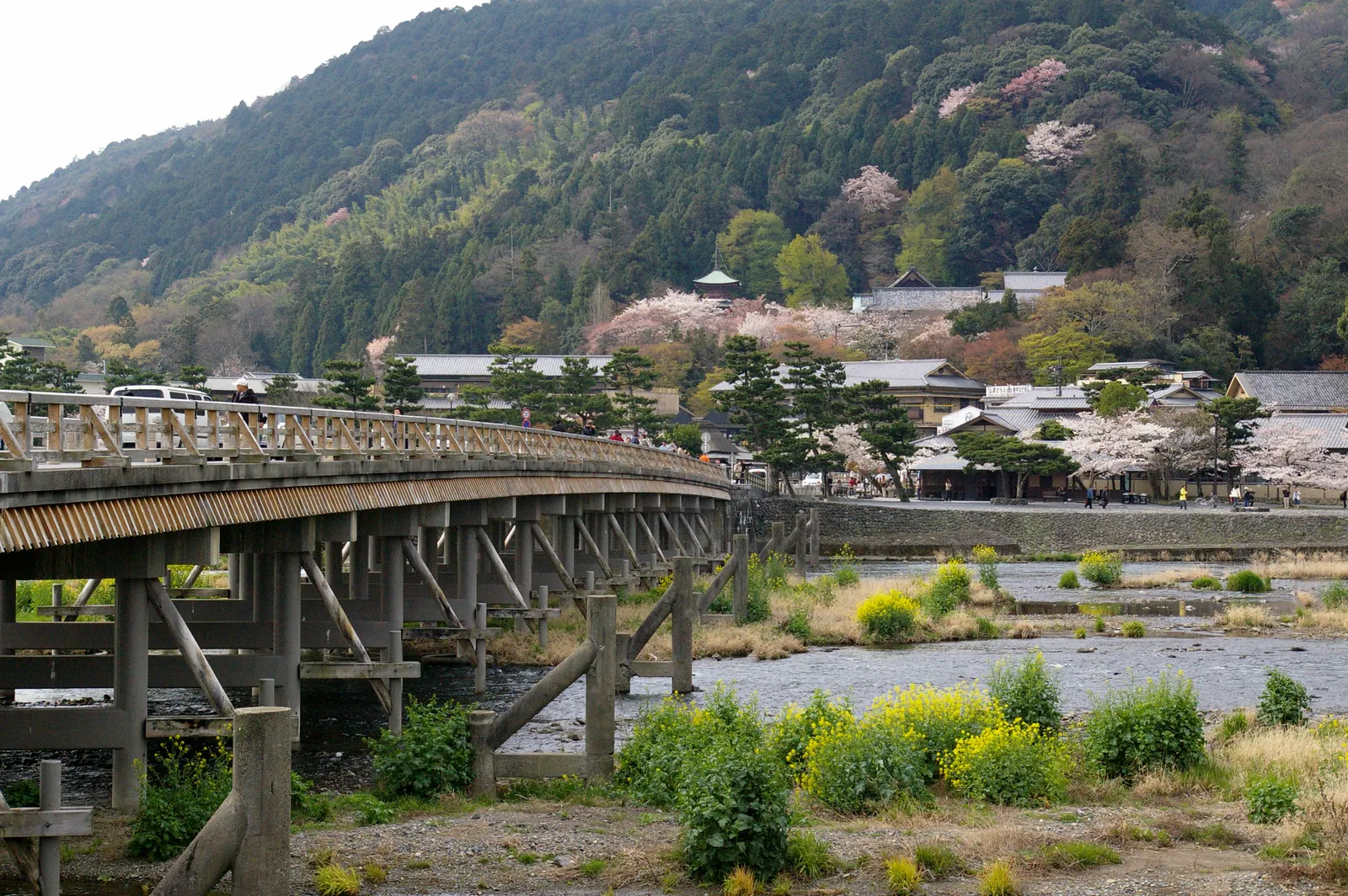
It costs nothing and takes five minutes, and the riverbank on either side is where most people end up sitting. On the way back to the station, the tram terminus is worth two minutes of detour: its walkways are lined with about six hundred cylindrical pillars wrapped in Kyo-yuzen dyed fabric, put in during a 2013 rebuild of the station, and backlit from inside after dark so the patterns come out of the black. It is open at any hour and costs nothing, and almost everyone walks past the entrance to it on the way to somewhere else.
The airport train goes from the same end of Kyoto Station
Saga-Arashiyama is 240 yen and about fifteen minutes back to Kyoto Station, arriving at the platforms at the west end of the building, which happens to be the same end the airport train leaves from. The Kansai-Airport Express Haruka runs from platform 30 to Kansai International Airport (KIX) in about 75 minutes, roughly every half hour, at 3,060 yen non-reserved or 3,590 yen reserved.
Allow two hours from the bamboo path to the terminal door and you will not be rushing. The airport bus from the Hachijo exit on the station’s south side is 2,800 yen and runs to 9:10pm, which is later than the train, but it puts you on the opposite side of the building from where you arrive. If this loop turns out to be more travelling than the day allows, the main Kyoto guide keeps everything inside twenty minutes of the station.
Frequently asked questions
What should I do during a layover near Saga-Arashiyama Station in Kyoto?
Do it as one loop: Tenryu-ji first, out through its north gate into the bamboo path, then down to the Togetsukyo bridge and back along the main street to the station. That is about two hours at an unhurried pace and covers everything most people come here for. Tenryu-ji is the only part with a ticket and a closing time, 500 yen and last entry at 4:50pm, so it sets the order rather than the bamboo, which is free and open at any hour. Leave the scenic railway out unless you have five hours or more, because it only runs one way.
When should I go to the Arashiyama bamboo path to avoid the crowds?
Before eight in the morning, and that is not a soft recommendation. The main path is about 400 metres long and narrow, there are no gates or tickets, and by mid-morning it is a slow-moving single file for most of its length. It is open around the clock, but there is no lighting on it, so after dark it is genuinely hard to see where you are walking. Early is the whole trick here: the same path at 7am is nearly empty.
Is the Sagano scenic railway worth it on a short stop?
Only if you have a long connection, because it is a one-way trip and getting back is the problem. The train runs 25 minutes up the Hozu gorge from Torokko Saga to Torokko Kameoka, hourly at two minutes past from 9am to 4pm, and at the far end you either take a local train back or spend around two hours on the river boat down. Budget three hours round trip minimum. Car five is open-sided with no glass, which is the one to ask for unless it is raining.
Is Arashiyama different in autumn?
Substantially, and mostly in ways that cost you time. Tenryu-ji's pond garden and the slopes above the Hozu gorge are two of the best maple viewings in Kyoto, so November brings the year's heaviest crowds to a 400-metre path and a single bridge, and the scenic railway's seats sell out days ahead rather than on the morning. The compensating detail is that the same colour is free from the riverbank and from the bamboo path, neither of which charges anything at any time of year.
How do I get from Kyoto Station to Arashiyama?
A local line west from Kyoto Station to Saga-Arashiyama, 240 yen, from the platforms at the far west end of the building. A rapid service does it in about ten minutes and a local in about twenty, and the difference matters more on the way back than the way out. From Saga-Arashiyama it is ten minutes on foot north to the bamboo path. There is also a tram from central Kyoto that terminates a little closer to the bridge, which is slower but drops you at the fabric-pillar arcade outside its station.