Kinkaku-ji Layover: Kyoto's Golden Pavilion
Part of the full Kyoto Layover: Fushimi Inari Gates, KIX
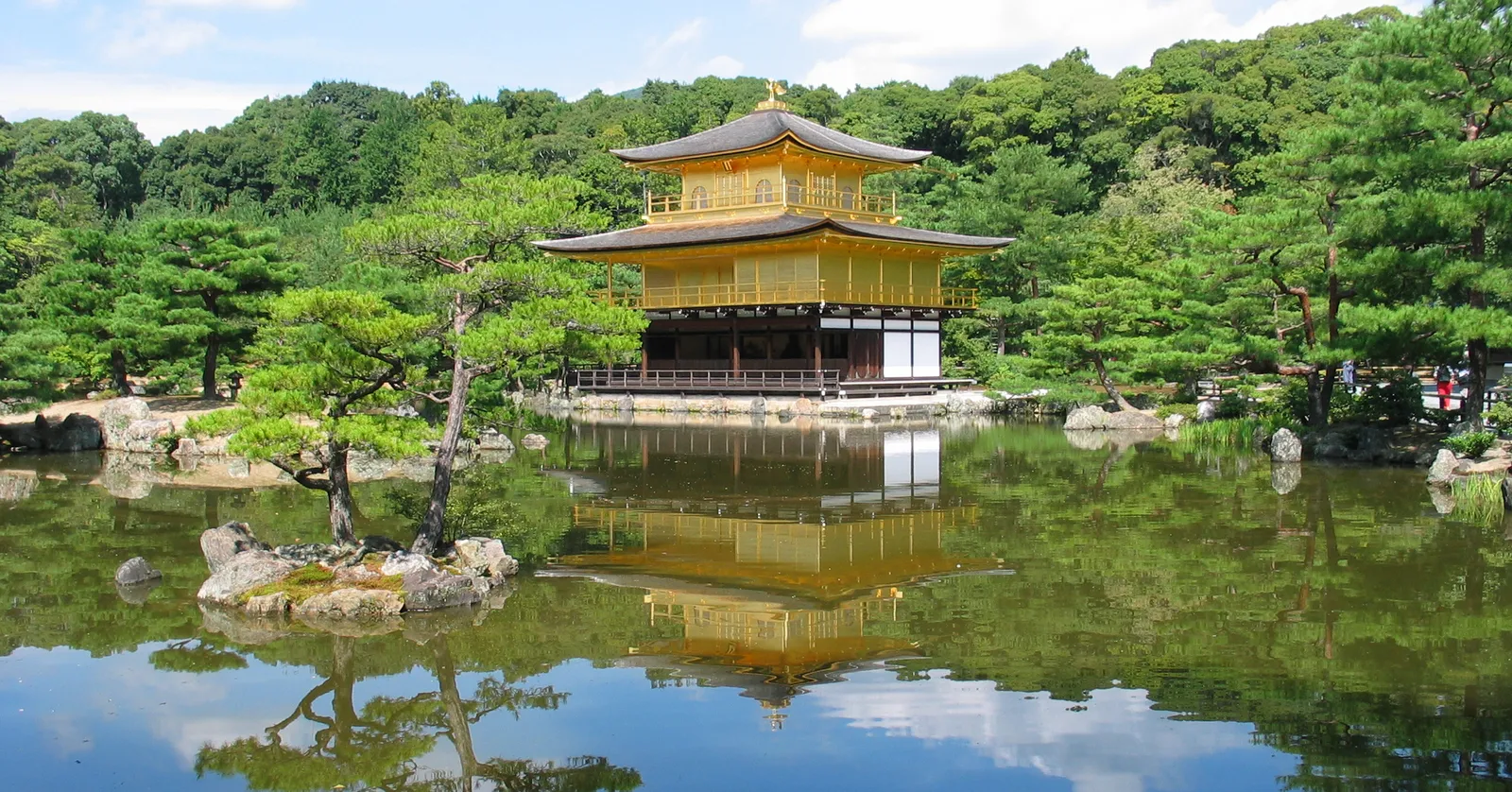
Kinkaku-ji’s gold-leafed pavilion stands over a pond in north-west Kyoto, about forty minutes from Kyoto Station by bus because no railway runs there, and Ryoan-ji’s rock garden is twenty minutes further along the same road.
Kinkaku-ji is walked on a one-way circuit
Kinkaku-ji stands in a corner of north-west Kyoto with no railway station anywhere near it, which is the first fact about visiting it. Getting there means a city bus from Kyoto Station to the Kinkakuji-michi stop, about forty minutes and 230 yen, or a train to Kitanohakubaicho and ten minutes on foot. If you are doing three or more bus rides in a day, a combined subway and bus day ticket is sold through a tours and activities platform and covers this route in both directions.
What you get for the journey is a three-storey hall standing at the edge of a pond with its upper two floors sheathed in gold leaf and a bronze phoenix on the roof. Each floor is in a different style: aristocratic residence at the bottom, samurai house in the middle, Zen hall at the top, stacked without any attempt to reconcile them. The building is a 1955 reconstruction: a novice monk burned the original down in 1950, and the gold leaf on the replacement was renewed in 1987.
The path through the grounds runs one way and only one way. Staff turn people back who try to walk against it, so the pond view near the start is the one to linger at rather than plan to return to, and the whole circuit takes forty minutes to an hour. Entry is 500 yen and the gates are open 9am to 5pm. There is nowhere along that circuit to set anything down, and no way to leave a bag and pick it up on your way back out, because there is no way back out except forward.
Ryoan-ji’s rock garden has fifteen stones and shows fourteen
Twenty minutes west along the same road, Ryoan-ji keeps the most argued-over garden in Japan: a rectangle of white gravel raked into lines, enclosed by a low clay wall stained by centuries of the oil in it, with fifteen rocks set in moss in five groups and nothing else at all.
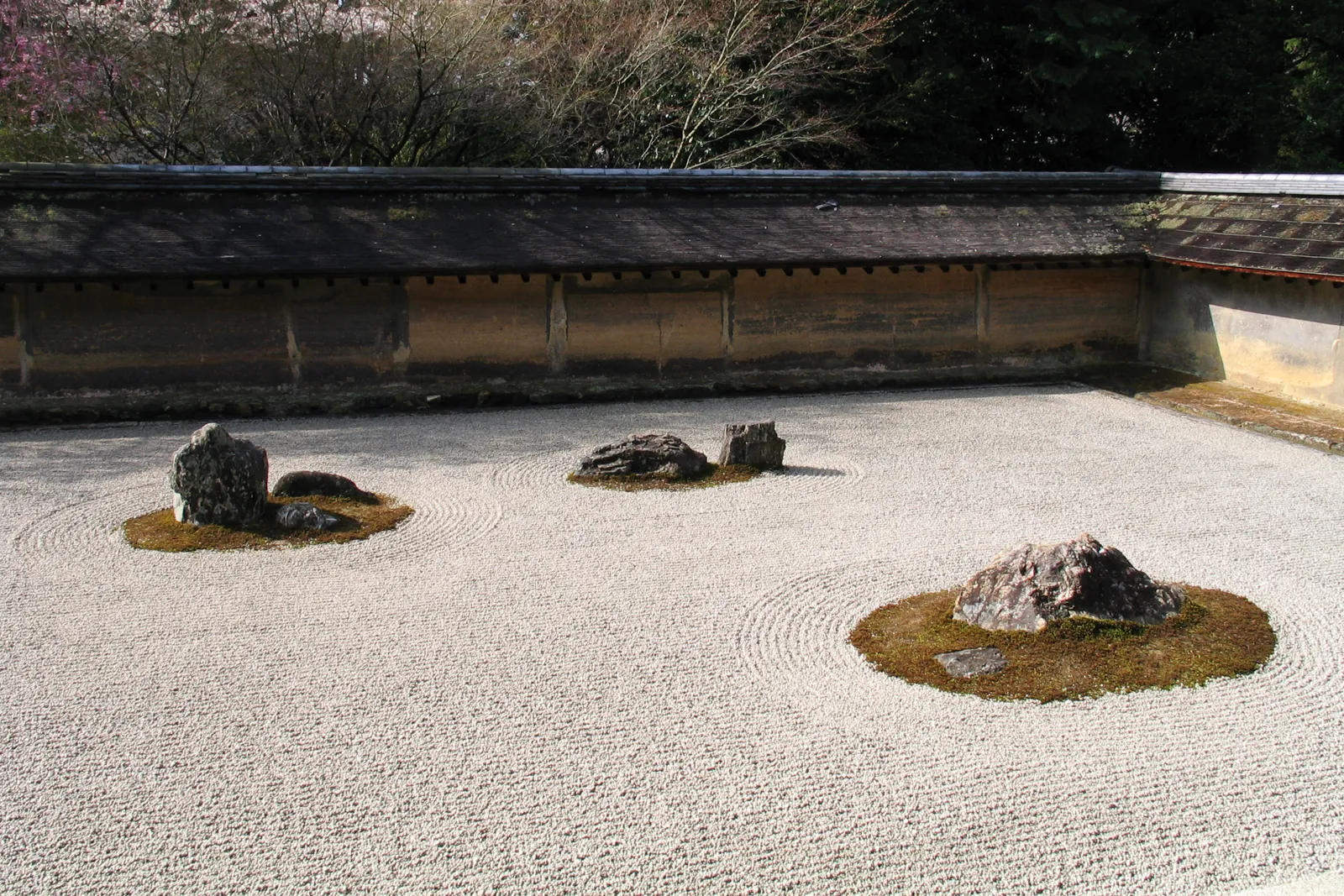
The arrangement is set so that from any single position on the veranda you can see fourteen of them and never all fifteen. Nobody has a documented explanation from the people who built it, which has left the field open to several centuries of theories. Admission is 600 yen, and the doors run 8am to 5pm from March to November and 8:30am to 4:30pm from December to February. Half an hour is enough unless you sit down, and most people sit down.
The bus back is the part to budget for
Nothing about this corner of Kyoto is quick. The ride back to Kyoto Station is another forty minutes on the same bus route in reverse, longer in the late afternoon when the traffic on the western ring builds, and Kyoto’s city buses carry a decal showing a crossed-out suitcase, with drivers free to refuse luggage they judge too big for the aisle.
From Kyoto Station the Kansai-Airport Express Haruka leaves platform 30 for Kansai International Airport (KIX), about 75 minutes, roughly every half hour, 3,060 yen non-reserved or 3,590 yen reserved; the airport bus from the Hachijo exit is 2,800 yen and runs to 9:10pm. Working backwards from the flight, allow three hours from the Golden Pavilion’s gate to the terminal door and you will not be watching the clock. If that maths does not work, the main Kyoto guide keeps to places within twenty minutes of the station, and Nijo Castle is the nearest thing to this one that the subway actually reaches.
Frequently asked questions
What should I do during a layover near Kinkaku-ji in Kyoto?
Pair the two temples on the same road and accept that the bus is most of the trip. Kinkaku-ji is 500 yen, takes forty minutes to an hour on its one-way circuit, and is the reason you came. Ryoan-ji, twenty minutes' walk west, is 600 yen and worth another half hour for its rock garden. Together with the ride each way that is a four to five hour commitment, so on anything shorter this corner of the city is the wrong choice rather than a rushed one.
How long does it take to get to Kinkaku-ji from Kyoto Station?
About forty minutes on a city bus for 230 yen, getting off at the Kinkakuji-michi stop a minute from the gate. There is no station anywhere near the temple, which is what makes this the most transport-heavy destination in Kyoto relative to how long you spend at it. The faster alternative is a train to Kitanohakubaicho and about ten minutes on foot from there, which cuts the bus time but adds a change.
Can I go back for a second look at the Golden Pavilion?
No, the path only runs one way. The route through the grounds is a fixed circuit that visitors walk in a single direction, and staff turn back anyone trying to double back on busy days, partly for flow and partly because the path is narrow. Wheelchair users have a designated reverse route. In practice it means taking your time at the pond, where the pavilion is closest and most of the photographs get taken, rather than assuming you can return to it.
Is Kinkaku-ji worth visiting in winter?
It is the one time of year the place looks different from every photograph of it. Gold leaf against snow on the pavilion roof is the image Kyoto puts on its own posters, and it needs an overnight fall, which happens a handful of times most winters rather than reliably. The practical trade-offs are that Ryoan-ji shortens to 8:30am to 4:30pm from December to February against 8am to 5pm the rest of the year, and that the twenty-minute walk between the two is exposed road with no cover.
How long do Kinkaku-ji and Ryoan-ji take together?
Around two and a half hours on the ground, plus the travel. Kinkaku-ji is forty minutes to an hour on the circuit, the walk between them is twenty minutes, and Ryoan-ji takes thirty minutes to an hour depending on how long you sit at the garden. Add roughly forty minutes of bus at each end and you have most of an afternoon, which is the honest reason this pairing does not fit a short stop.