Gion Layover: Kyoto's Evening Streets
Part of the full Kyoto Layover: Fushimi Inari Gates, KIX
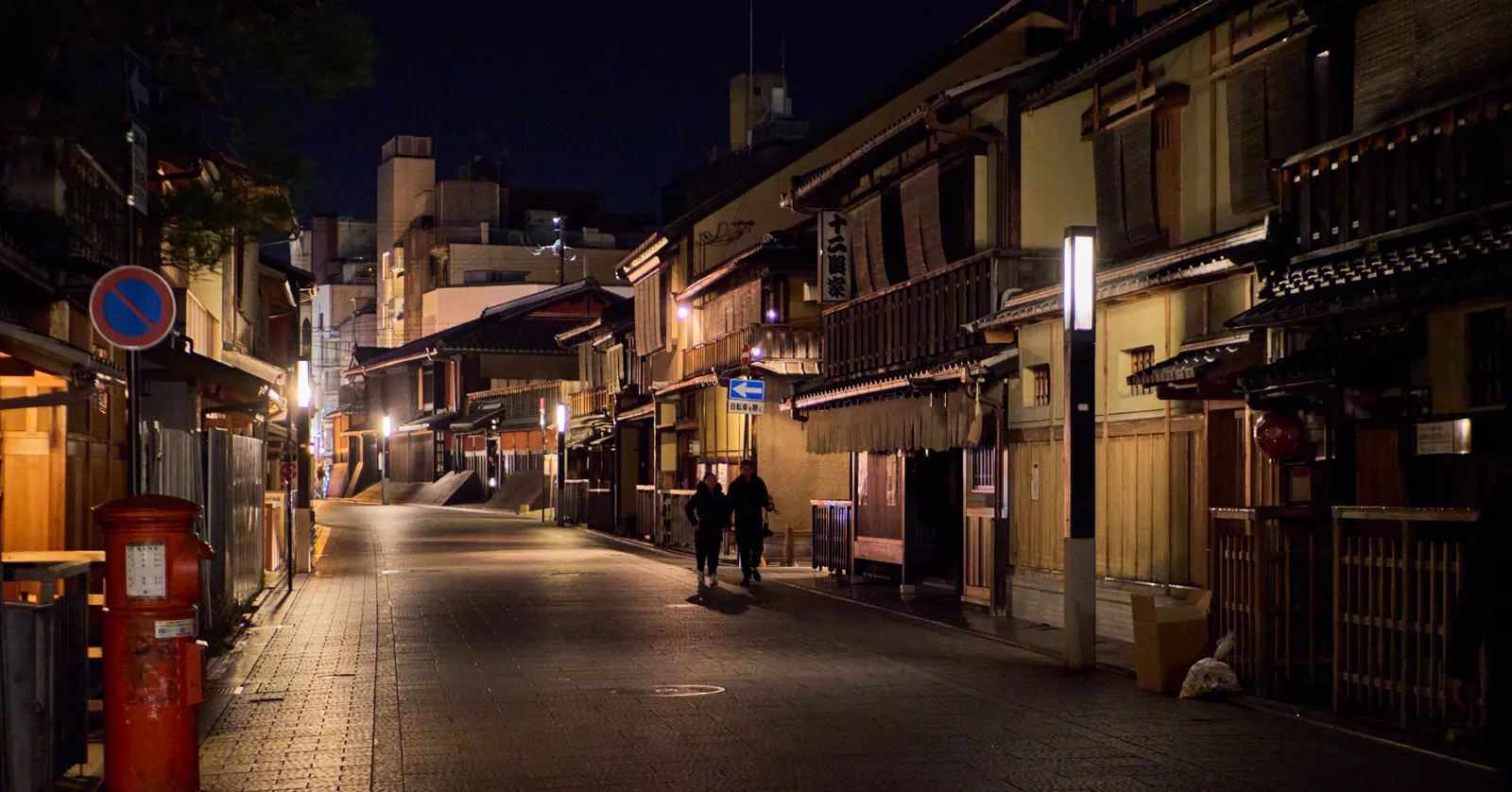
Kyoto’s Gion district runs east along Shijo-dori from the Kamo river to Yasaka Shrine, its side streets lined with two-storey wooden teahouses, and the shrine at the end of it is free and open at any hour.
Photography is banned on Gion’s private alleys
Hanamikoji-dori runs south from Shijo-dori through the middle of Gion and is the street most of the photographs are taken on: two-storey machiya with slatted timber lattices, deep tiled eaves, and almost no signage, because the businesses behind those fronts are not trying to attract passing trade. The narrow lanes leading off it are private property, and a council of residents and shop owners closed them to photography with a penalty of up to 10,000 yen, after years of visitors chasing geiko and maiko down them, cornering them and pulling at their kimono. Signs mark which lanes are covered and there are cameras on them. Hanamikoji itself is a public road and is not included, but the request to ask before photographing anyone stands there too.
The other half of Gion is quieter and most people miss it. A few minutes north, Shinbashi-dori runs along the Shirakawa canal on stone paving, willows hanging over the water, low wooden houses on the far bank and small bridges across it. It is the same architecture as Hanamikoji at maybe a third of the foot traffic, with the exception of Tatsumi bridge, which is narrow enough that people photographing it block it entirely. If you would rather be part of the picture, kimono rental by the day near Gion-Shijo is bookable through a tours and activities platform, which is what a good share of the people you pass on these streets have done.
Both streets are narrow, both are busiest between five and eight in the evening, and neither has a pavement to step onto, so a wheeled suitcase in that hour means walking in single file behind whoever is in front of you.
Kenninji was founded in 1202 and is Kyoto’s oldest Zen temple
Kenninji occupies a walled block at the southern edge of Gion, between Hanamikoji and the river, and going through its gate takes the noise level down by about half. The monk Eisai founded it in 1202 after two study trips to China, from which he brought back both Rinzai Zen and tea cultivation, which is a reasonable claim to have changed Japanese daily life twice.
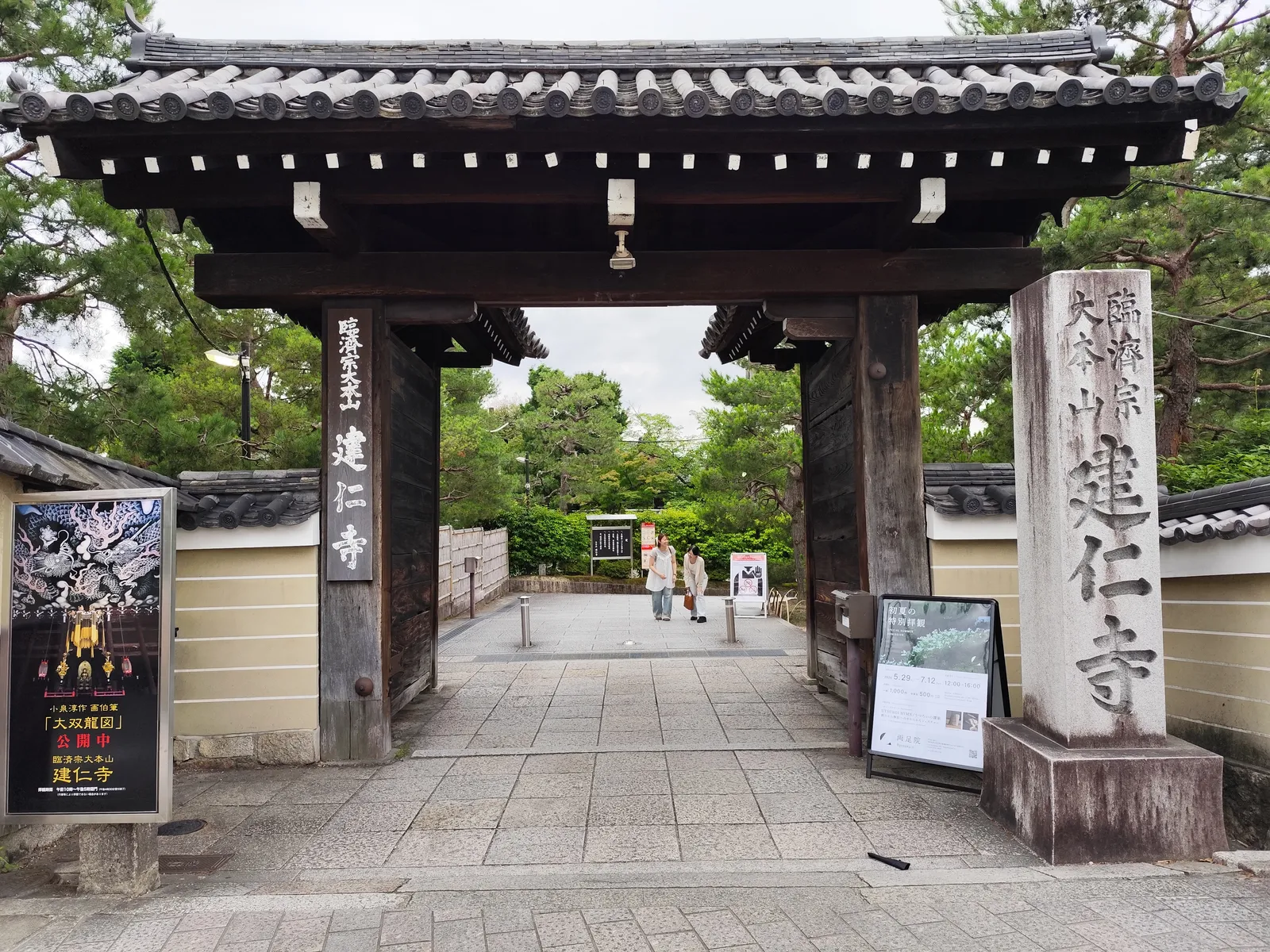
It is the head temple of the Rinzai school and ranks third among Kyoto’s five great Zen temples. The Dharma Hall ceiling carries a pair of dragons painted across it in 2002 for the temple’s 800th anniversary, and the dry gardens around the main buildings are the sort you sit on a veranda and look at rather than walk through. Admission is 800 yen and the doors are open 10am to 4:30pm, which makes it the fixed point in an otherwise open-ended evening here.
Yasaka Shrine has no closing time
Shijo-dori ends at a vermilion two-storey gate standing above a flight of steps, and that gate is Yasaka Shrine, founded in 656 and free to walk into at any hour of any day. In front of the main hall is a dance stage hung on all four sides with rows of white lanterns, lit after dark, and behind the whole compound is Maruyama Park, which is where Kyoto goes to see cherry blossom in April.
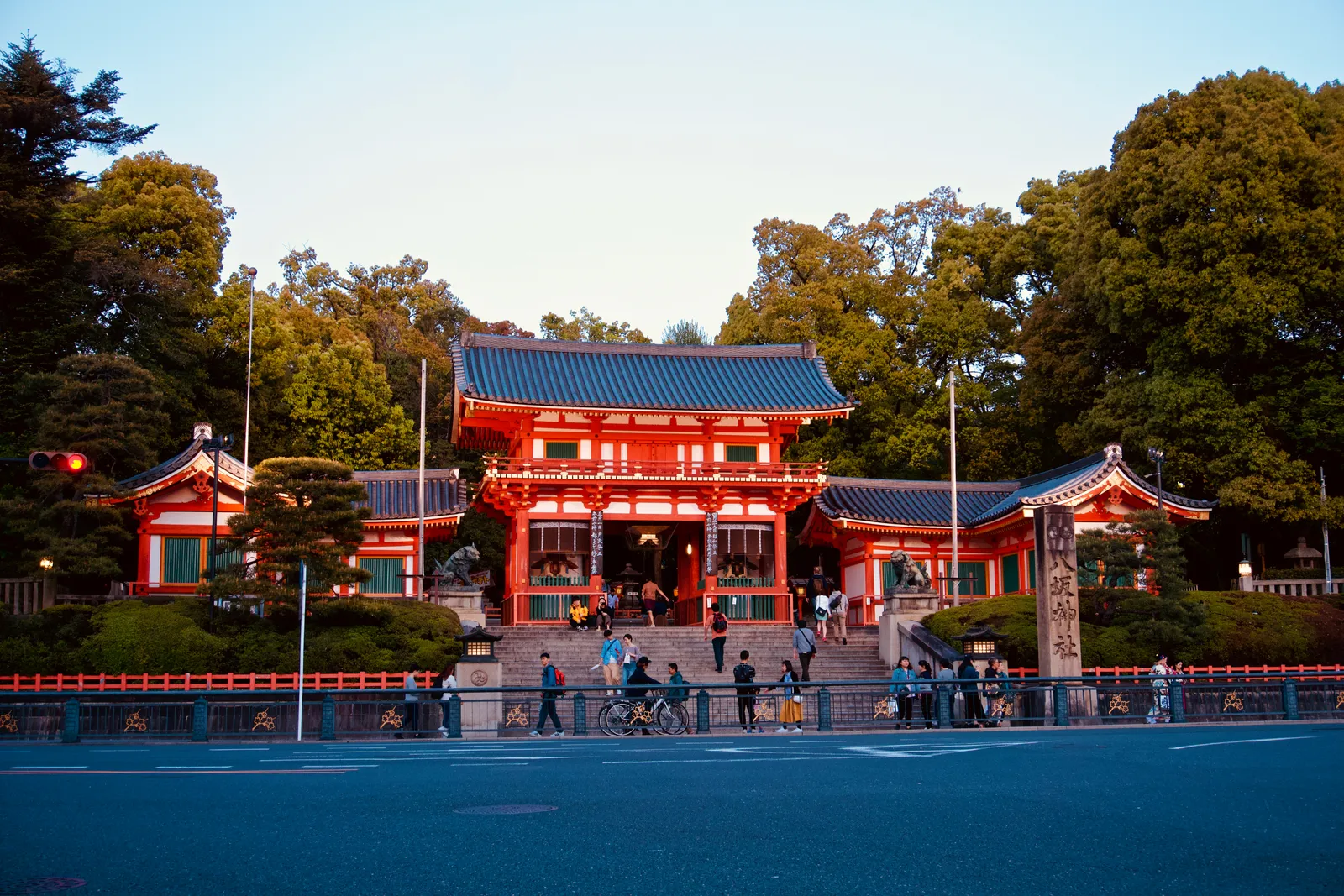
The shrine is also the reason July is a difficult month to move around central Kyoto. In 869 an epidemic was running through the city and the shrine’s portable sanctuary was carried through the streets to stop it; the procession has been repeated every year since as the Gion Matsuri, which now fills the whole of July and closes streets for the float parades in the middle of it. If you are here in any other month, the compound at night, lit and largely empty, is the version most visitors never see.
Gion has no station of its own
Buses from the stop in front of Yasaka Shrine reach Kyoto Station in about twenty minutes for 230 yen, which is the rare Kyoto journey where the bus is the sensible choice. The alternatives are Gion-Shijo and Kyoto-Kawaramachi, a few minutes’ walk west over Shijo bridge, and both need a change to get to Kyoto Station, so the rail version comes out at a similar ten to fifteen minutes once the transfer is counted.
From Kyoto Station the Kansai-Airport Express Haruka runs to Kansai International Airport (KIX) in about 75 minutes, roughly every half hour, at 3,060 yen non-reserved or 3,590 yen reserved, from platform 30 at the west end of the building. The airport bus from the Hachijo exit is 2,800 yen and runs later, to 9:10pm. Either way you are back at Kyoto Station first, which is where a bag left in a storage point is waiting. If the evening turns out to be shorter than planned, the main Kyoto guide has the stops that sit closer to the station.
Frequently asked questions
What should I do during a layover near Gion in Kyoto?
Walk Hanamikoji from Shijo-dori south, take the Shirakawa canal north of it on the way back, and finish at Yasaka Shrine, which costs nothing and never closes. That loop is about an hour at a slow pace and works best from late afternoon, when the lanterns come on and the teahouses open. Add Kenninji if you have three hours or more and want somewhere quiet with a fixed closing time of 4:30pm, which makes it the stop to drop if you are running late rather than early.
Can I take photographs in Gion?
On the main streets yes, on the private alleys no. A council of Gion residents and shop owners banned photography on the private lanes leading off Hanamikoji, with a penalty of up to 10,000 yen, after years of visitors chasing, cornering and grabbing at geiko and maiko for pictures. Hanamikoji itself is a public road and is not covered, though the same council asks people to get consent before photographing anyone. Signs mark the restricted lanes and there is camera surveillance on them.
Where is quieter than Hanamikoji in Gion?
The Shirakawa canal, a few minutes north. Shinbashi-dori runs along the water on stone paving, with willows over the canal, low wooden houses on one side and small bridges across it, and the crowd density drops noticeably once you are past the first bridge. The exception is Tatsumi bridge itself, which is narrow and gets blocked by people photographing the willows, so cross elsewhere and walk the bank.
Is Pontocho worth crossing the river for?
Yes, if you want dinner rather than architecture. Pontocho is a single alley running parallel to the Kamo river on the west bank, roughly wide enough for two people to pass, lined end to end with restaurants and lit by lanterns after dark. It is a five-minute walk from Gion across Shijo bridge, and it is the natural continuation of the same evening rather than a separate trip. Prices sit well above the streets behind it, and several places keep to a reservation-only policy.
How do I get from Gion to Kyoto Station?
The bus, which is the one place in Kyoto where it beats the train. Buses run from the stop in front of Yasaka Shrine to Kyoto Station in about twenty minutes for 230 yen. There is no station in Gion itself: the nearest are Gion-Shijo and Kyoto-Kawaramachi, both a few minutes west across the river, and both need a change to reach Kyoto Station, which brings the rail option to a similar ten to fifteen minutes plus the transfer wait.