Kiyomizu-dera Layover: Kyoto's Hill Lanes
Part of the full Kyoto Layover: Fushimi Inari Gates, KIX
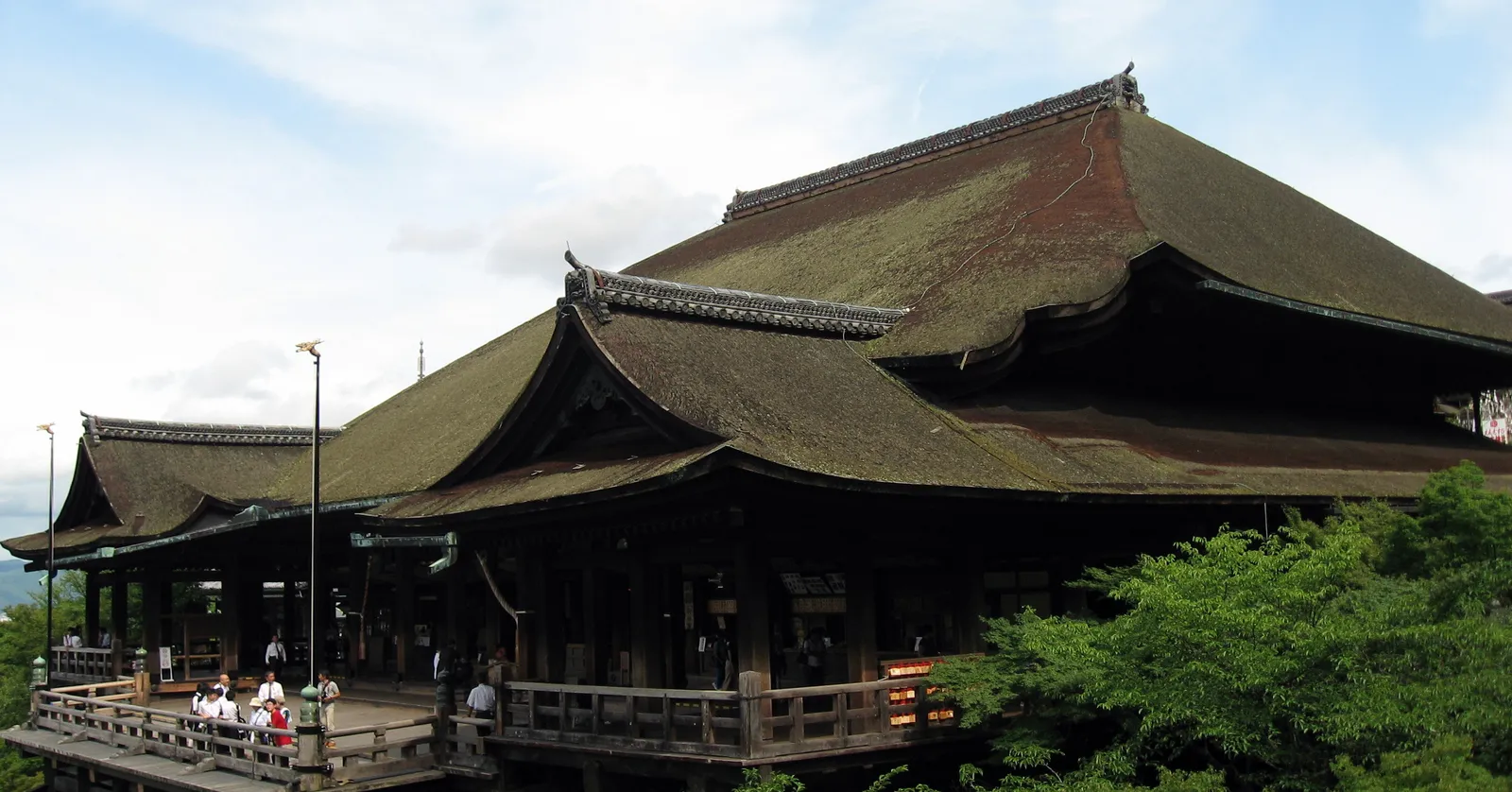
Kiyomizu-dera stands on a wooden stage above the eastern slope of Kyoto, ten minutes uphill on foot from the nearest bus stop, and the stone-stepped lanes running down from it pass a 46-metre pagoda and a one-room temple hung with thousands of coloured cloth balls.
Kiyomizu-dera’s stage rests on 168 pillars and no nails
The temple was founded in 778 around a spring on the Higashiyama slope, and the buildings standing now went up in 1633. What everyone comes for is the veranda off the main hall, which runs out from the hillside on a trestle of 168 timber pillars, cross-braced and jointed together with no nails anywhere in the structure. Standing on it you are looking over the tops of maples at the whole of Kyoto laid out flat below.
Behind the hall, the Otowa waterfall drops in three separate streams into a pool, and visitors queue to catch one of them in a long-handled cup: long life, success in study, luck in love, one each, and the convention is that taking all three is greedy rather than efficient. Admission to the inner grounds is 500 yen and the gates open at 6am and close at 6pm. If you would rather have the place explained and sit down for tea somewhere on the way, a guided walk that pairs the temple with a tea ceremony is bookable through a tours and activities platform.
Everything here runs on buses, not trains
There is no station on this hillside, which is the single fact that shapes a stop here. Buses from Kyoto Station reach the Kiyomizu-michi stop in about fifteen minutes for 230 yen, and the temple is ten minutes uphill from there. Coming back, the Kansai-Airport Express Haruka goes from platform 30 at Kyoto Station to Kansai International Airport (KIX) in about 75 minutes, roughly every half hour, at 3,060 yen non-reserved or 3,590 yen reserved; the airport bus from the Hachijo exit is 2,800 yen and runs later, to 9:10pm. Allow two hours from the top of the hill to the terminal, since the bus down is the slowest part of it.
Walking north instead of back down brings you into Gion in about twenty minutes, which is the better plan if the evening is ahead of you rather than the morning. If a hill and a bus both sound like more than the day has room for, the main Kyoto guide stays closer to the tracks.
Sannenzaka and Ninenzaka are stone steps, not streets
The two lanes running down from the temple gate are flights of shallow stone steps between timber shopfronts, and they have been a designated preservation district since 1976, which is why there are no overhead cables, no road markings and no cars anywhere along them.
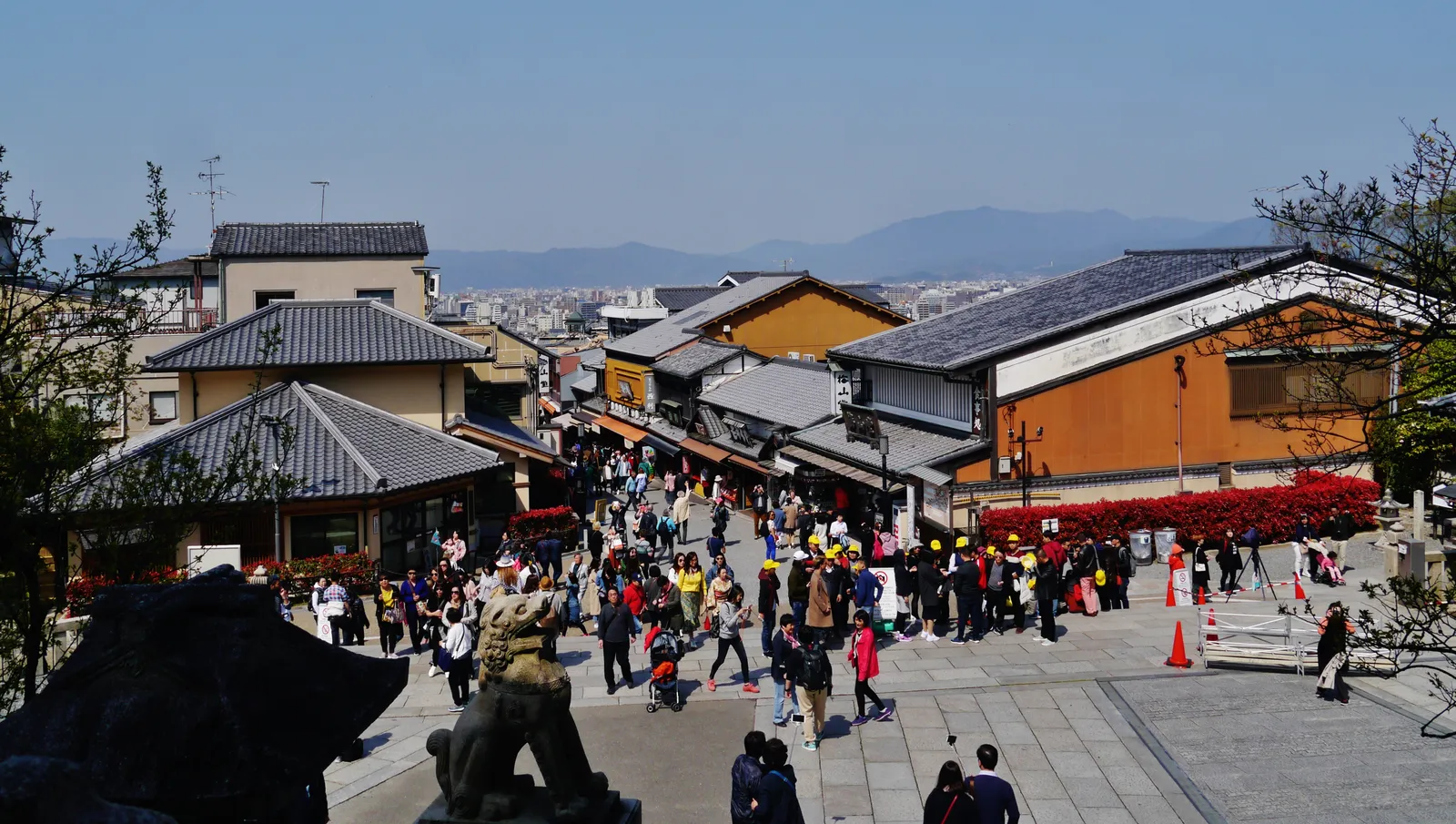
Their names mean two-year slope and three-year slope, and the local line is that slipping on them buys you two or three years of bad luck, which is a memorable way of saying that worn stone in the wet is slippery. The preservation rules also keep motor vehicles out of the whole district, so nothing drops you off anywhere on this hill: taxis and buses stop at the bottom, and everything above that point goes up and comes down on foot, carried.
The 46-metre Yasaka Pagoda stands in the middle of a lane
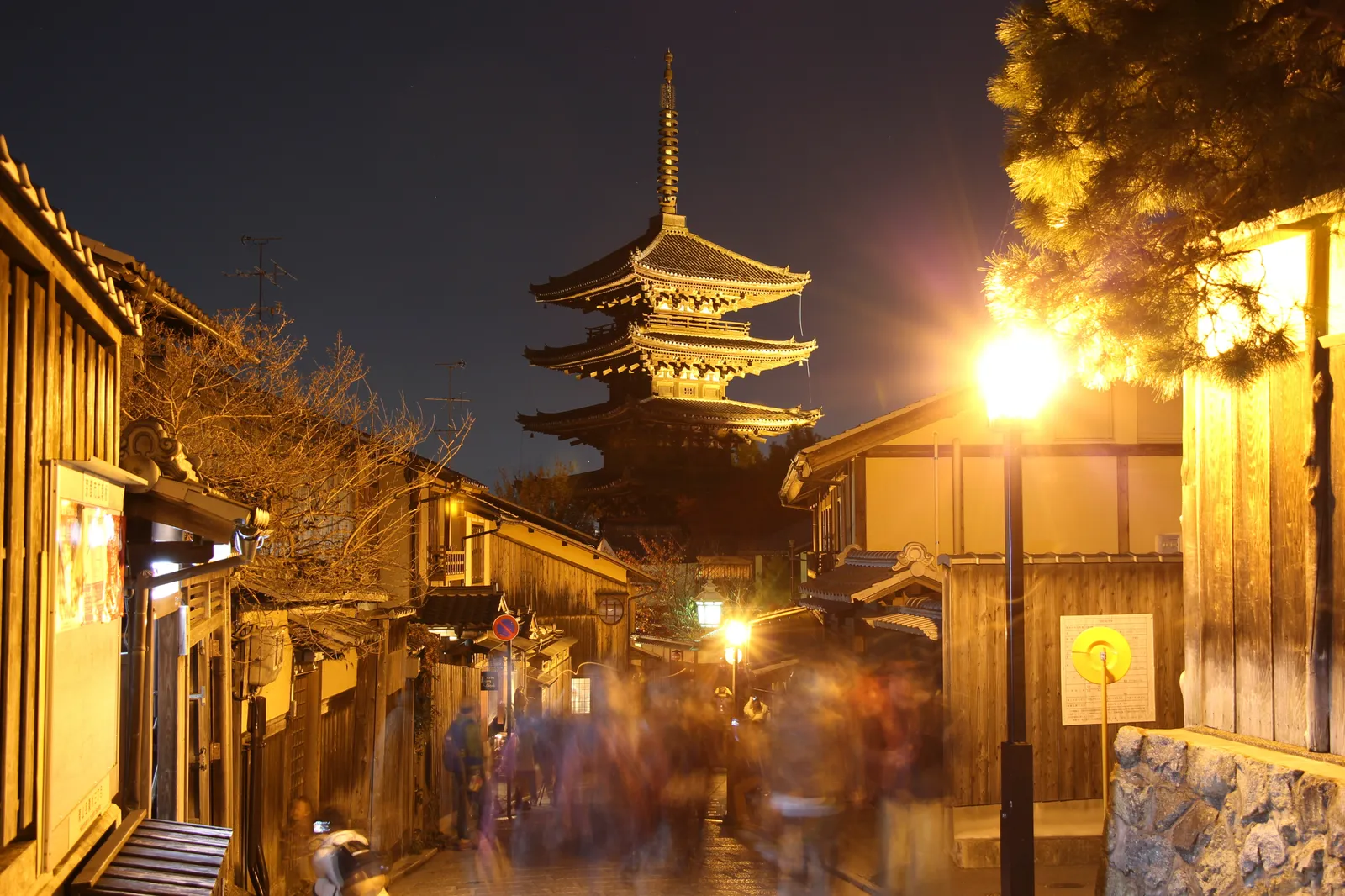
Hokan-ji’s five-storey pagoda is 46 metres high and sits not in a temple compound but in the middle of an ordinary residential lane, roofs and house fronts running right up to its base, which is why it appears in almost every photograph anyone takes of this part of Kyoto. Its interior opens only occasionally; the thing itself is free to stand under at any hour, and it is lit after dark.
The cloth monkeys at Yasaka Koshin-do temple
Yasaka Koshin-do stands immediately beside the Yasaka Pagoda, a hall about the size of a shop unit, hung from the floor to the ceiling with kukurizaru: small cloth balls in every colour, each one a monkey with its hands and feet tied. The idea is that a monkey left loose does whatever it wants, so binding it stands for holding your own desires still, and the deal is that you write a wish on one, hang it, and give up something you wanted in exchange.
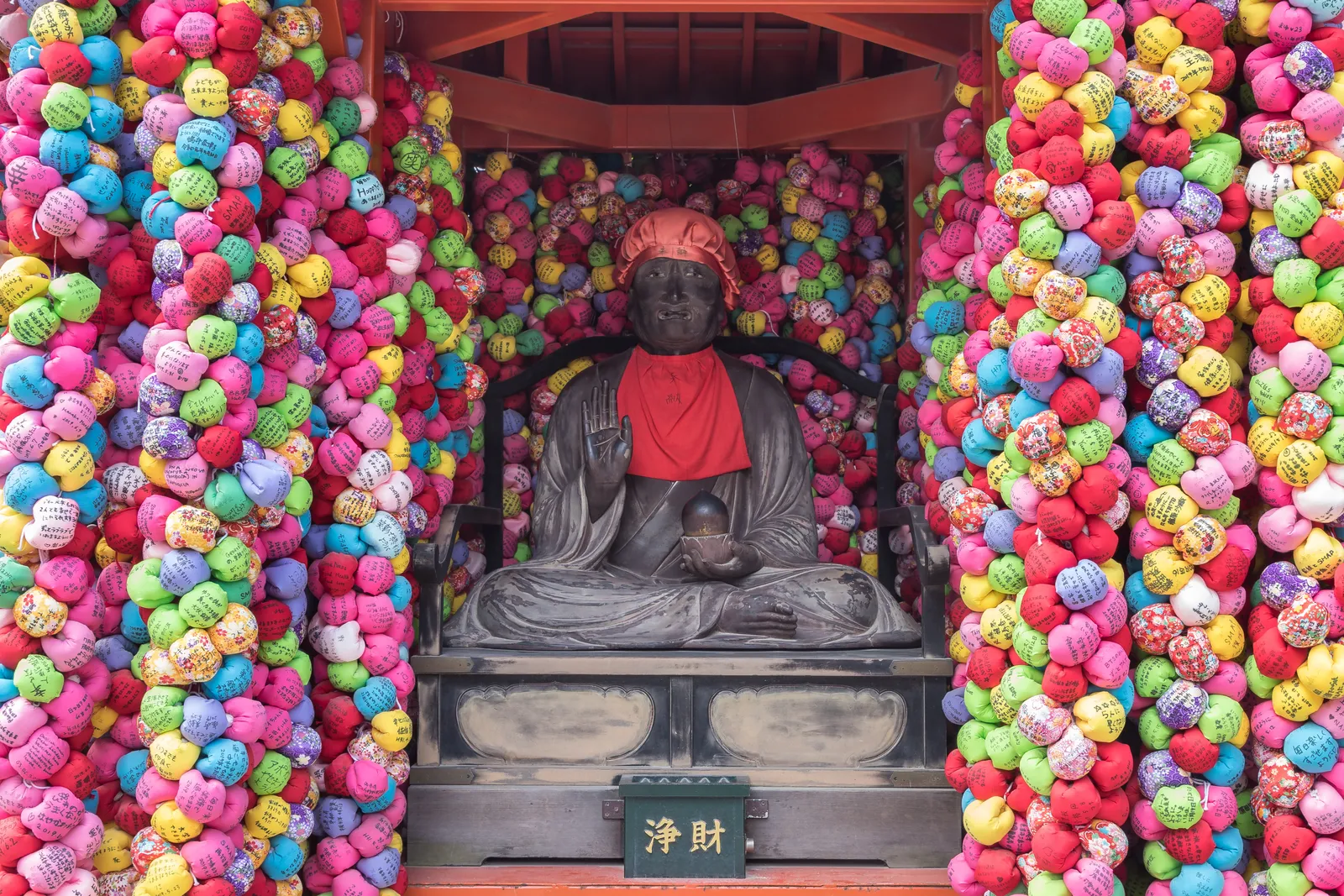
Its full name is Daikoku-san Kongo-ji, it is dedicated to Shomen Kongo rather than to any of the better-known figures on this hill, and it also keeps the three wise monkeys. Entry is free, the hours are 9am to 5pm, and the whole visit takes five minutes. It is also the last thing on the hill before the ground flattens out, so from here it is downhill to the bus and then straight through Kyoto Station, where whatever you left at a storage point is on the way to the platform rather than a detour from it.
Frequently asked questions
What should I do during a layover near Kiyomizu-dera in Kyoto?
Go up first and come down slowly. Kiyomizu-dera is 500 yen and open from 6am, so it is the one thing here you can do before anything else in Kyoto has opened; give it forty minutes including the stage and the Otowa waterfall. Then walk down through Sannenzaka and Ninenzaka to the Yasaka Pagoda, which takes another hour if you stop, and costs nothing at any point. Yasaka Koshin-do, the small temple hung with coloured cloth balls beside the pagoda, is a five-minute detour and free, and it is the part to drop if the clock is against you.
How early does Kiyomizu-dera open?
Six in the morning, every day, which makes it the practical answer to an early arrival in Kyoto with nowhere else open. Most of the city's temples do not unlock until 8:30 or 9am, so between six and eight the stage and the approach lanes are close to empty and the light is on the city rather than in your eyes. Last entry is at 6pm. Spring and autumn bring separate evening illumination sessions with their own tickets and closing times, so check the temple's schedule if you are here in April, May or November.
What is the small temple covered in coloured balls near the Yasaka Pagoda?
Yasaka Koshin-do, properly Daikoku-san Kongo-ji, a tiny Koshin-faith hall packed with kukurizaru: cloth balls representing monkeys with their hands and feet bound, which stands for holding your own desires in check. You write a wish on one and hang it, giving up something you want in exchange. It is dedicated to Shomen Kongo and also honours the three wise monkeys. Open 9am to 5pm, no admission charge, and it takes up about the footprint of a small shop.
How much of the Higashiyama walk is free?
All of it except the temple at the top. Kiyomizu-dera charges 500 yen for the inner grounds that include the stage and the waterfall, and everything below the gate costs nothing: the whole run of Sannenzaka and Ninenzaka, the Yasaka Pagoda, which is only entered on occasional openings but is the thing people photograph from the street anyway, and Yasaka Koshin-do. On a tight budget the honest version of this walk is to look at the temple's gate, turn round, and spend the time on the lanes.
How do I get to Kiyomizu-dera from Kyoto Station?
A bus, then a climb. There is no station near the temple, so the usual route is a bus from Kyoto Station to the Kiyomizu-michi stop, about fifteen minutes and 230 yen, then ten minutes uphill on foot from there. The last stretch is inside a preservation district that no motor vehicle may enter, so a taxi cannot shortcut it either: the road ends and the slope begins. Coming back down, the same bus route runs in reverse from the bottom of the hill.