Berlin Layover Guide: What to Do Before a Flight Out of BER
If you have 4-6 hours in Berlin before a flight out of BER, leave your bag near Hauptbahnhof, walk south to the Reichstag and the Brandenburg Gate, cross the field of stelae, then follow Unter den Linden east to Museum Island before riding the 23-minute Airport Express back.
Out of Hauptbahnhof and straight into the government quarter
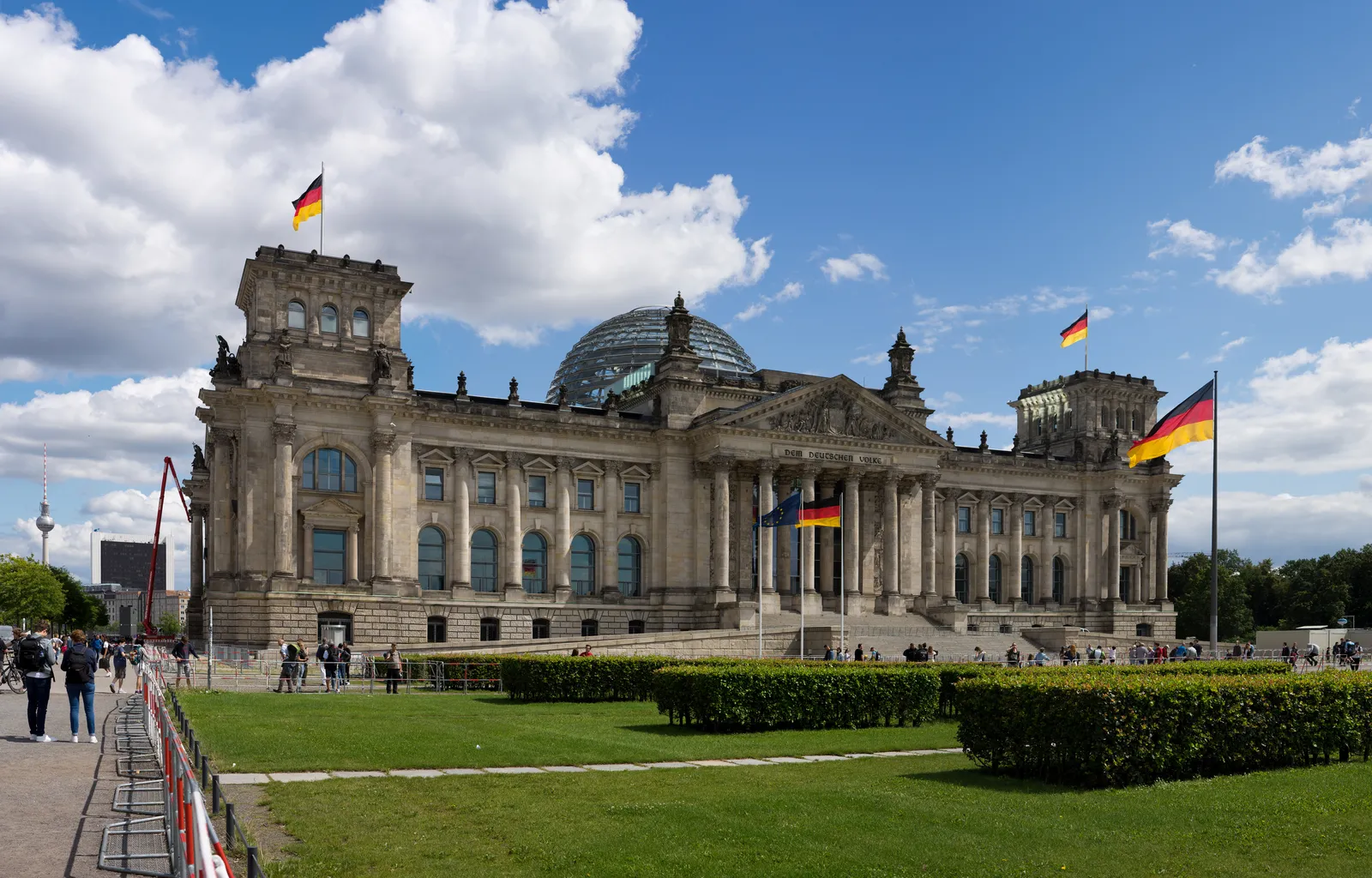
Berlin’s sights are famously spread out, which is why so many layover afternoons here get eaten by transfers. The exception is the strip that starts directly outside Berlin Hauptbahnhof. Leave by the south exit, cross the Spree, and in about ten minutes of flat pavement you are standing on the lawn of the Platz der Republik looking at the Reichstag.
What you are looking at is a building that has been burned, shelled, walled off from half the city, and then rebuilt with a glass dome sitting where the old one stood, on the argument that voters should be able to look down on their parliament rather than the other way round. Going up is free, and the ramp inside spirals about 230 metres to the top and back with no stairs anywhere on it. The catch is that you cannot simply walk in: registration is compulsory, slots open roughly three months ahead, and the good midday times in summer go within days. If you did not plan for it, the visitors’ service point about 150 metres away on Scheidemannstraße hands out same-day slots for at least two hours later when any are left, which on a weekday out of season is a reasonable gamble. Bags bigger than a cabin case do not clear the Reichstag’s airport-grade security, and there is no luggage room on site to leave one in.
Through the Gate, then across 2,710 slabs of concrete
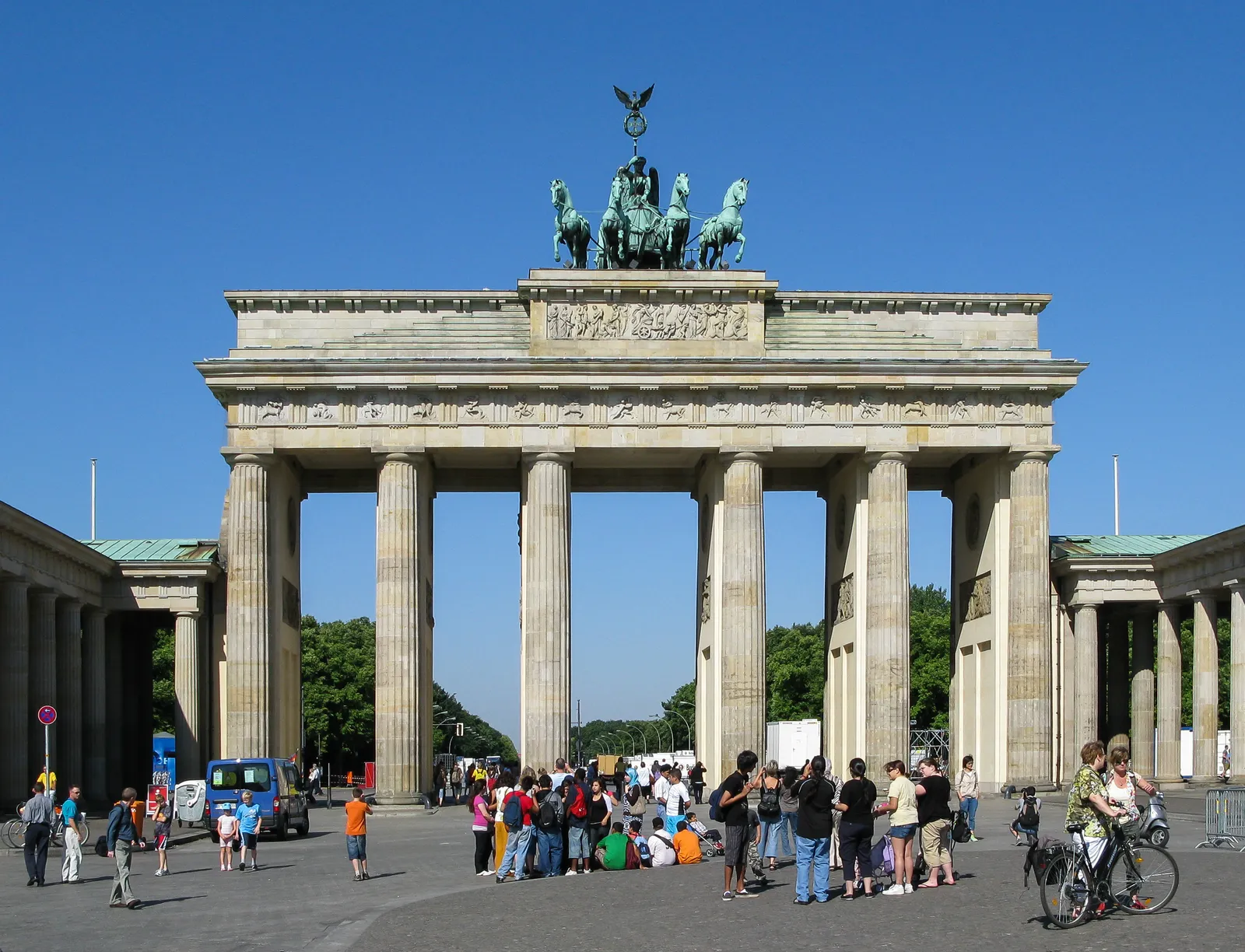
Five minutes south of the Reichstag lawn, the Brandenburg Gate closes the end of Pariser Platz. It is the one thing in Berlin that needs no ticket, no queue and no opening hours, and it is worth walking through rather than photographing from the front, because the point of it is that for twenty-eight years nobody could. It stood inside the death strip, reachable from neither side.
Carry on one block south and the ground opens into the Memorial to the Murdered Jews of Europe: 2,710 concrete stelae on undulating ground, laid out in a grid you can walk into from any side. Peter Eisenman never explained what it represents and refused to, which is why it works. The field is open around the clock and free, and the information centre underneath it is also free, open Tuesday to Sunday from 10am to 6pm and closed Mondays.
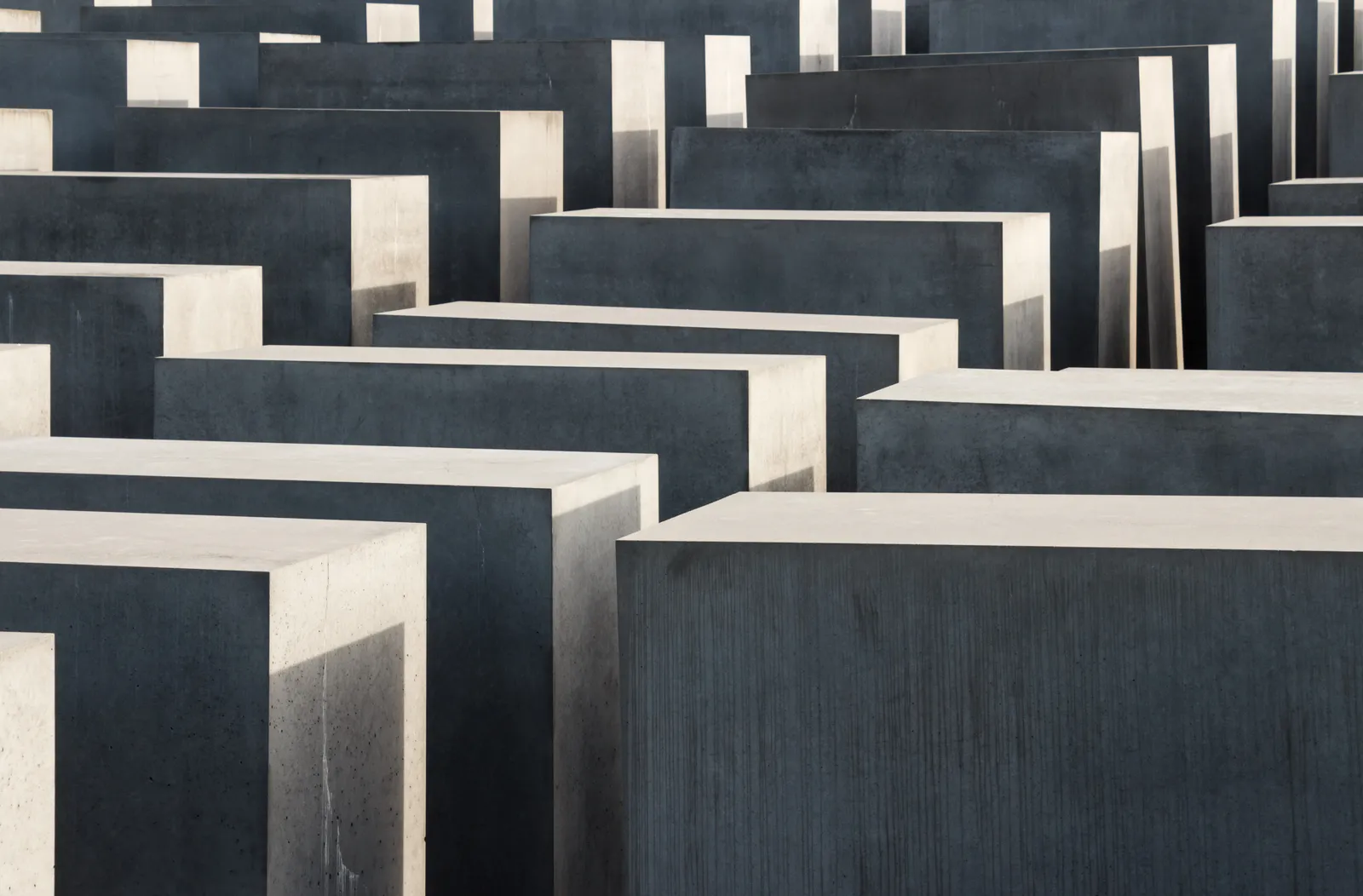
Two things worth knowing before you walk in. The ground drops away as you go toward the middle, so the stelae that were waist-high at the edge are three metres over your head by the centre and you lose sight of the street entirely; that is deliberate. And the paths are narrow, single-file, and crossed constantly by people coming the other way.
Unter den Linden runs east until it hits an island
Back at the Gate, turn your back on it and Unter den Linden runs dead straight east for about twenty minutes of walking. This was the ceremonial approach to the royal city, lined with lime trees since the seventeenth century, and it passes the Humboldt University, the Neue Wache with Käthe Kollwitz’s mother-and-son sculpture open to the rain through a hole in the roof, and the State Opera, before delivering you to the Spree.
The island in the river is Museum Island, five state collections on one sandbank, and it is worth being clear about what is actually open. The Pergamonmuseum, the one everybody has heard of, closed in October 2023 and will not reopen until 4 June 2027, and even that reopening only covers its north wing; the south wing is scheduled for the 2030s. What remains open is still a serious afternoon: the Neues Museum with Nefertiti, the Alte Nationalgalerie, the Bode-Museum and the Altes Museum.
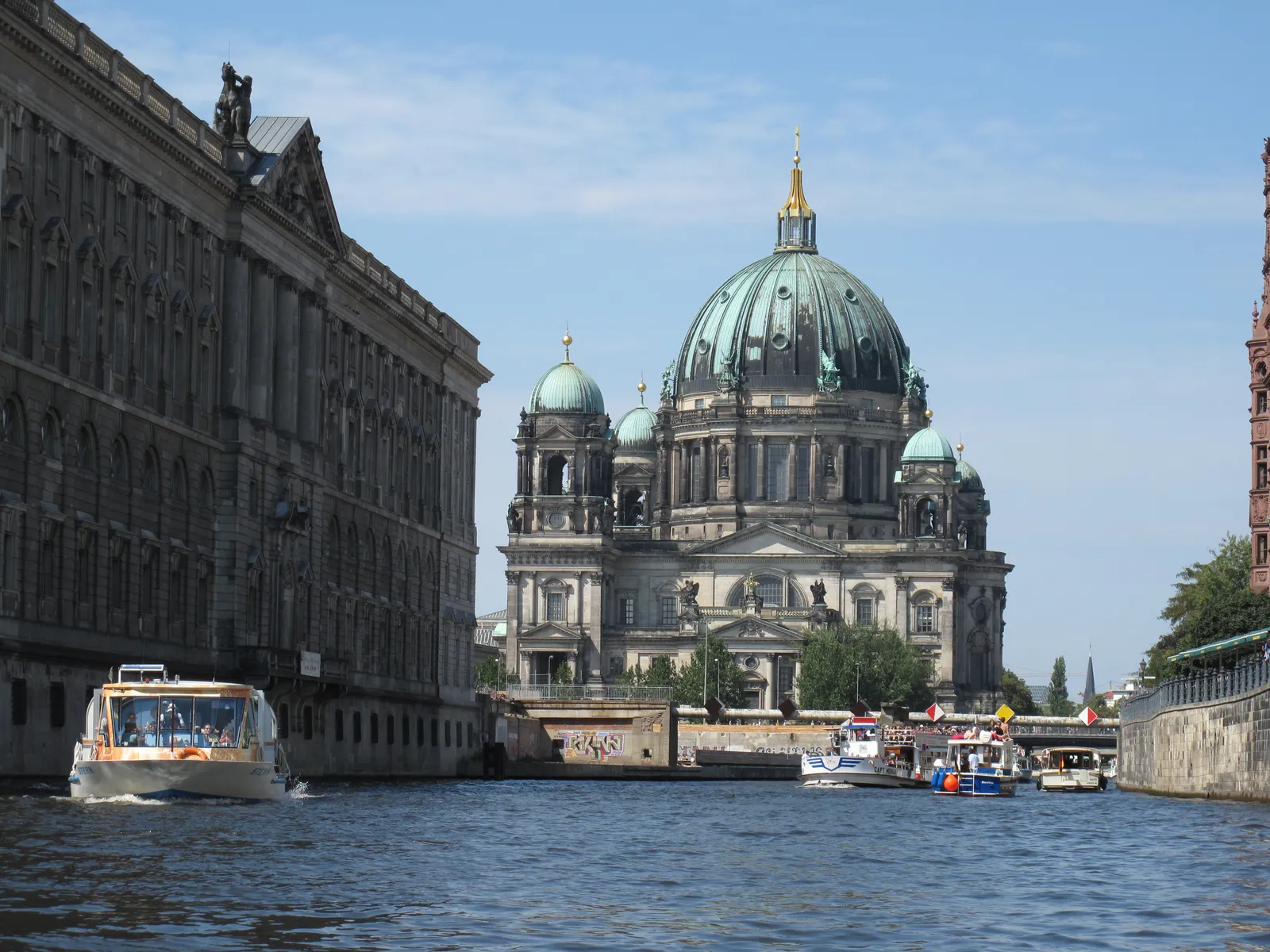
Across the Lustgarten from them, the Berliner Dom is the enormous green-domed thing you cannot miss. Standard entry is around 10 euros and includes the walkway around the outside of the dome, 270 steps up, with the widest view in the middle of the city at the top of them.
If the window stretches, do not go further out
The instinct with extra hours in Berlin is to go somewhere else. Resist it: the transfers will eat the time you gained. Two better options sit within a few minutes of where you already are.
The first is simply the bus. Lines 100 and 300 run almost exactly the route described above, on an ordinary AB ticket rather than a tour fare, so you can walk the axis east and ride it back west from an upper-deck seat, which also happens to be the entire wet-weather plan for this city.
The second is small enough that most people who work in the government quarter have never been in. On the north bank of the Spree at Schiffbauerdamm, a few minutes from Hauptbahnhof, is the Parlament der Bäume, the Parliament of Trees: a walled garden the artist Ben Wagin planted directly on the former border strip in 1990, using 58 real segments of the Wall and granite slabs carved with the names of 258 people who died at it. It is free, and it is almost always empty, which is not something you can say about anything else on this list. It is seasonal and only open some afternoons in the warmer months, and published opening days vary between sources, so check the Berlin Wall Foundation’s own listing on the day rather than turning up on spec.
The 23 minutes back out to BER
The FEX Airport Express leaves Berlin Hauptbahnhof for BER every 15 minutes from around 4am to 1am and takes about 23 minutes, calling at Potsdamer Platz and Südkreuz on the way. The S9 covers the same trip more slowly but is the better choice if you finished your afternoon nearer Friedrichstraße or Alexanderplatz, since it runs straight through both.
The ticket is the part people get wrong. Berlin’s standard AB ticket does not reach the airport: BER sits in zone C, so you need an ABC single, which is 5.00 euros in 2026. Buy it before you board, validate it, and keep it, because Berlin runs plain-clothes inspectors and being unable to produce a valid ticket is a 60 euro matter rather than a conversation. At the far end, the station sits directly beneath Terminal 1 on level U2; if you are flying from Terminal 2, come up to the arrivals level and follow the signs, which adds a few minutes on foot.
Leaving the centre about two and a half hours before departure gives you the ride, the transfer and the queues without hurrying.
A city best measured in straight lines
Berlin does not reward wandering the way a medieval centre does. It rewards picking one straight line and walking the whole of it, which is exactly what the Hauptbahnhof-to-Museum-Island axis is: roughly three kilometres, flat the entire way, with the Reichstag, the Gate, the memorial and the river strung along it in order. It is a good walk and a genuinely easy one, right up until you try to do it towing something on wheels. Leave the bag by the station for the afternoon and the whole thing turns into a walk you would take even if you did not have a flight to catch.
Frequently asked questions
How long does the train from central Berlin to BER actually take?
About 23 minutes from Berlin Hauptbahnhof on the FEX Airport Express, which also calls at Potsdamer Platz and Südkreuz and runs every 15 minutes between roughly 4am and 1am. The S9 is slower but useful if you are nearer Friedrichstraße or Alexanderplatz. BER sits in fare zone C, so you need an ABC ticket rather than the standard AB one, which costs 5.00 euros for a single as of 2026. The station is directly under Terminal 1 on level U2.
Can I get into the Reichstag dome if I did not book weeks ago?
Sometimes. Entry is free but registration is compulsory, and slots open about three months out and go quickly for midday times in summer. The fallback is the Bundestag visitors' service point about 150 metres from the building on Scheidemannstraße, which can issue a slot for a visit at least two hours later if any are left that day. Bring photo ID for everyone in your party, since the name on the booking is checked at the door.
Does this route work with elderly parents or a wheelchair?
Better than most European city walks. Central Berlin is flat, the pavements along Unter den Linden are wide and smooth, and the Reichstag has lifts up to the roof terrace with a gently graded double-helix ramp of about 230 metres through the dome rather than stairs. The field of stelae has marked step-free entry routes with slopes no steeper than about eight percent. If the full three kilometres is too far on foot, bus 100 or 300 covers nearly the same line.
What is the plan if it rains?
Swap the walking for bus 100 or 300, which run the Zoo to Alexanderplatz and Philharmonie to Warschauer Straße axes on an ordinary AB ticket and pass the Reichstag, Brandenburg Gate, Unter den Linden and Museum Island from an upper deck seat for the price of a normal fare. That turns the same itinerary into a dry hour, and it leaves the option of getting off at Lustgarten and spending the rest of the window inside one museum.
Which Museum Island museum makes sense on a short window?
Not the Pergamon: it has been shut since October 2023 and is not due to reopen until 4 June 2027, and even then only its north wing. That leaves the Neues Museum, where Nefertiti is the headline object, plus the Alte Nationalgalerie, the Bode-Museum and the Altes Museum. The Neues is the one to pick if you only have an hour, since its collection reads quickly and the building itself, rebuilt around its own war damage, is half the point.