Hamburg Layover: Speicherstadt From HAM
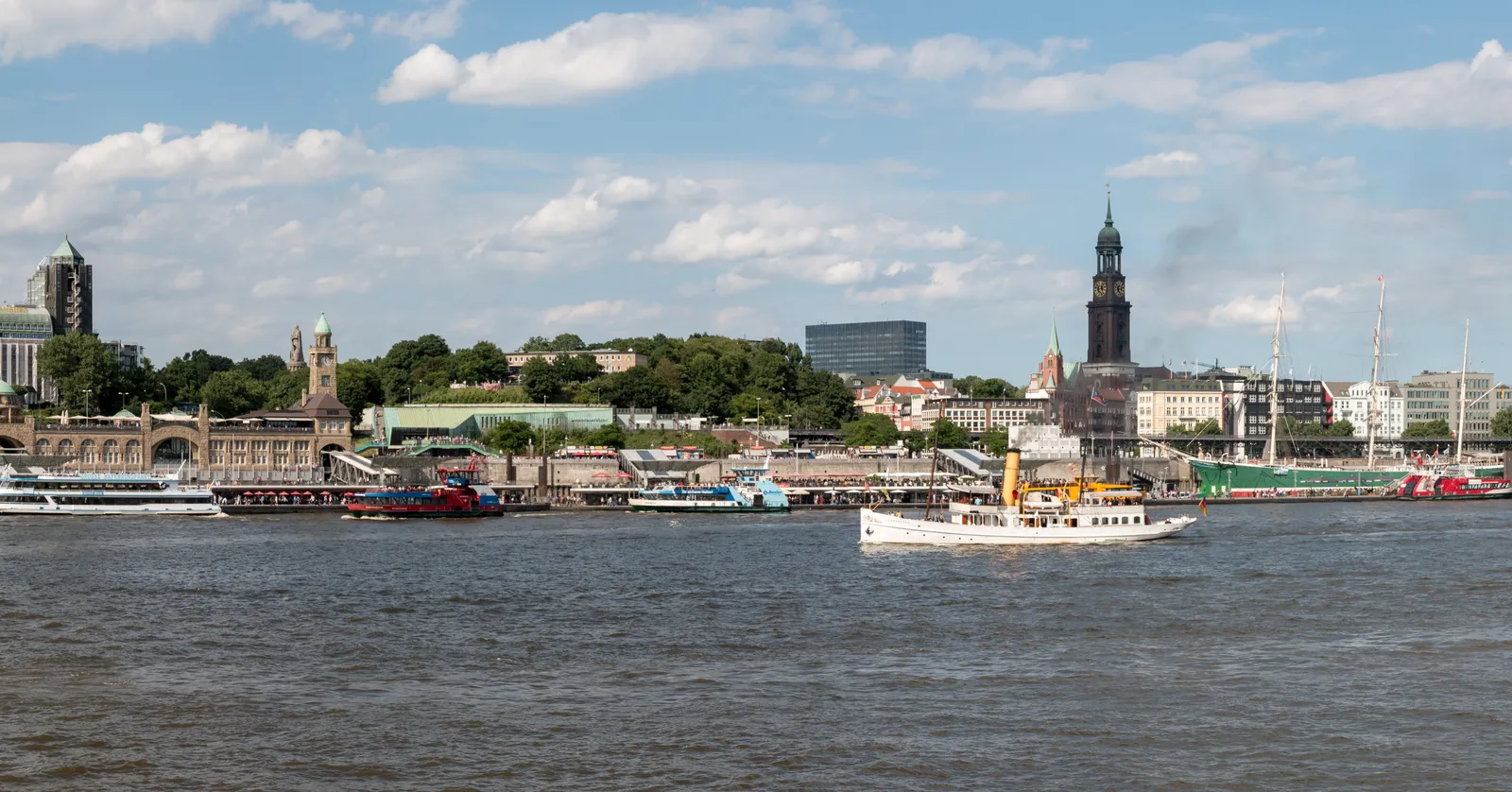
Hamburg’s Speicherstadt is 1,500 metres of red-brick warehouses standing on oak piles over a grid of canals, and the Elbphilharmonie concert hall’s public deck, Hamburg City Hall’s courtyard and a tunnel running 426 metres under the Elbe all sit within a half-hour walk of it.
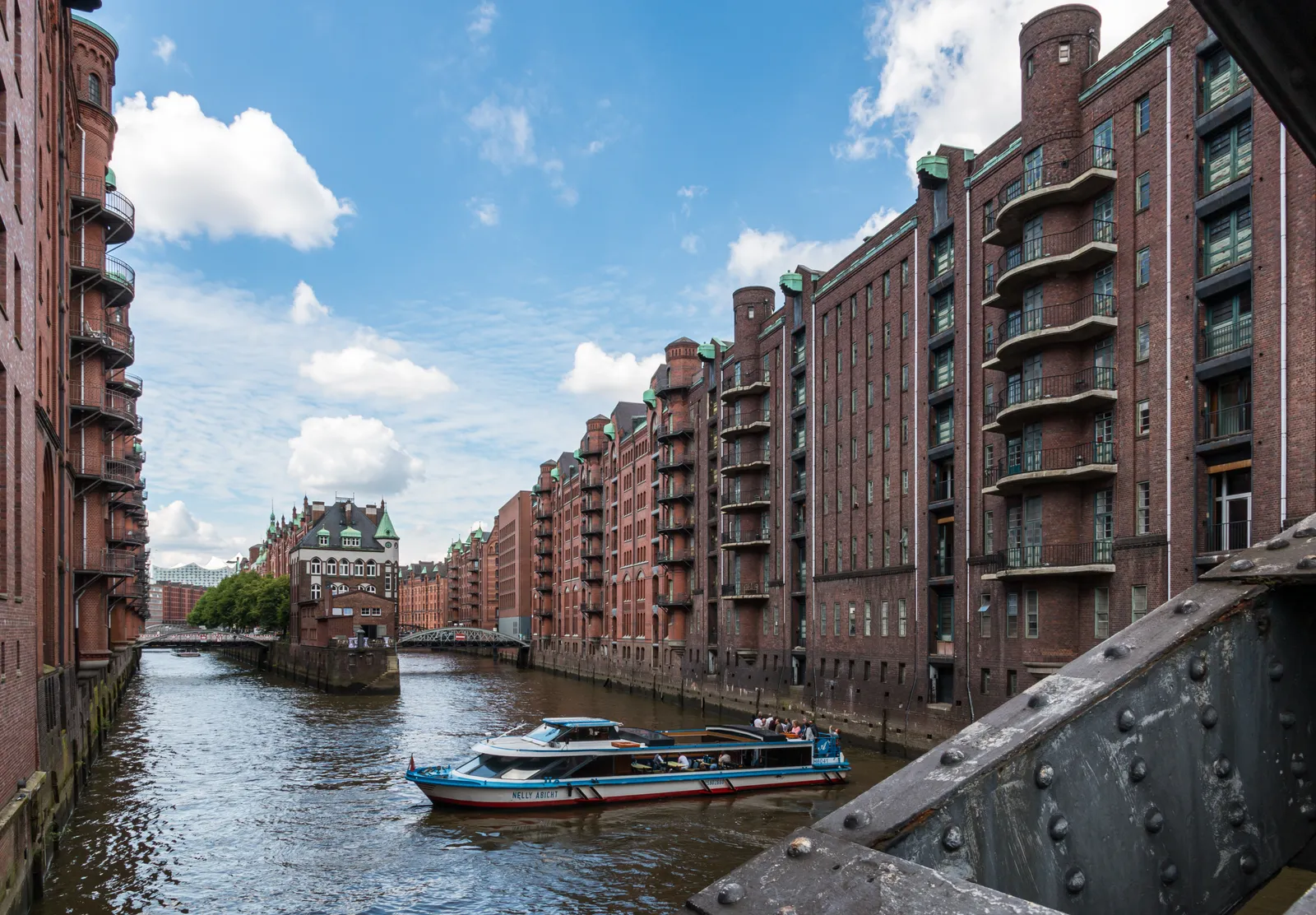
Speicherstadt is the world’s largest warehouse district built on piles
Speicherstadt went up between 1883 and 1927 as a customs-free district for storing goods coming off the ships: coffee, cocoa, tea, spices, some of which are still handled here. It runs 1,500 metres long and 250 metres deep and, at 630,000 square metres of floor space, is the largest warehouse district in the world built on timber piles, oak logs driven into marshy ground because there was no firmer ground here. Loading canals, the Fleete, run between the blocks, so most of the district is seen from a bridge rather than a street. UNESCO listed it in 2015, together with the Kontorhaus office district immediately north.
Inside one of the blocks, Miniatur Wunderland holds the largest model railway in the world: roughly 16.5 kilometres of track, some 1,230 trains, around 290,000 figures and twelve modelled regions running from Patagonia to Scandinavia. Nearly 1.6 million people came through in 2024, and entry is timed for that reason, with adult tickets starting around 22 euros. Slots go early on weekends and through the school holidays, so a ticket booked in advance through a tours and activities platform is the difference between walking straight in and queueing. The streets between the blocks are cobbled end to end.
The Elbphilharmonie’s glass roof sits on a 1960s warehouse
The Elbphilharmonie opened in January 2017 on top of Kaispeicher A, a plain brick warehouse finished in 1966 that was kept whole and used as the base of the new building. Herzog & de Meuron’s glass upper half brings the total to 108 metres, taller than anything else lived or worked in across the city, and its roofline is cut into a row of peaks that read as waves from the water.
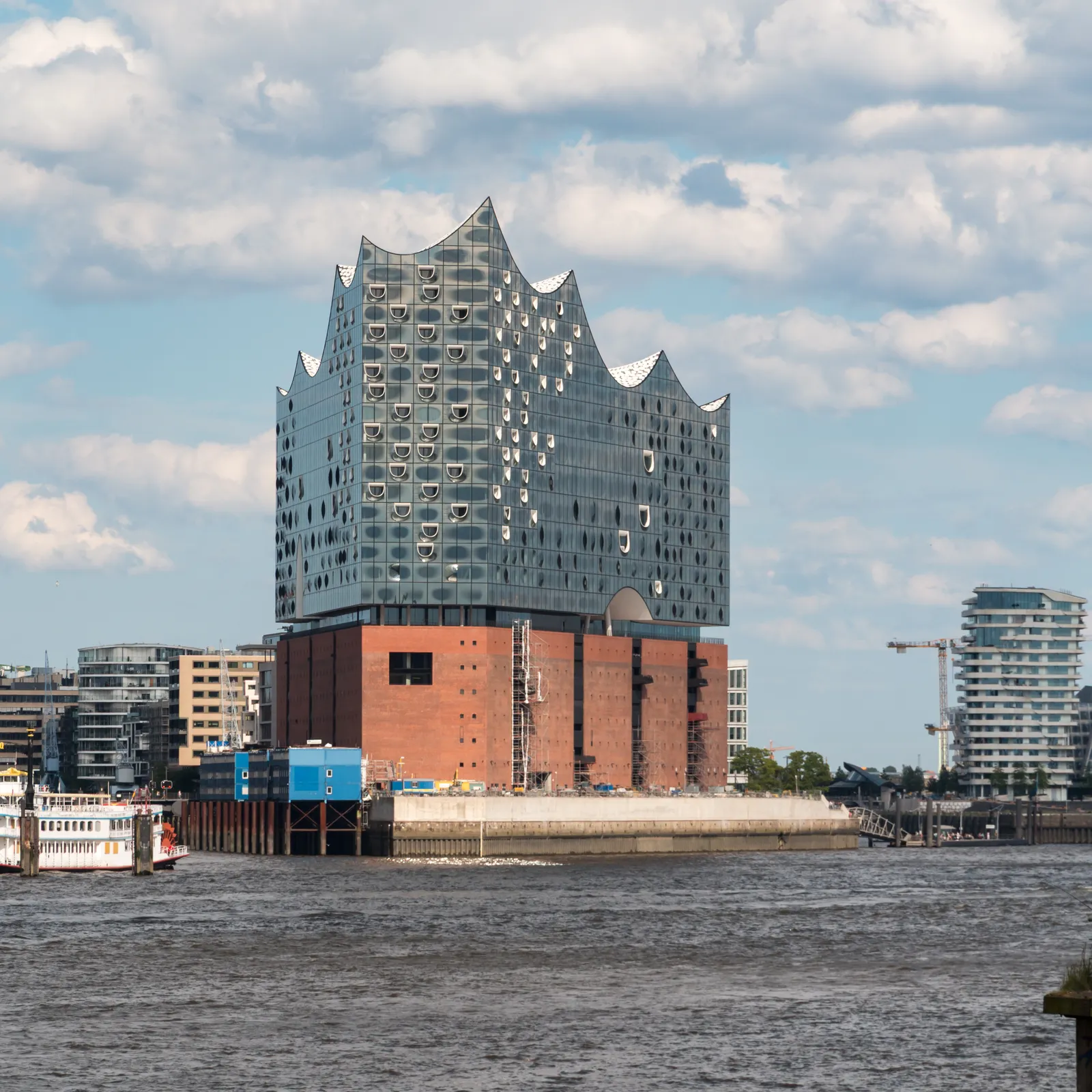
A long curved escalator inside the brick section carries you up to the Plaza, an open-air deck laid out where the warehouse roof used to be, 37 metres above the ground, with the container cranes on one side and the church spires on the other. It stays open from 10am to midnight, last admission 11:30pm. Until 5 October 2026 walk-up tickets are free from the visitor centre at the main entrance while they last; from that date entry costs 5 euros, booked ahead or picked up on the spot.
St. Michaelis’ tower trumpeter plays twice a day from four windows
St. Michael’s Church, the Michel to everyone here, has kept a tower trumpeter for around three hundred years. He climbs to the seventh floor, opens the east window and plays a chorale, then works round the remaining three in turn: 10am and 9pm Monday to Saturday, noon on Sunday. Until 1861 the same signal marked the opening and closing of the city gates. Standing on the pavement below to listen costs nothing, and the 9pm round is the reason this stop survives a genuinely late departure.
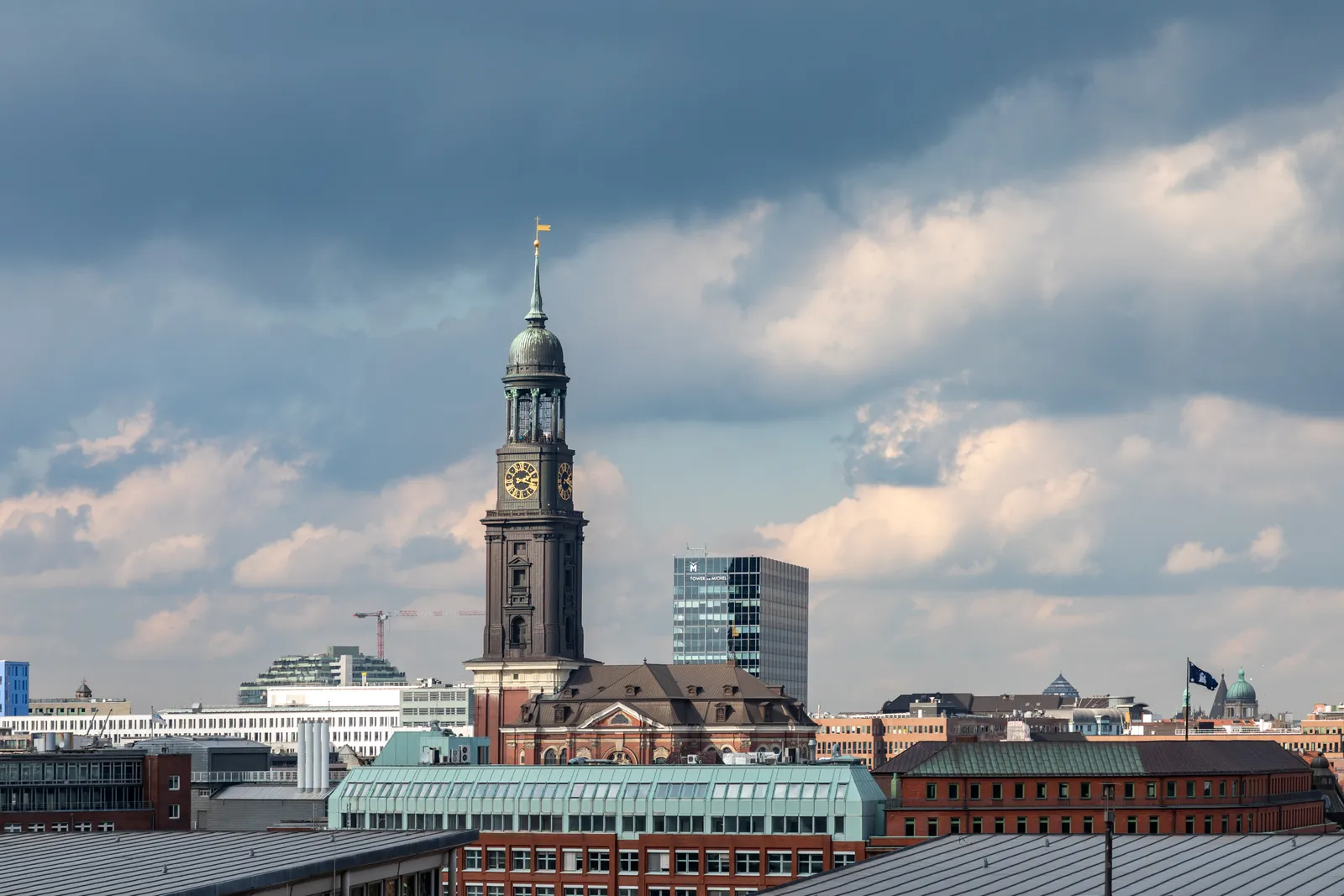
Walking into the church is free. The observation deck sits at 106 metres on a 132-metre spire and costs 8 euros for adults, 5 euros for children aged 6 to 15; a lift covers most of the height after 52 steps, or it is roughly 400 more steps on foot. The crypt below, with its exhibitions, runs 6 euros on its own or 10 euros combined with the tower.
The cholera memorial in Hamburg City Hall’s courtyard
Hamburg City Hall was inaugurated in 1897 after eleven years of building, neo-Renaissance outside, with a 112-metre tower over the entrance and 647 rooms behind the facade. One room in the tower went unrecorded until 1971, when it turned up during a search for a document that had fallen behind a filing cabinet.
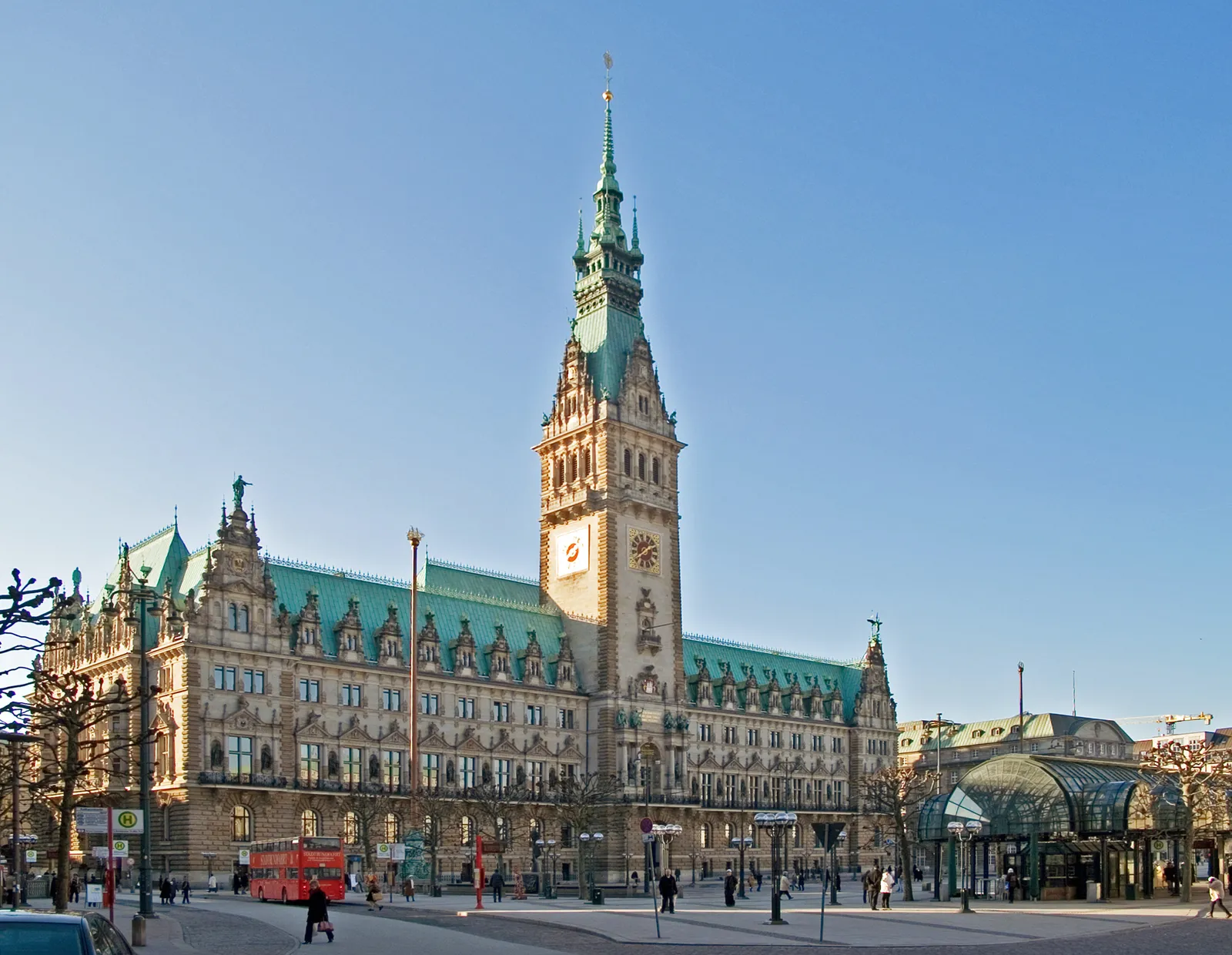
The inner courtyard holds a fountain of Hygieia, the Greek goddess of health, put there after the cholera epidemic that killed thousands of Hamburgers in 1892; it also did real work cooling the building’s air. The courtyard and the entrance hall are free to walk into during opening hours, and everything past them means a guided tour at 8 euros. Rathausmarkt, the square out front, opens onto the arcades along the Kleine Alster, which is where the city’s covered shopping runs if the weather turns.
The Old Elbe Tunnel runs 426 metres under the river
The Old Elbe Tunnel opened in 1911 to move dock workers across to the shipyards on the south bank, and it still does exactly that job: two white-tiled tubes, 426 metres long, about 24 metres below the surface, running from the Landungsbrücken piers over to the harbour island of Steinwerder. Walking through costs nothing and the tunnel is open to pedestrians and cyclists at all hours, though the lifts keep shorter days than the tunnel does, so late on it is the staircase down and the staircase back.
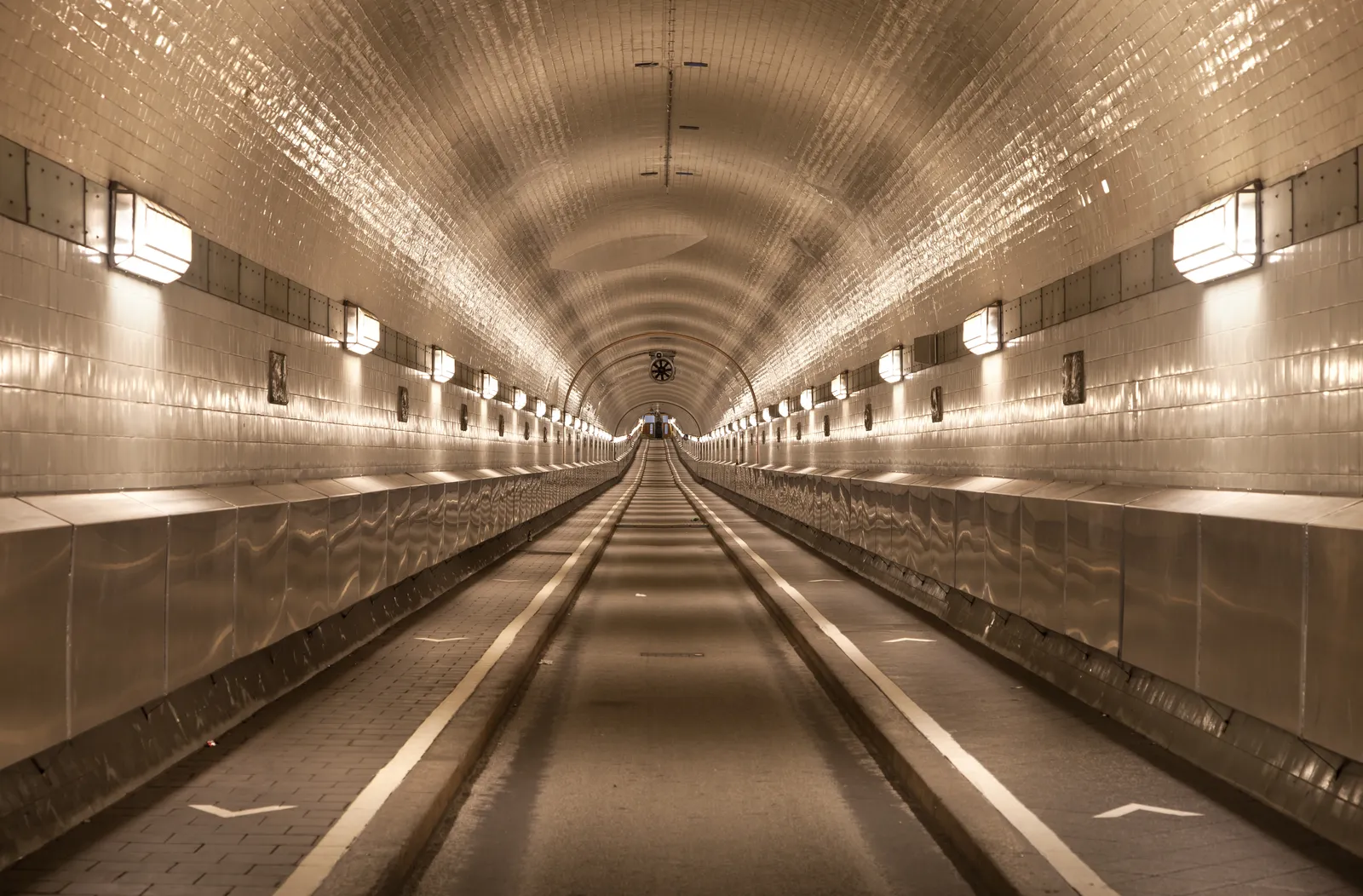
The far side is the point of going. From the Steinwerder bank the whole northern waterfront lines up across the water at once, the pier hall, the spires and the Elbphilharmonie in one view, which is the shot most people come back with. Back on the north bank, the piers are where the harbour boats leave from, and an hour on a harbour boat booked through a tours and activities platform runs out past the container terminals and the dry docks. A public ferry from the same piers covers a plainer version of the same water on the way to Finkenwerder, about 28 minutes, and an ordinary transit ticket pays for it rather than a separate fare. The tunnel, the crossing and the walk back take the better part of two hours together, so this is the piece to drop if you are tight on time. The lifts are the wrinkle: once they stop it is twenty-odd metres of stairs at each end, which adds real minutes to the crossing with a bag in hand.
The airport train splits in two one stop short of the terminal
A suburban train, the S1, runs from the central station, Hamburg Hauptbahnhof, out to Hamburg Airport Helmut Schmidt in about 25 minutes, every 10 minutes from around 6am to 11pm and every 20 minutes outside that. At Ohlsdorf, one stop before the airport, the train divides: the front three carriages carry on to the terminal, the rear three go to Poppenbüttel, so which end you board decides where you end up. A single ticket covering the city area costs 4.10 euros from a machine and 3.81 euros bought in the transit app, with a day ticket at 8.20 euros. Four to six hours in the city fits the warehouses, the deck and the tunnel without rushing any of them, and an international departure wants roughly two hours at the terminal on top of the ride. Hauptbahnhof is also where the long-distance trains go, so anyone carrying on overland to Berlin instead of flying leaves from the same building.
Cobblestones for the length of Speicherstadt, 400 steps up the Michel if you skip the lift, and a staircase at each end of the tunnel once the lifts stop for the night: those are the three stretches of this route a wheeled suitcase argues with. Leaving it at a storage point near the central station is what keeps them from mattering.
Frequently asked questions
What should I do during a layover in Hamburg?
Walk Speicherstadt first: the warehouse blocks and the bridges over the canals between them cost nothing, and the largest model railway in the world sits inside one of the blocks on timed entry. Ten minutes west, the Elbphilharmonie's open-air deck looks over the harbour from the roof of the old warehouse the concert hall was built on. North of the warehouses, Hamburg City Hall's entrance hall and courtyard are open to walk into, and St. Michael's Church is free below its paid tower. With four hours or more, add the Old Elbe Tunnel, 426 metres under the river and free at any hour. Only the model railway really needs booking ahead; the rest is walk-up.
Is the Elbphilharmonie's viewing deck free?
Until 5 October 2026 it is: walk-up tickets are handed out at the visitor centre by the main entrance, subject to availability, and booking a timed slot online instead carries a 3 euro fee. From 5 October 2026 the deck costs 5 euros, whether you book ahead or pick a ticket up on the spot. Either way the deck itself is open 10am to midnight daily, with last admission at 11:30pm.
Is Hamburg worth going into after dark?
More than most cities this size, because the three best stops all stay open. Speicherstadt's warehouse facades have been floodlit since 2001, roughly 1,200 lamps across the blocks and bridges, running from dusk until a little after midnight and free to walk through. The Elbphilharmonie's deck takes its last visitors at 11:30pm. The Old Elbe Tunnel is open to pedestrians around the clock, though its lifts are not, so after hours the way down is the staircase.
How do you get down into the Old Elbe Tunnel?
There are stairs and lifts at both ends, and the walk through costs nothing. The freight lifts, big enough for a wheelchair, run roughly 6am to 8pm on weekdays and 10am to 6pm at weekends; outside those hours it is the staircase down about 24 metres and back up on the far side. The tunnel itself, both 426-metre tubes, stays open to pedestrians and cyclists at all hours.
Does it cost anything to go inside Hamburg City Hall?
The entrance hall and the inner courtyard are free to walk into during opening hours, and the courtyard is where the Hygieia fountain stands, put up after the 1892 cholera epidemic. Seeing any of the 647 rooms beyond them means a guided tour, 8 euros for adults and free for under-15s, with English departures on published tour days. Tours are cut back or dropped entirely when the building is hosting a state visit or a parliamentary session, so it is worth checking the day's schedule rather than turning up expecting one.