Hamburg Layover Near Altona Station
Part of the full Hamburg Layover: Speicherstadt From HAM
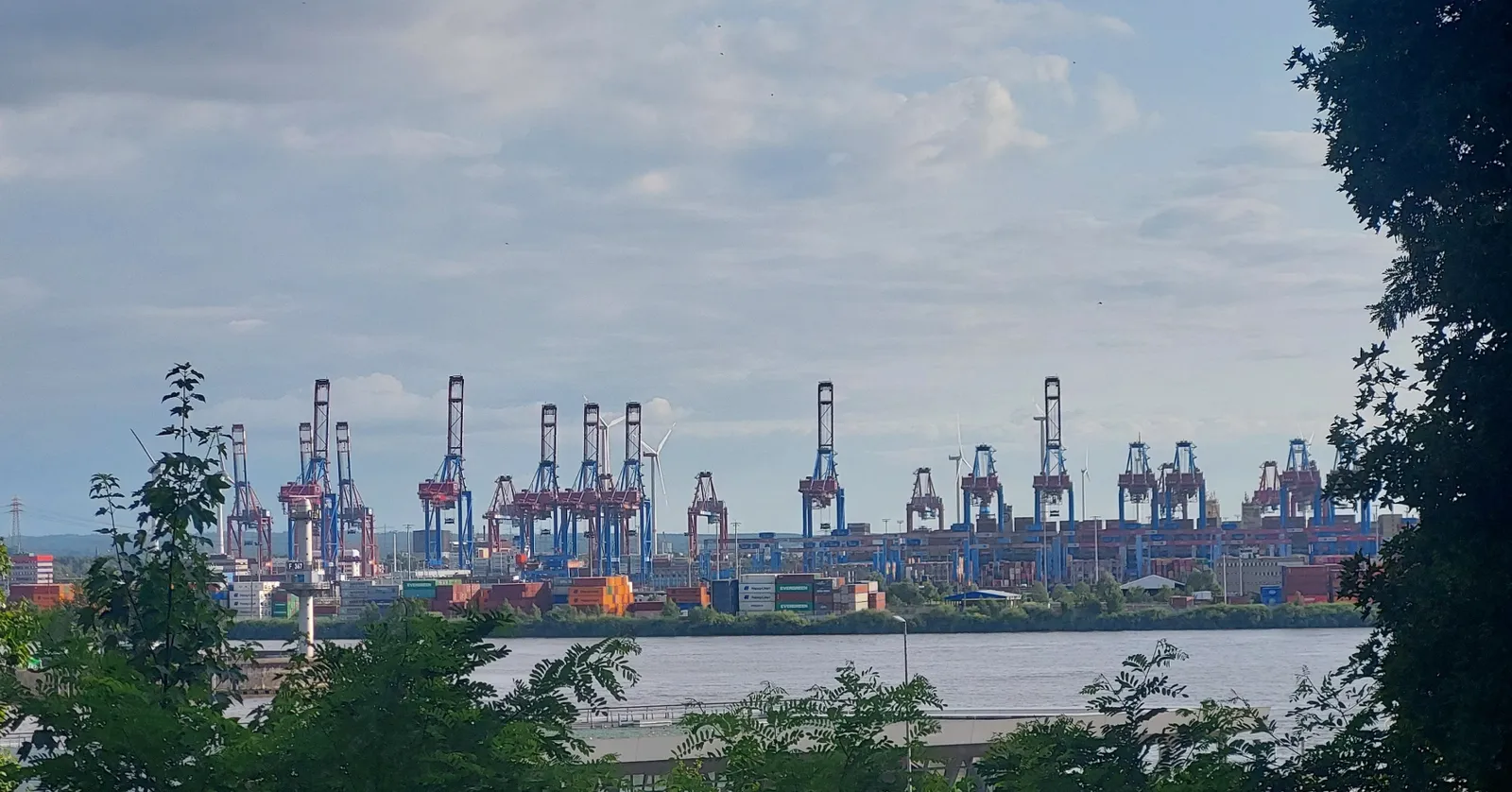
Hamburg-Altona, the city’s western railway terminus, has a regional museum two minutes from its platforms, a 647-metre boulevard of neoclassical houses running south from it, and a free public terrace at the end of that looking down on the container port.
The Altona Museum opens on Mondays and closes on Tuesdays
The Altonaer Museum stands on Museumstraße, a two-minute walk from the platforms, and it keeps the opposite week to the museums by the central station: 10am to 6pm with Tuesday as its closed day. Founded in 1863, it collects the lower Elbe rather than the art world, fishing boats and ships’ figureheads, farmhouse interiors, toys and regional painting, with a full ship’s carpenter’s workshop rebuilt inside.
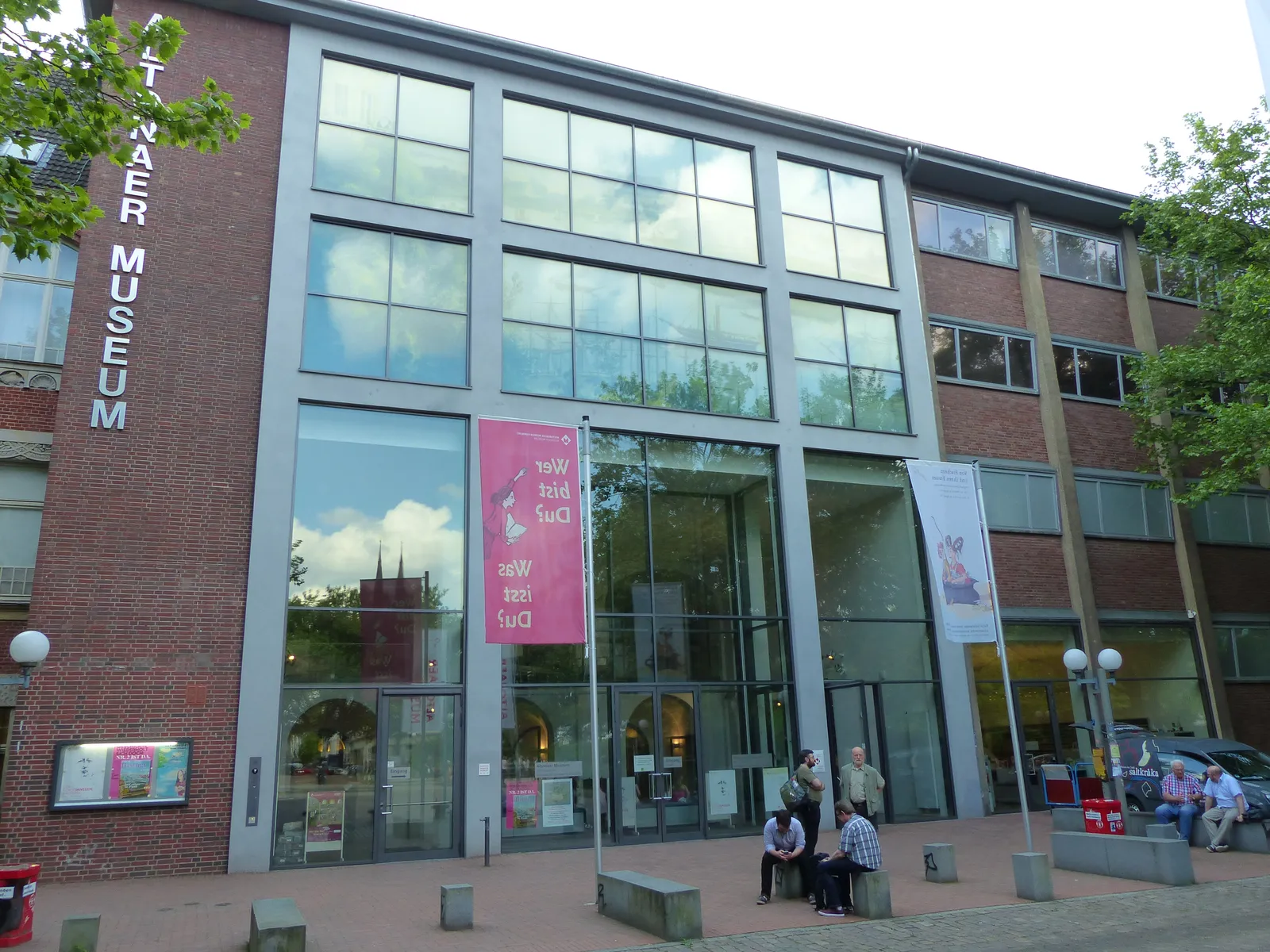
Adult entry is 9.50 euros, 6 euros reduced. For anyone whose stopover lands on a Monday, that closing day is the deciding fact: the art collections across town are shut and this one is not.
Palmaille was laid out in 1638 as a court for a ball game
Palmaille runs 647 metres west along the bluff from the Altona town hall, and it exists because Count Otto V of Schauenburg wanted somewhere to play palla a maglio, an Italian mallet-and-ball game that gave the street its name and, in its English form, gave London its Pall Mall. The original court was flanked by 400 lime trees.
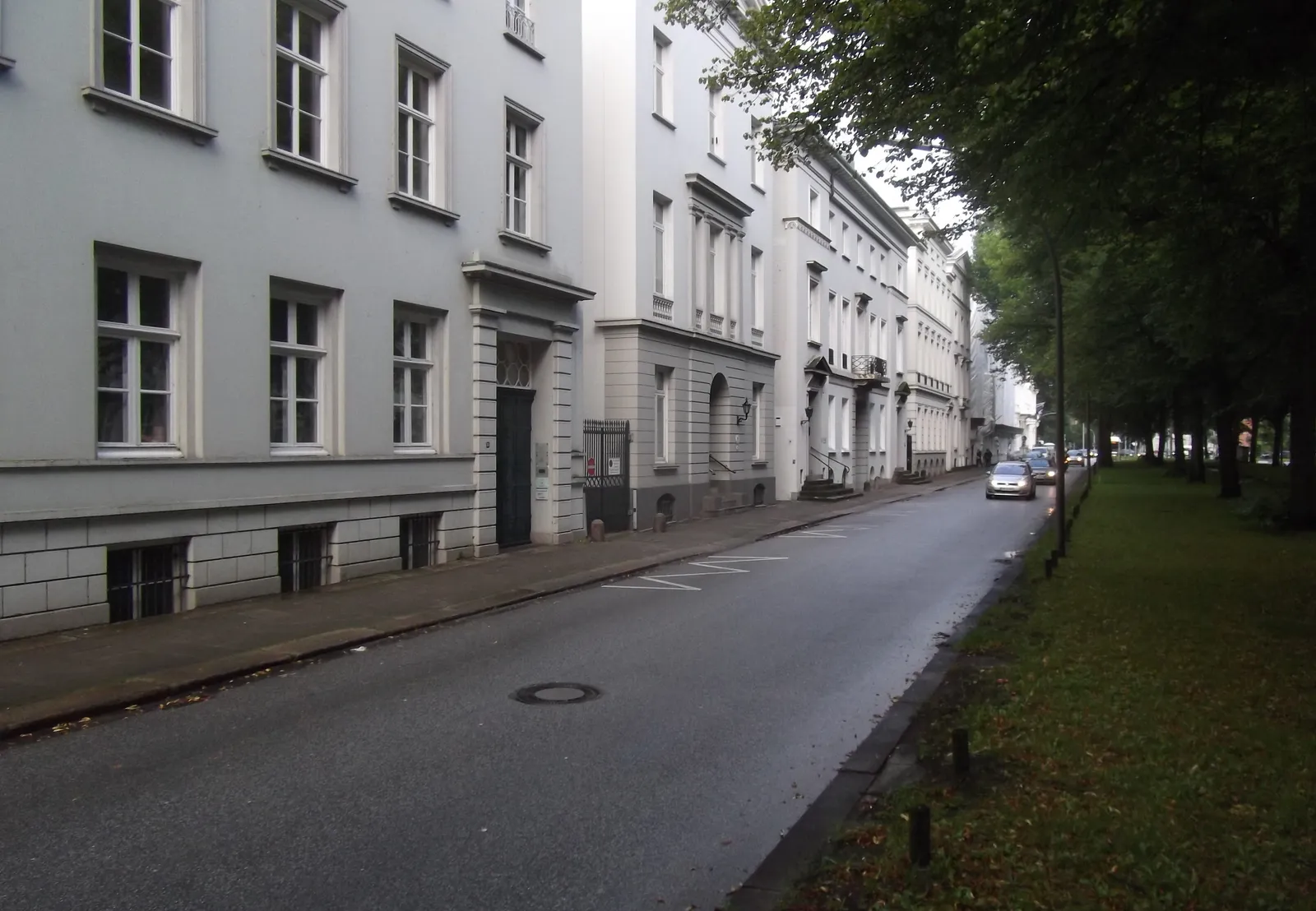
The houses came later. Between 1786 and 1825 the Danish architect Christian Frederik Hansen, working with his nephew Johann Matthias Hansen, rebuilt much of the street in a restrained neoclassical style, and the run at numbers 49 to 65 is the most intact stretch left. Beside the town hall at the street’s eastern end, the Altonaer Balkon is a public terrace 27 metres above the Elbe: no ticket, no gate, and a straight view over the water to the container cranes, the Köhlbrand bridge and the low Harburg hills behind them. It is a working view rather than a pretty one, which is the point.
Ottensen’s cinema sits inside a ship-propeller factory
Ten minutes west of the station, the Zeisehallen were a propeller works: Theodor Zeise founded them in 1869 and they turned out ships’ screws for export until the business closed in 1979. The conversion in 1993 kept the industrial shell, so the arcade running through the middle is the original glazed hall, brick walls and steel roof trusses intact, now lined with a three-screen cinema, shops, restaurants and a film institute.
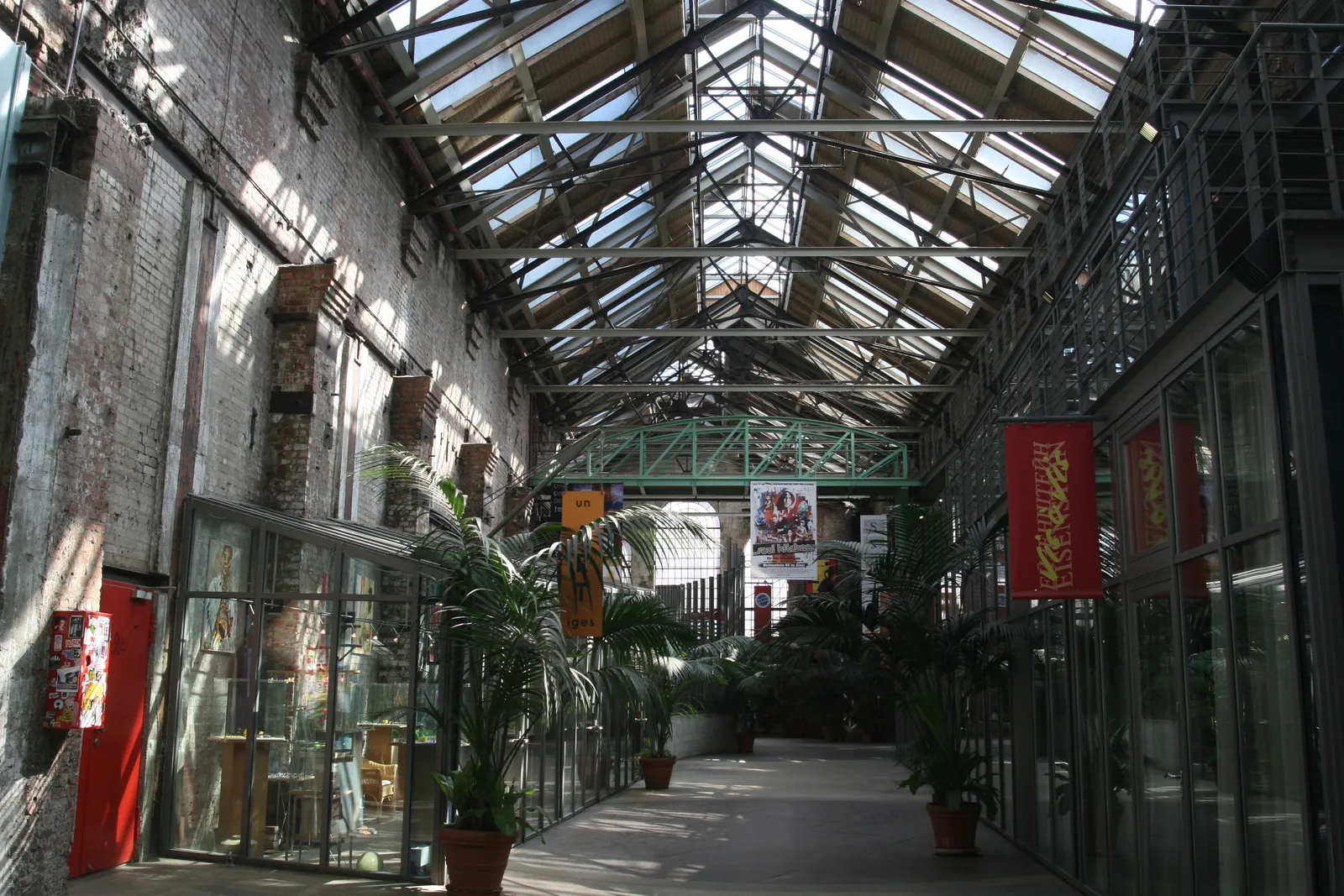
The surrounding streets, Bahrenfelder Straße and Ottenser Hauptstraße, are the district’s everyday shopping, which means they keep shop hours: everything ticketed or retail on this route, museum included, is shut by 6pm, so a bag needs somewhere to go before then rather than after.
Altona’s long-distance platforms move north in 2029
Hamburg-Altona is the western end of the line for most fast services to southern Germany, and its current building, a low concrete box from 1979, replaced a grander one demolished in the late 1970s. Twelve tracks run off six island platforms, three of them suburban. The long-distance half of that is due to move about a kilometre north to a new station at Diebsteich, a plan originally set for 2016 and now scheduled for December 2029; the suburban lines through Altona stay where they are.
Getting to the airport from here means the S1, which runs from Altona through the tunnel under the city centre to Hamburg Hauptbahnhof and on to Hamburg Airport Helmut Schmidt, about 35 minutes end to end with no change. A single ticket for the city area is 4.10 euros at a machine, 3.81 euros in the transit app. The same train splits at Ohlsdorf one stop short of the terminal, front three carriages to the airport, so board the front. If the gap is longer than four hours, the warehouse district and the harbour on the main Hamburg route are the better use of it; Altona is the two-to-four-hour version.
Four stops, all inside twenty minutes of the same platforms, and every ticketed one of them closed by six. That makes this a route to cover at a walk rather than a trudge, which is what leaving the suitcase at a storage point near the station buys.
Frequently asked questions
What should I do during a layover near Hamburg-Altona Station in Hamburg?
Everything on this route sits inside twenty minutes' walk of the platforms. The Altonaer Museum, the regional collection for northern Germany, is two minutes away at 9.50 euros and is open on Mondays when the city-centre museums are not. South of it, Palmaille runs 647 metres of white neoclassical houses along the bluff, with the Altonaer Balkon at its eastern end, a free terrace 27 metres above the Elbe looking straight at the container port. West in Ottensen, the Zeisehallen puts a cinema and shops inside a ship-propeller factory. Two hours covers the boulevard and the terrace; add the museum and it is closer to four.
Which museum near Hamburg-Altona is open on a Monday?
The Altonaer Museum on Museumstraße, two minutes from the station. It runs 10am to 6pm and closes on Tuesdays instead, which is the reverse of the Kunsthalle and the design museum by the central station, both of which shut on Mondays. Adult entry is 9.50 euros, reduced 6 euros, and the collection covers the fishing, shipping and rural life of the lower Elbe rather than fine art.
Is the walk from Altona station to the Elbe terrace step-free?
Yes, if you stay on Palmaille. The street runs along the top of the bluff rather than down it, and the terrace is reached across level ground beside the Altona town hall, so there are no steps between the platforms and the view. The stairs and slipways that drop from the terrace to the water below are a separate matter, and none of them are needed to see anything.
When do the long-distance trains stop using Hamburg-Altona?
The plan is to move them roughly a kilometre north to a new station at Diebsteich, a project first aimed at 2016 and now scheduled for December 2029. Until that happens Altona stays the western terminus for most long-distance services to southern Germany, and the suburban lines through it are unaffected by the move either way.