Hamburg Layover Near Landungsbrücken
Part of the full Hamburg Layover: Speicherstadt From HAM
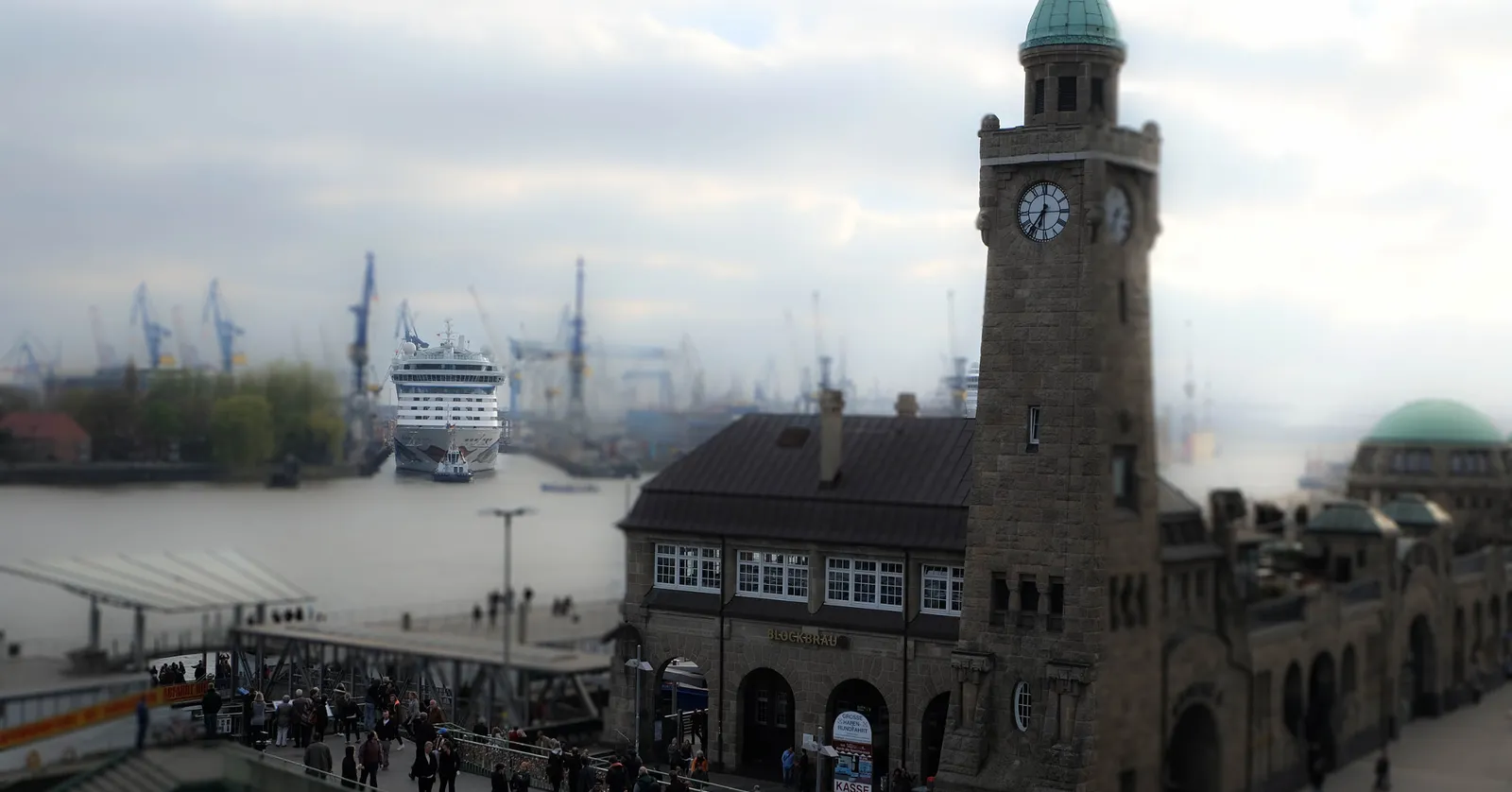
Hamburg’s Landungsbrücken, the row of floating piers on the Elbe where the harbour ferries dock, has an 1896 sailing ship moored alongside it, a 1961 cargo liner a few minutes east, and a Sunday fish market that has traded on the same shore since 1703.
The Rickmer Rickmers has been tied up at the piers since 1983
Rickmer Rickmers is a steel-hulled three-masted barque launched at Bremerhaven in 1896, which spent its working life carrying rice and bamboo out of Asia before ending up here as a museum. The whole ship is walkable: crew quarters, officers’ cabins, the galley, and the engine room fitted after its sailing days ended.
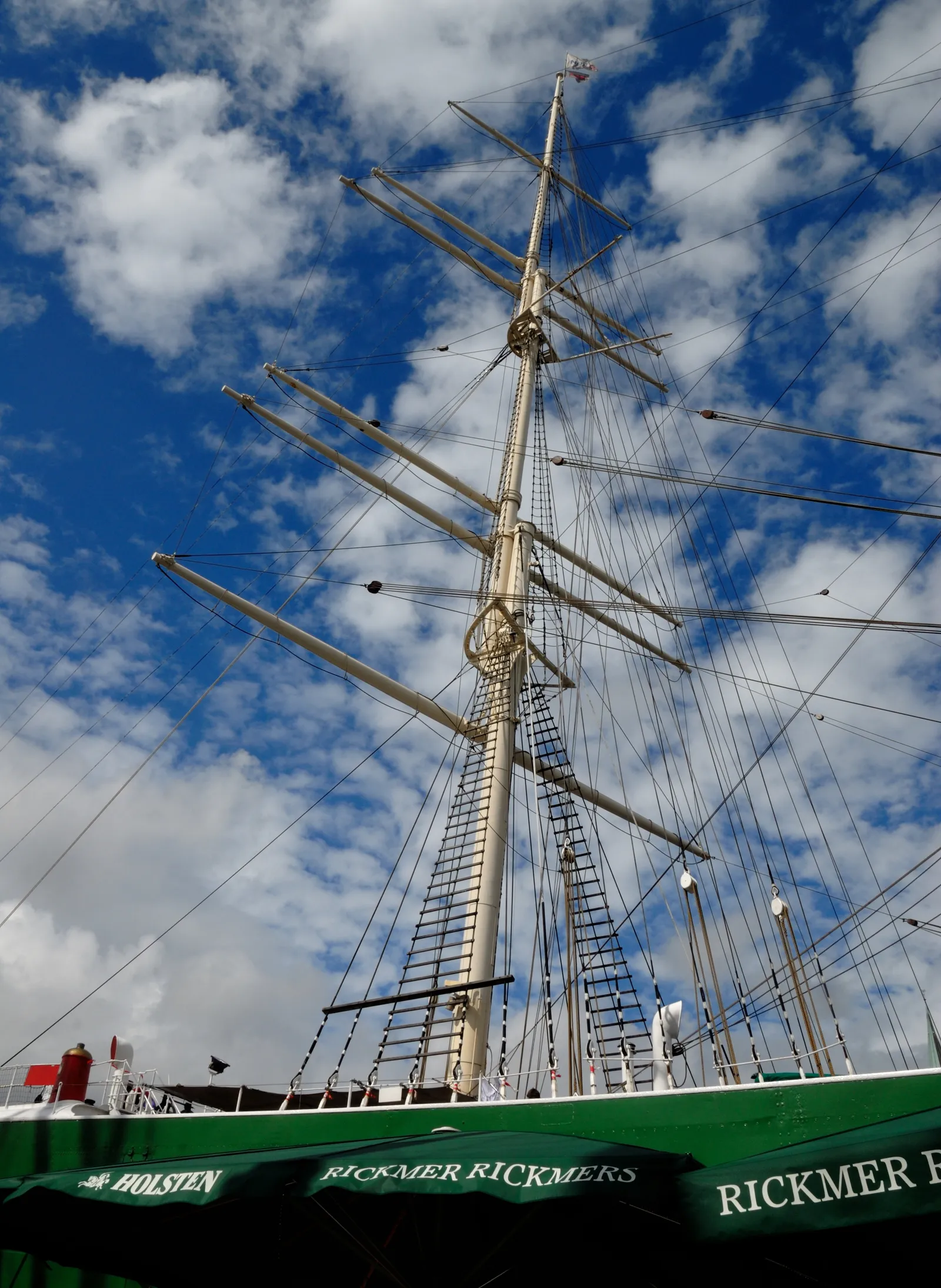
Entry runs between 4 and 7 euros depending on the ticket, 18 for a family, and the ship opens Tuesday to Sunday from 10am to 6pm. An admission ticket bought ahead through a tours and activities platform saves the queue at the gangway, which is the only bottleneck on an otherwise walk-up visit. There is also a mast climb, 35 metres up the rigging, for anyone who wants the harbour from that angle.
Cap San Diego is a 1961 cargo liner that can still put to sea
Cap San Diego is moored at the Überseebrücke, ten minutes east along the water from the piers, and unlike most preserved ships it is not a static exhibit: at 159 metres she is the largest seagoing museum ship still certified to sail, and does make occasional harbour trips under her own power. She was built in Hamburg-Finkenwerder as the last of the Cap San class, general cargo ships designed by Caesar Pinnau for the South American run and nicknamed the white swans of the South Atlantic for their hull line.
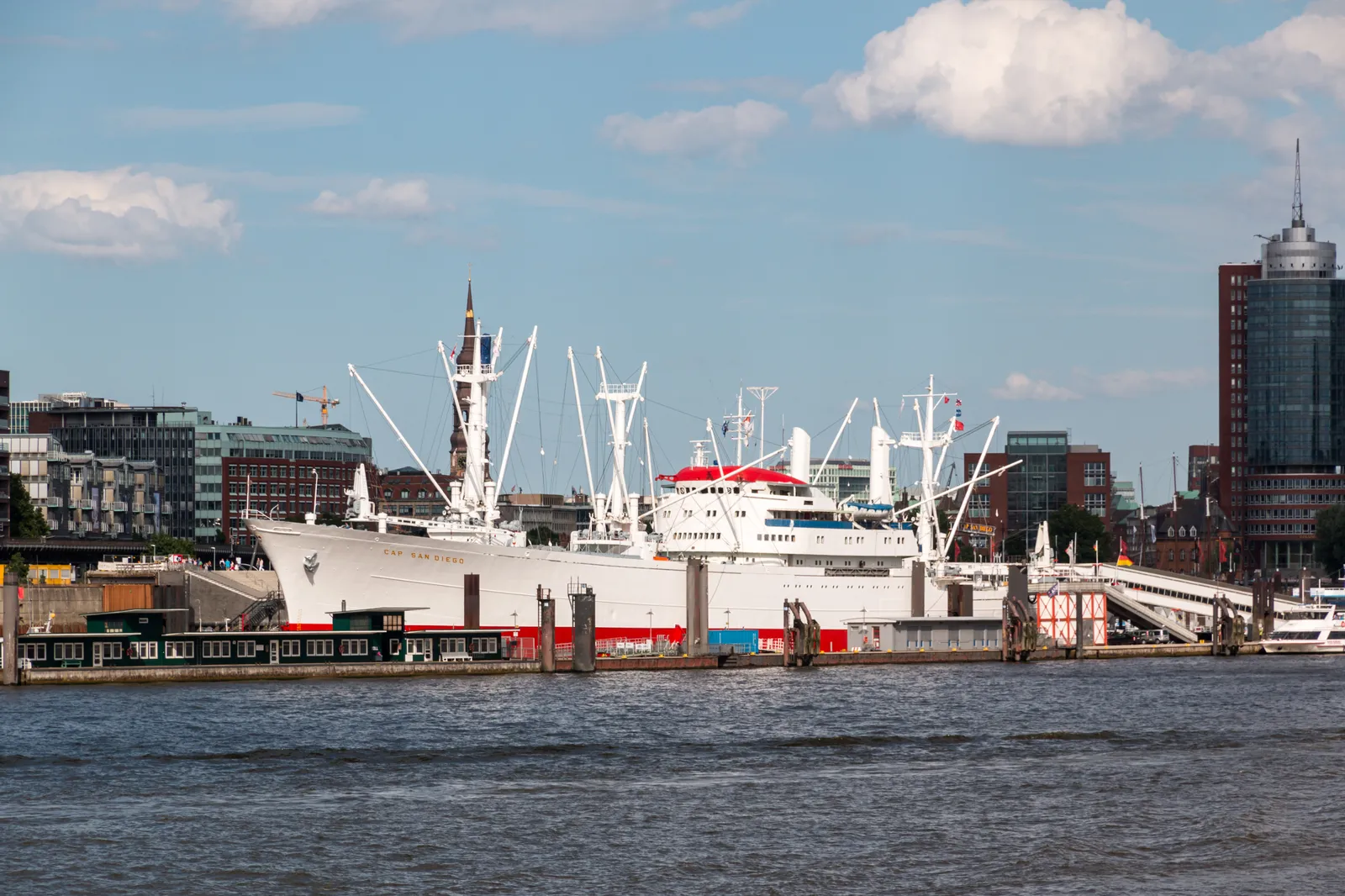
Admission starts at 10 euros for adults and 3 euros for under-14s. Anyone arriving here off a ship rather than a plane has usually already carried cabin luggage down a gangway once that morning, and the pier pontoons are reached by movable walkways that pitch with the tide, which is not where you want to be doing it twice.
Hamburg’s fish market opens at five on Sunday mornings
The market on the Elbe shore has been trading since 1703 and it keeps hours nothing else in the city does: 5am to 9:30am from April through October, 7am to 9:30am from November through March, Sundays only. Up to 70,000 people come through, buying fish, fruit, plants and whatever else the market criers are shouting down in price as the close approaches.
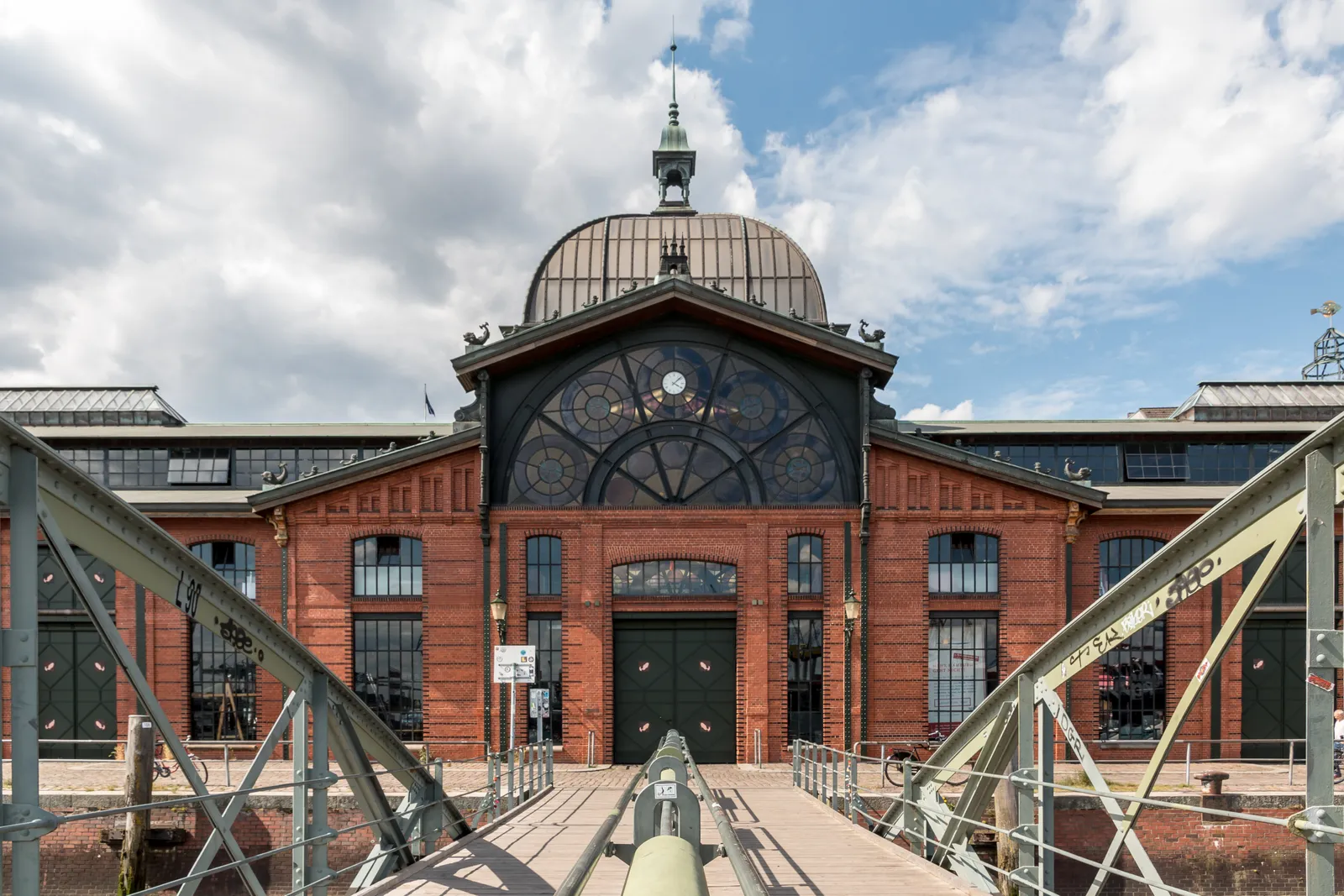
Next to the stalls, the Fischauktionshalle is a steel-framed brick hall built in 1895 for Altona’s new fishing port, modelled on Roman market halls, restored in the early 1980s and now running live bands and breakfast through the same early hours. It is the one indoor option on this shore at 6am, and the reason the market survives Hamburg’s weather.
A sand beach and a 217-tonne boulder at Övelgönne
Downstream from the piers the north bank turns into actual sand: the Elbstrand at Övelgönne, a working beach with container ships passing close enough to read their names, backed by a row of former pilots’ cottages. A public harbour ferry from the piers, part of the ordinary transport network rather than a tour boat, reaches the Neumühlen/Övelgönne landing in about twenty minutes on a normal transit ticket.
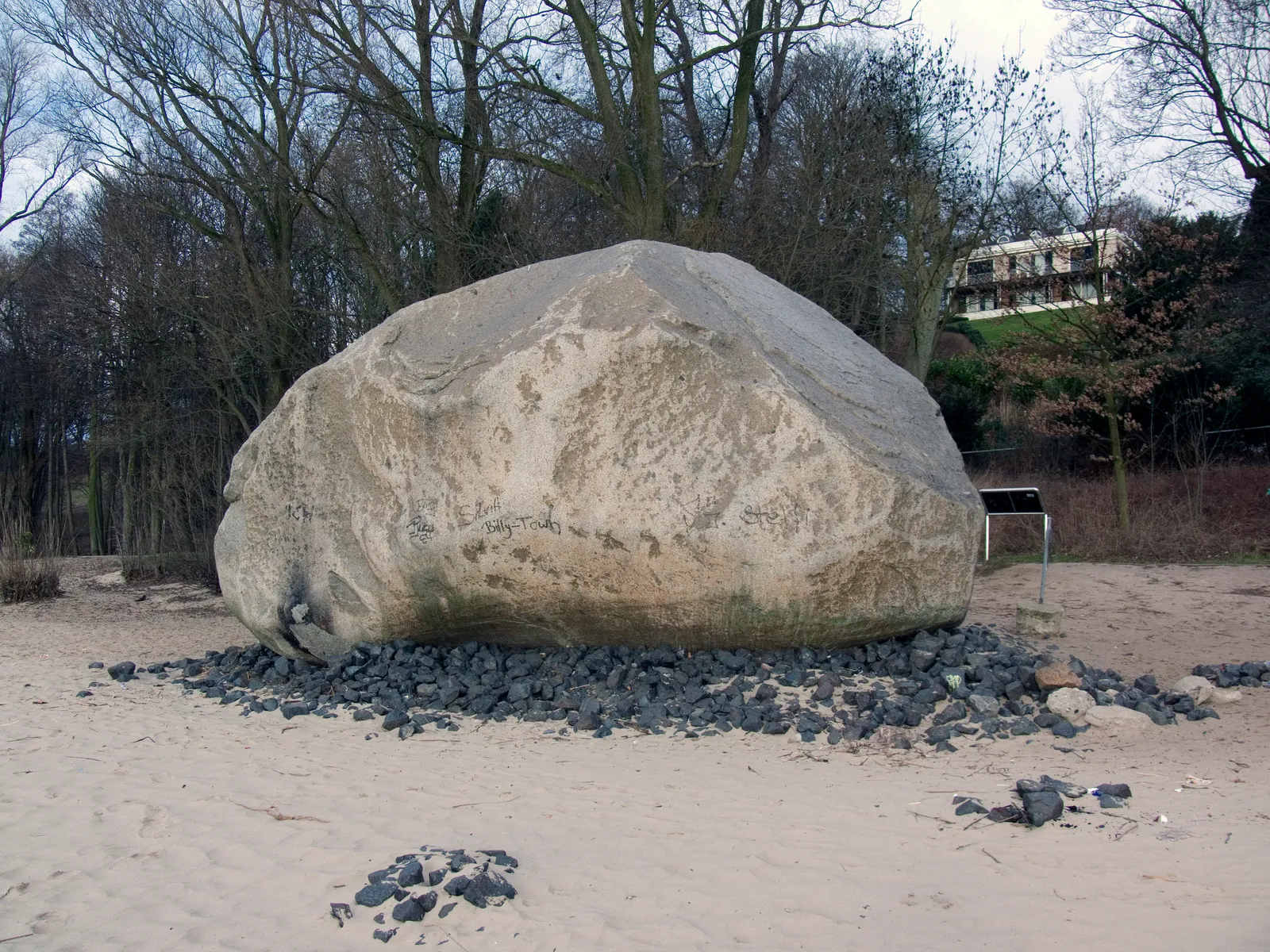
Sitting on that sand is the Alter Schwede, a granite boulder of about 217 tonnes and 80 cubic metres that an Ice Age glacier carried down from southern Sweden and left in the riverbed. Dredgers found it on 17 September 1999 and needed until 23 October to actually get it out. Beside it, the Museumshafen Övelgönne keeps a couple of dozen restored working boats afloat, tugs and barges rather than the tall ships the piers get. This is the half-day version of the day; on a shorter stop, the warehouse district and the concert hall deck on the main Hamburg route are the denser use of the same hours.
The airport train stops at the piers themselves
Landungsbrücken has its own station on the tunnel line under the city centre, and the S1 that runs through it carries on to Hamburg Airport Helmut Schmidt without a change: about six minutes to Hamburg Hauptbahnhof and roughly half an hour end to end. A single ticket for the city area costs 4.10 euros at a machine, 3.81 euros in the transit app. The train divides at Ohlsdorf, one stop before the airport, with only the front three carriages continuing to the terminal, so board the front end when you get on here.
Coming ashore, going aboard a museum ship, crossing on a ferry and coming back is four gangways in an afternoon. Every one of them is easier without a suitcase on the end of your arm, which is the argument for leaving it at a storage point near the piers first.
Frequently asked questions
What should I do during a layover near Landungsbrücken in Hamburg?
Two museum ships sit within ten minutes of the pier building. The Rickmer Rickmers, an 1896 three-masted barque, is moored at the piers themselves and runs 4 to 7 euros; the Cap San Diego, a 1961 cargo liner and the largest seagoing museum ship still able to sail, lies east along the water from about 10 euros. Both close on some weekdays, so check the day before committing. Three hours also covers a harbour ferry across to the Elbe beach at Övelgönne, which costs no more than an ordinary transit ticket, and on Sunday mornings the fish market on the same shore trades from before dawn.
What time does the Hamburg fish market actually start?
Sundays only, and the start time moves with the season: 5am from 1 April to 31 October, 7am from 1 November to 31 March. Either way it shuts at 9:30am sharp, which is earlier than most visitors expect and is the single most common way people miss it. The market has run since 1703 and pulls up to 70,000 people on a good Sunday, so the last half hour is when the traders start discounting rather than when it is quietest.
Can you get from Landungsbrücken to the Elbe beach without a boat tour?
Yes. Public harbour ferries leave from the piers as part of the ordinary city transport network, not as a sightseeing service, so a normal single or day ticket pays for the crossing to the Neumühlen/Övelgönne landing and back. The trip out takes about twenty minutes and the boats run through the evening, which is why locals use it as a commuter route rather than an excursion.
Is Landungsbrücken a good stop with kids?
Better than most of Hamburg, because the two headline stops are climbable rather than roped off. The Rickmer Rickmers opens its crew quarters, galley and engine room to walk through, and sells a mast climb 35 metres up the rigging on top of the standard ticket. The Cap San Diego charges 3 euros for under-14s against 10 for adults. The harbour ferry counts as a boat ride on an ordinary transit ticket, and the Elbe beach at Övelgönne is actual sand with container ships passing a few hundred metres out.