Hamburg Layover Near Dammtor Station
Part of the full Hamburg Layover: Speicherstadt From HAM
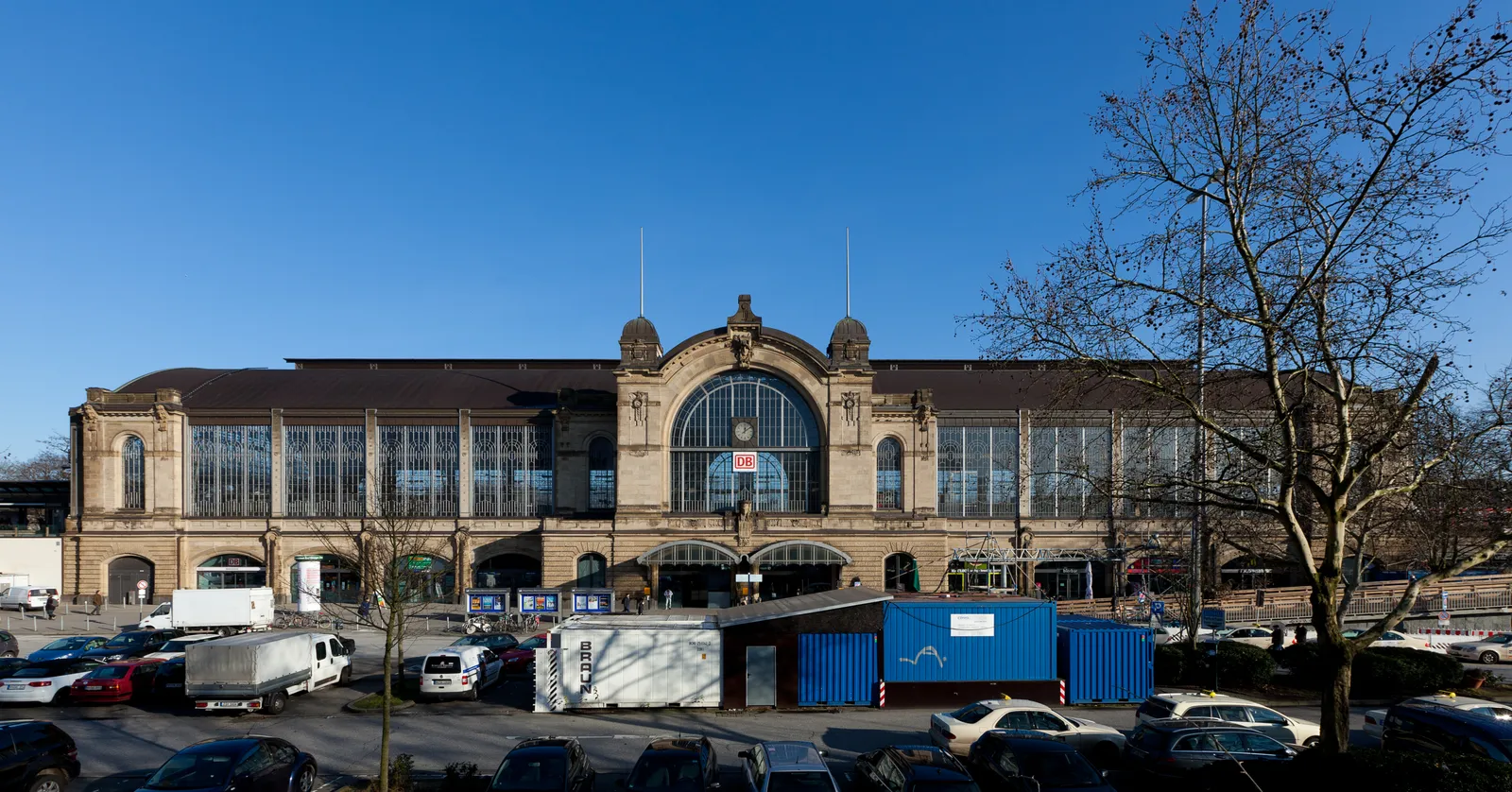
Hamburg’s Dammtor station has open water ten minutes east of it and 47 hectares of free public park ten minutes west, with tropical glasshouses, a Japanese tea house and a nightly summer fountain show inside the park.
The Outer Alster is a dammed river, not a natural lake
The Alster looks like a lake and is really a river with two mill dams in it. The first went in around 1190 to drive a watermill; a second in 1235 ponded the water back far enough to make the broad sheet now called the Außenalster, with the smaller Binnenalster below it. Nothing about the shape is natural, and it is shallow enough to freeze right across in a hard winter: when it does, the city walks out onto it, most recently in 2012, and in January 1997 about a million people came out for a fair held on the ice.
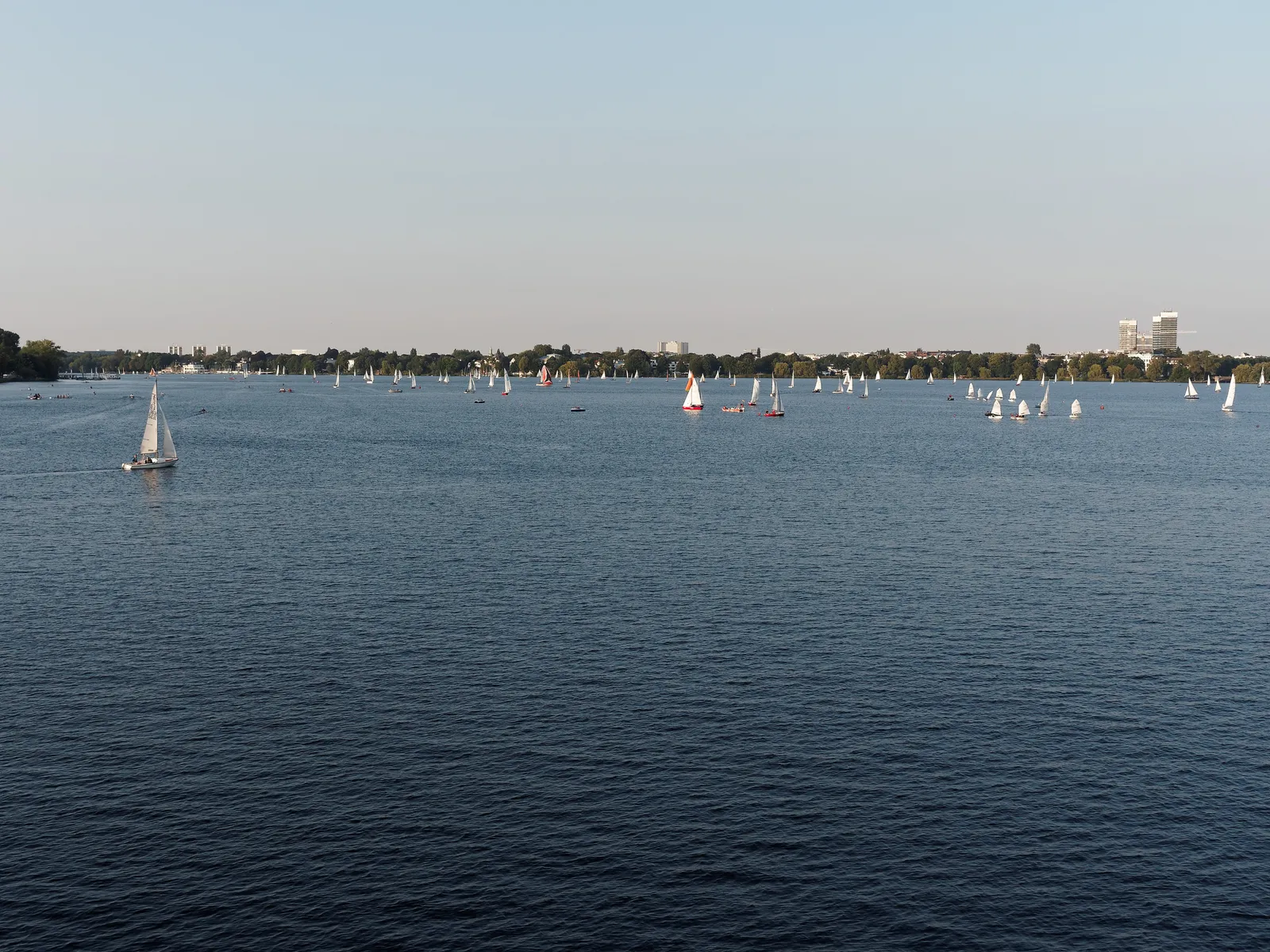
That shallowness is why it fills with dinghies rather than motor cruisers: sailing clubs line the eastern shore and the water is busy with small boats from spring through autumn. From the Jungfernstieg quay at the southern end, an hour-long boat circuit booked through a tours and activities platform runs the full loop past the villas and the canal mouths, which is the fastest way to see a side of the city the harbour never shows.
Planten un Blomen was laid out on Hamburg’s demolished ramparts
Planten un Blomen covers 47 hectares in a long green curve on the line of the 17th-century fortifications, torn down at the start of the 19th century and never built over. It is free, gates open, no ticket for any part of it including the botanical garden.
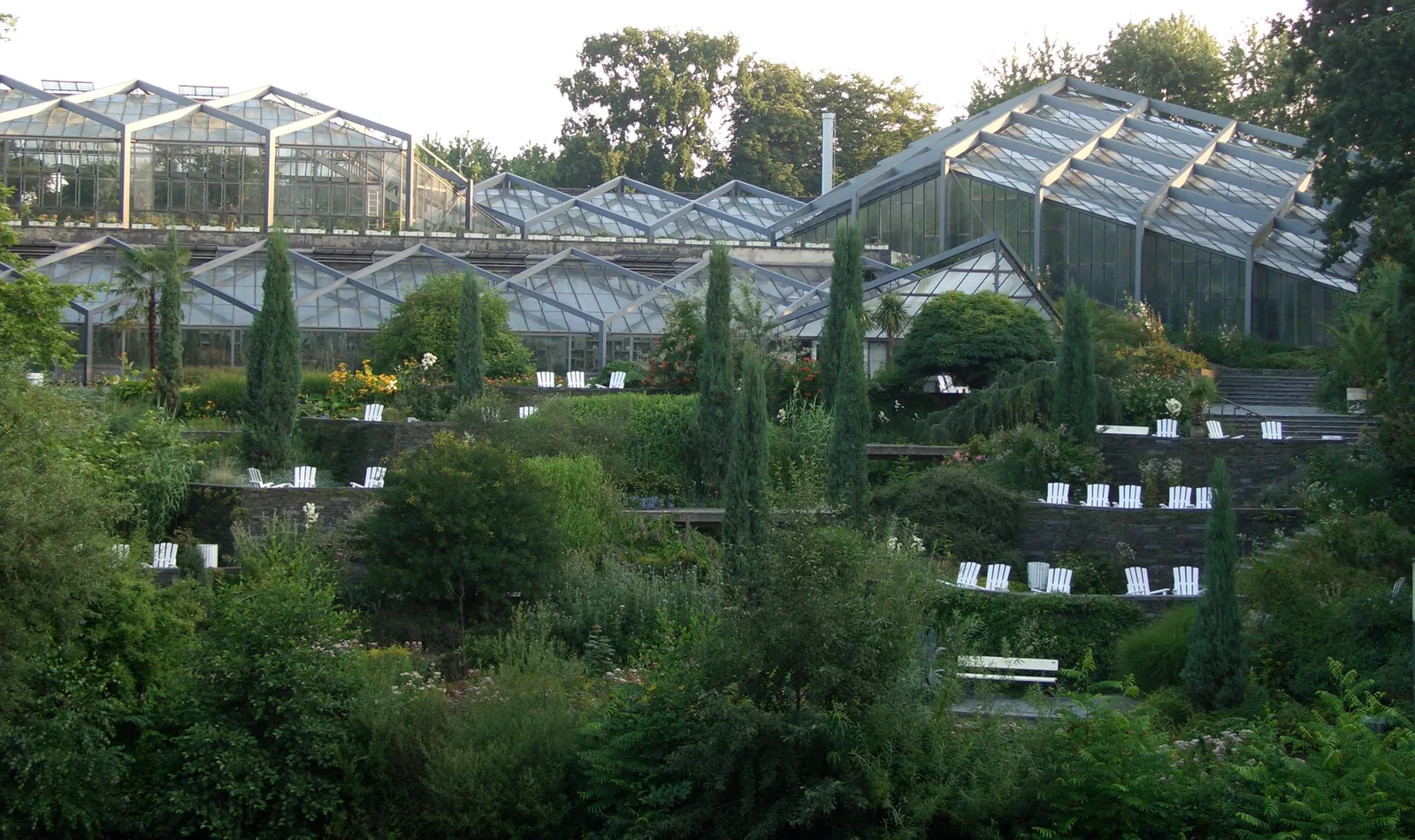
The tropical greenhouses run to 2,800 square metres under glass, split into tropical, subtropical, fern and cactus houses, and they cost nothing either. They are also the one part of this route with a roof, which matters more here than it would elsewhere in the city.
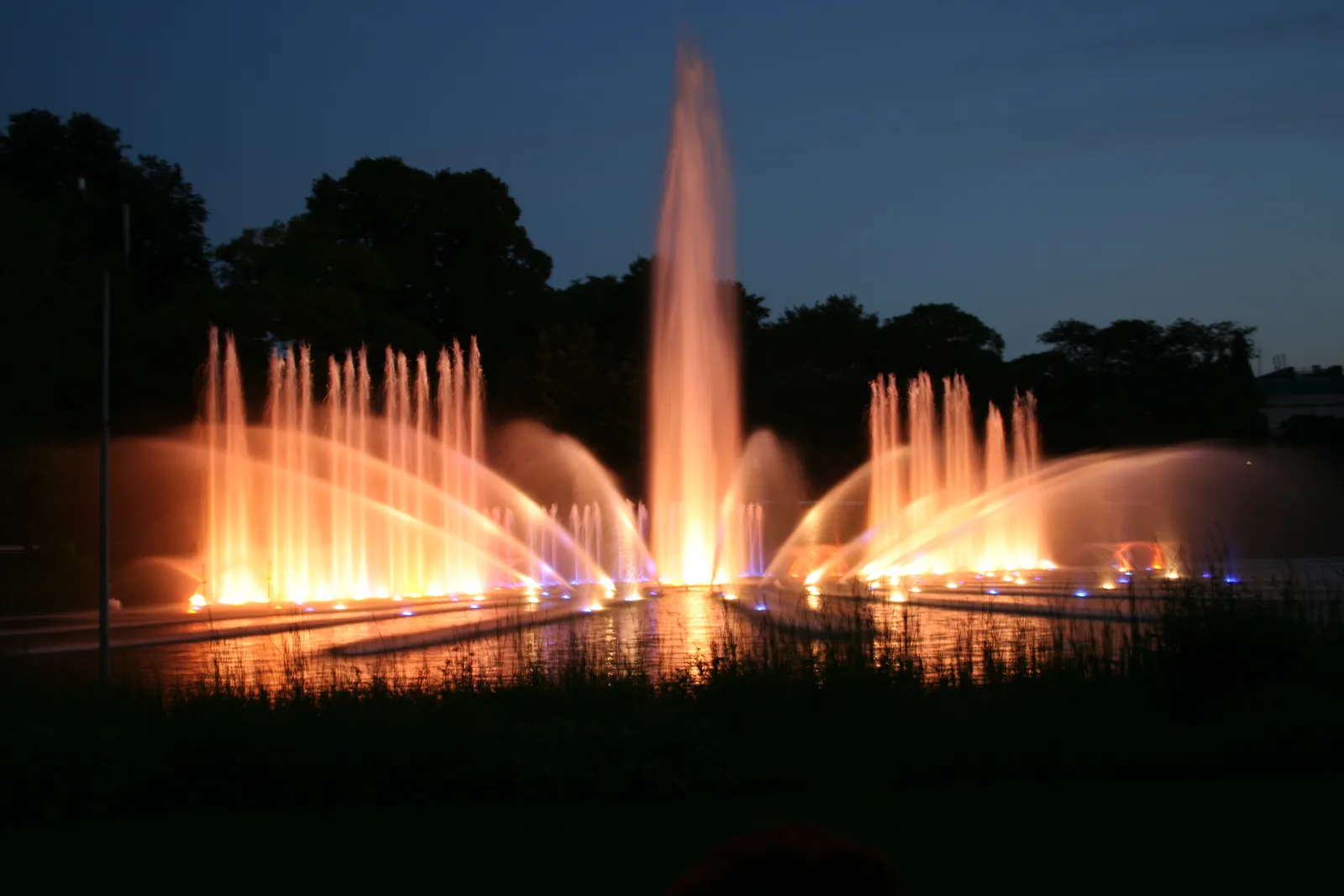
On the park lake, from 1 May to 30 September, close to a hundred nozzles and a bank of coloured lamps put on a 25-minute show set to music: 10pm from May through August, 9pm in September, free, no ticket and no seating plan, just the grass around the water. The programme is rewritten every couple of weeks. In daylight the same fountains run plain, without music or light, at 4pm and 6pm.
A thatched tea house has stood in the Japanese garden since 1990
Inside the northern half of the park, the Japanese garden was laid out in 1988 to a design by the Japanese landscape architect Yoshikuni Araki, and Hamburg’s tourist office calls it the largest of its kind in Europe. It is built around a pond with stepping stones, clipped pines and a stone-and-gravel bed.
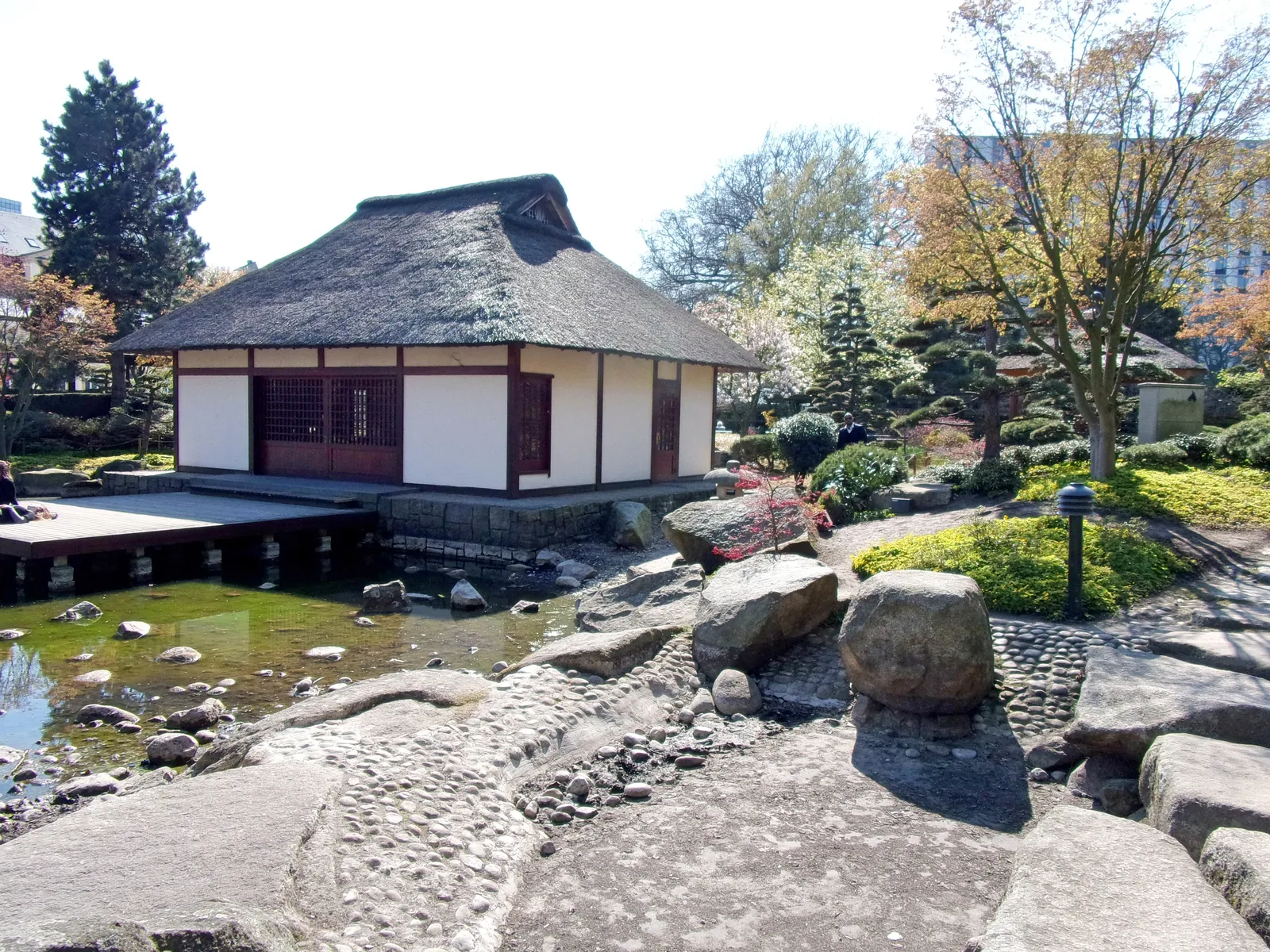
The tea house on the water arrived in 1990 and holds proper tea ceremonies from May to September. The rest of the year it is a building to look at rather than enter, which is fine: the garden reads best from the path around the pond anyway.
Dammtor is officially a stop, not a station
Hamburg Dammtor opened on 7 July 1903, replacing an 1866 building, and the Art Nouveau hall it has kept since is a single arched span of steel and glass over four tracks. It is one of five long-distance stations in the city, signed as the trade fair and congress station for the exhibition halls and the university around it. It also has no points anywhere in it, which is why the railway classifies it as a stop rather than a station, an odd label for somewhere intercity trains call all day.
Everything reachable from here is outdoors and unroofed, park lawns, lake shore, gravel paths, and there is nowhere along the route to put a suitcase down for an hour, so the bag needs settling before you start rather than halfway round.
The airport train needs one change from Dammtor
Dammtor sits on the suburban lines that run north through the city rather than the ones that go to the airport, so getting to Hamburg Airport Helmut Schmidt means changing: one stop east to Hamburg Hauptbahnhof, then the S1 for about 25 minutes, or a change at Ohlsdorf if the timetable suits it better. Budget around 40 minutes door to platform. A single ticket for the city area covers the whole run at 4.10 euros from a machine, 3.81 euros in the transit app, and the S1 splits at Ohlsdorf with only the front three carriages going to the terminal. Anyone with more than five hours would get more out of the harbour, the warehouse district and the tunnel under the river on the main Hamburg route; this side of town is the quieter, greener use of a shorter gap.
The whole of this route is grass, gravel and lake path, none of it built for wheels. That is the case for leaving the suitcase at a storage point near the station and walking out of it with nothing.
Frequently asked questions
What should I do during a layover near Hamburg Dammtor Station in Hamburg?
The station has open water on one side and 47 hectares of park on the other, both within ten minutes on foot. East is the Outer Alster, a dammed river covered in dinghies all summer, with hour-long boat circuits from the far end of it. West is Planten un Blomen, free to enter, with 2,800 square metres of tropical glasshouses, a Japanese garden built around a thatched tea house, and a fountain-and-light show on the park lake every evening from May to September. Three hours covers the park properly; the boat trip needs an hour of its own and is the only part worth booking ahead.
What time are the water-light concerts at Planten un Blomen?
Every night from 1 May to 30 September, and they cost nothing. The show starts at 10pm from May through August and at 9pm in September, and runs about 25 minutes on the park lake, with the choreography changing every couple of weeks. In daylight the same fountains run without music or lighting at 4pm and 6pm, which is worth knowing if your departure is too early for the evening version.
Is there anything to do near Dammtor when it rains?
Not much of this route, honestly. Planten un Blomen is open ground and the Alster shore has nothing to shelter under, so a wet afternoon here comes down to the tropical greenhouses, which are heated, glazed and free, and the Japanese tea house pavilion. The park stays open in any weather and there is no ticket to waste, but the fountain show does not run in a thunderstorm.
Do long-distance trains stop at Hamburg Dammtor?
Yes, and more of them than the size of the place suggests: Dammtor is one of Hamburg's five long-distance stations, with intercity services alongside regional trains and two suburban lines. Technically it is classed as a stop rather than a station, because it has no points anywhere in it, just four tracks running straight through under one roof.