Munich Layover Guide: Marienplatz From MUC
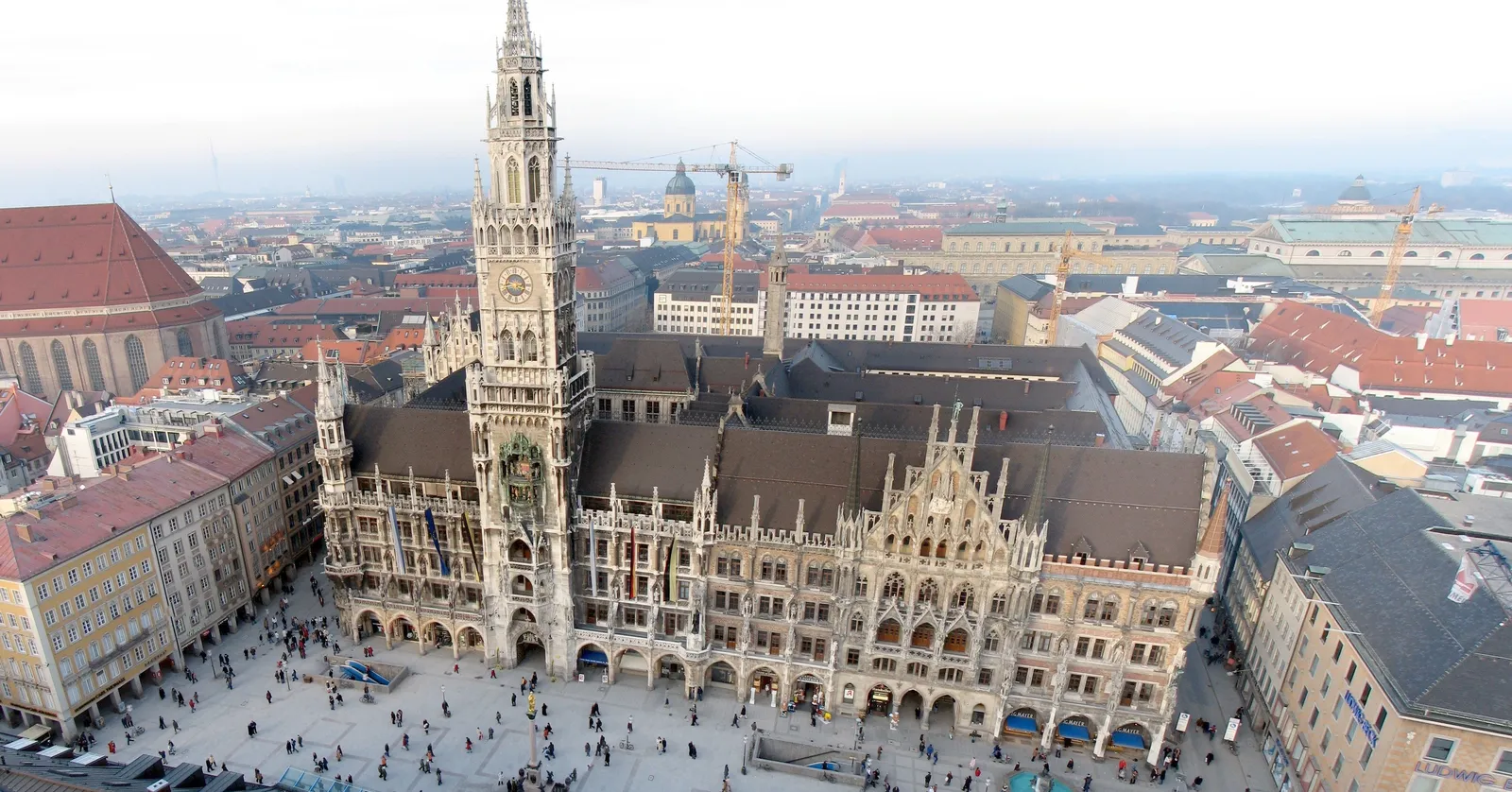
Marienplatz’s Glockenspiel, the climb up Alter Peter’s 306 steps, and the Viktualienmarkt sit within a few minutes of each other in central Munich.
Marienplatz and the Rathaus-Glockenspiel
Marienplatz has been the heart of Munich’s old centre since the city was founded in 1158, and the Neues Rathaus fills its whole north side: a Gothic Revival front nearly 100 metres long that is not actually Gothic at all, built in three stages between 1867 and 1905 and blackened by a century of city air.
The thing to time your arrival around is the Rathaus-Glockenspiel in the tower. Forty-three bells and 32 life-sized figures re-enact a ducal wedding and the coopers’ dance from the 1500s, it runs 12 to 15 minutes, and it plays at 11am and noon every day of the year, with a third show at 5pm from March to October. It costs nothing and it happens in any weather. The square packs in ahead of it, so if you want to see the figures rather than the backs of phones, stand well back toward the Fischbrunnen at the eastern end.
306 steps up Alter Peter
Directly south of Marienplatz is Alter Peter, Munich’s oldest parish church. The church is free. The tower is 5 euros, and it is 306 steps up a single spiral staircase with no lift, no bag room at the bottom, and nowhere on the way to put anything down, which is worth knowing before you hand a bag to a storage point rather than after.
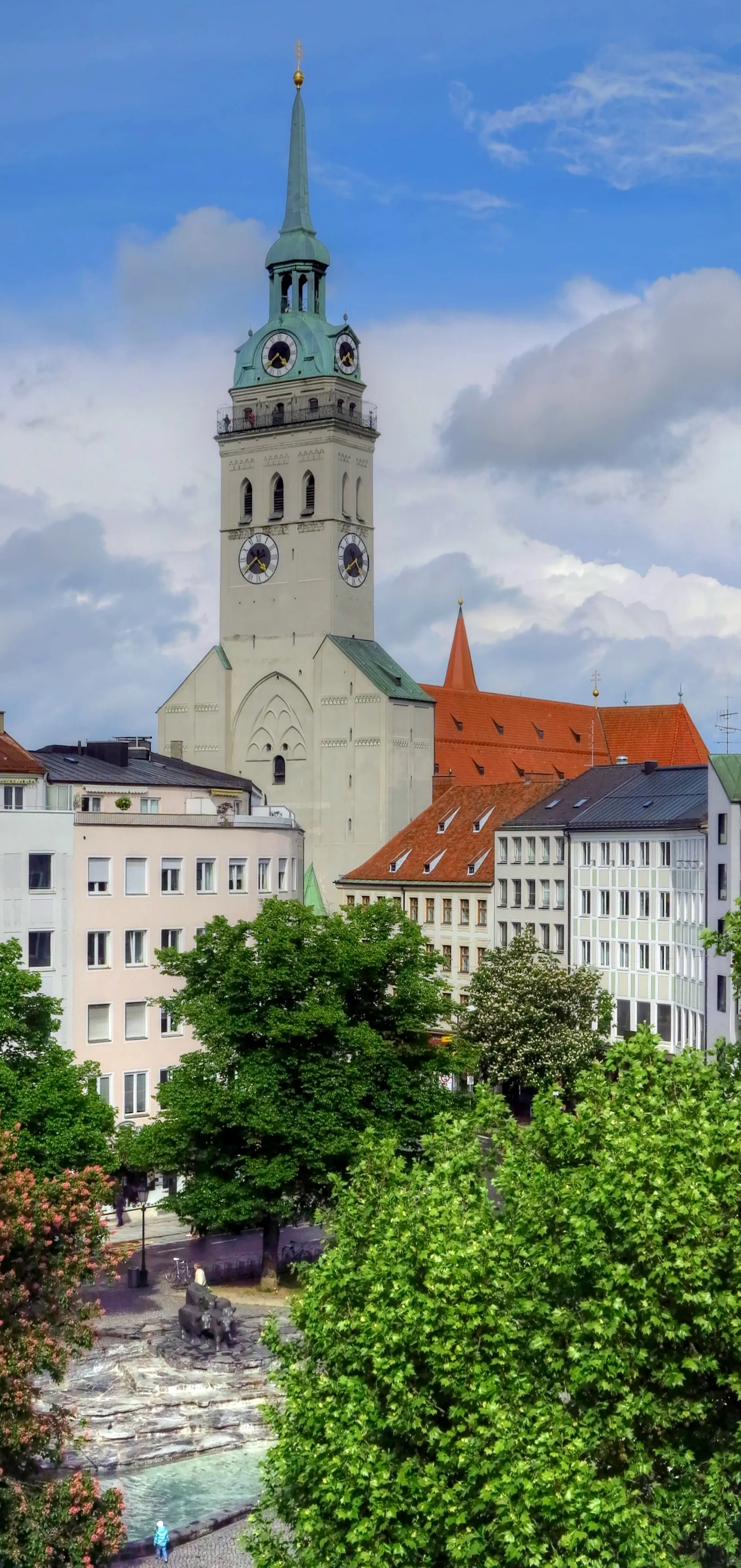
It is worth the climb: the viewing gallery looks straight down the length of the Rathaus facade, across the twin onion domes of the Frauenkirche, and on a clear day to the Alps on the southern horizon. The tower opens daily from 9am to 7.30pm between April and October, and closes earlier in the winter months. Tickets are sold at the base on the day; there is nothing to book.
The Frauenkirche itself is five minutes northwest and free to walk into, open 8am to 8pm outside services. Its two towers are 98 metres, and that number is why the skyline behind them is so flat: Munich voted in 2004 to stop new buildings rising above the Frauenkirche, and the ceiling that vote set has largely held since.
The Viktualienmarkt’s six rotating breweries
Walk around the back of Alter Peter and you are at the Viktualienmarkt, a permanent open-air food market that has been on this spot since 1807, when it outgrew Marienplatz and the king moved it here.
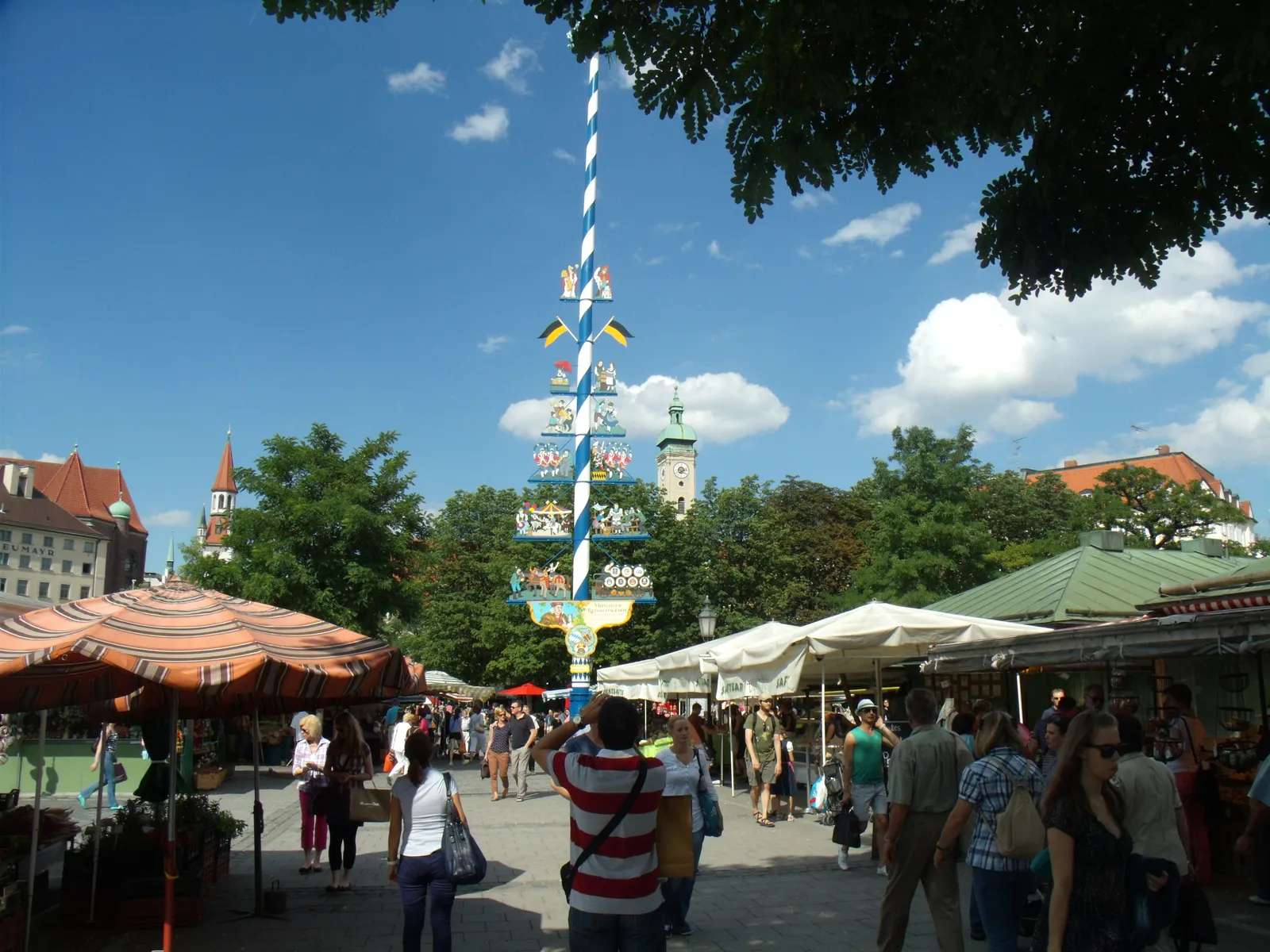
Traders set their own hours, but in practice the stalls run from around 8am to 8pm Monday to Saturday, and most of them shut on Sundays. The beer garden in the middle is the part worth knowing about: it opens Monday to Saturday from about 9am to 10pm, weather allowing, and rather than pouring one brewery’s beer it rotates through all six of Munich’s big ones, Augustiner, Hacker-Pschorr, Löwenbräu, Hofbräu, Paulaner and Spaten, changing every five or six weeks. You are allowed to bring your own food to the tables under the trees and buy only the beer, which is a genuine Bavarian beer garden rule and not a loophole.
This is also the sensible place to eat. It is the last easy food before the airport, and a Weisswurst from a market stall beats anything you will find airside.
Odeonsplatz and the Theatinerkirche
Ten minutes up Theatinerstraße from Marienplatz, the street opens into Odeonsplatz, with the yellow Theatinerkirche on one side and the Residenz, the Wittelsbachs’ city palace, running along the other.
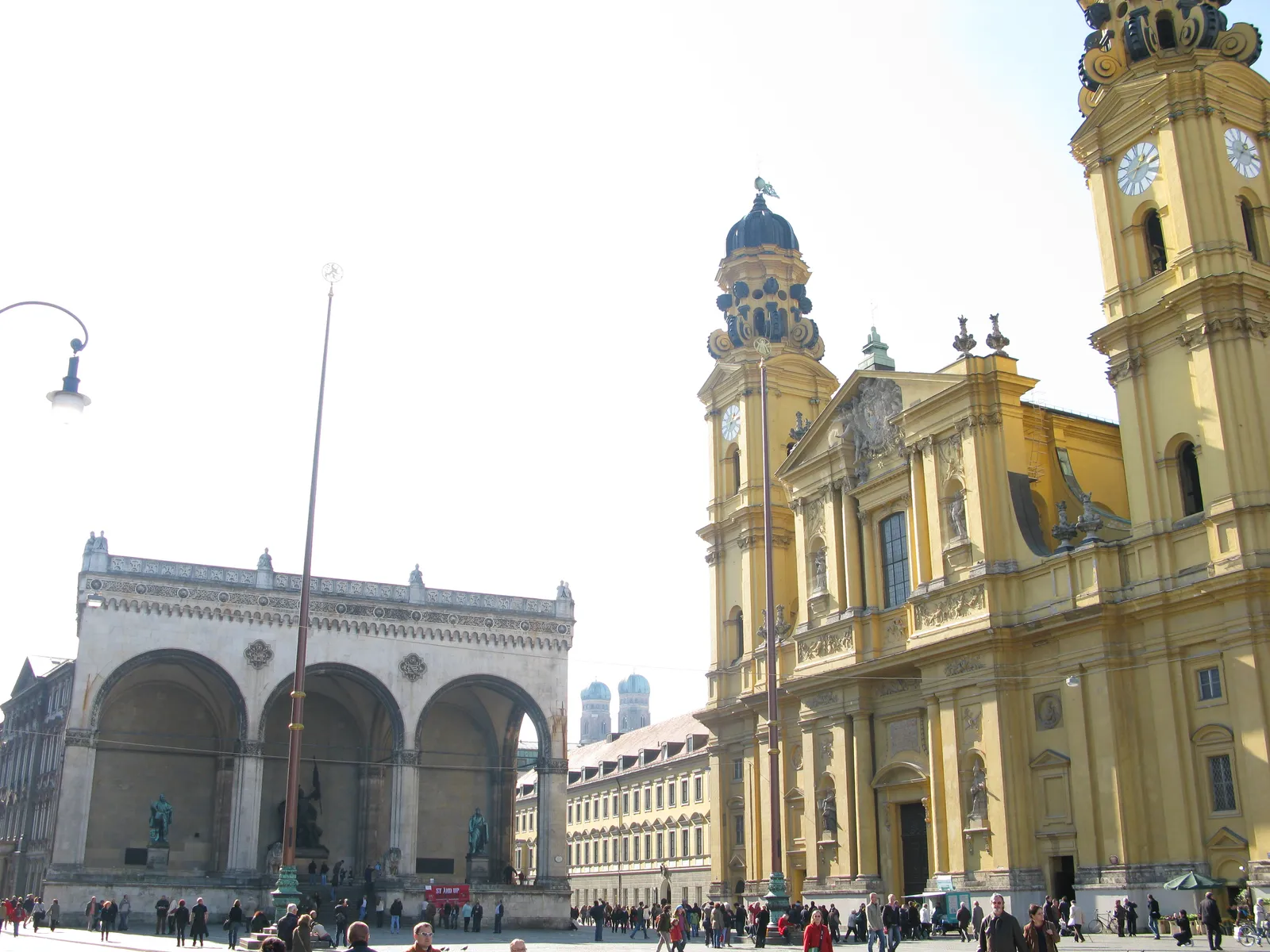
The Theatinerkirche was begun in 1663 as a thank-you from the electoral family for the birth of an heir, and its Rococo facade, added a century later, is the yellow everyone photographs from the square. It is free to walk into.
The Hofgarten’s Dianatempel pavilion
Behind the Residenz is the Hofgarten, a walled Renaissance garden laid out between 1613 and 1617, with a domed pavilion called the Dianatempel at the centre where the eight gravel paths meet.
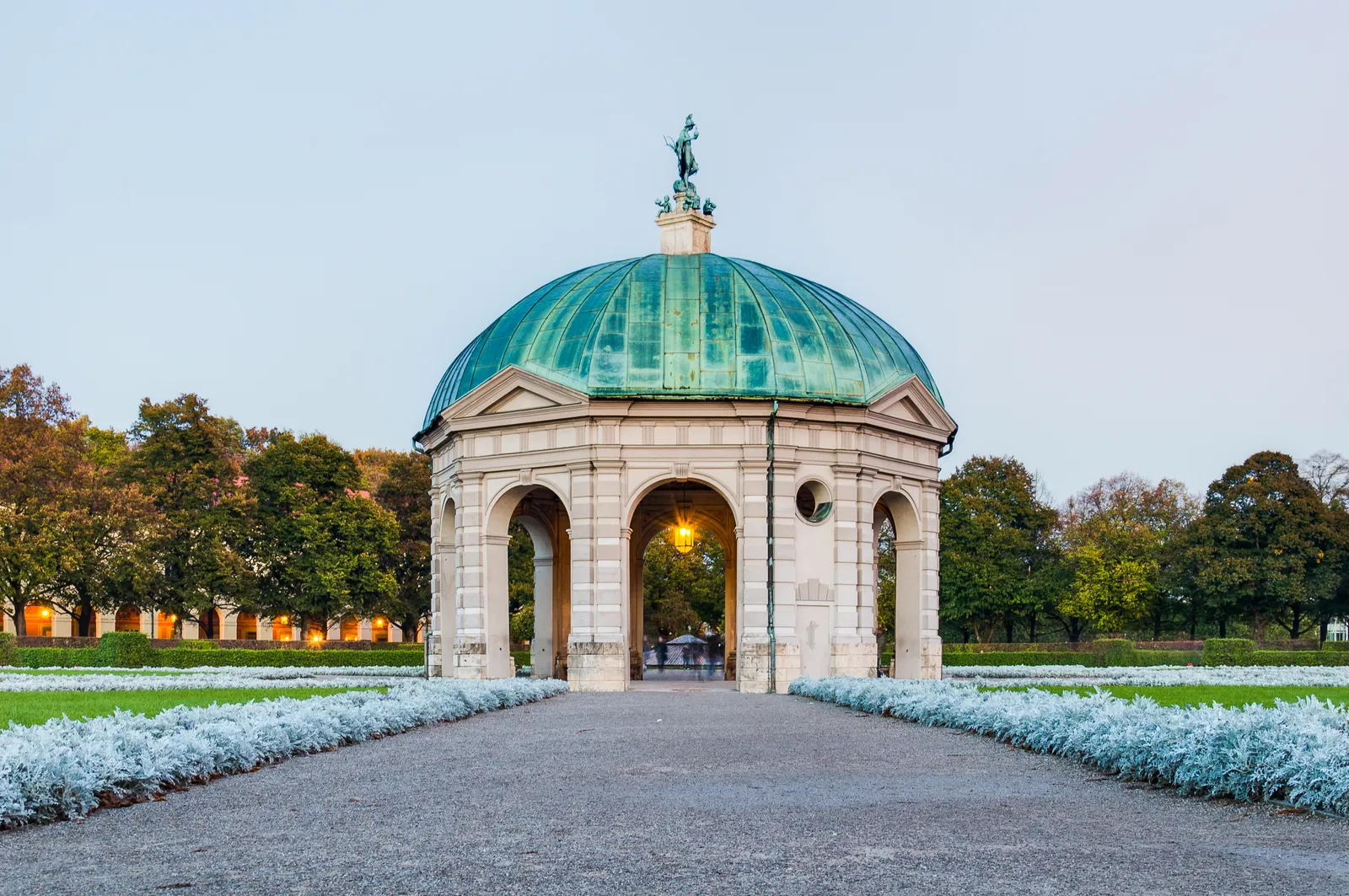
The pavilion is the detail worth turning up for on a warm evening. Munich’s social dancers have adopted it: on fine nights through the summer, people bring a speaker and dance under the dome, tango on some evenings, swing and salsa on others, and it is entirely self-organised, with no entrance fee, no bar and nobody to sign in with. Schedules are informal and weather-dependent, so treat it as something to look for rather than something to plan around. If it is happening, you will hear it from Odeonsplatz.
The Eisbach wave in the Englischer Garten
Carry on east and the Englischer Garten starts. It is larger than Central Park, but the part that fits a layover is the first few hundred metres: the bridge on Prinzregentenstraße, where the Eisbach comes out of a culvert and forms a standing wave that people surf, in the middle of a landlocked city, all year round.
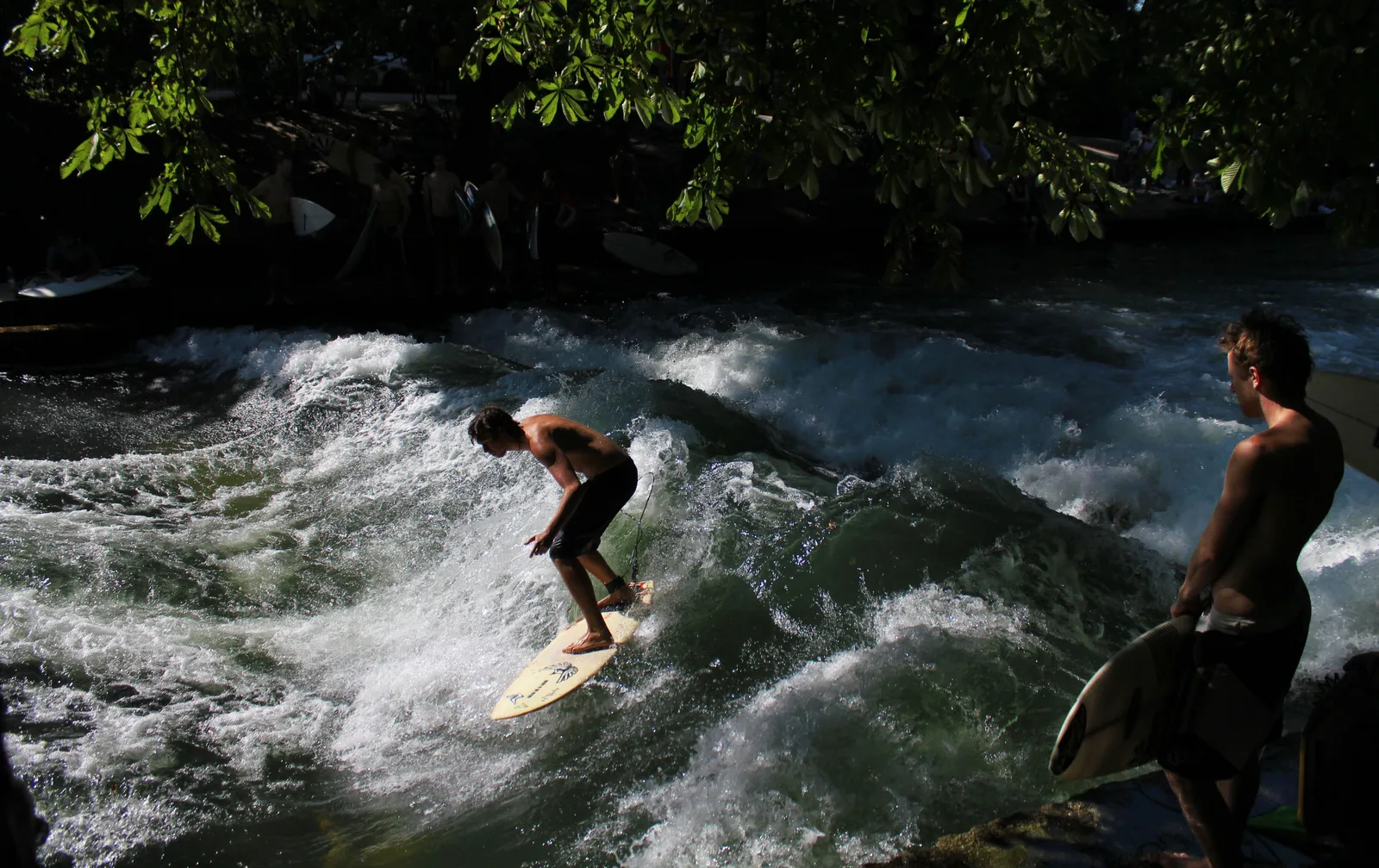
The wave was shut for about a year after a surfer drowned there in April 2025 and reopened in May 2026 under stricter rules, so there are riders on it again. Watching from the bridge is free and takes as long as you want to give it.
Munich Airport is 40 minutes out, either line
Munich Airport sits about 28 kilometres northeast of the city, so the ride is the number that shapes everything else about the day. Two S-Bahn lines cover it and they alternate: the S1 comes in via the west of the city, the S8 via the east, and between them something leaves the airport roughly every 10 minutes. Both take about 40 minutes between Marienplatz and Hauptbahnhof.
The S8 is the more useful of the two if Marienplatz is where your day starts or ends: coming from the east it runs Ostbahnhof, Rosenheimer Platz, Isartor, then Marienplatz, two stops before it reaches the main station, so it drops you there without a change. The S1 reaches Hauptbahnhof first and Marienplatz after.
Two practical notes. The airport station sits underneath the Munich Airport Center, the covered plaza between Terminals 1 and 2; follow the green S signs down, and budget more than 40 minutes door to door, because the walk from a Terminal 2 gate plus the wait for the next departure realistically makes it closer to an hour. Buy the Airport-City-Day-Ticket rather than a single: it is 17.50 euros for unlimited travel across zones M-5 for the day, which the return leg alone nearly justifies. If there are two to five of you, the group version is 32.60 euros for the whole party.
For comparison, if you have done this in Germany before: the equivalent run into Berlin is 23 minutes on the FEX, so budget about 40 more minutes on the train here than you would there.
Work backwards from your departure. Forty minutes on the train, plus the walk from the Marienplatz platforms and the walk up into the terminal at the far end, plus check-in and security at Germany’s second-busiest airport: leaving the centre about three hours before departure covers all of it without rushing. The S8 runs around the clock, dropping to every 40 minutes between 1am and 4am, so a genuinely late flight is still covered; the S1 stops around midnight.
An easy afternoon, apart from one staircase
Marienplatz to Viktualienmarkt to the Hofgarten is a walk of maybe two kilometres in total, flat the whole way and pedestrianised for most of it. It is an easy afternoon on foot, and the reason to hand the bag over at the start is simply that the one strenuous part of it, the top of Alter Peter, is 306 steps that you climb and then climb back down.
Frequently asked questions
What should I do during a layover in Munich?
With four to six hours, the S-Bahn from the airport puts you at Marienplatz in about 40 minutes, timed if you can manage it around the free Glockenspiel show at 11am, noon or 5pm. From there it's a climb up Alter Peter's tower (5 euros, 306 steps, no lift) for a view over the Rathaus roofline to the Alps, then three minutes south to the Viktualienmarkt, a working food market with a beer garden that rotates through Munich's six big breweries. With time to spare, keep walking north to the Hofgarten and the Eisbach wave in the Englischer Garten, both free.
Does it matter whether I catch the S1 or S8 back to the airport?
A little. Both take about 40 minutes from Marienplatz to the airport, and they alternate, so something leaves roughly every 10 minutes and the right answer is usually whichever is on the platform. The S8 runs east first, through Isartor, Rosenheimer Platz and Ostbahnhof; the S1 runs west on a different route. Either gets you there in the same time, so there is no reason to wait for a specific one.
Is there a cheaper ticket if there are several of us?
Yes, and the gap is large. The Airport-City-Day-Ticket is 17.50 euros per person for a day's unlimited travel across zones M-5 including the airport run, but the group version covers two to five adults for 32.60 euros total. Four people travelling separately would pay 70 euros; on the group ticket they pay 32.60. Children aged 6 to 14 count as half a person, and under-6s travel free.
Can I still catch the Glockenspiel if I only get in mid-afternoon?
Only between March and October. The Rathaus-Glockenspiel plays at 11am and noon year round, and adds a third show at 5pm in the summer half of the year. It runs about 12 to 15 minutes, it is free, and it happens whatever the weather. Marienplatz fills up ahead of it, so stand back toward Alter Peter or the Fischbrunnen rather than directly under the tower.
Is the Viktualienmarkt worth walking to on a Sunday?
The square is public and never closes, but most of the stalls do not trade on Sundays, so you would be looking at shuttered stands. Bakers, florists and caterers sometimes keep Sunday hours, and the beer garden opens on a fine Sunday, but on a wet one it will not. Traders set their own hours the rest of the week, generally from around 8am to 8pm Monday to Saturday, with some closing earlier in winter.
Are people actually surfing the Eisbach again?
Yes. The standing wave in the Englischer Garten was closed for about a year after a surfer drowned there in April 2025, and reopened in May 2026 under tighter rules: self-releasing leashes only, no surfing between 10pm and 5.30am, and riders aged 16 and over unless accompanied by an experienced adult. Watching costs nothing. The bridge on Prinzregentenstraße at the south tip of the park is the spot, about 20 minutes' walk from Marienplatz.