Berlin Layover Near Nordbahnhof and the Berlin Wall Memorial
Part of the full Berlin Layover Guide: What to Do Before a Flight Out of BER
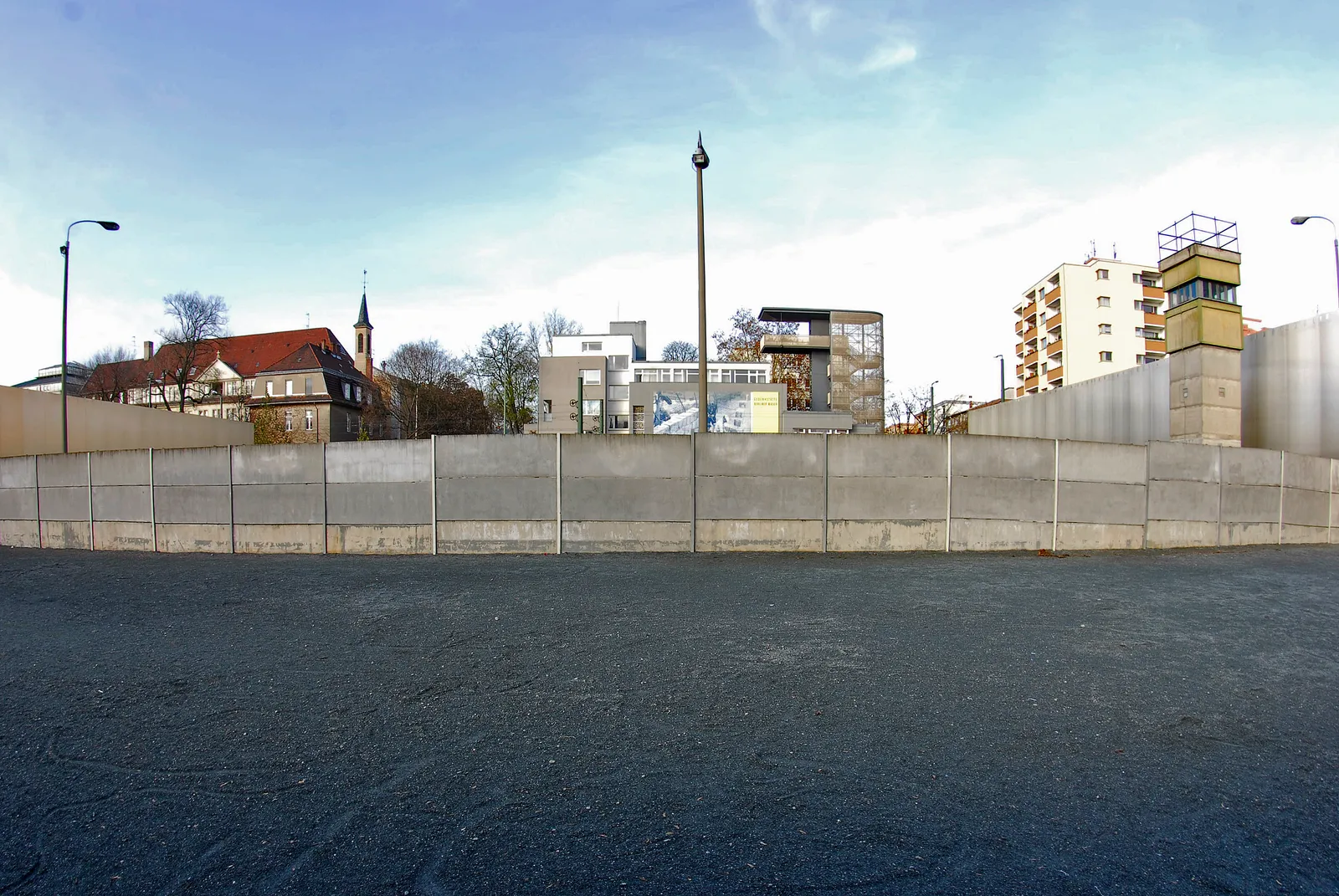
From Nordbahnhof, the Berlin Wall Memorial runs 1.4 kilometres along Bernauer Straße and is free from end to end: the only place the border survives at its full depth, plus a chapel built out of the rubble of the church that used to stand here.
The only place the border is still the width it was
Everywhere else in Berlin, the Wall is a line: a double row of cobbles in the road, a single panel kept as a souvenir, a stretch of painted concrete with the depth stripped away. Bernauer Straße is the exception. Here a section has been kept as a complete system, which is the thing photographs never convey. The outer wall people photographed from the west was one element of five or six: behind it a floodlit sand strip raked to show footprints, a signal fence that triggered an alarm on contact, anti-vehicle obstacles, a patrol road, and an inner wall.
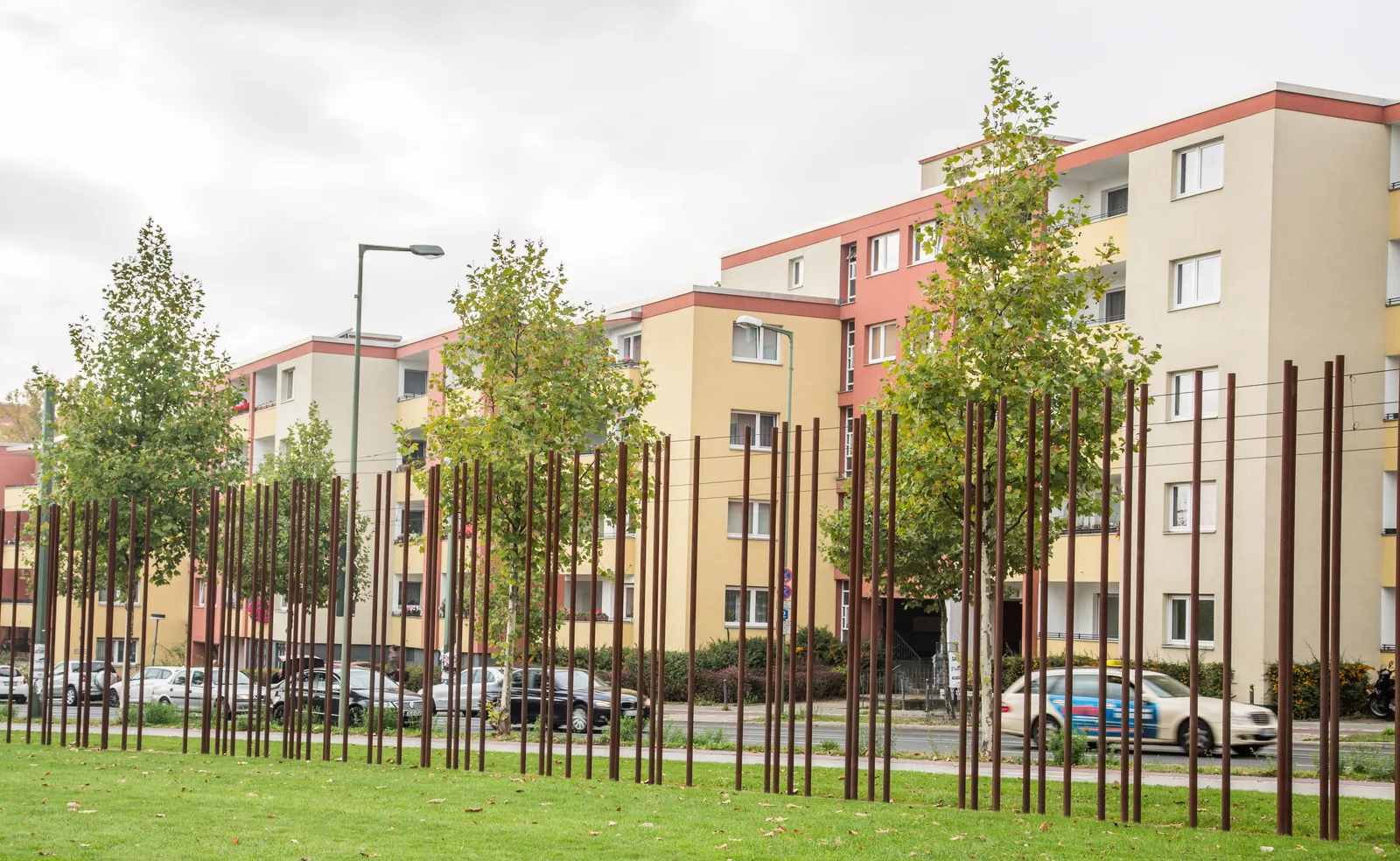
The rest of the 1.4 kilometres is marked rather than preserved: rows of rusted steel posts trace where the wall stood, and openings in the ground show foundations of the houses that were demolished to clear the strip. This street was chosen for the memorial because of what happened on it. The buildings on the southern side stood in the East while their front doorsteps were in the West, so in August 1961 people jumped from upper windows into blankets held by West Berlin firemen, and the windows were then bricked up.
A chapel made partly of the church that stood here
In the middle of the grounds is an oval building wrapped in vertical timber slats: the Kapelle der Versöhnung, the Chapel of Reconciliation, finished in 2000.
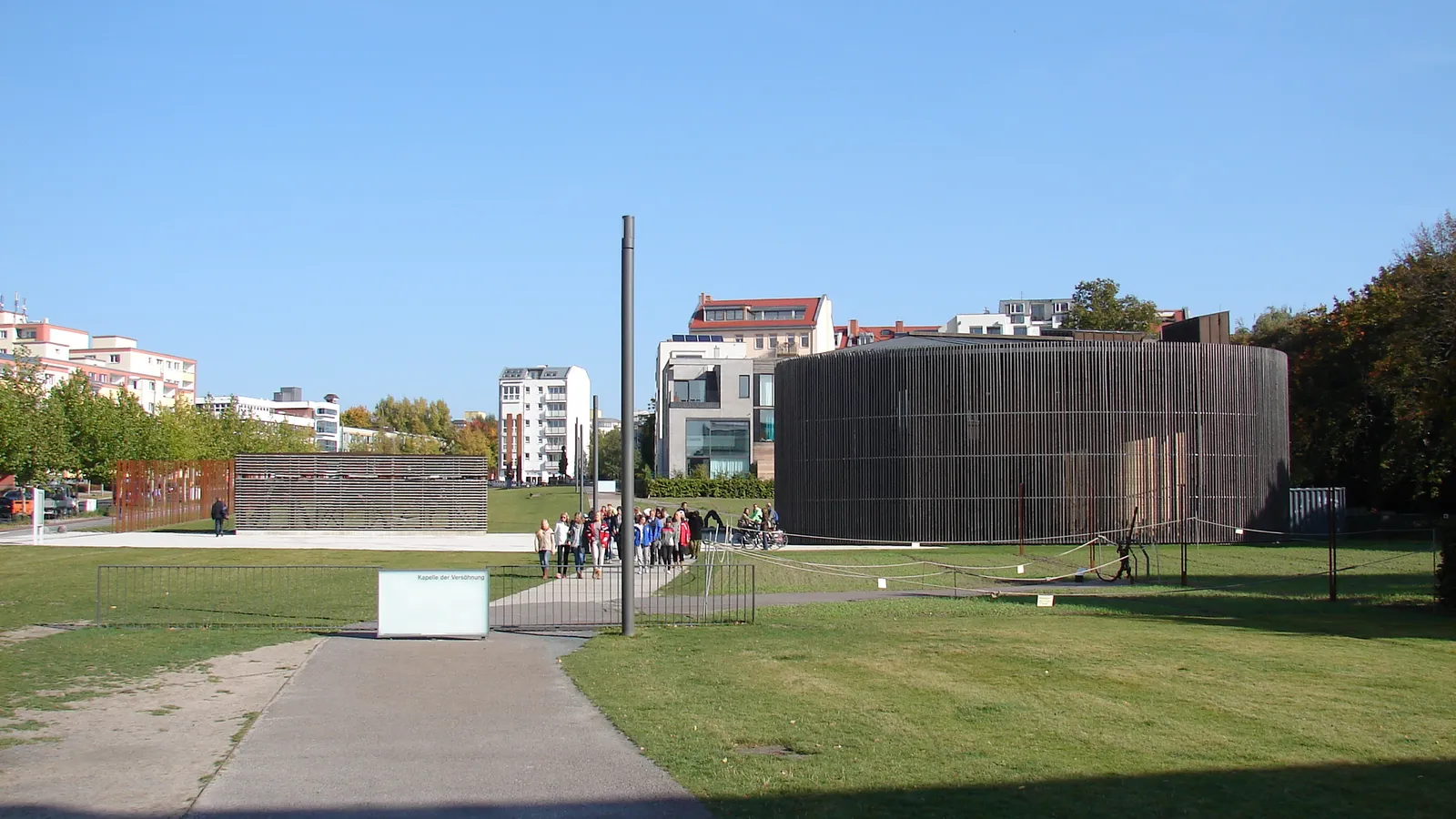
It stands on the footprint of the Church of Reconciliation, a nineteenth-century parish church that ended up marooned inside the death strip when the border went up, was sealed off from its own congregation, and was finally blown up by the East German authorities in 1985 on the grounds that it obstructed sightlines. The replacement is built from rammed earth, and the earth was mixed with crushed rubble from the demolished church, so the wall of the new building physically contains the old one. The salvaged relief of the Last Supper hangs behind the altar again, and a broken piece of the original sandstone altar, dug up during excavation, is set into the floor.
A short prayer is held at noon from Tuesday to Friday, and it commemorates one named person killed at the Wall each time. It takes about a quarter of an hour, and anyone can walk in.
Five storeys up, the strip finally makes sense
Across the road, the Documentation Centre has a five-storey observation tower, and it is worth the stairs specifically because everything below is designed to be read from above. From street level the preserved section looks like a wall and a field. From the platform it resolves into the arrangement it actually was: two parallel barriers with a controlled corridor between them, running through what used to be an ordinary residential block.
Both the centre and the tower are free, Tuesday to Sunday, 10am to 6pm. The grounds outside stay open daily from 8am to 10pm, and nothing is ticketed. One practical warning about the arrival end: Nordbahnhof is a two-platform S-Bahn halt with none of the staffed left-luggage infrastructure Hauptbahnhof or Ostbahnhof have, so whatever you get off the train holding is yours for the afternoon.
The platform you arrived on was sealed for 28 years
Before you leave, look at the station. Nordbahnhof was on a West Berlin line that ran under East Berlin, so from 1961 it was closed, bricked up at street level and patrolled by border guards while western trains rolled slowly through without stopping. There is a small free exhibition on the platform level about exactly this, and it is the only part of the ensemble that most visitors miss, because they arrive underneath it and walk straight up the stairs.
Ninety minutes, none of it ticketed
There is no queue here, nothing to book, and nothing to pay, which is unusual for a site of this importance and makes it an unusually low-friction way to spend a short window. What it asks for instead is attention: this is a place you walk slowly and stop at often. That is much easier to do when your hands are empty.
Frequently asked questions
Does any part of this cost money?
None of it. Admission to every exhibition on Bernauer Straße is free, including the Documentation Centre and the tower. The open-air grounds are accessible daily from 8am to 10pm, and the Documentation Centre, its viewing platform and the visitor centre run Tuesday to Sunday from 10am to 6pm, closed Mondays. There is nothing to book.
How long does 1.4 kilometres of memorial take?
Around 90 minutes if you read the panels, and about 40 if you walk it briskly and only stop at the reconstructed section. The density is at the Nordbahnhof end: the preserved border strip, the watchtower, the Window of Remembrance and the chapel are all in the first few hundred metres. If your window is tight, do that part properly and skip the western end rather than rushing the whole thing.
How do I get here, and back out to the airport?
Nordbahnhof sits on the north-south S-Bahn, the S1, S2, S25 and S26, and the M10 tram runs along Bernauer Straße itself. For BER, ride two stops south to Friedrichstraße for the S9, or to Hauptbahnhof for the FEX, which is the faster of the two at about 23 minutes. An ABC ticket covers the whole thing.
Is this a good stop if I am travelling alone?
It is one of the better ones in Berlin. Everything is self-guided, outdoors and free, with nothing to book and no group pace to keep to, so you can spend forty minutes at one panel if it takes you. The chapel's noon prayer, Tuesday to Friday, is about fifteen minutes and names a single person killed at the Wall; slipping into that alone is straightforward in a way it would not be with four other people in tow.