Berlin Layover Near Friedrichstraße Station
Part of the full Berlin Layover Guide: What to Do Before a Flight Out of BER
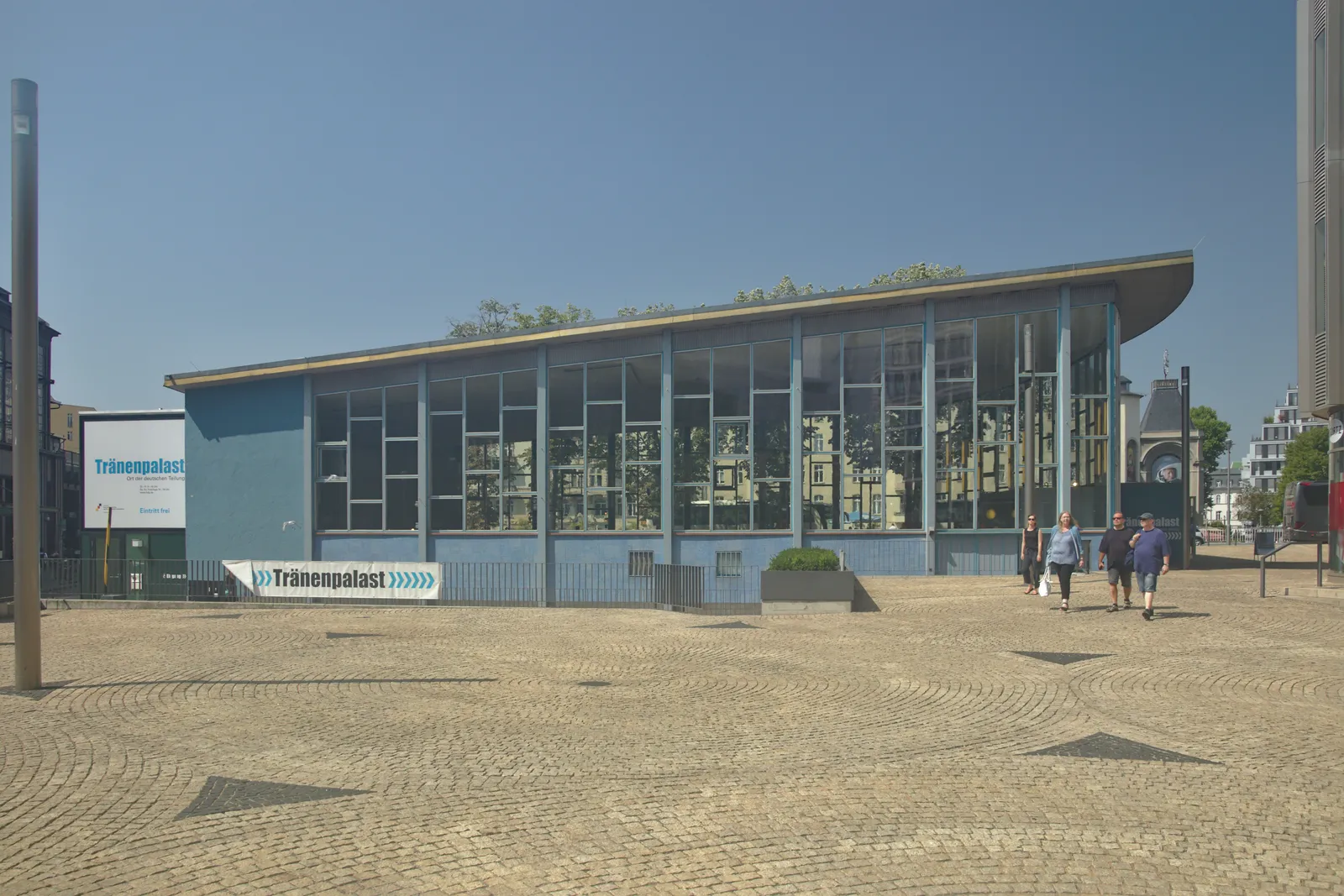
At Berlin Friedrichstraße, the old border crossing station, walk into the free Tränenpalast exhibition beside the platforms, then take ten minutes south to Gendarmenmarkt before catching the S9 back to BER.
The strangest railway station in Cold War Europe
Friedrichstraße looks like an ordinary busy interchange, and for four decades it was one of the most peculiar pieces of infrastructure on the continent. The station stood in East Berlin, but West Berlin’s own S-Bahn and U-Bahn lines ran through it, so the building was carved up internally into sealed zones: a West Berlin part where westerners could change trains without ever legally entering the GDR, an East Berlin part for everyone else, and a controlled crossing between the two.
Elsewhere on those lines, East Berlin stations were simply closed and the trains ran through them without stopping, dimly lit and guarded, for twenty-eight years. Berliners called them the Geisterbahnhöfe, the ghost stations. Friedrichstraße was the one place where the two systems touched, which made it the busiest and most watched crossing point in the city.
The glass hall where the goodbyes happened
The border crossing itself was a separate building, put up in 1962 on the river side of the station: a low pavilion of steel and glass that handled departures out of East Berlin. Officially it was the Ausreisehalle, the exit hall. Berliners called it the Tränenpalast, the Palace of Tears, because this is where East Germans said goodbye to visiting relatives they had no way of following.
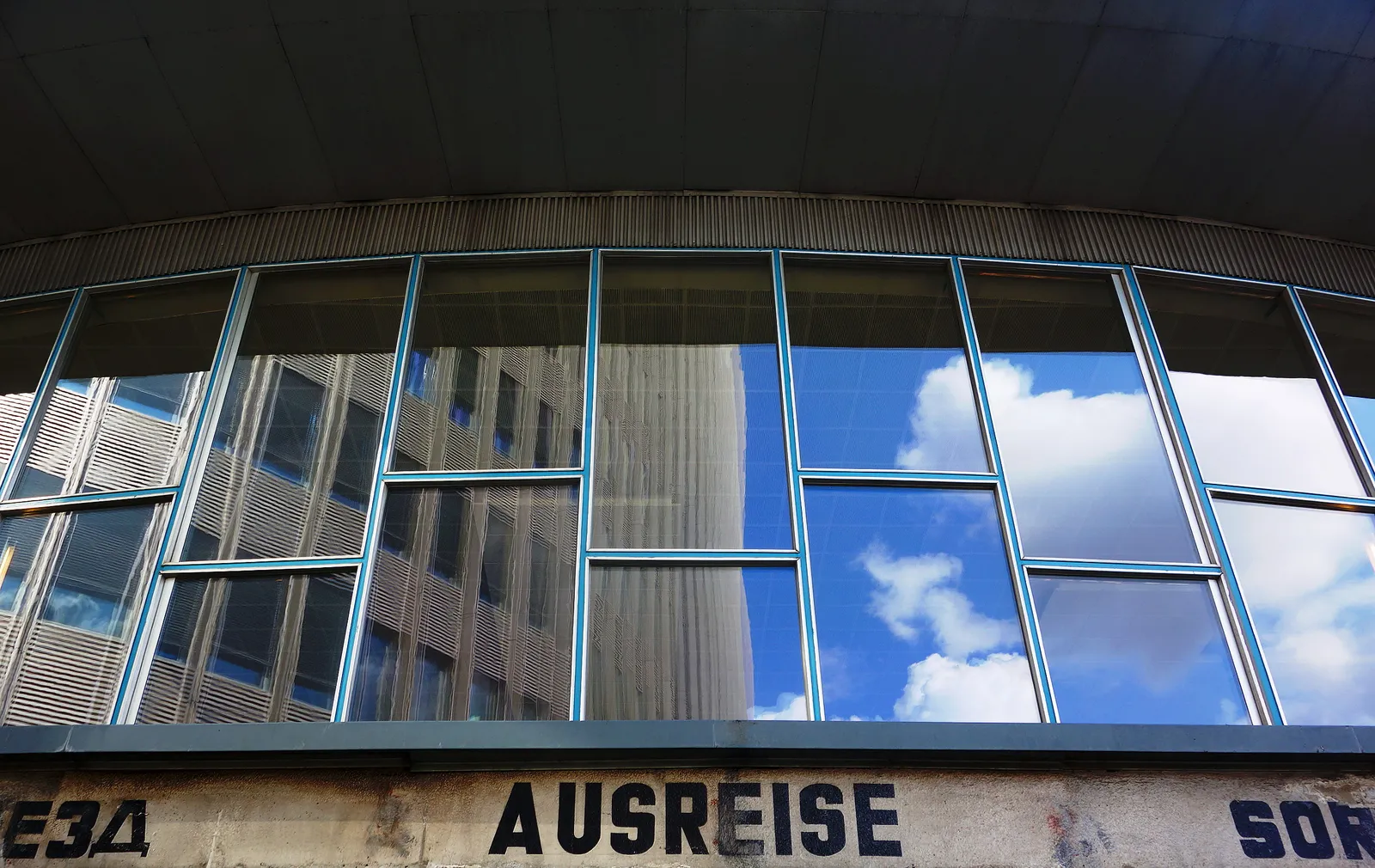
It is now a permanent exhibition on division and reunification, and it is one of the best small museums in the city precisely because it stayed in the room where the thing happened. The passport control booths are the originals. So are the fittings, the low ceilings, the sightlines a guard would have had. Entry is free, it opens Tuesday to Friday from 9am and at weekends from 10am, and it closes on Mondays. Set aside about an hour: this is a window spent standing in one hall reading closely rather than walking, which is not something you want to do with a bag between your feet.
Ten minutes south, a square built for symmetry
Walk down Friedrichstraße and turn left and you are on Gendarmenmarkt, which is as composed as the Tränenpalast is plain. Schinkel’s Konzerthaus sits in the middle on a high flight of steps, and it is flanked by two domed towers that face each other exactly.
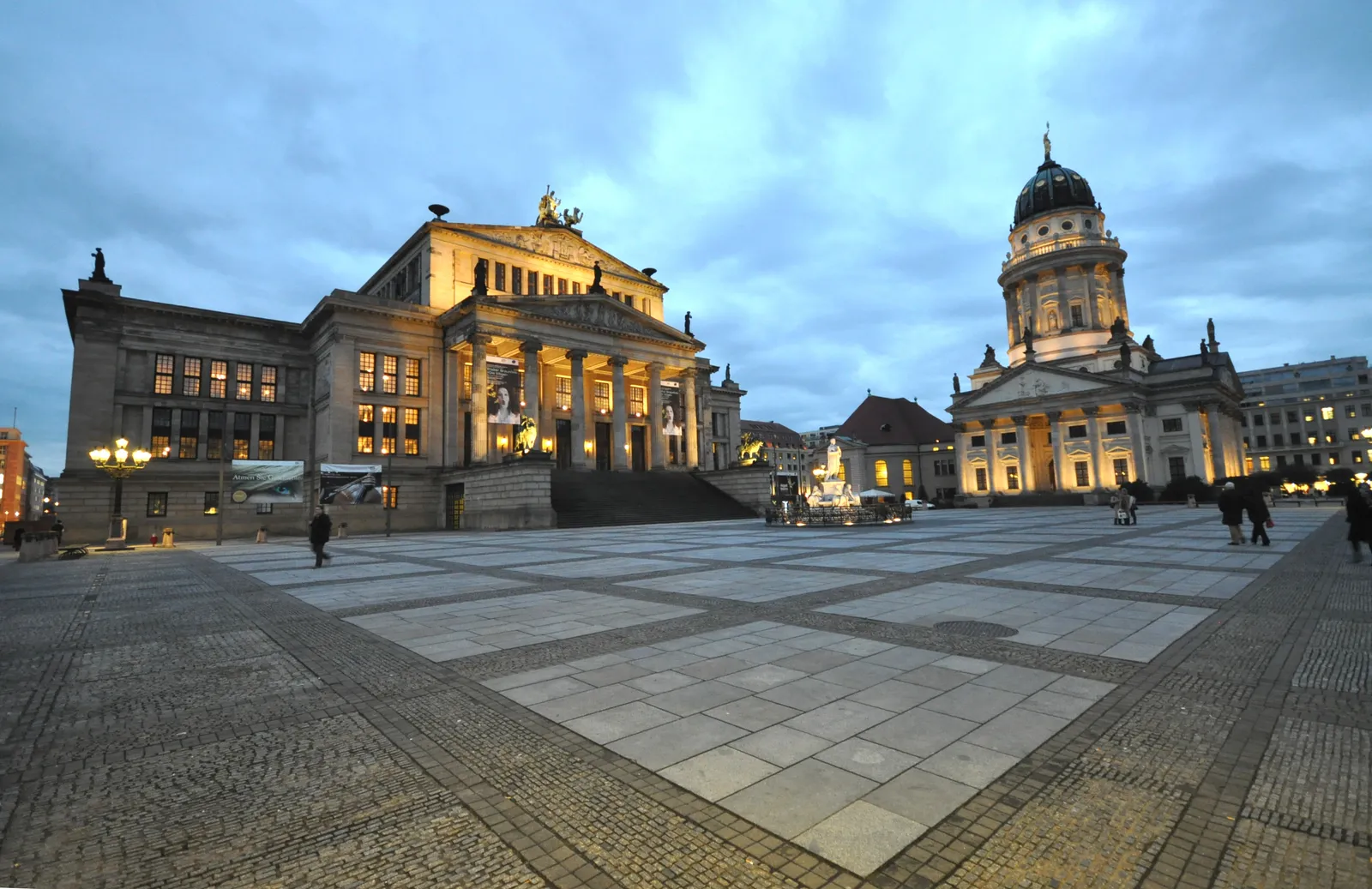
The joke of the square is that neither of them is a cathedral and neither dome belongs to the church it sits on. The Französischer Dom and the Deutscher Dom were modest churches, the French one built for Berlin’s Huguenot refugees, until domed towers were added in the 1780s purely so the square would look right. The word Dom here comes from the French dôme, meaning the dome, not from any cathedral status. It is architecture as stage set, and it worked.
Twenty quiet minutes to the north
If there is time left, walk up Friedrichstraße the other way to Chausseestraße 126, where a walled cemetery called the Dorotheenstädtischer Friedhof has been in use since 1762. It is small, gravelled, thick with ivy, and the density of who is in it is faintly absurd: Hegel and Fichte, the architects Schinkel and Schadow, Bertolt Brecht and Helene Weigel in a corner beside the house Brecht lived in, Heiner Müller, Christa Wolf.
It is a working cemetery rather than an attraction, so there is no ticket desk and no queue, and the gates run on seasonal hours, opening at 8am and closing anywhere between 4pm in midwinter and 8pm between May and August. On a weekday you may well be the only person in it. Read the rest of this itinerary and it makes a certain sense to end here: a city that spent the twentieth century arguing with itself, with most of the arguers buried in one garden a few hundred metres from where the border ran.
A frontier you now have to be told about
Nothing at Friedrichstraße announces what happened here. The sealed corridors are gone, the ghost stations are ordinary stops again, and the crossing hall is a museum that does not charge to get in. That is the case for spending a couple of layover hours here rather than at the Brandenburg Gate: this is the version of Berlin’s history you have to be shown, standing in the actual rooms, which works much better without something on wheels attached to your hand.
Frequently asked questions
Is the Tränenpalast free, and when can I get in?
Free, with no ticket to book. It opens Tuesday to Friday from 9am to 6pm and at weekends from 10am to 6pm, and it is closed on Mondays, which is the single thing most likely to wreck this itinerary. The address is Reichstagufer 17, which in practice means the glass building on the river side of Friedrichstraße station, about two minutes from the platforms.
How long does it take to go through?
Around 45 minutes to an hour if you read properly, and it is one hall, so there is no risk of losing yourself in a wing you did not plan for. That size is the reason it fits a layover: you can be off a train, through the exhibition and back on a platform inside 90 minutes without rushing any part of it.
What runs from Friedrichstraße?
Almost everything. The north-south and east-west S-Bahn lines cross here, the U6 stops underneath, regional trains call, and trams run outside. For the airport the one that matters is the S9, which goes to BER without a change, so you can finish here and leave from the same station you started at.
Is this a good layover with kids?
Be honest with yourself about the subject. The Tränenpalast is free, short and full of real objects, including the actual passport control booths, but its subject is families being separated and much of it is reading. Older children who have covered the Cold War at school get a lot out of it; younger ones will not. If you are travelling with small children, the field at Tempelhof or the TV Tower are better uses of the same hours.