Berlin Layover Near Südkreuz Station
Part of the full Berlin Layover Guide: What to Do Before a Flight Out of BER
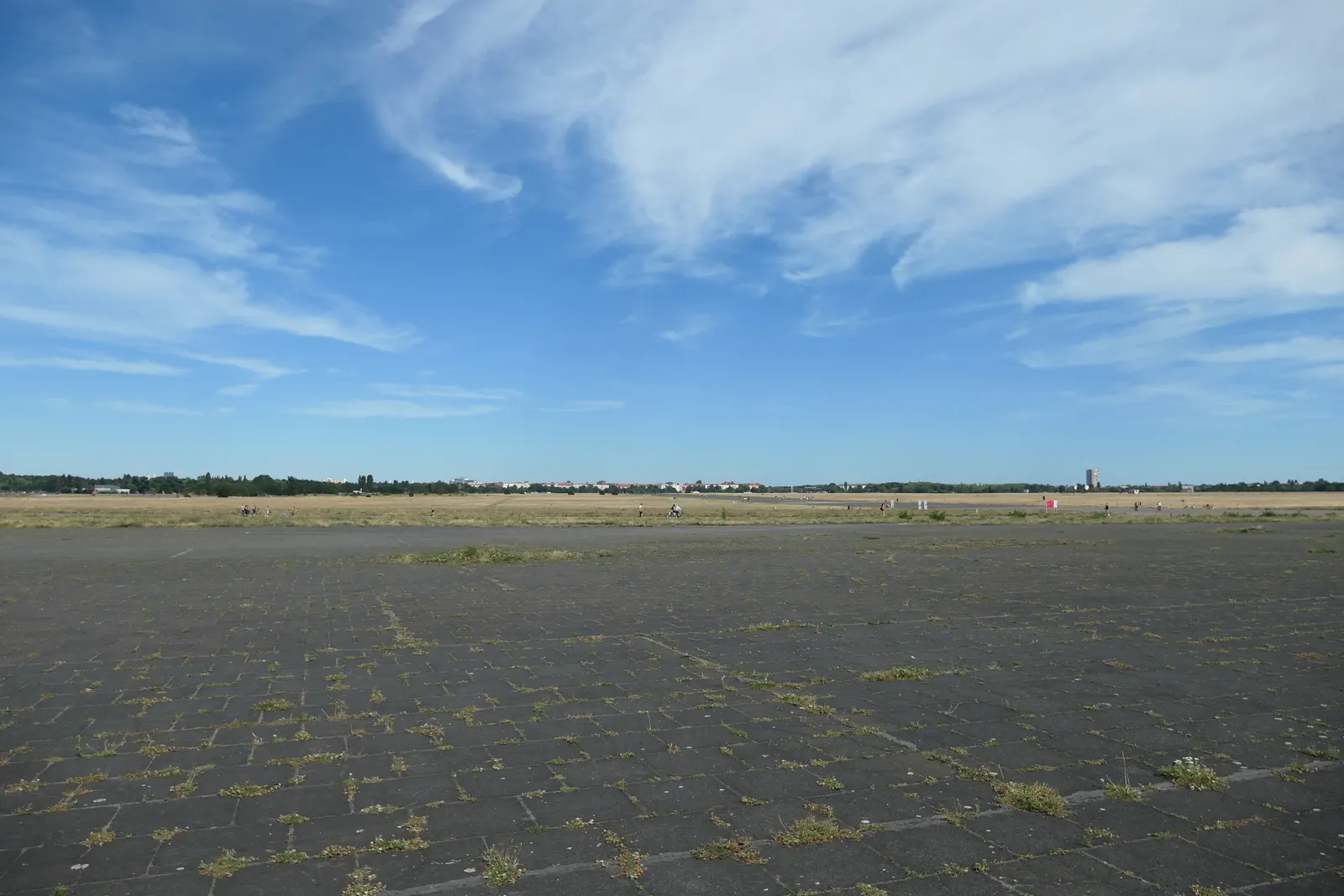
From Berlin Südkreuz, ride one Ringbahn stop to Tempelhofer Feld and walk 355 hectares of decommissioned airport, or pay a euro to get into the Südgelände nature park, then take the FEX 14 minutes back to BER.
The station nobody visits, next to the space everyone should
Südkreuz is not a destination. It is a junction: Ringbahn, north-south S-Bahn, ICE services, and the FEX, which reaches BER from here in about 14 minutes, the shortest run to the airport of any main station in Berlin. That last fact is the whole argument for this itinerary. A window that would be uncomfortably tight from Hauptbahnhof is relaxed from here.
One Ringbahn stop east is Tempelhof, and out of the station is Tempelhofer Feld: 355 hectares of former airport, closed to aircraft in 2008 and opened as a public park in 2010, and by most measures the largest inner-city open space in the world. Berliners voted in 2014 to keep it exactly as it is rather than build on the edges, and the result is the strangest public space in Europe. Nothing has been landscaped. The runways are still runways, the taxiway markings are still painted on, and the horizon is genuinely flat in a way no other part of this city is. The field is 355 hectares of open ground with no shade and no left-luggage anywhere on it, so whatever you carry through the gate you carry for the entire visit.
What moved in after the aircraft left
The interesting thing about Tempelhofer Feld is that it was never converted into a park in any conventional sense. It was fenced, given gates, and largely left alone, and a lot of things have taken advantage of that.
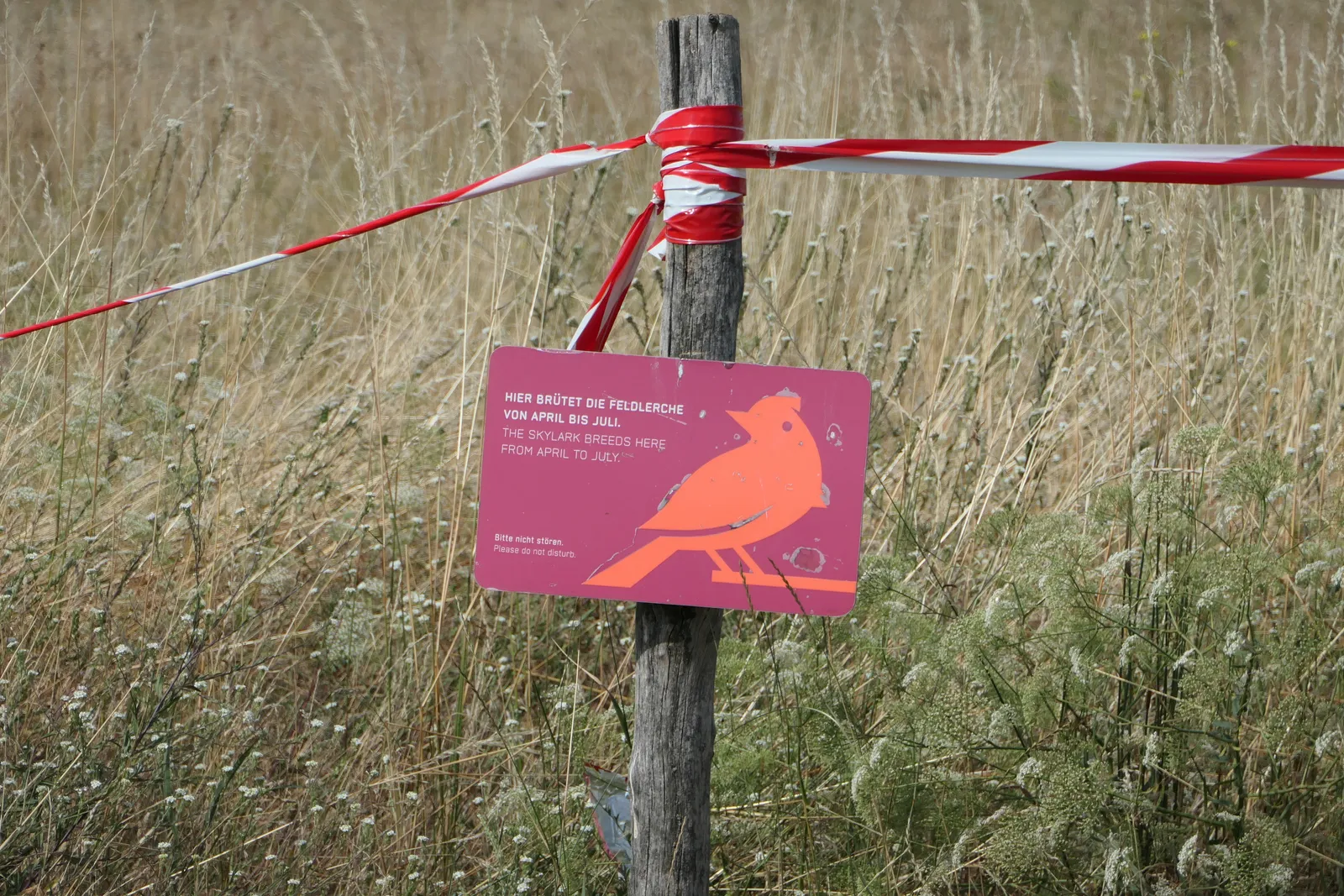
The most visible is the bird. Skylarks nest directly on the ground in the rough grass between the runways, and because they are on Germany’s endangered list the city ropes off large sections of meadow for them every spring: red and white tape, wooden posts, and small pink signs telling you that this is a breeding area from April to July. A fenced zone of roughly 23 hectares is grazed by sheep to keep the habitat right. You end up walking a decommissioned international airport while being politely kept off the grass by songbirds.
The other occupants are people. There are community garden plots built out of pallets and salvage near the Oderstraße end, kite-buggies and skaters using the runways as their own private velodrome, and, on any warm evening, a few hundred people sitting on concrete watching a sunset with nothing whatsoever in the way of it.
One euro to walk into a forest that grew over a railway
If the field leaves you wanting the opposite of open space, go the other way from Südkreuz. Two or three stops south on the S2, S25 or S26 is Priesterweg, and beside the station is the Natur-Park Schöneberger Südgelände.
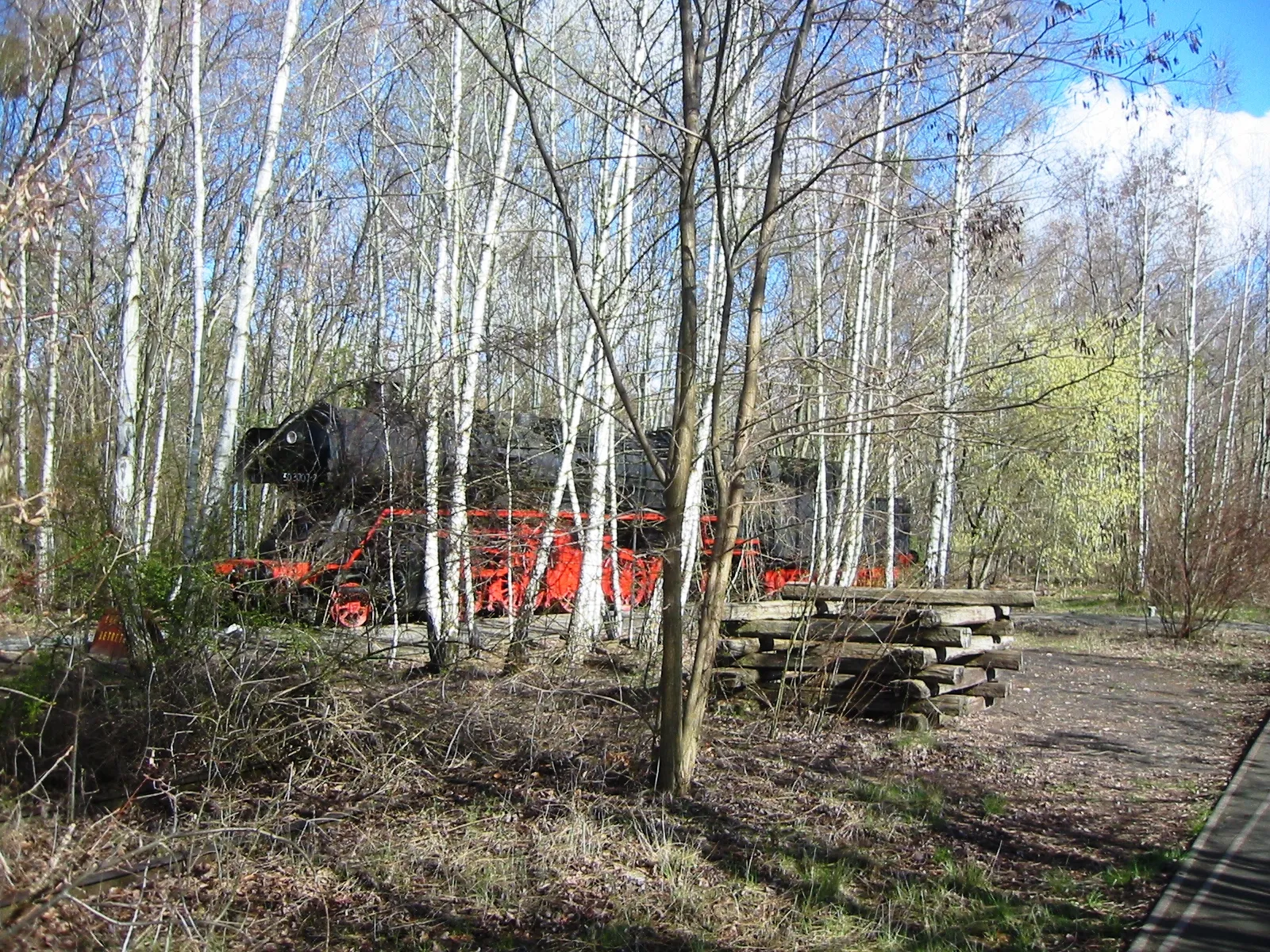
This was the Tempelhof marshalling yard until it closed in 1952, at which point it was simply abandoned and the forest moved in on top of it. Eighteen hectares of birch and robinia have grown up through the tracks, a water tower and a steam locomotive are still standing in the middle of it, and steel walkways lift you above the most sensitive ground. It was made a nature park in 1996 and opened to the public in 2000. Admission is 1 euro, free for children up to 14, and the closing time slides with the season from 4pm in midwinter to 9pm between May and August. For a euro it is the best-value hour in Berlin, and on a weekday you may have the place to yourself.
Fourteen minutes from here to the gate
The reason to build a layover around Südkreuz rather than the centre is arithmetic. You lose nothing in transfer time and you gain nine minutes at each end against a Hauptbahnhof itinerary, which on a three-hour window is the difference between a walk and a rush. What you get for it is a pair of places that exist nowhere else: an airport with no aeroplanes and a rail yard with no rails visible under the trees. Neither is a place to be pulling a suitcase around, and neither charges more than a euro to get in.
Frequently asked questions
What time do the gates at Tempelhofer Feld shut?
They move with the daylight, month by month, and it catches people out. Roughly: 6am to 22:30 in June and July, 6am to 21:30 in May and August, 6am to 20:30 in April and September, and down to 7:30am to 5pm in December and January. There are ten entrances, including two at Tempelhof S-Bahn and Paradestraße on Tempelhofer Damm, and they all lock at the posted time.
How do I get from Südkreuz to the field?
One stop on the Ringbahn. The S41 and S42 both run from Südkreuz to Tempelhof, and the entrance is beside the station. The U6 also stops at Tempelhof and at Paradestraße if you are coming from the centre instead. It is close enough that the transfer is not really the constraint on your window; the gate times are.
How long does Südkreuz to BER actually take?
About 14 minutes on the FEX, which is the shortest run to the airport from any main Berlin station, and roughly nine minutes less than from Hauptbahnhof. The FEX calls here every 15 minutes, and the RE20 stops here too. You still need an ABC ticket at 5.00 euros, since the airport is in fare zone C.
Is there any point coming here in winter?
Not for the field, if your window is an evening one. The gates shut at 5pm in December and January, and the Südgelände closes at 4pm from November to February, so a dark winter afternoon at Südkreuz leaves you with neither. Winter mornings are fine, and the field in low sun with frost on the runways is arguably better than in August.