São Paulo Layover: Old Centre to Paulista, GRU
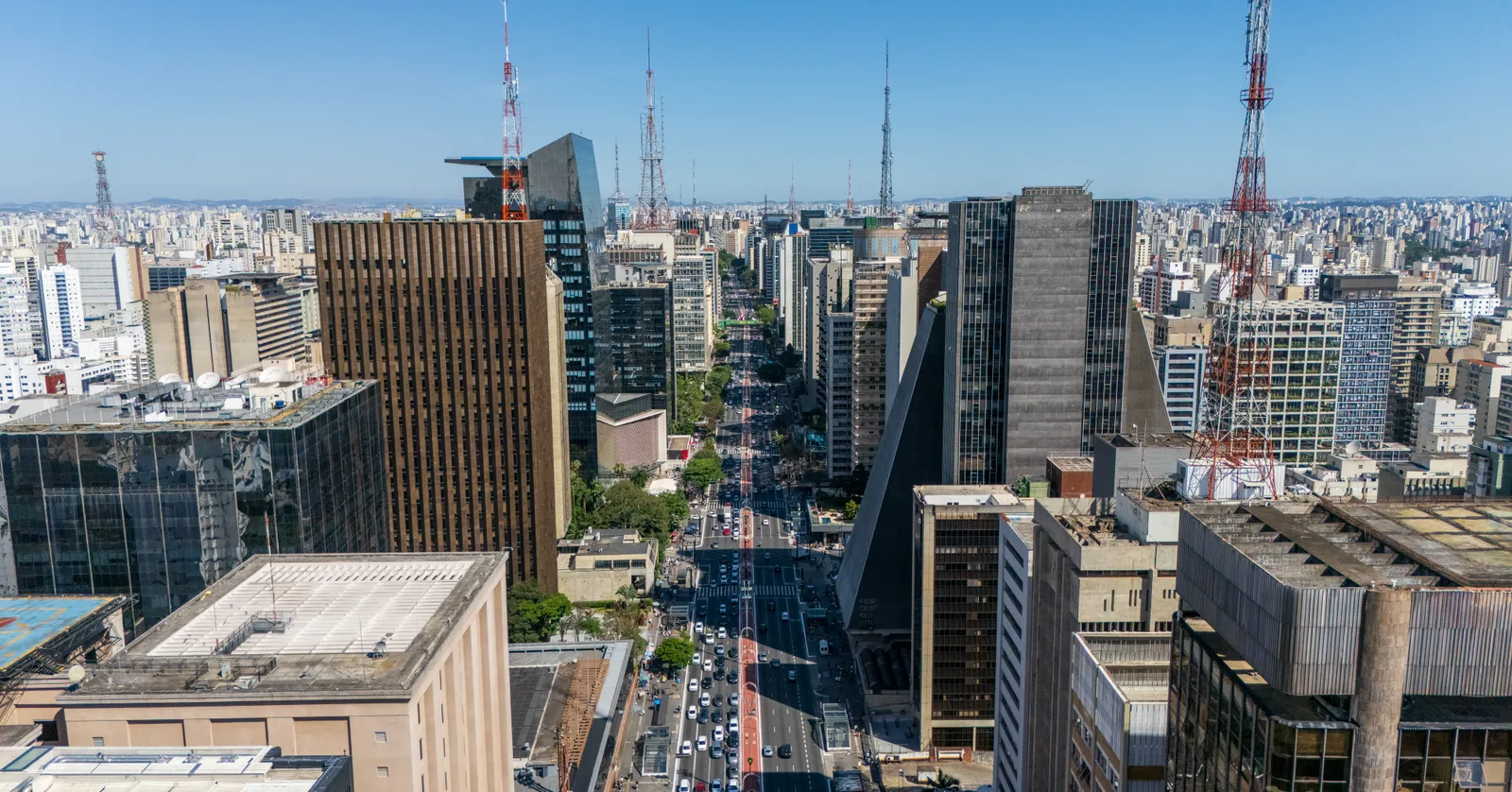
São Paulo’s old centre puts a 1911 opera house, a 1947 skyscraper with a public deck near the top and a 1933 market hall lit through stained glass within about a kilometre of each other, and the city’s best-known art museum sits a short metro ride south on Avenida Paulista.
The Theatro Municipal runs free tours in English
The Theatro Municipal, São Paulo’s opera house, stands at the head of the Viaduto do Chá, the viaduct that carries the old centre’s streets across the Anhangabaú valley below, and it has looked like a scaled-down Paris Opéra since it opened in 1911. Bronze figures stand along the roofline, the interior is finished in marble, mosaic and gilt, and the coffee trade paid for all of it.
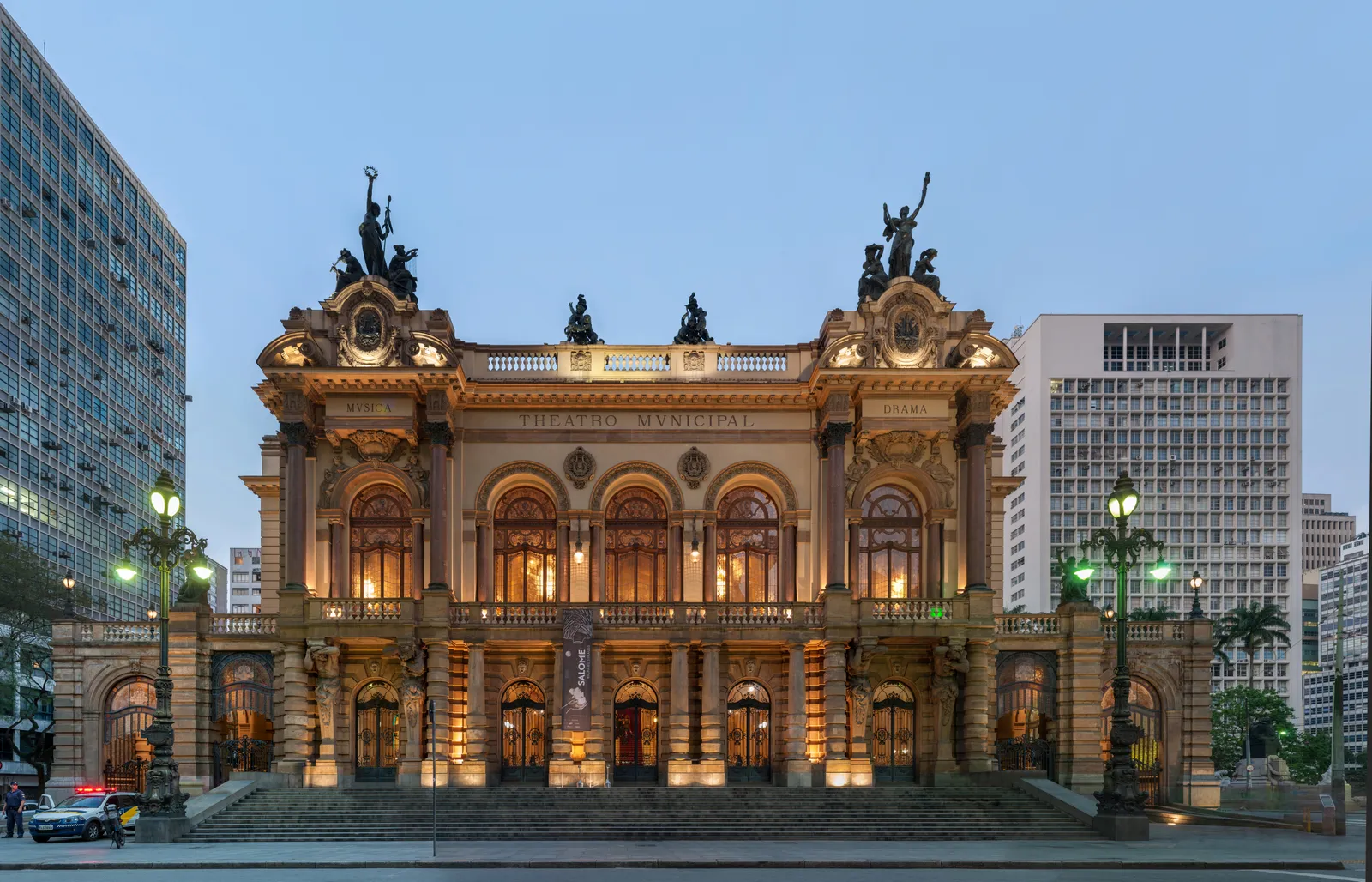
The education team walks visitors through the foyer, the auditorium and the upper rooms for nothing, and the English-language visits are the ones that suit someone passing through: Saturdays at 11am and Wednesday, Thursday and Friday at 1pm, signed up for in person at the theatre with an identity document and a passport, since they are reserved for foreign visitors. That makes them the rare tour you can decide on the same morning. Portuguese visits run more often, Tuesdays at 10am, 11am and 5pm and Wednesday to Friday at 11am, 1pm, 3pm and 5pm, and those are booked online instead. Neither runs on public holidays. If you would rather have the whole quarter explained than one building, a guided walk through the historic centre is bookable through a tours and activities platform and covers the theatre, the cathedral square and the streets between them.
A viewing deck 26 floors up at Farol Santander
Rua João Brícola runs through São Paulo’s old banking district, and the white tower at number 24 is the Altino Arantes building: 161 metres and 35 floors, finished in 1947, with an architect who took the Empire State Building as his reference and then built the thing in reinforced concrete rather than steel. It was the state bank’s headquarters for decades, which is why half the city still calls it the Banespa. Since 2018 it has been a cultural centre called Farol Santander.
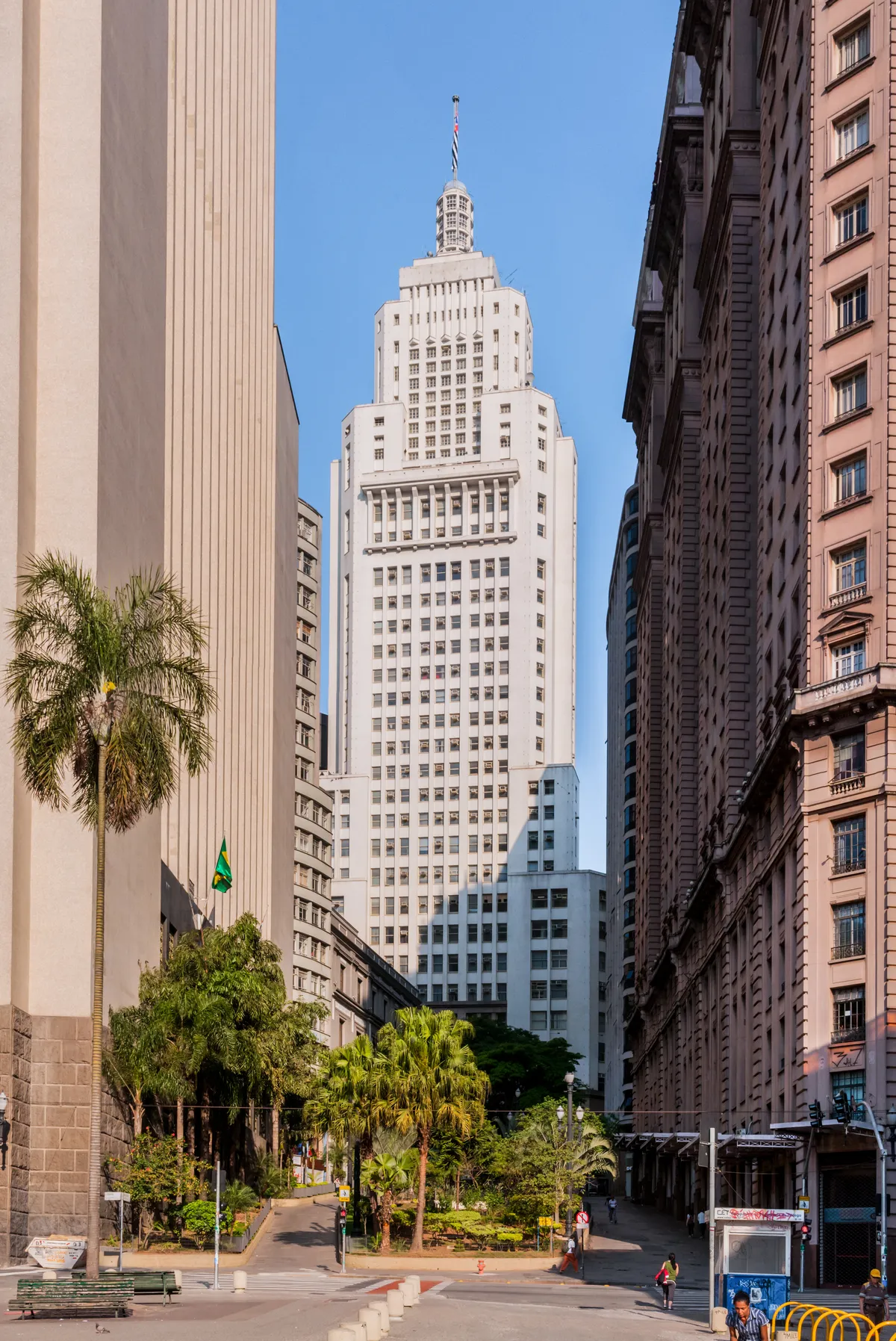
One ticket, R$45 full and R$22.50 half price, covers whatever exhibitions are hanging plus the deck and café on the 26th floor, and the building opens Tuesday to Sunday from 9am to 8pm with the last tickets sold at 7pm. The 21st floor is a working skate ramp, hired by the hour and not part of that ticket. If you would rather not pay for a view at all, the Sesc on Rua 24 de Maio, a department store rebuilt as a cultural centre a few minutes west, keeps a free public terrace on its roof: Tuesday to Saturday 10am to 6.30pm, Sundays and holidays until 5.30pm, no booking, and you get in as long as it isn’t already full.
Paintings on glass easels at the Avenida Paulista art museum
The Museu de Arte de São Paulo sits at Avenida Paulista 1578 in a glass box slung between four red concrete pillars, with 74 metres of clear span underneath and nothing at all holding up the middle. Lina Bo Bardi designed it, Queen Elizabeth II opened it on 7 November 1968, and the empty plaza it leaves at street level has been used ever since for protests, concerts and a Sunday antiques market.
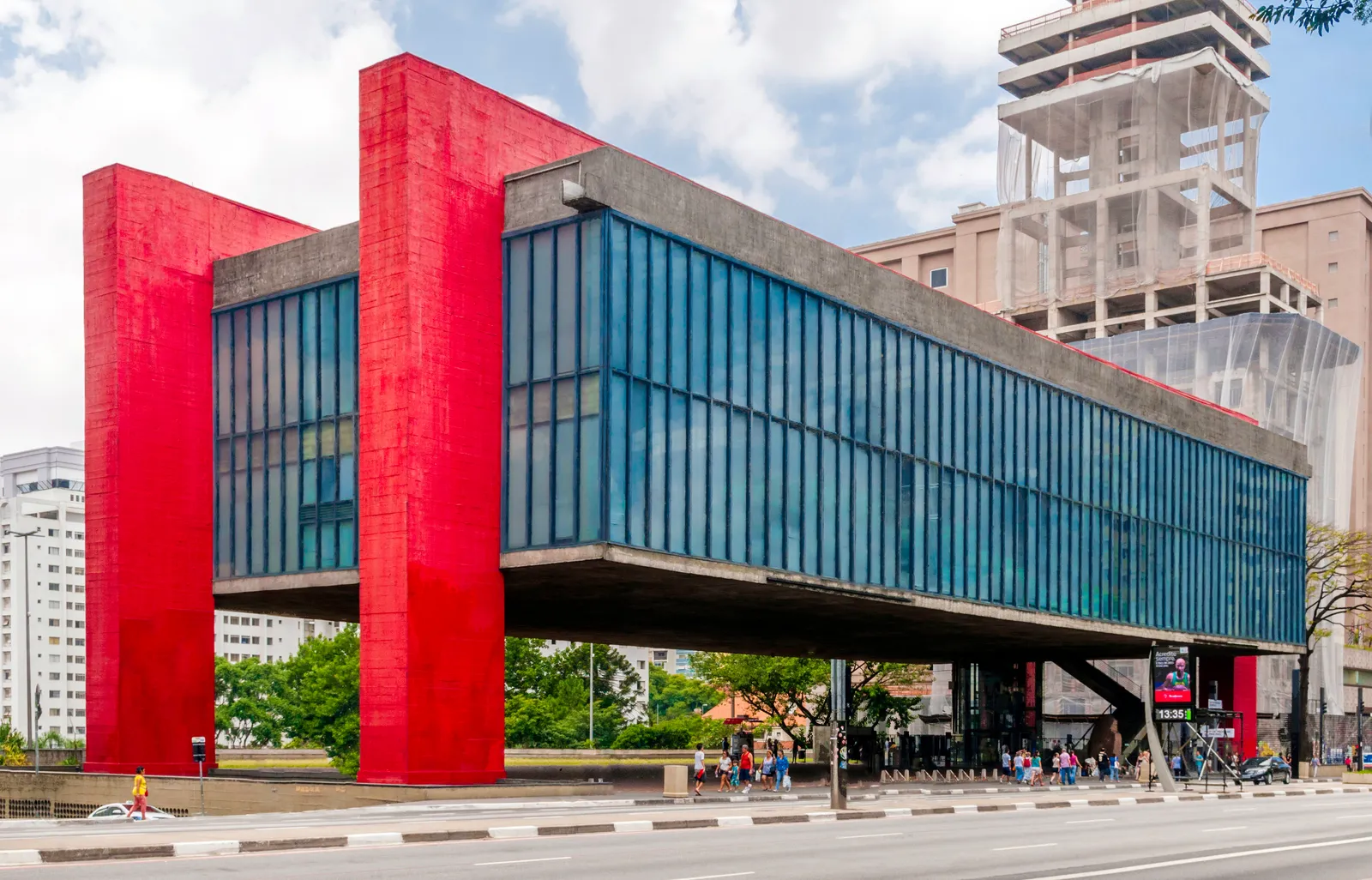
Upstairs the collection hangs the way Bo Bardi meant it to: sheets of tempered glass wedged into rough concrete blocks, standing in open rows with no partitions and no wall behind them, so a Van Gogh or a Renoir sits in the middle of the floor and you walk around it. The easels were taken out in 1996 and put back in December 2015. Admission is R$75, free to everyone on Tuesdays and free again on Friday evenings from 6pm to 10pm; the museum closes on Mondays and runs to 8pm on Thursdays. Tickets are booked online in advance, including on the free days.
The Pinacoteca, a brick art museum beside the Luz gardens
Praça da Luz has two of São Paulo’s grandest turn-of-the-century buildings facing each other across the Jardim da Luz, the oldest public garden in the city. One is Luz station, whose iron structure and clock were made in Britain, shipped over as ballast in the ships that came for coffee and assembled here for an opening on 1 March 1901; the tower clock came from Dimbleby & Son and survived the 2015 fire that gutted the Portuguese language museum housed inside, which reopened in 2021. The other is the Pinacoteca, an art museum in a bare-brick building of 1900 by the Ramos de Azevedo office.
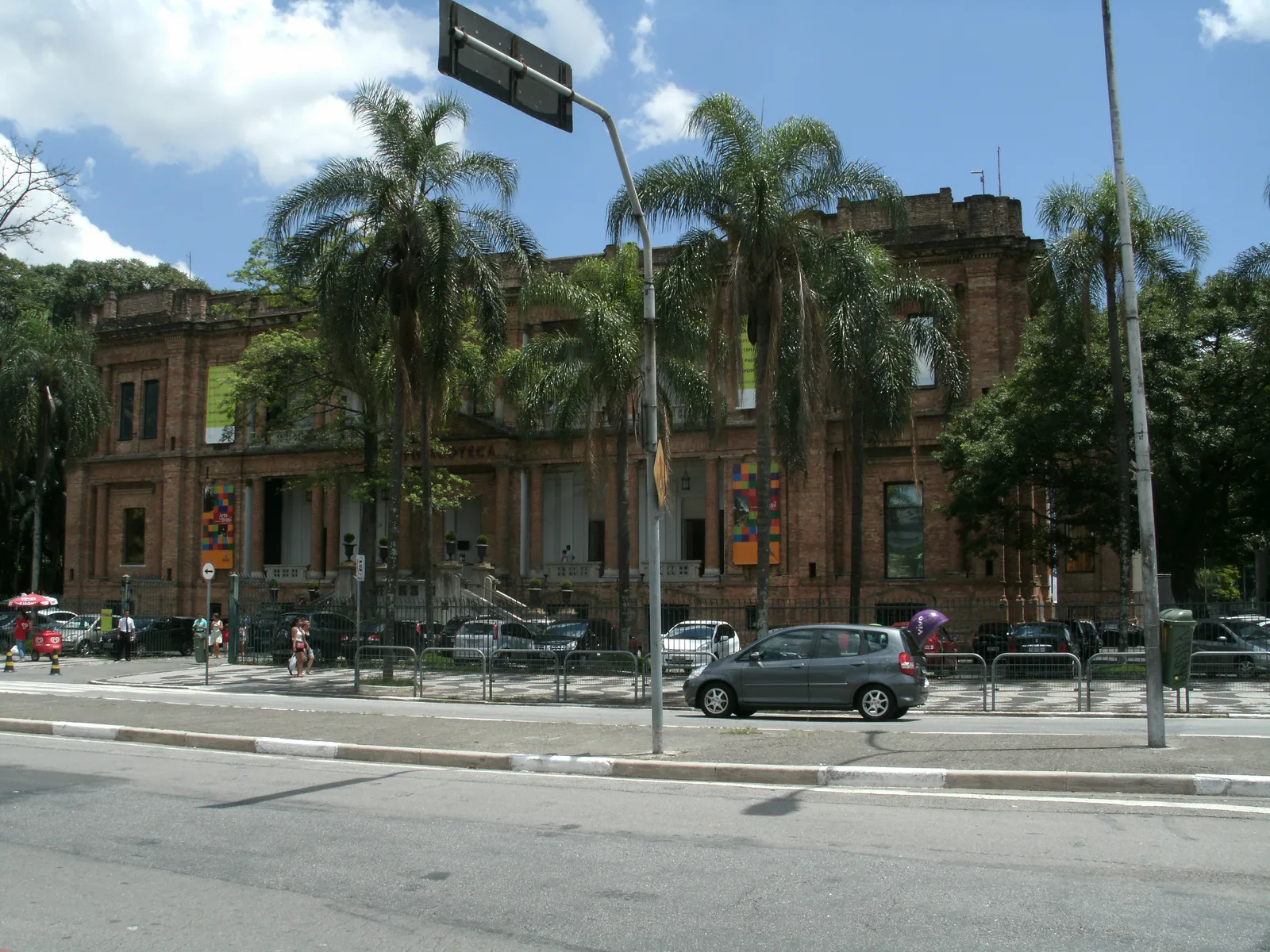
The collection is Brazilian, largely 19th century onwards, spread across three linked buildings on and around the square, and one ticket covers all of them. Entry is R$40, R$20 half price, and free to everyone on Saturdays. It opens Wednesday to Monday, 10am to 6pm with last entry at 5pm, and closes on Tuesdays, which happens to be the exact day the museum on Avenida Paulista lets everyone in for nothing. Thursdays it stays open to 8pm and stops charging at 6pm. Between the two of them, Tuesday, Thursday evening, Friday evening and Saturday all have a free door open somewhere, so it is worth checking which one before you pick a direction.
The Municipal Market’s 72 stained-glass panels
Rua da Cantareira 306 is a covered market that opened on 25 January 1933, conceived by the same Ramos de Azevedo office as the theatre and the Pinacoteca, and its walls carry 72 stained-glass panels by Conrado Sorgenicht Filho. They are not saints. They show what the state of São Paulo grew and sold: coffee bushes, cattle, bananas, men hauling fishing nets, which is a fairly blunt statement of what the money here was for.
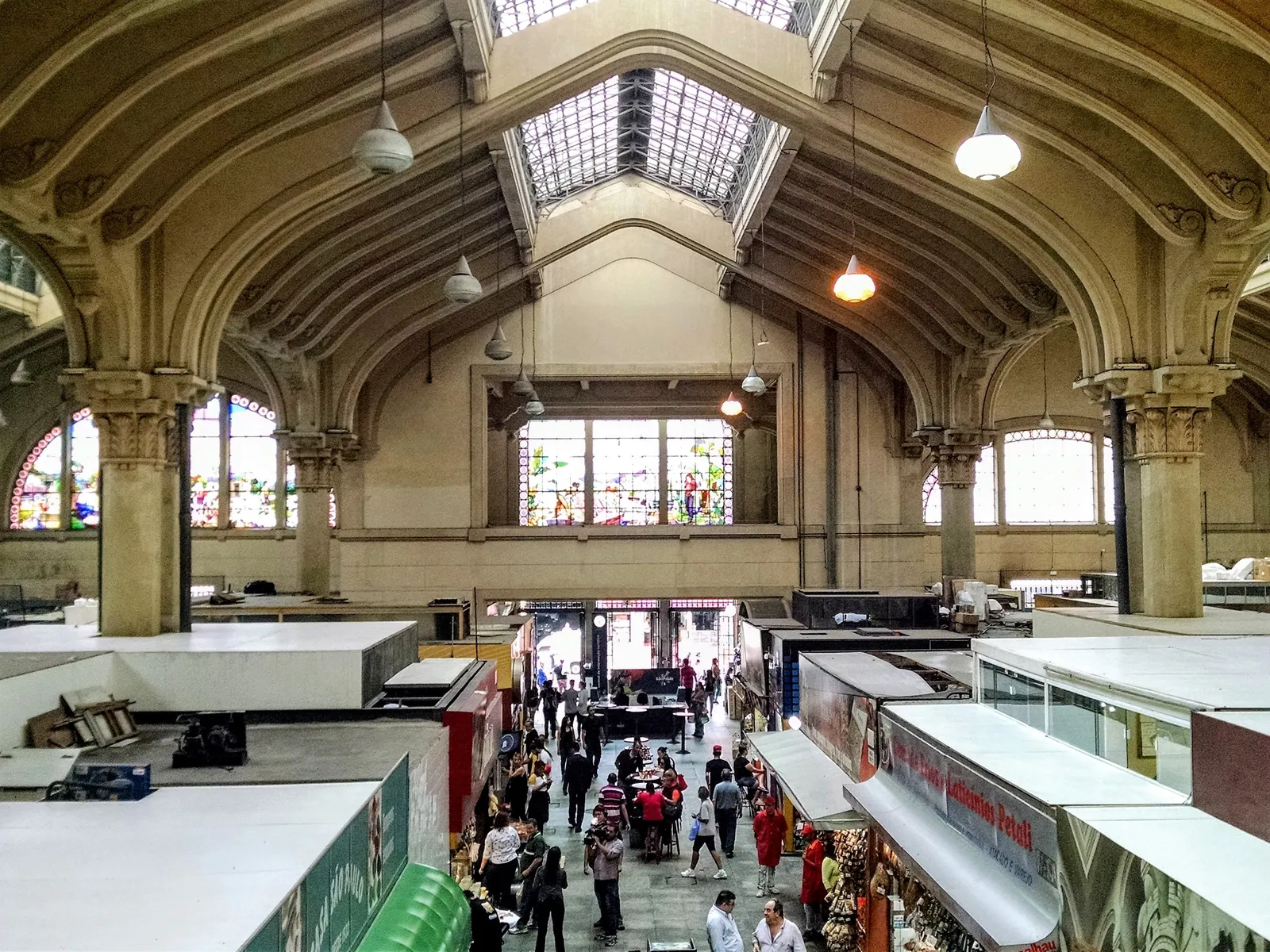
Around 300 stalls trade on the floor, and the mezzanine added in the 2004 restoration is where the counters sell the sandwich the market is known for, a half-pound slab of mortadella between two pieces of bread that most people eat standing up and nobody finishes alone. Walking in costs nothing. Doors open at 6am and close at 6pm Monday to Saturday, 4pm on Sundays and holidays. The aisles narrow to single file around lunchtime, which is the argument for dropping your suitcase somewhere before you come.
Oscar Niemeyer’s auditorium and canopy in Ibirapuera Park
Ibirapuera Park opened on 21 August 1954 for São Paulo’s 400th anniversary: 158 hectares south of the centre, free to walk into since the day it opened and open from 5am to midnight. With more than five hours to spend it is the addition worth the ride out, and it is the one part of this page with essentially no opening hours to plan around. Oscar Niemeyer laid out the pavilions and the long low concrete canopy that ties them together, and the group was listed as a national monument in 2016.
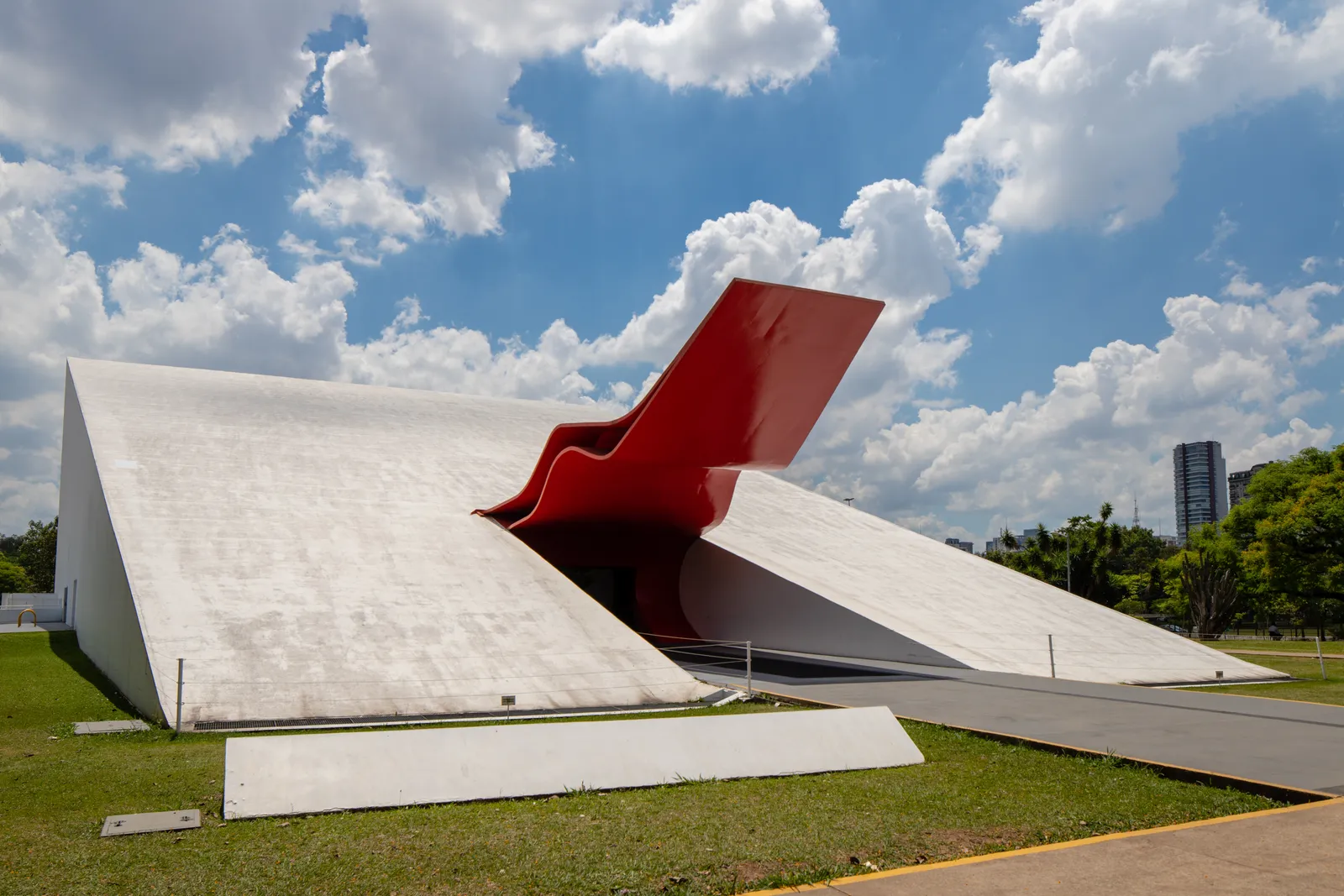
The auditorium at the northern end of the park is the simplest thing Niemeyer built here: a white concrete wedge with a red steel canopy folding out over the door like a tongue. The pavilions under the canopy hold the modern art museum and the Afro Brasil museum, the paths run for kilometres past three connected lakes, and none of it requires a ticket to be outdoors in. If you would rather not work out the buses, a private five-hour city tour that takes in the park can be booked through a tours and activities platform.
One direct train an hour runs out to Guarulhos
São Paulo/Guarulhos International Airport (GRU) sits about 25 kilometres north-east of the centre, and the Expresso Aeroporto is the only service that reaches it without a change: an hourly train on Line 13-Jade running from Palmeiras-Barra Funda via Luz out to Aeroporto-Guarulhos station, 5am to midnight every day, on the ordinary R$5.40 metropolitan fare rather than a special airport ticket. From Luz the ride is around 30 minutes, from Barra Funda around 35.
That is the time on the train, not the time from your last stop to the check-in desk. The station stands beside Terminal 1, so Terminals 2 and 3 need the free connection at the far end, either the shuttle bus or the elevated people mover that opened to passengers in February 2026 and has been widening its hours through the year. Allow ten minutes for that, and up to an hour of waiting if you have just watched a departure go, and the honest door-to-door figure is nearer an hour and a half than thirty. Budget three hours between leaving your last stop and standing at the desk for an international flight.
The other rail option leaves every fifteen minutes rather than hourly, but it takes two changes: the ordinary Line 13-Jade service to Engenheiro Goulart, Line 12-Safira from there to Brás or Tatuapé, then the metro into the centre, which comes to a little over an hour. The Airport Bus Service coaches from the Paulista hotel strip, Praça da República and the Tietê and Barra Funda coach terminals cost several times the train fare and sit in the same traffic as everything else on that road. Whichever you take, the train and the coaches both leave from points on the western side of the centre, so a storage point near Luz or the market puts your bag on the way out rather than behind you. If this stop is the middle of a longer hop down the continent, the Buenos Aires layover guide covers the other end of one of the busiest routes out of here.
Frequently asked questions
What should I do during a layover in São Paulo?
Stay in the old centre and add one thing on Avenida Paulista. The Theatro Municipal's free guided tour and the 26th-floor deck at Farol Santander are the two fixed-time stops, so they set the shape of the afternoon; the Municipal Market and its stained glass are open all day and cost nothing to walk into. The art museum on Avenida Paulista is a short metro ride south and worth the detour if you have five hours or more. On a tighter stop, drop Avenida Paulista and keep the centre, which you can cross on foot in twenty minutes.
Which São Paulo museums are free on the day I land?
It depends which day, and the two big ones deliberately don't overlap. The Museu de Arte de São Paulo at Avenida Paulista 1578 is free to everyone on Tuesdays and again on Friday evenings from 6pm to 10pm, and shuts on Mondays. The Pinacoteca at Praça da Luz is free to everyone on Saturdays and from 6pm on Thursdays, and shuts on Tuesdays, the one day its counterpart is free. Guided tours of the Theatro Municipal cost nothing any day they run, and the Municipal Market charges nothing to walk in. Book the museum tickets online even for the free days.
Can I join an English tour of the Theatro Municipal without booking ahead?
Yes, and it is the only tour there you can't book online. English-language visits run Saturdays at 11am and Wednesday, Thursday and Friday at 1pm, they are free, and you sign up in person at the theatre on presentation of an identity document and passport, because they are reserved for foreign visitors. Portuguese-language visits are the ones booked in advance through the theatre's website: Tuesdays at 10am, 11am and 5pm, and Wednesday to Friday at 11am, 1pm, 3pm and 5pm. Neither runs on public holidays, and the schedule does move, so check the day before.
What is still open in central São Paulo in the evening?
More than you would expect, which is useful when the flight is late. Farol Santander sells its last tickets at 7pm and keeps the building open until 8pm. The art museum on Avenida Paulista runs to 8pm on Thursdays and stays open free from 6pm to 10pm on Fridays; the Pinacoteca runs to 8pm on Thursdays with free entry from 6pm. Ibirapuera Park is open until midnight every day and lit along the main paths. The Municipal Market is the early one, shut by 6pm on weekdays and Saturdays and 4pm on Sundays.
Is the train or the airport bus better for getting back to Guarulhos?
The train, unless you are starting from a hotel on Avenida Paulista. The Expresso Aeroporto runs once an hour from 5am to midnight on Line 13-Jade, straight from Palmeiras-Barra Funda via Luz to Aeroporto-Guarulhos station, on the ordinary R$5.40 fare rather than a special ticket, and takes around 30 minutes from Luz. Because it is hourly, check the departure before you leave your last stop. The Airport Bus Service coaches from the Paulista hotel strip, Praça da República and the Tietê and Barra Funda coach terminals cost several times as much and sit in the same traffic as everything else on the road out to São Paulo/Guarulhos International Airport (GRU).