São Paulo Layover: Liberdade's Japanese Blocks
Part of the full São Paulo Layover: Old Centre to Paulista, GRU
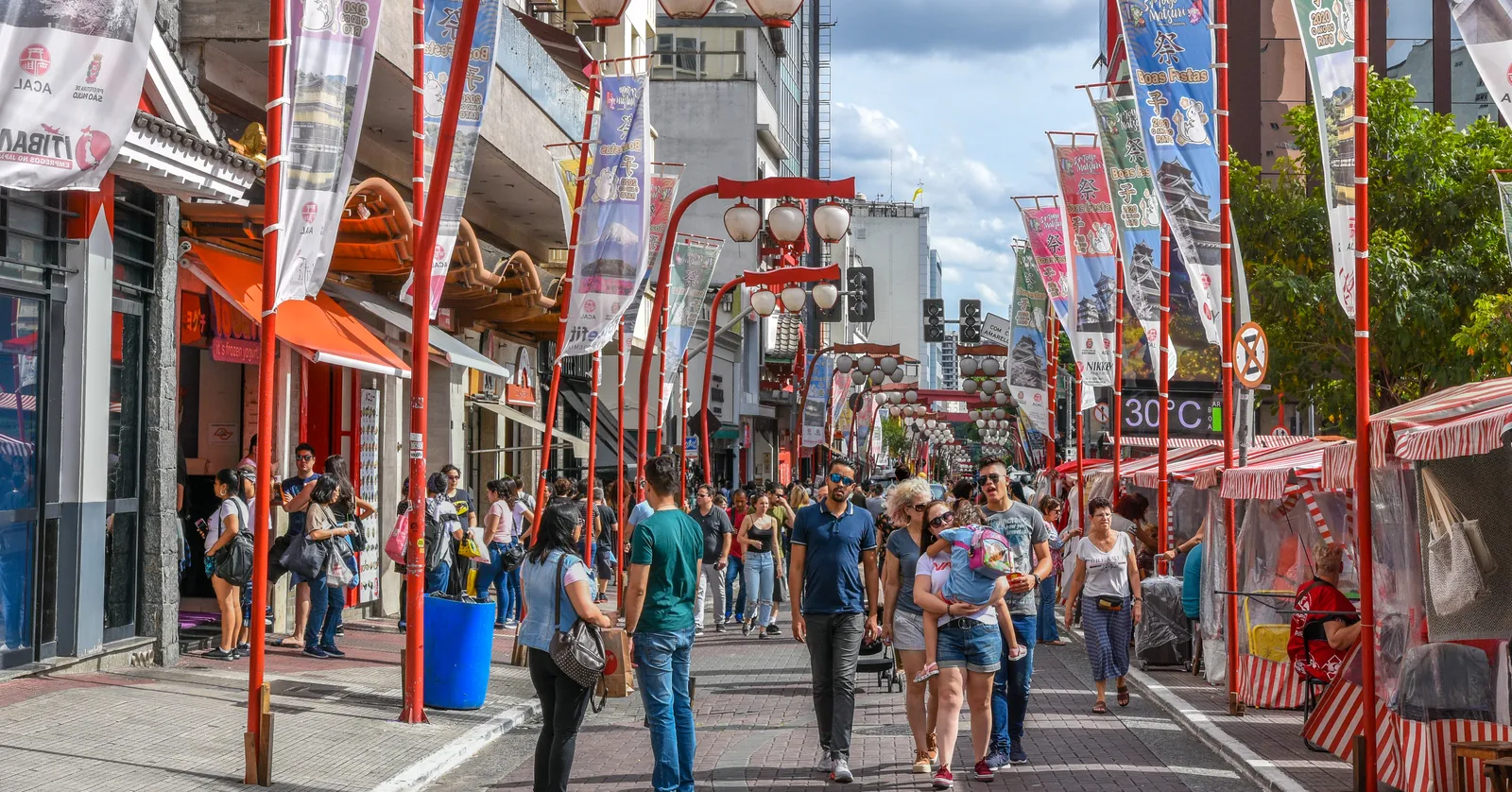
Liberdade is the six or seven blocks of central São Paulo where the city’s Japanese, and later Korean and Chinese, communities settled, and it is worth an hour or two for the red lamps down Rua Galvão Bueno, the weekend food fair on Praça da Liberdade, and a museum of Japanese migration and a Zen temple that face each other on Rua São Joaquim.
Red lamps shaped like lilies run down Rua Galvão Bueno
Rua Galvão Bueno is the district’s spine, and the tall red posts along it carry lamps modelled on the suzuran, the lily of the valley, installed in the 1970s when the city and the community set about giving the neighbourhood a visible identity. A red torii gate stands over the street at the São Joaquim end. The shopfronts under them sell rice cookers, manga, ceramics, dried fish and stationery, mostly out of premises narrow enough that two people with bags cannot pass in the aisle.
The history underneath is less decorative. This was the Largo da Forca, where the colonial city hanged people, and it later took in the freed and the poor before Japanese migrants began arriving from 1908 and made it theirs. If you would rather have the district and the rest of the old centre explained by someone, a guided walk through central São Paulo is bookable through a tours and activities platform.
A food fair takes over Praça da Liberdade at weekends
Saturdays and Sundays from 9am to 6pm, the square and the streets running off it fill with stalls under red and white canopies selling Japanese, Korean and Okinawan food along with crafts and imported goods. Yakisoba, gyoza, takoyaki, pastel and grilled skewers are cooked in front of you and eaten standing up, which is how most of the crowd is spending its afternoon.
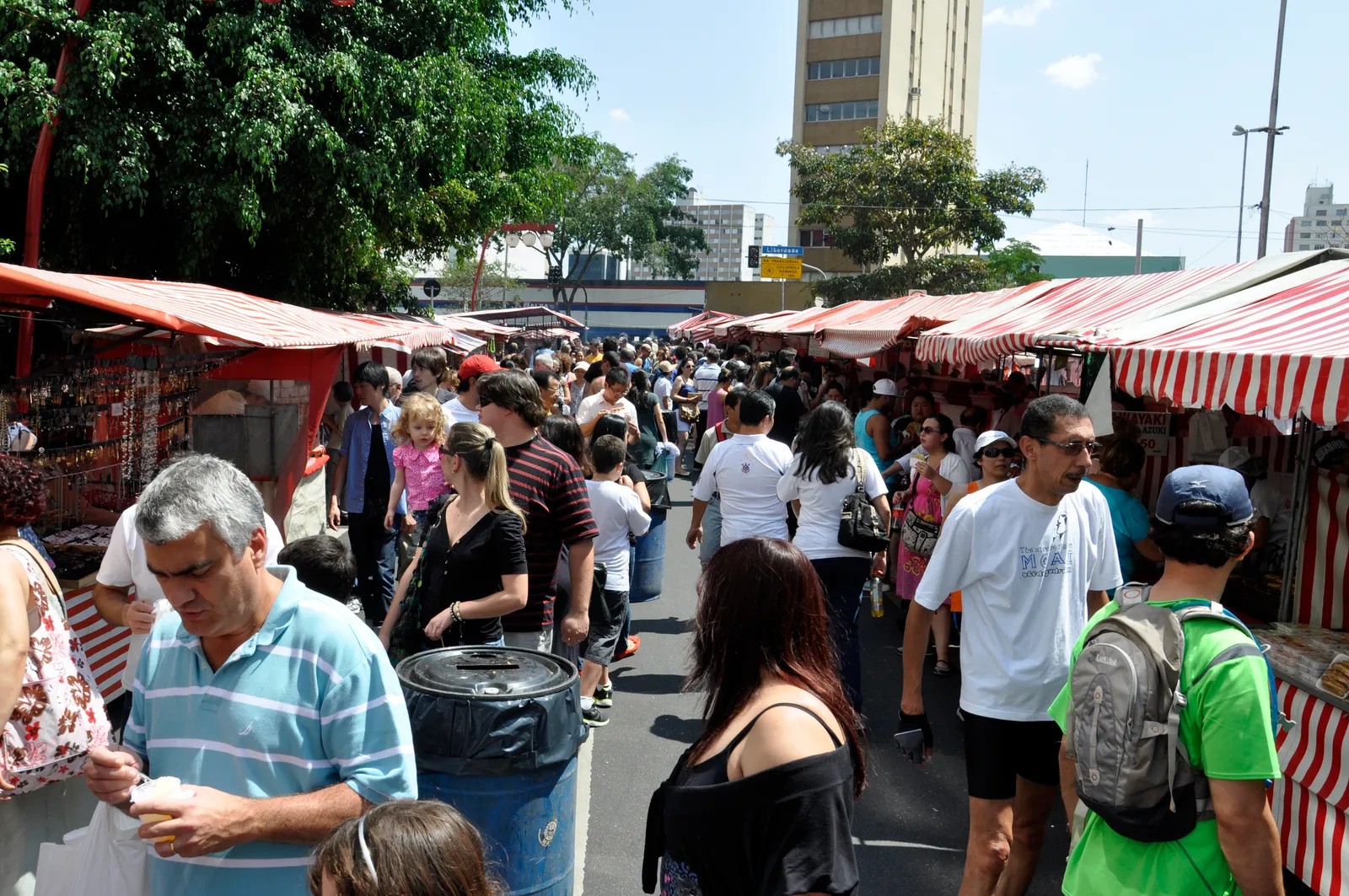
Come before 11am if you want to look at anything properly. By the early afternoon the gaps between stalls are a single person wide, and you move at whatever pace the queue in front of you is moving, which is the strongest argument on this page for turning up with nothing in your hands. The fair is the reason to time a stop here for a weekend rather than a Tuesday.
The Japanese immigration museum is free on Wednesdays
Rua São Joaquim 381 is the Bunkyo building, headquarters of the Brazilian Society of Japanese Culture, and three of its floors hold a museum of how Brazil came to have the largest Japanese population outside Japan. The ticket desk is on the seventh floor, which is not obvious from the street.
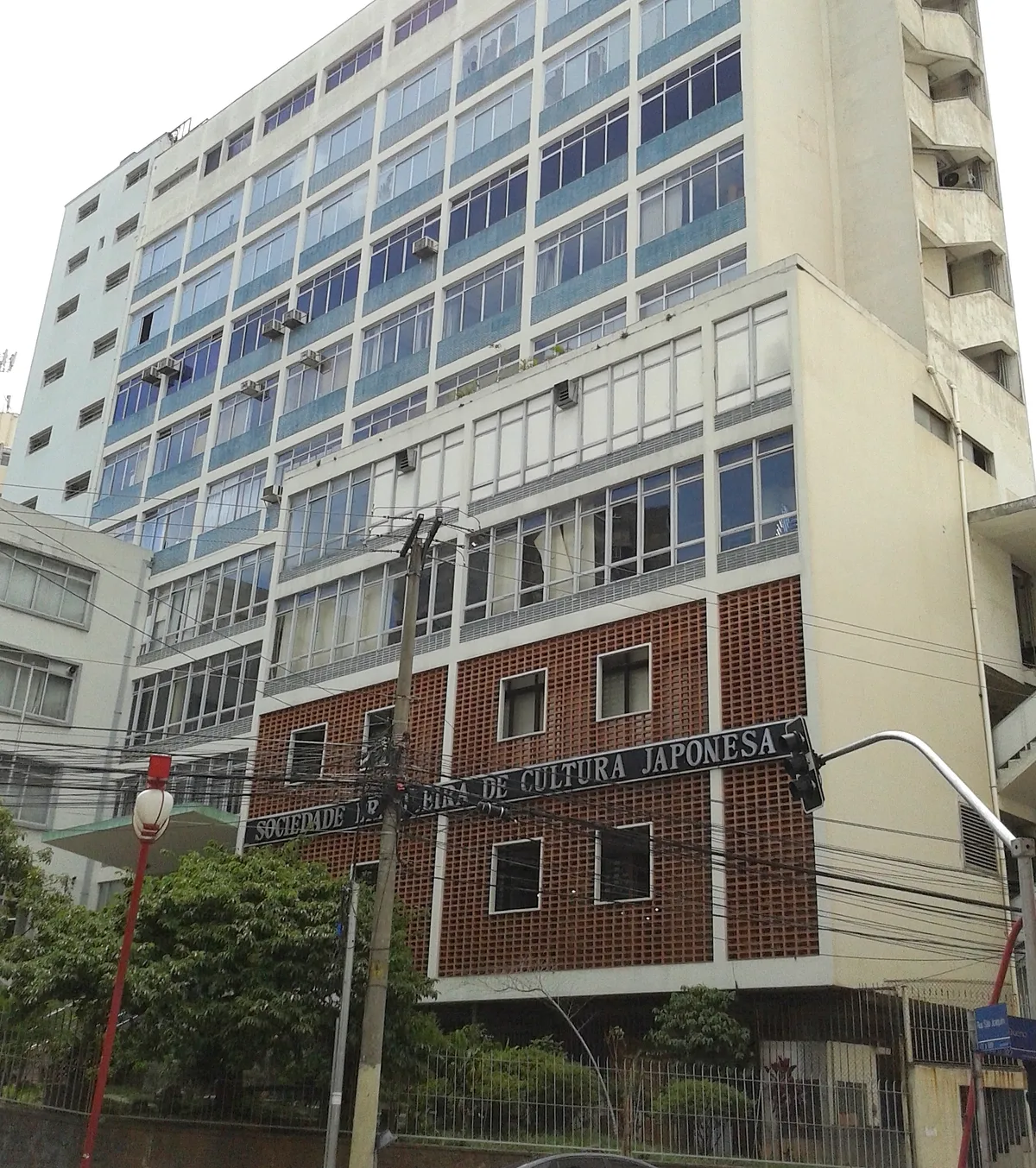
The collection starts with the Kasato Maru, the ship that brought the first 781 contracted migrants to Santos in June 1908, and works through the coffee plantations they were sent to, the houses and schools they built, and the war years when the language was banned in public. Entry is R$25, R$12 for students, children from five to eleven and over-60s, and free to everyone on Wednesdays. It opens Tuesday to Sunday from 10am to 5pm, with the last admission at 4pm.
Templo Busshinji is the Sōtō Zen headquarters for South America
Rua São Joaquim 285, a short way along from the museum, is a low timber temple with a broad pyramidal tiled roof, founded in 1955 when the Sōtō school in Japan sent the priest Rosen Takashina to start a mission for the immigrant community here. It has been the seat of Sōtō Zen in South America ever since.
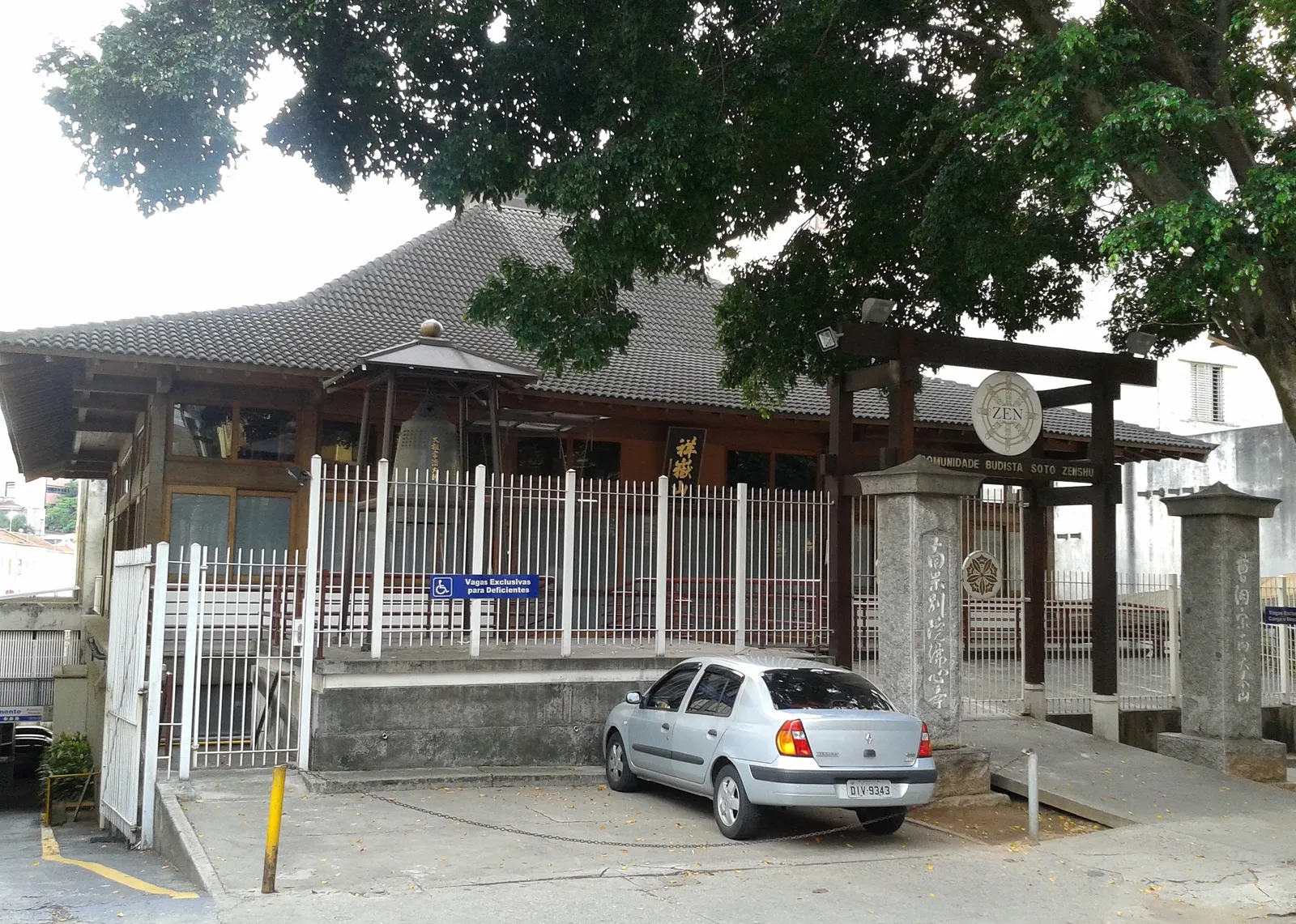
The grounds are quiet in a way nothing else in Liberdade is, which is the argument for looking in after the fair. Beginners’ sitting meditation is offered on Saturday evenings at 6pm, with arrival between 5.15pm and 5.55pm and dark, comfortable clothing expected, so it is a commitment rather than a drop-in unless the timing happens to land.
An hour and three quarters from Liberdade to the airport gate
The route out to São Paulo/Guarulhos International Airport (GRU) runs north through the centre: a short metro ride to Luz, then the Expresso Aeroporto on Line 13-Jade, hourly from 5am to midnight, around 30 minutes to Aeroporto-Guarulhos station on the standard R$5.40 fare, then the free people mover to the terminals. The metro leg is short, so the hourly departure is the number that decides everything.
Liberdade sits close enough to the old centre to combine with it in an afternoon, and the main São Paulo guide covers the theatre, the market and the tower deck that fill out the rest of that walk. If you are doing both, leave the bag before you start rather than dragging it through the fair.
Frequently asked questions
What should I do during a layover in Liberdade in São Paulo?
Walk Rua Galvão Bueno under the red lamps, eat something from a counter on it, and pick one of two indoor stops. The Japanese immigration museum on Rua São Joaquim is free on Wednesdays and R$25 otherwise, opening Tuesday to Sunday from 10am to 5pm with last entry at 4pm. At a weekend, the street fair on Praça da Liberdade runs Saturday and Sunday from 9am to 6pm and is the reason to come on those days specifically. Two hours is enough for all of it.
When is the Liberdade street fair on?
Saturdays and Sundays, roughly 9am to 6pm, on and around Praça da Liberdade. It sells Japanese, Korean and Okinawan food alongside crafts, and the food stalls are the point: yakisoba, takoyaki, gyoza, pastel and grilled skewers eaten standing up. Arrive before 11am if you want to move through it at your own pace, because by early afternoon the aisles between the stalls are one-person wide and everything slows to the speed of the person in front.
Is the Japanese immigration museum worth an hour?
If you have any interest in why Brazil has the largest Japanese population outside Japan, yes. It occupies three floors of the Bunkyo building at Rua São Joaquim 381, with the ticket desk on the seventh, and covers the arrival of the Kasato Maru in 1908, the coffee plantations the first migrants were contracted to, and what the community built afterwards. Entry is R$25, R$12 reduced, and free to everyone on Wednesdays. It opens Tuesday to Sunday, 10am to 5pm, with last admission at 4pm.
Is Liberdade still a Japanese neighbourhood?
Japanese in origin and mixed in practice. Japanese families began moving out from the 1950s as the community prospered, and again in the 1960s and 1970s when road widening and metro construction cleared shopfronts, though most kept their businesses here. Chinese and Korean migrants took up the space from the 1970s onwards, so the shops and restaurants you walk past now are all three. The street signage, the lamps and the weekend fair still read as Japanese, but the menus have not been for decades.