São Paulo Layover Near Praça da Sé
Part of the full São Paulo Layover: Old Centre to Paulista, GRU
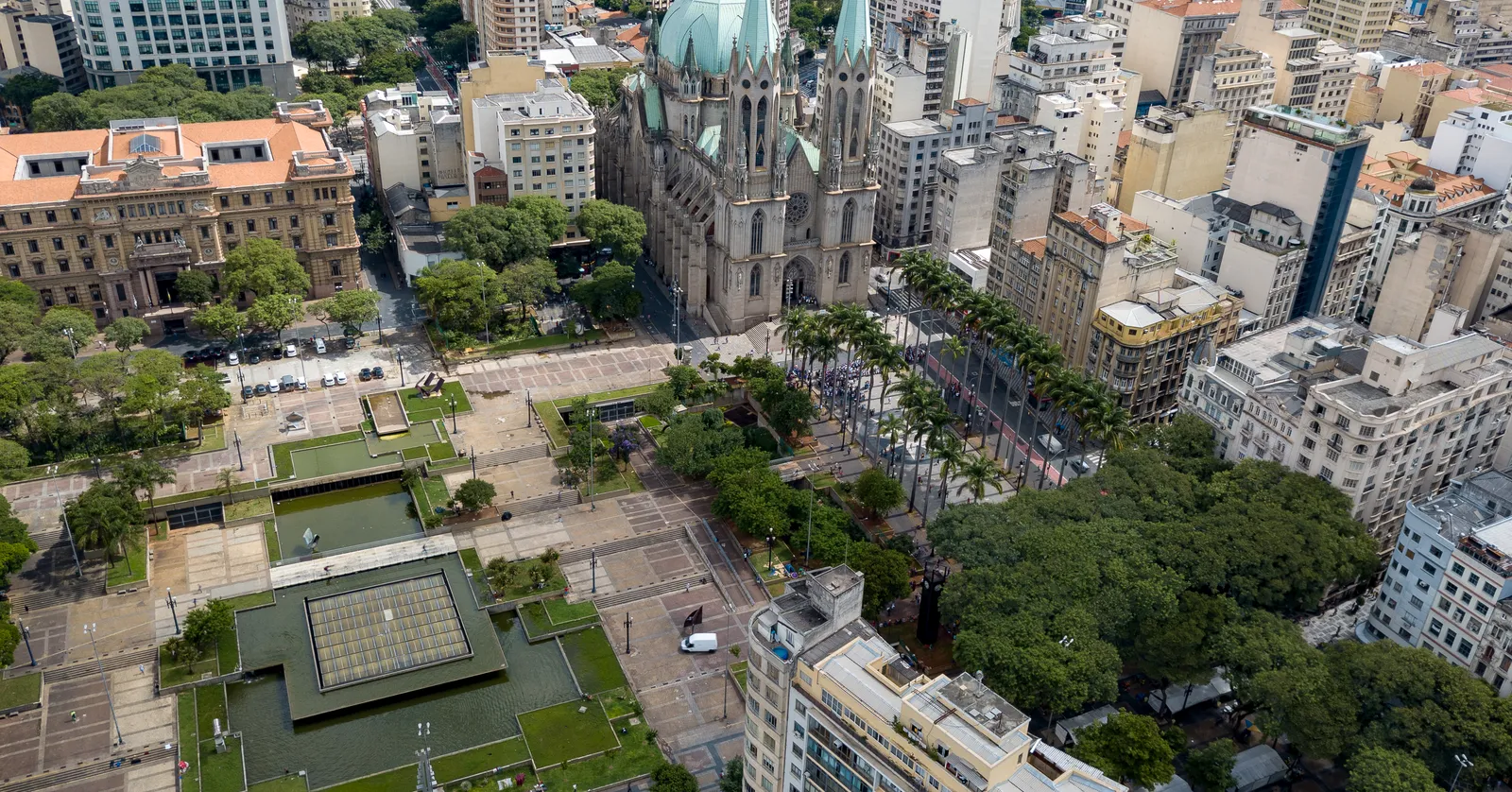
Praça da Sé is the square São Paulo measures itself from, and the three things worth stopping for around it are all colonial or ecclesiastical: a crypt of thirty tombs under the cathedral, the courtyard where the city was founded in 1554, and the last 18th-century house left standing in the centre.
Thirty tombs lie in the crypt under the Sé cathedral
The cathedral on the east side of the square was finished in 1954, four centuries after the city it serves, in a neo-Gothic idiom with two towers of 92 metres and a dome of 70. The nave is free to walk into and worth five minutes for the scale alone, but the part most people miss is underneath it.
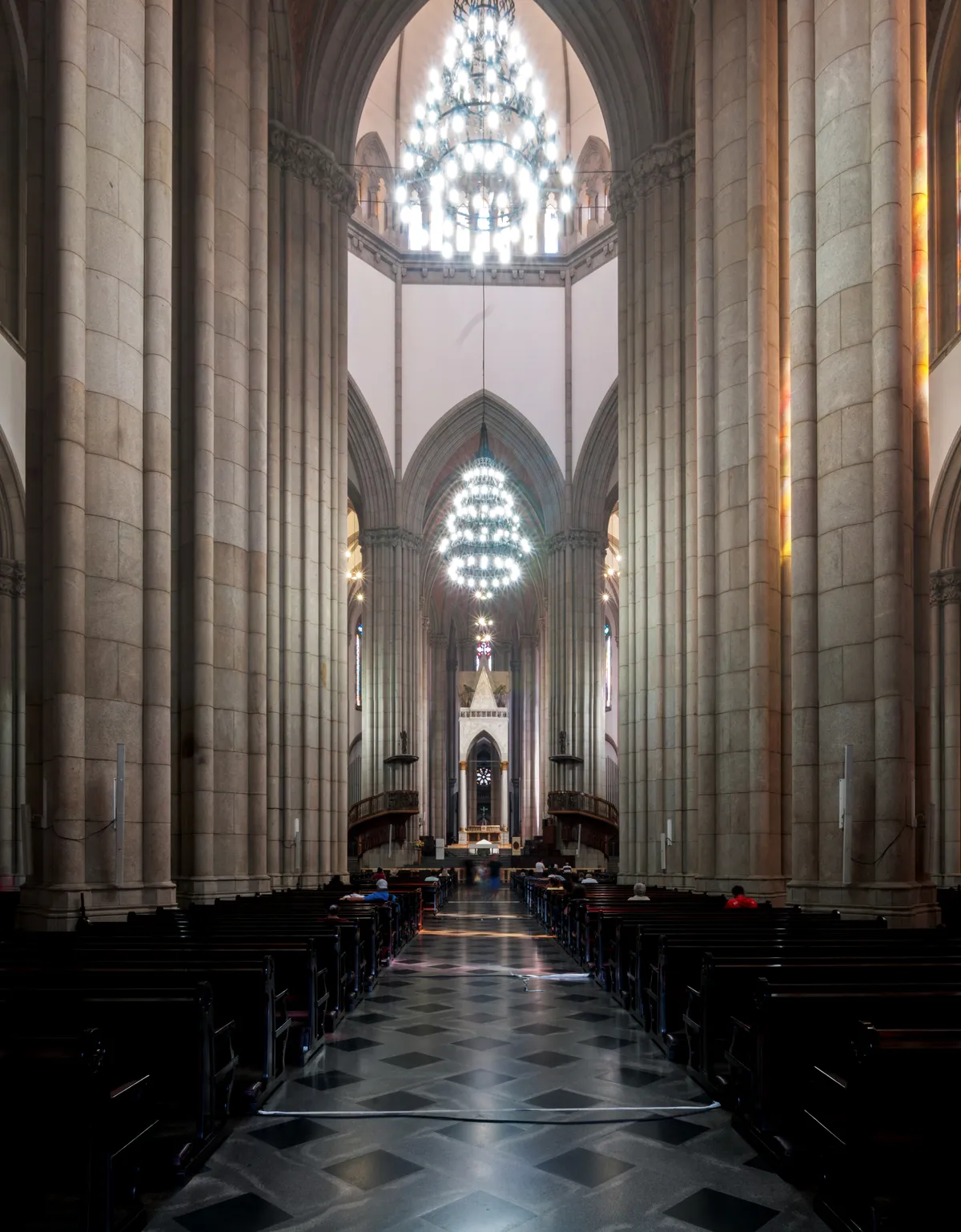
The crypt runs to 619 square metres under the main altar, seven metres from floor to the brick arches overhead, with a chequerboard of black and white Carrara marble underfoot. Thirty burial chambers hold the bishops and archbishops of São Paulo going back to 1748, and, alongside them, Tibiriçá, the indigenous leader who allied with the Jesuits at the city’s founding. A ticket is R$10 at the shop by the cathedral door and buys a place on the next guided descent, which leaves every half hour and lasts about thirty minutes. Visits run 9am to 11.30am and 1pm to 4.30pm on weekdays, finishing an hour and a half earlier at weekends and on holidays. There is no minimum group size, so turning up alone still gets you down there.
Pátio do Colégio is where São Paulo was founded in 1554
Two blocks north-east of the cathedral, on the low ridge between two rivers that the Jesuits picked for it, is the courtyard where thirteen priests said the first mass on 25 January 1554 and gave the settlement its name. What stands there now is a reconstruction of the college and church rather than the original fabric, but the site and the street pattern around it are the oldest thing in São Paulo.
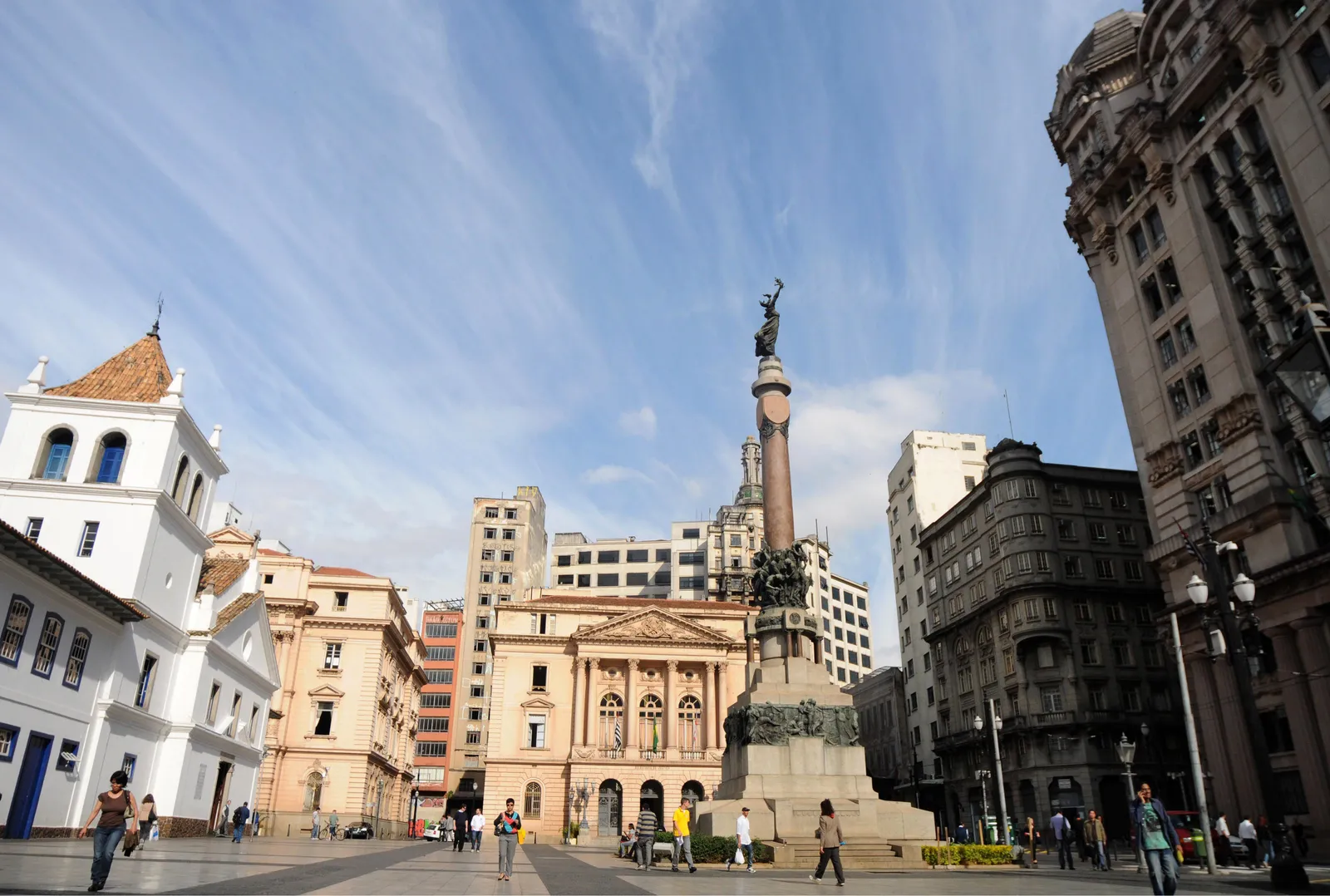
The Anchieta museum attached to it keeps objects and documents from the Jesuit period and a section of original wall. It opens Tuesday to Sunday, 9am to 4.45pm, costs R$8 full and R$4 half, and lets everyone in free on Tuesdays. If you would rather have the whole centre and the wider city explained in one go, a guided day tour taking in this square and the market is bookable through a tours and activities platform, though it needs a much longer stop than this page assumes.
The Solar da Marquesa de Santos is the last 18th-century house in the centre
Rua Roberto Simonsen runs off Pátio do Colégio, and the long pink house with iron balconies along it is the only piece of 18th-century urban domestic architecture left standing in São Paulo. It takes its name from Domitila de Castro, the Marquesa de Santos, who bought it in 1834; before and after her it was a merchant’s house, a bishop’s residence and a set of shops, and the fabric shows every one of those lives.
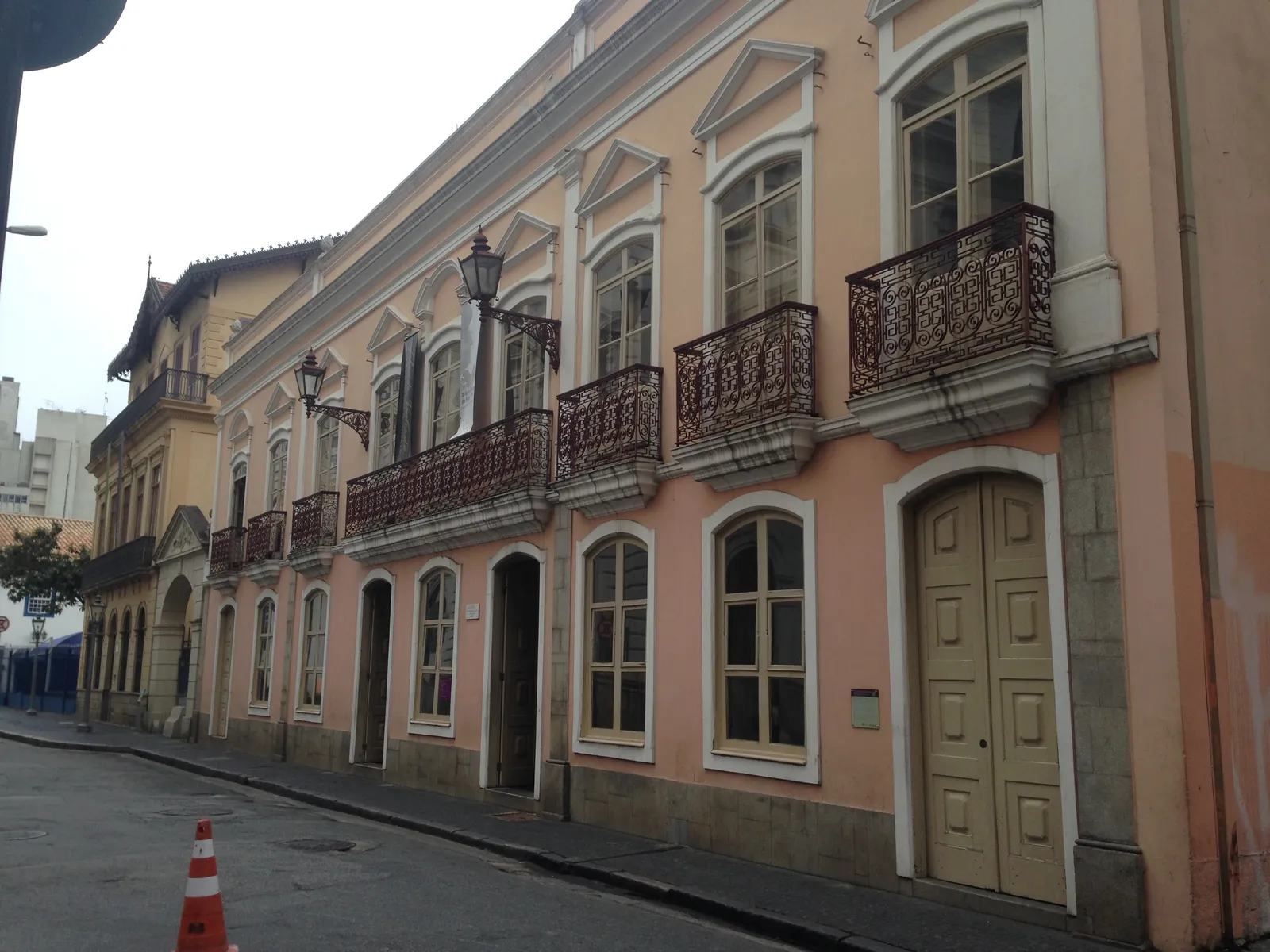
It houses part of the city museum now and costs nothing to enter, Tuesday to Sunday, 9am to 5pm. Sections of the original wall construction have been deliberately left exposed behind glass, so you can see the rammed earth and brick under the stucco. Between this and the crypt, the awkward part of this walk is not the ground, which is flat the whole way, but the buildings: a half-hourly group descent by staircase and a pair of small historic houses are not places to arrive towing a suitcase.
No airport train calls at Sé
Luz, two stops north on the metro, is where the airport service actually calls. The sequence out of Praça da Sé is that short ride, then the Expresso Aeroporto on Line 13-Jade to Aeroporto-Guarulhos station, which runs hourly from 5am to midnight and takes around 30 minutes on the standard R$5.40 fare. Add the metro leg, the wait for an hourly departure and the free people mover between the airport station and the terminals, and an hour and a half is the realistic door-to-door figure for São Paulo/Guarulhos International Airport (GRU).
That makes this a good square to finish on rather than start from, since the whole route out runs north from here. The main São Paulo guide covers the rest of the centre and Avenida Paulista if you have more than the couple of hours these three buildings need, and picking up your bag on the way north beats doubling back for it.
Frequently asked questions
What should I do during a layover near Praça da Sé in São Paulo?
Three things sit within a five-minute walk of each other. The crypt under the cathedral is the one worth paying for, R$10 at the shop by the door, on guided descents every half hour. Pátio do Colégio, the courtyard where São Paulo was founded in 1554, charges R$8 and lets everyone in free on Tuesdays. The Solar da Marquesa de Santos, the last 18th-century house left standing in the city, is free every day it opens. Two hours covers all three, but not on a Monday: the two museums shut that day and only the cathedral and its crypt stay open.
How do you get into the crypt of the Sé cathedral?
Buy a R$10 ticket at the shop just inside the cathedral entrance and join the next guided descent, which leaves every half hour and lasts about thirty minutes. Visits run Monday to Friday from 9am to 11.30am and 1pm to 4.30pm, and Saturdays, Sundays and holidays from 9am to 11.30am and 1pm to 3pm. There is no minimum group size, so a single visitor still gets taken down. The cathedral's towers and its private interior areas are not open to visitors at all, so the crypt is the only part beyond the nave you can actually see.
What is shut around Praça da Sé on a Monday?
Both museums. Pátio do Colégio and the Solar da Marquesa each run Tuesday to Sunday, so Monday leaves you with the cathedral, which is free to walk into, and the crypt below it, which keeps the cathedral's own schedule rather than a museum one and runs Monday to Friday. Tuesday is the opposite extreme, since that is the day Pátio do Colégio charges nothing. Even on a Monday the walk between the three buildings is worth doing for what survives of the colonial street plan.
Can you go up the cathedral's towers?
No. The two 92-metre towers are closed to visitors, as are the cathedral's private internal areas; the nave and the crypt are the only parts open. That surprises people who have seen the building from the square and assumed there is a view from the top of it. For height in this part of the city, the paid deck on the old bank tower a few streets north is the nearest substitute,, and it is a few minutes' walk from here.