São Paulo Layover Near Luz Station
Part of the full São Paulo Layover: Old Centre to Paulista, GRU
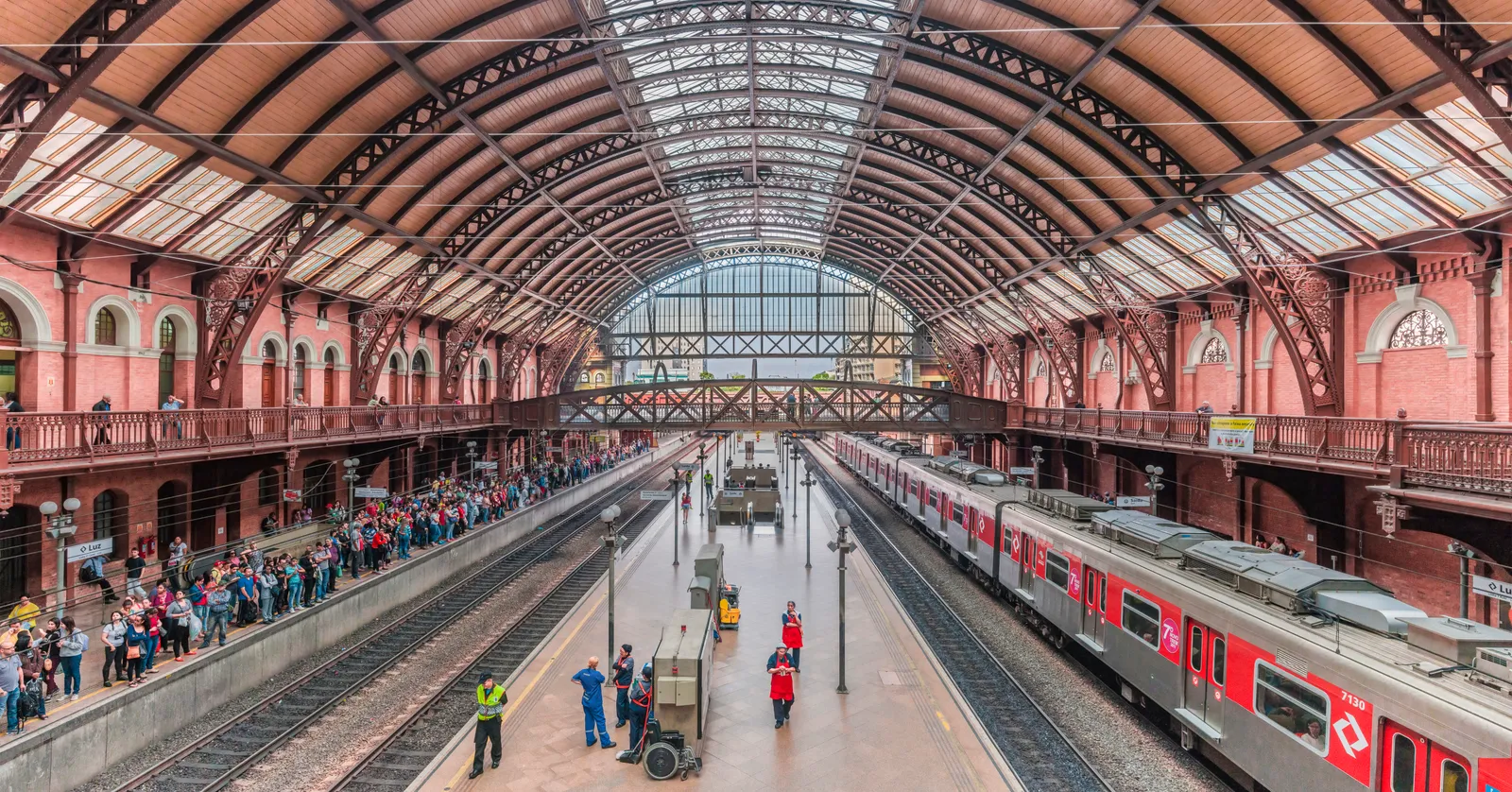
Luz Station in São Paulo is a British railway building dropped into a Brazilian city, and three of the four things worth seeing around it are inside or across the square from it: a museum of the Portuguese language on its upper floors, a concert hall in the station next door, and the city’s oldest public garden facing its front doors.
Luz Station’s iron roof was made in Britain and shipped over
The station opened on 1 March 1901, and almost nothing structural in it started life in Brazil. Charles Henry Driver designed it in England, the iron frame and the bricks were manufactured there and carried across as ballast in the ships coming to collect coffee, and the pieces were bolted together on the site of what had been swampy ground north of the old town. The result is a glazed arched shed over the platforms that looks like it belongs in Manchester, which is more or less the point: the São Paulo Railway that built it was a British company hauling coffee down to the port at Santos.
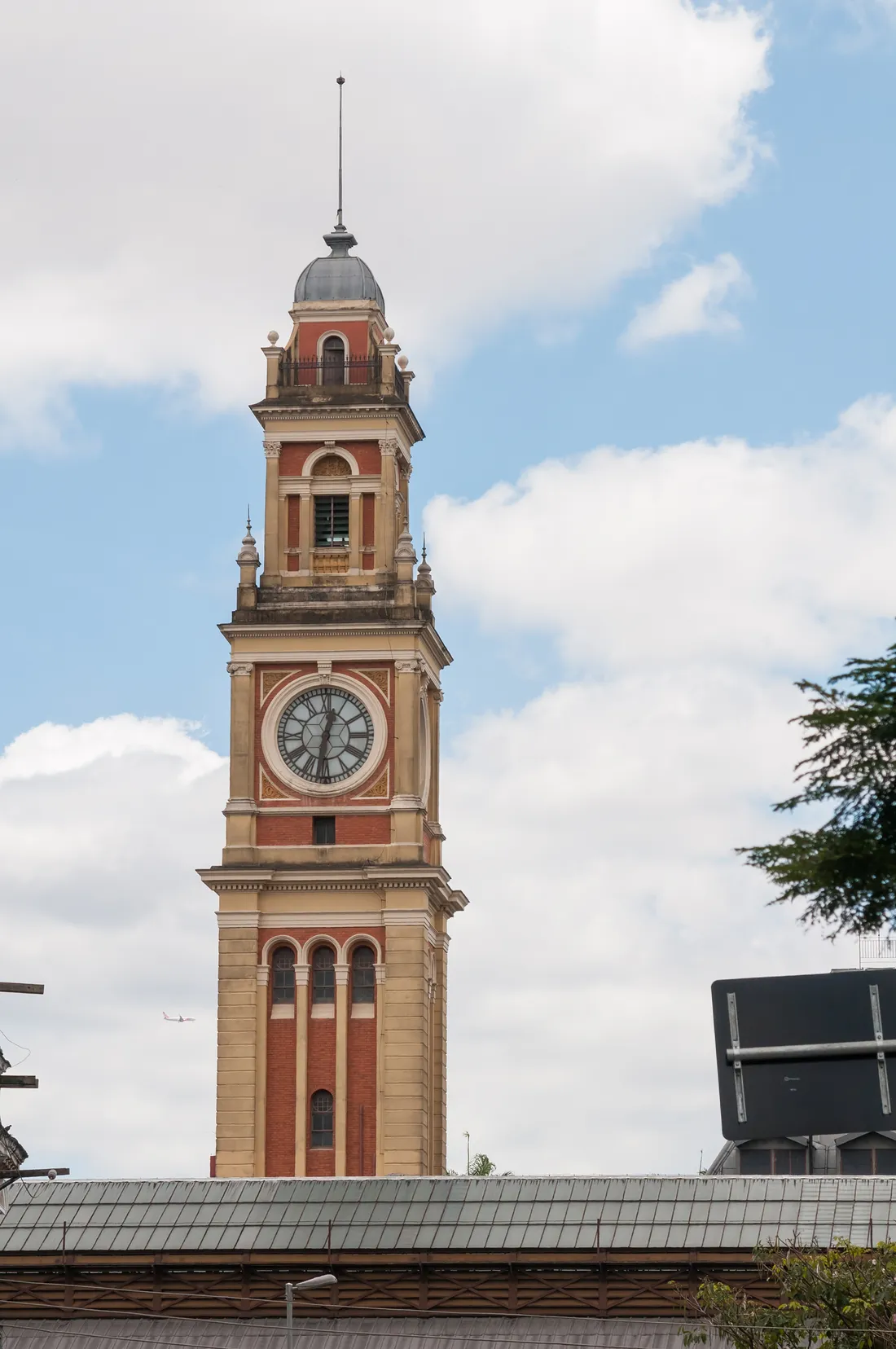
The tower over the front is the piece everyone photographs, and its clock came from the English firm Dimbleby & Son in the same shipment. In December 2015 a fire tore through the building and destroyed the museum inside it; the clock mechanism, sitting high in the tower above the flames, came through with little damage and was restored with the rest.
The Museum of the Portuguese Language is free on Tuesdays and Sundays
Rebuilt after that fire and reopened in 2021, the museum occupies the station’s upper floors and is about the behaviour of a language rather than its grammar: where the words came from, what Brazil did to them, how the same language sounds in Luanda and Lisbon and Recife. Much of it is projection, sound and interactive screens, so it holds up better for someone who doesn’t speak Portuguese than the name suggests.
It opens Tuesday to Sunday, 9am to 4.30pm with visitors allowed to stay until 6pm, and closes Mondays. Tickets are R$25 full and R$12.50 half, and entry is free to everyone on Tuesdays and Sundays. Book online even for the free days, since admission runs on timed slots. If you would rather cover more ground than one building, a guided bike tour of the city’s street scenes is bookable through a tours and activities platform.
Sala São Paulo runs free guided visits inside Júlio Prestes station
One block west of Praça da Luz, the old Júlio Prestes railway station has a concert hall of about 1,500 seats built into what was its grand hall, opened in 1999 and home to the state orchestra. Its ceiling is not fixed: fifteen suspended panels can be raised and lowered to change the reverberation of the room for whatever is being played that night.
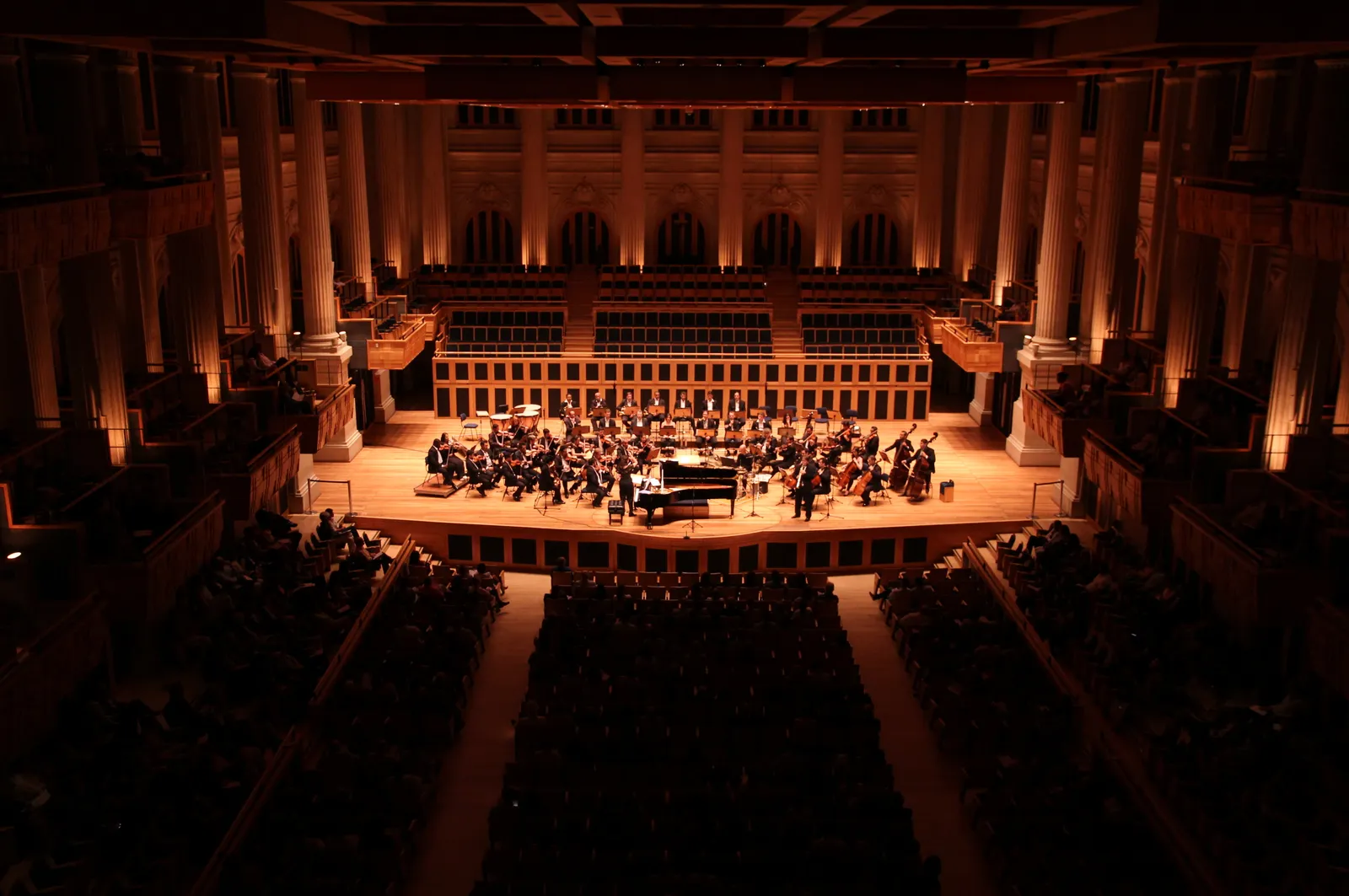
You do not need a concert ticket to see it. Free guided visits run Monday to Friday at 9am, 1pm and 4.30pm, and at 1pm on Saturdays, Sundays and holidays, lasting about an hour. Individuals book a slot through the orchestra’s ticketing site; the schedule is published around a fortnight ahead and moves when the hall is in use, so check before building an afternoon around it.
The Jardim da Luz has been a public garden since 1825
Across Praça da Luz from the station entrance is the oldest park in São Paulo, laid out as a botanical garden in 1825 and public ever since. It is walled, formal and small enough to cross in fifteen minutes: gravel paths between mature trees, an oval pool with a fountain, a grotto with a waterfall, and an open-air collection of modern sculpture scattered through the planting.
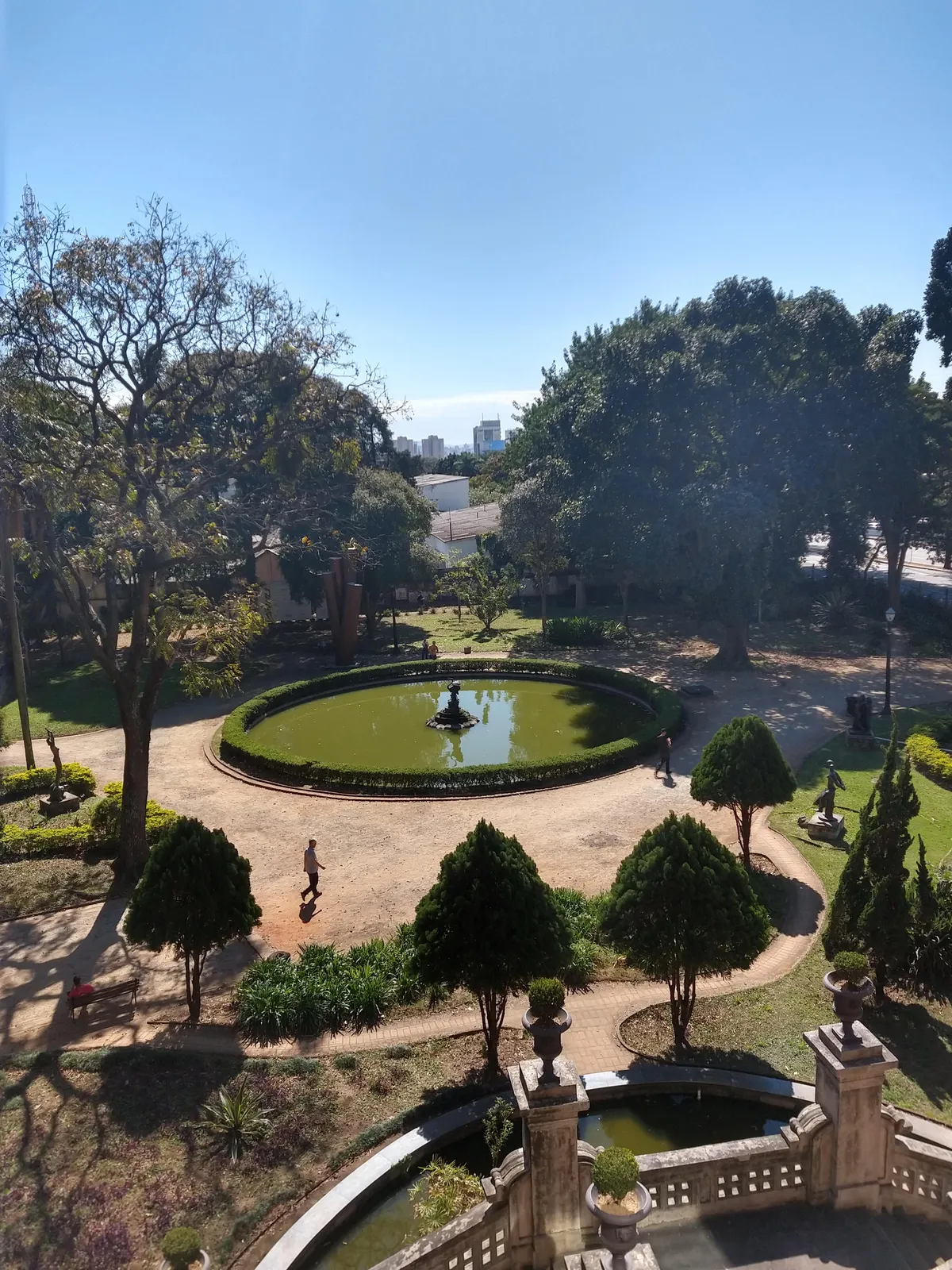
Entry costs nothing and the gates open Tuesday to Sunday, 9am to 6pm. Because it closes on Mondays, and so does the museum in the station, Monday is the one day this whole cluster falls apart; the concert hall visits and the art museum on the far side of the garden are what is left. Everything here is at ground level except the station interchange itself, where the metro platforms sit under the train shed and any move between the two ends in a climb, so it is worth arriving without a suitcase in tow.
The airport train stops at Luz, once an hour
The Expresso Aeroporto is the reason this station suits a flight day at all: it runs on Line 13-Jade between Palmeiras-Barra Funda and Aeroporto-Guarulhos station, calls at Luz in both directions, and covers the roughly 30 minutes out to São Paulo/Guarulhos International Airport (GRU) without a change. It goes hourly from 5am to midnight on the standard R$5.40 metropolitan fare, so the departure time, not the journey time, is the number to plan around.
Add ten minutes at the far end for the free people mover or shuttle bus between the airport station and the terminals, and up to an hour of waiting if you mistime the departure, and the realistic door-to-door figure is an hour and a half. Three hours between leaving Praça da Luz and standing at an international check-in desk is the safe number. The main São Paulo guide covers the rest of the centre, the theatre, the market and Avenida Paulista, if you have longer than this station’s own block deserves.
Frequently asked questions
What should I do during a layover near Luz Station in São Paulo?
Everything worth stopping for here is on the same two blocks. The Museum of the Portuguese Language is inside the station itself and free on Tuesdays and Sundays; the Jardim da Luz across the square is free every day it opens; and Sala São Paulo, the concert hall built into the neighbouring railway station, runs free guided visits several times a day. Three hours covers all three at a walk. If a rehearsal or concert has the hall booked, the visit is the one that gets cancelled, so treat it as the flexible item.
Is the Museum of the Portuguese Language worth it if I don't speak Portuguese?
It is more about how languages behave than about vocabulary, and much of it is visual and interactive rather than text you have to read, so it works better for a non-speaker than the name suggests. It opens Tuesday to Sunday from 9am to 4.30pm, with visitors allowed to stay until 6pm, and closes on Mondays. Tickets are R$25, half price R$12.50, and free for everyone on Tuesdays and Sundays. Buy online in advance, including on the free days, because entry runs on timed slots.
How do I get a free guided visit to Sala São Paulo?
Book a place online through the orchestra's ticketing site rather than turning up. Visits run Monday to Friday at 9am, 1pm and 4.30pm, and at 1pm on Saturdays, Sundays and public holidays, and they cost nothing. The schedule is released roughly a fortnight ahead and depends on what the hall is doing that day, so slots vanish when a concert or a rehearsal takes over. The tour lasts about an hour and takes in the hall itself, which is the reason to go.
Is the Luz interchange step-free with a suitcase?
Partly, and not predictably. Luz is really two stations stacked together: a surface-level train shed for the commuter lines and metro platforms below it, joined by passageways that involve stairs as well as escalators depending on the route you take. Lifts exist but are not on every path between every platform. With a bag, the useful thing to know is that all four attractions on this page are reached from the surface exits onto Praça da Luz, so you only need to come up once.