São Paulo Layover in Ibirapuera Park
Part of the full São Paulo Layover: Old Centre to Paulista, GRU
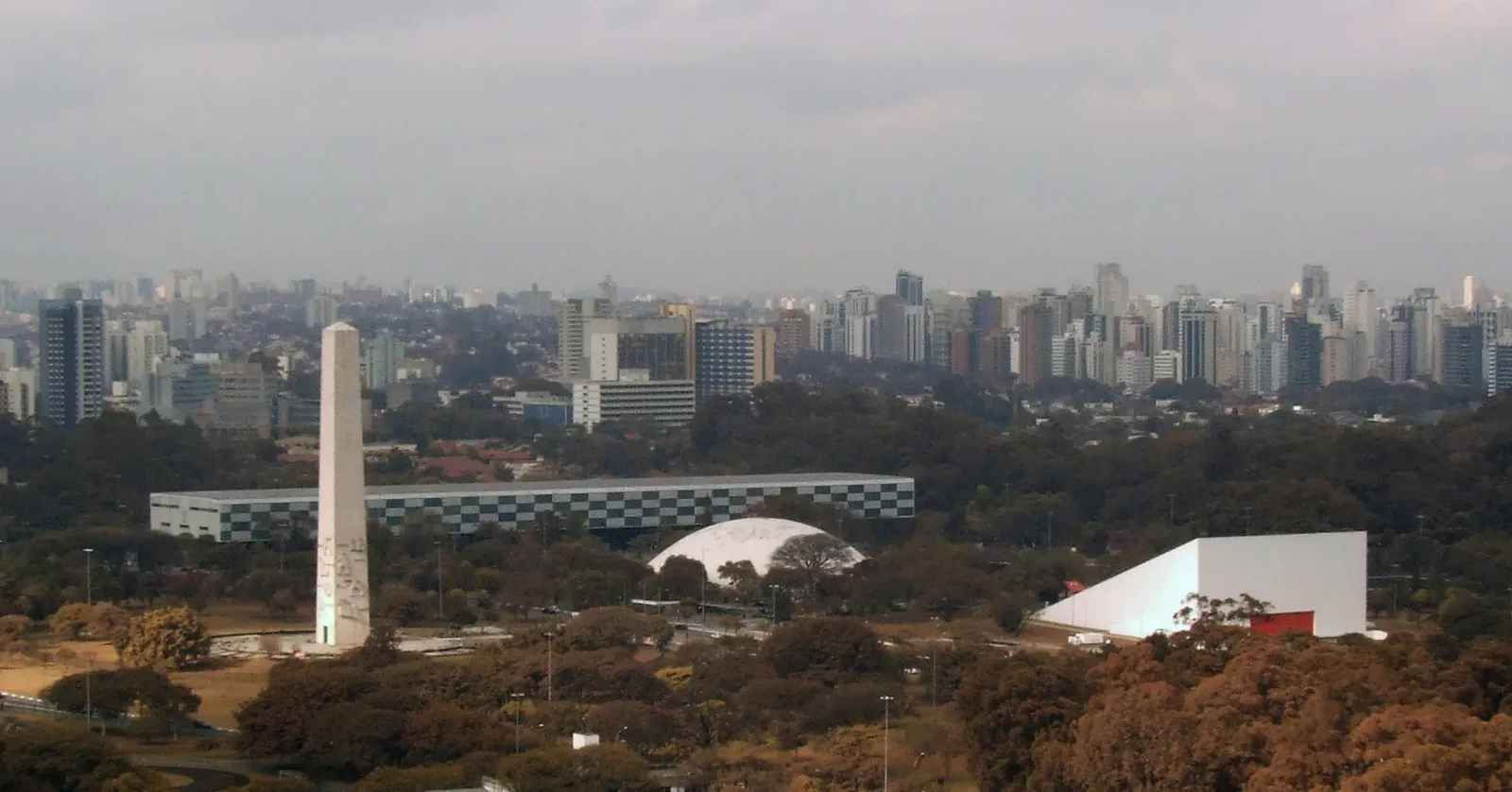
Parque Ibirapuera is 158 hectares of São Paulo that cost nothing to walk into and stay open until midnight, and its Niemeyer pavilions, a dome, a wedge-shaped auditorium and a long chequered exhibition hall, are all tied together by one continuous sheet of concrete canopy.
One concrete canopy links every building in the park
Oscar Niemeyer laid the park out with Roberto Burle Marx for São Paulo’s 400th anniversary in 1954, and the organising idea was the marquise: a low, undulating concrete roof on slender columns that runs between the pavilions so you can cross the whole complex without going outside. It covers around 27,000 square metres, it has no walls, and the group it serves was listed as a national monument in 2016.
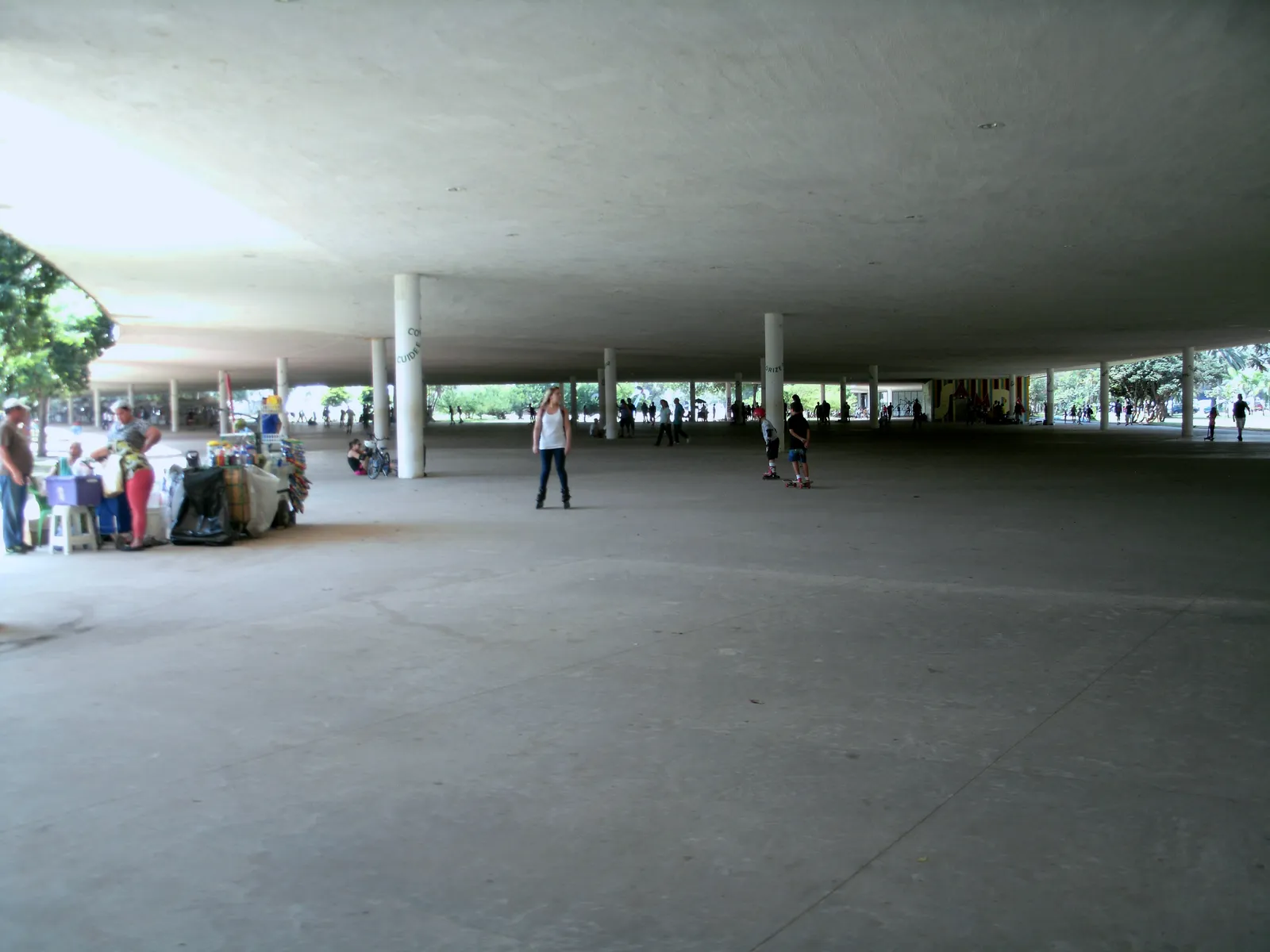
It reopened in January 2026 after five years shut for a restoration costing R$86 million, with about 3,600 square metres marked out for skateboards, rollerblades and BMX and a smaller area for children. On a wet afternoon it is the most useful structure in the park, since it is the one place you can keep walking with a roof over your head. If you would rather have the park and the rest of the city covered in one guided run, a full-day tour stopping here and downtown is bookable through a tours and activities platform.
The Museu Afro Brasil is free on Wednesdays
The Padre Manoel da Nóbrega pavilion, one of the buildings under that canopy, holds a collection of some thousands of pieces on the history of Africans in Brazil: slavery, religion, work, sculpture, painting and photography, assembled by the artist Emanoel Araujo, whose name the museum now carries.
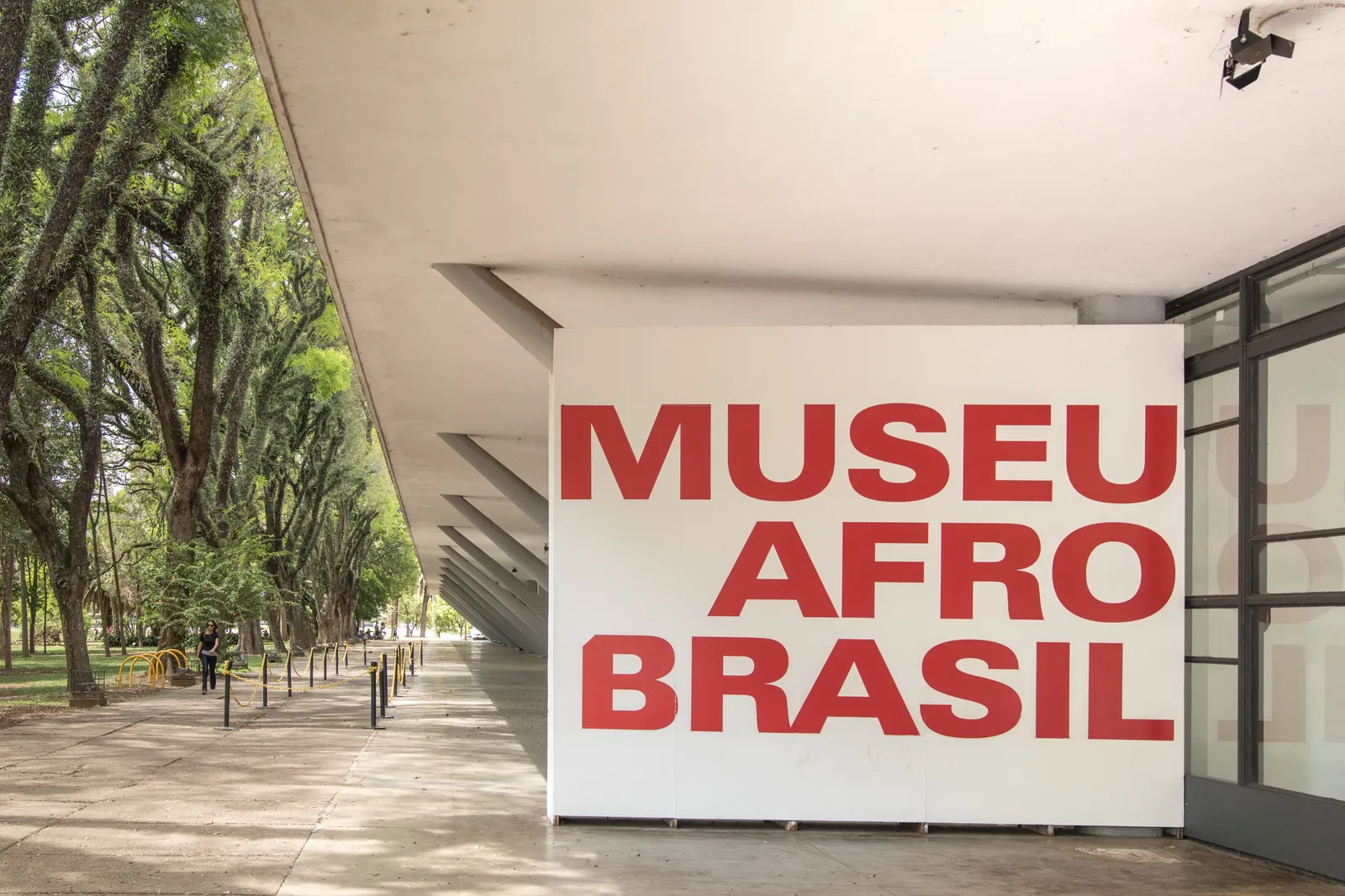
Entry is R$15, or R$7.50 half price, and free to everyone on Wednesdays. It opens Tuesday to Sunday from 10am to 5pm, with visitors allowed to stay until 6pm. Of everything under the marquise this is the one to pick if you only have time for a single building, and Wednesday is the day it costs nothing at all.
The Japanese Pavilion is a copy of Kyoto’s Katsura Palace
Over on the lake near Gate 10, a white timber-framed building with wide tiled eaves stands on piles above the water, modelled on the Katsura Imperial Villa of 1624 in the Shoin style, with a Japanese garden and carp pond around it. It was a gift from the Japanese community for the same 400th-anniversary programme that produced the rest of the park.
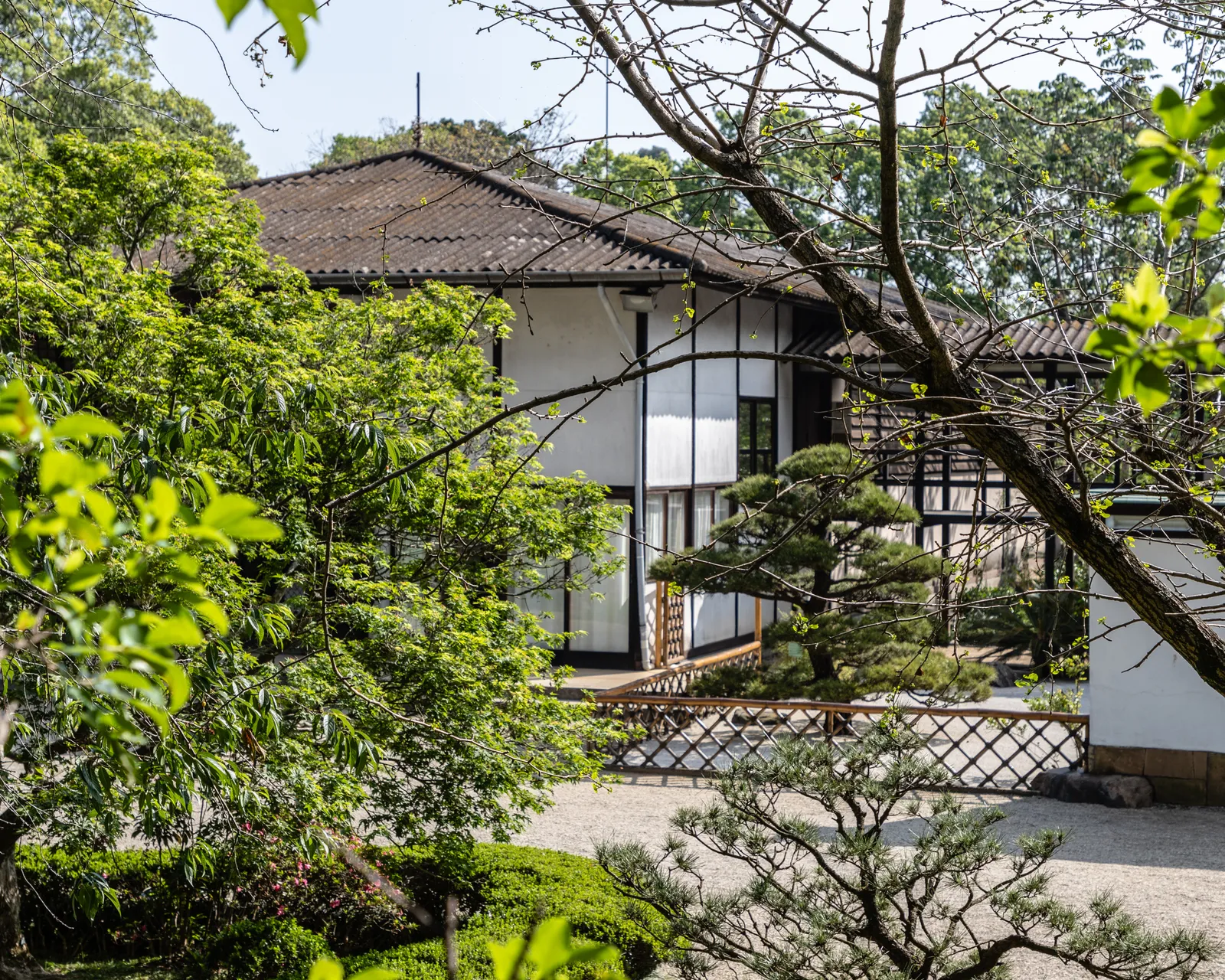
It keeps the tightest opening hours in the park: Thursday to Sunday only, 10am to 5pm, R$20 full price and R$10 half, free on Thursdays. Shoes come off at the door. Between this and the Afro Brasil museum, Wednesday and Thursday are the two days something substantial here is free, which is worth knowing before you decide which afternoon to spend out this way. The park itself has nowhere inside the gates to leave anything, and the nearest stations are a fifteen-minute walk from the edge, so whatever you carry in you carry the whole way round.
The planetarium under the dome by Gate 10 runs four shows a day
The Planetário Professor Aristóteles Orsini has stood in the park since 1957, under a ribbed dome that from outside looks like a slightly squashed flying saucer parked on the grass. It is the one thing inside these gates that never has a free day.
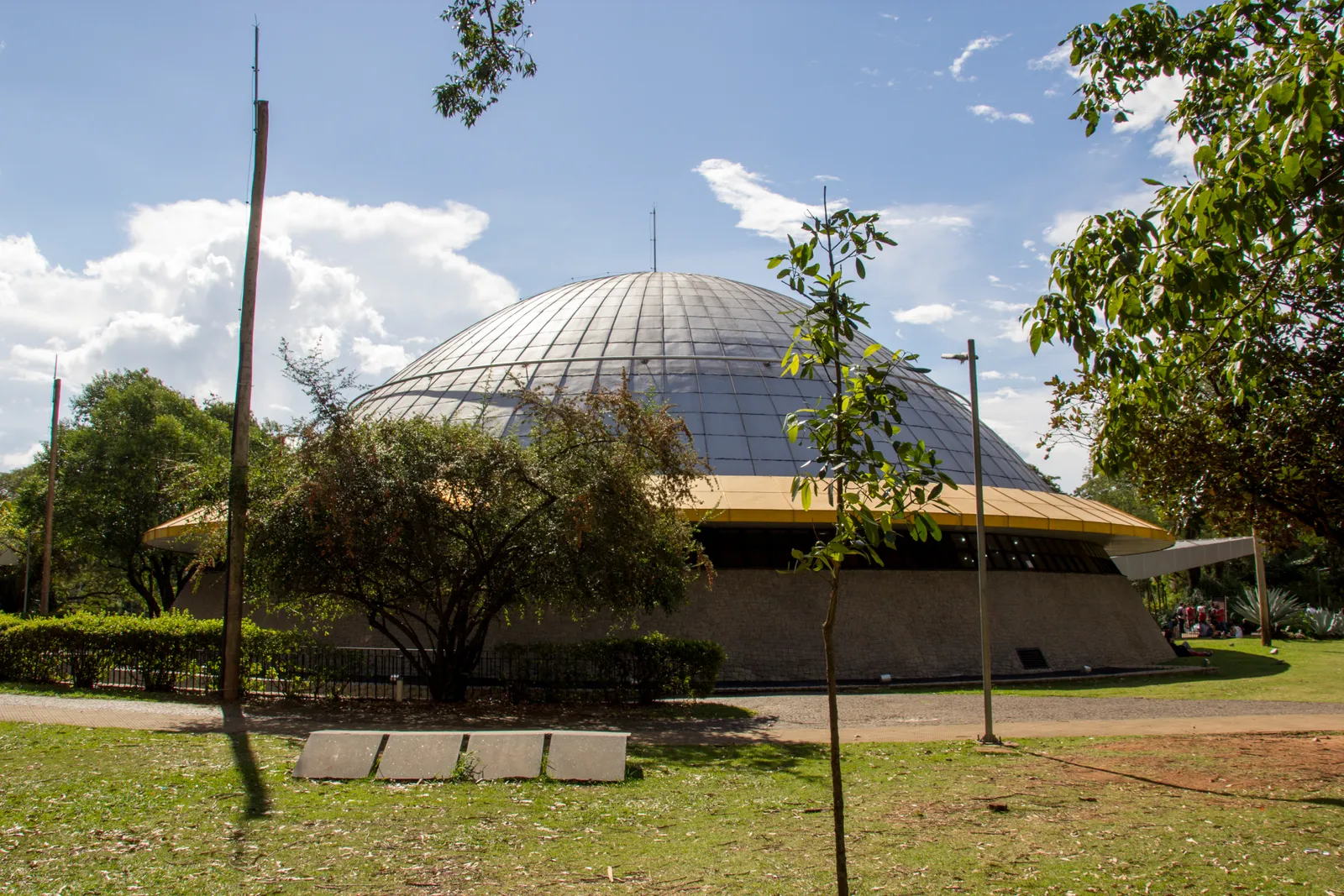
Sessions run at 11am, 1pm, 3pm and 5pm, tickets are R$36 full price and R$18 reduced, and the programme mixes a standing show on the São Paulo sky with rotating specials on constellations and deep time. Shows are narrated in Portuguese, so it works better as architecture and spectacle than as a lecture if you do not follow the language.
No rail line reaches this park
The route out to São Paulo/Guarulhos International Airport (GRU) starts with a bus or a short taxi to the nearest metro station, the metro north to Luz, then the hourly Expresso Aeroporto on Line 13-Jade, which takes around 30 minutes to Aeroporto-Guarulhos station on the standard R$5.40 fare. Two and a quarter hours is the realistic allowance from a park gate to an international check-in desk, and more at rush hour.
That makes Ibirapuera a better morning than an evening stop, however late the park stays open. The main São Paulo guide covers the old centre, which is on the way north anyway, and leaving your bag near the airport train rather than carrying it out here saves the worst leg of the day.
Frequently asked questions
What should I do during a layover in Parque Ibirapuera in São Paulo?
Walk the concrete canopy that links the pavilions, which is the piece of the park that explains the rest of it, then pick one museum off it. The Museu Afro Brasil is the strongest of them and is free on Wednesdays; the Japanese Pavilion by the lake is free on Thursdays and only opens Thursday to Sunday. The lake circuit and the whole park cost nothing at any hour between 5am and midnight. Three hours is comfortable, and unlike most of central São Paulo, none of it depends on a Monday closure.
Which museums in Ibirapuera have a free day?
Two of them, and they fall on different days. The Museu Afro Brasil in the Padre Manoel da Nóbrega pavilion charges R$15, half price R$7.50, and lets everyone in free on Wednesdays, opening Tuesday to Sunday from 10am to 5pm with visitors allowed to stay until 6pm. The Japanese Pavilion charges R$20 or R$10 and is free on Thursdays, open Thursday to Sunday from 10am to 5pm. The planetarium is the one that never goes free, at R$36 full price with sessions through the day.
Is Ibirapuera open at night?
The park is, from 5am to midnight every day, and it has been free since it opened in 1954. The buildings are not: the museums close by 5pm or 6pm, and the planetarium's last session runs in the late afternoon. What that gives you on a late flight is a lit park with wide paved paths and people running on them well after dark, which is a rare thing to have available in a city this size at 10pm. The lake circuit is the part that stays busiest.
How do I get to Ibirapuera without a car?
There is no metro station inside the park, which is the one awkward thing about it. The nearest stations are a walk of fifteen to twenty minutes away on the north and west sides, and buses run along Avenida República do Líbano and Avenida Pedro Álvares Cabral to gates on the park's edge. There is nowhere inside the gates to leave a bag either, so the walk in from a station is a walk you make carrying whatever you brought.